Evaluation of Cropping Model of Green Manure Crops with Main Crops for Upland-Specific
Doug Young Chung
1*, Misuk Park
1, Jin-Woong Cho
1, Sang-Eun Lee
2, Kwang-Hyun Han
3, Jin-Hee Ryu
4, and Seong-Hoon Hyun
51
Dept. of Bio-environmental Chem. College of Agriculture and Life Sciences, Chungnam National Univ., Daejeon 305-764, Korea,
2
Dept. of Plant Resources Sciences, Hankyung National Univ., Ansung 456-749, Korea,
3Dept of Environmental and Biological Chem., Chungbuk National Univ., Cheongju 361-763, Korea,
4National Institute of Crop Science, RDA, Iksan
570-080,
5Div. of Environ. Sci. and Eco. Eng., Col. of Life Sci. and Biotech., Korea Univ. Seoul Korea
For organic farming, green manure crops such as leguminous forages and barley have been broadly used to improve soil fertility and soil physical and chemical properties by repeatedly cutting and mulching them directly as winter crop in the field in the rotation. In this investigation we selected 78 agricultural farm corporations as well as individual organic farmhouses related to crop rotation from greenmanure crops to main crops in order to analyze the relationship of cropping system between main crops and green manure crops. The results showed that the green manure crops were divided into two groups as leguminous and nonleguminous crops, representing that those are limited to specific climate and farming systems of regions. Also the 10 or less green manure crops including sudangrass, hairyvetch, italian ryegrass, sorghun, buckwheat, oat, pea, rye, clover, and canola which belong to leguminous crops which are presently cultivated from the organic farmhouses within the rotational crop system. We also confirmed that the major main crops are sweet potato, soybean, corn, tobacco, spinach from usage frequency analyzed by NetMiner H 2.6 which was used to estimate the rotational cropping system among the green manure crops and main crops.
Key words: Green Manure Crops, Main crops, Site-Specific of Upland, Model
접수 : 2013. 1. 17 수리 : 2013. 3. 14
*연락저자 : Phone: +82428216739 E-mail: [email protected]
Introduction
지구온난화에 따른 이상 기상이 작물 생육에 영향을 미치 고 있어 파종, 재배 및 수확, 품종선택, 토양보전기술 등 생 산의 안정성을 기본으로 하는 재배기술과 녹비작물을 활용한 토양비옥도 증진과 환경보전을 위한 작부체계가 요구되고 있 다. 녹비작물은 두과와 화본과로 구분하며 자운영, 콩, 헤어 리베치, 팥, 녹두, 클로버 등과 같은 두과는 질소를 식물체 비료로 전환하여 토양에 공급하며 호밀, 보리, 귀리, 들묵새 등 화본과는 두과에 비하여 질소공급량은 작지만 토양 물리 성을 개량하는 효과가 크다 (Lee, 2008; Kim et al., 2008).
작부체계는 토양과 작물의 특징에 따라 작물을 시간과 공간의 조건을 고려하여 농산물을 생산하는 관리체계를 의 미한다. 발에서의 작부체계는 논에 비하며 매우 다양하다.
우리나라의 전통적인 작부체계는 동계작물로 보리와 밀 등 을 재배한 후 여름작물인 벼와 콩을 재배하거나 수수를 혼 작하는 등 각종 작물의 조합으로 비교적 안정된 생산 유지 가 목적이었다. 그러나 최근에는 특정 작물의 집중 재배 시 발생되는 토양병해충에 의한 연작장해 방지와 화학비료 다
량 투입에 의한 환경부하를 경감시키고, 토양양분의 불균형 에 의한 각종 생리장해를 경감시키기 위한 방법으로 사용하 고 있다 (Hyun et al., 2010). 한편 유기농업체계에서 합리적 작부체계는 장기적으로 토양비옥도를 유지하고 보전하여 농 산물을 안정적으로 지속하여 생산하는 체계를 의미한다. 이 를 위해 화본과나 두과 계통의 녹비작물을 도입하여 윤작을 실시하면 토양비옥도 유지, 양분의 합리적 관리, 토양환경의 개선, 토양 미생물의 활성 증대 등이 가능하다 (Lee, 2008).
하절기에 주작물을 재배하기 위하여 겨울철 휴한기에 호 밀 및 헤어리베치를 재배하고 다음해 수확한 지상부 생체량 을 조사한 결과 호밀의 경우 3년 평균 10 a당 2.592 kg (1.974~ 3.700 kg 10a
-1)이었으며 헤어리베치는 3년간 10a 당 평균 12609 kg (1.652~3803 kg) 수확하였다 (NAAS.
2008). 이는 기온, 토양수분조건 등 환경적인 요인도 있으나 재배종간 차이에 의한 영향으로 판단한다. 그리고 수확된 녹 비작물의 지상부 양분함량은 화본과 녹비작물인 호밀은 헤 어리베치에 비하여 전체적인 양분함량이 낮았으나 탄소함량 은 높은 것으로 조사되었다. 따라서 헤어리베치를 녹비로 시 용할 경우 분해 및 질소무기화 과정이 용이하여 작물이 쉽게 양분을 이용하는 것으로 판단된다 (NAAS, 2008).
녹비작물 도입이 작물생산성에 미치는 효과를 살펴보면
헤어리베치를 윤작한 재배구에서는 관행구와 비교 시 초장,
경경 및 엽색도에서 유사한 결과를 보인 반면 호밀을 녹비 로 윤작한 재배구에서는 생육이 불량하였다 (NAAS. 2008).
이는 호밀의 탄질비율이 높아 질소기아로 인하여 생육이 불 량하였던 것으로 보고되었다. 따라서 녹비작물을 도입할 때 에는 안정적 생산성을 위하여 양분의 효율적인 관리를 위한 양분수지 분석이 반드시 필요하다.
양분수지는 비료의 사용, 관개수, 강우 및 생물학적 고정 에 의해 투입된 양분과 작물의 흡수, 용탈, 유거, 휘산 및 탈질에 의한 손실된 양분의 차이로 산출한다. 산출된 양분 수지는 양분의 이용효율을 높이고 환경에 미치는 영향을 최 소화하기 위한 근거로 활용할 수 있다. 따라서 유기농업체 계에서 녹비작물을 윤작하여 작물을 재배할 경우 양분의 효 율적인 관리가 가능하다.
따라서 동절기 녹비작물과 하절기 주작물의 윤작재배체 계에서 양분수지와 토양의 이화학성을 개선하기 위한 작물 의 선정 방안이 마련되어야 한다. 따라서 본 연구에서는 녹 비작물과 주작물 간의 상호연관성을 조사하기 위하여 국내 에서 재배되고 있는 작물의 자료를 수립하고 수립된 데이터 베이스를 네트워크분석기법을 활용하여 녹비작물과 주작물 간의 윤작경향을 분석하였다. 또한 네트워크 분석기법을 활 용하여 얻은 결과를 이용하여 전체 작물간 연결성, 중앙 성, 밀도 등으로 계량화하여 토양,기후, 지역 등의 다양한 요인변화에 알맞은 윤작체계 개발의 근거 자료로 활용할 수 있는 분석도구를 개발하고자 하였다.
Materials and Methods
주작물과 녹비작물과의 연계성을 고려한 지역별 녹비작 물 이용 현황과 작물의 윤작체계를 조사하여 밭토양 녹비작 물 선발 모형을 설계하기 위하여 문헌조사 및 현장 조사를 실시하였고 조사 결과를 NetMiner II 2.6 (Cyram, Korea)을 이용하여 지역과 지형별 재배현황 네트워크 분석을 실시하 였다.
Data Base 설계 및 작성은 근접 작물 대 일반 작물의 윤 작 가능 여부 (Non-D)와 기여 작물의 특성을 조사하였다.
작물의 특성과 관련한 조사항목은 심근성,천근성,질소고 정, 조사료 사용 등이었다. 우리나라에서 주로 이용되는 3 가지 주요 녹비작물인 호밀, 자운영, 헤어리베치의 재배적 특성은 Table 1과 같다.
지역 특성에 맞는 주작물과 녹비작물의 연계성분석을 위 해서 지역별 78개의 영농조합 및 법인 그리고 유기농가 중 에서 경상북도 지역에 35개, 전라북도 12개, 경상남도 9개, 충청남도에서 1개의 농가를 대상으로 조사를 실시하였다.
현장 조사를 통해 획득한 자료에 대해서 Cyram 사의 NetMiner II 2.6을 이용하여 네트워크 분석을 실시하였다.
네트워크 분석은 윤작체계, 주요 작물, 녹비작물로 구분하
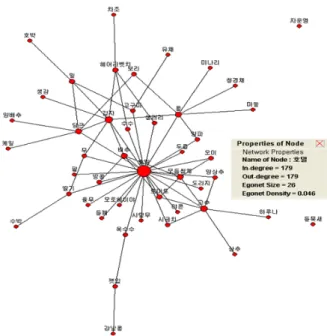
여 분석을 실시하였다. 네트워크 분석기법은 Netmmer (Ver. 2.6)을 이용하여 결정도 (Degree), 중앙성 분석,패턴 분석 등의 작물간의 연결 관계 분석과 Spring-KK와 탐색적 분석결과를 시각화를 수행하였다.
Results and Discussion
지역별로 선정한 영농조합 및 법인 그리고 유기농가를 대상으로 맥류, 서류, 잡곡, 두류, 채소, 특작, 그리고 기타 로 구분하여 지역별 작물의 재배종을 조사하였다 (Table 2).
조사 결과 맥류는 보리를 포함하여 5종, 서류는 감자와 고 구마, 잡곡은 옥수수, 수수 등 6종, 두류는 대두와 녹두 등 6종, 특작은 대두, 녹두 등 6종 그리고 다양한 종류의 채소 와 기타 작물이 있다.
국내에서 발표된 학술문헌과 본 조사가 실시된 지역 내 에서 재배되고 있는 녹비작물의 종류에 대하여 조사한 결과 현재 녹비작물로 이용되고 있는 작물은 Table 3에서 보는 바와 같이 크게 두과류와 비두과류로 나누어지며 두과 작물 로는 자운영, 헤어리벳치, 알파파 등 14종이 있으며 비두과 작물로는 수단그라스, 호밀, 이탈리안 라이그래스 등 11종 이 조사되었다.
지대별 작부체계를 살펴보면 남부 평야지대는 벼 후작으 로 밀, 호밀, 귀리 및 이탈리안 라이그라스, 중부 평야지대 에는 총체보리, 호밀 및 밀, 그리고 중북부 및 산간지대에는 밀, 호밀 등을 재배하여 이듬해 모내기 전 총체맥류로 이용 이 가능하다 (Table 4). 또한 겨울철 단백질 사료작물로서 내한성이 강한 두과작물인 헤어리베치를 맥류와 혼파하는 사례도 있었다. 자운영은 재배 특성상 밭토양 보다는 벼 재 배 시 녹비작물로 많이 이용되고 있는데 우리나라에서는 동 계월평균 최저 기온이 -5
oC 이상인 지역인 전남 서북부 지 역과 경남 남동부지역에서 적합하며, 동계 월평균 최저 기 온이 -5
oC 이하인 지역에서는 월동률이 낮고, 생육정도가 불량하여 자운영 재배에 부적지이다. 헤어리베치는 중북부, 중부 및 남부지역 중에서 옥수수 및 밭작물의 작부 조합 시 유리하고, 과수원의 피복 작물로 가능하다 (Table 3).
Table 3에서 살펴본 바와 같이 녹비작물은 연평균 기온
에 따라 재배적지가 제한적이었다. 따라서 기후적 조건에
의해 녹비작물의 재배가 제한적인 경기도와 강원도를 대상
으로 조사한 결과 화본과에 속하는 호밀이 빈도 26으로 가
장 많이 재배되고 있는 것으로 조사되었으며 다음으로 콩
(6), 헤어리베치 (4) 순이었다. 그러나 자운영의 경우 경기
도와 강원도 지역에서는 재배가 전혀 없는 것으로 조사되었
다. 한편 용도는 사료와 녹비용이 가장 많았으며 땅콩, 강낭
콩, 팥은 단순 녹비용으로 재배되는 것을 알 수 있었다
(Table 5). 그리고 호밀, 유채, 그리고 자운영은 동절기 재
배작목으로 재배하는 것으로 조사되었다.
Table 1. Cultivation characteristics of major green manure crops in Korea.
Category Types of Green manure crop
Rye Milky-vetch Hairy-vetch
Period of Sowing after October September August to September
Nutrient requirement Nitrogen Phosphorus, Sulfur Phosphorus, Sulfur
Cold tolerance Strong, Nationwide Weak, below Daejeon Strong, Nationwide
Tolerance to moisture Intermediate Intermediate Weak
Decomposition rate Slow Intermediate Rapid
Effect of green manure Soil physical property Microbial status/N supply
Table 2. Cultivated crops classified as cropping systems at provinces in Korea.
Province Barley Tuber Crop
Miscellaneous
Grain Crop Leguminose Vegetables Herbal Crop Others
GG
Barley Wheat Rye Oats Triticale
Potato S w e e t Potato
Corn Sorghum Adlay Millet
Soybean Mung Bean Pea, Cowpea Kidney Bean, Adzuki Beans
Lettuce, Chinese Cabbage Cabbage, Chives, Spinach A Crown Daisy, Radish, Pumpkin, Onion, Tomato, Green Oion Carrot, Strawberry
Flax, Sesame Perilla, Peanut, Sunflower
Upland Rice Milky-Vetch Dahila Beet
Italian Ryegrass
GW
Barley Wheat Rye
〃 Corn Sorghum Miillet Buckwheat
Soybean Mung Bean Adzuki Beans
Radish, Chinese Cabbage Cabbage, Radish, Pepper, Cucumber, Carrot
Tobaco, Sesame Perilla, Peanut, Sunflower, Angelica
Upland Rice Ryegrass
CB
Barley Wheat Rye Oats Triticale
〃 Corn Sorghum Millet Buckwheat
Soybean Mung Bean Pea, Cowpea Kidney Bean, Adzuki Beans
Lettuce, Spinach, Shepherd’S Purse, Korean Lettuce, White Radish, Strawberry, Pumpkin, Garlic, Pepper
Tobaco, Sesame Perilla, canola
Upland Rice Ryegrass
CN
Barley Wheat Rye
〃 Corn
Soybean Mung Bean Kidney Bean Adzuki Beans
Chinese Cabbage, Spinach Strawberry, Pumpkin, Garlic, Pepper
Radish, Green Onion, Garlic
Tobaco, Sesame canola
Upland Rice Ryegrass
JB
Barley Wheat Rye
〃 Corn Sorghum Adlay Buckwheat
Soybean Kidney Bean
Lettuce, Chinese Cabbage Cabbage, Chives, Spinach A Crown Daisy, White Radish, Pumpkin, Onion, Tomato, Green Oion Carrot, Strawberry
Welsh Onion, Garlic, Pepper, Cucumber, Watermelon, Melon
Flax, Sesame Perilla, Peanut, Rush, canola, Cotton
Beet, Milky-Vetch Ryegrass Italian Ryegrass
JN
Barley Wheat Triticale
〃 Corn Buckwheat
Soybean Kidney Bean
Lettuce, Chives, Spinach
A Crown Daisy, White Radish, Pumpkin, Onion, Tomato, Green Oion Carrot, Strawberry
Welsh Onion, Tomato
Flax, Sesame Perilla, Peanut, Rush, canola, Cotton
Alisma Alpalfa Ryegrass Italian Ryegrass
GB
Barley Wheat Rye Oats Triticale
〃 Corn Adlay Buckwheat
Soybean Pea Broad Bean Kidney Bean
Lettuce, Chives, Spinach,Onion, Crown Daisy, White Radish, Pumpkin, Tomato, Green Oion Carrot, Strawberry, Welsh Onion, Tomato, Pepper, Cucumber, Watermelon, Melon Eggplant, Oriental Melon
Flax, Hemp, Sesame Perilla, Rush, Peanut, Peppermint, Crambe, Safflower
Upland Rice Milky-Vetch Orchard Grass Italian Ryegrass
GN Barley
Wheat 〃 - Soybean
Pea
Garlic, Onion, Melon, Cucumber Chinese Cabbage, Green Onion, Watermelon, Strawberry
Flax, Sesame canola, Tobaco
Milky-Vetch Orchard Grass
JJ Barley
Wheat 〃 - Soybean Chinese Cabbage,, Spinach,
Onion, Radish, Pepper, Pumpkin Sesame
canola, Upland Rice GG: Gyunggi Province; GW: Gangwon Province; CB:Chungbuk Province; CN: Chungnam Province; JB: Junbuk Province;
JN: Junnam Province; GB: Kyungbuk Province; GN: Kyungnam Province; JJ: Jeju Province
Table 3. Types of green manure crops cultivated in Korea.
Leguminous green manure crops Non-leguminous green manure crops Cowpea, White Clover, Red-Clover, Hairy-Vetch, Milky-Vetch,
Oat, Pea, Peanut, Alfalfa, Kidney Bean, Adzuki Beans, Mung Beans, Early Bean, Lupin Etc.
Canola, Buckwheat, Millet, Sorghum, Sudangrass, Rye, Oat, Ryegrass, Italian Ryegrass
Table 4. Cropping status of green manure crops associated with main crops throughout nation.
Green manure crops Crops before/after Possible region of cropping system Remarks
Milky-vetch Rice
Nortwest of Jeonnam Monthly average temperature greater than -5℃
during winter season
South-eastern of Gyungnam Monthly average temperature greater than -5℃
during winter season
Hairy vetch
Rice, Corn, Sesame, Orchard (Cover crop)
North of Middle, Middle and Southern part
Sowing of Hairy vetch in a rice field with favorable drainage till the first part of Oct.
Upland field cultivating corn and Sesame Cover crops of orchard growing gcanola and pear
Table 5. Characteristics and uses of green manure crops cultivated in provinces of Kyunggi and Kangwon.
Name of crops Family Uses Season/Temperture Frequency
Rye Gramineae Forage/Green manure Winter/Low temp. 26
Soybean Legumonosae Forage Summer/Low temp. 6
Hairy vetch Legumonosae Forage/Green manure All/High temp. 4
Canola Brassicaceae Forage/Green manure Winter/Low temp. 1
Adzuki beans Legumonosae Green manure Summer/Low temp. 1
Milky-vetch Legumonosae Green manure Winter/High temp. 0
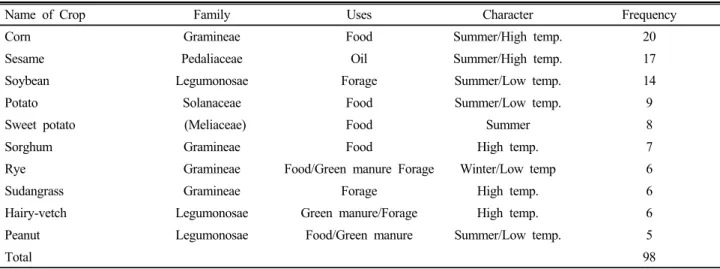
Table 6. Top 10 crops selected by cultivation frequency obtained from investigation sites.
Name of Crop Family Uses Character Frequency
Corn Gramineae Food Summer/High temp. 20
Sesame Pedaliaceae Oil Summer/High temp. 17
Soybean Legumonosae Forage Summer/Low temp. 14
Potato Solanaceae Food Summer/Low temp. 9
Sweet potato (Meliaceae) Food Summer 8
Sorghum Gramineae Food High temp. 7
Rye Gramineae Food/Green manure Forage Winter/Low temp 6
Sudangrass Gramineae Forage High temp. 6
Hairy-vetch Legumonosae Green manure/Forage High temp. 6
Peanut Legumonosae Food/Green manure Summer/Low temp. 5
Total 98