Technical Paper DOI: http://dx.doi.org/10.6108/KSPE.2014.18.6.082
격막형 PSD를 적용한 소형 추진기관 설계 및 시험평가
김진용 a ․ 권태하 a ․ 이원복 a ․ 조원만 a ․ 이방업 b ․ 윤남균 b ․ 이영우 c, *
Design, Test and Evaluation on the PSD with Thermal Barrier Type for Subscale Dual Pulse Rocket Motor
Jinyong Kim a ․ Taeha Kwon a ․ Wonbok Lee a ․ Wonman Cho a ․ Bangeop Lee b ․ Namgyun Yun b ․ Youngwoo Rhee c, *
a Development Team, Hanwha Corporation, Korea
b Advanced Propulsion Technology Center, Agency for Defense Development, Korea
c Department of Chemical Engineering, Chungnam National University, Korea
* Corresponding author. E-mail: [email protected]
ABSTRACT
Dual pulse rocket motor has a rocket motor with different pulse grains divided by a pulse separation device such as a fragile bulkhead or a thermal barrier type. It distributes thrust energy very effectively via pulse separation device to improve range and terminal velocity of a missile. This paper contains the thermal barrier design and experimental analysis through ground firing tests of small dual pulse motors. The results will be applied to the design, test and evaluation of the scale up dual pulse rocket motor.
초 록
이중펄스 로켓모타는 두 개의 펄스모타 사이에 격벽 또는 격막을 통하여 1단 펄스모타 연소 후 2단 펄스모타가 연소하는 방식으로 일회성 추력 방식이 아닌 효율적으로 이중추력을 조절한다. 이러한 추 력 배분을 통하여 사거리와 종말속도를 증가시켜 미사일의 기동성 및 사거리를 향상시킨다. 본 연구에 서는 격막 펄스분리장치를 갖는 소형 이중펄스모타에 설계하였고 지상연소시험을 통하여 특성을 분석 하였다. 결과적으로 얻어진 데이터 값들은 향후 F-type 이중펄스모타의 설계에 적용가능할 것으로 판단 된다.
Key Words: Dual Pulse Rocket Motor(이중펄스로켓모타), Pulse Separation Device(펄스분리장치), Bulkhead(격벽), Thermal Barrier(격막)
Received 17 July 2013 / Revised 7 November 2014 / Accepted 14 November 2014 Copyright Ⓒ The Korean Society of Propulsion Engineers pISSN 1226-6027 / eISSN 2288-4548
1. 서 론
다중펄스 로켓모타는 펄스분리장치(Pulse
This is an Open-Access article distributed under the terms of the Creative Commons Attribution Non-Commercial License(http://creativecommons.org /licenses/by-nc/3.0) which permits unrestricted non-commercial use, distribution, and reproduction in any medium, provided the original work is properly cited.
Separation Device, PSD)에 의해 비교적 효과적 인 추력 배분을 실현하여 사거리 및 종말 속도 를 증가시키며 미사일의 기동성 및 명중률을 향 상시킨다. 이러한 고체 로켓 모타의 펄스분리장 치 설계 능력은 향후 차세대 추진기관을 위한 첨단 기술이다. 보통 펄스분리장치는 크게 격벽 형(bulkhead type)과 격막형(thermal barrier type)의 두 가지로 분류하며 이는 두개의 분리된 추진제 그레인이 순차적으로 연소를 할 수 있도 록 하는 역할을 한다[1-3].
격벽형 추진기관의 경우, 격벽 펄스분리장치의 복잡한 설계와 구조물 때문에 추진기관의 무게 가 증가하고 2단 펄스모타가 작동할 때 1단 펄 스모타 내열재의 삭마가 크게 증가되어 내열설 계가 보강되어야 한다. 하지만 그레인 설계에 제 한이 없다는 것이 큰 장점이다. 격막형 추진기관 은 돔 형태의 격벽 구조물을 갖지 않고 내열소 재만으로 설계되어 추진기관 무게를 최소화 시 킬 수 있다. 이는 격벽형과 비교하면 동일한 용 적 대비 추력을 더 증가 시킬 수 있다는 장점이 있다. 하지만 2단 펄스모타 그레인 설계에 큰 제 한을 갖는다. 상기 시스템들은 공통적으로 1단, 2단 펄스모타가 작동하기 위해 연소실과 펄스분
Fig. 1 Performance comparison of the single thrust and dual thrust rocket motor[1].
리장치의 내열 설계 및 점화장치 설계가 가장 중요한 요소 중의 하나로 부각되고 있다[3,4].
해외 선진국의 격막형 이중펄스 로켓모타를 적용한 대표적인 무기체계로는 미국의 SM-3 유 도탄(TSRM), 이스라엘의 Barak 8이 있다. 현재 독일의 MSA(modular thrust adaptation), 프랑 스 Snecma, 일본 미쓰비씨 중공업에서도 격막형 이중펄스 로켓모타에 대한 연구를 진행하고 있 다[4-8].
Fig. 1에서는 단일추력형과 이중추력형 추진기 관의 추력과 사거리 비교를 나타내었다. 추력비 교에서 알 수 있듯이 이중펄스 로켓모타의 경우 일회성 추력이 아닌 두 번에 나누어 추력을 배분 하므로 거리에 따른 속도 조절이 가능하며 결과 적으로 사거리 및 종말속도을 향상시킬 수 있는 장점을 가지고 있다. Fig. 2는 현재 국내에서 개 발된 격벽형과 Thiokol사의 SM-3 3단에 적용된 고체로켓모타인 격막형 펄스분리장치를 갖는 이 중펄스로켓모타 형상을 나타내었다[1,4-6,9]. 특히 격막형은 1단 펄스모타가 연소시 고온, 고압가스 에 직접적으로 노출되어 2단 펄스모타 추진제가 자연발화되는 것을 방지해야하며 2단 펄스모타가 연소될 경우, 특정 압력에서 분리되어 떨어져나 가는 현상없이 파열되어야한다. 따라서 격막형 펄스분리장치를 갖는 이중펄스모타는 격막형상과 내열소재의 열적특성이 중요한 설계인자이며 이 는 개발단계에서 충분히 검증, 분석되어야 한다.
Fig. 2 Schematic drawing of dual pulse rocket motor of bulkhead and barrier type[4,9].
본 연구에서는 격막의 파열특성을 분석하기 위하여 소형 격막형 이중펄스모타를 설계하여 1 단 펄스모타와 2단 펄스모타를 각각 시험하였다.
또한 점화장치의 점화특성을 분석하기 위하여 특성이 다른 점화제를 적용하였고, 내열소재의 열적특성을 분석하기 위하여 격막 내부의 온도 를 계측하여 열전달 계수를 산출하였다.
2. 본 론
2.1 격막형 이중펄스모타 설계
본 연구에서 격막에 적용된 내열소재는 1차 폴리머로 EPDM(Ethylene-propylene diene Termonomer), 2차 폴리머로 CR(Chloroprene) 조성으로, EPDM은 에틸렌함량이 53.0~60.0wt%, ENB 함량이 6.9~8.9wt%인 금호 폴리켐에서 생 산되는 KEP-330을 사용하였다. CR은 Dupont에 서 생산되는 NEOPRENEⓇ GRT M 시리즈를 적
용하였으며 삭마특성을 향상시키기 위하여
Kevlar를 첨가하였다. 각각의 펄스 그레인은 HTPB(Hydroxyl-terminated polybutadiene)/
AP(Ammonium perchlorate)계 복합추진제를 적 용하여 설계하였으며 Table 1과 같은 물성값을 갖는다.
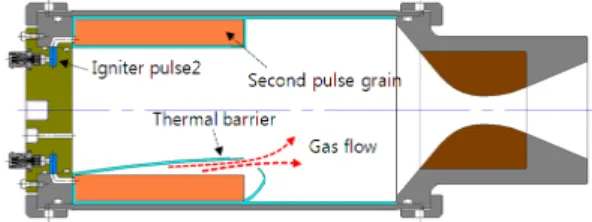
소형 격막형 이중펄스모타 형상은 Fig. 3과 같 이 1단 펄스 그레인과 2단 펄스 그레인 사이에 펄스분리장치를 설계하였고, 점화기도 각각 다른
Item 1st stage
propellant
2nd stage propellant
Sm(Bar) 11.6 10.0
EM(%) 47.65 42.33
Er(%) 51.46 44.56
D(g/cc) 1.796 1.719
Hardness
(shoreA) 64.0 64.0
Table 1. HTPB/AP propellant mechanical properties.
* Shore A(hardness testing machine) widely used to test common rubber. It is available in ASTM D240, JIS R7215 and so on.
타입으로 적용하였다. 격막 두께는 2 mm를 기 준으로 형상을 설계하였고, 파열압력은 50~60 psig로 설정하였다. Fig. 4, 5와 같이 1단 펄스
Fig. 3 Design of dual pulse motor with thermal barrier type PSD.
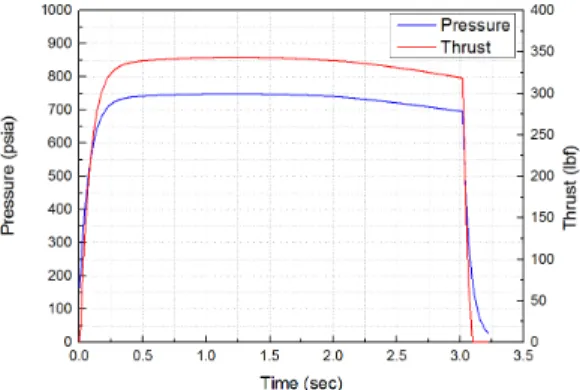
Fig. 4 T-T and P-T curves of 1st stage design.
Fig. 5 T-T and P-T curves of 2nd stage design.
Fig. 6 Fabricating process of dual pulse motor.
Fig. 7 Ground static test.
그레인은 연소시 평균압력이 757 psi, 총역적은 956 lbf-sec이고 2단 펄스 그레인은 974 psi, 1,017 lbf-sec로 각각 설계하였고, 모타 크기는 전 체길이가 484 mm, 직경이 162 mm인 소형 이중 펄스모타를 적용하였다. 내열재 및 격막의 제작 은 여러개의 분할치구를 이용하여 생성하였고, Fig. 6에서와 같이 1, 2단 추진제를 충전 및 조 립하여 소형 이중펄스모타를 완성하였다.
2.2 연소시험
2단 펄스모타 연소시 격막의 파열특성을 분석 하기 위하여 Fig. 8과 같이 1단 펄스 그레인을 배제하고 2단 펄스 그레인만을 연소시켜 지상 연소시험을 수행하였다. 그림에서 볼 수 있듯이 점화제가 연소되면 2단 펄스모타 내부에 압력이 형성되며 이로 인하여 격막이 파열되어 연소가 스가 노즐을 향해 빠져나가는 구조이다. 이 시험 에서는 2단 점화장치의 점화특성을 분석하기 위 하여 순간적으로 큰 압력을 형성시키는 보통의 점화제(B/KNO3 파우더, 4 g)와 이에 비교하여 상대적으로 서서히 압력을 생성시키는 점화제 (HTPB/AP계 추진제, 4 g)를 적용하였다. 또한
Fig. 8 Static ground test of 2nd pulse motor.
Fig. 9 Static ground test of 1st pulse motor.
Fig. 9와 같이, 1단 펄스모타는 추진제를 충전하 고, 2단 펄스모타는 inert그레인을 충전한후 1단 펄스모타 연소시험을 실시하였다. 이때 1단 펄스 모타 연소시 격막 내열소재의 열적특성을 분석 하기 위하여 격막 내부에 온도센서를 부착하여 내열소재의 온도변화를 측정하였다. Fig. 7과 같 이 각 연소시험에 대하여 추력/압력은 1채널, 온 도센서는 대칭으로 4채널을 측정하였다.
3. 시험 결과
2단 펄스모타 첫 번째 시험의 경우 Fig. 10, 11 의 결과물과 같이 압력선도는 초기에 2,500 psi 까지 상승하는 결과를 가져왔고 격막의 내열소 재는 찢어져 분리되었다. 이는 초기 점화시 격막 내열소재가 연소관으로부터 분리되어 노즐목을 막아 발생한 원인으로 판단되었다. 분석결과 점 화 후 0.35초경에 연소관이 파손된 것으로 나타 났다. 이러한 원인은 격막 내열소재의 두께보강 과 점화제 변경으로 해결할 수 있었으며 Fig.
12, 13과 같은 압력선도와 일정한 압력에서 균일 하게 격막이 분리되는 결과를 얻을 수 있었다.
B/KNO3 파우더를 점화제로 사용했을 경우 2단 펄스모타 내부에 압력이 순간적으로 올라가 격막
Fig. 10 P-T curve of 1st test for 2nd pulse motor.
Fig. 11 Result of case and thermal barrier after 1st test for 2nd pulse motor.
Fig. 12 P-T curve of 2nd/3rd test for 2nd pulse motor.
내열소재가 분리되는 현상이 나타났으나
HTPB/AP계 점화제의 경우는 2단 펄스모타의 내부 압력을 서서히 올려 이러한 현상을 완화할 수 있었다. 또한 격막 내열소재의 두께를 2 mm 에서 4 mm로 증가시켜 형상을 변경하였다.
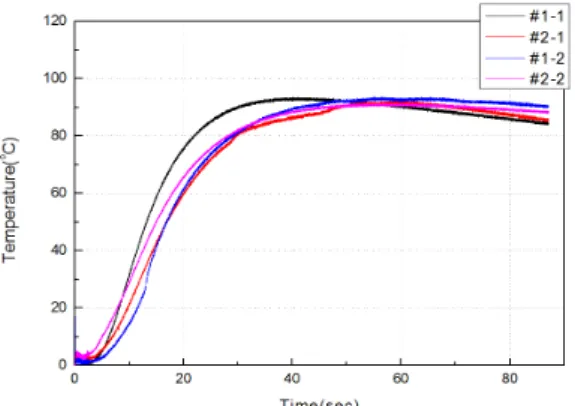
1단 펄스모타 시험결과 Fig. 14의 압력선도를 얻을 수 있었으며 Fig. 15와 같이 격막 내부의 온도는 연소시간 동안에는 온도상승이 없으나
Fig. 13 Result of thermal barrier after 2nd/3rd test for 2nd pulse motor.
Fig. 14 P-T curve of 1st test for 1st pulse motor.
Fig. 15 Temperature sensor value of 3rd test for 1st pulse motor.
60초 후에 100℃ 이내의 값을 나타내는 것으로 분석되었다. 이는 보통의 추진제 발화온도 (240~250℃)에 못미치는 온도로서 본 이중펄스모 타에서는 안전한 수준으로 사료된다. 본 연구에 서 산출된 온도 데이터를 바탕으로 열전달 계수 를 역산출하였으며 그 값은 50 W/m2K로 분석 되었다. 열전달 계수를 구하기 위하여 상용 해석 프로그램(Abaqus)을 사용하여 2차원 축대칭 모델
을 적용하였으며 격막소재의 밀도(1080 kg/m3), 비열(1888 J/kgK), 열전도도(0.34 W/mK)의 물성 치를 토대로 값을 산출하였다. 이 값은 향후 격막 의 내열소재 형상 및 두께 결정에 중요한 요소로 사용될 수 있을 것으로 판단된다.
4. 결 론
본 연구에서는 소형 이중펄스모타에 적용가능 한 격막형 펄스분리장치를 설계하였으며 이를 분 석하기 위하여 1, 2단 펄스 모타를 각각 지상연 소시험을 수행하였다. 많은 시험을 통해 본 이중 펄스모타에 맞는 격막형 펄스분리장치를 검증할 수 있었다. 검증 과정에서 점화장치의 점화특성 을 분석하기 위하여 특성이 다른 점화제를 적용 하였다. 또한 내열소재의 파열 특성 및 열적특성 을 분석하기 위하여 형상을 변경하여 시험을 실 시하였고, 격막 내부의 온도를 계측하여 열전달 계수를 산출하였다. 본 연구 성과 결과물은 향후 중형 및 대형 격막형 이중펄스모타를 설계할 때 기초 자료로 활용할 수 있을 것으로 판단된다.
References
1. Naumann, K.W. and Stadler, L.,
"Double-pulse Solid Rocket Technology- Applications and Technical Solutions," 46th AIAA/ASME/SAE/ASEE Joint Propulsion Conference & Exhibit, Nashville, TN, U.S.A., AIAA 2010-6754, Jul. 2010.
2. Cho, W.M., Kim, W.H., Chang, H.B., Oh, J.Y., Lee, B.E. and Lee, J.W., "Study on Pulse Separation Device of Bulkhead Type
for Solid Rocket Motors," 2009 KSPE Spring Conference, Jeonju, Korea, pp. 187-190, May 2009.
3. Kim, W.H., Lee, B.E., Koo, S.H. and Lee, W.B., "Study on the Technical Trend of a Pulse Separation Device with Thermal Barrier Type," 2010 KSPE Fall Conference, Jeju, Korea, pp. 225-228, Nov. 2010.
4. Public Release, "SM 3 - TSRM"
5. Dombrowski, D.C., Frey, T.J., Nevrincean, A.G. and Carr, C.E., Solid Propellant Dual Pulse Rocket Motor Loaded Case and Ignition System and Method of Manufacture US Patent No. 5600946A, Feb.
1997.
6. Rafael Release, "Pulse Rocket Motor/
Sustainer," 2000.
7. Aurelie, E., "Throttable Solid Propulsion,"
6th AAAF International Conference on Missile Defense Challenges in Europe 9-12 Feb. 2010.
8. Stadler, L.J., Hoffmann, S., Huber, J., Stingl, R. and Naumann, K.W., "The Flight Demonstration of the Double Pulse Motor Demonstrator MSA", 46th AIAA/ASME/SAE/
ASEE Joint Propulsion Conference & Exhibit, Nashville, TN, U.S.A., AIAA 2010-6756, Jul.
2010.
9. Kim, J.Y., Rho, T.H., Lee, W.B., Cho, W.M., Ham, H.C. and Yun, N.G., "The Case Thermal Design of Dual Pulse Rocket Motor with Bulkhead Pulse Separation Device," KIMST Conference, Jeju, Korea, Jun.
2011.
![Fig. 1 Performance comparison of the single thrust and dual thrust rocket motor[1].](https://thumb-ap.123doks.com/thumbv2/123dokinfo/5361176.401865/2.808.137.343.665.969/fig-performance-comparison-single-thrust-thrust-rocket-motor.webp)