I. 서 론
인간의 편익을 위한 무분별한 개발사업으로 인해 국 토전반에 걸친 경관 훼손은 날로 심화되고 있는 실정이 다. 이러한 현상은 비단 시가화지역 뿐만 아니라 비시가
Corresponding author : Kwon, Oh Sung Tel : +82-31-250-3252
E-mail : [email protected]
화지역에까지 영향을 미치고 있으며, 현재도 진행되고 있는 수많은 개발계획은 돌이킬 수 없는 수준으로 자연 경관을 훼손하고 있다. 이러한 자연경관의 훼손에 대한 관심은 심각한 사회적 문제로 인식되어져 왔으며 가치 있는 자연경관을 효과적으로 보전하기 위한 방안 마련에 국내ㆍ외적으로 많은 노력을 기울이고 있다.
유럽의 경우 2007년 “유럽경관협약(European Landscape Convention)”이 채택되어 범 유럽적 차원에서 경관의 보 호 및 관리에 많은 노력을 기울이고 있다. 국내의 경우
비시가화지역의 경관친화적 계획 유도를 위한 지구단위계획 관련 제도 개선방안 연구
김진효*ㆍ나정화**ㆍ권오성***
*한국산지보전협회 산지공간계획연구실⋅**경북대학교 조경학과⋅***경기연구원 생태환경연구실
A Study on Improvement Measures Related to District Unit Planning to Induce Landscape-Friendly Planning in Non-Urban Areas
Kim, Jin Hyo*ㆍRa, Jung Hwa**ㆍKwon, Oh Sung***
*Division of Forestland Spatial Planning, Korea Forest Conservation Association
**Dept. of Landscape Architecture, Kyungpook National University
***Dept. of Ecology&Environment, Gyeonggi Research Institute
ABSTRACT : In this study, in order to induce landscape-friendly various development plans established at the district level, the contents of landscape plans appearing in domestic laws and systems and related previous studies are reviewed and comparative analysis is performed to advance the district-level landscape plan. The main focus was to explore the institutional methodology for this. The summary of the research results is as follows. First of all, as a result of analysis of the landscape plan content prescribed in the National Territory Planning Act and the enforcement decree of the same Act, the landscape plan content for natural elements and the landscape plan content for artifacts appeared mixed. Next, looking at the analysis results of the landscape plan contents in the Landscape Act, the Enforcement Decree of the same Act, and the landscape plan establishment guidelines, it is analyzed that the content mainly intended to improve the artificial landscape in terms of aesthetics, such as color, lighting, and buildings. Became. As a result of analysis of the landscape plan contents in the district unit plan establishment guidelines, it was found that the contents of the landscape plan for the skyline, night view, color, advertisements, and viewpoints were presented. As a result of the analysis of the landscape plan contents in the preceding study, the plan contents for ecological, recreational, and micro-visual aspects were revealed, and all three aspects aim to establish a landscape plan within the range of minimizing damage to nature. there was.
Appeared to be. The results of this study are considered to be able to induce more landscape and nature-friendly district unit plans being conducted at the district level.
Key words : District unit, Landscape planning, Non-urban area, Transdisciplinary approach 1)
2007년 경관법이 제정됨에 따라 각종개발사업 시 경관 관련 사항을 고려할 수 있는 법적수단이 마련되었다 볼 수 있으며 국토공간개발계획의 범위 중 특히, 지구단위 계획차원에도 경관 문제를 고려할 수 있도록 법⋅제도 적으로 뒷받침 하고 있다.
지구단위계획이란 지구단위계획구역의 토지이용을 합 리화하고 그 기능을 증진시키며 경관 및 미관을 개선하 고 양호한 환경을 확보함은 물론, 당해 구역을 체계적ㆍ 계획적으로 개발ㆍ관리하기 위하여 건축물 그 밖의 시 설의 용도ㆍ종류 및 규모 등에 대한 제한을 완화하거나 건폐율 또는 용적률을 완화하여 수립하는 계획이라 정의 하고 있다(District unit plan establishment guidelines, 2018).
이와 같이 지구단위계획은 도시 내 일정구역을 대상으로 개발과 보전의 적절한 합치점을 모색함으로써 도시환경을 보다 쾌적하게, 즉 인간과 자연이 공존할 수 있는 도시환 경을 조성하는데 그 의의가 있다 볼 수 있다(Kim, 2020).
이러한 제도적 측면 이외에도 지구단위차원에서의 경 관계획 관련 연구 역시 꾸준히 수행되어 왔다. 일례로, Kim(2012)은 지구단위개발계획 예정지를 대상으로 조망 점을 선정한 이후 정량적인 가치평가를 수행하고 이에 기초한 경관계획을 수립한 바 있다. 또한 Cho et al.(2013)의 경우 비오톱 지도를 활용하여 휴양적 측면에 서의 경관계획을 수립하였으며, Kim and Cho(2019)는 지 구단위계획요소별 중요도를 분석함으로써 계획의 우선순 위 설정 및 효율적인 운영을 위한 제도적 개선방안을 제 시한바 있다.
하지만 국토계획법이 제정됨에 따라 공간계획의 수립 범위가 도시가 아닌 비시가화지역으로 확장되었음에도 불구하고 단순히 공간적 범위의 확대일 뿐 내용적 측면 에 있어서는 여전히 인공물 중심에 대한 내용에 치중하 고 있는 실정이다. 그 결과 2007년 경관법이 제정되었음 에도 불구하고 자연경관 중심의 비시가화지역에 대한 효 과적인 계획수립에는 한계를 보이고 있으며(Lee and Yu, 2010) 비시가화지역은 여전히 경관관리 소외지역으로서 무분별한 개발계획으로 인해 심각한 경관훼손이 나타나 고 있다. 또한 지구단위경관계획과 관련된 다양한 연구 들의 경우 특정전문분야의 시각으로 구성되어 있으며, 개발계획 수립 시 직접적인 영향을 미치고 있는 법ㆍ제도 적 내용과는 상당한 거리감을 보이고 있는바 연구결과 의 활용 및 적용에는 많은 한계를 보이고 있는 실정이다.
따라서 본 연구에서는 시행을 전제로 한 상세한 물적 계획임과 동시에 법적구속력을 지닌 지구단위계획과 관 련된 법ㆍ제도 및 관련 선행연구 속에서 나타나고 있는 경관계획내용을 살펴보고 이를 바탕으로 법ㆍ제도적 개 선방안을 모색해보는데 주안점을 두었다. 이러한 본 연
구의 결과는 인공물에 대한 경관 질 개선에 주안점을 두 고 있는 현재의 비시가화지역에 대한 지구단위경관계획 을 자연친화적 및 경관친화적으로 유도하기 위한 기초자 료로써 중요한 역할을 수행할 수 있을 것으로 판단된다.
II. 이론적 고찰
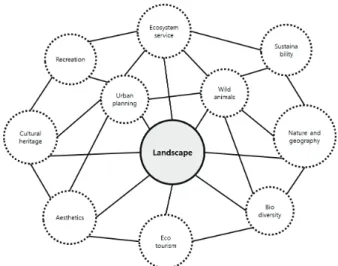
자연경관이 우점하고 있는 비시화지역은 대부분 생물, 무생물, 인공경관 등 다양한 요소들이 혼재되어 나타나 고 있는바 이러한 요소들을 종합적으로 고려하여(see Figure 1) 경관계획을 수립하고 경관을 효과적으로 보전 및 관리해나가는 것이 중요하다(Kwon, 2013; Cho, 2011;
Mann et al., 2018; Taylor and Hochuli, 2007). 가치중립적 복합체로서의 경관은 특히 자연환경이라는 토대 위에 인 간의 행위가 수반될 때 나타나는 다양한 변화를 인간이 지각하게 되며, 이때 지각하게 되는 물리적 환경전체를 파악하는 것으로 이해하고 있다. 따라서 경관이란 “생태 적 요소, 자연지리적 요소, 미시각 요소들이 복잡하게 얽 혀있는 가운데 유사한 특징을 보이며 주변과 구별되는 일련의 공간”으로 정의해 볼 수 있다.
Figure 1. Elements of landscape planning in non-urban areas
이와 같이 경관의 다의적 기능을 고려할 때 국토공간 계획을 환경 및 경관친화적으로 유도해 나갈 수 있다.
Dramstad & Fjellstad(2011), Enengel et al.(2012) 등에 따 르면, 인간의 다양한 개발행위들로부터 자연환경 및 경 관을 보전하기 위해서는 특히 생태적, 휴양적 및 미시각 적 측면에서의 부정적인 영향을 파악하고 이를 사전에 계획적 차원에서 최소화하는 것이 중요하다 언급하고 있
다. 특히, 비시가화지역의 경우 생태적, 미시각적으로 가 치 높은 자연경관 유형들이 우점하고 있는바 이들을 효 과적으로 보전하거나 또는 개발로 인한 영향을 최소화시 키기 위한 법ㆍ제도적 뒷받침 및 경관친화적 계획 수립 은 매우 중요하다 볼 수 있다. 상기의 내용을 종합적으 로 고려해 볼 때, 비시화지역에 대한 경관친화적 계획이 란 “경관을 생태적 측면, 휴양적 측면, 미시각적 측면에 서 바라보고, 이를 실제 지구단위계획 속에 반영하여 지 구단위계획을 보다 경관친화적으로 유도해 나가는 공간 계획도구”로 정의해볼 수 있다.
III. 연구범위 및 방법
본 연구에서는 국토공간의 다양한 영역들 가운데 비 시가화 지역으로 공간적 범위를 제한하여 연구를 수행하 였으며, 내용적 범위의 경우 경관계획 관련된 모든 법⋅
제도들 중 지구단위경관계획과 직접적으로 연관성이 높 은 법 및 관련 선행연구들을 중점적으로 검토하였다. 연 구의 수행절차는 크게 4단계로 구분되며 절차 및 방법을 살펴보면 다음과 같다. (see Figure 2).
우선 첫째, 국토계획법(2020) 및 동법시행령(2021)에서 규정하고 있는 경관계획은 내용이 무엇인지를 살펴보았 다. 둘째, 경관법(2019) 및 동법시행령(2020)에서 규정하 고 있는 경관계획은 내용이 무엇인지를 살펴보았다. 셋 째, 지구단위계획 수립지침 속에서 나타나고 있는 경관 계획 내용은 무엇인지를 살펴보았다. 마지막 넷째 경관 계획 관련 선행연구 속에 명시되어 있는 경관계획 내용 을 살펴보았다. 특히, 선행연구는 경관의 다의적 기능에 입 각하여 크게 3가지 측면 즉, 생태적, 휴양적, 미시각적 측 면에 대한 경관계획 내용을 제시하고 있는 연구들을 중점 적으로 검토하였다. 우선 생태적 측면에서는 Cho(2011) 와 Ra et al.(2013)의 선행연구를 중점적으로 검토하였으
며, 휴양적 측면에서는 Cho(2013)의 선행연구를 살펴보 았다. 그리고 마지막으로 미시각적 측면에서는 Kwon(2013) 의 연구에서 나타나고 있는 경관계획 내용이 무엇인지를 살펴보았다. 마지막으로는 법ㆍ제도적 측면 및 선행연구 에서 나타나고 있는 경관계획 내용을 종합적으로 고려한 이후 지구단위계획을 경관친화적으로 유도하기 위한 정 책적 개선방안을 모색해 보았다.
IV. 결과 및 고찰
1. 국토계획법 및 동법시행령에서 규정하고 있는 경 관계획 내용
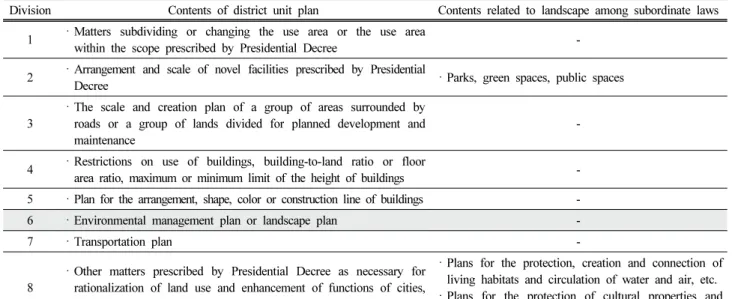
먼저 국토계획법 제52조에 의하면, 지구단위 계획 속 에 포함되어야 할 내용을 총 8개 항목으로 규정하고 있 으며(see Table 1), 경관계획을 포함하도록 명시되어 있는 바 지구단위경관계획을 수립할 수 있는 법적 뒷받침은 마련되어 있다고 볼 수 있다. 또한 동법 제3조 제2호 및 제5호에 의하면 국토는 자연환경의 보전과 자원의 효율 적 활용을 통하여 환경적으로 건전하고 지속가능한 발전 을 이루기 위하여 자연환경 및 경관의 보전과 훼손된 자 연환경 및 경관의 개선 및 복원과 지역의 정체성 및 문 화유산이 보전될 수 있도록 이용 및 관리되어야 한다고 명시하고 있다.
다음으로 국토계획법 시행령에서 제시하고 있는 경관 계획 관련 주요 내용을 살펴보면 다음과 같다. 도시ㆍ군 기본계획의 내용에는 환경의 보전 및 관리에 관한 사항, 공원ㆍ녹지에 관한 사항, 경관에 관한 사항, 기후변화대 응 및 에너지절약에 관한 사항에 대한 정책방향이 포함 되어야 한다고 명시하고 있다(제19조 제1항 제5호, 제7 호, 제8호, 제8의2호). 또한 도시ㆍ군 기본계획의 수립기 준에는 녹지축, 생태계, 산림, 경관 등 양호한 자연환경 과 우량농지, 보전목적의 용도지역 등을 충분히 고려하 여 수립하도록 하고, 또한 경관에 관한 사항에 대하여는 필요한 경우에는 도시ㆍ군 기본계획 도서의 별책으로 작성할 수 있도록 하여야 한다고 명시되어 있다(시행령 제16조 제7호 및 제8호).
또한 지구단위계획구역의 지정 및 지구단위계획은 도 시⋅군 관리계획으로 결정하며, 특히 지구단위계획의 내 용에는 대통령령으로 정하는 기반시설의 배치와 규모, 건축물의 배치⋅형태⋅색채 또는 건축선에 관한 계획, 환경관리계획 또는 경관계획을 포함할 수 있도록 규정하 고 있다(제52조 제1항 제2호, 제5호, 제6호). 뿐만 아니라 에너지 및 자원의 절약과 재활용에 관한 계획, 생물서식 Figure 2. Research flow
공간의 보호⋅조성⋅연결 및 물과 공기의 순환 등에 관 한 계획 등을 포함할 수 있도록 명시하고 있다(시행령 제45조 제5호 및 제6호).
2. 경관법 및 동법시행령에서 규정하고 있는 경관계 획 내용
경관법 제9조에 따르면, 경관계획 속에 포함되어야 할 내용을 아래와 같이 총 11개 항목으로 규정하고 있다
(see Table 2). 다음으로 경관법 시행령에 명시되어 있는 경관계획 관련 주요 내용을 살펴보면 다음과 같다. 경관 계획의 수립기준에는 자연경관, 역사⋅문화경관, 농촌⋅
산촌⋅어촌 경관 및 시가지 경관에 대한 장기적 방향을 제시하고 삶의 질을 향상시키기 위한 내용이 반영되도록 할 것, 지역적 특성과 요구를 충분히 반영하여 경관계획 의 독창성과 다양성이 확보되도록 할 것, 경관계획이 실 질적으로 추진될 수 있도록 상세하고 구체적으로 수립되 도록 할 것 등과 같은 사항을 고려하도록 규정하고 있다 Division Contents of district unit plan Contents related to landscape among subordinate laws
1 ㆍMatters sub dividing or changing the use area or the use area
within the scope prescribed by Presidential Decree -
2 ㆍArrangement and scale of novel facilities prescribed by Presidential
Decree ㆍParks, green spaces, public spaces
3 ㆍThe scale and creation plan of a group of areas surrounded by roads or a group of lands divided for planned development and
maintenance -
4 ㆍRestrictions on use of buildings, building-to-land ratio or floor
area ratio, maximum or minimum limit of the height of buildings - 5 ㆍPlan for the arrangement, shape, color or construction line of buildings -
6 ㆍEnvironmental management plan or landscape plan -
7 ㆍTransportation plan -
8 ㆍOther matters prescribed by Presidential Decree as necessary for rationalization of land use and enhancement of functions of cities, agriculture, mountains, and fishing villages.
ㆍPlans for the protection, creation and connection of living habitats and circulation of water and air, etc.
ㆍPlans for the protection of cultural properties and historical and cultural environment
Table 1. Contents to be included in the district unit plan
Division Article 9(Details of landscape plans)
Landscape plan contents
ㆍMatters concerning the basic directions and objectives of
the landscape plan ㆍMatters concerning the management and operation of
landscape agreements under Article 19
⋅Matters concerning the survey and evaluation of
landscape resources ㆍMatters concerning an administration system of the
management of landscapes and an action plan
ㆍMatters concerning the establishment of landscape structure
ㆍMatters concerning the management of specific landscape elements, such as specific types of landscapes including natural landscapes, cityscapes, agricultural, fishing and mountainous village landscapes, buildings, streets, parks and green spaces
ㆍMatters concerning the management of an area requiring the focused conservation, management and creation of landscapes
ㆍMatters concerning the raising of financial resources for the implementation of the landscape plan and the gradual promotion of the landscape plan
ㆍMatters concerning the management and operation of landscape districts under Article 37 (1) 1 of the National Land Planning and Utilization Act
ㆍOther matters necessary for the conservation, management and creation of landscapes, which are prescribed by Municipal Ordinance of the relevant local government ㆍMatters concerning the promotion of landscape projects
under Article 16
Table 2. Contents of landscape plan in the landscape act
(시행령 제3조 제1항).
그러나 상기의 경관계획과 관련한 내용들은 실제 경 관계획 수립 시 적용하기에는 단지 정책적 방향제시 수 준으로 매우 포괄적으로 제시되어 있었던바, 이러한 포 괄적인 내용을 보다 구체화 하고 있는 경관계획 수립지 침 속의 경관계획 관련 내용을 살펴보았다. 경관계획 수 립지침에서 제시하고 있는 경관계획 내용은 크게 건축물 경관계획, 오픈스페이스 경관계획, 옥외광고물 경관계획, 공공시설물 경관계획, 색채 경관계획, 야간 경관계획, 가 로 경관계획, 경관축 계획 등이다. 여기서 경관축 계획 시 지역을 대표하는 뛰어난 자연경관, 랜드마크, 역사문 화자원 등에 대한 조망경관축의 경우 주요 접근로와 조 망점 및 가로의 규모 등을 고려하도록 하고 있다. 또한 우수한 산림, 공원, 녹지 등을 중심으로 한 녹지 경관축 에서는 연속성을 확보하거나 조망을 확보할 수 있도록 해야 한다고 규정하고 있다. 오픈스페이스 경관계획 수 립 시에는 원경, 중경, 근경을 고려하여야 하며, 중경에 서 보이는 가로의 연속성 형성을 위한 상징가로, 보행자 전용도로 등을 고려하도록 하고 있다.
3. 지구단위계획 수립지침에서 규정하고 있는 경관 계획 내용
국토계획법 및 동법시행령, 그리고 경관법 및 동법시
행령에서 나타나고 있는 경관계획의 내용을 살펴보았지 만 경관계획과 관련한 구체적인 법적내용을 명시하고 있 지 않아 지구단위계획 시행을 위한 가이드라인 역할을 수행하는 지구단위계획 수립지침에서 규정하고 있는 경 관계획 관련 내용들을 추가적으로 살펴보았다. 지구단위 계획 수립지침 제16절(경관)에서 경관 상세계획에 관한 내용을 기술하고 있으며, 주요 내용은 스카이라인, 야경, 색채, 광고물, 가로, 안내물, 랜드마크, 조망점, 유적지 보 전지역, 건축선, 건물의 높이ㆍ길이, 창문의 위치ㆍ크기, 지붕형상, 녹지조성 계획 등이다.
이와 같은 경관상세계획 내용을 좀 더 구체적으로 살 펴보면, 수림대ㆍ구릉지ㆍ하천변ㆍ청정호수 등 자연경관 이 양호한 지역, 주요문화재나 한옥 등 전통적 건조물, 시대적 건축특성이 반영되어 있는 건물들이 밀집해 있어 보전이 요구되는 역사환경지역, 깨끗한 공기, 맑은 하늘, 주위의 산세, 양호한 수림대, 구릉지, 하천변, 청정호수 등 우수한 기후 및 지리적 조건을 가진 시ㆍ군에 개발 압력이 존재하고 있어 양호한 자연환경 및 경관의 보전 이 필요한 지역. 독특한 경관형성이 요구되는 시ㆍ군의 상징적 도로, 녹지대, 문화재나 한옥 등 전통적 건조물, 시대적 건축특성이 반영되어 있는 건물군 등의 주변 지 역, 스카이라인, 야경, 조망점, 건축선, 지붕형상 등에 관 한 내용을 경관계획 속에 포함하도록 명시하고 있다.
Division Landscape plan contents suggested in this study
Ecological aspect
ㆍNature conservation area ⋅Reforestation with specific tree species ⋅Improvement of the
forest edge ⋅Water planting, management and planting
ㆍLandscape protected area ⋅Restrictions on certain types of use
⋅Creation of a natural habitat in the site that is used agriculturally
⋅Installation, management and planting of small-scale forests surrounded by cultivated land
⋅Natural monument
protected area ㆍProhibition of 1st planting ㆍImprovement and management of multi-faceted sites ⋅Installation of protective materials
⋅Small residual landscape elements with protective value
⋅Improvement and management of non- cultivated border forests
ㆍInstallation, management and planting of tall bush-shaped belt-shaped forests
⋅Installation of wildlife corridor
⋅Natural development
of fallow land ⋅Renaturalization of the reservoir
⋅Management and planting of low-tall bush-shaped
belt-shaped forests ㆍBuffer space installation
⋅Conversion and use of specific forms of fallow land
⋅Small water space
biotope installation ⋅Installation, management and
planting of linear street trees ㆍForest creation
⋅Artificial management of fallow land
⋅Improvement of the belt forest at the edge of the cropland
⋅Installation, management and planting of
expeditionary trees ㆍLandscape axis creation Table 3. Contents of landscape planning from the ecological aspect
4. 관련 선행연구 속에서의 경관계획 내용
우선 선행연구에서 제시된 생태적 측면에서의 경관계 획 관련 내용을 종합해보면 자연보호지역, 천연기념물 보호지역, 휴경지의 자연적인 발전 등 총 28개로 매우 상세한 수준에서 경관 질 향상을 위한 계획내용을 제시 하고 있는 것으로 나타났다(see Table 3).
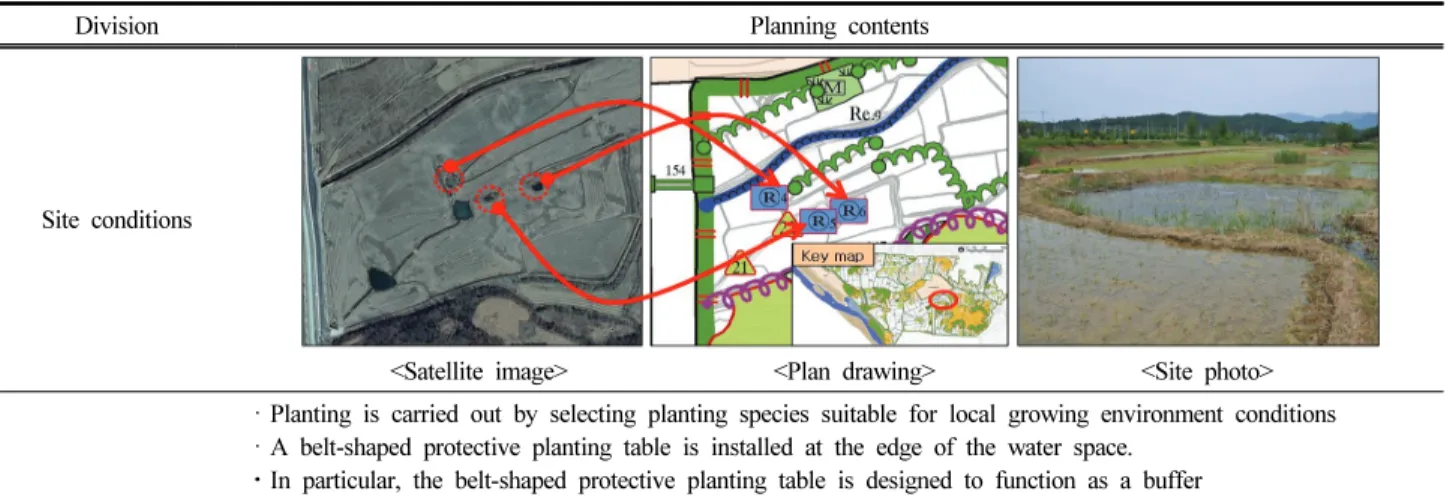
다양한 경관계획 지표들 중 “소규모 수공간 비오톱 설치”에 내한 내용을 살펴보면 다음과 같다(see Table 4).
소규모 수공간 비오톱의 설치는 비록 규모가 작지만 다 양한 크기의 수공간들이 부지 곳곳에 위치할 경우 생물 종들의 서식처, 경관다양성, 미세기후 조절 등의 역할을 기대할 수 있다. 이러한 점을 고려해 볼 때, 소규모 수공 간 비오톱의 추가적인 설치 및 개선은 생태적, 미시각적 측면에서 중요도가 매우 높다. 또한 계획지표 “경관보호 지역”은 생태적 측면에서 고유성, 심미적인 가치를 가진 지역, 공간 내 다양한 자연요소 또는 사물이 조화를 이 루고 있어 경관을 체계적으로 관리 및 보호할 중요성이 높은 지역을 의미한다. 그리고 생물종다양성이 풍부하여 서식공간으로서의 발전가능성이 높은 공간도 해당된다.
계획지표 “수림조성”은 크게 새로운 수림 조성, 기존 수림면적의 확충 등 2가지로 제시 가능하다. 우선 새로 운 수림의 조성은 일반적으로 획일화된 경작지 중심의 공간을 대상으로 수림 조성을 통해 경관다양성 향상 및 징검다리 녹지로서의 기능강화에 목적이 있다. 그리고
기존 수림면적의 확충은 산림과 접한 지역을 대상으로 연결성을 향상시킴으로서 단절된 녹지축을 복원하는데 조성의 목적이 있다. 이와 같이 생태적 측면에서의 경관 계획 내용 대부분은 단절된 서식지 연결 및 훼손된 생태 계 복원 등을 주요 계획내용으로 제시하고 있는 것으로 나타났다. 따라서 개발계획 수립 시 생태적으로 가치 높 은 경관자원들을 효과적으로 보전할 수 있을 것으로 판 단된다.
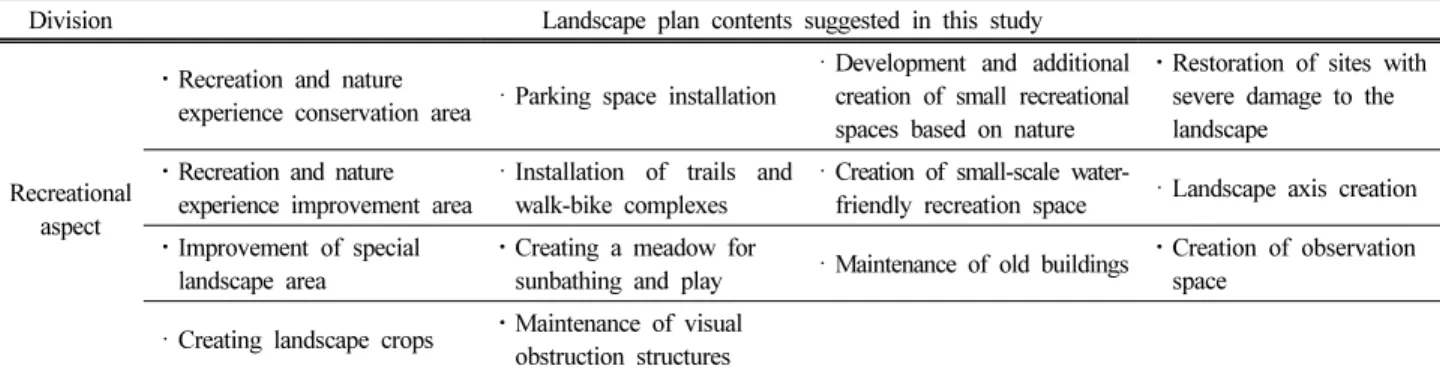
다음으로 Cho(2013)의 선행연구에서 나타난 휴양적 측 면에서의 경관계획 관련 내용을 종합해보면 휴양 및 자 연체험 보전지역, 전망공간 조성, 주차공간 설치, 산책로 및 산책-자전거 복합로 설치, 일광욕 및 놀이용 초원 조 성 등 총 14개의 계획내용을 제시하고 있는 것으로 나타 났다(see Table 5).
계획지표 “휴양 및 자연체험 보전지역”은 휴양 및 자 연체험을 위해 가치가 높은 지역, 주거지와 인접해 있으 면서 비교적 큰 규모로 조성상태가 양호한 지역, 휴양적 이용이 실제로 많이 관찰되고 있는 기존의 휴양핵심지역 을 중심으로 수립 가능하다. 주요 개선내용은 부지의 물 리적, 생태적 공간조성상태 및 특성에 따라 자연생태 체 험형, 친수 휴양형, 정적 휴양형, 동적 활동형 등으로 조 성 가능하다. 다음으로 “자연을 전제로 한 소규모 휴양 공간의 개발 및 추가조성”은 자연에 대한 훼손을 최소화 하는 범위 내에서 자연체험의 기회 향상을 위해 소규모 로 조성되는 공간들이다. 그리고 이들은 기존의 가치 높
Division Planning contents
Site conditions
<Satellite image> <Plan drawing> <Site photo>
Major improvements
ㆍPlanting is carried out by selecting planting species suitable for local growing environment conditions ㆍA belt-shaped protective planting table is installed at the edge of the water space.
⋅In particular, the belt-shaped protective planting table is designed to function as a buffer against the inflow of vegetation and excessive nutrient accumulation from the surroundings, and gradually multi-layered compact planting from the open substrate surface.
ㆍReorganization such as bed maintenance and pruning is performed every 5 years ㆍIf there are too many fish, control them in an appropriate way
⋅Prohibition of damaging the function of the water space biotope due to hydrophilic activities such as fishing, fishing, and bathing.
Source : Cho(2011), rewrite after modification
Table 4. Main plan contents of small water space biotope
은 핵심 휴양지역을 보완하는 의미이며, 이들 공간과 연 계하여 조성할 경우 휴양 및 자연체험 서비스 질 향상을 기대해볼 수 있다.
계획지표 “소규모 친수휴양 공간의 조성”은 하천, 개 천, 유수지 주변의 소규모 공간을 중심으로 이미 많은 친수휴양활동이 관찰되고 있거나, 또는 이용 가능성이 높을 것으로 예상되는 지역에 설치함으로써 지역민들에 게 자연을 체험할 수 있는 기회를 확대 제공해 주는데 의의가 있다(see Table 6).
또한 모든 도입공간의 경우 시설별 이용자수 추정을 통해 생태적 수용능력을 초과하지 않는 범위 내에서 규 모를 결정하며, 공간별 성격에 부합하는 동선, 식재, 시 설물배치계획을 수립하여야 한다고 명시하고 있다. 이와
같이 휴양적 측면에서의 경관계획 내용은 앞선 생태적 측면에서의 계획 내용과 비교 시 인간의 직접적인 이용 편의성 향상에 주안점을 두고 있음을 알 수 있다. 하지 만, 이와 동시에 자연을 훼손하지 않고 동화될 수 있는 범위 내에서 경관계획을 수립하여야 한다고 명시하고 있 는바 휴양적 측면에 무게중심을 두고 있지만 생태적 측 면에 대한 고려도 포함되어 있음을 유추할 수 있다.
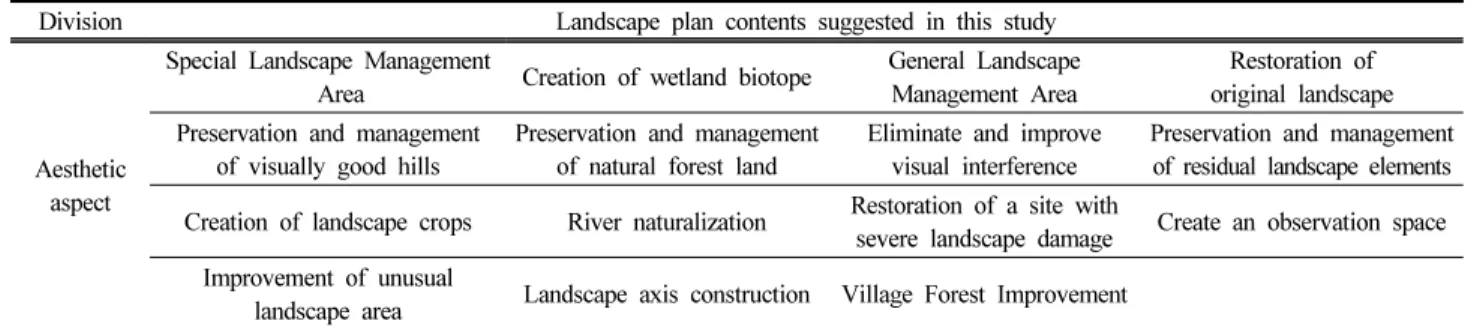
마지막으로 선행연구에서 제시된 미시각적 측면에서 의 경관계획 관련 내용을 종합해보면 특별경관관리지역, 시각적 방해요소의 제거 및 개선, 경관작물 재배지 조성, 원풍경 복원, 유수지의 재자연화 등 총 15개의 계획내용 을 제시하고 있는 것으로 분석되었다(see Table 7).
Division Landscape plan contents suggested in this study
Recreational aspect
⋅Recreation and nature
experience conservation area ㆍParking space installation
ㆍDevelopment and additional creation of small recreational spaces based on nature
⋅Restoration of sites with severe damage to the landscape
⋅Recreation and nature
experience improvement area ㆍInstallation of trails and
walk-bike complexes ㆍCreation of small-scale water-
friendly recreation space ㆍLandscape axis creation
⋅Improvement of special
landscape area ⋅Creating a meadow for
sunbathing and play ㆍMaintenance of old buildings ⋅Creation of observation space ㆍCreating landscape crops ⋅Maintenance of visual
obstruction structures Table 5. Contents of landscape planning from the recreational aspect
Division Planning contents
Site conditions
<Satellite image> <Plan drawing> <Site photo>
Major improvements
ㆍCreate a small recreational space with ecological support by prioritizing conservation content
⋅Review the suitability according to the physical and ecological space composition status and characteristics of the site to define the types and characteristics of recreational activities, and establish a creation plan
⋅Determination of the size and number within the range of not exceeding ecological capacity through estimation of the number of users by major introduced spaces and facilities
⋅space arrangement plan, a movement line plan, a planting plan, and a facility arrangement plan, which are considered as the core partial plans of the recreation plan, are established and implemented in accordance with the characteristics of each recreation area
Source : Cho(2013), rewrite after modification
Table 6. Main plan contents of Creation of Development and additional creation of small recreational spaces based on nature
계획지표 “시각적 방해요소의 제거 및 개선”은 이용 되지 않고 있는 건물, 폐도로, 불필요한 담장 또는 전신 주 등을 제거 및 정비하는데 주안점을 두고 있는 계획 내용이다. 이러한 요소들은 혐오시설 및 미시각적 통로 를 차단하는 요소로 작용하여 전체적인 경관 질을 저하 시키는 주요요인으로 작용하며 경관 질 개선을 위한 주 요 개선내용을 살펴보면 다음과 같다(see Table 8).
뿐만 아니라 마을숲 개선, 잔여경관요소의 보전 및 관 리, 경관작물 재배지 조성 등과 같이 자연공간을 대상으 로 수립되는 경관계획 내용 역시 앞선 휴양적 측면에서 의 계획내용과 유사하게 자연에 대한 훼손을 최소화하도 록 유도하고 있는 것으로 나타나 농촌 지역을 대상으로 수립되는 지구단위 차원에서의 개발계획 시 생태적 측면 과 미시각적 측면 모두를 충족시킬 수 있는 계획 수립이 가능할 것으로 사료된다.
5. 종합고찰
지금까지는 법ㆍ제도 속에서 나타나고 있는 경관계획
의 내용과 지구단위경관계획 관련 선행연구들에서 나타 난 경관계획 내용은 무엇인지를 살펴보았다. 이를 바탕 으로 선행연구에서 제시된 경관계획 내용과 경관계획의 법ㆍ제도적 내용을 비교분석해 보았으며, 크게 아래와 같은 3가지 측면에서 지구단위계획을 경관친화적으로 유 도하기 위한 개선방안을 모색해 보았다.
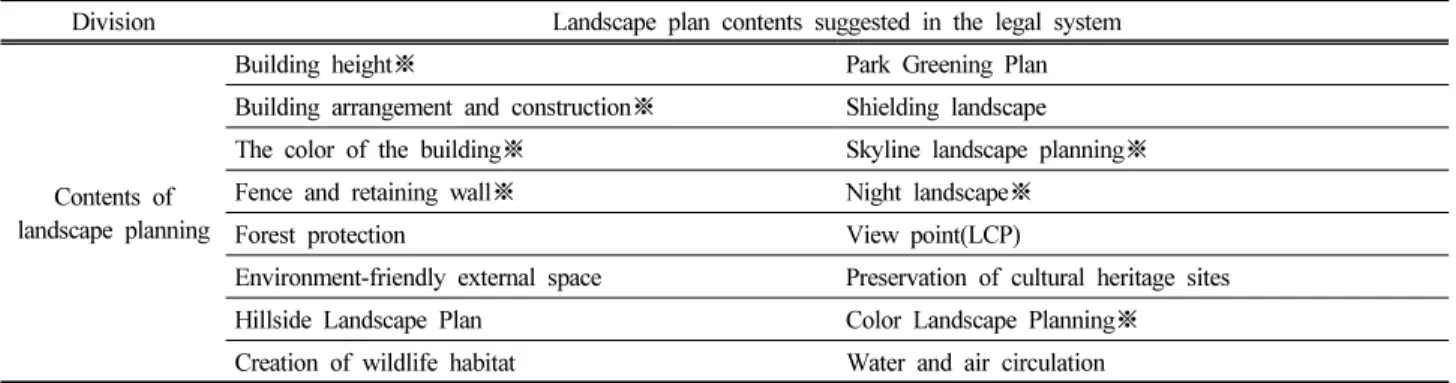
첫째, 경관계획의 내용적 측면이다. 선행연구들에서 제시된 경관계획 내용을 종합한 즉, 통섭적 측면에서의 경관계획 내용은 경관의 다기능적 측면, 즉 종과 비오톱 보전적 측면, 휴양 및 자연체험적 측면, 미시각적 측면에 서 계획항목을 설정하고 있는 것으로 나타났다. 반면, 경 관계획의 법적내용에서는 특히, 건축물 및 인공구조물, 색채 등과 같은 인공경관을 미시각적 측면에서 개선하기 위한 계획항목 중심으로 구성되어 있음을 확인할 수 있 다(see Table 9).
이러한 사실은 경관계획의 법적 내용은 물론 실제 지 구단위계획 시행지침 속에서도 매우 유사하게 나타나고 있는 것으로 나타났다. 따라서 인공경관 중심의 특정전 문분야 시각으로 구성된 경관계획의 법적내용으로는 특
Division Landscape plan contents suggested in this study
Aesthetic aspect
Special Landscape Management
Area Creation of wetland biotope General Landscape
Management Area Restoration of original landscape Preservation and management
of visually good hills Preservation and management
of natural forest land Eliminate and improve
visual interference Preservation and management of residual landscape elements Creation of landscape crops River naturalization Restoration of a site with
severe landscape damage Create an observation space Improvement of unusual
landscape area Landscape axis construction Village Forest Improvement Table 7. Contents of landscape planning from the aesthetic aspect
Division Planning contents
Site conditions
<Satellite image> <Plan drawing> <Site photo>
Major improvements
ㆍDeteriorated fences are removed and the site is built in a landscape-friendly way.
ㆍRemoved concrete, brick, plywood, etc. are transported
ㆍPlanting tree species that meet local growing environment conditions and creating a belt-shaped forest area ㆍPlant planting species that can shield and soundproof the factory in the fence as much as possible Source : Kwon(2013), rewrite after modification
Table 8. Main plan contents of removal and improvement of visual disturbances
히, 자연경관이 우점하고 있는 비시가화지역을 대상으로 수립되는 택지개발사업, 주택재개발사업 등과 같은 각종 수많은 지구단위 개발사업을 자연환경 및 경관친화적으 로 유도함에 있어 기여의 폭이 매우 제한될 우려가 있을 것으로 사료된다.
둘째, 경관계획의 접근 방법적 측면이다. 상기와 같이 경관계획의 법적내용 속에서 나타나고 있는 인공물 중심 의 경관계획 내용과는 달리 오늘날 경관계획의 접근방법 은 경관의 다기능적 측면을 상호보완적 관계에서 해결하 려고 하는 분야초월적 접근방법1)을 강조하고 있다(Norris et al., 2016; Taylor and Hochul, 2017). 그러나 경관계획 의 법적내용은 어느 한 특정 전문분야의 시각을 중심으 로 구성되어 있어 분야초월적 접근을 통한 경관계획 내 용과는 상당한 거리감을 느낄 수 있으며, 생태적, 휴양 적, 미시각적 측면 등 경관의 다기능적 측면을 종합적으 로 고려하기 위한 시도가 반드시 필요하다.
셋째, 경관계획의 기초자료(도면)적 측면이다. 지구단위 차원에서의 경관계획과 직접적으로 연동될 수 있는 기초 자료(도면)의 확보는 경관계획 시 매우 중요하다. 그러나 선행연구들과 비교 시 경관계획의 법적내용 속에는 경관 계획수립에 필요한 핵심인 기초조사 방법 및 기초도면의 작성과 관련된 내용에 대한 부분은 매우 미흡한 상태이다.
이러한 문제점에 대해 Kim(2011) 및 Im et al.(2007)은 국내의 각 지자체별로 수립되고 있는 경관계획의 기초조 사는 대부분 자연환경(지형ㆍ지세, 경사, 기후 등), 인문 사회환경(인구밀도, 인구구조, 토지이용 등), 관련법규 검 토 등을 중심으로 일반적이고 형식적으로 수행되고 있는 문제점을 지적하면서 특히, 경관계획에 직접적으로 활용 할 수 있는 체계적인 기초자료 조사 방법론의 개발이 필 요하다는 점을 강조한 바 있다. 또한 Joo and Shin(2015) 는 경관계획 수립을 위한 가치평가의 경우 현황조사 차 원으로 진행되고 있는바 객관성을 확보하기 어려우며 그
결과 평가결과와 경관계획의 연계가 어렵다는 한계점을 언급한 바 있다.
이러한 사실에 기초해 볼 때, 지구단위차원에서 수행 되는 개발계획을 경관친화적 또는 환경친화적으로 유도 하기 위해서는 다음과 같은 노력이 필요할 것으로 판단 된다. 우선 경관계획의 법⋅제도적 내용의 경우 특정 전 문분야의 시각에서 탈피하여 분야초월적 접근을 바탕으 로 경관의 생태적, 휴양적, 미시각적 측면을 함께 반영할 수 있는 방향으로 구체화 및 재구성할 필요가 있다. 또 한 이러한 경관계획의 내용을 실제로 추진할 수 있도록 해주는 기초도면의 작성 및 정량적인 가치평가에 대한 법적뒷받침이 보다 강화될 필요가 있다. 기초자료로는 전국적으로 작성 중에 있는 도시생태현황도를 활용하거 나 또는 경관계획을 위한 유형분류도 및 가치평가도면을 구축하고 이러한 내용을 법⋅제도 내 보다 구체화 시키
Division Landscape plan contents suggested in the legal system
Contents of landscape planning
Building height※ Park Greening Plan
Building arrangement and construction※ Shielding landscape
The color of the building※ Skyline landscape planning※
Fence and retaining wall※ Night landscape※
Forest protection View point(LCP)
Environment-friendly external space Preservation of cultural heritage sites
Hillside Landscape Plan Color Landscape Planning※
Creation of wildlife habitat Water and air circulation
※ Landscape plan contents that are highly related to artifacts in the legal system Table 9. Contents of landscape planning from the legal system
Figure 3. Considerations for landscape-friendly planning at the district unit level
는 것이 바람직할 것으로 사료된다(see Figure 3).
이외에도 경관계획과 관련된 용어의 통일에 대한 논 의도 고려되어야 할 것으로 판단된다. 지구단위계획을 포함한 국토공간계획을 자연환경 및 경관친화적으로 유 도함에 있어서 핵심적인 역할을 수행할 수 있는 공간 계 획적 수단은 현재 자연환경보전계획, 경관(생태)계획, 환 경계획, 환경보전계획, 환경생태계획, 공간환경계획, 환경 관리계획 등과 같이 매우 다양하게 나타나고 있다. 따라 서, 국토계획과 환경계획과의 연동을 통한 친환경적 개 발을 위한 수단으로서 경관계획이 효과적으로 기능하기 위해서는 관련 용어의 통일을 통해 상징성을 보다 강화 하는 것이 바람직할 것으로 사료된다.
V. 결 론
본 연구에서는 지구단위계획과 관련된 국내 법ㆍ제도 및 관련 선행연구들에서 나타나고 있는 경관계획 내용을 살펴보고 상호 비교분석을 수행함으로써 지구단위경관계 획을 경관친화적으로 유도하기 위한 제도적 방법론을 모 색해 보는데 주안점을 두었다. 연구결과를 요약하면 다 음과 같다.
우선 국토계획법 및 동법시행령에서 규정하고 있는 경관계획 내용에 대한 분석결과 자연요소에 대한 경관계 획내용과 인공물에 대한 경관계획 내용이 혼재하여 나타 나고 있었다. 다음으로 경관법 및 동법시행령, 그리고 경 관계획 수립지침 속에서의 경관계획 내용에 대한 분석 결과를 살펴보면, 색채, 조명, 건축물 등과 같이 주로 인 공경관을 미적 측면에서 개선하기 위한 내용이 주류를 이루고 있는 것으로 분석되었다. 지구단위계획 수립지침 속에서의 경관계획 내용에 대한 분석결과, 스카이라인, 야경, 색채, 광고물, 조망점 등에 대한 경관계획 내용에 제시되어 있는 것으로 나타났다. 선행연구 내에서의 경 관계획 내용에 대한 분석 결과, 생태적, 휴양적, 미시각 적 측면에 대한 계획내용이 나타나고 있었으며 세 가지 측면 모두 자연에 대한 훼손을 최소화하는 범위 내에서 의 경관계획 수립을 지향하고 있었다.
이러한 내용을 종합해 볼 때, 본 연구의 결과는 우선 지구단위차원에서 진행되고 있는 개발계획을 보다 경관 및 자연친화적으로 유도할 수 있을 것으로 판단된다. 특 히, 인공물에 대한 미적 개선에 주안점을 두고 있는 현 재의 법ㆍ제도 내 경관계획 내용은 자연경관이 우점하 고 있는 비시가화지역의 경관계획을 수립하는데 있어 그 역할이 매우 제한될 우려가 있다. 따라서, 지구단위경관 계획 관련 법ㆍ제도 내 경관계획 내용은 경관의 다기능
적 측면 즉, 생태적ㆍ휴양적ㆍ미시각적 측면을 포함하도 록 개선될 필요가 있다. 또한 경관계획을 위한 기초자료 역시 단순한 현황조사가 아닌 도시생태현황도(비오톱지 도) 또는 이와 유사한 기초도면을 구축하고 적극적으로 활용하도록 법ㆍ제도 내 명시할 필요가 있다.
뿐만 아니라, 국토계획법 제52조1항에 의하면, 지구단 위계획 수립 시 8개의 지구단위계획의 내용들 중 “대통 령령으로 정하는 기반시설의 배치와 규모”, “건축물의 용도제한, 건축물의 건폐율 또는 용적률, 건축물 높이의 최고한도 또는 최저한도”를 반드시 포함한 둘 이상의 사 항이 포함되어야 한다고 명시하고 있다. 즉, 지구단위경 관계획 수립 시 고려하여할 지구단위계획의 내용들 중
“환경관리계획 또는 경관계획”이 배제된 상태로 계획이 진행되더라도 법에 위배되지 않는 한계를 보이고 있다.
따라서, 지구단위계획을 보다 경관친화적으로 유도하기 위해서는 지구단위계획 수립 시 “환경관리계획 또는 경 관계획”이 필수 계획내용으로 포함되는 것이 바람직할 것으로 사료된다.
그럼에도 불구하고 차후 연구에서는 실제 개발계획이 수립된 다양한 성격의 지구단위개발계획 대상지로의 적 용을 통해 보다 객관성을 확보할 필요가 있다. 더불어 국토계획법 및 경관법 뿐만이 아닌 공원녹지법, 자연환 경보전법, 농어촌정비법, 산림기본법, 산지관리법 등 국 토공간계획과 관련된 모든 법ㆍ제도들 내에서의 경관계 획 관련 내용을 상세히 검토하고 개선방안을 모색할 필 요가 있다.
주1) 분야초월적 접근방법이란 특정 전문분야의 시각 및 한계에
서 탈피하여 해당관련 분야 전체를 포괄하는 전문분야 외적 또는 탈 특정분야의 시각에서 문제를 해결하기 위한 시도로 이해될 수 있다(Jäger und Scheringer, 1998).
References
1. Cho, H. J., 2011, “The Development and Application of Landscape Planning Model based on Biotop Mapping”, Ph.D dissertation. Kyungpook National University.
2. Cho, H. J., Ra, J. H., Kim, J. H., Kwon, O. S., 2013,
“Development and Application of Landscape Planning Model bssed on Biotop Recreation Assessment”, Journal of the Korean Institute of Forest Recreation 17(4):
183-199
3. Dramstad, W. E. and W. J. Fjellstad., 2011,, Landscapes- Bridging the gaps between science, policy and people-.
Landscape and Urban Planning, 100, 330-332.
4. Enengel, B., A. Muhar, M. Penker, B. Freyer, S. Drlik and F. Ritter., 2012, Co-production of knowledge in transdisciplinary doctoral theses on landscape development- An analysis of actor roles and knowledge types in different research phases-. Landscape and Urban Planning, 105, 106-117.
5. Im, S. B., Seo, J. H., Park, H. C., Jeong, Y. H., 2007,
“Classification Index for Landscape Type -focused on Natural and Rural Landscape mapping”, Journal of Korea Society of Rural Planning 13(1): 41-50.
6. Joo, S. H., Shin, Y. J., 2015. “A Study on the Current Status and Future Tasks of the Landscape Resources Survey in Korea”. Journal of the Korean Institute of Landscape Architecture 43(3): 27-42.
7. Jäger, J., Scheringer, M., 1998 “Transdisziplinarität- problemorientierung ohne Methodenzwang-”, GAIA, 7(1), 10-25.
8. Kim, C. H., Cho, M. J., 2019, “A Study on the Importance Analysis of District Unit Plan Elements:
Focused on the Hoegi District Unit Plan Zone”, Journal of the Korean Urban Management Association 32(2):
33-50.
9. Kim , J. H., Lee, H. T., Ra, J. H., Lee, Cho, H. J., Sagong, J, H., 2012. “Landscape Assessment and Improvement of the View Area by Selecting the Landscape Control Point”. Journal of the Korean Institute of Landscape Architecture 43(4): 112-123.
10. Kim, J. H., 2020, “Development of Landscape Planning Method at the District Level based on Landscape Unit Type Classification and Value Assessment”, Ph.D dissertation, Kyungpook National University.
11. Kim, Y. H., 2011, “A Study on the Status and Improvement of Domestic Landscape Planning Based on the Landscape Law”, Master’s Thesis, Seoul Women’s University.
12. Kwon, O. S., Lee, H. T., Ra, J. H. and Cho, H. J., 2014, “Landscape Assessment and Landscape Planning based on Landscapetope Classification”, Journal of Korea Society of Environmental Restoration Technology
17(1): 65-79.
13. Lee, S. S., Ryu, H. J., 2010, “The Operational Status and the System Improvement of Second District Unit Plan as the Management Method oh Non-Urbanized Area”, The Korea Spatial Planning Review 2010.9, 169-194.
14. Mann, C.. Martin, M., Raymond, C., Shaw, B. and Plieninger, T., 2018, “The potential for integrated landscape management to fulfil Europe’s commitments to the Sustainable Development Goals”. Landscape and Urban Planning, 177: 75-82.
15. Ministry of Land, Infrastructure and Transport, 2020,
“Enforcement Decree of Landscape Act”
16. Ministry of Land, Infrastructure and Transport, 2021,
“Enforcement Decree of National Land Planning and Utilization Act”
17. Ministry of Land, Infrastructure and Transport, 2018,
“District Unit Plan Establishment Guidelines”
18. Ministry of Land, Infrastructure and Transport, 2019,
“Landscape Act”
19. Ministry of Land, Infrastructure and Transport, 2019,
“Landscape Plan Establishment Guidelines”
20. Ministry of Land, Infrastructure and Transport, 2020,
“National Land Planning and Utilization Act”
21. Norris, P. E., Rourke, M. O., Mayer, A. S., Halvorsen, K. E., 2016, “Managing the wicked problem of transdisciplinary team formation in socio-ecological systems” Landscape and Urban Planning, 154: 115-122.
22. Ra, J. H., Cho, H. J., Kim, J. H., Kwon, O. S., 2013,
“The Development and Application of Landscape Ecological Planning Model bssed on Biotop Mapping”, Journal of Korea Society of Rural Planning 19(4): 17-32.
23. Taylor, L. and Hochuli, D., 2017, “Defining greenspace:
Multiple uses across multiple disciplines”, Landscape and Urban Planning, 158: 25-38.
Received 8 December 2020
First Revised 30 March 2021
Finally Revised 12 April 2021
Accepted 13 April 2021