Print ISSN: 2288-4637 / Online ISSN 2288-4645 doi:10.13106/jafeb.2020.vol7.no6.221
The Relationship among Product Risk, Perceived Satisfaction and Purchase Intentions for Online Shopping
Van Dat TRAN
1Received: March 29, 2020 Revised: April 18, 2020 Accepted: May 07, 2020
Abstract
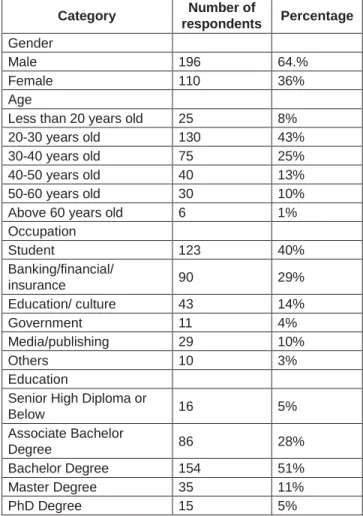
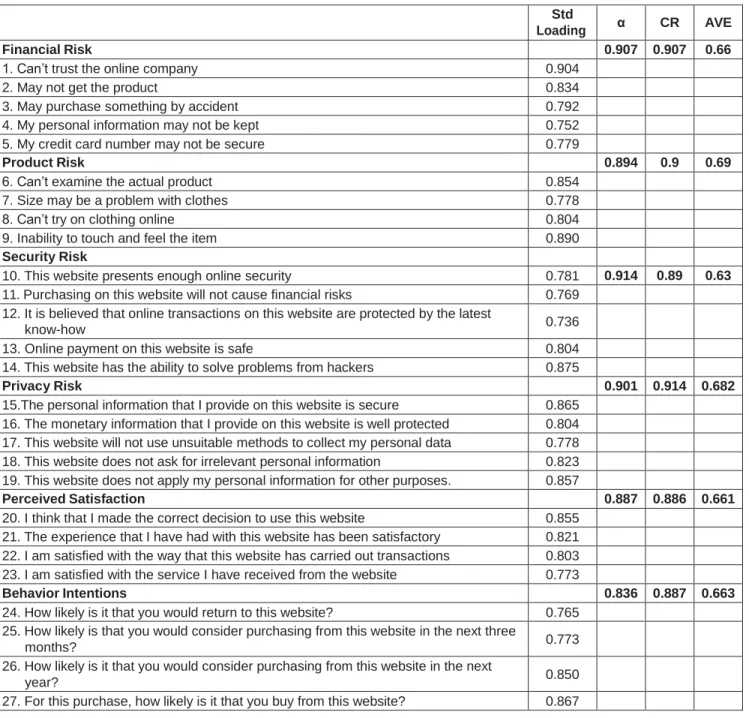
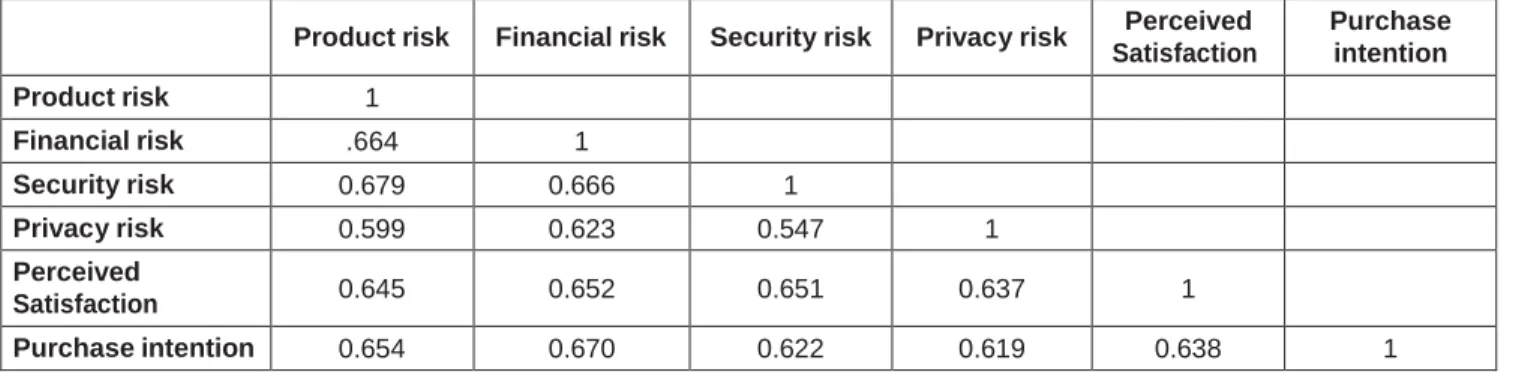
This research investigates the relationship among product risk, financial risk, security risk, privacy risk, perceived satisfaction, and purchase intention. Validated measurements were identified from a literature review. The measurement model and the conceptual model depicting hypothesized relationships were evaluated based on responses from 306 customers using confirmatory factor analysis and structural equation modeling. The results showed that product risk, financial risk, security risk, and privacy risk impacted on perceived satisfaction. Besides, product risk, privacy risk, and perceived satisfaction influenced purchase intentions. Thus, this study focused on the influences of product risk, financial risk, security risk, and privacy risk on their cognitive attitudes toward websites. That means the more consumer perceive security, the more they avoid shopping online. The study is important to show how perceived risk affects online shopping behaviors, and it invites marketers to make necessary adjustments to prevent perceived risks to increase and online shopping to decrease. The findings of this study suggest the creation of a framework on the effect of perceived risk types on online shopping. Managers need to take perceived risks into account when designing their electronic marketing channels. In addition, shopping websites should strengthen their transaction security by appropriately using various available resources and new information technologies.
Keywords : Product Risk, Financial Risk, Security Risk, Privacy Risk, Purchase Intentions JEL Classification Code: M30, M31, M37
1. Introduction
The area of e-commerce in developed and developing countries is now growing rapidly. Therefore, Internet users’
digital flow experiences have gained increased attention with the rapid development of the Internet in recent year (Skadberg & Kimmel, 2004). Online shopping is significantly growing, and there is not only a positive outlook for the future of online shopping, but also scientific indicators that forecast a great expansion for Internet purchasing. Despite the positive sides of online shopping, there are negative attitudes toward buying online because of risk perceptions.
1First Author and Corresponding Author. Lecturer, Faculty of Business Administration, Banking University, Vietnam [Postal Address: No.36, Ton That Dam Street, Nguyen Thai Binh Ward, District 1, Ho Chi Minh City, 710000, Vietnam] Email: [email protected]
© Copyright: The Author(s)
This is an Open Access article distributed under the terms of the Creative Commons Attribution Non-Commercial License (http://Creativecommons.org/licenses/by-nc/4.0/) which permits unrestricted noncommercial use, distribution, and reproduction in any medium, provided the original work is properly cited.