Maxillary expansion with the memory screw:
a preliminary investigation
Objective: The purpose of this study was to investigate the effects of a newly developed rapid maxillary expansion screwthe memory screwover 6 months.
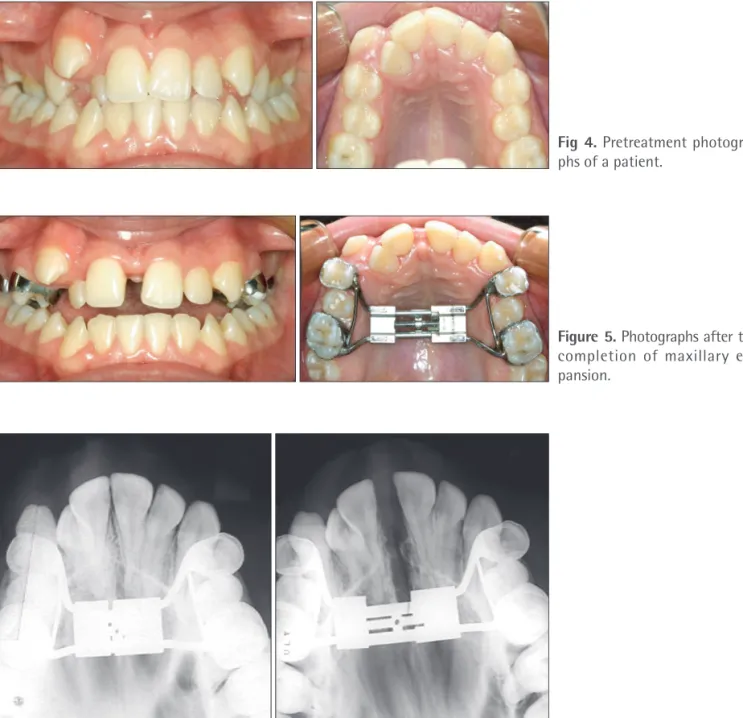
Methods: Five subjects, aged between 11.7 and 13.75 years, were enrolled in this study. All subjects underwent placement of a maxillary expansion appliance containing superelastic nickel-titanium opencoil springs in its screw bed. The parents of the patients and/or the patients themselves were instructed to activate the expansion screw by 2 quarterturns 3 times a day (morning, midday, and evening; 6 quarterturns a day). The mean expansion period was 7.52 ± 1.04 days.
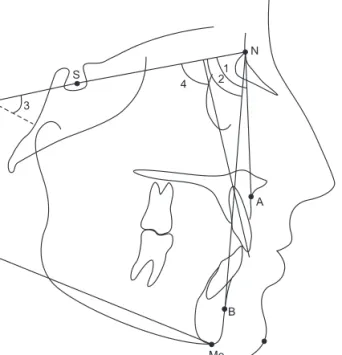
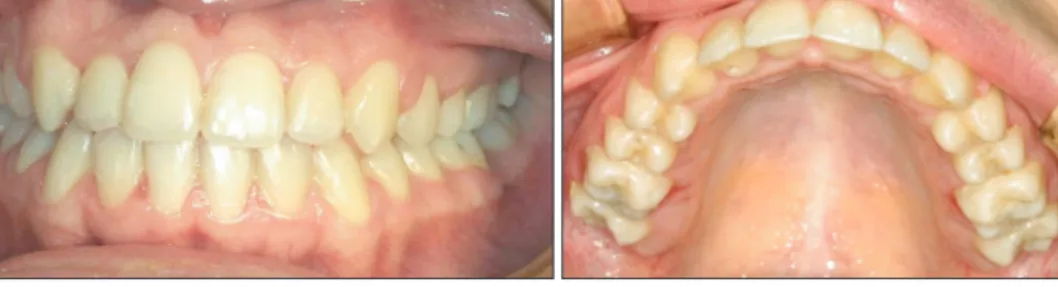
Dentoskeletal effects of the procedure, including dentoalveolar inclination, were evaluated. Measurements of all the parameters were repeated after 6 months of retention in order to check for relapse. Results: SellaNasionA point (SNA) and SellaNasion/GonionMenton angles increased, and SellaNasionB point (SNB) angle decreased in all the subjects during the expansion phase. However, they appro ximated to the initial values at the end of 6 months. On the other hand, the increments in maxillary apical base (MxrMxl) and intermolar widths was quite stable. As expected, some amount of dentoalveolar tipping was observed.
Conclusions: The newly developed memory expansion screw offers advantages of both rapid and slow expansion procedures. It widens the midpalatal suture and expands the maxilla with relatively lighter forces and within a short time. In addition, the resultant increments in the maxillary apical base and intermolar width remained quite stable even after 6 months of retention.
[Korean J Orthod 2012;42(2):73-79]
Key words: Expansion, Appliances, Cephalometrics, Retention and stability Koray Halicioğlu
aAli Kiki
bİbrahim Yavuz
ca
Department of Orthodontics, Faculty of Dentistry, Abant İzzet Baysal University, Bolu, Turkey
b
Department of Orthodontics, Faculty of Dentistry, Atatürk University, Erzurum, Turkey
c
Department of Orthodontics, Faculty of Dentistry, Erciyes University, Kayseri, Turkey
pISSN 2234-7518 • eISSN 2005-372X http://dx.doi.org/10.4041/kjod.2012.42.2.73
Received November 14, 2011; Revised February 6, 2012; Accepted February 7, 2012.
Corresponding author: İbrahim Yavuz.
Professor and Chair, Department of Orthodontics, Faculty of Dentistry, Erciyes University, Rektorlugu 38039, Kayseri, Turkey.
Tel +903522076600 (29102) email [email protected]
© 2012 The Korean Association of Orthodontists.
The authors report no commercial, proprietary, or financial interest in the products or companies described in this article.
This is an Open Access article distributed under the terms of the Creative Commons Attribution NonCommercial License (http://creativecommons.org/licenses/bync/3.0) which permits unrestricted noncommercial use, distribution, and reproduction in any medium, provided the original work is properly cited.