J Lipid Atheroscler 2017 December;6(2):84-88 https://doi.org/10.12997/jla.2017.6.2.84
pISSN 2287-2892 • eISSN 2288-2561
JLA
Alteration of Lipid Profiles in Patients with Subclinical Hypothyroidism
Jung Eun Lee, Su Jin Jeong, Sol Jae Lee, Young Hoon Lee, Yuchang Lee, Sook Jung Lee, Chong Hwa Kim
Division of Endocrinology and Metabolism, Department of Internal Medicine, Sejong General Hospital, Bucheon, Korea
Objectives: Overt hypothyroidism has been associated with abnormalities of lipid metabolism; however conflicting results regarding the degree of lipid changes in subclinical hypothyroidism (SCH) have been reported. The aim of this study was to assess differences in lipid profile parameters between people with and without SCH in Korean population.
Methods: Serum lipid parameters of 37 patients with SCH and 44 euthyroid control subjects were evaluated in a retrospective cross-sectional study.
Results: The mean serum triglycerides (TG) level was significantly higher in patients with SCH than in controls (p<0.05).
The mean serum high-density lipoprotein cholesterol (HDL-C) level was significantly lower in patients with SCH than in controls (p<0.05). When adjusted by age, the odds ratio for the association of HDL-C with SCH was significant at 0.893 (95% confidence interval 0.809-0.986) compared with that of the euthyroid controls. No association with SCH was found with total cholesterol level, low-density lipoprotein cholesterol level or serum thyroid-stimulating hormone level. In addition, the lipid profile did not differ significantly between premenopausal and postmenopausal women.
Conclusions: We found variations of lipid profiles in patients with SCH, characterized by a significantly lower HDL-C level.
(J Lipid Atheroscler 2017 December;6(2):84-88) Key Words: Subclinical hypothyroidism, Lipid
Received:
Revised:
Accepted:
May 31, 2017 October 24, 2017 November 6, 2017
Corresponding Author: Chong Hwa Kim, Division of Endocrinology and Metabolism, Department of Internal Medicine, Sejong General Hospital, 28 Hohyeon-ro 489 Beon-gil, Sosa-gu, Bucheon 422-711, Korea
Tel: +82-32-340-1116, Fax: +82-32-340-1236, E-mail: [email protected]
This is an Open Access article distributed under the terms of the Creative Commons Attribution Non-Commercial License (http://creativecommons.org/licenses/by-nc/3.0) which permits unrestricted non-commercial use, distribution, and reproduction in any medium, provided the original work is properly cited.
INTRODUCTION
It is well known that patients with overt hypothyroidism have elevated levels of cholesterol, low-density lipoprotein cholesterol (LDL-C),and apolipoprotein B.1 Some studies have demonstrated dyslipidemia in patients with subclinical hypothyroidism (SCH).2-5
Hypercholesterolemia develops from a decrease in the fractional clearance of LDL-C due to a reduction in the number and activities of LDL receptors.6-8 SCH is defined
by high serum thyroid-stimulating hormone(TSH) con- centration and normal serum total or free T4 and T3 concentrations, but with few or no symptoms and signs of hypothyroidism. SCH is more common among the elderly population , and is twice as common in women than in men.9 However there is a lack of studies on the association of SCH and dyslipidemia in Korea. Therefore, the objective of this study was to assess differences in lipid profile parameters between people with and without SCH in the Korean population.
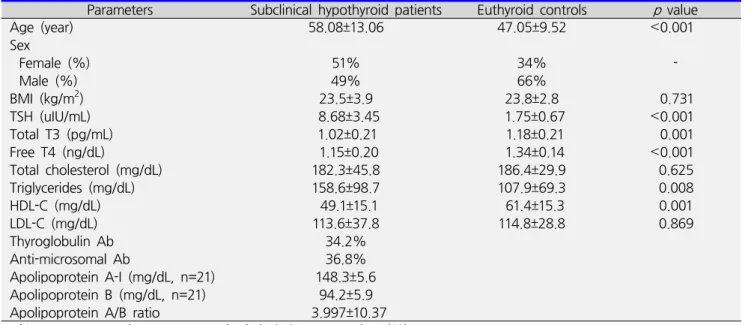
Table 1. Baseline characteristics in subclinical hypothyroid patients and euthyroid controls
Parameters Subclinical hypothyroid patients Euthyroid controls p value Age (year)
Sex
Female (%) Male (%) BMI (kg/m2) TSH (uIU/mL) Total T3 (pg/mL) Free T4 (ng/dL)
Total cholesterol (mg/dL) Triglycerides (mg/dL) HDL-C (mg/dL) LDL-C (mg/dL) Thyroglobulin Ab Anti-microsomal Ab
Apolipoprotein A-I (mg/dL, n=21) Apolipoprotein B (mg/dL, n=21) Apolipoprotein A/B ratio
58.08±13.06 51%
49%
23.5±3.9 8.68±3.45
1.02±0.21 1.15±0.20 182.3±45.8 158.6±98.7 49.1±15.1 113.6±37.8 34.2%
36.8%
148.3±5.6 94.2±5.9 3.997±10.37
47.05±9.52 34%
66%
23.8±2.8 1.75±0.67
1.18±0.21 1.34±0.14 186.4±29.9 107.9±69.3 61.4±15.3 114.8±28.8
<0.001 - 0.731
<0.001 0.001
<0.001 0.625 0.008 0.001 0.869
Values are expressed as mean±standard deviation or number (%).
BMI; body mass index, TSH; thyroid-stimulating hormone, HDL-C; high-density lipoprotein cholesterol, LDL-C; low- density lipoprotein cholesterol, Ab; antibody.
p values were obtainded by Student's t-test.
MATERIALS AND METHODS
1. SubjectsThis cross-sectional study was conducted at Sejong General Hospital in Bucheon, South Korea. A total of 37 patients with SCH and 44 euthyroid controls were selected among individuals who visited the hospital from 2010 to 2017. The mean age of patients in SCH patients was 58.08 years old and euthyroid controls’ mean age was 47.50 years old (p<0.05). Fifty one percent of SCH patients and 34% euthyroid controls were female, 49% percent of SCH patients and 66% euthyroid controls were male.
The mean body mass index (BMI) in SCH patients was 23.5±3.9 kg/m2 and BMI in euthyroid controls was 23.8±2.8 kg/m2. SCH was established in terms of a TSH level ˃4.5 μIU/mL, with normal free T4 and total T3 levels.
There was no history of thyroidectomy and cancer among the subjects. Patients taking any drug that could possibly affect lipid metabolism were excluded from the study.
In total, 44 euthyroid controls (0<TSH levels ≤3.0 μIU/mL) were recruited among individuals visiting the health
promotion center for a health screening test. Premeno- pausal women were considered those under 50 years old and postmenopausal women were considered those over 50 years old.
2. Statistical analysis
All statistical computations were performed using the software program SPSS version 24.0 (SPSS Inc., Chicago, IL, USA). Data are reported as mean±standard deviation.
The Student' s t-test was performed to determine the significance of difference in the study parameters between the SCH group and controls. The Mann-Whitney test was also performed owing to the skewed distribution of certain parameters. Regression analysis was used to adjust for age. A p value less than 0.05 was considered to indicate statistically significant differences.
RESULTS
Table 1 shows the baseline characteristics in the SCH patients and euthyroid controls. The mean TSH level in
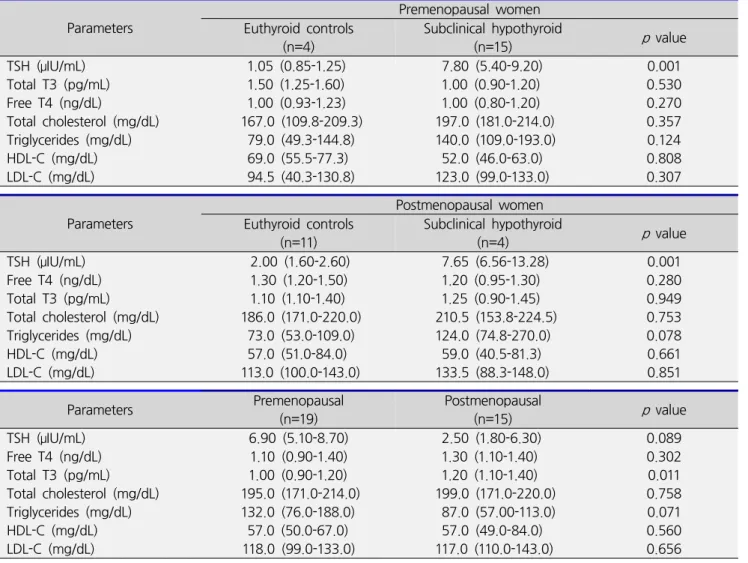
Table 3. Distribution of lipid profile and thyroid hormone according to menopausal status Parameters
Premenopausal women Euthyroid controls
(n=4)
Subclinical hypothyroid
(n=15) p value
TSH (μIU/mL) Total T3 (pg/mL) Free T4 (ng/dL)
Total cholesterol (mg/dL) Triglycerides (mg/dL) HDL-C (mg/dL) LDL-C (mg/dL)
1.05 (0.85-1.25) 1.50 (1.25-1.60) 1.00 (0.93-1.23) 167.0 (109.8-209.3) 79.0 (49.3-144.8) 69.0 (55.5-77.3) 94.5 (40.3-130.8)
7.80 (5.40-9.20) 1.00 (0.90-1.20) 1.00 (0.80-1.20) 197.0 (181.0-214.0) 140.0 (109.0-193.0) 52.0 (46.0-63.0) 123.0 (99.0-133.0)
0.001 0.530 0.270 0.357 0.124 0.808 0.307 Parameters
Postmenopausal women Euthyroid controls
(n=11) Subclinical hypothyroid
(n=4) p value
TSH (μIU/mL) Free T4 (ng/dL) Total T3 (pg/mL) Total cholesterol (mg/dL) Triglycerides (mg/dL) HDL-C (mg/dL) LDL-C (mg/dL)
2.00 (1.60-2.60) 1.30 (1.20-1.50) 1.10 (1.10-1.40) 186.0 (171.0-220.0) 73.0 (53.0-109.0) 57.0 (51.0-84.0) 113.0 (100.0-143.0)
7.65 (6.56-13.28) 1.20 (0.95-1.30) 1.25 (0.90-1.45) 210.5 (153.8-224.5) 124.0 (74.8-270.0) 59.0 (40.5-81.3) 133.5 (88.3-148.0)
0.001 0.280 0.949 0.753 0.078 0.661 0.851
Parameters Premenopausal
(n=19)
Postmenopausal
(n=15) p value
TSH (μIU/mL) Free T4 (ng/dL) Total T3 (pg/mL) Total cholesterol (mg/dL) Triglycerides (mg/dL) HDL-C (mg/dL) LDL-C (mg/dL)
6.90 (5.10-8.70) 1.10 (0.90-1.40) 1.00 (0.90-1.20) 195.0 (171.0-214.0) 132.0 (76.0-188.0) 57.0 (50.0-67.0)
118.0 (99.0-133.0)
2.50 (1.80-6.30) 1.30 (1.10-1.40) 1.20 (1.10-1.40) 199.0 (171.0-220.0) 87.0 (57.00-113.0) 57.0 (49.0-84.0) 117.0 (110.0-143.0)
0.089 0.302 0.011 0.758 0.071 0.560 0.656 Values are expressed as median (interquartile range)
TSH; thyroid-stimulating hormone, HDL-C; high-density lipoprotein cholesterol, LDL-C; low-density lipoprotein cholesterol p values were obtainded by Mann-whitney.
Table 2. The age-adjusted odds ratios (95% confidence interval) for lipid profiles in subclinical hypothyroid patients against euthyroid controls by regression analysis
Parameters Euthyroid controls Subclinical hypothyroid patients p value Total cholesterol (mg/dL)
Triglycerides (mg/dL) HDL-C (mg/dL) LDL-C (mg/dL)
1 1 1 1
1.080 (0.980-1.190) 0.997 (0.985-1.010) 0.893 (0.809-0.986) 0.925 (0.836-1.024)
0.121 0.683 0.026 0.132 HDL-C; high-density lipoprotein cholesterol, LDL-C; low-density lipoprotein cholesterol
p values were obtainded by logistic regression analysis.
Negelkerke R Squre. 0.435
the SCH patients was 8.68±3.45 μIU/mL and that in euthyroid controls was 1.75±0.67 μIU/mL (normal value:
0.35-5.00) (p<0.001). The mean total T3 level in the SCH
patients was 1.02±0.21 pg/mL and that in euthyroid controls was 1.18±0.21 pg/ml (p=0.001). The mean free T4 level in the SCH patients was 1.15±0.20 ng/dL and
that in euthyroid controls was 1.34±0.14 ng/dL (p<0.001).
The mean total cholesterol level in the SCH patients was 182.3±45.8 mg/dL and that in euthyroid controls was 186.4±29.9 mg/dL (p=0.625). The mean serum triglyce- rides (TG) value in the SCH patients was 158.6±98.7 mg/dL and that in euthyroid controls was 107.9±69.3 mg/dL (p=0.008). The mean HDL-C value in the SCH patients was 49.1±15.1 mg/dL and that in euthyroid controls was 61.4± 15.3 mg/dL (p=0.001). The mean LDL-C value in the SCH patients was 113.6±37.8 mg/dL and that in euthyroid controls was 114.8±28.8 mg/dL (p=0.869).
Patients with SCH had a significantly higher level of TG and lower HDL-C level compared with euthyroid controls (Table 1). HDL-C showed a significant association with SCH based on the odds ratio and confidence interval (CI) 0.893 (95% CI=0.809-0.986), compared to that in euthy- roid controls (Table 2). Among the total 34 females included in the study 19 (4 euthyroid controls and 15 SCH patients) were premenopausal and 15 (11 euthyroid controls and 4 SCH patients) were postmenopausal. There was no statistically significant difference in the lipid profiles between premenopausal and postmenopausal women (Table 3).
DISCUSSION
It is well known that thyroid hormones significantly affect lipoprotein metabolism. Thyroid hormones induce 3-hydroxy-3-methylglutarylcoenzyme A (HMG-CoA) reductase, which is the first step in cholesterol bio- synthesis. T3 stimulats the upregulated expression of LDL receptor proteins and controls the sterol regulatory element binding protein-2 (SREBP-2), which in turn regulates the gene expression of LDL receptors and protects LDL-C from oxidative pathways. Thyroid hormones influence HDL-C metabolism by increasing cholesteryl ester transfer protein (CETP) activity.10 Many previous studies have shown that the serum total
cholesterol, TG and LDL-C levels were significantly increased, while the HDL-C level was decreased in hypothyroidism. A recent meta-analysis to investigate the association between SCH and lipid profiles suggested that the serum total cholesterol, LDL-C, and total TG levels were significantly increased in patients with SCH compared with those in euthyroid control subjects.11 Many previous studies have suggested that patients with SCH had higher levels of total cholesterol and LDL-C compared with euthyroid controls. This trend is reasonable, given that LDL contains 65% total cholesterol. However, there has been some controversy regarding whether SCH induces dyslipidemia.
One of the main reasons contributing to these conflic- ting results among previous studies is that these analyses did not adjust for potentially confounding factors, such as age, sex, BMI, and alcohol consumption. Our study showed that HDL-C level in SCH patients was significantly lower. The lipid level differences between premenopausal and postmenopausal women were found to be statically insignificant. This finding was concordance with result of previous study.2 This study has several limitations. First, the sample size was relatively small given the retrospective case- control study design; therefore a larger study would be required to improve the statistical power of the analysis.
Therefore confounding variables, including age, sex, BMI, and alcohol consumption, need to be carefully adjusted and controlled in the study design; as a cross- sectional study, this was not possible in the present work. Further studies are needed to better understand the mechanism of dyslipidemia in SCH, including multicenter prospective larger studies with adjustment of confounding factors.
CONCLUSION
We found alteration of lipid profiles in patients with SCH, characterized by a significantly low HDL-C level.
CONFLICTS OF INTEREST
No potential conflict of interest relevant to this article was reported.
REFERENCE
1. Duntas LH. Thyroid disease and lipids. Thyroid 2002;
12:287-293.
2. Desai JP, Vachhani UN, Modi G, Chauhan K. A study of correlation of serum lipid profile in patients with hypothyroidism. Int J Med Sci Public Health 2015;4:
1108-1112.
3. Milionis HJ, Tambaki AP, Kanioglou CN, Elisaf MS, Tselepis AD, Tsatsoulis A. Thyroid substitution therapy induces high-density lipoprotein-associated platelet- activating factor-acetylhydrolase in patients with sub- clinical hypothyroidism: a potential antiatherogenic effect. Thyroid 2005;15:455-460.
4. Toruner F, Altinova AE, Karakoc A, Yetkin I, Ayvaz G, Cakir N, et al. Risk factors for cardiovascular disease in patients with subclinical hypothyroidism. Adv Ther 2008;
25:430-437.
5. Erdem TY, Ercan M, Ugurlu S, Balci H, Acbay O, Gundogdu S. Plasma viscosity, an early cardiovascular
risk factor in women with subclinical hypothyroidism.
Clin Hemorheol Microcirc 2008;38:219-225.
6. Elder J, McLelland A, O'Reilly DS, Packard CJ, Series JJ, Shepherd J. The relationship between serum cholesterol and serum thyrotropin, thyroxine and tri-iodothyronine concentrations in suspected hypothyroidism. Ann Clin Biochem 1990;27:110-113.
7. Thompson GR, Soutar AK, Spengel FA, Jadhav A, Gavigan SJ, Myant NB. Defects of receptor-mediated low density lipoprotein catabolism in homozygous familial hypercholesterolemia and hypothyroidism in vivo. Proc Natl Acad Sci U S A 1981;78:2591-2595.
8. Rush J, Danzi S, Klein I. Role of thyroid disease in the development of statin-induced myopathy. Endocrino- logist 2006;16:279-285.
9. Drover VA, Agellon LB. Regulation of the human cholesterol 7alpha-hydroxylase gene (CYP7A1) by thyroid hormone in transgenic mice. Endocrinology 2004;145:574-581.
10. Rizos CV, Elisaf MS, Liberopoulos EN. Effects of thyroid dysfunction on lipid profile. Open Cardiovasc Med J 2011;5:76-84.
11. Liu XL, He S, Zhang SF, Wang J, Sun XF, Gong CM, et al. Alteration of lipid profile in subclinical hypo- thyroidism: a meta-analysis. Med Sci Monit 2014;20:
1432-1441.