*Corresponding author: Yong Bok Lee Phone: +82-55-772-1967; Fax: +82-55-772-1969;
E-mail: [email protected]
Korean J Environ Agric. 2016;35(2):104-110. English Online ISSN: 2233-4173
Published online 2016 June 30. http://dx.doi.org/10.5338/KJEA.2016.35.2.21 Print ISSN: 1225-3537
Free Amino Acid Composition of Korean Spinach ( Spinacia oleracea ) Cultivars as Influenced by Different Harvesting Time
Young-Eun Yoon
1, Saranya Kuppusamy
2, Song Yeob Kim
2, Jang Hwan Kim
1and Yong Bok Lee
2*1
Division of Applied Life Science (BK21 Plus), Gyeongsang National University, Jinju 52828, Korea
2
Institute of Agriculture and Life Science, Gyeongsang National University, Jinju 52828, Korea
Received: 19 June 2016 / Revised: 23 June 2016 / Accepted: 26 June 2016 Copyright ⓒ 2016 The Korean Society of Environmental Agriculture
This is an Open-Access article distributed under the terms of the Creative Commons Attribution Non-Commercial License (http://creativecommons.org/licenses/by-nc/3.0) which permits unrestricted non-commercial use, distribution, and reproduction in any medium, provided the original work is properly cited.
ORCID Yong Bok Lee
http://orcid.org/0000-0002-7651-4556
104
Abstract
BACKGROUND: There is lack of comprehensive compositional data of the amino acid profile of spinach with regard to different cultivars. A more detailed knowledge in this aspect will be of benefit in the future selection of spinach genotypes with improved nutritional quality.
METHODS AND RESULTS: The effects of cultivar type (Jeoncheonhu, Sagyejul, Namdongcho and Mustang) and harvest time (79
th, 116
thand 145
thdays after sowing or DAS) on the concentrations of free amino acids in field-grown spinach (Spinacia oleracea) were examined.
About 35 different free amino acids were detected and quantified by the amino acid analyzer. Glutamic acid and proline were identified as the major amino acids, while α -aminoadipic acid and α-aminobutyric acid were present in much lower concentrations. Spinach constituted 1468.4 mg/100 g total free amino acids (TAA), of which essential amino acids, neutral/acidic amino acids and sulphur containing amino acids constituted around 15, 45 and 2% of the TAA, respectively. The most limiting amino acids among the leafy vegetables – cysteine was recorded only in Mustang harvested at 116 DAS. Free amino acid contents did not differ significantly among the spinach cultivars and also at different harvest times.
CONCLUSION: The data show that, either of the spinach cultivars, preferably Mustang harvested on or after 116 DAS can serve as a significant source of nutritionally relevant amino acids to meet the demand of the growing populations.
Key words: Amino acid, Cultivar, Essential, Harvest time, Non-essential, Spinach
Introduction
Spinach ( Spinacia oleracea ) is one of the widely used nutrient rich leafy vegetables with a global production area and amount of nearly 890,000 ha and 14,000,000 ton, respectively (Citak and Sonmez, 2010).
In Korea, spinach is the only leafy vegetable cultivated in open-field condition by farmers during winter season.
A steady rise in consumer demand has been reflected by an expansion of Korean spinach production reaching 84170 ton in 2014 with a total production area of 5645 ha (KOSIS, 2014). Mostly, spinach has a high content of vitamins, organic acids, minerals, proteins and antioxidants of nutritive value. Of all the compounds, amino acids are the most important constituent of any plant products since some of the amino acids for e.g., histidine, lysine, leucine, isoleucine, methionine, phenylalanine, threonine and valine cannot be synthesized in human body and it is essential to obtain these from natural foodstuffs
Research Article Open Access
(Lisiewska et al ., 2011).
The chemical composition of horticultural crops are modified by several factors, among them, the type of cultivar and harvest times are the most important ones. Beis et al . (2002) stated that the level of amino acids in spinach levels was dependent on the age of leaves. Wu et al . (2007) reported that, depending on the type of cultivars, differences in the content of horticultural crops were significant. Much of the spinach related studies were focused mainly on its chemical composition depending on the dose of fertilizers applied and amount of light (Budwalda et al ., 2000). However, there is lack of comprehensive compositional data of its amino acid profile with regard to different cultivars. Nowadays four cultivars of spinach are commonly planted in Korea, including Spinacia oleracea cv. Jeoncheonhu, Sagyejul, Namdongcho and Mustang. So far, no data have been reported on the amino acid composition of these cultivars cultivated in Korea. Therefore, this research was focused on the analysis and comparison of the free amino acids of different spinach cultivars harvested at different times. A more detailed knowledge of the variability among the cultivars will be of benefit in the future selection of spinach genotypes with improved nutritional quality.
Materials and Methods
Materials
The investigated material consisted of leaves of spinach cultivars Jeoncheonhu, Sagyejul, Namdongcho and Mustang. The spinach was conventionally grown in an experimental field at Namhae-gun, Gyeongsangnam- do, South Korea (34° 46'N, 127° 57'E) between October 2014 and February 2015. The soil at this site had pH 7.1, EC 0.36 dS/m, total carbon 1.86%, total nitrogen (N) 0.16% and available phosphorous (P) 215.87 mg /kg. Exchangeable cations - potassium (K
+), calcium (Ca
2+), magnesium (Mg
2+) and sodium (Na
+) were 0.86, 11.81, 2.83 and 0.16 cmol
c/kg soil, respectively.
The land was prepared in a randomized manner consisting of three replicates and fertilized with inorganic fertilizers by adopting basal application and top-dressing. Urea, super phosphate and potassium chloride were the sources of N, P and K, respectively.
Basal application of N, P and K fertilizers were at a rate of 10, 5.9 and 7.9 kg/ha. One dose of K fertilizer (4 kg/ha) was top dressed after one month of sowing.
The spinach received N fertilizer as top-dress at a rate of 5 kg/ha/month till the end of the harvest season.
Harvest dates were chosen based on the leaf length (first harvest was made when the leaf length was over 7 cm). The 1st, 2nd and 3rd harvests were scheduled on the 79
th, 116
thand 145
thdays after sowing (DAS).
On each harvest dates, yellow and damaged leaves were removed. The remaining leaves were hand-washed to render them free of soil, freeze dried and ground to a fine powder using liquid nitrogen.
After powdering, the four cultivars of Korean spinach analyzed in this paper were vacuum packed in small bags and stored at -20℃ until all assays were performed. All results represent averages of triplicate determinations and are expressed on dry weight basis.
Amino acids extraction and analysis
The content of amino acids were determined according to procedures described by Ishimoto et al . (2010) with some modifications. The L-8900 high-speed amino acid analyzer (AAA) (Hitachi High-Tech.
Corp., Japan) was used for quantitative determination of the amino acid composition. Free amino acids from each spinach cultivar samples (0.10 g) were extracted by vigorous shaking for 1 h with 100 ml of 3%
sulfosalicylic acid. The suspensions were then centrifuged at 3,500 rpm for 10 min at 4ºC, and the resulting pellets were subjected to four additional rounds of extraction. The five extracts were combined, filtered with 0.45 mm syringe filter and analyzed for the soluble or free amino acids by the ninhydrin method using AAA. The calculations were carried out according to the external standard.
Statistical analyses
Statistical analyses allowing a mean comparison of the content of amino acids in the four spinach cultivars at the 0.05 probability level was carried out using Duncan’s multiple range test (DMRT) using SAS software version 9.4 (SAS Institute Inc.).
Results and Discussion
Quality of horticultural crops is generally determined
from the relative levels of several chemical
constituents such as soluble sugars, vitamins, fatty
acids and amino acids considered together. Selection
of the right cultivar and harvest time are crucial for
the production of high-quality crops (Wu et al ., 2007).
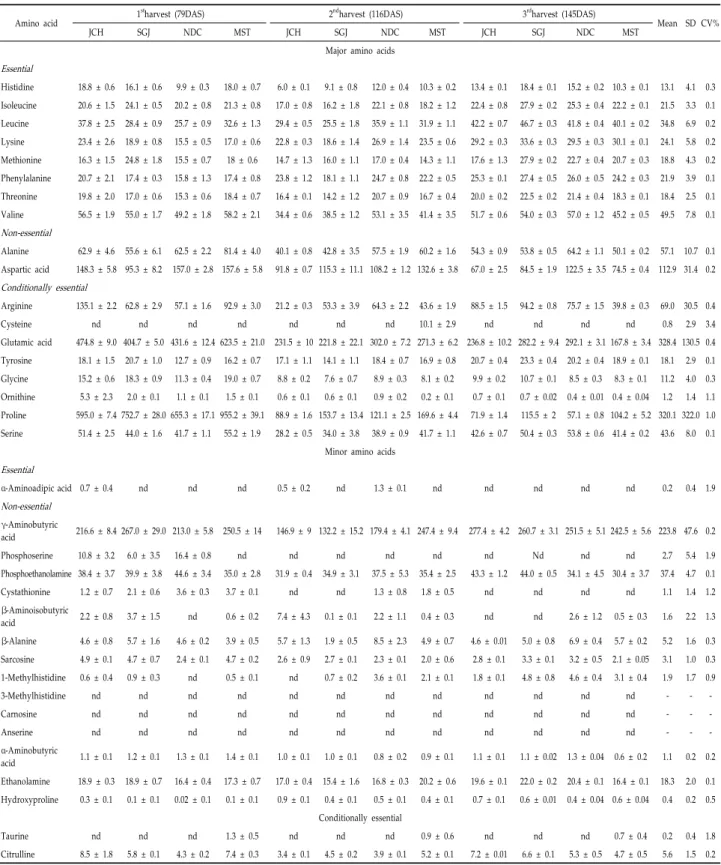
Table 1. Amino acid profile of four spinach cultivars in mg/100 g on dry weight basis
Amino acid 1stharvest (79DAS) 2ndharvest (116DAS) 3rdharvest (145DAS)
Mean SD CV%
JCH SGJ NDC MST JCH SGJ NDC MST JCH SGJ NDC MST
Major amino acids Essential
Histidine 18.8 ± 0.6 16.1 ± 0.6 9.9 ± 0.3 18.0 ± 0.7 6.0 ± 0.1 9.1 ± 0.8 12.0 ± 0.4 10.3 ± 0.2 13.4 ± 0.1 18.4 ± 0.1 15.2 ± 0.2 10.3 ± 0.1 13.1 4.1 0.3 Isoleucine 20.6 ± 1.5 24.1 ± 0.5 20.2 ± 0.8 21.3 ± 0.8 17.0 ± 0.8 16.2 ± 1.8 22.1 ± 0.8 18.2 ± 1.2 22.4 ± 0.8 27.9 ± 0.2 25.3 ± 0.4 22.2 ± 0.1 21.5 3.3 0.1 Leucine 37.8 ± 2.5 28.4 ± 0.9 25.7 ± 0.9 32.6 ± 1.3 29.4 ± 0.5 25.5 ± 1.8 35.9 ± 1.1 31.9 ± 1.1 42.2 ± 0.7 46.7 ± 0.3 41.8 ± 0.4 40.1 ± 0.2 34.8 6.9 0.2 Lysine 23.4 ± 2.6 18.9 ± 0.8 15.5 ± 0.5 17.0 ± 0.6 22.8 ± 0.3 18.6 ± 1.4 26.9 ± 1.4 23.5 ± 0.6 29.2 ± 0.3 33.6 ± 0.3 29.5 ± 0.3 30.1 ± 0.1 24.1 5.8 0.2 Methionine 16.3 ± 1.5 24.8 ± 1.8 15.5 ± 0.7 18 ± 0.6 14.7 ± 1.3 16.0 ± 1.1 17.0 ± 0.4 14.3 ± 1.1 17.6 ± 1.3 27.9 ± 0.2 22.7 ± 0.4 20.7 ± 0.3 18.8 4.3 0.2 Phenylalanine 20.7 ± 2.1 17.4 ± 0.3 15.8 ± 1.3 17.4 ± 0.8 23.8 ± 1.2 18.1 ± 1.1 24.7 ± 0.8 22.2 ± 0.5 25.3 ± 0.1 27.4 ± 0.5 26.0 ± 0.5 24.2 ± 0.3 21.9 3.9 0.1 Threonine 19.8 ± 2.0 17.0 ± 0.6 15.3 ± 0.6 18.4 ± 0.7 16.4 ± 0.1 14.2 ± 1.2 20.7 ± 0.9 16.7 ± 0.4 20.0 ± 0.2 22.5 ± 0.2 21.4 ± 0.4 18.3 ± 0.1 18.4 2.5 0.1 Valine 56.5 ± 1.9 55.0 ± 1.7 49.2 ± 1.8 58.2 ± 2.1 34.4 ± 0.6 38.5 ± 1.2 53.1 ± 3.5 41.4 ± 3.5 51.7 ± 0.6 54.0 ± 0.3 57.0 ± 1.2 45.2 ± 0.5 49.5 7.8 0.1 Non-essential
Alanine 62.9 ± 4.6 55.6 ± 6.1 62.5 ± 2.2 81.4 ± 4.0 40.1 ± 0.8 42.8 ± 3.5 57.5 ± 1.9 60.2 ± 1.6 54.3 ± 0.9 53.8 ± 0.5 64.2 ± 1.1 50.1 ± 0.2 57.1 10.7 0.1 Aspartic acid 148.3 ± 5.8 95.3 ± 8.2 157.0 ± 2.8 157.6 ± 5.8 91.8 ± 0.7 115.3 ± 11.1 108.2 ± 1.2 132.6 ± 3.8 67.0 ± 2.5 84.5 ± 1.9 122.5 ± 3.5 74.5 ± 0.4 112.9 31.4 0.2 Conditionally essential
Arginine 135.1 ± 2.2 62.8 ± 2.9 57.1 ± 1.6 92.9 ± 3.0 21.2 ± 0.3 53.3 ± 3.9 64.3 ± 2.2 43.6 ± 1.9 88.5 ± 1.5 94.2 ± 0.8 75.7 ± 1.5 39.8 ± 0.3 69.0 30.5 0.4
Cysteine nd nd nd nd nd nd nd 10.1 ± 2.9 nd nd nd nd 0.8 2.9 3.4
Glutamic acid 474.8 ± 9.0 404.7 ± 5.0 431.6 ± 12.4 623.5 ± 21.0 231.5 ± 10 221.8 ± 22.1 302.0 ± 7.2 271.3 ± 6.2 236.8 ± 10.2 282.2 ± 9.4 292.1 ± 3.1 167.8 ± 3.4 328.4 130.5 0.4 Tyrosine 18.1 ± 1.5 20.7 ± 1.0 12.7 ± 0.9 16.2 ± 0.7 17.1 ± 1.1 14.1 ± 1.1 18.4 ± 0.7 16.9 ± 0.8 20.7 ± 0.4 23.3 ± 0.4 20.2 ± 0.4 18.9 ± 0.1 18.1 2.9 0.1 Glycine 15.2 ± 0.6 18.3 ± 0.9 11.3 ± 0.4 19.0 ± 0.7 8.8 ± 0.2 7.6 ± 0.7 8.9 ± 0.3 8.1 ± 0.2 9.9 ± 0.2 10.7 ± 0.1 8.5 ± 0.3 8.3 ± 0.1 11.2 4.0 0.3 Ornithine 5.3 ± 2.3 2.0 ± 0.1 1.1 ± 0.1 1.5 ± 0.1 0.6 ± 0.1 0.6 ± 0.1 0.9 ± 0.2 0.2 ± 0.1 0.7 ± 0.1 0.7 ± 0.02 0.4 ± 0.01 0.4 ± 0.04 1.2 1.4 1.1 Proline 595.0 ± 7.4 752.7 ± 28.0 655.3 ± 17.1 955.2 ± 39.1 88.9 ± 1.6 153.7 ± 13.4 121.1 ± 2.5 169.6 ± 4.4 71.9 ± 1.4 115.5 ± 2 57.1 ± 0.8 104.2 ± 5.2 320.1 322.0 1.0 Serine 51.4 ± 2.5 44.0 ± 1.6 41.7 ± 1.1 55.2 ± 1.9 28.2 ± 0.5 34.0 ± 3.8 38.9 ± 0.9 41.7 ± 1.1 42.6 ± 0.7 50.4 ± 0.3 53.8 ± 0.6 41.4 ± 0.2 43.6 8.0 0.1
Minor amino acids Essential
α-Aminoadipic acid 0.7 ± 0.4 nd nd nd 0.5 ± 0.2 nd 1.3 ± 0.1 nd nd nd nd nd 0.2 0.4 1.9
Non-essential γ-Aminobutyric
acid 216.6 ± 8.4 267.0 ± 29.0 213.0 ± 5.8 250.5 ± 14 146.9 ± 9 132.2 ± 15.2 179.4 ± 4.1 247.4 ± 9.4 277.4 ± 4.2 260.7 ± 3.1 251.5 ± 5.1 242.5 ± 5.6 223.8 47.6 0.2
Phosphoserine 10.8 ± 3.2 6.0 ± 3.5 16.4 ± 0.8 nd nd nd nd nd nd Nd nd nd 2.7 5.4 1.9
Phosphoethanolamine 38.4 ± 3.7 39.9 ± 3.8 44.6 ± 3.4 35.0 ± 2.8 31.9 ± 0.4 34.9 ± 3.1 37.5 ± 5.3 35.4 ± 2.5 43.3 ± 1.2 44.0 ± 0.5 34.1 ± 4.5 30.4 ± 3.7 37.4 4.7 0.1
Cystathionine 1.2 ± 0.7 2.1 ± 0.6 3.6 ± 0.3 3.7 ± 0.1 nd nd 1.3 ± 0.8 1.8 ± 0.5 nd nd nd nd 1.1 1.4 1.2
β-Aminoisobutyric
acid 2.2 ± 0.8 3.7 ± 1.5 nd 0.6 ± 0.2 7.4 ± 4.3 0.1 ± 0.1 2.2 ± 1.1 0.4 ± 0.3 nd nd 2.6 ± 1.2 0.5 ± 0.3 1.6 2.2 1.3
β-Alanine 4.6 ± 0.8 5.7 ± 1.6 4.6 ± 0.2 3.9 ± 0.5 5.7 ± 1.3 1.9 ± 0.5 8.5 ± 2.3 4.9 ± 0.7 4.6 ± 0.01 5.0 ± 0.8 6.9 ± 0.4 5.7 ± 0.2 5.2 1.6 0.3 Sarcosine 4.9 ± 0.1 4.7 ± 0.7 2.4 ± 0.1 4.7 ± 0.2 2.6 ± 0.9 2.7 ± 0.1 2.3 ± 0.1 2.0 ± 0.6 2.8 ± 0.1 3.3 ± 0.1 3.2 ± 0.5 2.1 ± 0.05 3.1 1.0 0.3 1-Methylhistidine 0.6 ± 0.4 0.9 ± 0.3 nd 0.5 ± 0.1 nd 0.7 ± 0.2 3.6 ± 0.1 2.1 ± 0.1 1.8 ± 0.1 4.8 ± 0.8 4.6 ± 0.4 3.1 ± 0.4 1.9 1.7 0.9
3-Methylhistidine nd nd nd nd nd nd nd nd nd nd nd nd - - -
Carnosine nd nd nd nd nd nd nd nd nd nd nd nd - - -
Anserine nd nd nd nd nd nd nd nd nd nd nd nd - - -
α-Aminobutyric
acid 1.1 ± 0.1 1.2 ± 0.1 1.3 ± 0.1 1.4 ± 0.1 1.0 ± 0.1 1.0 ± 0.1 0.8 ± 0.2 0.9 ± 0.1 1.1 ± 0.1 1.1 ± 0.02 1.3 ± 0.04 0.6 ± 0.2 1.1 0.2 0.2 Ethanolamine 18.9 ± 0.3 18.9 ± 0.7 16.4 ± 0.4 17.3 ± 0.7 17.0 ± 0.4 15.4 ± 1.6 16.8 ± 0.3 20.2 ± 0.6 19.6 ± 0.1 22.0 ± 0.2 20.4 ± 0.1 16.4 ± 0.1 18.3 2.0 0.1 Hydroxyproline 0.3 ± 0.1 0.1 ± 0.1 0.02 ± 0.1 0.1 ± 0.1 0.9 ± 0.1 0.4 ± 0.1 0.5 ± 0.1 0.4 ± 0.1 0.7 ± 0.1 0.6 ± 0.01 0.4 ± 0.04 0.6 ± 0.04 0.4 0.2 0.5
Conditionally essential
Taurine nd nd nd 1.3 ± 0.5 nd nd nd 0.9 ± 0.6 nd nd nd 0.7 ± 0.4 0.2 0.4 1.8
Citrulline 8.5 ± 1.8 5.8 ± 0.1 4.3 ± 0.2 7.4 ± 0.3 3.4 ± 0.1 4.5 ± 0.2 3.9 ± 0.1 5.2 ± 0.1 7.2 ± 0.01 6.6 ± 0.1 5.3 ± 0.5 4.7 ± 0.5 5.6 1.5 0.2 JCH - Jeoncheonhu; SGJ - Sagyejul; NDC - Namdongcho; MST - Mustang; nd - not detected; Data represent means ± standard error of three determinations
The free amino acid composition of the field-grown spinach cultivars Jeoncheonhu, Sagyejul, Namdongcho and Mustang harvested at designated time intervals (79
th, 116
thand 145
thDAS) are presented in Table 1.
Nearly 35 different free amino acids were detected by
AAA and quantified (Table 2; Fig. 1). The free amino
acid levels were not variously distributed amongst
both the spinach cultivars and at different harvest
Table 2. Free amino acid analyzer details of this study Peak
no.
Retention time (min)
Amino acid Abbreviation Trivial name 1 1.79 P-Ser Phosphoserine
2 2.20 Tau Taurine
3 3.14 PEA Phosphoethanolamine
4 11.46 Asp Aspartic acid
5 16.48 Thr Threonine
6 18.11 Ser Serine
7 22.88 Glu Glutamic acid
8 28.19 Sar Sarcosine
9 33.18 Pro Proline
10 35.75 α-AAA α-Aminoadipic acid
11 37.75 Gly Glycine
12 39.49 Ala Alanine
13 41.08 Cit Citrulline
14 42.42 α-ABA α-Aminobutyric acid
15 45.16 Val Valine
16 46.01 Cys Cysteine
17 47.63 Met Methionine
18 48.60 Cysthi Cystathionine
19 50.80 Ile Isoleucine
20 52.42 Leu Leucine
21 54.56 Tyr Tyrosine
22 58.42 Phe Phenylalanine
23 62.57 β-Ala β-Alanine
24 64.49 β-AiBA β-Aminoisobutyric acid
25 69.47 γ-ABA γ-Aminobutyric acid
26 77.30 AE Ethanolamine
27 89.68 Hyp Hydroxyproline
28 93.01 Orn Ornithine
29 97.54 Lys Lysine
30 101.04 1-Mehis 1-Methylhistidine
31 102.51 His Histidine
32 108.16 3-Mehis 3-Methylhistidine
33 110.92 Ans Anserine
34 114.31 Car Carnosine
35 118.94 Arg Arginine
Fig. 1. Chromatograms of the free amino acids in spinach (Cultivars: a. Jeoncheonhu, b. Sagyejul, c. Namdongcho and d. Mustang). In the figures, peak numbers refers to the free amino acids listed in Table 2
times, and this could certainly be witnessed in the
coefficient of variation percentage (CV%) which was
quite low ranging from 0.1 to 3.4. Glutamic acid
(22.4% of the total contents of free amino acids) and
proline (21.8% of the total contents of free amino
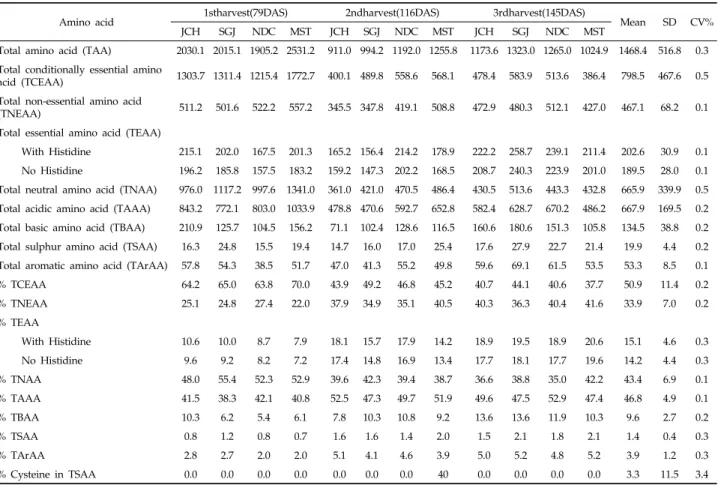
Table 3. Essential, conditionally essential, non-essential, neutral, acidic and basic amino acids (mg/100g) of the four spinach cultivars
Amino acid 1stharvest(79DAS) 2ndharvest(116DAS) 3rdharvest(145DAS)
Mean SD CV%
JCH SGJ NDC MST JCH SGJ NDC MST JCH SGJ NDC MST
Total amino acid (TAA) 2030.1 2015.1 1905.2 2531.2 911.0 994.2 1192.0 1255.8 1173.6 1323.0 1265.0 1024.9 1468.4 516.8 0.3 Total conditionally essential amino
acid (TCEAA) 1303.7 1311.4 1215.4 1772.7 400.1 489.8 558.6 568.1 478.4 583.9 513.6 386.4 798.5 467.6 0.5 Total non-essential amino acid
(TNEAA) 511.2 501.6 522.2 557.2 345.5 347.8 419.1 508.8 472.9 480.3 512.1 427.0 467.1 68.2 0.1
Total essential amino acid (TEAA)
With Histidine 215.1 202.0 167.5 201.3 165.2 156.4 214.2 178.9 222.2 258.7 239.1 211.4 202.6 30.9 0.1 No Histidine 196.2 185.8 157.5 183.2 159.2 147.3 202.2 168.5 208.7 240.3 223.9 201.0 189.5 28.0 0.1 Total neutral amino acid (TNAA) 976.0 1117.2 997.6 1341.0 361.0 421.0 470.5 486.4 430.5 513.6 443.3 432.8 665.9 339.9 0.5 Total acidic amino acid (TAAA) 843.2 772.1 803.0 1033.9 478.8 470.6 592.7 652.8 582.4 628.7 670.2 486.2 667.9 169.5 0.2 Total basic amino acid (TBAA) 210.9 125.7 104.5 156.2 71.1 102.4 128.6 116.5 160.6 180.6 151.3 105.8 134.5 38.8 0.2 Total sulphur amino acid (TSAA) 16.3 24.8 15.5 19.4 14.7 16.0 17.0 25.4 17.6 27.9 22.7 21.4 19.9 4.4 0.2 Total aromatic amino acid (TArAA) 57.8 54.3 38.5 51.7 47.0 41.3 55.2 49.8 59.6 69.1 61.5 53.5 53.3 8.5 0.1
% TCEAA 64.2 65.0 63.8 70.0 43.9 49.2 46.8 45.2 40.7 44.1 40.6 37.7 50.9 11.4 0.2
% TNEAA 25.1 24.8 27.4 22.0 37.9 34.9 35.1 40.5 40.3 36.3 40.4 41.6 33.9 7.0 0.2
% TEAA
With Histidine 10.6 10.0 8.7 7.9 18.1 15.7 17.9 14.2 18.9 19.5 18.9 20.6 15.1 4.6 0.3
No Histidine 9.6 9.2 8.2 7.2 17.4 14.8 16.9 13.4 17.7 18.1 17.7 19.6 14.2 4.4 0.3
% TNAA 48.0 55.4 52.3 52.9 39.6 42.3 39.4 38.7 36.6 38.8 35.0 42.2 43.4 6.9 0.1
% TAAA 41.5 38.3 42.1 40.8 52.5 47.3 49.7 51.9 49.6 47.5 52.9 47.4 46.8 4.9 0.1
% TBAA 10.3 6.2 5.4 6.1 7.8 10.3 10.8 9.2 13.6 13.6 11.9 10.3 9.6 2.7 0.2
% TSAA 0.8 1.2 0.8 0.7 1.6 1.6 1.4 2.0 1.5 2.1 1.8 2.1 1.4 0.4 0.3
% TArAA 2.8 2.7 2.0 2.0 5.1 4.1 4.6 3.9 5.0 5.2 4.8 5.2 3.9 1.2 0.3
% Cysteine in TSAA 0.0 0.0 0.0 0.0 0.0 0.0 0.0 40 0.0 0.0 0.0 0.0 3.3 11.5 3.4
JCH - Jeoncheonhu; SGJ - Sagyejul; NDC - Namdongcho; MST - Mustang