Print ISSN: 2288-4637 / Online ISSN 2288-4645 doi:10.13106/jafeb.2021.vol8.no5.0707
COVID-19 Lockdown, Earnings Manipulation and Stock Market Sensitivity: An Empirical Study in Iraq
Bushra Abdul Wahhab ALJAWAHERI
1, Hassnain Kadhem OJAH
2, Ahmed Hussein MACHI
3, Akeel Hamza ALMAGTOME
4Received: January 30, 2021 Revised: April 05, 2021 Accepted: April 15, 2021
Abstract
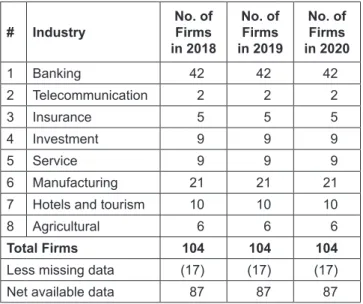
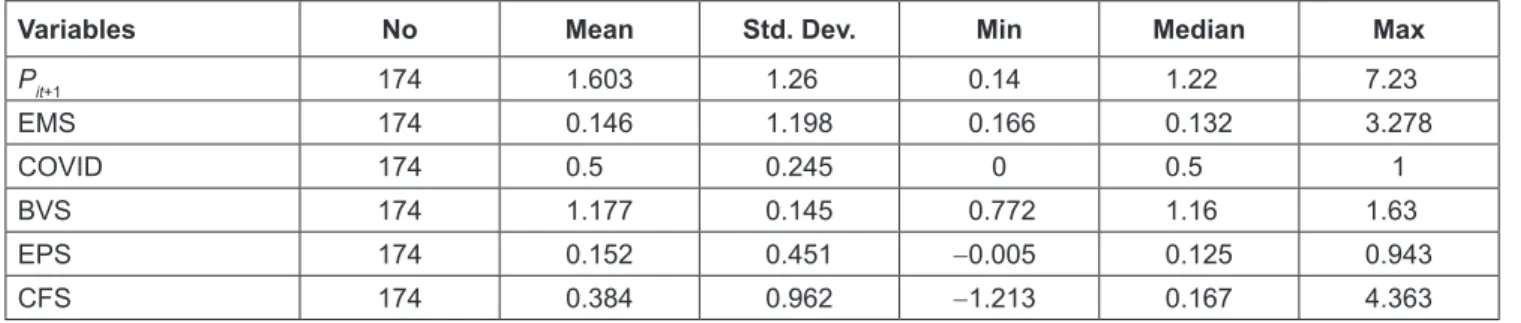
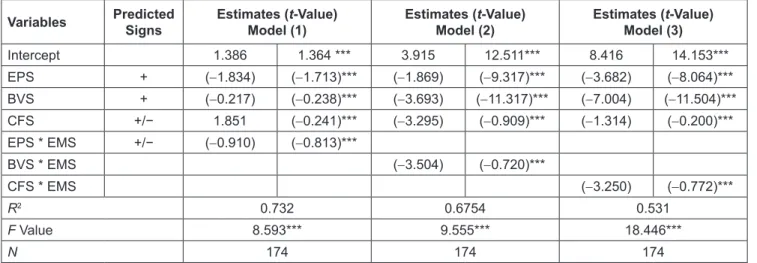
This article examines the potential impact of the Covid-19 Lockdown on earnings manipulation and stock market sensitivity to earnings announcements. It also explores the effects of earnings manipulation after the COVID-19 outbreak on the share price sensitivity to the earnings disclosures. The study uses a quantitative method to analyze the financial data consisting of 87 firms listed on the Iraq Stock Exchange for the period from 2018 to 2020, which constitutes a total of (174 observations). We used Ohlson (1995) model to estimate financial market reaction and sensitivity to earnings manipulation fluctuations and accounting information. The results show that companies practice earnings manipulation to maintain earnings over a time series, which means a negative impact of earnings manipulation on all earnings measures’ value relevance (EPS, BVS, and CFS). Accordingly, earnings manipulation negatively influences investor behavior in the financial market, based mainly on financial reporting. The value relevance of financial reports has also decreased because of the COVID-19 outbreak and related economic Lockdown. These results reflect a long-term adverse impact of earnings manipulation on investor behavior and financial statements reliability.
Keywords: Economic Lockdown, COVID-19, Earning Manipulation, Stock Market Sensitivity JEL Classification Code: E16, H83, M41, Q56
was the first victim of this epidemic, and the Covid-19 virus exhibited widespread and remarkable shock waves in all Capital markets. After Europe and the United States, Iraq recorded the first case in early February 2020, which disrupted all country’s economic and financial activities.
This epidemic has shocked the entire global economy (Sun et al., 2021). On the one hand, it exposed the imbalances that have long characterized financial regulation. On the one hand, it negatively affected all financial aspects globally due to most countries’ containment measures. Investors’
positive behavior and the intervention of the supervisory authorities on the financial markets in terms of regulation and awareness of investors were among the main factors in managing the current global economic crisis (Lee, 2020).
The novel coronavirus pandemic, which is also known as SARS-CoV-2, is causing a shock to the global economy, triggering an unprecedented economic sudden halt (Arfah et al., 2020). This time, the situation is different for at least two reasons. First, its impact on the overall economy is more significant than any catastrophic bouts of the past 40 years. The containment measures taken to limit the spread
1
First Author. Lecturer, Department of Accounting, Faculty Administration and Economics, University of Kufa, Iraq.
Email: [email protected]
2
Lecturer, Department of Accounting, Faculty Administration and Economics, University of Kufa, Iraq.
Email: [email protected]
3
Lecturer, Department of Accounting, Faculty Administration and Economics, University of Kufa, Iraq.
Email: [email protected]
4
Corresponding Author. Lecturer, Department of Accounting, Faculty Administration and Economics, University of Kufa, Iraq [Postal Address: Prof. Dr. Akeel Hamza Almagtome, University of Kufa, Najaf, 540011, Iraq] Email: [email protected]
© Copyright: The Author(s)
This is an Open Access article distributed under the terms of the Creative Commons Attribution Non-Commercial License (https://creativecommons.org/licenses/by-nc/4.0/) which permits unrestricted non-commercial use, distribution, and reproduction in any medium, provided the original work is properly cited.