Original Article
Epidemiological characteristics of ovarian cancer in Korea
Boyoung Park1,4,*, Sohee Park2,*, Tae-Joong Kim3, Seung Hyun Ma1,4, Byoung-Gie Kim3, Yong-Man Kim5, Jae Weon Kim6, Sokbom Kang7, Jaehoon Kim8, Tae Jin Kim9, Keun-Young Yoo1, Sue K. Park1,4,10
1Department of Preventive Medicine, Seoul National University College of Medicine, Seoul, 2Division of Cancer Registration and Surveillance, National Cancer Center, Goyang, 3Department of Obstetrics and Gynecology, Samsung Medical Center, Sungkyunkwan University School of Medicine, Seoul, 4Cancer Research Institute, Seoul National University, Seoul, 5Department of Obstetrics and Gynecology, Asan Medical Center, University of Ulsan College of Medicine, Seoul,
6Department of Obstetrics and Gynecology, Seoul National University Hospital, Seoul National University College of Medicine, Seoul, 7Department of Gynecologic Oncology, National Cancer Center, Goyang, 8Division of Gynecologic Oncology, Department of Obstetrics and Gynecology, Gangnam Severance Hospital, Yonsei University College of Medicine, Seoul, 9Department of Obstetrics and Gynecology, Cheil General Hospital and Women's Healthcare Center,
Kwandong University College of Medicine, Seoul, 10Department of Biomedical Science, Seoul National University College of Medicine, Seoul, Korea
Objective: This study was conducted to examine recent trends in ovarian cancer incidence and mortality and secular trends in demographic factors in Korea.
Methods: With the data from Korea Central Cancer Registry, International Agency for Research on Cancer, Korean Death Registry, and World Health Organization’s Statistical Information System, we calculated age-standardized incidence and mortality rates for ovarian cancer. Also we estimated future incidence of ovarian and cervical cancer using linear regression model. To assess the demographic trend, data from national surveys in Korea or results from published papers were searched.
Results: Ovarian cancer incidence rate was similar to that in women worldwide but lower than those in Western countries, and the trend has been increased steadily. Ovarian cancer-related mortality rates have been increasing in Korea, even though those in western and some Asian countries, such as China, have been decreasing. Age-specific incidence rate and mortality rate showed steep increases with advancing age. The incidence rate of ovarian cancer was estimated to surpass that of uterine cervix cancer in 2015. Korea showed rapid changes in nutritional, reproductive, and anthropometric factors.
Conclusion: These recent trends in ovarian cancer incidence and mortality may be partly attributed to gradual westernizing of life styles and to changes in socio-demographic behavior factors. In particular, the increasing trend in ovarian cancer mortality in Korea may be attributed to a real rise in mortality as well as, in part, a decline in misclassification bias related to an increase in the proportion of deaths confirmed by physician diagnosis.
Key Words: Ovarian neoplasms, Epidemiology, Incidence, Mortality
Received October 20, 2010, Revised November 19, 2010, Accepted November 27, 2010
Correspondence to Sue K. Park
Department of Preventive Medicine, Seoul National University College of Medicine, 28 Yeongeon-dong, Jongno-gu, Seoul 110-799, Korea Tel: 82-2-740-8338, Fax: 82-2-747-4830
E-mail: [email protected]
*Equally contributed as the 1st author.
INTRODUCTION
Ovarian cancer is the second most common gynecological cancer in western women and the most common in the UK.1-3 Also, it is the second commonest gynecological cancer, next to uterine cervix cancer, in Korea.4 From 1999 to 2007, ovarian cancer (International Classification of Diseases Code 10 [ICD10]: C56) ranked ninth or tenth among women, and the incidence rate for ovarian cancer has been relatively stable
over time, although a slight increase in the incidence rate has been reported.4 In contrast, mortality rates for ovarian cancer have been increasing in Korea, even though those in western countries and some Asian countries such as China have been decreasing.1,2,5 In this report, we examined the recent trends in ovarian cancer incidence and secular trends in demographic factors of the population in Korea in order to uncover addi- tional factors in ovarian cancer etiology.
MATERIALS AND METHODS 1. Cancer incidence
The Korea National Cancer Center produced the incidence da- ta for cancers based on data collected by the Korea Central Cancer Registry, eight regional cancer registries, national death certification, and nationwide health insurance data. The base- line population for cancer incidence estimation covers most of the entire population of Korea.6 For the time-trend analysis and
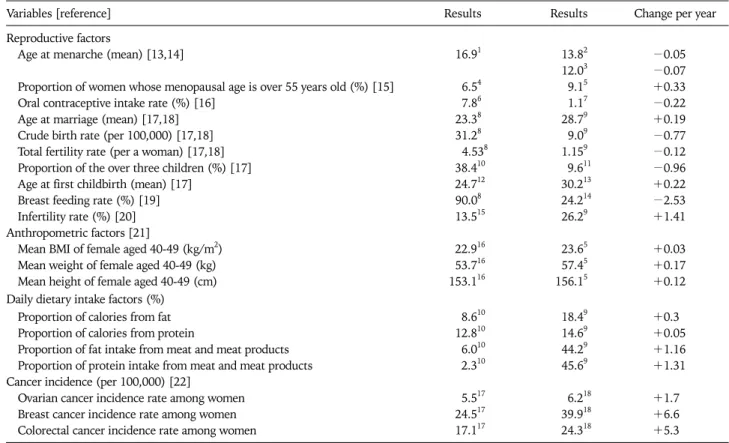
Table 1. Changes in reproductive, anthropometric and daily dietary intake patterns in Korea
Variables [reference] Results Results Change per year
Reproductive factors
Age at menarche (mean) [13,14] 16.91 13.82 −0.05
12.03 −0.07
Proportion of women whose menopausal age is over 55 years old (%) [15] 6.54 9.15 +0.33
Oral contraceptive intake rate (%) [16] 7.86 1.17 −0.22
Age at marriage (mean) [17,18] 23.38 28.79 +0.19
Crude birth rate (per 100,000) [17,18] 31.28 9.09 −0.77
Total fertility rate (per a woman) [17,18] 4.538 1.159 −0.12
Proportion of the over three children (%) [17] 38.410 9.611 −0.96
Age at first childbirth (mean) [17] 24.712 30.213 +0.22
Breast feeding rate (%) [19] 90.08 24.214 −2.53
Infertility rate (%) [20] 13.515 26.29 +1.41
Anthropometric factors [21]
Mean BMI of female aged 40-49 (kg/m2) 22.916 23.65 +0.03
Mean weight of female aged 40-49 (kg) 53.716 57.45 +0.17
Mean height of female aged 40-49 (cm) 153.116 156.15 +0.12
Daily dietary intake factors (%)
Proportion of calories from fat 8.610 18.49 +0.3
Proportion of calories from protein 12.810 14.69 +0.05
Proportion of fat intake from meat and meat products 6.010 44.29 +1.16
Proportion of protein intake from meat and meat products 2.310 45.69 +1.31
Cancer incidence (per 100,000) [22]
Ovarian cancer incidence rate among women 5.517 6.218 +1.7
Breast cancer incidence rate among women 24.517 39.918 +6.6
Colorectal cancer incidence rate among women 17.117 24.318 +5.3
1Those born in 1920-1924. 2Those born in 1980-1985. 3Those born in after 1990. 4Year of 1996. 5Year of 2004. 6Year of 1976. 7Year of 2006.
8Year of 1970. 9Year of 2009. 10Year of 1975. 11Year of 2005. 12Those born in 1955. 13Those born in after 1980. 14Year of 2006. 15Year of 2000.
16Year of 1979. 17Year of 1999. 18Year of 2007.
international comparison, we used direct age-standardized in- cidence rates for ovarian cancer (ICD10: C56) using the Segi world standard population.7 We used nationwide ovarian can- cer incidences for the period 1999-2007.4 For comparison of rates with other countries, ovarian cancer rates from the USA, UK, and Japan, were obtained from the International Agency for Research on Cancer (IARC) publication, Cancer Incidence in Five Continents Volume VIII.8 The age group 75+ was an aggregate of age groups 75-79, 80-84, 85-89, 90-94, 95-99, and 100+.
2. Mortality
Based on national death certification data, annual age-specif- ic death rates for ovarian cancer in Korea were acquired from the Korea Statistical Information System (KOSIS) of the National Statistical Office in Korea9 for the years 1983-2008.
Ovarian cancer rates for the USA, UK, and Japan were ob- tained from Surveillance, Epidemiology and End Results (SEER) statistics,10 and from the Mortality Database of the World Health Organization (WHO)’s Statistical Information System.11 All mortality rates were age-adjusted to the Segi world standard population7 using the direct method. Our age group 80+ was an aggregate of the age groups 80-84, 85-89, 90-94, 95-99, and 100+.
3. Future incidence estimation of ovarian cancer and uterine cervix cancer
Using the incidence rates of ovarian cancer and uterine cervix cancer from 1999 to 2007, we established a linear regression model to estimate the future incidence rate. The regression model was as follows: Yi=α+βtk, where tk=calendar year and Yi=age-standardized incidence rate. We obtained the best-fit α and β values using the regression model, and the estimated incidence rates after 2008 were calculated by extrapolation.
4. Demographic factors
We accessed the Demographic factors in the three aspects - nutritional factors, reproductive factors, and anthropometric factors. To study the changes of nutritional factors, the national data on food consumption from the reports of Korea National Health and Nutrition Examination Survey (KNHANES) by the Ministry of Health and Welfare,12 which was based on the amount of nutrients per capita in the food available for con- sumption in Korea were obtained. Data from national surveys or results from published papers were obtained for re- productive and anthropometric factors. If data from national surveys existed, they were primarily considered but if not, re- sults from papers were considered as alternatives. The sources that we used are described in the Table 1 and Fig. 1.
Fig. 1. Changes in dietary patterns in Korea. Fig. 2. Global incidence rates (age-standardized, Segi standard pop- ulation) for ovarian cancers. Source: Globocan, 2008. IARC, 2010.
Fig. 3. Age-standardized incidence and mortality rates for ovarian can- cer in USA, UK, Japan and Korea.
Incidence rate source: Globocan, 2008. IARC, 2010. Mortality rate source: KOSIS, 1983-2005. SEER, 1975-2007.
RESULTS
Fig. 2 shows the age-adjusted incidence of ovarian cancer in some countries.8 Global ovarian cancer incidence rate was 6.3 per 100,000 women-years, and that among Korean women was similar to that of women worldwide (5.8 per 100,000 women-years).
Although the periods for which incidences have been re- ported were variable, ovarian cancer incidence rates in Asian countries, including Korea, were lower than those in Western countries, including the USA, the UK, and France. The in- cidence for women in Israel, in which a large proportion of population are Caucasian, was higher than those of other Asian countries. Rates in Korea exceeded only those in China and Egypt where ovarian cancer incidences have been among
the lowest in the world.
Fig. 3 shows the trend of age-adjusted incidence and mortal- ity rates related to ovarian cancer in two western countries (the USA and the UK) and two Asian countries (Japan and Korea). In Korea, the nationwide incidence of ovarian cancer was 5.5 per 100,000 women-years in 1999, 5.2 per 100,000 women-years in 2000 and 2001, 5.4 per 100,000 women-years in 2002, and 5.5 per 100,000 women-years in 2003-2005. The incidence rate in 2005 rose relative to that of 2000 (5.8% in- crease); however, the rate in 2005 was not changeable (0%) relative to that of 1999. The age-adjusted incidence rates in Japan has been increasing, while those in the USA have shown a decreasing trend since 1975. Those in the UK had increased until 1997, but since then have decreased. Relative to the in- cidence rate in 2000, the rate in 2004 rose 16.0% in Japan,
Fig. 4. Age-specific incidence (1999-2007) and mortality rate (1983-2008) in Korea.
Fig. 5. Yearly changes in age-specific incidence (1999-2007) and mortality rates (1983-2008) in Korea.
Fig. 6. Future incidence rate estimation in ovarian cancer and ute- rine cervix cancer in Korea.
while that in 2005 declined 11.2% in the USA and 6.7% in the UK.
The mortality rates in the UK have been decreasing since 1975, while those in the USA have fluctuated during that same period. In contrast, those in Japan remained stable after a slight increase in mortality prior to 1987. Those in Korea have been continually increasing since 1983. Relative to the mortality rate in 1983, the rate in 2006 rose by 831.9% in Korea, while the rate rose by only 5.3% in Japan, whereas it declined by 7.2% and 15.1% in the USA and the UK, respectively.
Figs. 4 and 5 shows age-specific rates of incidence and mortal- ity for ovarian cancer in Korea. Both the age-specific incidence rate and the age-specific mortality rate showed steep increases with advancing age. Relative to the incidence rate in 1999-2001, the incidence in 2005-2007 had increased. In particular, the in- cidence gap between 1999-2001 and 2005-2007 was first ex- hibited in the 25-29 age group and the gap became wider with increases in age categories. The mortality gap between 1983- 1987 and 2003-2008 started in age category 25-29, and the gap also widened with an increase in age category (Fig. 4). From
1999 to 2007, age-specific incidence rates in the youngest age- groups (under 34 years old) were not changeable, whereas the rates increased in older age-categories. From 1983 to 2008, age- specific mortality rates showed a similar pattern to that of age-
specific incidence rates. Age-specific incidence and mortality rates in the 65-79 and 80+ age groups fluctuated year by year;
however, increases in both were detected in both age groups (Fig. 5).
Fig. 6 shows estimated age-standardized incidence rates of ovarian and uterine cervix cancers. The incidence rate of ovar- ian cancer is continually increasing, whereas that of uterine cervix cancer is continuously decreasing. The R2 value of both regression models for ovarian cancer and uterine cervix were 0.98 and 0.97, respectively. When we assumed that the slope in the rate change regression from 1999 to 2007 is maintained in the future until 2020, the incidence rate of ovarian cancer could surpass that of uterine cervix cancer in 2015, and ovar- ian cancer may then become the more common gynecological cancer than cervix cancer in Korea.
Fig. 1 and Table 1 presents that the changes in nutritional fac- tors, reproductive factors, and anthropometric factors in Korea.
Based on national survey data conducted since 1969, the amount of protein, fat, and animal food intake as well as the percent of calories from fat and protein, and the percent of fat and protein from meat and meat products has been increased.23 Age at menarche has been decreasing13,14 and the proportion of women whose menopause were delayed increased.15 Oral contraceptive agent usage has been decreasing,16 otherwise the percentage of infertility among married women has increased recently (from 13.5% in 2000 to 26.2% in 2009). In particular, the increasing rate among fertile women aged 30-39 was nearly 78%.23 The mean age of women at marriage has risen17,18 and the mean age at first childbirth has continued to rise from 24.7 for women born in 1955, to 30.2 years for those born in 1980.24 Total fertility rates have declined from 4.5324 to 1.15 during last 30 years and the proportion of women having more than three children and breast feeding rate has also been decreasing (Table 1).25 Also, the obesity rate among Korean women has been increasing.21
DISCUSSION
Age-adjusted ovarian cancer incidence in Korea is much low- er than the incidences in Western nations and Japan, but it has been rising steadily over time. In recent years, the rising in- cidence in Korea is similar to the incidence trends reported in other Asian countries.5,26 The mortality rate in Korea is in- creasing markedly and, from 1983 to 2006, mortality in- creased 9.5-fold nationwide (from 0.22 per 100,000 person- years in 1983 to 2.09 per 100,000 person-years), although a slightly decrease in mortality rates has been reported in sev- eral Western countries such as the USA and the UK, and in some Asian countries such as China. However, the ovarian cancer-related mortality rate in Japan remained relatively sta- ble over time.1,2,20
In Korea, the reasons for the increases in ovarian cancer in- cidence and mortality are unclear, but may be explained in part by the gradual westernization of lifestyles and changes in
socio-demographic behavior factors affecting environmental factors in Korea. Western lifestyle factors, such as increased meat and fat consumption, have been linked to elevated ovar- ian cancer risk in a recent meta-analysis.27 In Korea, there has been a shift toward increased westernization of dietary pat- terns such as increasing the percent of calories from fat and protein, and the percent of fat and protein from meat and meat products (Fig.1, Table 1).12
Some changes in reproductive factors, such as nulliparity, have been shown to have the potential to increase the risk of developing ovarian cancer. The expanding role of women in the work place has led to a shift in the pattern of childbearing to later in reproductive life. In Korea, the mean age of women at marriage and first child birth has risen.17,18,20 In addition, fertil- ity rates have declined rapidly.20,24 Ovulation-inducing drugs, such as clomifene citrate, were reported to have a relationship with ovarian cancer risk with debate,28,29 while infertility among women having normal ovulation has been identified as a risk factor for ovarian cancer.30 In Korea, the greater avail- ability of ovarian stimulating drugs due to increased infertility rates among marred women23,31 might be expected to influence the increasing trend in ovarian cancer incidence. In Korea, the infertility rate among married women was 13.5-26.5% (Table 1), which is similar or higher than the 10-20% infertility rate among women in western populations.31
One of the leading hypothesis of ovarian cancer is the
“incessant ovulation” hypothesis.32 According to this hypoth- esis, increasing lifetime ovulatory cycles by starting menarche earlier,13,14 stopping menstruation later15 and decreasing oral contraceptives16,33 usage in Korea (Table 1) may be one of the important contributing factors to ovarian cancer. Considering that lactation suppresses ovulation and plays a favorable role in ovarian cancer,34 decreasing breast feeding rate19 might af- fect increasing ovarian cancer incidence in Korea (Table 1).
Also, increasing obesity rate among Korean women21 might explain the rapid increase of ovarian cancer among elderly women (Fig. 4, Table 1).
Therefore, changes in socio-demographic, menstrual and re- productive factors, life-style related factors contribute to changes in the incidence of future ovarian cancer in Korea.
The observed regional variation in ovarian cancer incidence, along with dietary patterns further supports our hypothesis that westernization is partly affecting changes in reproductive factors over time. Although ethnic differences or genetic var- iation such as BRCA mutation are thought to be the main rea- son for regional variation in ovarian cancer incidence, wester- nized life styles might affect the regional differences of ovar- ian cancer to a considerable extent. Age-standardized ovarian cancer incidence and mortality rates have been highest in North America as well as in Northern and Middle Europe, while they have been intermediate in Oceania and South America, and lowest in Asia (including Korea) and Africa.3 These differences among world regions may be consistent with westernizing of diet and lifestyle conditions. Also other
reproductive factors, including longer periods of breast feed- ing, as well as the use of oral contraceptives and tubal liga- tion35,36 may be different between regions. For example, in Korea, the percentage of oral contraceptive use for the pur- pose of contraception is very low (1.8%) relative to that of western women (15% in the USA, 25% in the UK, and 40% in the Netherlands). This international difference in oral contra- ceptive use may reflect international differences in ovarian cancer incidence rates.
In particular, the increasing trend in ovarian cancer related mortality in Korea may be attributed to the rise in ovarian can- cer incidence rates. Though the mortality rates in westernized countries show a decreasing trend, and even in Japan where the incidence rate was slightly increasing or stable, ovarian cancer mortality rates in Korea have increased steadily. This contradiction in trends may be attributed to declines in mis- classification bias. The proportion of death confirmations by physicians’ diagnoses may be related to the accuracy of deter- mination of the cause of death; thus, leading to a decreasing misclassification bias. Until 1990, the proportion of deaths confirmed by a physician’s diagnosis was much lower than in subsequent years,22 potentially leading to an increase in re- ported ovarian cancer mortality. In another aspect, since the nationwide ovarian cancer incidence has been published since 1999, the mortality of ovarian cancer data may be under- estimated because of the lack of incidence information.
In summary, population-based incidence and mortality data in Korea suggest that ovarian cancer incidence and mortality have been low, but are increasing steadily over time. This up- ward trend may be explained in part by increased western- ization of life style factors and changes in reproductive factors due to socio-demographical secular trend. Nevertheless, a major part of the disparity in ovarian cancer incidences be- tween women in Korea and those in western countries such as the USA, remains unexplained. Moreover, although many studies regarding risk factors for ovarian cancer have been re- ported, there are few studies for behavior-related modifiable risk factors and genetic risk factors. In particular, epidemio- logical studies into risk factors among Korean women are rare. Based on a continuation of current trends, after 2015, ovarian cancer is estimated to be a more common gyneco- logical cancer than cervical cancer in Korea. However, consid- ering the rapid westernization in Korea and lag time, the in- creasing pattern would become more rapid than our estimation. Therefore, future quantitative studies with large sample sizes with individual-level exposure estimation and molecular assessment are needed to provide insight into the role of putative risk factors. Such studies will help elucidate the independent and combined effects of environmental and genetic factors in ovarian cancer etiology, and may uncover factors related to racial differences in ovarian cancer risk. In 2009, a National Cancer Institute grant initiated the Korean Epithelial Ovarian Cancer (Ko-EVE) Study, which is aimed at establishing Korean risk factors and is designed to produce
evidence-based clinical practice guidelines for epithelial ovar- ian cancer. It is hoped that the Ko-EVE study will provide unique and important data on the etiology and natural history of Korean epithelial ovarian cancer.
CONFLICT OF INTEREST
No potential conflict of interest relevant to this article was reported.
ACKNOWLEDGEMENTS
This study was supported by a grant from the National R&D Program for Cancer Control, Ministry for Health, Welfare and Family affairs, Republic of Korea (0920010).
REFERENCES
1. Brewster WR. Temporal trends in ovarian cancer: incidence and mortality across Europe. Nat Clin Pract Oncol 2005; 2: 286-7.
2. Olaitan A, Mocroft A, Jacobs I. Patterns in the incidence of age-related ovarian cancer in South East England 1967-1996.
BJOG 2000; 107: 1094-6.
3. World Health Organization. Globocan 2008 [Internet]. Lyon:
International Agency for Research on Cancer; [cited 2010 Jul 15]. Available from: http://globocan.iarc.fr/.
4. Ministry for Health, Welfare and Family Affairs. Annual report of cancer incidence (2007), cancer prevalence (2007) and sur- vival (1993-2007) in Korea. Seoul: Ministry for Health, Welfare and Family Affairs; 2009.
5. Kim K, Zang R, Choi SC, Ryu SY, Kim JW. Current status of gy- necological cancer in China. J Gynecol Oncol 2009; 20: 72-6.
6. Ahn YO. Cancer registration in Korea: the present and furtherance.
J Prev Med Public Health 2007; 40: 265-72.
7. Segi M, Kurihara M. Cancer mortality for selected sites in 24 countries. Sandai: Department of Public Health, Tohoku University of Medicine; 1966.
8. Parkin DM, Whelan SL, Ferlay J, Teppo L, Thomas DB. Cancer in- cidence in five continents, Vol. VIII. IARC scientific publication No.
155. Lyon: International Agency for Research on Cancer; 2002.
9. Korea National Statistical Office. Korean Statistical Information System (KOSIS): Annual report on the cause of death statistics.
1983-2005 [Internet]. Daejeon: Korea National Statistical Office;
[cited 2010 Jul 15]. Available from: http://www.kosis.kr.
10. Altekruse SF, Kosary CL, Krapcho M, Neyman N, Aminou R, Waldron W, et al. SEER cancer statistics review, 1975-2007 [Internet]. Bethesda: National Cancer Institute; 2009 [cited 2010 Jul 15]. Available from: http://seer.cancer.gov/csr/1975_2007/.
11. World Health Organization, Global Healrh Observatory (GHO).
Mortality and Burden of Diseases Estimates for WHO Member States in 2004, Table 1: Estimated total female deaths, by cause and WHO member state, 2004 [Internet]. Geneva: World Health Organization; 2009 [cited 2010 Jul 15]. Available from: http://apps.
who.int/ghodata/resources/gbddeathdalycountryestimates_fem ale_2004.xls.
12. Ministry of Health & Welfare, Korean Centers for Disease Control and Prevention. Korea National Health & Nutrition Examination Survey [Internet]. Seoul: Ministry of Health and Welfare; [cited 2010 Sep 14]. Available from: http://knhanes.cdc.go.kr/.
13. Cho GJ, Park HT, Shin JH, Hur JY, Kim YT, Kim SH, et al. Age at menarche in a Korean population: secular trends and influenc-
ing factors. Eur J Pediatr 2010; 169: 89-94.
14. Park MJ, Lee IS, Shin EK, Joung H, Cho SI. The timing of sexual maturation and secular trends of menarchial age in Korean adolescents. Korean J Pediatr 2006; 49: 610-6.
15. Park SK, Kang D, Kim Y, Yoo KY. Epidemiologic characteristics of the breast cancer in Korea. J Korean Med Assoc 2009; 52:
937-45.
16. Korea Institute for Health and Social Affairs (KIHASA). National survey data of marriage and fertility transition in 2009 [Internet].
Seoul: Ministry of Health and Welfare; 2009 [cited 2010 Jul 15].
Available from: http://www.mw.go.kr.
17. Korean Statistical Information Service. The population statistics [Internet]. Daejeon: Korea National Statistical Office; [cited 2010 Sep 13]. Available from: http://www.kosis.kr/.
18. Korea National Statistical Office. Population projections for Korea:
2005-2050 [Internet]. Daejeon: Korea National Statistical Office;
[cited 2010 Jul 15]. Available from: http://kostat.go.kr.
19. Whittemore AS, Harris R, Itnyre J. Characteristics relating to ovarian cancer risk: collaborative analysis of 12 US case-control studies. II. Invasive epithelial ovarian cancers in white women.
Collaborative Ovarian Cancer Group. Am J Epidemiol 1992; 136:
1184-203.
20. Kolahdooz F, van der Pols JC, Bain CJ, Marks GC, Hughes MC, Whiteman DC, et al. Meat, fish, and ovarian cancer risk: results from 2 Australian case-control studies, a systematic review, and meta-analysis. Am J Clin Nutr 2010; 91: 1752-63.
21. Ushijima K. Current status of gynecologic cancer in Japan. J Gynecol Oncol 2009; 20: 67-71.
22. National Cancer Information Center [Internet]. Goyang: National Cancer Center; [cited 2010 Jul 15]. Available from: http://www.
cancer.go.kr/cms/statics/incidence/index.html#4.
23. Kim NI, Lee JH. An analytical review of the methods computing age at first marriage. Korean J Popul Stud 1995; 18: 1-22.
24. Korea National Statistical Office. The pilot result of birth sta- tistics in 2009 [Internet]. Daejeon: Korea National Statistical Office; [cited 2010 Jul 15]. Available from: http://kostat.go.kr/.
25. Size Korea. Comparison of estimates according to year [Internet].
Gwacheon: Korea Ministry of Commerce, Industry and Energy;
[cited 2010 Oct 10]. Available from: http://sizekorea.kats.go.kr/.
26. Hirabayashi Y, Marugame T. Comparison of time trends in ovary can- cer mortality (1990-2006) in the world, from the WHO Mortality Database. Jpn J Clin Oncol 2009; 39: 860-1.
27. Nugent D, Salha O, Balen AH, Rutherford AJ. Ovarian neoplasia and subfertility treatments. Br J Obstet Gynaecol 1998; 105: 584-91.
28. Brinton LA, Moghissi KS, Scoccia B, Westhoff CL, Lamb EJ.
Ovulation induction and cancer risk. Fertil Steril 2005; 83: 261-74.
29. Parazzini F, Franceschi S, La Vecchia C, Fasoli M. The epidemi- ology of ovarian cancer. Gynecol Oncol 1991; 43: 9-23.
30. Hwang N. The status of infertility and policy direction in Korea.
Health Welf Policy Forum 2003; 82: 88-97.
31. Risch HA. Hormonal etiology of epithelial ovarian cancer, with a hypothesis concerning the role of androgens and progesterone. J Natl Cancer Inst 1998; 90: 1774-86.
32. Moorman PG, Schildkraut JM, Calingaert B, Halabi S, Vine MF, Berchuck A. Ovulation and ovarian cancer: a comparison of two methods for calculating lifetime ovulatory cycles (United States).
Cancer Causes Control 2002; 13: 807-11.
33. Zografos GC, Panou M, Panou N. Common risk factors of breast and ovarian cancer: recent view. Int J Gynecol Cancer 2004; 14:
721-40.
34. Kim HR, Hwang NM, Sim JE, Kim EJ. Analysis of the factors related to nutrition and policy issues for healthy future generation [Internet]. Seoul: Korea Institute for Health and Social Affairs (KIHASA); 2008 [cited 2010 Sep 13]. Available from: http://211.
252.146.15/pub/docu/kr/AK/AA/AKAA2008AAQ/AKAA-200 8-AAQ.PDF.
35. Collaborative Group on Epidemiological Studies of Ovarian Cancer, Beral V, Doll R, Hermon C, Peto R, Reeves G. Ovarian cancer and oral contraceptives: collaborative reanalysis of data from 45 epidemiological studies including 23,257 women with ovarian cancer and 87,303 controls. Lancet 2008; 371: 303-14.
36. Jo MW, Khang YH, Yun S, Lee JY, Lee MS, Lee SI. Proportion of death certificates issued by physicians and associated factors in Korea, 1990-2002. J Prev Med Public Health 2004; 37: 345-52.