pISSN 2288-9272 eISSN 2383-8493 J Oral Med Pain 2017;42(4):89-101 https://doi.org/10.14476/jomp.2017.42.4.89
Characteristics and Treatment of Temporomandibular Disorder in Children and Adolescents: An Analytic Review
Hyung-Seok Park 1 , Yong-Woo Ahn 1,2 , Sung-Hee Jeong 1,2 , Hye-Mi Jeon 3 , Soo-Min Ok 1,2
1 Department of Oral Medicine, Institute of Translational Dental Sciences, Pusan National University, Yangsan, Korea
2 Dental Research Institute, Pusan National University Dental Hospital, Yangsan, Korea
3 Dental Clinic Center, Pusan National University Hospital, Busan, Korea
Received September 20, 2017 Revised December 19, 2017 Accepted December 20, 2017
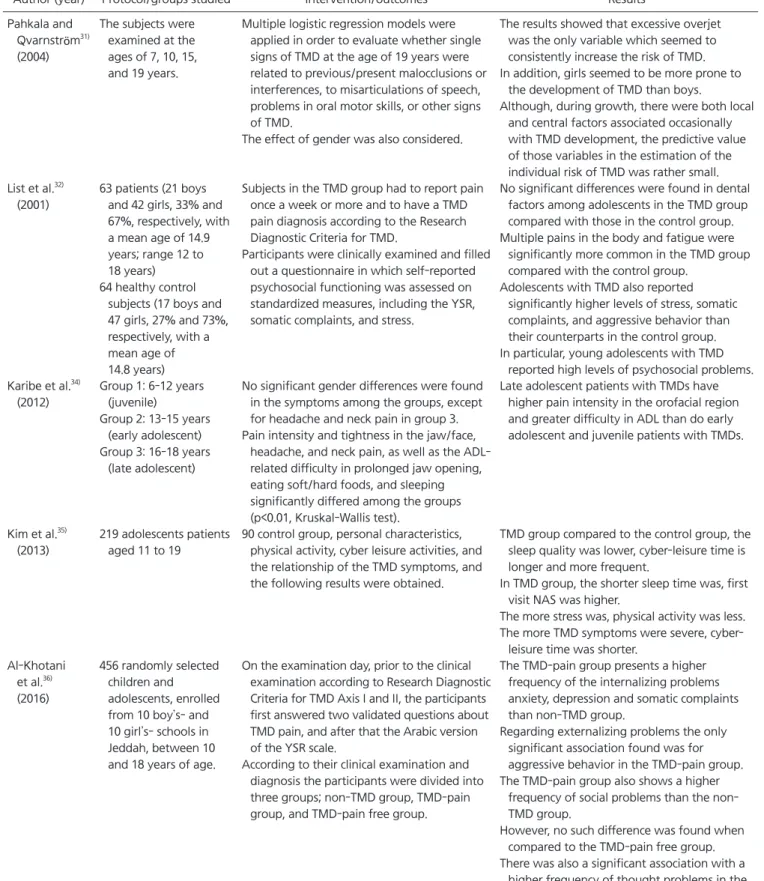
Purpose: The purpose of this study is to investigate the prevalence of temporomandibular dis- orders (TMDs) in children and adolescents, their characteristic contributing factors, the charac- teristic features of symptoms and symptoms, and the response to treatment.
Methods: We studied the researches, that were the results of the searches for words such as temporomandibular disorder, TMD, children, adolescents, and juvenile through PubMed and DBpia.
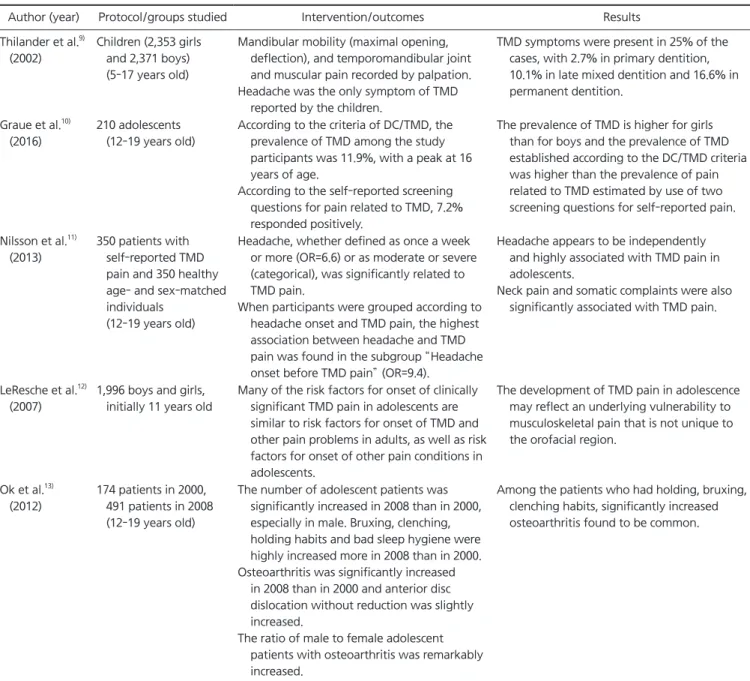
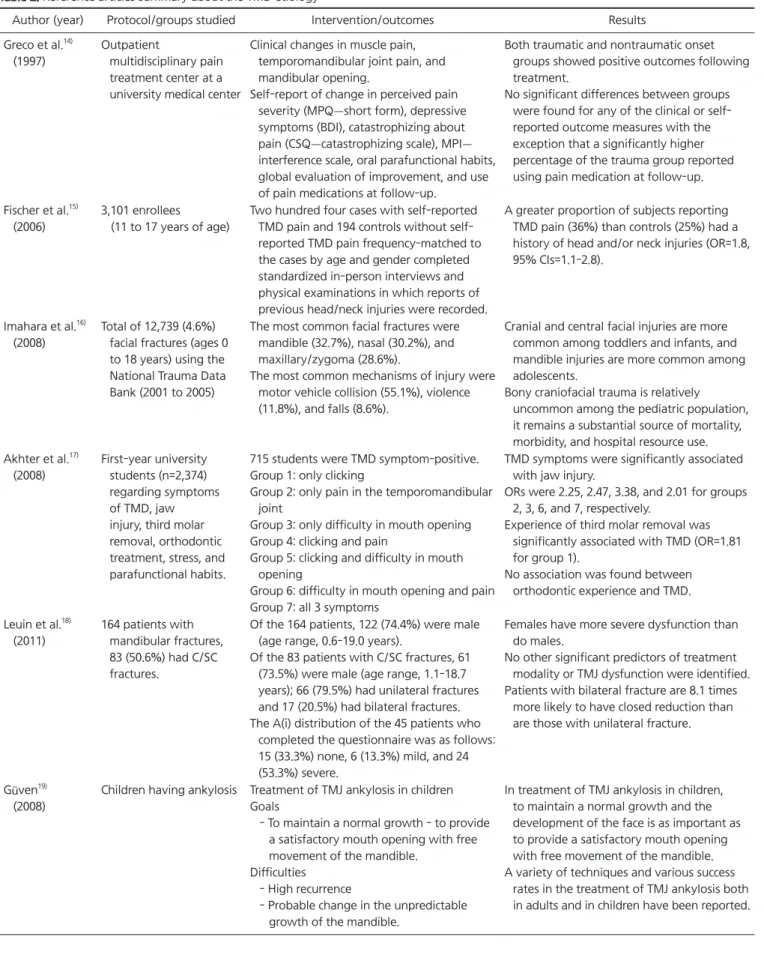
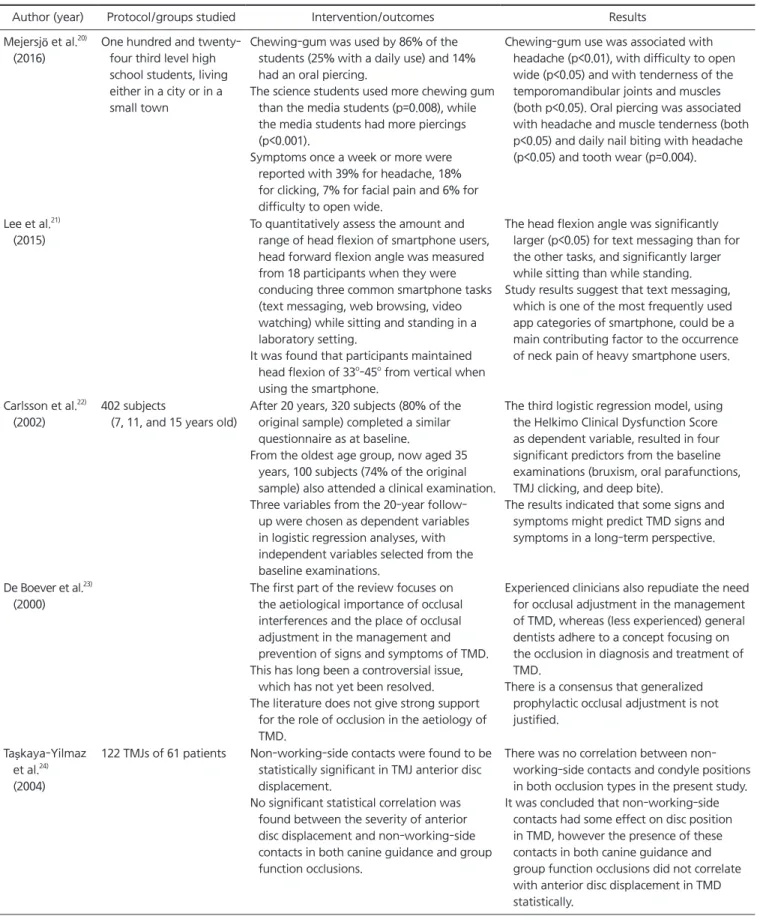
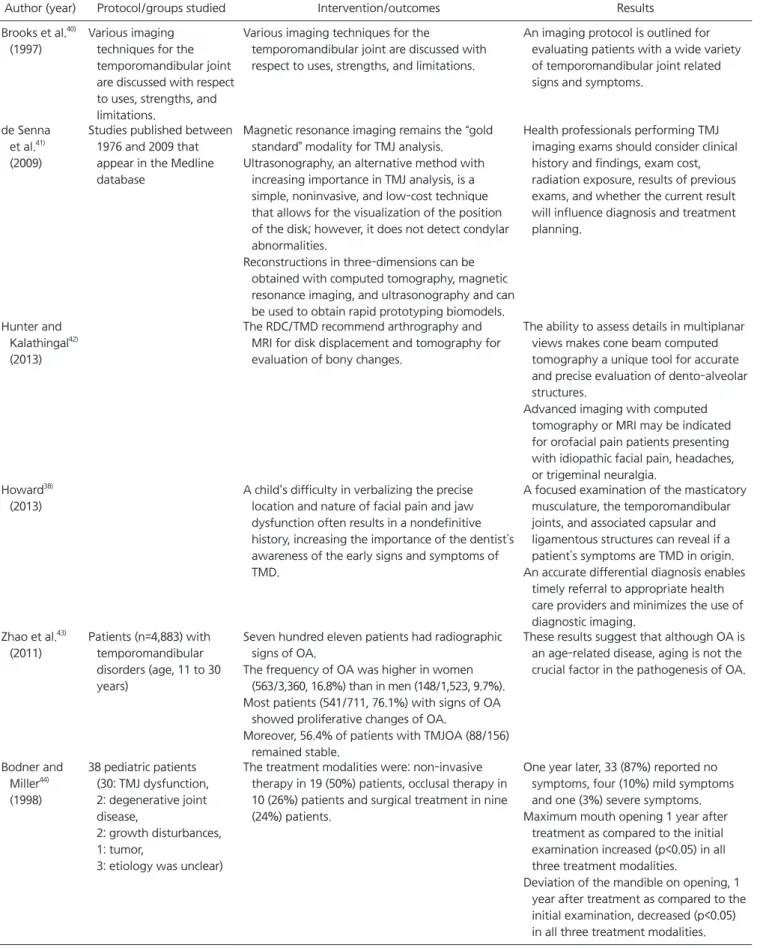
Results: According to a study conducted in Busan, the ratio of adolescents increased from 18.3% to 21% in 2008 compared to 2000, and the proportion of boys increased from 38.58% to 45.38%. One of the characteristic contributing factors for adolescents is the macrotrauma such as jaw trauma, vehicle accidents, sports, physical abuse, forceful intubation, and third molar extraction. The second is a microtrauma from parafunctional habit such as bruxism, clenching, hyperextension, wind instrument, and fingernail biting that can cause joint overload, cartilage breakdown, synovial fluid alterations, and other changes within the joint. The diagnosis of TMDs in juvenile adolescents is not significantly different from that of adults. Medical history, clinical examination and radiological examinations are required.
Conclusions: In the temporomandibular joint history and assessment, all comprehensive den- tal history examination is required, including head and neck pain, mandibular dysfunction, previous orofacial trauma, history of present illness with an account of current symptoms.
For the treatment and management of temporomandibular arthritis in juvenile adolescents, understanding the characteristics of TMDs in juvenile adolescents and thoroughly analyzing appropriate diagnosis and possible contributing factors through comprehensive history taking
& examination, conservative treatment, including fast and active cautions education, will be essential.
Key Words: Adolescent; Children; Juvenile; Temporomandibular disorder; TMD
Correspondence to:
Soo-Min Ok
Department of Oral Medicine, Pusan National University, School of Dentistry, 49 Busandaehak-ro, Mulgeum-eup, Yangsan 50612, Korea Tel: +82-55-360-5243
Fax: +82-51-510-8241 E-mail: [email protected] This study was supported by Clinical Research Grant, Pusan National University Dental Hospital (2017).
JOMP Journal of Oral Medicine and Pain
Copyright Ⓒ 2017 Korean Academy of Orofacial Pain and Oral Medicine. All rights reserved.
CC