R E S E A R C H Open Access
Assessment of the correlation between various risk factors and orofacial cleft disorder spectrum: a retrospective case- control study
Behzad Cheshmi 1 , Zahra Jafari 1* , Mohammad Ali Naseri 2,3 and Heidar Ali Davari 3,1
Abstract
Background: Orofacial clefts (OFCs) comprise a wide range of malformations, including cleft lip, cleft palate, and cleft lip with cleft palate, which can vary in terms of etiology, severity, and disease burden.
Objective(s): This study aimed to evaluate the correlation between various risk factors and orofacial cleft disorder spectrum in newborns.
Study design: A total of 323 cases and 400 controls were enrolled in this study and evaluated in terms of the maternal history of abortion or miscarriage, child ’s sex, maternal and paternal age, maternal history of systemic disease, history of medication therapy during pregnancy, birth order, consanguineous marriage, and complications during pregnancy.
Results: Analysis of the results suggested that consanguineous marriage, a maternal history of abortion/miscarriage, and complications during pregnancy could potentially increase the risk of OFCs in children ( P < 0.05). However, the analyses revealed that the other variables could not potentially increase the risk of OFCs ( P > 0.05).
Conclusion(s): Multiple cofactors may simultaneously contribute to the formation of such abnormalities; therefore, a comprehensive, multidisciplinary care program is necessary to ensure a successful pregnancy period and the birth of a healthy newborn.
Keywords: Cleft lip, Cleft palate, Orofacial cleft, Miscarriage, Abortion, Pregnancy
Introduction
Orofacial clefts (OFCs) comprise a wide range of malfor- mations, including cleft lip, cleft palate, and cleft lip with cleft palate, which can vary in terms of etiology, severity, and disease burden [1]. The etiology of OFCs is multi- factorial, including various genetic (e.g., chromosomal abnormalities and syndromes) and environmental (e.g., medication use, dietary deficiencies, smoking, consump- tion of alcohol, obesity, exposure to toxins, high altitude,
birth order, socioeconomic status, and parental age) fac- tors [2–6]. Therefore, by understanding the multifactor- ial etiology of these abnormalities, we can explain the proposed approaches for the prevention and treatment of OFCs [7, 8]. Environmental factors, either alone or in combination with genetic factors involved in morpho- genesis (e.g., TGF-α/TGF-β, BCL3, and MSX1), are com- monly responsible for 60% of OFC abnormalities [4]. A wide range of pharmaceutical products, such as medica- tions, which are generally used for the treatment of can- cer, arthritis, and psoriasis, may also cause OFCs [9]. In one of the most comprehensive global studies of OFC prevalence, researchers found that 45,193 out of 30,665,
© The Author(s). 2020 Open Access This article is licensed under a Creative Commons Attribution 4.0 International License, which permits use, sharing, adaptation, distribution and reproduction in any medium or format, as long as you give appropriate credit to the original author(s) and the source, provide a link to the Creative Commons licence, and indicate if changes were made. The images or other third party material in this article are included in the article's Creative Commons licence, unless indicated otherwise in a credit line to the material. If material is not included in the article's Creative Commons licence and your intended use is not permitted by statutory regulation or exceeds the permitted use, you will need to obtain permission directly from the copyright holder. To view a copy of this licence, visit http://creativecommons.org/licenses/by/4.0/.
* Correspondence: [email protected]
1
Department of Oral and Maxillofacial Medicine, Faculty of Dentistry, Broujerd Branch, Islamic Azad University, Broujerd, Iran
Full list of author information is available at the end of the article
615 people were diagnosed with one of these abnormal- ities, that is, 1.47 per 1000 live births worldwide [10]. Pa- tients with a type of OFC often experience complications, such as cosmetic problems, reduced muscle function, feeding problems, ear infections, speech difficulties, dentoalveolar disorders (e.g., dental crowding and decay), and significant psychological effects on the child and parents [11, 12]. Currently, studies on individ- uals with OFCs mainly focus on the etiology of these ab- normalities to reduce the incidence rate. Since the formation of OFCs is not often dependent on a single factor, and multiple cofactors may simultaneously con- tribute to such abnormalities, a one-dimensional study is unlikely to yield reliable results. Therefore, in this study, we aimed to evaluate the association between various factors and the birth of a child with OFCs.
Materials and methods
This retrospective, case-control study was conducted at the Craniofacial and Cleft Research Center of Isfahan University of Medical Sciences, Isfahan, Iran, from 2014 to 2020. Data were collected by reviewing the medical records of mothers, fathers, and children, with or without a reported history of OFCs. The study pro- cedures were verbally explained to the parents, and written consent was obtained. All procedures in this study were in accordance with the ethical standards of the local research committee, as well as the Declaration of Helsinki.
Mothers who received childbirth care at the hospital and delivered newborns with or without OFCs were in- cluded in this study. The exclusion criteria were as fol- lows: (1) Patients without medical records, (2) patients with incomplete medical records, (3) mothers not receiv- ing medical care at the hospital during 2014–2020 and also, (4) patients diagnosed with syndromic OFCs were excluded. The study variables included the maternal his- tory of abortion or miscarriage, child’s sex, maternal and paternal age, maternal history of systemic disorders, his- tory of medication therapy during pregnancy, birth order, consanguineous marriage, and complications dur- ing pregnancy.
The obtained data were stored in a database and ana- lyzed using SPSS® Version 26.0 (IBM Corp., Armonk, N.Y., USA). Statistical analyses were carried out using lo- gistic regression analysis. To estimate the risk of OFCs, the odds ratio (OR) was calculated at a confidence inter- val of 95% (95% CI). P values less than 0.05 were consi- dered statistically significant.
Results
A total of 323 cases and 400 controls were enrolled in this study. The mean ± SD of age was 31.4 ± 5.4 and 30.78 ± 5.05 years in the case and control mothers,
respectively. Also, the mean ± SD of age was 32.60 ± 4.80 and 31.69 ± 4.76 years in the case and control fa- thers, respectively. Overall, 171 (53%) children in the case group and 204 (51%) children in the control group were female. Based on the results, 42 (13%) mothers of children with OFCs and 28 (7%) control mothers re- ported a history of abortion or miscarriage. Also, 119 (36%) mothers of children with OFCs and 93 (23%) con- trol mothers reported a consanguineous marriage.
A review of mothers’ medical records showed that 36 (11%) mothers of children with OFCs and 32 (8%) control mothers suffered from at least one systemic disorder. Medication therapy during pregnancy was re- ported by 122 (38) case mothers and 124 (31%) control mothers. The results showed that 92 (29%) mothers of children with OFCs and 88 (22%) control mothers experienced a complication during pregnancy.
Based on the results, the correlation between the birth of a child with OFCs and child’s sex (OR = 1.081; CI 0.806–1.450), medication use during pregnancy (OR = 1.358; CI 0.997–1.850), and history of a systemic dis- order (OR = 1.443; CI 0.874–2.380) was not significant (P > 0.05). However, the birth of a child with OFCs had a potential correlation with the maternal history of abor- tion/miscarriage (OR = 1.986; CI 1.201–3.283), consan- guineous marriage (OR = 1.926; CI 1.393–2.662), and complications during pregnancy (OR = 1.412; CI 1.007–
1.980) (P > 0.05).
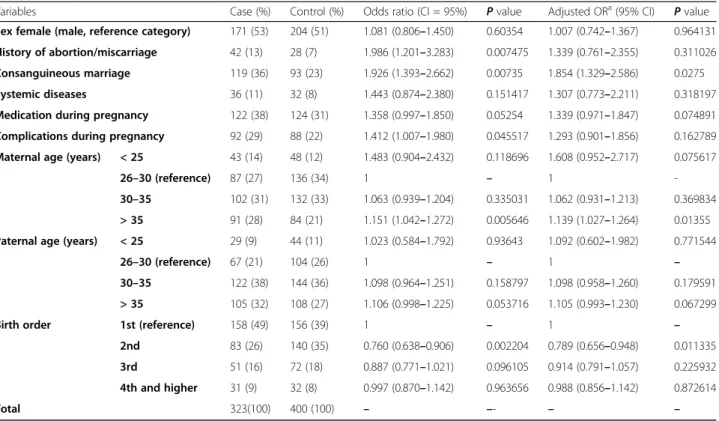
Table 1 presents the results of bivariate and multivari- ate analyses, comparing the demographic and clinical characteristics of patients with OFCs and the controls.
To improve the accuracy of our findings and prevent the effects of confounding factors, the adjusted ORs were also reported for the variables, in addition to the independent OR for each variable.
Discussion
The main purpose of this study was to evaluate the cor- relation between various risk factors and orofacial cleft disorder spectrum in newborns. As explained earlier, to improve the accuracy of available data, the correlation between the various risk factors and the risk of giving birth to a child with OFCs was evaluated in a multifac- torial model. For this purpose, we reported the adjusted ORs, in addition to the crude ORs.
We may be able to computationally explain the inci- dence and prevalence of OFCs by examining the risk factors in each community [5]. This study was con- ducted at the Craniofacial and Cleft Research Center of Isfahan University of Medical Sciences, Isfahan, Iran. In this regard, Khazaei et al. [13], in a meta-analysis, re- ported that the cumulative incidence of OFCs in Iran was 1.0/1000 (0.77/1000 to 3.37/1000; 95% CI 0–1.5).
Therefore, it can be concluded that the incidence of
OFCs is lower in Iran, compared to the global average [10].
Our findings revealed a potential correlation between the history of abortion/miscarriage and the birth of a child with OFCs in the subsequent pregnancies (P <
0.05), which is consistent with the results of several studies [14–16]. Mbuyi-Musanzayi et al. [17] and Acuña-González et al. [18], in two independent studies, showed that the maternal history of miscarriage in- creased the risk of giving birth to a child with OFCs in the subsequent pregnancies; however, their findings were not statistically significant. According to our lit- erature review, no study has yet assessed the etiology of the increased risk of OFCs in children of mothers with a history of miscarriage. It is theoretically pos- sible that factors, such as consumption of anti- miscarriage medications, abnormalities and defects in the uterine wall, and increased maternal stress in the subsequent pregnancies, are related to the increased risk of OFCs in children of mothers with a history of miscarriage [19–22].
The results of the present study showed that female newborns were slightly more likely to develop cleft lip and cleft palate, compared to males, although this cor- relation was not significant (P > 0.05). The male/female ratio in our study was about 0.88, whereas this ratio in another study conducted in Iran was 2.3 [23]. Also,
studies from other countries often suggest that males are more likely to be born with OFCs, compared to females [15, 17, 24]; overall, understanding the cause of this dif- ference requires further investigations.
Moreover, medication use during pregnancy has been identified as a factor, which cannot potentially increase the risk of OFCs in children (P > 0.052). However, the independent analysis of medications used by mothers during pregnancy was beyond our capacity. Our in- vestigations showed that the most common medica- tions used by the mothers of children with OFCs during pregnancy included anti-stress medications, miscarriage prevention drugs, antibiotics, and some pain-relief medications, such as non-steroidal anti- inflammatory drugs. Nevertheless, the results of vari- ous studies [14 – 16, 25 – 28] regarding the increased risk of OFCs following medication therapy are incon- sistent. We believe that it is not statistically reliable to report an absolute OR for all drug categories, and it is suggested to evaluate each drug category separ- ately. The results of studies evaluating the effect of a particular drug on the increased risk of OFCs are probably more conclusive [29–32].
Pregnancy complications such as maternal cold or flu, preeclampsia, anemia, pregnancy hypertension, gesta- tional diabetes, and intrauterine hypoxia can potentially increase the risk of OFCs in children (P < 0.05).
Table 1 The association between the risk factors and development of OF
Variables Case (%) Control (%) Odds ratio (CI = 95%) P value Adjusted OR
a(95% CI) P value
Sex female (male, reference category) 171 (53) 204 (51) 1.081 (0.806 –1.450) 0.60354 1.007 (0.742 –1.367) 0.964131 History of abortion/miscarriage 42 (13) 28 (7) 1.986 (1.201 –3.283) 0.007475 1.339 (0.761 –2.355) 0.311026 Consanguineous marriage 119 (36) 93 (23) 1.926 (1.393 –2.662) 0.00735 1.854 (1.329 –2.586) 0.0275
Systemic diseases 36 (11) 32 (8) 1.443 (0.874 –2.380) 0.151417 1.307 (0.773 –2.211) 0.318197
Medication during pregnancy 122 (38) 124 (31) 1.358 (0.997 –1.850) 0.05254 1.339 (0.971 –1.847) 0.074891 Complications during pregnancy 92 (29) 88 (22) 1.412 (1.007 –1.980) 0.045517 1.293 (0.901 –1.856) 0.162789 Maternal age (years) < 25 43 (14) 48 (12) 1.483 (0.904 –2.432) 0.118696 1.608 (0.952 –2.717) 0.075617
26 –30 (reference) 87 (27) 136 (34) 1 – 1 -
30 –35 102 (31) 132 (33) 1.063 (0.939 –1.204) 0.335031 1.062 (0.931 –1.213) 0.369834
> 35 91 (28) 84 (21) 1.151 (1.042 –1.272) 0.005646 1.139 (1.027 –1.264) 0.01355 Paternal age (years) < 25 29 (9) 44 (11) 1.023 (0.584 –1.792) 0.93643 1.092 (0.602 –1.982) 0.771544
26 –30 (reference) 67 (21) 104 (26) 1 – 1 –
30 –35 122 (38) 144 (36) 1.098 (0.964 –1.251) 0.158797 1.098 (0.958 –1.260) 0.179591
> 35 105 (32) 108 (27) 1.106 (0.998 –1.225) 0.053716 1.105 (0.993 –1.230) 0.067299
Birth order 1st (reference) 158 (49) 156 (39) 1 – 1 –
2nd 83 (26) 140 (35) 0.760 (0.638 –0.906) 0.002204 0.789 (0.656 –0.948) 0.011335
3rd 51 (16) 72 (18) 0.887 (0.771 –1.021) 0.096105 0.914 (0.791 –1.057) 0.225932
4th and higher 31 (9) 32 (8) 0.997 (0.870 –1.142) 0.963656 0.988 (0.856 –1.142) 0.872614
Total 323(100) 400 (100) – –- – –
C
a
OR is adjusted for all other factors in the table
Similarly, a study by Bui et al. [16] revealed that compli- cations during pregnancy significantly increased the risk of OFCs in children. On the other hand, Acuña-Gonzá- lez et al. reported that the effect of gestational diabetes and preeclampsia on the increased risk of OFCs was not significant (P > 0.05) [18].
According to the definition of systemic disorders, which are known to affect a number of organs and tis- sues or the body as a whole [33], we found that the ef- fect of maternal systemic disorders on the risk of OFCs in children was not significant (P > 0.05). Similarly, the results of a study by Mirilas et al. [34] showed that ma- ternal systemic disease could not significantly increase the risk of OFCs in children. On the other hand, Taghavi et al. [35] and Krapels et al. [36], in separate studies, re- ported that maternal systemic disease increased the risk of OFCs in children.
In the present study, the most remarkable factor, which potentially increased the risk of OFCs, was con- sanguineous marriage (P < 0.05). However, the results of studies by Mbuyi-Musanzayi et al. [17] and Corona- Rivera et al. [15] regarding the effect of consanguineous marriage on the risk of OFCs were not significant. It is estimated that 20% of the world’s population lives in communities, where there is an inclination toward con- sanguineous marriage, and 8.5% of children are the re- sult of these marriages worldwide [37–39]. Overall, consanguineous marriage seems to be significantly influ- enced by cultural norms [40, 41]. The prevalence of con- sanguineous marriage in Iran is estimated at 38% (α = 0.0185), which is significantly higher than the global average [40, 42].
In the current study, the effects of maternal and pater- nal age were not significant for most categories. How- ever, the results of a meta-analysis suggested that fathers and mothers above 40 years had 58% and 28% higher risks of having a child with OFC, respectively, com- pared to those aged 20–39 years. On the other hand, no association was observed between young maternal and paternal age and the occurrence of OFCs in an- other study [43].
Moreover, the results of our study regarding birth order showed that last children were more predisposed to OFCs, which is consistent with the findings of a meta-analysis [44].
Although a general pattern can be occasionally found among the risk factors for OFCs, our review of various studies indicated that the effects of these risk factors were not similar in different populations. Apart from dif- ferences in the sample size, study methodology, and stat- istical tests, the communities’ genetic diversities, as well as geographical, economic, and cultural factors, may affect the outcomes of studies conducted in different societies. For instance, the high prevalence of
consanguineous marriage in relatively traditional devel- oping countries significantly increases the risk of OFCs (e.g., Iran), compared to Western developed countries, where this type of marriage is not very common. The implicit conclusion that can be drawn from these find- ings is that studies conducted in different countries can only identify the factors, which may increase the risk of OFCs. However, to reach a reliable understanding of the factors increasing the risk of OFCs in a specific society, it is essential to conduct an exclusive study of risk fac- tors in the target population.
In the present study, considering the wide range of OFC abnormalities with multiple underlying factors, it was not possible to examine all factors influencing OFCs due to the lack of facilities; this can be considered as the most important limitation of our study. Also, examin- ation of different trimesters, a separate examination of different types of OFCs, paternal factors, smoking, con- sumption of alcohol, socioeconomic status of families, the status of maternal education, and maternal body mass index was among the crucial factors that could not be addressed in this study and require further investigation.
Conclusion
Our results indicated a potential correlation between some variables such as consanguineous marriage or a maternal history of abortion/miscarriage and the birth of a child with OFCs in the subsequent pregnancies. Since the formation of OFC, lesions are not usually dependent on a single factor, and multiple cofactors may simultan- eously contribute to such abnormalities, and a compre- hensive, multidisciplinary care program is necessary to ensure a successful pregnancy period and birth of a healthy newborn. It is also necessary to conduct further studies in various populations in order to gain a compre- hensive understanding of the multifactorial etiology of the OFCs disorder spectrum.
Abbreviations
OFCs: Orofacial clefts;; CL: Cleft lip; CP: Cleft palate; CLP: Cleft lip with cleft palate; OR: Odds ratio; CI: Confidence interval
Acknowledgements
We would like to thank the Faculty of Dentistry of Broujerd Islamic Azad University and Craniofacial and Cleft Research Center of Isfahan University of Medical Sciences for their constructive collaborations.
Authors ’ contributions
B.C. contributed substantially to the conception and design of the study, the acquisition of data, and the analysis and interpretation. Z.J. and M.A.N.
provided critical revision of the article and provided final approval of the version to publish. H.A.D. supervised the project. All authors discussed the results and contributed to the final manuscript. The author(s) read and approved the final manuscript.
Funding
The author(s) received no financial support for the research, authorship, and/
or publication of this article.
Availability of data and materials
The datasets generated and/or analyzed in the current study are not publicly available, but are available from the corresponding author on reasonable request.
Ethics approval and consent to participate
This study was designed and conducted in accordance with the
recommendations of the Declaration of Helsinki for investigations involving human subjects and was approved by the local research ethics committee (IR.IAU.B.REC.1398.042).
Consent for publication Not applicable.
Competing interests
The authors declare that they have no competing interests.
Author details
1