Chamber to Chamber Variations of a Cylindrical Ionization Chamber for the Calibration of an
192Ir Brachytherapy Source Based on
an Absorbed Dose to Water Standards
Seong Hoon Kim*, Hyundo Huh†, Sang Hyun Choi†, Chan Hyeong Kim‡, Chul Hee Min‡, Dong Oh Shin§, Jinho Choi∥
*Department of Radiation Oncology, Hanyang University Hospital, †Department of Radiation Oncology, Inhwa University Hospital, ‡Department of Nuclear Engineering, Hanyang University,
§Department of Radiation Oncology, Kyung Hee University Hospital, Seoul,
∥Department of Radiation Oncology, Gachon University of Medicine and Science, Incheon, Korea
This work is for the preliminary study for the calibration of an 192Ir brachytherapy source based on an absorbed dose to water standards. In order to calibrate brachytherapy sources based on absorbed dose to water standards using a clyndirical ionization chamber, the beam quality correction factor
is needed. In this study
s were determined by both Monte carlo simulation and semiexperimental methods because of the realistic difficulties to use primary standards to measure an absolute dose at a specified distance. The 5 different serial numbers of the PTW30013 chamber type were selected for this study. While chamber to chamber variations ran up to maximum 4.0% with the generic
, the chamber to chamber variations were within a maximum deviation of 0.5% with the individual
. The results show why and how important ionization chambers must be calibrated individually for the calibration of 192Ir brachytherapy sources based on absorbed dose to water standards. We hope that in the near future users will be able to calibrate the brachytherapy sources in terms of an absorbed dose to water, the quantity of interest in the treatment, instead of an air kerma strength just as the calibration in the high energy photon and electron beam.
Key Words: Beam quality correction factor, Absorbed dose to water, Ionization chamber, Primary standards
This study was supported by a grant of Nuclear R&D program by Ministry of Education, Science and Technology.
Submitted February 18, 2009, Accepted March 14, 2009
Corresponding Author: Seong Hoon Kim, Department of Radiation On- cology, Hanyang Universuty Hospital, 17, Haengdang-dong, Seong- dong-gu, Seoul 133-792, Korea.
Tel: 02)2290-8625, Fax: 02)2290-8620 E-mail: [email protected]
INTRODUCTION
For the calibration of the high energy photon and electron beams, air-kerma based calibration system has been replaced by the absorbed dose to water calibration system. The proto- cols based on the absorbed dose to water aim to provide di- rectly the absorbed dose to water, which is just the quantity of interest in the clinical treatment, instead of air kerma. This work is for the preliminary study for the calibration of an bra-
chytherapy source based on an 192Ir absorbed dose to water standards.
Calibrations in clinical practice for the HDR brachy therapy
192Ir sources are usually performed in air in terms of air kerma rate using the well-type chambers or jig phantoms. The strength of brachytherapy sources is still commonly specified by the air-kerma strength. As in the case of high energy pho- ton and electron beams, the so-called air-kerma is not the quantity of interest in the brachytherapy treatment and the ab- sorbed dose to water is just the quantity of interest. Some au- thors have been trying to develop the primary standards for the calibration of HDR 192Ir brachytherapy sources based on absorbed dose to water standards.1,2)
Every user has the cylindrical ionization chamber types, which are routinely used for the calibration of the high energy photon and electron beams. In order to calibrate brachytherapy
0 0 0
, , , , 192
, ,
, , , ,
D W Q D W Ir gen
Q Q Q Q
D W Q D W Cobalt
N N
k k
N N
= = =
Q W D Q
W M N
D = ⋅ , ,
Q W Q W
D M
N , , = D
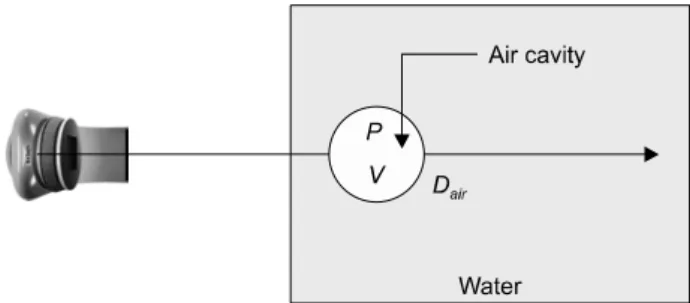
Fig. 1. Relation of charges collected in the air cavity and the
absorbed dose to the air cavity. The air cavity has the volume of V and ρ the density of ρ. The charge
collected in the air cavity can be derived from the absorbed dose to the air cavity
if
could be determined.
sources based on an absorbed dose water using an ionization chamber, the beam quality correction factor is needed.
The absorbed dose to water based protocols,3,4) however, rec- ommend that in the low and medium energy X-ray generic values of
shoud not be used because of large chamber to chamber variations in energy response within a same type ion- ization chamber and that chambers must be calibrated individually. The 192Ir source has a broad spectrum ranging from about 61 keV to 1.4 MeV or so and it means this source might be considered roughly to belong to low and medium en- ergy range.5-8)
According to the recommendations by the protocols, the in- dividual chambers must be provided with directly measured values of
in the 192Ir source. Until now, the PSDLs doesn’t provide users with directly measured values of
for the 192Ir source, that is to say, there are no primary stand- ards dedicated to brachytherapy sources based on an absorbed dose to water (under development by some authors). To be unfortunate, users should wait more long years to be able to calibrate brachytherapy sources including 192Ir source based on an absorbed dose to water standards.
It is a reality that the individual beam quality correction fac- tors
of the chamber of interest cannot be obtained for the
192Ir source, and we tried to investigate, first, chamber to chamber variations of an PTW30013 ionization chamber when as a makeshift the generic value of
was used, which is calculated through Monte Carlo simulation, and, second, cham- ber to chamber variations when chambers are given imagina- rily individual calibrations, where “imaginarily” means that the dose RTP system delivers is used as an imaginary absolute dose as if determined by primary standards.
MATERIALS AND METHODS
1. Theory and formalism for the calculation of generic values of
An absorbed dose to water in the clinical user beam of beam quality is calculated according to TRS-398 or TG-51 protocol as follows.
0 0
, , ,
w Q D W Q Q Q
D =M ⋅N ⋅k (1) Where is the reading of the dosimeter corrected for the
ambient air pressure and temperature, the calibration factor in terms of absorbed dose to water, and corrects for the effects of the difference between the reference beam quality and the clinical user beam quality .
The factor can be expressed as
(2)
For the calculation of and , Eldorado8 cobalt therapy machine was modeled using BEAM code and the PTW30013 Chamber and the Ir-192 source were coded us- ing EGSnrcCPP code.
If the factor for the beam quality could be known, the absorbed dose to water in the same beam is given by
(3)
The calibration correction factor is given from the equation (3) by
(4)
Therefore, if and could be determined
could be calculated. While the absorbed dose to water can be obtained directly from Monte carlo simulation, charge col- lected in the cavity is derived (not directly but indirectly) from the absorbed dose to the air cavity , which is also obtained from Monte carlo simulation.
( )
Q air
air
M W D =m ⋅ e
( )
air( )
air( )
Q air
D D
M m V
W W
e e
ρ
= ⋅ = ⋅
( )
, , W
D W Q
air air
D We N = D ⋅ m
( )
60
, , 60 60
Co w
D W Co Co
air air
D We N = D ⋅ m
( )
192
, , 192 192
Ir D W Ir wIr
air air
D We N = D ⋅ m
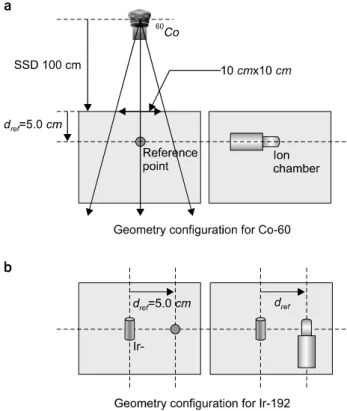
Fig. 2. Geometry configuration for the Monte carlo simuation to
calculate
. (a) is for Co-60 irradiation where the absorbed doses both at the reference point and an ion chamber were calculated at 5.0 cm depth in a 10×10 cm
2field size at an SSD of 100 and (b) for the Ir912 irradiation. Both the reference depth
for Co-60 simulation and the reference distance for the Ir912 simulation were chosen 5.0 cm. The absorbed doses both in the reference point and the chamber air cavity were calculated by Monte carlo simulation.
If The is known, the absorbed dose to the air cavity
is given by
(5)
From equation (5), is given by
(6)
Where is the mass of the air in the cavity and ( )We, 33.97[JC]was used in this calculation, is the mean energy ex- pended in air per ion pair formed and its. If the Volume V and density ρ of the air cavity are known, can be de- termined from the equation (6) because can be calculated from the Monte carlo simulation.
The equation (4) of the calibration correction factor
is now rewritten using the equation (6) as follows.
(7)
The calibration correction factors and
are given as follows.
(8)
(9)
In order to calculate and according to (8) and (9) the geometry in Fig 2. was used. The absorbed dose for the Co-60 beam was calculated at 5.0 cm depth in a 10×10 cm2 field size at an SSD of 100 and the reference dis- tance to obtain the absorbed dose for Ir-192 source was chos- en 5.0 cm. At first the absorbed dose to water at the ref- erence depth (distance as for Ir-192 source) was determined using Monte carlo simulation. The PTW30013 chamber was then positioned at the same reference depth (distance as for Ir-192 source) and the absorbed dose to air cavity was determined. The and determined by Monte Carlo simulation were used to calculate and in equation (8) and (9).
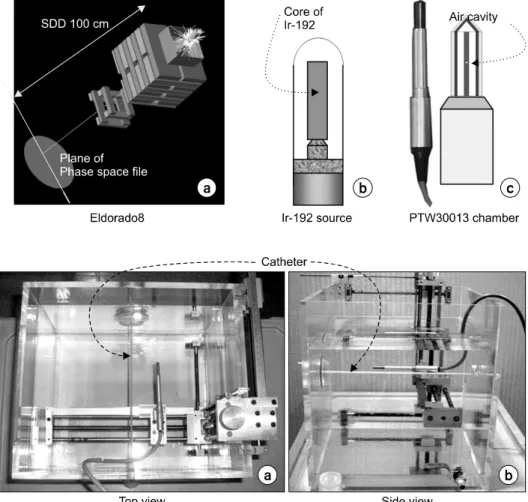
The model of Eldorado8 as the Cobalt teletherapy machine was chosen and modeled using BEAM code (Fig. 3). Phase
space file was obtained at the plane of SSD 100 cm and used as the source file of the cobalt beam. The geometry of both the Ir-192 source and the PTW30013 ionization chamber was modeled using EGSnrcCPP code. The absorbed doses in both the Co-60 sysetm an the Ir-192 source system were determined by EGSnrcCPP code.
2. The individual values of
for the particular chamber
According to recommendations given in the protocols based on an absorbed dose to water, the ionization chambers must be calibrated individually in the low and medium energy X-ray. It means that the generic value of
for a given ionization chamber type should not be used in this range of energy. The
Fig. 3. Schematic diagram of
simulation geometries used in this work. (a) shows diagram of Eldo- rado 8 teletherapy machine, (b) Ir-192 source, and (c) PTW30013 ionization chamber. The Eldorado 8 model was modeled using BEAM code and the phase space file was obtained at the plane of SSD 100 cm in a 10×10 cm
2field size. Both Ir-192 source and PTW30013 chamber were modeled using EGSnrcCPP code.
0
, , ,
, , D W Ir ind
Q Q
D W Co
k N
= N
192
, , 192
Ir w
D W Ir Ir
Q
N D
= M
Fig. 4. The multipurpose phantom
system developed for this work.
The multipurpose phantom (MPBP) for brachytherapy sources only was designed. This MPBP enables a chamber to position at the dis- tance you want from the center of the Ir-192 source.
192Ir source has a broad spectrum ranging from about 61 keV to 1.4 MeV or so and therefore might be considered roughly to belong to low and medium energy range.
The individual
for the particular chamber can be de- termined by equation (2) and (4).
(10)
(11)
is the calibration factor in terms of absorbed dose to water of the PTW 30013 chambers obtained from a standards laboratory at a reference beam quality 60Co and the calibration factor obtained from measurements at an 192Ir source. in equation (11) should be determined from di- rect measurements.
For this work the multipurpose brachytherapy phantom (MPBP) was home-made, which was designed to enable both sources and chambers positioned at the exact distance you want from the Ir-192 source in water phantom (Fig. 4). Ir-192 source moves through the fixed catheter and the chamber is positioned at the distance of 5 cm from the center of Ir-192 source.
Charge readings in equation (11), which were cor- rected for temperature, air pressure, polarity effect, and ion re- combination, were obtained using this phantom system.
in equation (11) couldn’t be determined directly because no primary or secondary standards for 192Ir standard source are available . As an alternative for direct measurement with pri- mary standards, the dose delivered by the RTP system was used as .
, , 5.17
D W cobalt cGy
N = ⎡⎢⎣ nC⎤⎥⎦
, , 192 5.25
D W ir cGy
N = ⎡⎢⎣ nC⎤⎥⎦
, 0 1.015
gen
kQ Q =
0
192 192
, , 60 ,
Ir gen Ir
mea D W co Q Q Q
D =N ⋅k ⋅M
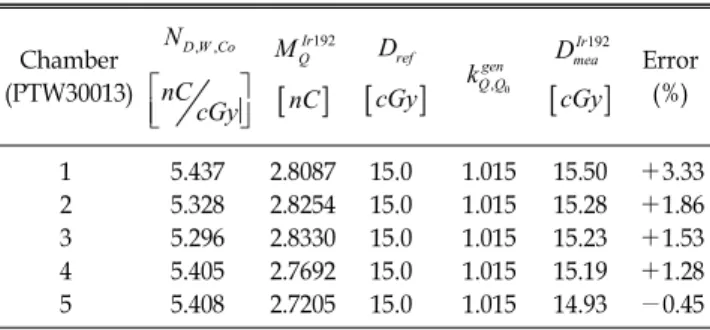
Table 1. Doses to water determined with the generic value of
with the uncertainty of 0.3%. The errors in the last column represent the ratio of the dose
measured with chambers to the dose
delivered by the RTP system.
Chamber (PTW30013)
, , D W Co
N nCcGy
⎡ ⎤
⎢ ⎥
⎣ ⎦
192 Ir
MQ
[ ]nC
Dref
[cGy] kQ Qgen,0
192 Ir
Dmea
[cGy]
Error (%)
1 5.437 2.8087 15.0 1.015 15.50 +3.33
2 5.328 2.8254 15.0 1.015 15.28 +1.86
3 5.296 2.8330 15.0 1.015 15.23 +1.53
4 5.405 2.7692 15.0 1.015 15.19 +1.28
5 5.408 2.7205 15.0 1.015 14.93 −0.45
RESULTS AND DISCUSSION
Measurements were performed with five different serial numbers of PTW30013 ionization chambers, which were posi- tioned at the same reference distance. An afterloading device with Nucletron HDR 192Ir source were used in this measure- ments. Nucletron system delivered 15.0 cGy to the reference point and the dose to water delivered at the point were meas- ured with 5 PTW30013 chambers and an UNIDOS electro- meter.
1. The absorbed dose calculated with the generic value of
The data released by F.Ballester was used as the spectrum of 192Ir source. 20 mCi, which amounts to 1,657,600,000 his- tories, were used for the 192Ir source Monte Carlo simulation and one hundred million histories were used for the simulation of Co-60 beam irradiation.
The absorbed dose to water calibration factors of the PTW30013 chamber , and , in the Co-60 beam and 192Ir source were calculated according to equation (8) and (9) with the uncertainty of ±0.3%.
(12)
(13)
The beam qualtity correction factor
of PTW30013 chamber is then calculated by equation (2)
(14) Now, the absorbed dos to water in the 192Ir brachy- therapy source can be calculated with the calibration factor ND,W,cobalt calibrated in the 60Co gamma ray beam by
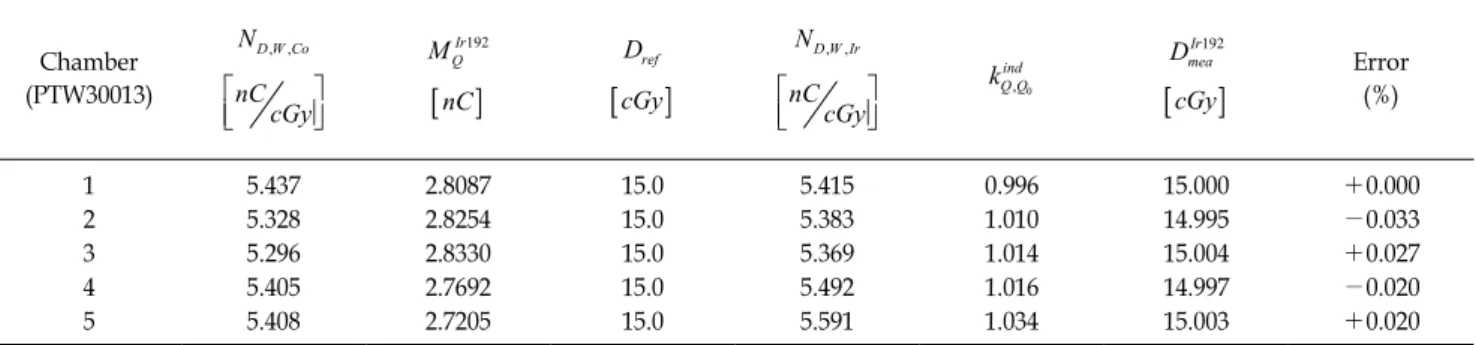
(15) s in Table 1 are the absorbed dose to water calibra- tion factors of each chamber provided from KFDA (Korea Food & Drug Administration), which has the secondary stand- ards of radiation dosimetry traceable to IAEA standard, in the
60Co gamma ray, the charge reading in unit of [nC]
corrected for a temperature, an air pressure, a polarity effect, and an ion recombination, the dose delivered by RTP system at the position of an chamber in the absence of the chamber, and the dose calculated by equation (15).
Protocols, as noted before, don’t recommend to use generic values of
in the low and medium energy X-ray. As ex- pected from the recommendation, the absorbed doses calcu- lated with the generic
for 5 chambers show the differ- ence of maximum 3% from the dose delivered by RTP system and chamber to chamber variations run up to maximum 4.0%.
If 5% could be, for example, accepted as the uncertainty ex- tent of the determination of the dose in HDR brachytherapy source, the generic values of
might be O.K to be used to determine roughly the dose in the HDR source. In order for the generic value of
to make sense and useful to the de- termination of the dose, you could be sure that the data of chamber to chamber variations in the same chamber type should be first obtained from as many samples as possible, at least 10 or more and that the variations be within a certain ac- ceptable level.
2. The absorbed dose calculated with the individual
measured
The 5 different serial numbers of the PTW30013 chamber type were positioned at the reference distance of 5.0 cm from the center of the 192Ir source and dwelled while the RTP sys- tem delivered 15.0 cGy to that position. This dose of 15.0 cGy was used as the measured dose -this is as a make- shift only an alternative for direct measurements with pri-
0
912 192
, , 60 ,
Ir ind Ir
mea D W co Q Q Q
D =N ⋅k ⋅M
Table 2. Doses to water determined with the individual value of
with the uncertainty of ±0.3%. The errors in the last column represent the ratio of the dose
measured with chambers to the dose
delivered by the RTP system.
Chamber (PTW30013)
, , D W Co
N nCcGy
⎡ ⎤
⎢ ⎥
⎣ ⎦
192 Ir
MQ
[ ]nC
Dref
[cGy]
, , D W Ir
N nCcGy
⎡ ⎤
⎢ ⎥
⎣ ⎦
,0 ind
kQ Q
192 Ir
Dmea
[cGy]
Error (%)
1 5.437 2.8087 15.0 5.415 0.996 15.000 +0.000
2 5.328 2.8254 15.0 5.383 1.010 14.995 −0.033
3 5.296 2.8330 15.0 5.369 1.014 15.004 +0.027
4 5.405 2.7692 15.0 5.492 1.016 14.997 −0.020
5 5.408 2.7205 15.0 5.591 1.034 15.003 +0.020
mary/secondary standards- in equation (11) for the calculation of the absorbed dose to water calibration factor of the individual chambers in the 192Ir source.
The individual values of
for the each chamber were then calculated from equation (10). The absorbed dose to wa- ter at the reference distance of 5.0 cm from individual chambers were then calculated from the following equation.
(16)
The semiexperimentally measured
values for 5 differ- ent serial numbers of an PTW30013 chamber type were in the range of 0.996 to 1.034. The absorbed doses calculated with those
values were in a good agreement within 0.3%with the dose delivered by the RTP system and the chamber to chamber variations were within a maximum deviation of 0.5%.
Small variations between chambers in Table 2 show that pro- tocols based on absorbed dose to water standards be good and easy methods for the calibration of 192Ir brachytherapy sources only if chambers could be individually calibrated.
CONCLUSION
It is of course sure that the factor from this method be not as accurate as calculated by primary standards. That is to say, this study bears an intrinsic limitation that the dose by RTP system instead of the direct measurements were used for the calculation of .
Nevertheless, the result shown in the Table 2 gives users hopeful hints that this kind of trials done in this work might
be an alternative for the calibration of 192Ir brachytherapy sources based on absorbed dose to water standards in the sit- uation where primary standards are nonavailable and stresses how important the individual calibrations of ionization cham- bers are for the calibration of 192Ir brachytherapy sources.
We hope that in the near future primary standards dedicated to the calibration of the brachytherapy sources based on ab- sorbed dose to water be developed in Korea and that users will be able to calibrate the brachytherapy sources in terms of an absorbed dose to water, the quantity of interest in the treat- ment, instead of an air kerma strength just as the calibration in the high energy photon and electron beam.
REFERENCES
1. Arman Sarfehnia, Kristin stewart, Jan Seuntjens: An absorbed dose to water standard for HDR
192Ir brachytherapysources based on water calorimetry: Numerical and experimental proof- of-priciple. Med Phys 34:4957-4961 (2007)
2. Austerlitz C, Mota HC, Sempau J, et al: Determination of absorbed dose in water at the reference point D(r
0, θ
0) for an
192Ir HDR brachytherapy source using a Fricke system. Med
Phys 35:5360-5365 (2008)
3. IAEA Technical Reports No.398: Absorbed dose Deter- mination in External Beam Radiotherapy. IAEA, VIENNA (2000) 4. Peter R.Almond, Peter J.Biggs, Coursey BM, et al:
AAPM’s TG-51 Protocol for clinical reference dosimetry of high energy photon and electron beams. Med Phys 26:1847-1870 (1999)
5. Ballester F, Hernandez C, Perez-Calatayud J, Lliso F:
Monte Carlo calculation of dose rate distributions around
192Ir wires. Med Phys 24:1221-1228 (1997)
6. Reynaert N, Verhaegen F, Thierens H: In-water calibra-
tion of PDR
192Ir brachytherapy sources wirh an NE2571 ioniza-tion chamber. Phys Med Biol 43:2095-2107 (1998)
물흡수선량 표준에 기반한
192Ir 근접치료 선원 교정 시 원통형 이온함의 이온함 간 변화
*한양대학병원 방사선종양학과, †인하대학병원 방사선종양학과, ‡한양대학교 원자력공학과,
§경희의료원 방사선종양학과, ∥가천의과대학 방사선종양학교실
김성훈*ㆍ허현도†ㆍ최상현†ㆍ김찬형‡ㆍ민철희‡ㆍ신동오§ㆍ최진호∥
본 논문은 물 흡수선량 표준에 기반하여 근접치료 선원인 192Ir을 교정하는 것에 대한 예비적 연구를 위한 것이다. 이온함 을 사용하여 물흡수선량 표준에 기반하여 근접치료 선원을 교정하기 위해선, 빔 선질 교정인자인 가 필요하다. 본 연구에선 일차 표준을 사용하여 지정된 거리에서의 흡수선량를 측정하는 데 있어서의 현실적인 어려움 때문에 몬테칼로 전산모사와 반실험적인 방법을 통하여 를 결정하였다. 본 연구를 위해 PTW30013 이온함 5개를 선택하였다. 포괄적
값의 경우엔 이온함간 변화가 최대 4.0%에 이른 반면, 개별적 경우엔 이온함간 변화가 최대 0.5% 이내였다.
이 결과는 물 흡수선량에 기반하여 근접치료 선원인 192Ir을 교정시에 이온함을 왜 개별적으로 교정해야 하는지, 개별적 인 교정이 얼마나 중요한 지를 보여 준다. 가까운 장래에 공기커마 세기 대신에 사용자가 근접치료 선원을 고에너지 광 자빔과 전자빔의 교정에서처럼 치료에서 관심있는 물리량인 물흡수선량의 관점에서 교정할 수 있기를 희망한다.
중심단어: 빔선질 교정인자, 물흡수선량, 이온함, 일차 표준