생약제제 중 이산화황 잔류실태 시중 유통 생약제제 중 이산화황의 잔류실태 조사
이춘영#·이정숙·이현경·박원희·김정곤·정애희 서울특별시 보건환경연구원
(Received September 27, 2011; Revised November 20, 2011; Accepted December 6, 2011)
Analysis of Sulfur Dioxide Residue in Commercial Medicine Prepared from Crude Drugs
Chun-Yeong Lee#, Jeong-Sook Lee, Hyun-Kyung Lee, Won-Hee Park, Jeong-Gon Kim and Ae-Hee Chung Seoul Metropolitan Government Research Institute of Public Health and Environment, Seoul 137-734, Korea
Abstract — This study was carried out to investigate the content of sulfur dioxide residues in the medicine prepared from crue drugs. Total 29 pills that contains salvia miltiorrhiza root, anemarrhena rhizome, fritillaria bulb, glehnia root, asparagus tuber, lycium fruit, moutan root bark, cimicifuga rhizome, pinellia tuber, dipsaci radix, codonopsis pilosula root, liriope tuber, achyranthes root, prepared aconite, aurantii fructus immaturus, corydalis tuber, dioscorea rhizome were examined by the modified Monier_Willams method. Sulfur dioxide were detectd in all the tested samples, and were found over MRLs (30 mg/
kg to medicinal herbs) in 8 samples (27.6%). Especilly, "i2" pills contains 132.46 mg/kg sulfur dioxide that is 4 times over than MRLs.
Keywords □ sulfur dioxid, pills, modified Monier_Willams method
이산화황(Sulfur dioxide, SO2)은 무색의 자극성 있는 불연성 가스로 기체 상태를 아황산 가스라고도 하며 황산화물(SOx) 중 에서 가장 많은 양을 차지하고 있다. 식품의 갈변에 관여하는 폴 리페놀 옥시다제의 작용을 강하게 저지하고 미생물의 번식을 억 제하므로 갈변방지, 방부와 발효억제의 목적으로 사용되고 있는 데, 한약재의 경우 박피, 세단, 분쇄 및 건조 등의 가공처리 과정 에서 효소 등에 의한 갈변을 방지하거나 색택을 좋게 하기 위한 목적으로 사용되고 있으며, 또한 건조 시 드는 시간과 비용의 절 감을 위하여 연탄건조 등의 과정을 거치면서 자연스럽게 아황산 계 화합물에 노출되었다. 그러나 이산화황은 독성이 있어 공기 속의 함유율이 0.003%(30 ppm) 이상이면 식물이 말라죽고, 0.012%(120 ppm)이상이면 인체에도 해롭다고 한다.1) FAO/WHO 에 의하면 1일 섭취허용량(ADI: acceptable daily intake)은 사람 몸무게 1 kg 기준 0~0.7 mg SO2로 정하고 있으며2) 아황산나트 륨(Na2SO3)의 반치사량(LD50)은 mice에 대해 175 ppm으로 되어 있다. 최근 들어 식품에 함유된 이산화황에 의해 일부 사람들에
게 과민 반응이 나타나고 있으며, FDA의 조사 결과에 따르면 이 산화황에 의해 사망을 비롯하여 기관지 수축, 두통, 복통, 구토, 현기증, 발진 등의 증상이 보고되고 있다. 특히 천식 환자들의 경 우에 이산화황에 대해 상당히 민감한 반응을 보이기도 하지만, 과민 반응을 보인 전체 환자들 가운데 약 25%는 천식환자가 아 님에도 과민 반응이 나타나는 것으로 알려져 있어서3)아황산염 의 안전 규제에 대한 필요성이 강조되고 있다. 우리나라에서도 식품위생법이 제정되면서 아황산염류의 사용에 대하여 규정하였 으며, 현재 허용된 아황산염류로 무수아황산(sulfur dioxide), 산 성아황산나트륨(sodium bisulfite), 아황산나트륨(sodium sulfite), 차아황산나트륨(sodium hydrosulfite), 메타중아황산나트륨(sodium metabisulfite), 메타중아황산칼륨(potassium metabisulfite)의 6종 을 식품공전 및 식품첨가물공전에서 이산화황의 잔류량으로 규 제하고 있다.4)
이산화황 함유량에 대한 연구는 천연유래 이산화황 함유량에 대한 보고,5-7)이산화황 함유량 최적 분석방법을 설정하기 위하 여 모니어-윌리암스 변법, 개량랭킹법, 이온크로마토그래피법 등 을 비교한 것 등이 보고되고 있는데, 기기분석으로 잔류 이산화 황을 측정한 경우 최저검출한계를 낮출 수 있었지만 실험 결과 치는 유사함을 알 수 있었다.5,8-11)
#본 논문에 관한 문의는 저자에게로
(전화) 02-570-3118 (팩스) 02-570-3123 (E-mail) [email protected]
종설
한약재에서는 최근 몇 년간 식약청 연구용역 사업을 통하여 시중에 유통되는 생약의 이산화황에 대한 모니터링 및 시험법 개 발 등에 대한 연구가 계속적으로 진행되었으며 그 결과 2005년 8월 1일 식약청고시로 한약재 206개 품목에 대한 이산화황 허용 기준을 제정하여 시행하다가,12) 2009년 6월 16일에 생약 등에 대한 중금속, 잔류농약, 잔류이산화황, 곰팡이독소 및 벤조피렌 등 안전성의 기준을 통합하여 생약 등의 잔류·오염물질 기준 및 시험방법에 대한 고시를 제정, 시행하였다.13)그러나 개정된 고시에서는 265개 생약에 대해서만 잔류이산화황의 기준을 30 mg/
kg 으로 정하고 있어 생약의 추출물 및 제제에 대하여는 기준을 적용할 수 없게 되었다. 따라서 본 연구에서는 시중 유통 생약제 제 중에 이산화황의 잔류량을 측정하고 그 결과를 바탕으로 생
약 뿐 아니라 안전한 생약제제 관리의 기초에 제공하고자 한다.
실험방법
재료
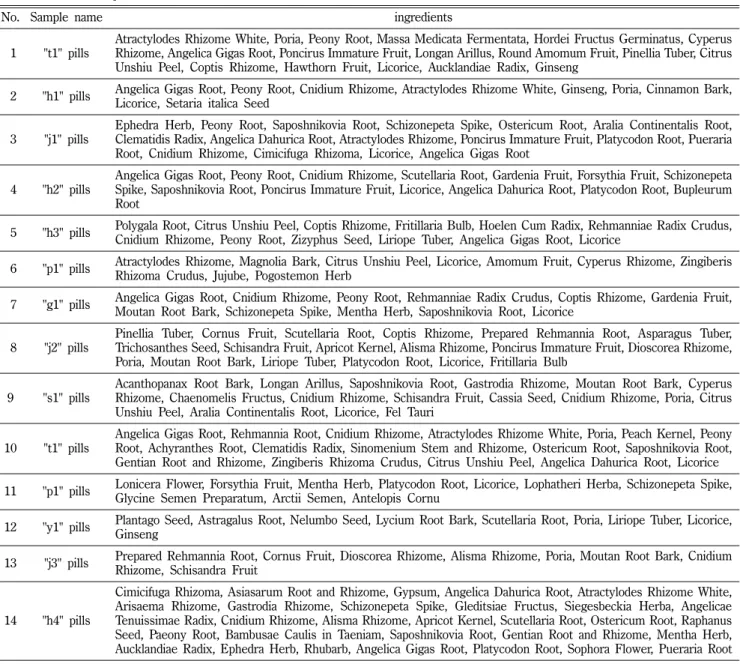
서울시청에서 시중에 유통되고 있는 생약제제를 수거하여 2010 년 11월 서울특별시 보건환경연구원 의약품 검사팀에 검사 의뢰 한 40건 중 보건환경연구원 강북검사소 한약재 검사팀에서 2008 년부터 2010년까지 검사한 결과 이산화황이 많이 검출된 생약인 단삼, 지모, 패모, 해방풍, 천문동, 구기자, 목단피, 승마, 반하, 속 단, 당삼, 맥문동, 우슬, 부자, 지각, 현호색, 산약 등을 포함하고 있는 29건의 환제를 대상으로 하였다(Table I).
Table I − List of samples tested
No. Sample name ingredients
01 "t1" pills
Atractylodes Rhizome White, Poria, Peony Root, Massa Medicata Fermentata, Hordei Fructus Germinatus, Cyperus Rhizome, Angelica Gigas Root, Poncirus Immature Fruit, Longan Arillus, Round Amomum Fruit, Pinellia Tuber, Citrus Unshiu Peel, Coptis Rhizome, Hawthorn Fruit, Licorice, Aucklandiae Radix, Ginseng
02 "h1" pills Angelica Gigas Root, Peony Root, Cnidium Rhizome, Atractylodes Rhizome White, Ginseng, Poria, Cinnamon Bark, Licorice, Setaria italica Seed
03 "j1" pills
Ephedra Herb, Peony Root, Saposhnikovia Root, Schizonepeta Spike, Ostericum Root, Aralia Continentalis Root, Clematidis Radix, Angelica Dahurica Root, Atractylodes Rhizome, Poncirus Immature Fruit, Platycodon Root, Pueraria Root, Cnidium Rhizome, Cimicifuga Rhizoma, Licorice, Angelica Gigas Root
04 "h2" pills
Angelica Gigas Root, Peony Root, Cnidium Rhizome, Scutellaria Root, Gardenia Fruit, Forsythia Fruit, Schizonepeta Spike, Saposhnikovia Root, Poncirus Immature Fruit, Licorice, Angelica Dahurica Root, Platycodon Root, Bupleurum Root
05 "h3" pills Polygala Root, Citrus Unshiu Peel, Coptis Rhizome, Fritillaria Bulb, Hoelen Cum Radix, Rehmanniae Radix Crudus, Cnidium Rhizome, Peony Root, Zizyphus Seed, Liriope Tuber, Angelica Gigas Root, Licorice
06 "p1" pills Atractylodes Rhizome, Magnolia Bark, Citrus Unshiu Peel, Licorice, Amomum Fruit, Cyperus Rhizome, Zingiberis Rhizoma Crudus, Jujube, Pogostemon Herb
07 "g1" pills Angelica Gigas Root, Cnidium Rhizome, Peony Root, Rehmanniae Radix Crudus, Coptis Rhizome, Gardenia Fruit, Moutan Root Bark, Schizonepeta Spike, Mentha Herb, Saposhnikovia Root, Licorice
08 "j2" pills
Pinellia Tuber, Cornus Fruit, Scutellaria Root, Coptis Rhizome, Prepared Rehmannia Root, Asparagus Tuber, Trichosanthes Seed, Schisandra Fruit, Apricot Kernel, Alisma Rhizome, Poncirus Immature Fruit, Dioscorea Rhizome, Poria, Moutan Root Bark, Liriope Tuber, Platycodon Root, Licorice, Fritillaria Bulb
9 "s1" pills
Acanthopanax Root Bark, Longan Arillus, Saposhnikovia Root, Gastrodia Rhizome, Moutan Root Bark, Cyperus Rhizome, Chaenomelis Fructus, Cnidium Rhizome, Schisandra Fruit, Cassia Seed, Cnidium Rhizome, Poria, Citrus Unshiu Peel, Aralia Continentalis Root, Licorice, Fel Tauri
10 "t1" pills
Angelica Gigas Root, Rehmannia Root, Cnidium Rhizome, Atractylodes Rhizome White, Poria, Peach Kernel, Peony Root, Achyranthes Root, Clematidis Radix, Sinomenium Stem and Rhizome, Ostericum Root, Saposhnikovia Root, Gentian Root and Rhizome, Zingiberis Rhizoma Crudus, Citrus Unshiu Peel, Angelica Dahurica Root, Licorice 11 "p1" pills Lonicera Flower, Forsythia Fruit, Mentha Herb, Platycodon Root, Licorice, Lophatheri Herba, Schizonepeta Spike,
Glycine Semen Preparatum, Arctii Semen, Antelopis Cornu
12 "y1" pills Plantago Seed, Astragalus Root, Nelumbo Seed, Lycium Root Bark, Scutellaria Root, Poria, Liriope Tuber, Licorice, Ginseng
13 "j3" pills Prepared Rehmannia Root, Cornus Fruit, Dioscorea Rhizome, Alisma Rhizome, Poria, Moutan Root Bark, Cnidium Rhizome, Schisandra Fruit
14 "h4" pills
Cimicifuga Rhizoma, Asiasarum Root and Rhizome, Gypsum, Angelica Dahurica Root, Atractylodes Rhizome White, Arisaema Rhizome, Gastrodia Rhizome, Schizonepeta Spike, Gleditsiae Fructus, Siegesbeckia Herba, Angelicae Tenuissimae Radix, Cnidium Rhizome, Alisma Rhizome, Apricot Kernel, Scutellaria Root, Ostericum Root, Raphanus Seed, Paeony Root, Bambusae Caulis in Taeniam, Saposhnikovia Root, Gentian Root and Rhizome, Mentha Herb, Aucklandiae Radix, Ephedra Herb, Rhubarb, Angelica Gigas Root, Platycodon Root, Sophora Flower, Pueraria Root
시약
분석에 사용된 Absolute ethanol(Junsei Chemical Co., Ltd., Kyoto, Japan), Hydrochloric acid(Dongwoo Fine-Chem, Iksan, Korea), Hydrogen peroxide(Junsei Chemical Co., Ltd., Kyoto, Japan)는 특급제품을 희석하여 사용하였다. 적정에 사용한 Methyl red(Duksan, Ansan, Korea), 0.01N-Sodium hydroxide(f=1.0, 20oC)는 용량분석용 제조시약(Wako Pure Chemical, Osaca, Japan)을 사용하였으며, 모든 시험에 사용한 물은 초순수 제조장 치(MQ Gradient, Millipore, Massachusetts, USA)로 제조한 탈 이온수를 사용하였다.
기기 및 실험방법
식품의약품안전청에서 고시한 생약의 잔류이산화황 시험법에
따라 Monier_Willams 변법 장치를 사용하여 생약제제에 잔류하 는 이산화황을 정량하였는데 3회 실험하여 평균값을 구하였다.
실험결과 및 고찰
서울시 보건환경연구원 강북검사소 한약재 검사팀에서 2008 년부터 2010년까지 검사한 결과 이산화황이 많이 검출된 생약인 단삼, 지모, 패모, 해방풍, 천문동, 구기자, 목단피, 승마, 반하, 속 단, 당삼, 맥문동, 우슬, 부자, 지각, 현호색, 산약 등을 포함하고 있는 29건의 환제를 대상으로 하여 이산화황의 잔류실태를 조사 한 결과, 시험된 모든 제제에서 이산화황이 검출되었으며, 생약 등의 잔류이산화황 기준인 30 mg/kg을 초과하여 검출이 된 제제 는 "j1" 환제, "j2" 환제 등 8건이었다(27.6%). 환제 29건의 평균 Table I − Continued
No. Sample name ingredients
15 "s2" pills
Atractylodes Rhizome White, Poria, Massa Medicata Fermentata, Hordei Fructus Germinatus, Peony Root, Cyperus Rhizome, Poncirus Immature Fruit, Angelica Gigas Root, Longan Arillus, Round Amomum Fruit, Pinellia Tuber, Hawthorn Fruit, Coptis Rhizome, Citrus Unshiu Peel, Licorice, Ginseng, Aucklandiae Radix
16 "c1" pills
Platycodon Root, Peony Root, Jujube, Poncirus Immature Fruit, Zingiberis Rhizoma Crudus, Gypsum, Magnoliae Flos, Scutellaria Root, Atractylodes Rhizome, Gardenia Fruit, Bupleurum Root, Cimicifuga Rhizoma, Anemarrhena Rhizome, Liriope Tuber, Eriobotrya Leaf
17 "g2" pills
Atractylodes Rhizome White, Cyperus Rhizome, Citrus Unshiu Peel, Pinellia Tuber, Hoelen Cum Radix, Poncirus Immature Fruit, Massa Medicata Fermentata, Coptis Rhizome, Paeony Root, Perillae Japonicae Semen, Raphanus Seed, Angelica Gigas Root, Round Amomum Fruit, Cnidium Rhizome, Licorice, Aucklandiae Radix
18 "i1" pills
Prepared Rehmannia Root, Polygala Root, Poria, Licorice, Longan Arillus, Bambusae Caulis in Taeniam, Angelica Dahurica Root, Angelicae Tenuissimae Radix, Ginseng, Cimicifuga Rhizoma, Platycodon Root, Hawthorn Fruit, Scutellaria Root, Aucklandiae Radix, Atractylodes Rhizome White, Pueraria Root, Astragalus Root, Angelica Gigas Root
19 "j4" pills
Schisandra Fruit, Dioscorea Rhizome, Atractylodes Rhizome White, Atractylodes Rhizome, Phellodendron Bark, Cuscutae Semen, Peony Root, Prepared Rehmannia Root, Testudinis Plastrum, Drynariae Rhizoma, Sinomenium Stem and Rhizome, Psoraleae Semen, Ostericum Root, Astragalus Root, Achyranthes Root, Ginseng, Saposhnikovia Root, Eucommia Bark, Angelica Gigas Root, Lycium Fruit
20 "b1" pills Pinellia Tuber, Ephedra Herb, Citrus Unshiu Peel, Lindera Root, Cnidium Rhizome, Angelica Dahurica Root, Bombycis Corpus, Aurantii Fructus Immaturus, Platycodon Root, Arisaema Rhizome, Poria, Ginger, Licorice, Jujube, Zingiberis Rhizoma Crudus 21 "k1" pills Zanthoxylum Peel, Cassiae Cotex Interior, Citrii Unshiu Immaturi Pericarpium, Rhubarb, Ginger, Zedoary, Lacca Sinica
Exsiccata, Angelica Gigas Root, Peach Kernel, Safflower
22 "s3" pills Scutellaria Root, Phellodendron Bark, Coptis Rhizome, Ursodesoxycholic acid, Ginger, Curcuma Root, Ginseng
23 "j5" pills
Asparagus Tuber, Liriope Tuber, Rehmanniae Radix Crudus, Prepared Rehmannia Root, Ginseng, Poria, Dioscorea Rhizome, Lycium Fruit, Achyranthes Root, Dendrobii Herba, Cassia Seed, Apricot Kernel, Chrysanthemi Flos, Cuscutae Semen, Aurantii Fructus Immaturus, Antelopis Cornu, Saposhnikovia Root, Celosiae Semen, Schisandra Fruit, Licorice, Coptis Rhizome, Tribuli Fructus, Cnidium Rhizome
24 "o1" pills
Cuscutae Semen, Cistanchis Herba, Asparagus Tuber, Liriope Tuber, Rehmanniae Radix Crudus, Prepared Rehmannia Root, Dioscorea Rhizome, Achyranthes Root, Eucommia Bark, Morindae Radix, Lycium Fruit, Cornus Fruit, Poria, Schisandra Fruit, Ginseng, Aucklandiae Radix, Thujae Semen, Rubi Fructus, Plantago Seed, Lycium Root Bark 25 "a1" pills Bupleurum Root, Betulae Cortex, Platycodon Root, Cnidium Rhizome, Aralia Continentalis Root, Saposhnikovia Root,
Zingiberis Rhizoma Crudus, Poria, Licorice, Schizonepeta Spike
26 "t2" pills
Acanthopanax Root Bark, Longan Arillus, Saposhnikovia Root, Gastrodia Rhizome, Moutan Root Bark, Cyperus Rhizome, Chaenomelis Fructus, Cnidium Rhizome, Schisandra Fruit, Cassia Seed, Cnidium Rhizome, Fel Tauri, Poria, Citrus Unshiu Peel, Aralia Continentalis Root, Licorice
27 "t3" pills Nelumbo Seed, Liriope Tuber, Poria, Ginseng, Plantago Seed, Scutellaria Root, Astragalus Root, Lycium Root Bark, Licorice 28 "i2" pills Cinnamomi Ramulus, Poria, Moutan Root Bark, Peach Kernel, Peony Root
29 "y1" pills Angelica Gigas Root, Cnidium Rhizome, Peony Root, Poria, Atractylodes Rhizome White, Alisma Rhizome
검출량은 25.36 mg/kg이었고 특히 "i2" 환제에서는 이산화황이 132.46 mg/kg이 검출되어 생약 등의 잔류이산화황 기준인 30 mg/
kg을 4배 이상 초과하여 검출되었다(Table II). "i2" 환제는 1포 (3.0 g) 중 계지, 복령, 목단피, 도인, 작약을 각각 600 mg 함유하 고 있는 통경제로 계지복령환 제제이다. 이산화황이 45.70 mg/
kg 검출되어 두 번째로 많이 검출된 "j1" 환제는 1환(200 mg) 중 마황, 작약 각 62.5 mg, 형개, 강활, 독활, 위령선, 백지, 창출, 지 실, 길경, 갈근, 천궁 각각 31.25 mg, 승마, 감초, 당귀 각각 18.75 mg을 주성분으로 하는 영선제통음 제제이며, 다음으로 "t3" 환제 가 43.93 mg/kg의 이산화황이 검출되었는데 "t3” 환제는 1포(3 g) 중에 연자육, 맥문동, 복령 각각 1.33 g, 인삼, 차전자, 황금 각 각 1 g, 황기, 지골피, 감초를 각각 0.67 g 함유하고 있는 기타의 중추신경용약으로 청심연자음 제제이다. 이산화황 41.72 mg/kg 이 검출된 "j2" 환제는 1포(1.5 g, 15환) 중 숙지황 187.95 mg, 산 수유, 산약 각 93.75 mg, 반하, 황금, 황련, 천문동, 과루인, 오미 자, 행인, 택사, 지실, 복령, 목단피, 맥문동, 길경, 패모 각각 70.05 mg, 감초 23.25 mg을 주성분으로 하는 진해거담제로 청상보화 환 제제이고, 이산화황 38.06 mg/kg이 검출된 "y1" 환제는 1포 (2.5 g) 중 당귀, 천궁 각 240 mg, 복령, 백출 각 320 mg, 택사 400 mg, 작약 480 mg을 함유한 통경제로 당귀작약산 제제이다.
36.55 mg/kg의 이산화황이 검출된 "j4" 환제는 1포(16환)중 오미 자, 산약, 백출, 창출, 황백, 토사자, 작약, 구판, 골쇄보, 보골지, 황기, 우슬, 인삼, 두충, 당귀, 구기자 각각 100 mg, 숙지황 150 mg, 방기, 강활, 방풍 각각 50 mg을 함유하고 있는 해열, 진통, 소염제이며 다음으로 이산화황이 34.06 mg/kg 검출된 "b1" 환제 는 반하 125 mg, 마황, 진피, 오약 각각 93.75 mg, 천궁, 백지, 백강잠, 지각, 길경, 천남성, 복령, 감초, 각각 62.5 mg, 건강 31.25 mg, 대추 33.5 mg, 생강 50.0 mg을 함유한 기타의 순환계 용약으로 오약순기산가도담탕환 제제이다. "k1" 환제는 32.41 mg/
kg의 이산화황이 검출되었는데 1회용량(4.9 g, 37환) 중 산초, 계 심, 청피, 대황, 건강, 아출, 건칠, 당귀, 도인, 홍화를 각각 480 mg 함유하는 통경제로 통경환 제제이다.
이상과 같이 이산화황이 주로 많이 검출되는 생약을 원료로 사용한 환제는 제제 중에서도 이산화황이 많이 검출되었다. 이 산화황은 끓는점이 -10oC로 상온에서 기체 상태로 존재하는데, 다른 연구에서 생약의 전탕 전과 후의 이산화황 잔류량을 측정 한 결과 전탕 전에 이산화황이 검출되었으나 전탕 후에는 6가지 처방 모두 이산화황이 검출되지 않은 결과를 보여 끓이는 과정 에서 대부분 제거되었음을 알 수 있었다.14)그러나 생약을 열처 리하지 않고 단순 분쇄, 혼합하여 만드는 환제의 경우에는 원료 로 사용된 생약에 이산화황이 잔류할 경우 제제에서도 그대로 이 산화황이 검출되었다고 볼 수 있다.
따라서 생약제제에 대한 지속적인 모니터링 및 품질관리를 통 하여 이에 대한 이산화황의 합리적인 기준 제정이 필요한 것으 로 생각한다. 그리고 생약제제의 제조공정별 차이에 따른 이산 화황의 잔류량에 대한 실험이 추가로 이루어져 보다 효과적이고 안전한 생약제제의 제법이 확립되어야 한다고 생각한다.
결 론
서울시 보건환경연구원 강북검사소 한약재 검사팀에서 2008 년부터 2010년까지 검사한 결과 이산화황이 많이 검출된 생약인 단삼, 지모, 패모, 해방풍, 천문동, 구기자, 목단피, 승마, 반하, 속 단, 당삼, 맥문동, 우슬, 부자, 지각, 현호색, 산약 등을 포함하고 있는 29건의 환제를 대상으로 하여 이산화황의 잔류실태를 조사 한 결과, 시험된 모든 제제에서 이산화황이 검출되었으며, 생약 등의 잔류이산화황 기준인 30 mg/kg을 초과하여 검출이 된 제제 는 "j1" 환제, "j2" 환제 등 8건이었다(27.6%). 환제 29건의 평균 검출량은 25.36 mg/kg이었고 이중 "i2" 환제는 132.46 mg/kg으 로 생약 등의 잔류이산화황 기준인 30 mg/kg을 4배 이상 초과하 여 검출되어 이산화황이 주로 많이 검출되는 생약을 원료로 사 용한 환제는 제제 중에서도 이산화황이 많이 검출되는 것을 알 수 있었다.
식품의약품안전청에서는 한약재 206개 품목에 대한 이산화황 Table II − Residual contens of SO2 in samples (Unit: mg/kg)
No. Sample name SO2 residual contents
01 "t1" pills 013.69
02 "h1" pills 007.14
03 "j1" pills 045.70
04 "h2" pills 011.21
05 "h3" pills 021.25
06 "p1" pills 002.09
07 "g1" pills 024.75
08 "j2" pills 041.72
09 "s1" pills 011.50
10 "t1" pills 005.46
11 "p1" pills 003.53
12 "y1" pills 011.17
13 "j3" pills 018.34
14 "h4" pills 012.22
15 "s2" pills 015.91
16 "c1" pills 028.25
17 "g2" pills 023.95
18 "i1" pills 026.13
19 "j4" pills 036.55
20 "b1" pills 034.06
21 "k1" pills 032.41
22 "s3" pills 025.58
23 "j5" pills 018.80
24 "o1" pills 010.91
25 "a1" pills 015.23
26 "t2" pills 023.44
27 "t3" pills 043.93
28 "i2" pills 132.46
29 "y1" pills 038.06
의 허용기준을 제정하여 2005년 8월 1일부터 시행하다가,12) 2009 년 6월 16일 생약 등의 잔류·오염물질 기준 및 시험방법 제정 고시를 통하여 한약과 한약재를 포함하는 생약 및 그 추출물(엑 스제, 유동엑스제, 틴크제를 포함) 과 제제에 대하여 생약 등의 중금속, 잔류농약, 잔류이산화황 및 곰팡이 독소의 기준 및 시험 방법을 정하였는데,13)잔류이산화황의 경우에는 적용대상을 늘 려 265개 생약으로 정하였으나 그 수가 한정되어 있고 생약의 추출물 및 제제에 대하여는 규정되어 있지 않으므로 생약제제에 대한 지속적인 모니터링 및 품질관리를 통하여 이에 대한 이산 화황의 기준의 제정이 필요한 것으로 생각한다. 그리고 생약제 제의 제조공정별 차이에 따른 이산화황의 잔류량에 대한 실험이 추가로 이루어져 보다 효과적이고 안전한 생약제제의 제법이 확 립되어야 한다고 생각한다.
참고문헌
1) 김병희 : 이화학사전. 성문각, pp. 976 (1983).
2) FAO/WHO, "Guide to the Safe Use of Food Additives", 2nd series (1979).
3) Sullivian, D. M. and Smith, R. L. : Determination of sulfite in foods by ion chromatography. Food Technol. July, 45 (1985).
4) 食衛誌 83, 82 (1992).
5) Kim, H. Y., Lee, Y. J., Hong, K. H., Kwon, Y. K., Ko, H. S., Lee, Y. K. and Lee, C. W. : Studies on the contents of naturally occuring of sulfite in foods. Korean J. Food Sci. Techno. 32, 544 (2000).
6) Kim, H. J., Kim, Y. K. and Smith, M. : Sulfite analysis by ion exclusion chromatography: Application to the food and beverage industries. Food Techno. 11, 113 (1988).
7) Holak, W. and Patel, B. : Differential pulse polarographic determination of sulfites in foods. J. Assoc. Off Anal. Chem. 70, 572 (1987).
8) Lawrence, J. F. and Chadha, R. K. : Determination of sulfite in foods by headspace liquid chromatography. J. Assoc. Off Anal.
Chem. 71, 930 (1988).
9) Perfetti, G. A., Joe, F. L. and Diachenko, G. W. : Liquid chromatographic determination of sulfite in grapes and selected grape products. J. Assoc. Off Anal. Chem. 72, 903 (1989).
10) Holak, W. and Specchio, J. : Determination of sulfites in foods by simultaneous nitrogen purging and differential pulse polarography. J. Assoc. Off Anal. Chem. 72, 476 (1989).
11) Sullivan, J. J., Hollingworth, T. A., Wekell, M. M., Newton, R. T. and Larose, J. E. : Determination of sulfite in food by flow injection analysis. J. Assoc. Off Anal. Chem. 69, 542 (1986).
12) 식품의약품안전청고시 제 2005-44호, 생약의 잔류이산화황검사 기준 및 시험방법.
13) 식품의약품안전청고시 제2009-35호, 생약 등의 잔류·오염물질 기 준 및 시험방법.
14) Seo, C.-S., Huang, D.-S., Lee, J.-K., Ha, H.-K., Chun, J.-M., Um, Y.-R., Jang, S. and Shin, H.-K. : Concentration of heavy metals, residual pesticides and sulfur dioxide of before/after a detection - in prescription of digestive system. Kor. J.
Herbology 24, 111 (2009).