• 검색 결과가 없습니다.

The Influence of Daily Stress on Impaired Control through Emotion Dysregulation and Drinking Motives

N/A
N/A
Protected

Academic year: 2021

Share "The Influence of Daily Stress on Impaired Control through Emotion Dysregulation and Drinking Motives"

Copied!
9
0
0

로드 중.... (전체 텍스트 보기)

전체 글

(1)

The Influence of Daily Stress on Impaired Control through Emotion Dysregulation and Drinking Motives

Sung-Doo Won

Keyo Hospital, Keyo Medical Foundation, Uiwang, Korea

Alcohol use disorder (AUD) can be explained by some emotion-based hypotheses such as the self-medication hypothesis and negative reinforcement model. Accordingly, the aim of this study was to explore the dynamic relationships between daily stress, emotion dysregulation and drinking motives in the prediction of impaired control to drink alcohol in a clinical male sample. Male patients with AUD (n=193) were recruited from alcohol centers of four psychiatric hospitals in South Korea.

All participants completed a questionnaire that included the Hassles and Uplifts Scale, the Difficulties in Emotion Regulation Scale (DERS), the Drinking Motives Questionnaire (DMQ), and the Impaired Control Scale (ICS). The serial multiple medi- ation model analyses showed that daily stress resulted in impaired control through emotional dysregulation and drinking motives in order. Specifically, both emotional dysregulation and drinking motives in turn had partial mediation effects on the relationship between daily stress and impaired control on alcohol. Moreover, when drinking motives were entered as a medi- ator individually, the size of the indirect effect for coping motives was larger than that of enhancement motives was, suggest- ing that there might be no gender difference related to drinking motives. These results suggest that daily stress as a precursor indirectly influences impaired control through emotion dysregulation and drinking motives among patients with AUD. Con- sidering the connection between stress and impaired control on alcohol via emotion dysregulation and drinking motives, fu- ture interventions need to focus on providing an individualized intervention that includes stress management and adaptive emotion regulation strategies.

Keywords: alcohol use disorder, impaired control, emotion dysregulation, drinking motives

Alcohol Use Disorder (AUD) has a very high relapse rate. For ex- ample, the recurrence of AUD occurred mostly within 3 to 4 months after treatment, with only 14.5% and 12.4% of patients re- mained abstinent from alcohol more than one and two years, re- spectively (Kim et al., 2007). It seems to be similar to results of adults in U.S (only 18.2% kept going abstinent in the past 12 months) (Dawson, Grant, & Ruan, 2005).

The notion that addictive behavior is difficult to control is fun- damental to descriptions of substance-related and addictive disor- ders (American Psychiatric Association, 2013; Baumeister &

Heatherton, 1996; Marsh, Saunders, & Piek, 2002; Wills & Stool-

miller, 2002). Accordingly, AUD is also conceptualized as a chron- ic failure of self-regulation (Hull & Slone, 2004; Sayette & Griffin, 2011). Given that AUD is one of many chronic and relapsing men- tal disorders (Kim et al., 2007; Meyerhoff, Durazzo, & Ende, 2011), a scrutiny of psychosocial ground of relapse into drinking alcohol is needed.

According to the relapse prevention model (Marlatt & George, 1984), relapse to AUD can be defined as the act of back-sliding, worsening, or subsiding. It may imply that relapse is not a symp- tom of deteroration, ‘loss of control’ or total indulgence, but rather a mistake or an indication of total failure (Marlatt & George, 1984). Similar to the studies of Marlatt and George (1984), Heather and his colleagues (Heather, Booth, & Luce, 1998; Heather, Teb- butt, Mattick, & Zamir, 1993) introduces “impaired control”

which is distinguished from “loss of control” on the basis of the

eISSN 2733-4538

Correspondence to Sung-Doo Won, Keyo Hospital, Keyo Medical Foundation, 15 Ojeon-ro, Uiwang, Korea; E-mail: [email protected]

Received Aug 22, 2017; Revised Oct 13, 2017; Accepted Oct 16, 2017

(2)

Alcohol Dependence Syndrome (ADS) (Edwards & Gross, 1976).

Although impaired control consists of three componets, including Attempted Control (AC), Failed Control (FC), and Predicted Con- trol (PC), several studies showed that FC might be a robust predic- tor of the severity of AUD (Claus, Ewing, Filbey, Sabbineni, &

Hutchison, 2011;Heather & Dawe, 2005; Leeman, Fenton, & Vol- picelli, 2007). Indeed, AUD peaked among persons who exceeded the daily limits twice a week (Dawson, Grant, & Li, 2005).

Meanwhile, AUD and major depressive disorder (MDD) are of- ten comorbid (Brière, Rohde, Seeley, Klein, & Lewinsohn, 2014;

Hasin & Grant, 2002; Torvik et al., 2017). Specifically, Brière et al.

(2014) reported that rates of cumulative comorbidity from adoles- cence to adulthood increased up to 21%. Moreover, a large-scale epidemiologic survey found that there were significant associa- tions between negative mood and AUD (Hasin, Stinson, Ogburn,

& Grant, 2007). As such, impaired control in AUD can be ex- plained by negative emotionality (Khantzian, 1997; Smith & Cy- ders, 2016). To better understand mechanisms by which negative emotions imparts impaired control of AUD, this study sought to investigate the effect of daily stress as an environmental variable, and emotion dysregulation and drinking motives as individual difference variables on impaired control.

Typically, there is an association between daily stress and drink- ing in the general population (Dawson, Grant, & Ruan, 2005).

However, it has been well-established that both physical and psy- chological stressors facilitate the acquisition of drug self-adminis- tration in chronic patients with AUD (Piazza & Le Moal, 1998).

Specifically, stress is considered a major contributor to the initia- tion and continuation of addiction to alcohol as well as to relapse (Brady & Sonne, 1999).

In addition, patients with AUD are more likely to experience re- lapse or recurrence when they face a wide range of stressful events provoking negative emotions (e.g., anger or depression) after dis- charge from clinics (Fox, Hong, & Sinha, 2008; Ilgen, McKellar, &

Tiet, 2005). An experimental study found that high stress has an association with coping motives to consume alcohol (Colder, 2001). In contrast, a study (Pilowsky, Keyes, Geier, Grant, & Hasin, 2013) showed that relapse onto AUD has no direct association with other stressful life events except divorce/separation. Thus, it is necessary to examine whether there is a direct effect between

self-reported stressful events and impaired control or an indirect effect through other variables as suggested below.

Emotion dysregulation (ED) has been known to be related to externalizing symptomatology (Wills, Simons, Sussman, &

Knight, 2016). ED has also been suggested as a contributing factor to substance abuse among adults (Miller & Brown, 1991). Accord- ing to the self-medication hypothesis (SMH) (Khantzian, 1997), impaired control could primarily occur in context of difficulties in regulating affects. In particular, individuals with AUD suffer in the extreme with their feeling, being overwhelmed with negative affects, such as anger and depression. It can be consistent with a concept called ‘misregulation’ of substance use, which refers to an ability to exert control in a way that fails to produce the desired re- sult (Baumeister & Heatherton, 1996; Sayette & Griffin, 2011).

Emotion regulation can be conceived as a process whereby peo- ple regulate any type of affective or emotionally charged response including attention, cognitive representations, and physical or be- havioural responses (Koole, Van Dillen, & Sheppes, 2011). Accord- ing to the process model of emotion regulation (Gross, 2001;

McRae, Ochsner, & Gross, 2011), emotions are generated in a se- quence of stages, including situation selection, situation modifica- tion, attention deployment, cognitive changes, and response mod- ulation. On the other hand, emotion dysregulation is defined as a multidimensional construct, including nonacceptance of emotion- al responses, lack of emotional awareness, limited access to emo- tion regulation strategies, difficulties in engaging in goal-directed behavior when distressed, difficulties in refraining from impulsive behavior when upset, and lack of emotional clarity (Gratz & Ro- emer, 2004). Integrating both approaches described above, im- paired control among patients with AUD might be caused by emo- tion dysregulation of negative or positive affect states.

Recently, emotion dysregulation has been found to be a transdi- agnostic factor that contribute to drinking behavior (Holzhauer &

Gamble, 2017). Moreover, it may promote the abstinence violation effect (Baumeister & Heatherton, 1996; Marlatt & George, 1984) or can act as a trigger for relapse after a period of sustained sobri- ety (Walitzer & Dearing, 2006).

Many people believe that alcohol consumption is helpful to re- lieve their anger or other forms of emotional distress (Baumeister

& Heatherton, 1996). However, a number of studies have shown

(3)

that people drink alcohol for different social and psychologcial goals and drinking motives (Fernandes-Jesus et al., 2016). Typical drinking motives include coping motives, enhancement motives, conformity motives, and social motivation (Cox & Klinger, 1988).

In particular, it was reported that both coping and enhancement motives were the strongest predictors of alcohol consumption and drinking frequency among adolescents (Cooper, 1994). In addi- tion, these motives may be related to an inability to limit drinking (Neal & Carey, 2007).

Several studies (Karpyak et al., 2016; Lehavot, Stappenbeck, Lu- terek, Kaysen, & Simpson, 2014) showed that the average drink per day among male patients with AUD was not related to coping mo- tives but to enhancement motives, suggesting that there is a gender difference. However, study subjects were limited to AUD patients with posttraumatic stress disorder and therefore it may be difficult to generalize these results to all patients with AUD.

A recent study found that coping motives to drink were most commonly expressed in adult patients seeking treatment for prob- lematic alcohol use (Hammarberg, Öster, & Nehlin, 2017). Fur- thermore, some studies showed that coping motives to drink me- diate the relationship between the emotion dysregulation and problematic drinking in college samples (Aurora & Klanecky, 2016; Messman-Moore & Ward, 2014), suggesting that emotion dysregulation can contribute to drinking motives.

However, few researches focus on more comprehensive relation- ships between daily stress, emotion dysregulation and drinking motives (especially, coping and enhancement motives) in the pre- diction of recurring impaired control in a clinical sample. Based on the self-medication hypothesis (Crum et al., 2013; Khantzian, 1997) as well as the process model of emotion regulation (Gross, 1998; Gross & Thompson, 2007), this study hypothesized that the relationship between daily stress and impaired control would be mediated by emotion dysregulation and motives to drink in order to cope with stress.

Methods

Participants

Participants were 193 male patients with AUD, who were recruited from alcohol centers of four psychiatric hospitals. Participants

were the patients who met the AUD diagnostic criteria in the Di- agnostic Statistical Manual of Mental Disorders, 5th edition (DSM-5) and were receiving specialized treatment for AUD. How- ever, despite showing their willingness to participate, patients who (1) showed serious aggression and hostility, (2) were illiterate, (3) could not fill in a self-report questionnaire due to visual impair- ment, or (4) were difficult to participate in this study because their judgment was deteriorated or their decision-making had a prob- lem were excluded from the study. Though a total of 216 patients wanted to take part in the research, 20 patients were excluded ac- cording to the exclusion criteria. Three of 196 patients who volun- tarily signed the informed consent forms and filled out the ques- tionnaires were excluded from final analyses due to unreliable or incomplete responses.

This study was conducted with the approval of the Ajou Univer- sity Institute Review Board. Informed consent was obtained from all individual participants included in the study.

Measures

Hassles and Uplifts Scale (DeLongis, Folkman, & Lazarus, 1988;

Kanner, Coyne, Schaefer, & Lazarus, 1981). It was used to measure the magnitude of daily stress of the participants. In this study, 44 daily hassles (e.g., problems with their children, legal problems, fi- nancial security, and so on) were extracted from the original ver- sion. Respondents were asked to rate the subjective distress from each event on a 4-point scale ranging from 0 (“not bothered at all”) to 3 (“bothered a lot”) for the last 12 months. This scale has one structure. Internal consistency was good (Cronbach’s α=.94).

Difficulties in Emotion Regulation Scale (DERS) (Gratz & Ro- emer, 2004). It was used to assess emotion dysregulation. Al- though the DERS consists of six factors, the Korean version of the DERS (Cho & Hong, 2013) has adapted an alternative five-factor model. Considering the scope of the current study, however, this study used the total scores instead of five subfactor scores. The in- strument had good internal consistency (α=.91).

Drinking Motives Questionnaire (Cooper, 1994). It was used to

assess different motives to drink enhancement, coping, conformi-

ty and social motives. The Korean version of DMQ (K-DMQ)

consists of 16 items where participants respond using a 5-point

Likert scale ranging from 1 (almost never/never) to 5 (almost al-

(4)

ways/always). This study used scores of each subactors as well as the total scores. The instrument had good internal consistency (α

= .95 for full scale, α=.85–.91 for the subscale).

Impaired Control Scale (ICS) (Heather, Booth, & Luce, 1998). It was used to measure the degree of impaired control on alcohol, which is a 10-item scale called “failed control (FC)”. It asks re- spondents to rate the frequency of the failure in controlling drink- ing over the past 6 months on a 5-point scale ranging from 0 (“never”) to 4 (“always”). FC which is essentially unidimensional was only used after translating into the Korean language. The reli- ability of this scale was good (α=.99).

Statistical analysis

All statistical analyses were performed using the Statistical Pack- age for Social Science 23.0 (SPSS Inc., Chicago, IL, USA). Pearson’s correlation analysis was used to determine the relationships be- tween daily stress, emotion dysregulation, drinking motives and impaired control. The hypothesis that daily stress impacts im- paired control through emotion dysregulation and drinking mo- tives were examined with the serial multiple mediation model in SPSS PROCESS macro (Hayes, 2012, 2013). The serial multiple mediated effect analysis was conducted along with 5,000 times of

bootstrapping. Confidence intervals that do not include 0 are con- sidered significant.

Results

Descriptive statistics

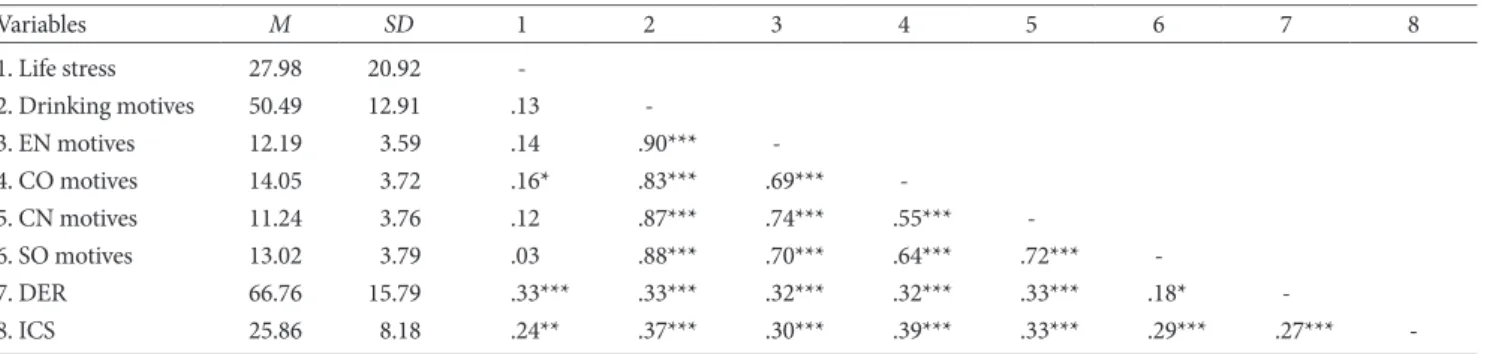
Table 1 shows the demographic and clinical data. All participants were males of an average age of 49.99 (SD= 9.16). The mean educa- tion of participants was 12.30 years (SD= 2.66), ranging from 1 to 19 years. The mean age of first alcohol drinking was 18.62 years (SD =5.97), ranging from 8 to 69 years. Additionally, the mean number of admissions was 5.77 times (SD= 6.43), ranging from 1 to 40 times. As shown in Table 2, interestingly, coping motive was found to be higher than other motives among male inpatients with AUD.

Correlations

Table 2 displays the bivariate correlations among the variables of interest. Correlations of daily stress with emotion dysregulation and impaired control were significant. In contrast to expectations, daily stress was not significantly related to a total score of drinking motives. In fact, it was only correlated with coping motives, but not with enhancement, conformity, and social motives. Mean- while, a total score as well as subscales of drinking motives was positively associated with emotion dysregulation and impaired control, respectively, but not associated with daily stress. In addi- tion, emotion dysregulation was significantly related to impaired control.

Table 2. Descriptive Data and Correlations among Variables

Variables M SD 1 2 3 4 5 6 7 8

1. Life stress 27.98 20.92 -

2. Drinking motives 50.49 12.91 .13 -

3. EN motives 12.19 3.59 .14 .90*** -

4. CO motives 14.05 3.72 .16* .83*** .69*** -

5. CN motives 11.24 3.76 .12 .87*** .74*** .55*** -

6. SO motives 13.02 3.79 .03 .88*** .70*** .64*** .72*** -

7. DER 66.76 15.79 .33*** .33*** .32*** .32*** .33*** .18* -

8. ICS 25.86 8.18 .24** .37*** .30*** .39*** .33*** .29*** .27*** -

Note. M=mean; SD=standard deviation; EN=enhancement; CO=coping; CN=conformity; SO=Social; DER=Difficulties in Emotion Regulation;

ICS=Impaired Control Scale.

*p<.05. **p<.01. ***p<.001.

Table 1. Demographic and Clinical Characteristics of Participants

Variables Mean SD Range

Age (year) 49.99 9.16 27–69

Education (year) 12.30 2.66 1–19

Age of first alcohol drinking

(year) 18.62 5.97 8–69

Number of admissions 5.77 6.43 1–40

(5)

Serial multiple mediation models

The Serial multiple mediation model which includes daily stress, emotion dysregulation and drinking motives was found to ac- count for 19% of the variance in impaired control, R

2

= .19, F (3, 189)=14.396, p<.001. As shown in Table 3, daily stress was associ- ated with emotion dysregulation (B= 0.248, SE= 0.052, p<.001) and impaired control (B= 0.062, SE= 0.027, p<.05.), but not with drinking motives (B= 0.015, SE= 0.045, p>.05).

Moreover, emotion dysregulation was associated with drinking motives, B= 0.264, SE= 0.059, p<.001), but not with impaired con- trol, B= 0.058, SE= 0.038, p>.05. On the other hand, drinking mo- tives were associated with impaired control, B= 0.200, SE= 0.044, p<.001. Furthermore, the results indicated that both emotional dysregulation and drinking motives partially mediated the rela- tionship between daily stress and impaired control (Figure 1).

Moreover, bootstrap analysis found that positive indirect effects of daily stress on impaired control through emotion dysregulation and drinking motives was only significant, B= 0.013, SE= 0.006,

95% confidence Interval= 0.005 to 0.029 in Table 3. However, both path 1 and 3 were not significant. In additional analyses, when en- tering each drinking motive as a mediator individually, the size of the indirect effect for coping motives was higher in magnitude than the indirect effect of enhancement motives, R

2

= .20, F (3, 189)=15.229, p<.001, R

2

= .14, F (3, 189)=10.533, p<.001, respec- tively. Also, both conformity and social motives partially mediat- ed the relationship between life stress and impaired control on al- cohol, R

2

= .16, F (3, 189)=11.926, p<.001, R

2

= .16, F (3, 189)=

11.790, p<.001, respectively.

Discussion

In line with the process model of emotion regulation (Gross, 1998;

Gross & Thompson, 2007), many studies suggested that the self- medication hypothesis (Khantzian, 1997) are valid and feasible in college populations. However, there was a paucity of studies that examined the hypothesis in clinical sample such as patients with AUD. Accordingly, the aim of the present study was to determine whether the effect of daily stress as an environment factor, on im- paired control can be attributed to emotion dysregulation and drinking motives.

However, daily stress had no direct effect on drinking motives.

Moreover, emotion dysregulation had no direct effect on impaired control. On the other hand, confirming the core hypothesis of the current study, however, results showed that daily stress had not Table 3. The Bootstrap Results for the Indirect Effect of Emotion Dysregulation and Drinking Motives on the Relationship between Daily Stress and Impaired Control

B SE 95% CI (BC)

Lower Upper

Direct effects

Daily stress → Emotion Dysregulation 0.248*** 0.052 0.146 0.350

Emotion Dysregulation → Drinking Motives 0.264*** 0.059 0.147 0.381

Daily Stress → Drinking Motives 0.015 0.045 -0.073 0.104

Emotion Dysregulation → Impaired Control 0.058 0.038 -0.016 0.133

Drinking Motives → Impaired Control 0.200*** 0.044 0.114 0.287

Daily Stress → Impaired Control 0.062* 0.027 0.008 0.115

Indirect effects

Path 1: Daily Stress → Emotion Dysregulation → Impaired Control 0.014

b

0.013 -0.007 0.042 Path 2: Daily Stress → Emotion Dysregulation → Drinking Motives → Impaired Control 0.013

a

0.006 0.005 0.029

Path 3: Daily Stress → Drinking Motives → Impaired Control 0.003

b

0.011 -0.017 0.025

Note. CI (BC)=bias corrected confidence interval; a=significant; b=not significant.

*p<.05. ***p<.001.

Figure 1. Model depicting the effects of daily stress, emotion dysregu- lation and drinking motives on impaired control. *p<.05. ***p<.001.

Daily Stress .248***

.264***

.200***

.062* .058 Impaired

Control Drinking

Motives Emotional

Dysregulation

.015

(6)

only the direct effect on impaired control, but also indirectly af- fected on it via emotion dysregulation and drinking motives in se- rial. Consistent with recent studies (Aurora & Klanecky, 2016;

Messman-Moore & Ward, 2014), these results showed that emo- tion dysregulation can be precursor to drinking motives.

Interestingly, coping motives were found to be higher than three other motives among male patients with AUD. It is consistent with results of Hammarberg et al. (2017), who reported that coping mo- tives were the most commonly expressed motive among adult pa- tients seeking treatment for problematic alcohol use. In extra anal- yses, the mediation model including the coping motives as a me- diator on impaired control had a greater explanatory power than the model including enhance motives. That is, it suggested that males might be also attributed to coping motives in contrast to previously reported findings (Karpyak et al., 2016; Lehavot et al., 2014). Like females, thus, males can be also suffering from im- paired control as emotion dysregulation increase drinking to cope, when they are experiencing unusually strong negative emo- tions due to daily stress.

On the other hand, the association between emotion dysregula- tion and coping motives was already confirmed in nonclinical samples such as college students (Messman-Moore & Ward, 2014;

Veilleux, Skinner, Reese, & Shaver, 2014) and adolescents (Cooper, 1994). Despite some support for self-medication models of alcohol use, the effects of stress and negative emotionality on alcohol use have been inconsistent (Greeley & Oei, 1999). Like the SMH, the negative reinforcement model of drug addiction assume that ad- dicted individuals take drugs to escape or avoid aversive states such as withdrawal or stress (Baker, Piper, McCarthy, Majeskie, &

Fiore, 2004). Although all four drinking motives can be related to alcohol use in nonclinical sample (Kuntsche, Knibbe, Gmel, & En- gels, 2005), this study documented that coping motives are more common among males with AUD.

According to the neurobehavioral decision systems hypothesis of addiction (Bickel, Yi, Kowal, & Gatchalian, 2008), AUD can be explained by which it results from a hyperactive impulsive system and a hypoactive executive decision system (Bickel, Yi, Landes, Hill, & Baxter, 2011), which is also in line with a number of dual mode models (Epstein, 1994; Metcalfe & Mischel, 1999; Rothbart, Ellis, Rosario Rueda, & Posner, 2003; Strack & Deutsch, 2004).

Therefore, many researches tend to have focused more upon the neurobiological substrates underlying addiction than on its affec- tive components, emphasising how the dysregulation of brain re- ward and stress systems bias addicted individuals towards contin- ued substance use (Cheetham, Allen, Yücel, & Lubman, 2010; Ka- livas & Volkow, 2005).

Considering the research trend above, the importance of emo- tion regulation can be overlooked. Many of the processes associat- ed with substance abuse and addiction appear to be congruent with those underlying more naturally occurring affective experi- ences (Cheetham et al., 2010). Thus, the results of the current study support that emotion regulation needs to take account as a necessary part in the treatment and prevention of AUD.

Meanwhile, this study employed impaired control of last 6 months as a dependent variable instead of the quantity or frequen- cy of alcohol use and alcohol-related consequences. In this case, these results could show more clearly that emotion dysregulation after stressful events play a stronger role in repetitive relapse of AUD, supporting the self-medication hypothesis or negative rein- forcement model of drug addiction.

The study's limitations are as follows. First, because the cross- sectional design was applied in this study, longitudinal design study would be needed in order to verify causality. Second, this study used self-report questionnaires, which their reliability could be lowered due to the respondents’ social desirability. Especially in the case of the DERS, there may be an enormous difference be- tween the respondents' perception of emotional regulation ability and their actual ability (Aurora & Klanecky, 2016). Finally, consid- ering findings that the self-medication hypothesis was supported in cross-sectional than in prospective analyses (Read, Merrill, Griffin, Bachrach, & Khan, 2014), it needs to confirm whether the present results can also be replicated in the longitudinal study.

Conclusions

Daily stress could have a direct effect on impaired control. In ad-

dition, daily stress could predict emotion dysregulation and

drinking motives, and drinking motives in turn could predict im-

paired control. Accordingly, to deliver an individualized interven-

tion including stress management strategies for those patients in

(7)

whom a clear linking between stress and relapse occurs might be particularly imperative. Thanks to these interventions, emotional dysregulation and drinking motives could be lessened and help the impaired control to alleviate. In addition, it is important to consider an emotion regulation module to overcome several limi- tations of specialized treatments for AUD which focus on absti- nence. In other words, interventions might provide information on the process of using alcohol as a means of emotion regulation and offer adaptive emotion regulation strategies such as cognitive reappraisal, acceptance, and problem solving (Aldao & Nolen- Hoeksema, 2012).

References

Aldao, A., & Nolen-Hoeksema, S. (2012). When are adaptive strat- egies most predictive of psychopathology? Journal of Abnormal Psychology, 121, 276-281.

American Psychiatric Association. (2013). Diagnostic and statistical manual of mental disorders (DSM-5®). Arlington, VA: Ameri- can Psychiatric Pub.

Aurora, P., & Klanecky, A. K. (2016). Drinking motives mediate emotion regulation difficulties and problem drinking in college students. American Journal of Drug and Alcohol Abuse, 42, 341- 350.

Baker, T. B., Piper, M. E., McCarthy, D. E., Majeskie, M. R., & Fiore, M. C. (2004). Addiction motivation reformulated: An affective processing model of negative reinforcement. Psychological Re- view, 111, 33-51.

Baumeister, R. F., & Heatherton, T. F. (1996). Impaired control: An overview. Psychological Inquiry, 7, 1-15.

Bickel, W. K., Yi, R., Kowal, B. P., & Gatchalian, K. M. (2008). Ciga- rette smokers discount past and future rewards symmetrically and more than controls: Is discounting a measure of impulsivity?

Drug and Alcohol Dependence, 96, 256-262.

Bickel, W. K., Yi, R., Landes, R. D., Hill, P. F., & Baxter, C. (2011).

Remember the future: Working memory training decreases de- lay discounting among stimulant addicts. Biological Psychiatry, 69, 260-265.

Brady, K. T., & Sonne, S. C. (1999). The role of stress in alcohol use, alcoholism treatment, and relapse. Alcohol Research & Health, 23, 263-263.

Brière, F. N., Rohde, P., Seeley, J. R., Klein, D., & Lewinsohn, P. M.

(2014). Comorbidity between major depression and alcohol use disorder from adolescence to adulthood. Comprehensive Psychi- atry, 55, 526-533.

Cheetham, A., Allen, N. B., Yücel, M., & Lubman, D. I. (2010). The

role of affective dysregulation in drug addiction. Clinical Psychol- ogy Review, 30, 621-634.

Cho, Y., & Hong, S. (2013). The new factor structure of the Korean version of the Difficulties in Emotion Regulation Scale (K- DERS) incorporating method factor. Measurement and Evalua- tion in Counseling and Development, 46, 192-201.

Claus, E. D., Ewing, S. W. F., Filbey, F. M., Sabbineni, A., & Hutchi- son, K. E. (2011). Identifying neurobiological phenotypes associ- ated with alcohol use disorder severity. Neuropsychopharmacolo- gy, 36, 2086-2096.

Colder, C. R. (2001). Daily stress, physiological and subjective in- dexes of negative emotionality, and coping reasons for drinking:

Is there evidence for a self-medication model of alcohol use?

Psychology of Addictive Behaviors, 15, 237-245.

Cooper, M. L. (1994). Motivations for alcohol use among adoles- cents: Development and validation of a four-factor model. Psy- chological Assessment, 6, 117-128.

Cox, W. M., & Klinger, E. (1988). A motivational model of alcohol use. Journal of Abnormal Psychology, 97, 168-180.

Crum, R. M., Mojtabai, R., Lazareck, S., Bolton, J. M., Robinson, J., Sareen, J., . . . Alvanzo, A. A. (2013). A prospective assessment of reports of drinking to self-medicate mood symptoms with the incidence and persistence of alcohol dependence. JAMA Psychi- atry, 70, 718-726.

Dawson, D. A., Grant, B. F., & Li, T. K. (2005). Quantifying the risks associated with exceeding recommended drinking limits.

Alcoholism: Clinical and Experimental Research, 29, 902-908.

Dawson, D. A., Grant, B. F., & Ruan, W. J. (2005). The association between stress and drinking: Modifying effects of gender and vulnerability. Alcohol and Alcoholism, 40, 453-460.

DeLongis, A., Folkman, S., & Lazarus, R. S. (1988). The impact of daily stress on health and mood: Psychological and social re- sources as mediators. Journal of Personality and Social Psycholo- gy, 54, 486-495.

Edwards, G., & Gross, M. M. (1976). Alcohol dependence: Provi- sional description of a clinical syndrome. British Medical Journal, 1, 1058-1061.

Epstein, S. (1994). Integration of the cognitive and the psychody- namic unconscious. American Psychologist, 49, 709-724.

Fernandes-Jesus, M., Beccaria, F., Demant, J., Fleig, L., Menezes, I., Scholz, U., . . . Cooke, R. (2016). Validation of the Drinking Mo- tives Questionnaire - Revised in six European countries. Addic- tive Behaviors, 62, 91-98.

Fox, H., Hong, K., & Sinha, R. (2008). Difficulties in emotion regu- lation and impulse control in recently abstinent alcoholics com- pared with social drinkers. Addictive Behaviors, 33, 388-394.

Gratz, K. L., & Roemer, L. (2004). Multidimensional assessment of

emotion regulation and dysregulation: Development, factor

structure, and initial validation of the difficulties in emotion reg-

(8)

ulation scale. Journal of Psychopathology and Behavioral Assess- ment, 26, 41-54.

Greeley, J., & Oei, T. (1999). Alcohol and tension reduction. In K. E.

Leonard & H. T. Blane (Eds.), Psychological theories of drinking and alcoholism (Vol. 2, pp. 14-53). New York: Guilford Press.

Gross, J. J. (1998). The emerging field of emotion regulation: An integrative review. Review of General Psychology, 2, 271-299.

Gross, J. J. (2001). Emotion regulation in adulthood: Timing is ev- erything. Current Directions in Psychological Science, 10, 214-219.

Gross, J. J., & Thompson, R. A. (2007). Emotion regulation: Con- ceptual foundations. In J. J. Gross (Ed.), Handbook of emotion regulation (Vol. 3, pp. 3-26). New York: Guilford Press.

Hammarberg, A., Öster, C., & Nehlin, C. (2017). Drinking motives of adult patients seeking treatment for problematic alcohol use.

Journal of Addictive Diseases, 36, 127-135.

Hasin, D. S., & Grant, B. F. (2002). Major depression in 6050 for- mer drinkers: Association with past alcohol dependence. Ar- chives of General Psychiatry, 59, 794-800.

Hasin, D. S., Stinson, F. S., Ogburn, E., & Grant, B. F. (2007). Preva- lence, correlates, disability, and comorbidity of DSM-IV alcohol abuse and dependence in the United States: Results from the National Epidemiologic Survey on Alcohol and Related Condi- tions. Archives of General Psychiatry, 64, 830-842.

Hayes, A. F. (2012). PROCESS: A versatile computational tool for observed variable mediation, moderation, and conditional process modeling. Retrieved from http://www.afhayes.com/public/pro- cess2012.pdf.

Hayes, A. F. (2013). Introduction to mediation, moderation, and conditional process analysis: A regression-based approach. New York: Guilford Press.

Heather, N., Booth, P., & Luce, A. (1998). Impaired control scale:

Cross‐validation and relationships with treatment outcome. Ad- diction, 93, 761-771.

Heather, N., & Dawe, S. (2005). Level of impaired control predicts outcome of moderation‐oriented treatment for alcohol prob- lems. Addiction, 100, 945-952.

Holzhauer, C. G., & Gamble, S. A. (2017). Depressive Symptoms mediate the relationship between changes in emotion regulation during treatment and abstinence among women with alcohol use disorders. Psychology of Addictive Behaviors, 31, 284-294.

Hull, J. G., & Slone, L. B. (2004). Alcohol and self-regulation. In K.

D. Vohs & R. F. Baumeister (Eds.), Handbook of self-regulation:

Research, theory, and applications (pp. 466-491). New York: Guil- ford Press.

Ilgen, M., McKellar, J., & Tiet, Q. (2005). Abstinence self-efficacy and abstinence 1 year after substance use disorder treatment.

Journal of Consulting and Clinical Psychology, 73, 1175-1180.

Kalivas, P. W., & Volkow, N. D. (2005). The neural basis of addic- tion: A pathology of motivation and choice. American Journal of

Psychiatry, 162, 1403-1413.

Kanner, A. D., Coyne, J. C., Schaefer, C., & Lazarus, R. S. (1981).

Comparison of two modes of stress measurement: Daily hassles and uplifts versus major life events. Journal of Behavioral Medi- cine, 4, 1-39.

Karpyak, V. M., Biernacka, J. M., Geske, J. R., Abulseoud, O. A., Brunner, M. D., Chauhan, M., . . . Melnyk, G. J. (2016). Gender‐

specific effects of comorbid depression and anxiety on the pro- pensity to drink in negative emotional states. Addiction, 111, 1366-1375.

Khantzian, E. J. (1997). The self-medication hypothesis of sub- stance use disorders: A reconsideration and recent applications.

Harvard Review of Psychiatry, 4, 231-244.

Kim, C. M., Kim, S. G., NamKoong, K., Cho, D. H., Lee, B. O., Choi, I. G., & Kim, M. J. (2007). A study on relapse predictors in Korean alcohol-dependent patients. Korean Journal of Biological Psychiatry, 14, 249-255.

Koole, S. L., Van Dillen, L. F., & Sheppes, G. (2011). The self-regu- lation of emotion. In K. D. Vohs & R. F. Baumeister (Eds.), The handbook of self-regulation: Research, theory, and applications (Vol. 2, pp. 22-40). New York: Guilford Press.

Kuntsche, E., Knibbe, R., Gmel, G., & Engels, R. (2005). Why do young people drink? A review of drinking motives. Clinical Psy- chology Review, 25, 841-861.

Leeman, R. F., Fenton, M., & Volpicelli, J. R. (2007). Impaired con- trol and undergraduate problem drinking. Alcohol and Alcohol- ism, 42, 42-48.

Lehavot, K., Stappenbeck, C. A., Luterek, J. A., Kaysen, D., & Simp- son, T. L. (2014). Gender differences in relationships among PTSD severity, drinking motives, and alcohol use in a comorbid alcohol dependence and PTSD sample. Psychology of Addictive Behaviors, 28, 42-52.

Marlatt, G. A., & George, W. H. (1984). Relapse prevention: Intro- duction and overview of the model. British Journal of Addiction, 79, 261-273.

Marsh, A., Saunders, B., & Piek, J. (2002). The Impaired Control Scale: Confirmation of factor structure and psychometric prop- erties for social drinkers and drinkers in alcohol treatment. Ad- diction, 97, 1339-1346.

McRae, K., Ochsner, K. N., & Gross, J. J. (2011). The reason in pa- sion. In K. D. Vohs & R. F. Baumeister (Eds.), Handbook of self- regulation: Research, theory, and applications (pp. 186-203). New York: Guilford Press.

Messman-Moore, T. L., & Ward, R. M. (2014). Emotion dysregula- tion and coping drinking motives in college women. American Journal of Health Behavior, 38, 553-559.

Metcalfe, J., & Mischel, W. (1999). A hot/cool-system analysis of

delay of gratification: Dynamics of willpower. Psychological Re-

view, 106, 3-19.

(9)

Meyerhoff, D. J., Durazzo, T. C., & Ende, G. (2011). Chronic alcohol consumption, abstinence and relapse: Brain proton magnetic res- onance spectroscopy studies in animals and humans. In W. H.

Sommer & R. Spanagel (Eds.), Behavioral Neurobiology of Alcohol Addiction (pp. 511-540). Berlin/Heidelberg, Germany: Springer.

Miller, W. R., & Brown, J. M. (1991). Self-regulation as a conceptual basis for the prevention and treatment of addictive behaviours.

In N. Heather, W. R. Miller, & J. Greeley (Eds.), Self-control and the addictive behaviours (pp. 3-79). Sydney, Australia: Maxwell Macmillan.

Neal, D. J., & Carey, K. B. (2007). Association between alcohol in- toxication and alcohol-related problems: An event-level analysis.

Psychology of Addictive Behaviors, 21, 194-204.

Piazza, P. V., & Le Moal, M. (1998). The role of stress in drug self- administration. Trends in Pharmacological Sciences, 19, 67-74.

Pilowsky, D. J., Keyes, K. M., Geier, T. J., Grant, B. F., & Hasin, D. S.

(2013). Stressful life events and relapse among formerly alcohol dependent adults. Social Work in Mental Health, 11, 184-197.

Read, J. P., Merrill, J. E., Griffin, M. J., Bachrach, R. L., & Khan, S. N.

(2014). Posttraumatic stress symptoms and alcohol problems:

Self-medication or trait vulnerability? American Journal on Ad- dictions, 23, 108-116.

Rothbart, M. K., Ellis, L. K., Rosario Rueda, M., & Posner, M. I.

(2003). Developing mechanisms of temperamental effortful control. Journal of Personality, 71, 1113-1144.

Sayette, M. A., & Griffin, K. M. (2011). Self-Regulatory failure and addiction. In K. D. Vohs & R. F. Baumeister (Eds.), Handbook of

self-regulation: Research, theory, and applications (Vol. 2, pp. 505- 521). New York: Guilford Press.

Smith, G. T., & Cyders, M. A. (2016). Integrating affect and impul- sivity: The role of positive and negative urgency in substance use risk. Drug and Alcohol Dependence, 163, S3-S12.

Strack, F., & Deutsch, R. (2004). Reflective and impulsive determi- nants of social behavior. Personality and Social Psychology Re- view, 8, 220-247.

Torvik, F., Rosenström, T., Ystrom, E., Tambs, K., Røysamb, E., Czajkowski, N., . . . Reichborn-Kjennerud, T. (2017). Stability and change in etiological factors for alcohol use disorder and major depression. Journal of Abnormal Psychology, 126, 812-822.

Veilleux, J. C., Skinner, K. D., Reese, E. D., & Shaver, J. A. (2014).

Negative affect intensity influences drinking to cope through facets of emotion dysregulation. Personality and Individual Dif- ferences, 59, 96-101.

Walitzer, K. S., & Dearing, R. L. (2006). Gender differences in alco- hol and substance use relapse. Clinical Psychology Review, 26, 128-148.

Wills, T. A., Simons, J. S., Sussman, S., & Knight, R. (2016). Emo- tional self-control and dysregulation: A dual-process analysis of pathways to externalizing/internalizing symptomatology and positive well-being in younger adolescents. Drug and Alcohol Dependence, 163, S37-S45.

Wills, T. A., & Stoolmiller, M. (2002). The role of self-control in

early escalation of substance use: A time-varying analysis. Jour-

nal of Consulting and Clinical Psychology, 70, 986-997.

수치

Table 2 displays the bivariate correlations among the variables of  interest. Correlations of daily stress with emotion dysregulation  and impaired control were significant
Figure 1. Model depicting the effects of daily stress, emotion dysregu- dysregu-lation and drinking motives on impaired control

참조

관련 문서