• 검색 결과가 없습니다.

Pharmaco-medical Application of Antimicrobial Peptides Derived from Insect

N/A
N/A
Protected

Academic year: 2021

Share "Pharmaco-medical Application of Antimicrobial Peptides Derived from Insect"

Copied!
12
0
0

로드 중.... (전체 텍스트 보기)

전체 글

(1)

Pharmaco-medical Application of Antimicrobial Peptides Derived from Insect

Joon Ha Lee, In-Woo Kim, Mi-Ae Kim, Eun Young Yun and Jae Sam Hwang*

Department of Agricultural Biology, National Institute of Agricultural Sciences, Rural Development Administration, Wanju 55365, Korea Received May 25, 2016 /Revised June 23, 2016 /Accepted June 27, 2016

By this time, insect antimicrobial peptides (AMPs) have been characterized more than 150 peptides since purification of cecropin in the hemolymph of pupae from Hyalophora cecropia in 1980. Therefore, it is considered that insects are good sources of AMP selection. Insect AMPs are small (low molecular weight) and cationic, and amphipathic with variable length, sequence, and structure. They perform a pivotal role on humoral immunity in the insect innate immune system against invading pathogens such as bacteria, fungi, parasites, and viruses. Most of the insect AMPs are induced rapidly in the fat bodies and other specific tissues of insects after septic injury or immune challenge. Then the AMPs subsequently released into the hemolymph to act against microorganisms. These peptides have a broad antimicrobial spectrum against various microbes including anticancer activities. Insect AMPs could be divided into four families based on their structures and sequences. That is the α-helical pep- tides, cysteine-rich peptides, proline-rich peptides, and glycine-rich peptides/proteins. For instance, ce- cropins, insect defensins, proline-rich peptides, and attacins are common insect AMPs, but gloverins and moricins have been identified only in lepidopteran species. This review focuses on AMPs from insects and discusses current knowledge and recent progress with potential applications of insect AMPs.

Key words : Antimicrobial activity, antimicrobial peptides, innate immunity, insect, pathogen

*Corresponding author

*Tel : +82-63-238-2974, Fax : +82-63-238-3833

*E-mail : [email protected]

This is an Open-Access article distributed under the terms of the Creative Commons Attribution Non-Commercial License (http://creativecommons.org/licenses/by-nc/3.0) which permits unrestricted non-commercial use, distribution, and reproduction in any medium, provided the original work is properly cited.

Journal of Life Science

2016 Vol. 26. No. 6. 737~748 DOI : http://dx.doi.org/10.5352/JLS.2016.26.6.737

서 론

곤충은 지구상에서 가장 번성한 동물군 중에 하나이며 평균 550만 종으로 종의 범위는 260-780만 종이 존재할 것으로 예상 된다[99]. 이렇듯 많은 종의 다양성을 갖는 곤충은 생태학적으 로 바다를 제외하고 다양한 환경에 노출되어 적응하며 개체수 를 유지하여왔다. 그러므로 곤충은 매우 효율적인 생체방어체 제를 가지고 있을 것으로 예상되었고 연구를 통해 체액성면역 과 세포성면역으로 구성된 선천성 면역체계를 가지고 있음이 밝혀졌다. 그 중 체액성면역에서 중요한 역할을 하는 항균 펩 티드가 존재함이 실험을 통해 알려졌다. 곤충은 침입하는 미 생물들에 대항하여 리소자임(lysozyme)과 같은 다양한 종류 의 항균 단백질과 항균 펩티드를 만들어 낼 수 있다. 곤충에서 이러한 물질들의 항균 활성은 박테리아로 면역화 시킨 거인 누에나방(가중나무고치나방과 세크로피아누에나방)의 번데 기에서 처음으로 확인[9, 36]되었으며 나중에는 박테리아로 면 역화 시킨 초파리(Drosophila melanogaster)에서도 확인되었다 [92]. 곤충의 항균 펩티드인 세크로핀(cecropin)이 1980년에 세

크로피아누에나방의 번데기로부터 최초로 정제[49, 98]된 이 래로 150개가 넘는 곤충 항균 펩티드들이 확인되어 왔다. 대부 분의 곤충 항균 펩티드들은 크기가 작으며 양전하를 띠고 염 기성인데 박테리아나 진균류를 포함하여 기생충(parasite)과 바이러스에도 활성을 나타내는 것으로 알려져 있다. 이들 곤 충 항균 펩티드들은 구조와 아미노산 서열상의 특징에 따라 크게 4개의 그룹으로 나눌 수가 있는데 세크로핀과 모리신 (moricin) 같은 α-나선형 펩티드, 곤충 디펜신(defensin)과 드 로소마이신(drosomycin)과 같은 시스테인(cysteine)-풍부 펩 티드, 아피데신(apidaesin)과 드로소신(drosocin), 그리고 레보 신(lebocin) 같은 프롤린(proline)-풍부 펩티드, 그리고 아타신 (attacin)과 글로베린(gloverin) 같은 글리신(glycine)-풍부 단 백질로 구분된다[16, 86]. 주요한 곤충 항균 펩티드로는 곤충 디펜신, 세크로핀, 프롤린-풍부 펩티드, 그리고 아타신이 확인 되어 왔는데 모리신과 글로베린의 경우는 나비목곤충에서만 확인되었다. 초파리의 경우는 앞서 언급한 4개의 그룹 이외에 3개의 그룹이 추가적으로 확인되어 7개의 그룹이 확인되었으 며, 초파리의 항균 펩티드 유전자들이 톨(Toll)과 immune de- ficiency (IMD) 경로(pathway)에 의해서 조절된다는 것이 깊 이 있게 연구되어 오고 있다. 이러한 곤충의 다양한 항균 펩티 드들은 새로운 소재로서 자원의 보고로 이들 물질을 활용하여 의약학적으로 적용하려는 연구들이 진행되고 있다. 본 총설에 서는 곤충 항균 펩티드에 관한 현재까지의 연구와 최근에 진 전된 사항들을 포함하여 곤충 항균 펩티드의 의약학적 적용 가능성에 대하여 고찰해보고자 한다.

- Review -

(2)

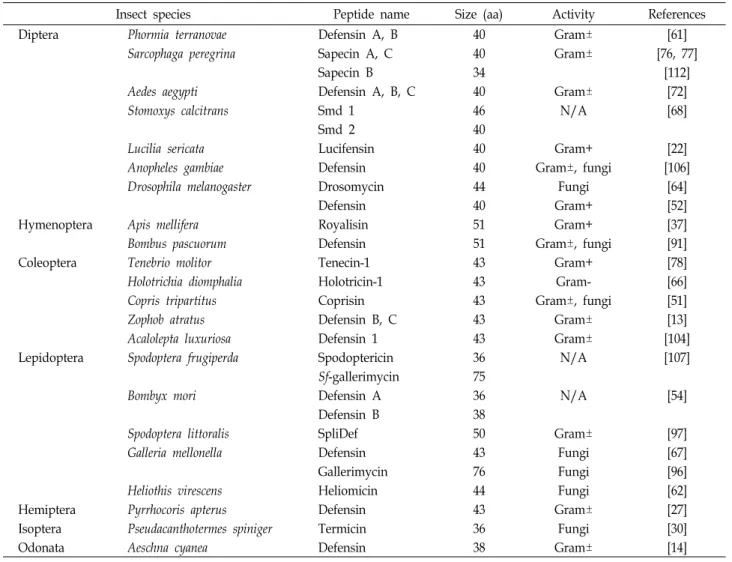
Table 1. Insect defensins

Insect species Peptide name Size (aa) Activity References

Diptera Phormia terranovae Defensin A, B 40 Gram± [61]

Sarcophaga peregrina Sapecin A, C 40 Gram± [76, 77]

Sapecin B 34 [112]

Aedes aegypti Defensin A, B, C 40 Gram± [72]

Stomoxys calcitrans Smd 1 46 N/A [68]

Smd 2 40

Lucilia sericata Lucifensin 40 Gram+ [22]

Anopheles gambiae Defensin 40 Gram±, fungi [106]

Drosophila melanogaster Drosomycin 44 Fungi [64]

Defensin 40 Gram+ [52]

Hymenoptera Apis mellifera Royalisin 51 Gram+ [37]

Bombus pascuorum Defensin 51 Gram±, fungi [91]

Coleoptera Tenebrio molitor Tenecin-1 43 Gram+ [78]

Holotrichia diomphalia Holotricin-1 43 Gram- [66]

Copris tripartitus Coprisin 43 Gram±, fungi [51]

Zophob atratus Defensin B, C 43 Gram± [13]

Acalolepta luxuriosa Defensin 1 43 Gram± [104]

Lepidoptera Spodoptera frugiperda Spodoptericin 36 N/A [107]

Sf-gallerimycin 75

Bombyx mori Defensin A 36 N/A [54]

Defensin B 38

Spodoptera littoralis SpliDef 50 Gram± [97]

Galleria mellonella Defensin 43 Fungi [67]

Gallerimycin 76 Fungi [96]

Heliothis virescens Heliomicin 44 Fungi [62]

Hemiptera Pyrrhocoris apterus Defensin 43 Gram± [27]

Isoptera Pseudacanthotermes spiniger Termicin 36 Fungi [30]

Odonata Aeschna cyanea Defensin 38 Gram± [14]

Gram+: Gram-positive bacteria, Gram-: Gram-negative bacteria, N/A: not available

본 론

곤충 디펜신

디펜신은 약 4 kDa의 분자량을 가지며 6개의 보존된 시스 테인 잔기가 세 개의 이황화 결합(disulfide bond)을 이루고 있는 양전하의 염기성 항균 펩티드이다. 디펜신은 구조적 특 징들에 근거하여 3개의 패밀리(family)로 나뉠 수 있는데

“classical” 디펜신, 베타-디펜신, 그리고 곤충 디펜신으로 구분 된다[38]. 곤충 디펜신은 분자량이 작은 양전하의 펩티드로 34-51개의 아미노산 잔기들로 구성되어 있으며 6개의 시스테 인 잔기를 갖는 시스테인-풍부 펩티드이다. 사페신(sapecin)으 로 명명한 곤충 디펜신이 쉬파리(Sacophaga peregrina) [76, 77]

에서 처음으로 보고되었으며, 검정금파리(Phormia terranovae) 디펜신이 박테리아로 면역화 시킨 유충의 혈림프(hemo- lymph)에서 정제되었다[61]. 이들 디펜신은 전구체의 형태로 합성되며 부분적인 단백질가수분해효소의 절단에 의해 활성 화되는 형태로 40개의 아미노산 잔기들로 구성되어있다[32,

76]. 이러한 전구체의 형태는 모기[26], 흡혈파리[68], 그리고 나방류에서[54, 97, 107] 확인되어 왔다. 곤충 디펜신은 주로 그람양성균에 활성을 나타내는데 몇몇 곤충 디펜신은 그람음 성균과 진균에도 활성을 갖는 것으로 알려져 있다[67, 72, 91, 97, 104, 106, 112]. 이러한 항균활성은 곤충 디펜신이 미생물들 의 세포막과 세포막 구성 성분들과 상호작용하여 결합하고 채널을 형성하여 미생물들을 죽이는 것으로 알려져 있다[28].

세크로핀

세크로핀은 31-39개의 아미노산 잔기로 이루어진 양전하의

항균 펩티드 패밀리로 세크로피아누에나방 번데기의 면역화

시킨 혈림프로부터 처음 분리되었으며[48, 98], 나비목, 파리

목, 그리고 딱정벌레목 곤충들에서 확인되어왔다(Table 2). 세

크로핀의 경우도 전구체의 형태로 합성이 되고 시그날 배열

(signal sequence)에 의해 분비가 되며 펩티다아제(peptidase)

에 의해 신호펩티드(signal peptide)가 제거된 후에 전구체 부

분(pre-pro region)이 절단됨에 따라 활성화 형태로 바뀌게 된

(3)

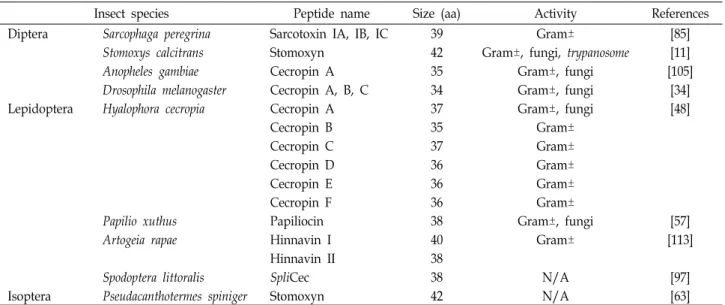
Table 2. Cecropins

Insect species Peptide name Size (aa) Activity References

Diptera Sarcophaga peregrina Sarcotoxin IA, IB, IC 39 Gram± [85]

Stomoxys calcitrans Stomoxyn 42 Gram±, fungi, trypanosome [11]

Anopheles gambiae Cecropin A 35 Gram±, fungi [105]

Drosophila melanogaster Cecropin A, B, C 34 Gram±, fungi [34]

Lepidoptera Hyalophora cecropia Cecropin A 37 Gram±, fungi [48]

Cecropin B 35 Gram±

Cecropin C 37 Gram±

Cecropin D 36 Gram±

Cecropin E 36 Gram±

Cecropin F 36 Gram±

Papilio xuthus Papiliocin 38 Gram±, fungi [57]

Artogeia rapae Hinnavin I 40 Gram± [113]

Hinnavin II 38

Spodoptera littoralis SpliCec 38 N/A [97]

Isoptera Pseudacanthotermes spiniger Stomoxyn 42 N/A [63]

Gram+: Gram-positive bacteria, Gram-: Gram-negative bacteria, N/A: not available

다. 세크로핀은 그람음성균과 그람양성균뿐만 아니라 진균류 에 까지 광범위한 항균활성을 나타낸다[21, 31, 34, 48, 79, 94, 105]. 대부분의 세크로핀들은 C-말단에 아미드화(amidation) 가 되어있으며, 이 아미드화된 형태가 리포좀(liposome)과 세 크로핀의 상호작용에 중요한 역할을 하며[82] 광범위한 항균 활성에 기여하는 것으로 사료된다[70]. 세크로핀은 항균활성 이외에도 말라리아열원충속(Plasmodium)과 파동편모충(Try-

panosome)과 같은 기생충들에도 활성을 나타내는 것으로 알려

져 있으며[2, 7, 8, 10, 40, 53, 93], HIV-1 바이러스의 복제와 암세포의 증식을 억제할 수 있다는 연구[24, 102, 108]가 보고 되어 다양한 활성을 가지고 있음을 알 수 있다. 또한 세크로핀 은 수용액상에서는 불규칙코일(random coil)의 구조를 취하 지만 세포막과 같은 소수성의 환경에서는 α-나선형 구조로 전 환되어 세포막성분들과 상호작용하는 것으로 알려져 있다. 세 크로핀의 구조는 N-말단과 C-말단에 두 개의 나선형 부위를 가지며 중앙에 각각의 나선 구조를 연결해 주는 경첩부위 (hinge region)가 존재하는 것으로 알려져 있다. 이 경첩부위 에는 글리신과 프롤린 잔기들이 존재하며 이들 아미노산이 경첩부위의 유연성에 중요한 역할을 한다[83].

아타신

아타신은 박테리아로 면역화 시킨 세크로피아누에나방 번 데기의 혈림프로부터 정제되었으며 분자량은 20-23 kDa이고 등전점은 5.7-8.3으로 염기성 아타신(A-D)과 산성 아타신(E와 F)의 두 그룹으로 아이소폼(isoform)이 나뉠 수 있다[46]. 염기 성 아타신과 산성 아타신은 아미노산 서열상으로 매우 유사하 지만 산성 아타신에서 아스파르트산(Asp) 잔기의 구성이 조금 더 많은 특징이 있으며, 이들 아타신은 두 개의 독립된 유전자 에 의해 암호화 된다[59, 101]. 아타신은 신호펩티드, 프로

(pro)-펩티드(P 도메인), 그리고 N-말단의 아타신 도메인과 그 뒤를 이어 글리신-풍부 도메인(G1과 G2 도메인)을 함유하고 있는 전구체의 형태로 합성된다[43, 100]. 아타신은 많은 나비 목 종들에서[5, 46, 55, 58, 60, 87, 89, 100, 103, 110] 확인되었으 며 몇몇은 파리목 종들에서 확인된 바 있다[3, 33, 41, 109].

대부분의 아타신은 대장균과 몇몇 그람음성 박테리아에 선별

적으로 활성을 나타낸다[46]. 예를 들면 체체파리(Glossina

morsitans) 아타신-A1은 대장균과 기생충인 감비아파동편모충

(Trypanosoma brucei)에 생체외(in vitro) 상에서 활성을 나타내

며[47], 흰불나방(Hyphantria cunea) 아타신-B는 대장균과 시트

로박터 푸룬디 (Citrobacter freundii) 뿐만 아니라 진균인 칸디

다(Candida albicans)에도 활성을 나타낸다[60]. 파밤나방

(Spodoptera exigua) 아타신은 그람음성균인 대장균과 슈도모

나스 치코리이(Pseudomonas cichorii) 그리고 그람양성균인 바

실러스 서브틸리스(Bacillus subtilis)와 리스테리아 모노사이토

제니스(Listeria monocytogenes)에 대항하여 활성을 갖는 것으

로 알려져 있다[5]. 그러나 몇몇의 아타신은 류신(leucine)-풍

부 영역을 갖는데 이들 아타신은 항균활성을 나타내지 않는

다. 그 예로 흰불나방 아타신-A는 류신이 많으며 항균활성을

갖지 않는다[60]. 아타신은 박테리아 외막(outer membrane)에

직접적으로 작용하여 투과성을 높임으로써 대장균의 성장을

저해할 수 있으며[35], 이들 아타신은 지질다당체(LPS)에 결합

만으로도 여러 박테리아의 외막 단백질들의 합성을 저해할

수 있다[17, 18]. 원이색성(CD) 스펙트럼을 통해 세크로피아누

에나방 아타신-F의 구조를 분석한 결과 수용액 상에서는 주로

불규칙코일 구조를 취하지만 소수성 유기용매인 헥사플루오

로 이소프로판올(HFIP)의 존재 하에서는 훨씬 더 나선형 구조

로 전환됨이 관찰되었다[39]. 소수성의 환경에서 나선형 구조

로 전환되는 아타신의 이러한 변화는 세크로핀과 글리신-풍부

(4)

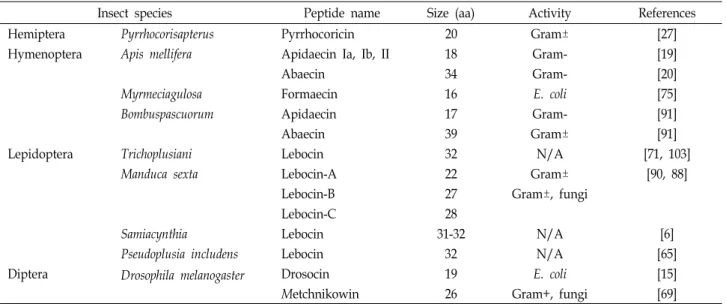
Table 3. Proline-rich antimicrobial peptides

Insect species Peptide name Size (aa) Activity References

Hemiptera Pyrrhocorisapterus Pyrrhocoricin 20 Gram± [27]

Hymenoptera Apis mellifera Apidaecin Ia, Ib, II 18 Gram- [19]

Abaecin 34 Gram- [20]

Myrmeciagulosa Formaecin 16 E. coli [75]

Bombuspascuorum Apidaecin 17 Gram- [91]

Abaecin 39 Gram± [91]

Lepidoptera Trichoplusiani Lebocin 32 N/A [71, 103]

Manduca sexta Lebocin-A 22 Gram± [90, 88]

Lebocin-B 27 Gram±, fungi

Lebocin-C 28

Samiacynthia Lebocin 31-32 N/A [6]

Pseudoplusia includens Lebocin 32 N/A [65]

Diptera Drosophila melanogaster Drosocin 19 E. coli [15]

Metchnikowin 26 Gram+, fungi [69]

Gram+: Gram-positive bacteria, Gram-: Gram-negative bacteria, N/A: not available 항균 펩티드인 글로베린과 매우 유사하다. 그러므로 아타신의

나선형 구조가 항균활성을 나타내는데 주요할 것으로 예상된 다.

프롤린-풍부 펩티드

레보신은 대장균으로 면역화 시킨 누에의 혈림프로부터 최 초로 분리되었으며 프롤린-풍부 펩티드로 O-글라이코실화 (glycosylation)된 32개의 아미노산 잔기로 구성되어 있다[43].

누에의 레보신은 꿀벌의 프롤린-풍부 펩티드인 아베신(abae- cin)과 서열상 41%의 상동성을 갖지만 꿀벌의 아베신은 O-글 라이코실화 되어있지 않다. 누에 레보신의 cDNA 클론으로부 터 레보신이 179 잔기의 전구체 단백질로서 합성되어짐을 알 수 있었고, 활성을 나타내는 32잔기의 펩티드는 전구체의 C- 말단에 가깝게 위치하고 있다[25]. 레보신 전구체를 암호화하 는 cDNA들은 다른 나비목 종들에서 또한 확인되어 왔다. 레 보신을 포함한 프롤린-풍부 펩티드들은 4개에서 6개의 프롤린 을 가지며 22-28 잔기들 사이의 범위 안에 있고 성숙한 전구체 단백질의 N-말단에 위치하지만, 누에의 레보신 전구체만이 7 개의 프롤린을 가지며 추가적인 32잔기의 펩티드를 C-말단에 근접하여 위치하고 있다[88]. 이들 결과는 활성을 나타내는 레 보신은 전구체 단백질이 단백질가수분해효소의 절단에 의해 생성되어짐을 나타낸다. 레보신은 그람음성 및 그람양성 박테 리아와 몇몇 진균류에 대항하여 활성을 갖는다(Table 3). 누에 의 레보신은 대장균과 그람음성 아시네토박터(Acinetobacter) 종들에 대항하여 활성을 나타내며, O-글라이코실화가 최대 활 성을 갖기 위해 필요하다[43]. 담배박각시나방(Manduca sexta) 의 합성한 N-말단 프롤린-풍부 펩티드 레보신-B (28 잔기) 와 레보신-C (27 잔기) 는 그람음성 세라티아 마르세센스(Serratia

marcescens)와 쥐티푸스균(Salmonella typhimurium) 그리고 그

람양성 황색포도상구균(Staphylococcus aureus)과 세레우스균 (Bacillus cereus) 뿐만 아니라 진균인 크립토코쿠스 네오포르만 스(Crytococcus neoformans)에도 활성을 나타낸다[88]. 이들 결 과는 누에를 포함한 다른 나비목 종들로부터의 N-말단 프롤린 -풍부 펩티드들 또한 활성을 나타낼 것임을 제시한다. 여러 다른 곤충들에서 프롤린-풍부 항균 펩티드들이 다양한 이름으 로 확인되어 왔다(Table 3). 이 작은 프롤린-풍부 펩티드들은 여러 곤충목(order)에서 확인되었는데 이들 펩티드들은 아미 노산 서열상에서 높은 유사성을 갖지는 않지만 모두 프롤린을 많이 함유하고 있으므로 프롤린-풍부 항균 펩티드의 같은 패 밀리로 속하여야 한다. 또한 몇몇 곤충의 프롤린-풍부 펩티드 는 O-글라이코실화 되어 있지만 반면 몇몇 다른 곤충들에서는 O-글라이코실화가 되어있지 않은데, O-글라이코실화가 분명 하게 항균활성을 향상시킨다.

모리신

모리신은 대장균으로 면역화 시킨 누에 유충의 혈림프로부 터 처음으로 분리된 매우 염기성인 42잔기의 펩티드이다[42].

모리신은 지금까지 나비목 곤충들에서만 발견되었는데 모리

신을 암호화하는 cDNA가 담배박각시나방[114], 담배거세미

나방(Spodoptera litura) [84], 꿀벌부채명나방(Galleria mello-

nella) [12], 왕담배나방(Helicoverpa armigera) [110], 파밤나방,

회색담배나방(Heliothis virescens), 그리고 팔랑나비붙이(Hy-

blaea puera)에서 확인되었다. 앞서 언급한 바와 같이 레보신은

단백질가수분해에 의해 큰 전구체 단백질로부터 형성되지만,

모리신은 신호펩티드의 절단 후에 분비형태의 단백질로 합성

된다. 모리신은 그람음성과 그람양성 박테리아에 활성을 나타

내는데 꿀벌부채명나방 모리신은 또한 진균류에 대항하여 높

은 활성을 나타낸다[12, 29, 42]. 모리신의 3차구조는 N-말단과

(5)

C-말단 부위의 일부 잔기들을 제외하고 거의 전체길이의 펩티 드가 여덟 번의 턴(turn)을 하는 하나의 긴 α-나선 구조를 나타 낸다[29, 45, 84]. N-말단의 α-나선(5-22번 잔기) 부위는 양친매 성(amphipathic)이며 이는 박테리아를 죽이기 위한 막투과성 을 높이는데 중요한 역할을 하며, C-말단의 α-나선(23-35번 잔 기) 부위는 소수성으로 모리신의 항균활성을 위해 결정적 역 할을 한다[45]. 모리신의 이러한 구조는 경첩부위가 없는 것을 제외하고는 세크로핀과 매우 유사하다.

글로베린

글로베린은 염기성의 글리신-풍부 단백질로 열에 안정하고 약 14 kDa의 분자량을 가지며, 산누에나방(Hyalophora gloveri) 번데기의 혈림프로부터 처음으로 정제되었다[4]. 글로베린은 모리신과 마찬가지로 현재까지 나비목곤충들에서만 확인되 었다. 글로베린은 전구체단백질로서 합성되며 프로-글로베린 의 N-말단 부위에 보존된 RXXR 모티프(motif)가 함유되어있 다[111]. 글로베린은 주로 대장균에 활성을 나타내는데 대장균 변종(D21f2, D21, D22)에 더 강한 활성을 갖는다[4, 56, 73, 75, 80, 81]. 그러나 양배추은무늬밤나방(Trichoplusia ni) 글로베린 은 또한 바이러스에 활성을 나타내며[80], 파밤나방 글로베린 은 그람양성 박테리아(플라보박테륨 속)에 활성을 갖지만 smooth 지질다당체를 가지고 있는 대장균종에 대해서는 활성 을 나타내지 않는다[50]. 또한 담배박각시나방 글로베린은 그 람양성인 바실러스 세레우스(Bacillus cereus)와 두 종의 진균인 맥주효모균(Saccharomyces cerevisiae)과 크립토코커스 네오포 르만스(Cryptococcus neoformans)에 대항하여 활성을 갖지만 smooth 지질다당체를 가지고 있는 대장균종에 대해서는 활성 을 나타내지 않는다[111]. 다른 나비목 곤충들로부터의 글로베 린이 어떻게 각기 다른 활성을 나타내는지 분명하진 않지만 염기성의 글로베린이 정전기적 인력을 통해 지질다당체와 상 호작용 하는 것으로 제시된다[4]. 재조합된 담배박각시나방 글 로베린의 경우 지질다당체의 O항원(O-antigen)과 outer core carbohydrate moieties, 그람양성 박테리아의 리포테이코산 (lipoteichoic acid)과 펩티도글리칸(peptidoglycan), 그리고 라 미나린(laminarin: 베타-1,3-글루칸)에 결합할 수 있음을 보여 주었다[111]. 따라서 글로베린은 지질다당체, 리포테이코산, 펩티도글리칸, 또는 라미나린과 상호작용을 통해 박테리아 또 는 진균의 표면에 결합을 함으로써 항균활성을 나타낼 것으로 예상된다. 대부분의 글로베린은 염기성이거나 매우 염기성이 며 높은 함유량의 글리신 잔기를 갖는다[111]. 글로베린은 수 용액상에서는 불규칙코일 구조를 취하지만 소수성의 환경에 서는 α-나선형 구조로 입체구조의 전이가 일어난다[4]. 미생물 의 표면에 결합함에 따라 불규칙코일 구조에서 α-나선형 구조 로 글로베린의 입체구조 전환이 미생물들에 대항하여 항균활 성을 갖게 되는 핵심일 것으로 사료된다.

곤충 항균 펩티드의 적용 및 응용

펩티드는 아미노산이 ‘펩티드 결합(peptide bond)’으로 연 결된 물질을 말하며, 일반적으로 분자량이 작은 단백질이나 아미노산의 수가 50개 이하인 경우를 펩티드로 정의하고 있 다. 이들 펩티드는 생물 의약 및 화학 분야에서 치료제 또는 기능성 물질로 사용되는 주요한 소재이다. 최초의 펩티드는 약 100년 전 에밀 피셔(Emil Fischer)에 의해 합성되었다고 알 려져 있지만, 의약품으로 사용되는 시점은 제2차 세계대전 이 후이며, 미국의 빈센트 뒤 비뇨(Vincent Du Vigneaud), 스위 스의 Ciba Specialty Chemicals, 오스트리아의 Sandoz 그룹만 이 순수한 펩티드를 생산할 수 있었다. 이때가 옥시토신 (oxytocin), 바소프레신(vasopressin) 등의 이황화 결합을 지닌 9개 아미노산으로 이루어진 펩티드가 개발된 시기이다. 1970 년대에 들어와 미국의 화학자 메리필드(Merrifield)에 의해 본 격적인 펩티드 합성이 이루어졌으며, 이를 기점으로 미국의 제약회사들이 대거 펩티드 연구에 착수하게 되었지만 실제 임상을 진행해보니 독성은 없었지만 약효 역시 나타나지 않아 연구 개발에 어려움을 직면하게 되었다. 이러한 연구가 새로 운 전기를 맞게 된 것은 1980년대 후반이다. 안정화 기술이 개발되어 의약품을 만들 수 있게 됨에 따라 제약사들에 의해 대거 의약품이 만들어졌으며 이를 계기로 90년대에 들어 형질 전환생장인자(TGF) 성분이 개발돼 큰 화제를 불러 모으기도 했다. 많은 바이오 회사에서 흥미 있는 약리적 특성을 지닌 새로운 펩티드 발견과 생체이용률이 높은 펩티드에 대한 고상 합성법 최적화, 새로운 약물전달기술 등의 개발로 펩티드 치 료제 분야가 부활되었다.

의약품으로의 적용은 단일클론 항체 시장에 진출된 품목은

20종 이상이며, 등록 전 또는 임상 3상단계인 것이 20종 이상

이고, 임상 2상단계인 품목 수는 45종 이상이다. 새로운 인간

화 단일클론항체가 치료용으로 검증되기 때문에 펩티드 및

단백질 시장에서 가장 빠르게 성장하는 분야이다. 이 분야 최

고의 상품은 GP IIb/IIIa 억제제인 리오프로(ReoPro)이고(Eli

Lilly), 비록 상품화된 숫자는 적지만, 100종 이상의 후보물질

이 임상 실험에 들어간 상태이다. 합성 펩티드의 시장진출은

40종 이상이며, 등록 전 또는 임상 3상은 20종 이상이고, 임상

2상은 60종 이상이다. 이는 펩티드 및 펩티드 모방물질을 포함

한 수치이다. 생식선 작용제로서 펩티드는 전립선암, 유방암

등의 내분비관련 종양치료에 사용되고 있으며, 주요제품은 루

프로라이드(leuprolide, Abbott Laboratories), 부세렐린

(buserelin, Sanofi-Aventis), 졸라덱스(zoladex, AstraZeneca),

트립토레린(triptorelin, Beaufour Ipsen), 나파렐린(nafarelin,

Roche) 등이 있다. 상기 의약품의 총 시장규모는 30억 미국달

러를 상회하며, 원료의약품으로 약 200 kg 이상이 생성되어

사용되고 있다. 이들 대부분은 합성 펩티드로 특허 만료 의약

품이며, 이 분야의 시장은 서방성 제형 기술이 도입된 의약품

이며, 향후 몇 년간 지속적으로 시장이 확대될 것으로 보인다.

(6)

소마토스타틴(somatostatin) 유사체 분야의 매출규모는 약 9 억 미국달러이며, 원료 의약품은 100 kg 미만이고, 치료 적응 증세는 암 성장 억제 효과이며, 2종의 주요 약품 옥트레오타이 드(octreotide, Novartis), 소마툴린(somatuline, Ipsen)이 시장 에 출시되어 판매되고 있다. 앤지오텐신전환효소 억제제(ACE inhibitor)는 전통적인 유기합성법에 의해 만들어진 변형된 2 개의 아미노산으로 구성된 펩티드이나, 대체로 합성 의약품으 로 분류하고 있으며, 대표적인 제품으로는 머크(Merck)에서 생산된 상품인 에날나프릴(enalapril)과 리시노프릴(lysino- pril)이 있다. 현재는 변형된 펩티드 계열로 만들어진 치료제 (앤지오텐신 II 수용체 길항제)의 출현으로 매출 규모가 감소 하였으나 현재까지 범용되는 의약품이다. 펩티드 계열이 아닌 라미프릴(ramipril), 트란돌라프릴(trandolapril), 페린도프릴 (perindopril)과 같은 앤지오텐신전환효소 억제제도 존재하 며, 현재 15종의 의약품이 출시되어 약 40억 달러의 매출규모 및 원료의약품으로 100 톤(ton) 이상이 거래되고 있다. 에이즈 치료제로서 HIV 단백질분해효소 억제제 개발은 스티브 켄트 (Steve Kent)와 댄 베베르(Dan Veber)에 의해 효소활성과 기 질 설계가 가능해졌으며, 재조합단백질, 단백질 구조학 등 기 술의 기반으로 결정구조가 밝혀졌으며 이를 근거로 펩티드 억제제 및 모방 펩티드 억제제가 개발되었다. 시장에 최초로 진출한 HIV 단백질분해효소 억제제는 로슈(Roche)의 사퀴나 비르(saquinavir)이며 머크의 인디나빌(indinavir)과 애보트 (Abbott)의 리토나비어(ritonavir)가 이후에 출시되었으나, 현 재 2세대 약품인 파이저(Pfizer)의 넬피나비어(nelfinavir)가 출 시된 상황이고, 이들 의약품의 매출은 15억 달러 정도이며, 약 200톤 이상의 원료의약품이 거래되고 있다. 바소프레신 (vasopressin) 유사체는 1950년대에 합성된 물질로 천연 바소 프레신은 거의 사용되지 않으며, 페링(Ferring)에 의해 유사체 가 개발되면서 치료제 개발이 시작되었다. 가장 유명한 유사 체는 데스모프레신(desmopressin) 이며 야뇨증 치료에 사용 되고 있다. 또한 유사한 의약품으로 텔리프레신(terlipressin), 리프레신(lypressin), 펠리프레신(felypressin) 등이 출시되어 있으며, 약 3억 달러의 시장규모와 원료의약품으로 50 kg 미만 이 거래되고 있다. 칼시토닌(calcitonins)는 현재 고령화 서구 사회에서 골다공증 치료제로서 널리 사용되고 있으며, 현재 사용되고 있는 주요 제품은 연어, 인간, 장어 칼시토닌 등을 사용하고 있다. 연어와 사람의 칼시토닌 모두 약효에 차이가 없으며, 32개 아미노산으로 구성된 칼시토닌은 화학합성법보 다는 재조합 단백질로 생산할 것이라 예측했으나, 인간 인슐 린과는 대조적으로 재조합 칼시토닌은 생산되지 않았고, 총 판매액은 5-6억 달러이며, 원료의약품으로 50 kg 정도가 거래 되고 있다. 고나도레린(gonadorelin) 길항제(antagonist)는 지 난 20년 동안 고나도트로핀 방출호르몬(LH-RH) 계열 생식선 작용물질(agonist)로 전립선암 및 내분비계 암에 성공적으로 사용되었으며, 이들의 주요단점은 주사 후 종양성장을 촉진하

는 호르몬 제거 전에 나타나는 황체형성호르몬(LH)와 난포자 극호르몬(FSH)의 급격한 증가와 그에 따른 약 일주일간의 테 스토스테론(testosterone) 및 에스트로겐(estrogen)의 급격한 증가 현상이 나타나는 것이다. 따라서 동물실험에서 나타난 것처럼 테스토스테론 급증가 현상이 없는 길항제 치료가 작용 제 치료를 대체할 것이지만 테스토스테론 방출을 저해할 수 있는 길항제의 투약량 농도가 작용제에 비해 5-10배 높여야 하는 단점이 있다. 이러한 고투약농도 때문에 가격 경쟁력 및 3-6개월 서방성 제형 생산에 어려움이 있다. 대부분이 임상시 험에서 실패하였으며 현재 2종류의 길항제가 출시되고 있다.

세트로레릭스(cetrorelix)와 가니렐릭스(ganirelix)가 호르몬 의존성 종양에 비해 시장규모가 작은 부인과 질환 및 체외수 정에 사용되고 있다.

최근 메리필드의 고상법(solid phase method)에 의한 펩티 드 화학 합성기술의 발전, 자동 합성기 보급에 의한 펩티드 합성의 자동화, 보호기 및 탈보호법 개발을 통한 펩티드 합성 수율 향상 등 다양한 펩티드 공학 기술의 발전으로 많은 종류 의 새로운 항균 펩티드가 개발되고 있으며, 또한 핵자기공명 분광법(NMR)과 원이색성 스펙트럼을 이용한 항균 펩티드의 구조와 기능에 관한 연구를 바탕으로 천연형 펩티드보다 세포 독성이 낮고 항균활성이 강한 새로운 합성 항균펩티드 개발에 관한 연구가 급격히 진행되고 있다. 그 예로, 미국의 Demegen 사에서 항염증제 및 화상 치료제로 개발 중인 D2A21는 세크 로핀 계열의 펩티드를 새롭게 합성한 항균 펩티드이며, 동물 임상시험에서 효과가 우수한 것으로 보고되었고[23], 봉독에 서 분리된 멜리틴(melittin)의 세포독성을 제거하기 위해 개발 된 세크로핀 A-멜리틴 하이브리드 항균 펩티드(CEME) 역시 동물 임상시험에서 그 안정성이 입증되었으며 개의 리슈만편 모충증(leishmaniasis) 치료에 대한 효과를 증명하였다[1]. 이 외에도 항균 펩티드를 이용한 피부질환 치료제로 덴마크의 노보짐(Novozyme) 사에서 개발 중인 플렉타신(plectasin), 독 일 바이오신(Biosyn)사의 시아노비린(cyanovirin), 벨기에 루 벤 카톨릭 대학교의 beta-Alanyl-tyrosine, 미국 제네라 사 (Genaera Corporation)의 Locilex, 인트라바이오틱스(Intra- Biotics)의 IB-367(lseganan), Helix Biomedix의 HB50, Deme- gen의 P113L, 조마(Xoma)의 XMP629 등이 연구 개발 중에 있으며 캐나다 미겐닉스(Migenix)사에서 개발한 MBI 594AN 의 경우 임상시험이 완료되어 미국 식품의약국(FDA)에 승인 을 취득 중에 있다[95]. 이와 같은 펩티드 공학 기술을 이용한 항균 펩티드의 우수한 항균활성을 갖는 변이체 개발은 각종 피부질환 치료용 의약품 개발 및 응용 분야에서 그 가능성이 매우 높아지고 있다.

곤충유래 항균 펩티드 역시 일부 의약품 개발을 위해서 임

상시험이 진행 중에 있으며 그 가능성이 매우 클 것으로 여겨

진다. 미국의 Entomed SA 사는 최근까지 100여종의 곤충으로

부터 175개 이상의 새로운 물질에 대한 연구를 진행하여 의약

(7)

품 개발의 가능성을 검정하였으며, 특히 나비목 곤충(회색담 배나방)에서 분리된 항진균 펩티드의 변이체인 ETD151을 개 발하여 피부의 침습성 진균 감염증(invasive fungal infection) 에 대한 임상시험을 수행 중에 있다. 국내에서도 배추흰나비, 풍뎅이, 소똥구리, 흰불나방, 흰점박이꽃무지 등 여러 곤충에 서 항균 펩티드를 분리하여 분자적 구조 및 특성에 관한 연구 를 수행하고 있으며, 유전공학기술을 이용하여 미생물에서 대 량생산을 위한 시도를 하고 있지만 이들 항균 펩티드를 이용 한 치료제 개발 및 응용에 관한 연구는 극히 미진한 상태이다.

따라서 곤충 항균 펩티드를 이용한 의약품 개발 및 산업적 응용을 위해서 고분해능 핵자기공명분광법을 이용한 펩티드 의 3차원 구조 분석, 이를 통해 인체에 무해하며 활성이 우수 한 새로운 항균 펩티드 변이체 개발 및 이의 임상시험을 통한 치료제 개발에 관한 연구의 필요성이 절실히 대두되고 있다.

또한 이와 병행하여 생물자원 확보 측면에서 다양한 국내서식 곤충 종으로부터 우수한 항균활성을 가지는 항균 펩티드의 분리 및 개발에 보다 많은 지원이 뒤따라야 할 것으로 여겨진 다. 항균 펩티드는 새로운 개념의 차세대 항생제로 부각되고 있으며, 피부질환 치료제, 항암제, 항바이러스제, 농약, 식품첨 가제, 방부제 등 다양한 분야에서 개발될 수 있는 가능성을 가지고 있다.

결론 및 전망

펩티드는 정확한 생리활성에 기초하여 생명과학 기술에 의 해 개발되고 있는 것으로 그 효능이 매우 뛰어나며, 이미 상당 수의 펩티드들이 의약품으로 개발되면서 화장품 소재 등으로 도 적용되고 있어 효능과 안전성 두 가지 모두 입증되고 있다.

따라서 펩티드 관련 원료의 가격 단가 안정화와 임상을 통한 기능성 원료의 등재 등이 선행된다면 펩티드는 의약품을 위한 신물질 후보로서의 가능성이 가장 높은 물질 중 하나일 것이 다.

감사의 글

본 연구는 농촌진흥청에서 지원하는 어젠다프로그램(과제 번호: PJ01099301)의 연구수행으로 인한 결과물임을 밝힙니 다.

References
1. Alberola, J., Rodriguez, A., Francino, O., Roura, X., Rivas, L. and Andreu, D. 2004. Safety and efficacy of antimicrobial peptides against naturally acquired leishmaniasis. Antimi- crob. Agents Chemother. 48, 641-643.

2. Arrowood, M. J., Jaynes, J. M. and Healey, M. C. 1991. In vitro activities of lytic peptides against the sporozoites of Cryptosporidium parvum. Antimicrob. Agents Chemother. 35,

224-227.

3. Asling, B., Dushay M. S. and Hultmark, D. 1995. Identifica- tion of early genes in the Drosophila immune response by PCR-based differential display: the Attacin A gene and the evolution of attacin-like proteins. Insect Biochem. Mol. Biol.

25, 511-518.

4. Axen, A., Carlsson, A., Engstrom, A. and Bennich, H. 1997.

Gloverin, an antibacterial protein from the immune hemo- lymph of Hyalophora pupae. Eur. J. Biochem. 247, 614-619.

5. Bang, K., Park, S., Yoo, J. Y. and Cho, S. 2012. Characteriza- tion and expression of attacin, an antibacterial protein-en- coding gene, from the beet armyworm, Spodoptera exigua (Hubner) (Insecta: Lepidoptera: Noctuidae). Mol. Biol. Rep.

39, 5151-5159.

6. Bao, Y., Yamano, Y. and Morishima, I. 2005. A novel leb- ocin-like gene from eri-silkworm, Samia cynthia ricini, that does not encode the antibacterial peptide lebocin. Comp.

Biochem. Physiol. B Biochem. Mol. Biol. 140, 127-131.

7. Barr, S. C., Rose, D. and Jaynes, J. M. 1995. Activity of lytic peptides against intracellular Trypanosoma cruzi amastigotes in vitro and parasitemias in mice. J. Parasitol. 81, 974-978.

8. Boisbouvier, J., Prochnicka-Chalufour, A., Nieto, A. R., Torres, J. A., Nanard, N., Rodriguez, M. H., Possani, L. D.

and Delepierre, M. 1998. Structural information on a cecro- pin-like synthetic peptide, Shiva-3 toxic to the sporogonic development of Plasmodium berghei. Eur. J. Biochem. 257, 263- 273.

9. Boman, H. G., Nilsson-Faye, I., Paul, K. and Rasmuson, T.

Jr. 1974. Insect immunity. I. Characteristics of an inducible cell-free antibacterial reaction in hemolymph of Samia cyn- thia pupae. Infect. Immun. 10, 136-145.

10. Boulanger, N., Brun, R., Ehret-Sabatier, L., Kunz, C. and Bulet, P. 2002a. Immunopeptides in the defense reactions of Glossina morsitans to bacterial and Trypanosoma brucei bru- cei infections. Insect Biochem. Mol. Biol. 32, 369-375.

11. Boulanger, N., Munks, R. J., Hamilton, J. V., Vovelle, F., Brun, R., Lehane, M. J. and Bulet, P. 2002b. Epithelial innate immunity. A novel antimicrobial peptide with antiparasitic activity in the blood-sucking insect Stomoxys calcitrans. J.

Biol. Chem. 277, 49921-49926.

12. Brown, S. E., Howard, A., Kasprzak, A. B., Gordon, K. H.

and East, P. D. 2008. The discovery and analysis of a di- verged family of novel antifungal moricin-like peptides in the wax moth Galleria mellonella. Insect Biochem. Mol. Biol.

38, 201-212.

13. Bulet, P., Cociancich, S., Dimarcq, J. L., Lambert, J., Reichhart, J. M., Hoffmann, D., Hetru, C. and Hoffmann, J. A. 1991.

Insect immunity. Isolation from a coleopteran insect of a novel inducible antibacterial peptide and of new members of the insect defensin family. J. Biol. Chem. 266, 24520-24525.

14. Bulet, P., Cociancich, S., Reuland, M., Sauber, F., Bischoff, R., Hegy, G., Van, Dorsselaer, A., Hetru, C. and Hoffmann, J. A. 1992. A novel insect defensin mediates the inducible antibacterial activity in larvae of the dragonfly Aeschna cya- nea (Paleoptera, Odonata). Eur. J. Biochem. 209, 977-984.

15. Bulet, P., Dimarcq, J. L., Hetru, C., Lagueux, M., Charlet,

(8)

M., Hegy, G., Van, Dorsselaer, A. and Hoffmann, J. A. 1993.

A novel inducible antibacterial peptide of Drosophila carries an O-glycosylated substitution. J. Biol. Chem. 268, 14893- 14897.

16. Bulet, P. and Stocklin, R. 2005. Insect antimicrobial peptides:

structures, properties and gene regulation. Protein Pept. Lett.

12, 3-11.

17. Carlsson, A., Engstrom, P., Palva, E. T. and Bennich, H.

1991. Attacin, an antibacterial protein from Hyalophora cecro- pia, inhibits synthesis of outer membrane proteins in Escherichia coli by interfering with omp gene transcription.

Infect. Immun. 59, 3040-3045.

18. Carlsson, A., Nystrom, T., de, Cock, H. and Bennich, H.

1998. Attacin-an insect immune protein–binds LPS and triggers the specific inhibition of bacterial outer-membrane protein synthesis. Microbiology 144, 2179-2188.

19. Casteels, P., Ampe, C., Jacobs, F., Vaeck, M. and Tempst, P. 1989. Apidaecins: antibacterial peptides from honeybees.

EMBO J. 8, 2387-2391.

20. Casteels, P., Ampe, C., Riviere, L., Van, Damme, J., Elicone, C., Fleming, M., Jacobs, F. and Tempst, P. 1990. Isolation and characterization of abaecin, a major antibacterial re- sponse peptide in the honeybee (Apis mellifera). Eur. J.

Biochem. 187, 381-386.

21. Cavallarin, L., Andreu, D. and San, Segundo, B. 1998.

Cecropin A-derived peptides are potent inhibitors of fungal plant pathogens. Mol. Plant Microbe Interact. 11, 218-227.

22. Cerovsky, V., Zdarek, J., Fucik, V., Monincova, L., Voburka, Z. and Bem, R. 2010. Lucifensin, the long-sought anti- microbial factor of medicinal maggots of the blowfly Lucilia sericata. Cell. Mol. Life Sci. 67, 455-466.

23. Chalekson, C. P., Neumeister, M. W. and Jaynes, J. 2003.

Treatment of infected wound with the antimicrobial peptide D2A21. J. Trauma 54, 770-774.

24. Chen, H. M., Wang, W., Smith, D. and Chan, S. C. 1997.

Effects of the antibacterial peptide cecropin B and its ana- logs, cecropins B-1 and B-2, on liposomes, bacteria, and can- cer cells. Biochim. Biophys. Acta 1336, 171-179.

25. Chowdhury, S., Taniai, K., Hara, S., Kadono-Okuda, K., Kato, Y., Yamamoto, M., Xu, J., Choi, S. K., Debnath, N.

C., Choi, H. K., Miyanoshita, A., Sugiyama, M., Asaoka, A.

and Yamakawa, M. 1995. cDNA cloning and gene ex- pression of lebocin, a novel member of antibacterial pep- tides from the silkworm, Bombyx mori. Biochem. Biophys. Res.

Commun. 214, 271-278.

26. Cho, W. L., Fu, Y. C., Chen, C. C. and Ho, C. M. 1996.

Cloning and characterization of cDNAs encoding the anti- bacterial peptide, defensin A, from the mosquito, Aedes aegypti. Insect Biochem. Mol. Biol. 26, 395-402.

27. Cociancich, S., Dupont, A., Hegy, G., Lanot, R., Holder, F., Hetru, C., Hoffmann, J. A. and Bulet, P. 1994. Novel in- ducible antibacterial peptides from a hemipteran insect, the sap-sucking bug Pyrrhocoris apterus. Biochem. J. 300, 567-575.

28. Cociancich, S., Ghazi, A., Hetru, C., Hoffmann, J. A. and Letellier, L. 1993. Insect defensin, an inducible antibacterial peptide, forms voltage-dependent channels in Micrococcus

luteus. J. Biol. Chem. 268, 19239-19245.

29. Dai, H., Rayaprolu, S., Gong, Y., Huang, R., Prakash, O.

and Jiang, H. 2008. Solution structure, antibacterial activity, and expression profile of Manduca sexta moricin. J. Pept. Sci.

14, 855-863.

30. Da, Silva, P., Jouvensal, L., Lamberty, M., Bulet, P., Caille, A. and Vovelle, F. 2003. Solution structure of termicin, an antimicrobial peptide from the termite Pseudacanthotermes spiniger. Protein Sci. 12, 438-446.

31. DeLucca, A. J., Bland, J. M., Jacks, T. J., Grimm, C., Cleveland, T. E. and Walsh, T. J. 1997. Fungicidal activity of cecropin A. Antimicrob. Agents Chemother. 41, 481-483.

32. Dimarcq, J. L., Zachary, D., Hoffmann, J. A., Hoffmann, D.

and Reichhart, J. M. 1990. Insect immunity: expression of the two major inducible antibacterial peptides, defensin and diptericin, in Phormia terranovae. EMBO J. 9, 2507-2515.

33. Dushay, M. S., Roethele, J. B., Chaverri, J. M., Dulek, D.

E., Syed, S. K., Kitami, T. and Eldon, E. D. 2000. Two attacin antibacterial genes of Drosophila melanogaster. Gene 246, 49- 57.

34. Ekengren, S. and Hultmark, D. 1999. Drosophila cecropin as an antifungal agent. Insect Biochem. Mol. Biol. 29, 965-972.

35. Engstrom, P., Carlsson, A., Engstrom, A., Tao, Z. J. and Bennich, H. 1984b. The antibacterial effect of attacins from the silk moth Hyalophora cecropia is directed against the outer membrane of Escherichia coli. EMBO J. 3, 3347-3351.

36. Faye, I., Pye, A., Rasmuson, T., Boman, H. G. and Boman, I. A. 1975. Insect immunity. 11. Simultaneous induction of antibacterial activity and selection synthesis of some hemo- lymph proteins in diapausing pupae of Hyalophora cecropia and Samia cynthia. Infect. Immun. 12, 1426-1438.

37. Fujiwara, S., Imai, J., Fujiwara, M., Yaeshima, T., Kawashima, T. and Kobayashi, K. 1990. A potent antibacterial protein in royal jelly. Purification and determination of the primary structure of royalisin. J. Biol. Chem. 265, 11333-11337.

38. Ganz, T. and Lehrer, R. I. 1994. Defensins. Curr. Opin.

Immunol. 6, 584-589.

39. Gunne, H., Hellers, M. and Steiner, H. 1990. Structure of preproattacin and its processing in insect cells infected with a recombinant baculovirus. Eur. J. Biochem. 187, 699-703.

40. Gwadz, R. W., Kaslow, D., Lee, J. Y., Maloy, W. L., Zasloff, M. and Miller, L. H. 1989. Effects of magainins and cecro- pins on the sporogonic development of malaria parasites in mosquitoes. Infect. Immun. 57, 2628-2633.

41. Hao, Z., Kasumba, I., Lehane, M. J., Gibson, W. C., Kwon, J. and Aksoy, S. 2001. Tsetse immune responses and trypa- nosome transmission: implications for the development of tsetse-based strategies to reduce trypanosomiasis. Proc. Natl.

Acad. Sci. USA 98, 12648-12653.

42. Hara, S. and Yamakawa, M. 1995a. Moricin, a novel type of antibacterial peptide isolated from the silkworm, Bombyx mori. J. Biol. Chem. 270, 29923-29927.

43. Hara, S. and Yamakawa, M. 1995b. A novel antibacterial peptide family isolated from the silkworm, Bombyx mori.

Biochem. J. 310, 651-656.

44. Hedengren, M., Borge, K. and Hultmark, D. 2000. Expression

(9)

and evolution of the Drosophila attacin/diptericin gene family. Biochem. Biophys. Res. Commun. 279, 574-581.

45. Hemmi, H., Ishibashi, J., Hara, S. and Yamakawa, M. 2002.

Solution structure of moricin, an antibacterial peptide, iso- lated from the silkworm Bombyx mori. FEBS Lett. 518, 33- 38.

46. Hultmark, D., Engstrom, A., Andersson, K., Steiner, H., Bennich, H. and Boman, H. G. 1983. Insect immunity.

Attacins, a family of antibacterial proteins from Hyalophora cecropia. EMBO J. 2, 571-576.

47. Hu, Y. and Aksoy, S. 2005. An antimicrobial peptide with trypanocidal activity characterized from Glossina morsitans morsitans. Insect Biochem. Mol. Biol. 35, 105-115.

48. Hultmark, D., Engstrom, A., Bennich, H., Kapur, R. and Boman, H. G. 1982. Insect immunity: isolation and structure of cecropin D and four minor antibacterial components from Cecropia pupae. Eur. J. Biochem. 127, 207-217.

49. Hultmark, D., Steiner, H., Rasmuson, T. and Boman, H. G.

1980. Insect immunity. Purification and properties of three inducible bactericidal proteins from hemolymph of immu- nized pupae of Hyalophora cecropia. Eur. J. Biochem. 106, 7- 16.

50. Hwang, J. and Kim, Y. 2011. RNA interference of an anti- microbial peptide, gloverin, of the beet armyworm, Spodoptera exigua, enhances susceptibility to Bacillus thuringiensis. J.

Invertebr. Pathol. 108, 194-200.

51. Hwang, J. S., Lee, J., Kim, Y. J., Bang, H. S., Yun, E. Y., Kim, S. R., Suh, H. J., Kang, B. R., Nam, S. H., Jeon, J. P., Kim, I. and Lee, D. G. 2009. Isolation and characterization of a defensin-like peptide (coprisin) from the dung beetle, Copris tripartitus. Int. J. Pept. 2009, 136284.

52. Imler, J. L. and Bulet, P. 2005. Antimicrobial peptides in Drosophila: structures, activities and gene regulation. Chem.

Immunol. Allergy 86, 1-21.

53. Jaynes, J. M., Burton, C. A., Barr, S. B., Jeffers, G. W., Julian, G. R., White, K. L., Enright, F. M., Klei, T. R. and Laine, R. A. 1988. In vitro cytocidal effect of novel lytic peptides on Plasmodium falciparum and Trypanosoma cruzi. FASEB J.

2, 2878-2883.

54. Kaneko, Y., Tanaka, H., Ishibashi, J., Iwasaki, T. and Yamakawa, M. 2008. Gene expression of a novel defensin antimicrobial peptide in the silkworm, Bombyx mori. Biosci.

Biotechnol. Biochem. 72, 2353-2361.

55. Kang, D., Lundstrom, A. and Steiner, H. 1996. Trichoplusia ni attacin A, a differentially displayed insect gene coding for an antibacterial protein. Gene 174, 245-249.

56. Kawaoka, S., Katsuma, S., Daimon, T., Isono, R., Omuro, N., Mita, K. and Shimada, T. 2008. Functional analysis of four Gloverin-like genes in the silkworm, Bombyx mori. Arch.

Insect Biochem. Physiol. 67, 87-96.

57. Kim, S. R., Hong, M. Y., Park, S. W., Choi, K. H., Yun, E.

Y., Goo, T. W., Kang, S. W., Suh, H. J., Kim, I. and Hwang, J. S. 2010. Characterization and cDNA cloning of a cecro- pin-like antimicrobial peptide, papiliocin, from the swallow- tail butterfly, Papilio xuthus. Mol. Cells 29, 419-423.

58. Kishimoto, K., Fujimoto, S., Matsumoto, K., Yamano, Y. and

Morishima, I. 2002. Protein purification, cDNA cloning and gene expression of attacin, an antibacterial protein, from eri-silkworm, Samia cynthia ricini. Insect Biochem. Mol. Biol.

32, 881-887.

59. Kockum, K., Faye, I., Hofsten, P. V., Lee, J. Y., Xanthopoulos, K. G. and Boman, H. G. 1984. Insect immunity. Isolation and sequence of two cDNA clones corresponding to acidic and basic attacins from Hyalophora cecropia. EMBO J. 3, 2071- 2075.

60. Kwon, Y. M., Kim, H. J., Kim, Y. I., Kang, Y. J., Lee, I. H., Jin, B. R., Han, Y. S., Cheon, H. M., Ha, N. G. and Seo, S. J. 2008. Comparative analysis of two attacin genes from Hyphantria cunea. Comp. Biochem. Physiol. B Biochem. Mol.

Biol. 151, 213-220.

61. Lambert, J., Keppi, E., Dimarcq, J. L., Wicker, C., Reichhart, J. M., Dunbar, B., Lepage, P., Van, Dorsselaer, A., Hoffmann, J., Fothergill, J. and Hoffmann, D. 1989. Insect immunity:

isolation from immune blood of the dipteran Phormia terra- novae of two insect antibacterial peptides with sequence ho- mology to rabbit lung macrophage bactericidal peptides.

Proc. Natl. Acad. Sci. USA 86, 262-266.

62. Lamberty, M., Ades, S., Uttenweiler-Joseph, S., Brookhart, G., Bushey, D., Hoffmann, J. A. and Bulet, P. 1999. Insect immunity. Isolation from the lepidopteran Heliothis virescens of a novel insect defensin with potent antifungal activity.

J. Biol. Chem. 274, 9320-9326.

63. Landon, C., Meudal, H., Boulanger, N., Bulet, P. and Vovelle, F. 2006. Solution structures of stomoxyn and spini- gerin, two insect antimicrobial peptides with an alpha-heli- cal conformation. Biopolymers 81, 92-103.

64. Landon, C., Sodano, P., Hetru, C., Hoffmann, J. and Ptak, M. 1997. Solution structure of drosomycin, the first in- ducible antifungal protein from insects. Protein Sci. 6, 1878- 1884.

65. Lavine, M. D., Chen, G. and Strand, M. R. 2005. Immune challenge differentially affects transcript abundance of three antimicrobial peptides in hemocytes from the moth Pseudo- plusia includens. Insect Biochem. Mol. Biol. 35, 1335-1346.

66. Lee, S. Y., Moon, H. J., Kawabata, S., Kurata, S., Natori, S.

and Lee, B. L. 1995. A sapecin homologue of Holotrichia dio- mphalia: purification, sequencing and determination of di- sulfide pairs. Biol. Pharm. Bull. 18, 457-459.

67. Lee, Y. S., Yun, E. K., Jang, W. S., Kim, I., Lee, J. H., Park, S. Y., Ryu, K. S., Seo, S. J., Kim, C. H. and Lee, I. H. 2004.

Purification, cDNA cloning and expression of an insect de- fensin from the great wax moth, Galleria mellonella. Insect Mol. Biol. 13, 65-72.

68. Lehane, M. J., Wu, D. and Lehane, S. M. 1997. Midgut-spe- cific immune molecules are produced by the blood-sucking insect Stomoxys calcitrans. Proc. Natl. Acad. Sci. USA 94, 11502- 11507.

69. Levashina, E. A., Ohresser, S., Bulet, P., Reichhart, J. M.,

Hetru, C. and Hoffmann, J. A. 1995. Metchnikowin, a novel

immune-inducible proline-rich peptide from Drosophila with

antibacterial and antifungal properties. Eur. J. Biochem. 233,

694-700.

(10)

70. Li, Z. Q., Merrifield, R. B., Boman, I. A. and Boman, H. G.

1988. Effects on electrophoretic mobility and antibacterial spectrum of removal of two residues from synthetic sarco- toxin IA and addition of the same residues to cecropin B.

FEBS Lett. 231, 299-302.

71. Liu, G., Kang, D. and Steiner, H. 2000. Trichoplusia ni leb- ocin, an inducible immune gene with a downstream in- sertion element. Biochem. Biophys. Res. Commun. 269, 803- 807.

72. Lowenberger, C., Bulet, P., Charlet, M., Hetru, C., Hodge- man, B., Christensen, B. M. and Hoffmann, J. A. 1995. Insect immunity: isolation of three novel inducible antibacterial defensins from the vector mosquito, Aedes aegypti. Insect Biochem. Mol. Biol. 25, 867-873.

73. Lundstrom, A., Liu, G., Kang, D., Berzins, K. and Steiner, H. 2002. Trichoplusia ni gloverin, an inducible immune gene encoding an antibacterial insect protein. Insect Biochem. Mol.

Biol. 32, 795-801.

74. Mackintosh, J. A., Gooley, A. A., Karuso, P. H., Beattie, A.

J., Jardine, D. R. and Veal, D. A. 1998a. A gloverin-like anti- bacterial protein is synthesized in Helicoverpa armigera fol- lowing bacterial challenge. Dev. Comp. Immunol. 22, 387-399.

75. Mackintosh, J. A., Veal, D. A., Beattie, A. J. and Gooley, A. A. 1998b. Isolation from an ant Myrmecia gulosa of two inducible O-glycosylated proline-rich antibacterial peptides.

J. Biol. Chem. 273, 6139-6143.

76. Matsuyama, K. and Natori, S. 1988a. Molecular cloning of cDNA for sapecin and unique expression of the sapecin gene during the development of Sarcophaga peregrina. J. Biol.

Chem. 263, 17117-17121.

77. Matsuyama, K. and Natori, S. 1988b. Purification of three antibacterial proteins from the culture medium of NIH- Sape-4, an embryonic cell line of Sarcophaga peregrina. J. Biol.

Chem. 263, 17112-17116.

78. Moon, H. J., Lee, S. Y., Kurata, S., Natori, S. and Lee, B.

L. 1994. Purification and molecular cloning of cDNA for an inducible antibacterial protein from larvae of the coleopter- an, Tenebrio molitor. J. Biochem. 116, 53-58.

79. Moore, A. J., Beazley, W. D., Bibby, M. C. and Devine, D.

A. 1996. Antimicrobial activity of cecropins. J. Antimicrob.

Chemother. 37, 1077-1089.

80. Moreno-Habel, D. A., Biglang-awa, I. M., Dulce, A., Luu, D. D., Garcia, P., Weers, P. M. and Haas-Stapleton, E. J. 2012.

Inactivation of the budded virus of Autographa californica M nucleopolyhedrovirus by gloverin. J. Invertebr. Pathol. 110, 92-101.

81. Mrinal, N. and Nagaraju, J. 2008. Intron loss is associated with gain of function in the evolution of the gloverin family of antibacterial genes in Bombyx mori. J. Biol. Chem. 283, 23376-23387.

82. Nakajima, Y., Qu, X. M. and Natori, S. 1987. Interaction be- tween liposomes and sarcotoxin IA, a potent antibacterial protein of Sarcophaga peregrina (flesh fly). J. Biol. Chem. 262, 1665-1669.

83. Oh, D., Shin, S. Y., Lee, S., Kang, J. H., Kim, S. D., Ryu, P. D., Hahm, K. S. and Kim, Y. 2000. Role of the hinge region

and the tryptophan residue in the synthetic antimicrobial peptides, cecropin A(1-8)-magainin 2(1-12) and its ana- logues, on their antibiotic activities and structures. Biochem- istry 39, 11855-11864.

84. Oizumi, Y., Hemmi, H., Minami, M., Asaoka, A. and Yamakawa, M. 2005. Isolation, gene expression and solution structure of a novel moricin analogue, antibacterial peptide from a lepidopteran insect, Spodoptera litura. Biochim. Bio- phys. Acta 1752, 83-92.

85. Okada, M. and Natori, S. 1985. Primary structure of sarco- toxin I, an antibacterial protein induced in the hemolymph of Sarcophaga peregrina (flesh fly) larvae. J. Biol. Chem. 260, 7174-7177.

86. Otvos, L. Jr. 2000. Antibacterial peptides isolated from insects. J. Pept. Sci. 6, 497-511.

87. Ourth, D. D., Lockey, T. D. and Renis, H. E. 1994. Induction of cecropin-like and attacin-like antibacterial but not anti- viral activity in Heliothis virescens larvae. Biochem. Biophys.

Res. Commun. 200, 35-44.

88. Rao, X. J., Xu, X. X. and Yu, X. Q. 2012. Functional analysis of two lebocin related proteins from Manduca sexta. Insect Biochem. Mol. Biol. 42, 231-239.

89. Rao, X. J. and Yu, X. Q. 2010. Lipoteichoic acid and lip- opolysaccharide can activate antimicrobial peptide ex- pression in the tobacco hornworm Manduca sexta. Dev.

Comp. Immunol. 34, 1119-1128.

90. Rayaprolu, S., Wang, Y., Kanost, M. R., Hartson, S. and Jiang, H. 2010. Functional analysis of four processing prod- ucts from multiple precursors encoded by a lebocin-related gene from Manduca sexta. Dev. Comp. Immunol. 34, 638-647.

91. Rees, J. A., Moniatte, M. and Bulet, P. 1997. Novel anti- bacterial peptides isolated from a European bumblebee, Bombus pascuorum (Hymenoptera, Apoidea). Insect Biochem.

Mol. Biol. 27, 413-422.

92. Robertson, M. and Postlethwait, J. H. 1986. The humoral antibacterial response of Drosophila adults. Dev. Comp.

Immunol. 10, 167-179.

93. Rodriguez, M. C., Zamudio, F., Torres, J. A., Gonzalez-Ceron, L., Possani, L. D. and Rodriguez, M. H. 1995. Effect of a cecropin-like synthetic peptide (Shiva-3) on the sporogonic development of Plasmodium berghei. Exp. Parasitol. 80, 596- 604.

94. Samakovlis, C., Kimbrell, D. A., Kylsten, P., Engstrom, A.

and Hultmark, D. 1990. The immune response in Drosophila:

pattern of cecropin expression and biological activity.

EMBO J. 9, 2969-2976.

95. Schroder, J. M. and Harder, J. 2006. Antimicrobial peptides in skin disease. Drug Discovery Today: Therapeutic Strategies 3, 93-100.

96. Schuhmann, B., Seitz, V., Vilcinskas, A. and Podsiadlowski, L. 2003. Cloning and expression of gallerimycin, an anti- fungal peptide expressed in immune response of greater wax moth larvae, Galleria mellonella. Arch. Insect Biochem.

Physiol. 53, 125-133.

97. Seufi, A. M., Hafez, E. E. and Galal, F. H. 2011. Identifica-

tion, phylogenetic analysis and expression profile of an

(11)

anionic insect defensin gene, with antibacterial activity, from bacterial-challenged cotton leafworm, Spodoptera lit- toralis. BMC Mol. Biol. 12, 47.

98. Steiner, H., Hultmark, D., Engstrom, A., Bennich, H. and Boman, H. G. 1981. Sequence and specificity of two anti- bacterial proteins involved in insect immunity. Nature 292, 246-248.

99. Stork, N. E., McBroom, J., Gely, C. and Hamilton, A. J.

2015. New approaches narrow global species estimates for beetles, insects, and terrestrial arthropods. Proc. Natl. Acad.

Sci. USA 112, 7519-7523.

100. Sugiyama, M., Kuniyoshi, H., Kotani, E., Taniai, K., Kadono-Okuda, K., Kato, Y., Yamamoto, M., Shimabukuro, M., Chowdhury, S., Xu, J., Choi, S. K., Kataoka, H., Suzuki, A. and Yamakawa, M. 1995. Characterization of a Bombyx mori cDNA encoding a novel member of the attacin family of insect antibacterial proteins. Insect Biochem. Mol. Biol. 25, 385-392.

101. Sun, S. C., Lindstrom, I., Lee, J. Y. and Faye, I. 1991.

Structure and expression of the attacin genes in Hyalophora cecropia. Eur. J. Biochem. 196, 247-254.

102. Suttmann, H., Retz, M., Paulsen, F., Harder, J., Zwergel, U., Kamradt, J., Wullich, B., Unteregger, G., Stockle, M.

and Lehmann, J. 2008. Antimicrobial peptides of the Cecropin-family show potent antitumor activity against bladder cancer cells. BMC Urol. 8, 5.

103. Tamez-Guerra, P., Valadez-Lira, J. A., Alcocer-Gonzalez, J.

M., Oppert, B., Gomez-Flores, R., Tamez-Guerra, R. and Rodriguez-Padilla, C. 2008. Detection of genes encoding antimicrobial peptides in Mexican strains of Trichoplusia ni (Hubner) exposed to Bacillus thuringiensis. J. Invertebr.

Pathol. 98, 218-227.

104. Ueda, K., Imamura, M., Satto, A. and Sato, R. 2005. Purifi- cation and cDNA cloning of an insect defensin from larvae of the longicorn beetle, Acalolepta luxuriosa. Appl. Entomol.

Zool. 40, 335-345.

105. Vizioli, J., Bulet, P., Charlet, M., Lowenberger, C., Blass, C., Muller, H. M., Dimopoulos, G., Hoffmann, J., Kafatos, F. C. and Richman, A. 2000. Cloning and analysis of a ce- cropin gene from the malaria vector mosquito, Anopheles gambiae. Insect Mol. Biol. 9, 75-84.

106. Vizioli, J., Richman, A. M., Uttenweiler-Joseph, S., Blass, C. and Bulet, P. 2001. The defensin peptide of the malaria vector mosquito Anopheles gambiae: antimicrobial activities and expression in adult mosquitoes. Insect Biochem. Mol.

Biol. 31, 241-248.

107. Volkoff, A. N., Rocher, J., d’Alencon, E., Bouton, M., Landais, I., Quesada-Moraga, E., Vey, A., Fournier, P., Mita, K. and Devauchelle, G. 2003. Characterization and transcriptional profiles of three Spodoptera frugiperda genes encoding cysteine-rich peptides. A new class of defensin- like genes from lepidopteran insects?. Gene 319, 43-53.

108. Wachinger, M., Kleinschmidt, A., Winder, D., von, Pech- mann, N., Ludvigsen, A., Neumann, M., Holle, R., Salmons, B., Erfle, V. and Brack-Werner, R. 1998. Antimicrobial pep- tides melittin and cecropin inhibit replication of human im- munodeficiency virus 1 by suppressing viral gene ex- pression. J. Gen. Virol. 79, 731-740.

109. Wang, J., Hu, C., Wu, Y., Stuart, A., Amemiya, C., Berriman, M., Toyoda, A., Hattori, M. and Aksoy, S. 2008. Characteri- zation of the antimicrobial peptide attacin loci from Glossina morsitans. Insect Mol. Biol. 17, 293-302.

110. Wang, Q., Liu, Y., He, H. J., Zhao, X. F. and Wang, J. X.

2010b. Immune responses of Helicoverpa armigera to differ- ent kinds of pathogens. BMC Immunol. 11, 9.

111. Xu, X. X., Zhong, X., Yi, H. Y. and Yu, X. Q. 2012. Manduca sexta gloverin binds microbial components and is active against bacteria and fungi. Dev. Comp. Immunol. 38, 275-284.

112. Yamada, K. and Natori, S. 1993. Purification, sequence and antibacterial activity of two novel sapecin homologues from Sarcophaga embryonic cells: similarity of sapecin B to charybdotoxin. Biochem. J. 291, 275-279.

113. Yoe, S. M., Kang, C. S., Han, S. S. and Bang, I. S. 2006.

Characterization and cDNA cloning of hinnavin II, a cecro- pin family antibacterial peptide from the cabbage butterfly, Artogeia rapae. Comp. Biochem. Physiol. B Biochem. Mol. Biol.

144, 199-205.

114. Zhu, Y., Johnson, T. J., Myers, A. A. and Kanost, M. R.

2003. Identification by subtractive suppression hybrid-

ization of bacteria-induced genes expressed in Manduca

sexta fat body. Insect Biochem. Mol. Biol. 33, 541-559.

(12)

초록:곤충유래 항균 펩티드의 의약학적 적용

이준하․김인우․김미애․윤은영․황재삼*

(국립농업과학원 농업생물부 곤충산업과 신소재개발연구실)

현재까지 곤충 항균 펩티드는 1980년에 세크로피아나방(Hyalophora cecropia) 번데기의 혈림프로부터 세크로핀

(cecropin)이 처음으로 정제된 이후로 150개 이상의 펩티드가 분리되어 특성들이 보고되어 왔다. 그러므로 곤충은

항균 펩티드 선발을 위한 좋은 재료로서 고려되어 왔다. 곤충 항균 펩티드는 분자량이 작으며 양전하를 띠고 다양

한 길이와 서열 및 구조를 갖는 양친매성의 특징을 갖는다. 곤충 항균 펩티드는 박테리아, 진균, 기생충, 그리고

바이러스와 같은 병원체들의 침입에 대항하여 곤충의 선천성 면역체계에서 중요한 역할을 수행한다. 대부분의

곤충 항균 펩티드들은 상처가 나거나 면역화 시 지방체와 다른 특정 조직들에서 유도 합성된다. 이어서 그 항균

펩티드들은 미생물들에 대항하여 작용하기 위해 혈림프로 분비되어 나온다. 이들 펩티드들은 항암활성을 포함하

여 다양한 미생물들에 대해 광범위한 항균활성을 나타낸다. 곤충 항균 펩티드는 구조 및 서열상의 특징들에 기초

하여 크게 4개의 패밀리로 나누어질 수 있다. 다시 말해서 α-나선형 펩티드, 시스테인-풍부 펩티드, 프롤린-풍부

펩티드, 그리고 글리신-풍부 펩티드/단백질이 그것이다. 예를 들면, 세크로핀, 곤충 디펜신(defensin), 프롤린-풍부

펩티드, 그리고 아타신(attacin)이 일반적인 곤충 항균 펩티드들인데, 글로베린(gloverin)과 모리신(moricin)은 나비

목 종들에서만 확인되어 왔다. 본 총설에서는 곤충의 항균 펩티드들에 초점을 맞추어 곤충 항균 펩티드들의 적용

가능성 및 방향과 함께 현재의 지식들과 최근의 진전된 사항들에 대하여 논의하고자 한다.

수치

Table  1.  Insect  defensins
Table  2.  Cecropins
Table  3.  Proline-rich  antimicrobial  peptides

참조

관련 문서