Korean Journal of Microbiology (2019) Vol. 55, No. 4, pp. 425-427 pISSN 0440-2413
DOI https://doi.org/10.7845/kjm.2019.9116 eISSN 2383-9902
Copyright ⓒ 2019, The Microbiological Society of Korea
Complete genome sequence of plant growth-promoting bacterium Pedobacter ginsengisoli T01R-27 isolated from tomato (Solanum lycopersicum L.) rhizosphere
Shin Ae Lee, Hyeon Su Kim, Tae-Wan Kim, Mee Kyung Sang, Jaekyeong Song, and Hang-Yeon Weon*
Agricultural Microbiology Division, National Institute of Agricultural Sciences, Rural Development Administration (RDA), Wanju 55365, Republic of Korea
토마토 근권에서 분리한 식물생육촉진 세균
Pedobacter ginsengisoli T01R-27 균주의 유전체 염기서열
이신애 ・ 김현수 ・ 김태완 ・ 상미경 ・ 송재경 ・ 원항연*
국립농업과학원 농업생물부 농업미생물과
(Received September 25, 2019, Revised November 1, 2019; Accepted November 4, 2019)
*For correspondence. E-mail: [email protected];
Tel.: +82-63-238-3042; Fax: +82-63-238-3834
Pedobacter ginsengisoli strain T01R-27 was isolated from the rhizosphere of tomato plants in Korea. The bacteria showed plant growth promoting activity under abiotic stress condi- tions, including salinity, heat, and cold. The genome of the strain consists of a circular chromosome with 5,373,360 bp with G + C content of 37.82%. The genome includes 4,399 coding genes, 16 rRNAs, and 53 tRNAs. Genes related to root colonization, antioxidant activity, proline biosynthesis, and phytohormone modulations were found in the genome, which may contribute to the promotion of plant growth under en- vironmental stresses.
Keywords: Pedobacter, abiotic stress, genome sequence, plant growth-promoting bacteria
The genus Pedobacter, which belongs to the family Sphingo- bacteriaceae, was first described by Steyn et al. (1998) with the following general characteristics: Gram-negative rods, strictly aerobic, non-motile, and non-spore forming (Steyn et al., 1998). To date, Pedobacter species have mainly been isolated
from soil and various other environments such as water, lake sediment, glacier, and wood (Yuan et al., 2018). Although Pedobacter was found to be highly abundant in the rhizosphere (the soil region associated with plant roots) and endosphere (inside plant tissue) of wheat and grass plants have been reported (Yin et al., 2013; Wemheuer et al., 2017), its bene- ficial functions for plant growth and the underlying molecular mechanisms are largely unknown.
Strain T01R-27 was isolated from the rhizosphere of tomato plants cultivated in a greenhouse in Jeju, Korea (33.459765 N 126.363764 E). It is closely related to Pedobacter ginsengisoli strain Gsoli 104
T, with 98.31% 16S rRNA gene sequence similarity. We tested its beneficial effect on plant growth under abiotic stress conditions and observed that strain T01R-27 conferred plant tolerance under high osmotic stress and both low (10°C) and high (40°C) temperatures.
Strain T01R-27 was cultured on Reasoner’s 2A (R2A) agar
medium and the genomic DNA was extracted using a QIAamp
DNA mini kit (Qiagen), according to the manufacturer’s
protocols. Whole-genome sequencing was carried out using
the Pacific Biosciences (PacBio) RSII single-molecule real-
426
∙ Lee et al.미생물학회지 제55권 제4호
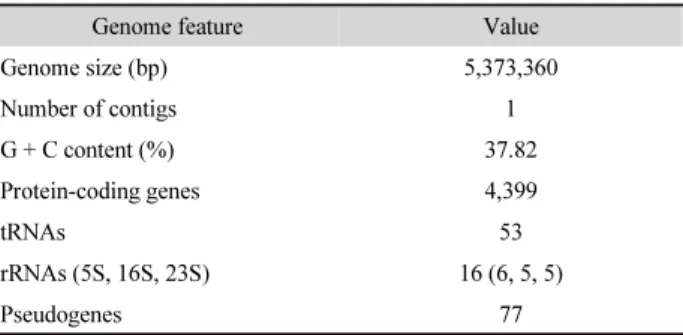
Table 1. Genome features of Pedobacter ginsengisoli T01R-27
Genome feature Value
Genome size (bp) 5,373,360
Number of contigs 1
G + C content (%) 37.82
Protein-coding genes 4,399
tRNAs 53
rRNAs (5S, 16S, 23S) 16 (6, 5, 5)
Pseudogenes 77
time (SMRT) sequencing platform with a 20 kb SMRTbell
TMtemplate at ChunLab Inc. All generated reads were assembled de novo using FALCON version 2.3.0 (Chin et al., 2016). Gene prediction and functional annotations were carried out using the NCBI Prokaryotic Genomes Annotation Pipeline (Tatusova et al., 2016) and the Rapid Annotation Subsystem Technology (RAST server) (Aziz et al., 2008).
The complete genome of the P. ginsengisoli T01R-27 consists of a 5,373,360 bp circular chromosome with G + C content of 37.82%. A total of 4,399 coding sequences, 16 rRNAs, 53 tRNAs, 3 ncRNAs, and 77 pseudogenes were predicted (Table 1). The genome of P. ginsengisoli T01R-27 possesses 11 gld genes (gldA, gldB, gldD, gldF, gldG, gldH, gldJ, gldK, gldL, gldM, and gldN) that are associated with gliding motility and genes encoding plant cell-wall degrading enzymes, such as pectate lyase, xylanase, and glucanase, that may help bacteria penetrate into plant tissue by degrading the plant cell-wall components. Strain T01R-27 contains genes NhaA and Kup that encode the Na
+/H
+antiporter and potassium transporter that are responsible for pumping out Na
+and K
+, respectively, in the cell. We also found 6 genes encoding antioxidant enzymes including superoxide dismutase (SOD), catalase (CAT), and peroxidase (PRX). The enzymes can reduce reactive oxygen species (ROS) that are produced under various stress conditions and result in significant cell damage. The gene encoding 1-aminocyclopropane-1-carboxylate (ACC) deaminase was detected in the genome, which is a well-known enzyme involed in plant growth promotion activity by modulating a phyto- hormone, ethylene. We found three genes involved in proline biosynthesis (proA, proB, and proC) in the T01R-27 genome, suggesting that the proline, an effective osmolyte, may protect plants from abiotic stresses such as drought, salinity, and
extreme temperatures. This study provides basic information to reveal the additional molecular mechanisms underlying the beneficial effect of T01R-27 on plants.
Nucleotide sequence accession numbers
Pedobacter ginsengisoli T01R-27 has been deposited in the Korean Agricultural Culture Collection under accession num- ber KACC 92177P and the complete genome sequence has been deposited in NCBI under the GenBank accession number CP024091.
적 요
토마토 근권에서 분리한 Pedobacter ginsengisoli T01R-27 균주는 고온, 저온, 고염류와 같은 환경 스트레스 조건에서 토마 토 생육을 촉진시키는 효과를 나타내었다. 이 균주는 5,373,360
bp 크기의 원형 염색체로 구성되어 있으며, G + C 함량은
37.82%이다. 유전체에는 4,399개 단백질 유전자가 있었고, 뿌 리 정착, 항산화 활성, 프롤린 생합성, 식물호르몬 조절 등에 관 여하는 유전자를 포함하고 있었다. 이들 유전자는 식물생육촉 진 기작과 관련되어 있을 것으로 판단된다.
Acknowledgements
This study was made possible by the support of “Cooperative Research Program for Agricultural Science & Technology Development (Project No. PJ01093903)”, Rural Development Administration, Republic of Korea.
References
Aziz RK, Bartels D, Best AA, DeJongh M, Disz T, Edwards RA, Formsma K, Gerdes S, Glass EM, Kubal M, et al. 2008. The RAST server: rapid annotations using subsystems technology.
BMC Genomics 9, 75.
Chin CS, Peluso P, Sedlazeck FJ, Nattestad M, Concepcion GT, Clum A, Dunn C, O'Malley R, Figueroa-Balderas R, Morales-Cruz A, et al. 2016. Phased diploid genome assembly with single- molecule real-time sequencing. Nat. Methods 13, 1050–1054.
Steyn PL, Segers P, Vancanneyt M, Sandra P, Kersters K, and Joubert JJ. 1998. Classification of heparinolytic bacteria into a new genus,
Complete genome sequence of P. ginsengisoli T01R-27∙
427
Korean Journal of Microbiology, Vol. 55, No. 4
Pedobacter, comprising four species: Pedobacter heparinuscomb. nov., Pedobacter piscium comb. nov., Pedobacter africanus sp. nov. and Pedobacter saltans sp. nov. proposal of the family Sphingobacteriaceae fam. nov. Int. J. Syst. Bacteriol. 48, 165– 177.
Tatusova T, DiCuccio M, Badretdin A, Chetvernin V, Nawrocki EP, Zaslavsky L, Lomsadze A, Pruitt KD, Borodovsky M, and Ostell J. 2016. NCBI prokaryotic genome annotation pipeline. Nucleic Acids Res. 44, 6614–6624.
Wemheuer F, Kaiser K, Karlovsky P, Daniel R, Vidal S, and Wemheuer B. 2017. Bacterial endophyte communities of three
agricultural important grass species differ in their response towards management regimes. Sci. Rep. 7, 40914.
Yin C, Hulbert SH, Schroeder KL, Mavrodi O, Mavrodi D, Dhingra A, Schillinger WF, and Paulitz TC. 2013. Role of bacterial communities in the natural suppression of Rhizoctonia solani bare patch disease of wheat (Triticum aestivum L.). Appl. Environ.
Microbiol. 79, 7428–7438.
Yuan K, Cao M, Li J, and Wang G. 2018. Pedobacter mongoliensis sp.
nov., isolated from grassland soil. Int. J. Syst. Evol. Microbiol.
68, 1112–1117.