도시유역의 물순환 및 수질 개선을 위한 저영향개발 시설의 비용 효율 분석
최정현
1⋅ 김경민
2⋅ 심인경
3⋅ 이옥정
4a⋅ 김상단
4b,†1
부경대학교 지구환경시스템과학부 (환경공학전공)⋅
2토지주택연구원 건설환경연구실
3
주식회사 헥코리아 수자원부⋅
4부경대학교 환경공학과
Cost-Effectiveness Analysis of Low-Impact Development Facilities to Improve Hydrologic Cycle and Water Qu ality in Urban Watershed
Jeonghyeon Choi
1⋅ Kyungmin Kim
2⋅ Inkyeong Sim
3⋅ Okjeong Lee
4a⋅ Sangdan Kim
4b,†1
Division of Earth Environmental System Science (Major of Environmental Engineering), Pukyong National University
2
Construction Environment Research Department, Land & Housing Institute
3
Department of Water Resources Engineering, HECOREA. INC
4
Department of Environmental Engineering, Pukyong National University (Received 6 April 2020, Revised 25 May 2020, Accepted 26 May 2020)
Abstract
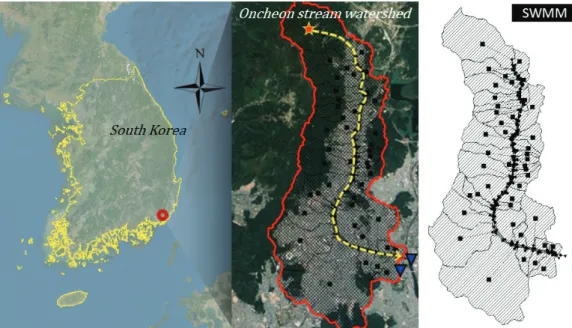
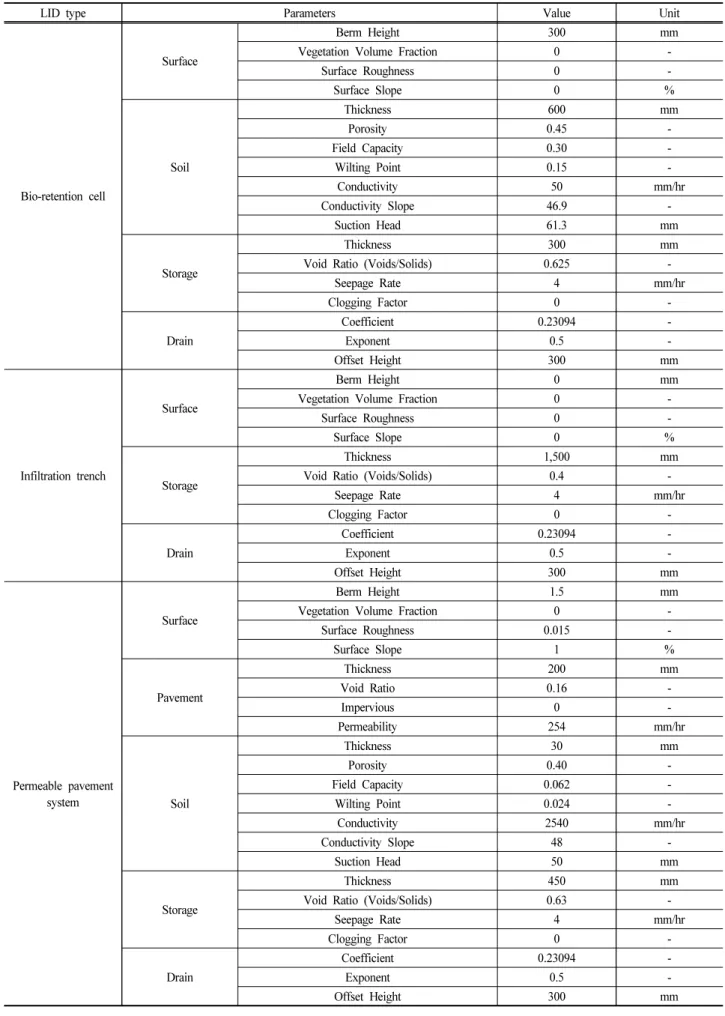
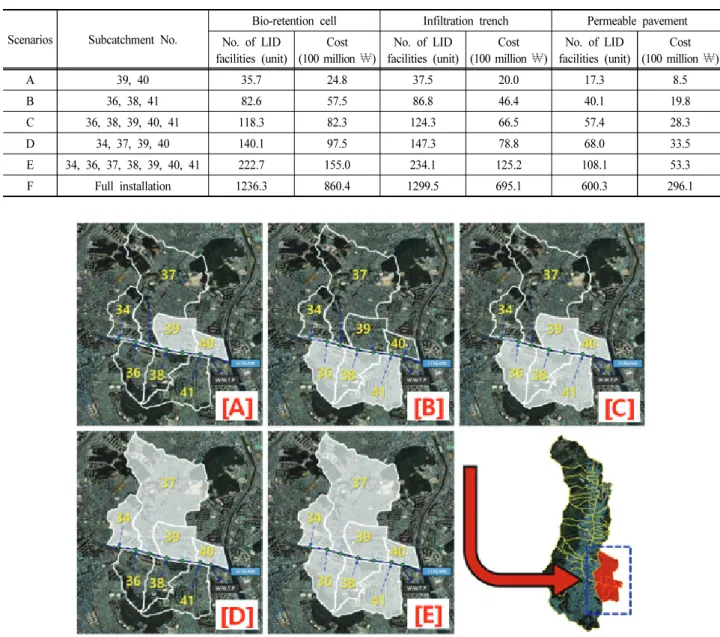
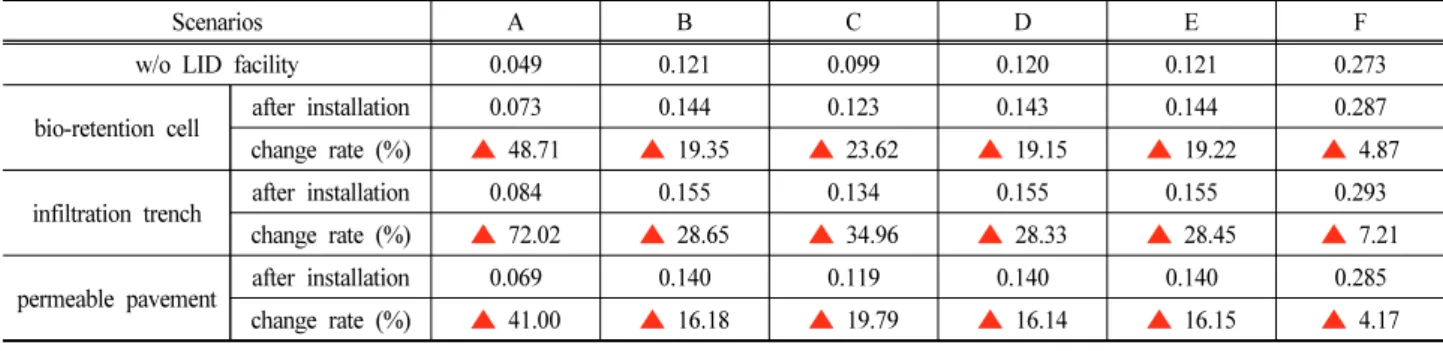
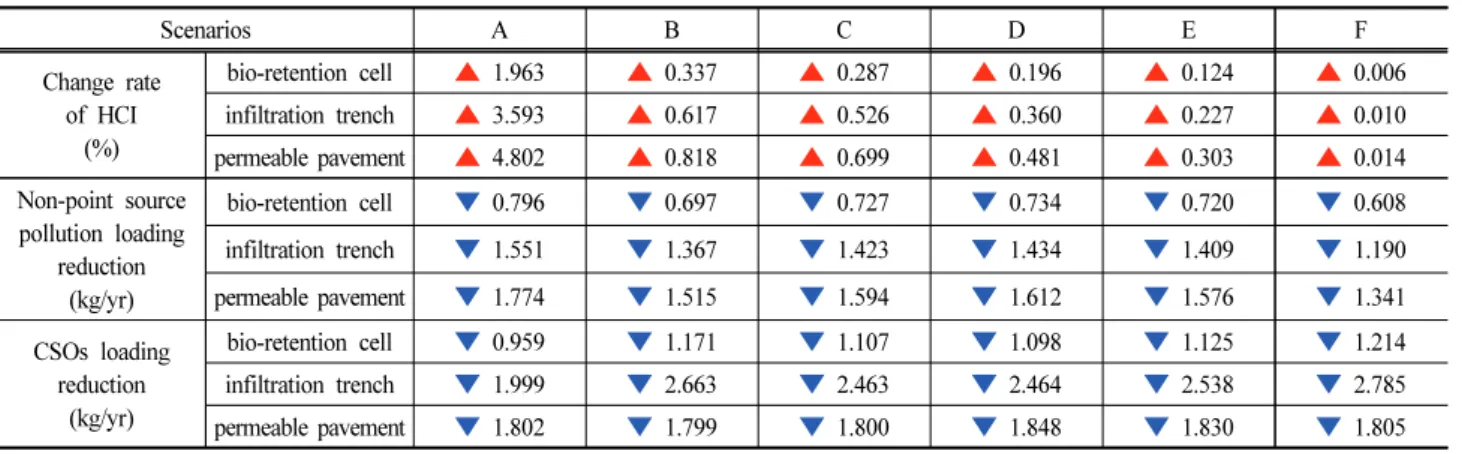
As urbanization and impermeable areas have increased, stormwater and non-point pollutants entering the stream have increased. Additionally, in the case of the old town comprising a combined sewer pipe system, there is a problem of stream water pollution caused by the combined sewer overflow. To resolve this problem, many cities globally are pursuing an environmentally friendly low impact development strategy that can infiltrate, evaporate, and store rainwater. This study analyzed the expected effects and efficiency when the LID facility was installed as a measure to improve hydrologic cycle and water quality in the Oncheon stream in Busan. The EPA-SWMM, previously calibrated for hydrological and water quality parameters, was used, and standard parameters of the LID facilities supported by the EPA-SWMM were set. Benchmarking the green infrastructure plan in New York City, USA, has created various installation scenarios for the LID facilities in the Oncheon stream drainage area. The installation and maintenance cost of the LID facility for scenarios were estimated, and the effect of each LID facility was analyzed through a long-term EPA-SWMM simulation. Among the applied LID facilities, the infiltration trench showed the best effect, and the bio-retention cell and permeable pavement system followed. Conversely, in terms of cost-efficiency, the permeable pavement systems showed the best efficiency, followed by the infiltration trenches and bio-retention cells.
Key words : Bio-retention cells, Combined sewer overflows, EPA-SWMM, Infiltration trenches, Permeable pavement systems, Water cycle
1 박사과정(Ph.D. Student), [email protected], https://orcid.org/0000-0003-4803-654X
2 연구원(Assistant Researcher), [email protected], https://orcid.org/0000-0001-6862-4707
3 사원(Staff), [email protected], https://orcid.org/0000-0002-4018-2625
4a박사후연구원(Postdoctoral Scholar), [email protected], https://orcid.org/0000-0001-5442-7024
4b,†