ARTICLE
Int J Thyroidol 2016 November 9(2): 145-151 https://doi.org/10.11106/ijt.2016.9.2.145Received March 7, 2016 / Revised 1st June 9, 2016, 2nd June 21, 2016 / Accepted July 8, 2016
Correspondence: Yong Hyun Kim, MD, PhD, Department of Internal Medicine, Bundang Jesaeng Hospital, 20 Seohyeon-ro 180beon-gil, Bundang-gu, Seongnam 13590, Korea
Tel: 82-31-779-0696, Fax: 82-31-779-0897, E-mail: [email protected]
Copyright ⓒ 2016, the Korean Thyroid Association. All rights reserved.
This is an open-access article distributed under the terms of the Creative Commons Attribution Non-Commercial License (http://creative- commons.org/licenses/by-nc/4.0/), which permits unrestricted non-commercial use, distribution, and reproduction in any medium, provided the original work is properly cited.
Subacute Thyroiditis and Painless Thyroiditis:
Clinical Characteristics of 221 Patients Diagnosed between 2009 and 2015
Jung Ah Choi, Yong Hyun Kim, Dong Hyun Shin, Jae Min Lee,
Jin Young Heo, Hyun Mi Kim, Won Il Park, Chul Young Kim, In Hye Lee, Ji Su Kim and Go Eul Kim
Department of Internal Medicine, Bundang Jesaeng Hospital, Seongnam, Korea
Background and Objectives: In the past, subacute thyroiditis causing thyrotoxicosis included both painful and painless subgroup, but it is representative for the painful subacute thyroiditis these days. So we evaluated the clinical and laboratory characteristics of subacute thyroiditis and compared with the painless (silent) thyroiditis, and identified predictive factors of permanent hypothyroidism and recurrence. Materials and Methods: This was a retrospective case series study analyzing clinical data of 221 consecutive patients diagnosed between 2009 and 2015. Medical records were reviewed for diagnostic route, age distribution, laboratory data, clinical course and long-term follow up outcome. Results: The mean age was 48 years; female v/s male ratio 3.4:1. Median disease duration was 110 days; mean peak free T4 level was 2.9 ng/dL. 56.7% of painless thyroiditis patients were diagnosed on health checkup or routine thyroid function test with symptoms not typically associated with thyrotoxicosis. Permanent hypothyroidism was not uncommon (11/221; 5.0%). Higher peak thyroid-stimulating hormone (TSH) was associated with permanent hypothyroidism in painless thyroiditis. Lower peak TSH was associated with recurrence rate in both subacute and painless thyroiditis. In painless thyroiditis, short duration of thyrotoxicosis phase was also associated with recurrence rate. Conclusion: Considerable numbers of painless thyroiditis without symptoms were diagnosed on health checkup. Higher peak TSH was associated with permanent hypothyroidism in painless thyroiditis. Recurrence rate was related with lower peak TSH in both groups.
Key Words: Subacute thyroiditis, Painless thyroiditis, Postpartum thyroiditis, Permanent hypothyroidism, Recurrence
Introduction
Thyrotoxicosis can be associated with the early phase of subacute thyroiditis in both painful and painless variants. Painful subacute thyroiditis has been termed granulomatous or de Quervain’s thyroiditis and com- monly representative of subacute thyroiditis nowadays.
So in our study, all subacute thyroiditis patients were
divided into subacute thyroiditis and painless (silent) thyroiditis group, including painless postpartum thyroi- ditis. Here we collected and compared clinical char- acteristics and laboratory data of subacute thyroiditis and painless thyroiditis. We also accumulated data about how painless thyroiditis was diagnosed. Painless thyroiditis is a common disease that can be seen in inpatient and outpatient clinic. There is a certain por- tion of painless thyroiditis without symptom diagnosed
on health checkup or thyroid function test screening on admission. But there is a few data on percentage of eventual prevalence of painless thyroiditis without symptoms of thyrotoxicosis. So we analyzed diag- nostic route of painless thyroiditis.
Subacute thyroiditis is typically diagnosed by pain or tenderness of neck and/or symptoms of thyrotoxicosis.1,2) It is a self-limited, possibly viral, inflammatory thyroid disease. The natural history of subacute thyroiditis in- volves 3-4 phases that generally last over 4-6 months. The initial phase of thyrotoxic state may last 2-6 weeks. The spilling of thyroid hormones into the circulation due to the acute inflammatory process is responsible for the thyrotoxicosis seen in the first phase. After transient asymptomatic euthyroidism, a short phase of mild hypothyroidism follows in most patients.3-6) Permanent hypothyroidism caused by subacute thyroiditis has been reported in up to 5-15%
of patients.7-9)
Although the clinical features and outcome of sub- acute thyroiditis have been described, data on pre- dictive factors of permanent hypothyroidism and re- currence are lacking.10,11) Furthermore, some studies lack data on radioiodine scan or image.12-15) No study has examined clinical characteristics or predictive fac- tors of recurrence or permanent hypothyroidism of subacute and painless thyroiditis in Republic of Korea.
In this study, we reviewed the medical records of 221 consecutive patients with subacute thyroiditis and painless thyroiditis to identify clinical characteristics and predictors of permanent hypothyroidism and recurrence.
Materials and Methods
The medical records of 221 consecutive patients with subacute thyroiditis and painless thyroiditis who were diagnosed in our medical center between 2009 and 2015 were reviewed for age distribution, labo- ratory data and outcome.
We defined subacute thyroiditis as a disease with neck tenderness or pain and typical clinical courses of thyrotoxicosis with sequential transient or permanent hypothyroidism and radioiodine scan. Painless thyroi-
ditis was defined as a disease with same clinical courses and radioiodine scan finding of subacute thy- roiditis without neck tenderness or pain. We excluded Hashimoto’s thyroiditis by analyzing initial thyroid hor- mone test and presence of goiter. Patients with Graves’ disease were excluded on the basis of radio- iodine scan and clinical course. All patients were div- ided into subacute thyroiditis and painless thyroiditis, including painless postpartum thyroiditis group asso- ciated with pregnancy. Patient with permanent hypo- thyroidism developed after thyroiditis was defined as patients who remained hypothyroidism state even after 4-6 months and needed levothyroxine supplemen- tation.
A commercial chemiluminescence immunoassay (ECLIA, Roshu [Kobas 2601]) was used to measure serum thyroid-stimulating hormone (TSH) (normal ref- erence values, 0.27-4.2 μIU/mL), free T4 (FT4) (normal, 0.93-1.70 ng/dL), total T3 (normal, 0.8-2.0 ng/mL) and antithyroid antibodies (normal range for thyroid stimulating receptor [TSH-R] <1.74 IU/L, and for anti-thyroid peroxidase [TPO] <34 IU/mL). Eryth- rocyte sedimentation rate (ESR) was examined by ca- pillary photometry kinetic method. Categorical variables were compared using the chi-square tests. Contin- uous variables, reported as mean with standard devi- ation (SD), were compared using a Mann Whitney U-test. Pearson’s correlation analysis was used to des- cribe the correlation between quantitative variables. All statistical analysis was performed using the SPSS ver- sion 18.0 statistical software program (SPSS, Chicago, IL, USA). The results were considered to be statistically significant when the p value was less than 0.05.
Results
Patient Characteristics
Total 221 patients were involved in this study. 171 patients were female, 50 patients were male. The sex ratio was 3.4:1. There were 64 subacute thyroiditis patients and 157 painless thyroiditis patients, including 15 painless postpartum thyroiditis patients.
Table 1. Laboratory findings of subacute thyroiditis and painless thyroiditis All patients
(n=221)
Subacute thyroiditis (n=64)
Painless thyroiditis
(n=157) p value
Age (years) (median, range) 48 (23-88) 50.5 (26-76) 47.0 (23-88) 0.078§
Female gender (%) 77 (171/221) 88 (56/64) 73 (115/157) 0.032†
ESR (mm/h) (mean±SD) 36.5±33.2 59.2±37.0 27.0±26.7 <0.001§
Anti-TPO antibody (%) 21 (9/43) 14 (2/14) 24 (7/29) 0.693‡
Anti-TSH receptor antibody (%) 6 (8/133) 3 (1/27) 6 (7/106) >0.999‡
Peak FT4 (ng/dL) (mean±SD) 2.93±3.3 4.0±5.8 2.5±1.3 0.738§
Duration of thyrotoxicosis (days) 52.9 39.5 59.1 0.038§
Peak TSH (mU/L) (median) 22 21 22 0.057§
Overall duration (days) (median) 110 120 106 0.800§
Permanent hypothyroid (%) 5 (11/221) 8 (5/64) 4 (6/157) 0.304‡
Recurrence (%) 12 (28/221) 9 (6/64) 14 (22/157) 0.994‡
§Mann-Whitney U-test
†Chi-squared test by two-sided Pearson’s exact test
‡Chi-squared test by two-sided Fisher’s exact test
FT4: free thyroxine, TPO: thyroid peroxidase, TSH: thyroid stimulating hormone
Fig. 1. Age distribution of subacute and painless thyroiditis, including postpartum painless thyroiditis patients (postpartum thyroiditis is not included in painless thyroiditis in this figure).
Clinical Characteristics and Laboratory Data
Weight loss was presented in 52 patients. Fatigue was observed in 39 patients, goiter in 34 patients, fe- brile sense or chilling in 29 patients, palpitation in 28 patients, and tremor in 24 patients. The clinical char- acteristics and laboratory data of the 221 patients in- cluded in the study are summarized in Table 1. Age distribution ranged from 23 to 88 years (mean age, 48). It shows both subacute thyroiditis and painless thyroiditis patients were distributed especially in age 30-69. Age distribution of postpartum thyroiditis was higher in 30-39 due to the age of women in their childbearing years (Fig. 1).
The mean ESR was 59.2±37.0 mm/h in subacute thyroiditis patients. Median peak free T4 was 2.9 ng/dL in total subacute and painless thyroiditis patients. Peak free T4, peak TSH, duration, and in- cidence of permanent hypothyroidism showed no sig- nificant difference between subacute thyroiditis and painless thyroiditis, except that ESR was higher in subacute thyroiditis, duration of thyrotoxicosis was longer in painless thyroiditis.
Anti-TPO antibodies were positive in 7 of 29 pa- tients (24%) in painless thyroiditis. Painless thyroiditis recurred in 22 of 157 patients (14%), 2 of whom had positive anti-TPO antibody. Recurrence rate was not higher in the group with positive anti-TPO antibody.
Diagnostic Route of Painless Thyroiditis
The routes that painless thyroiditis was diagnosed were classified under four entry. First, Patients diag- nosed on health checkup (including patients diag- nosed on health checkup in other local clinics): 36 patients, 22.9%. Second, inpatients or outpatients who were evaluated with thyroid function test because of nonspecific other symptoms (ex. dizziness, heart fail- ure, etc.) in clinics include out endocrinology: 53 pa- tients, 33.8%. Third, patients who were evaluated with thyroid function test because of thyrotoxicosis symp- toms (fatigue, palpitation, tremor, etc.): 53 patients,
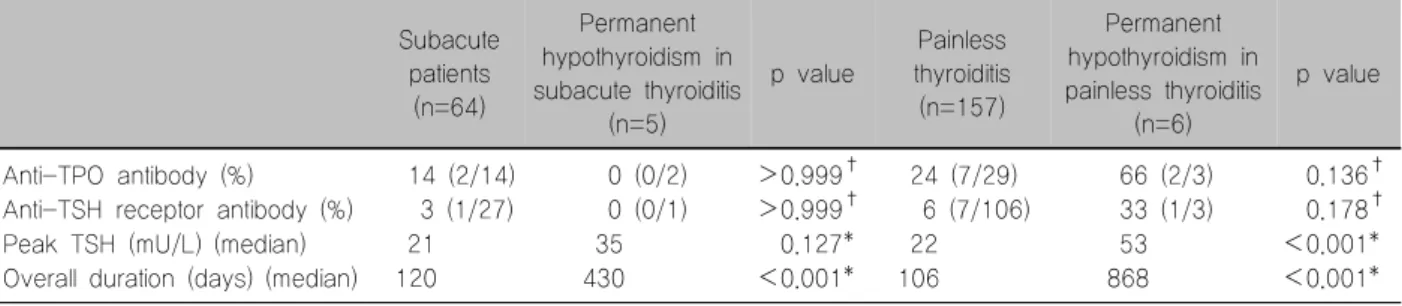
Table 2. Laboratory findings of subacute and painless thyroiditis according to permanent hypothyroidism
Subacute patients
(n=64)
Permanent hypothyroidism in subacute thyroiditis
(n=5)
p value
Painless thyroiditis (n=157)
Permanent hypothyroidism in painless thyroiditis
(n=6)
p value
Anti-TPO antibody (%) 14 (2/14) 0 (0/2) >0.999† 24 (7/29) 66 (2/3) 0.136†
Anti-TSH receptor antibody (%) 3 (1/27) 0 (0/1) >0.999† 6 (7/106) 33 (1/3) 0.178†
Peak TSH (mU/L) (median) 21 35 0.127* 22 53 <0.001*
Overall duration (days) (median) 120 430 <0.001* 106 868 <0.001*
*Mann-Whitney U-test
†Chi-squared test by two-sided Pearson’s exact test TPO: thyroid peroxidase, TSH: thyroid stimulating hormone 33.8%. Fourth, patients diagnosed after delivery, post- partum thyroiditis: 15 patients, 9.6%. Thus, 89 cases (56.7%) of painless thyroiditis were diagnosed on health checkup or routine thyroid function test with symptoms not typically associated with thyrotoxicosis.
Clinical Characteristics and Laboratory Data with Extremely High Free T4
Peak free T4 during thyrotoxicosis phase was more than 2-fold of normal in 38 patients and there were some patients with extremely high free T4 in our study.
We found four cases of extremely high peak free T4 more than or equal to 20 ng/dL. All these four patients had neck pain. Three patients were women, one pa- tient was man, with age distribution 34 to 60. These patients tend to go through longer duration of thyro- toxicosis. ESR elevation was not significantly higher than the other patients and existence of antibody was not in consideration because antibody was not checked in half of the patients. One patient experi- enced one recurrence, the other one patient showed permanent hypothyroidism. In textbook, extremely high free T4 is assumed to be Graves’ disease, but there was patient with subacute thyroiditis that free T4 ex- ceeded 30 ng/dL.
Correlation of Clinical Characteristics and Laboratory Data with Permanent Hypothyroidism
Permanent hypothyroidism developed in 11 patients (5.0%) of all subacute and painless thyroiditis patients.
Table 2 shows arranged laboratory data of subacute and painless thyroiditis to distinguish predictive factors
of permanent hypothyroidism after thyroiditis. In sub- acute thyroiditis group, there was no statistically sig- nificant predictive factor of permanent hypothyroidism.
When compared with the other patients, patients with permanent hypothyroidism showed no difference in ESR, antibodies, free T4 and TSH. Longer overall du- ration was the result of long-term follow up period of permanent hypothyroidism. On the other hand, labo- ratory data of painless thyroiditis shows that higher peak TSH seems to be related with permanent hypo- thyroidism (p<0.001).
Correlation of Clinical Characteristics and Laboratory Data with Recurrence
There were 28 patients (12.7%) who experienced recurrence in both groups. The recurrence rate (9%
vs. 14%) showed no statistically significant difference between subacute thyroiditis and painless thyroiditis.
Among 28 patients, 18 patients were female and 10 patients were male. Among the patients who experi- enced recurrence, three patients experienced 3 times of recurrence, two patients experienced 2 times of recurrence.
We analyzed laboratory data to find predictive fac- tors of recurrence of subacute thyroiditis and painless thyroiditis on Table 3. In subacute thyroiditis, low peak TSH measured in the clinical course of subacute thy- roiditis was associated with recurrence rate (p≤
0.007). Even at painless thyroiditis, low peak TSH was associated with recurrence rate (p≤0.018). One more predictive factor of recurrence in painless thyroiditis was short duration of thyrotoxicosis phase (p≤0.001).
Table 3. Laboratory findings of subacute and painless thyroiditis according to recurrence Subacute
thyroiditis patients
(n=64)
Recurrence in subacute thyroiditis
(n=6) (9%)
p value
Painless thyroiditis (n=157)
Recurrence in painless thyroiditis (n=22) (14%)
p value
Peak TSH (mU/L) 21 12.72 0.007* 22 6.38 0.018*
Peak FT4 (ng/dL) (mean±SD) 4.0±5.8 2.5±1.3 0.991* 2.5±1.3 2.9±1.3 0.086*
Duration of thyrotoxicosis (days) (mean) 39.5 56.3 0.325* 59.1 48.6 0.001*
Overall duration (days) (median) 120 100 0.566* 106 112 <0.001*
*Mann-Whitney U-test
FT4: free thyroxine, SD: standard deviation, TSH: thyroid stimulating hormone
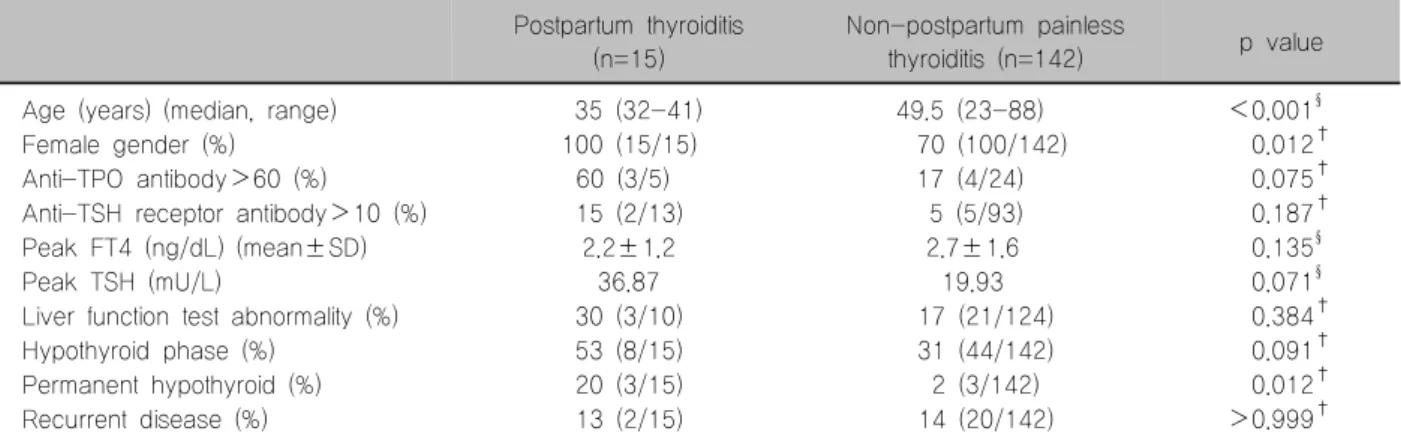
Table 4. Clinical characteristics of painless thyroiditis patients according to postpartum history Postpartum thyroiditis
(n=15)
Non-postpartum painless
thyroiditis (n=142) p value
Age (years) (median, range) 35 (32-41) 49.5 (23-88) <0.001§
Female gender (%) 100 (15/15) 70 (100/142) 0.012†
Anti-TPO antibody>60 (%) 60 (3/5) 17 (4/24) 0.075†
Anti-TSH receptor antibody>10 (%) 15 (2/13) 5 (5/93) 0.187†
Peak FT4 (ng/dL) (mean±SD) 2.2±1.2 2.7±1.6 0.135§
Peak TSH (mU/L) 36.87 19.93 0.071§
Liver function test abnormality (%) 30 (3/10) 17 (21/124) 0.384†
Hypothyroid phase (%) 53 (8/15) 31 (44/142) 0.091†
Permanent hypothyroid (%) 20 (3/15) 2 (3/142) 0.012†
Recurrent disease (%) 13 (2/15) 14 (20/142) >0.999†
§Mann-Whitney U-test
†Chi-squared test by two-sided Pearson’s exact test
‡Chi-squared test by two-sided Fisher’s exact test
FT4: free thyroxine, SD: standard deviation, TPO: thyroid peroxidase, TSH: thyroid stimulating hormone
Recurrence rate was not higher in the group with positive anti-TPO antibody.
Postpartum Thyroiditis
Postpartum thyroiditis is believed to be the con- sequence of over reactivation in immune system after delivery. In postpartum thyroiditis, ages of the patients were lower, because of childbearing age (Table 4).
Permanent hypothyroidism developed more in post- partum thyroiditis patients than non-postpartum pain- less thyroiditis patients group (20% vs. 2%, p≤0.012).
But it should be considered that the number of post- partum thyroiditis patients was only 15. There was no difference in the incidence of liver function test abnor- mality, incidence of hypothyroid phase, recurrence rate and presence of thyroid antibodies between postpartum thyroiditis patients and non-postpartum painless thyroiditis patients.
Discussion
Subacute thyroiditis (de Quervain’s thyroiditis) is a transient, inflammatory thyroid disease associated with neck pain as well as thyrotoxicosis symptoms. The results of our study reconfirmed clinical characteristics of patients with subacute thyroiditis previously reported by others.4-7)
The mean age was 40 years in the study of 1127 subacute thyroiditis patients.16) Iitaka et al.17) reported mean age of 38.4 years in 3344 subacute thyroiditis patients. The mean age of our patients with subacute thyroiditis was 50.5. Similar to previous studies, the majority of our patients were between 30-69 year of age.18,19)
The mean age of painless thyroiditis in our study was 47.0. Painless thyroiditis was also more prevalent
in females, with female:male ratio of 2.7:1. 56.7% of our patients with painless thyroiditis were diagnosed on health checkup or routine thyroid function test with symptoms not typically associated with thyrotoxicosis.
So there may be more cases of painless thyroiditis that can be ignored undiagnosed and many patients with heterogeneous parenchymal echogenicity on sono- graphic finding without history of thyroid disease may have experienced undiagnosed thyroiditis without symptom.
Permanent hypothyroidism is a known complication that can occur in 5-15% of subacute thyroiditis.7-9) The rate of permanent hypothyroidism in all patients involved in our study was 5.0% (11/221) and it was not different between subacute thyroiditis and painless thyroiditis group. There may be different pathogenesis of transient or permanent hypothyroidism. Transient hypothyroidism is caused by temporary destruction of thyroid cells by inflammation. In permanent hypo- thyroidism, subacute thyroiditis may trigger auto re- active B cells to produce TSH-receptor antibodies, resulting in TSH receptor antibody-associated thyroid dysfunction in some patients.8,20-22) Antithyroid anti- bodies were detected in 20-50% of patients with sub- acute thyroiditis or painless thyroiditis and disappeared during the recovery phase in most of them.8,9,12) Some studies suggest that antithyroid antibodies were the only factor associated with permanent hypothyroidism in subacute thyroiditis.11,23) In our study, antithyroid an- tibodies were not associated with permanent hypo- thyroidism. Instead, higher peak TSH showed statisti- cally significant association with permanent hypo- thyroidism only in painless thyroiditis. But further study with large number of subacute and painless thyroiditis patients will be needed to confirm the difference.
Recurrence of subacute thyroiditis is reported to be rare in many studies. One study reported 4 recurrent episodes of subacute thyroiditis occurred in 3 of 222 patients (1.4%).24) In a larger study that evaluated data for 3344 patients with subacute thyroiditis between 1970 and 1993, subacute thyroiditis recurred in 48 of 3344 patients (1.4%) (mean, 14.5±4.5 years after the first episode). Five patients experienced a third epi- sode (mean, 7.6±2.4 years after the second epi-
sode).17) Nishihara et al.25) reported recurrent episodes of subacute thyroiditis at intervals of 13.6±5.6 years which were accounted for 1.6% of all cases. But other studies show higher recurrence rate of approximately 9-20% in subacute thyroiditis patients.10,14,15) The re- currence rate of 12.7% (28 patients) in our study was also relatively high. Of whom, three patients experi- enced 3 times of recurrence, two patients experienced 2 times of recurrence. Theoretically, late recurrence after several years possibly occurs after the dis- appearance of immunity to the previous viral infection.
But there is no definite evidence supporting this theo- ry, because the titers of various viral antibodies were not increased during the clinical course of re- currence.24) Of course, our study has limitation that exact level of peak free T4 and TSH would be under- estimated because thyroid function test was not done frequently in the course of disease. But we analyzed predictive factors of recurrence and found low peak TSH was associated with recurrence of subacute thy- roiditis and painless thyroiditis (p≤0.05). Low peak TSH could probably mean recurrence of thyroiditis at recovering phase of hypothyroidism and the interval of recurrence was very short in some patients. Still, there should be more studies with large number of patients about predictive factors of permanent hypo- thyroidism and recurrent thyroiditis.
In summary, our study of contemporary and rela- tively large series of patients with subacute or painless thyroiditis confirmed some of the clinical characteristics previously reported by others. More than half of pain- less thyroiditis were diagnosed on health checkup or routine thyroid function test without symptoms of thyrotoxicosis. Permanent hypothyroidism was not un- common (5.0%) and higher peak TSH was associated with permanent hypothyroidism in painless thyroiditis.
Recurrence was relatively common (12.7%) and re- currence rate was higher in both subacute thyroiditis and painless thyroiditis with low peak TSH.
References
1) Volpe R. Subacute (de Quervain's) thyroiditis. Clin Endocrinol Metab 1979;8(1):81-95.
2) Walfish PG. Thyroiditis. Curr Ther Endocrinol Metab 1997;6:
117-22.
3) Ross DS. Syndromes of thyrotoxicosis with low radioactive iodine uptake. Endocrinol Metab Clin North Am 1998;27(1):
169-85.
4) Singer PA. Thyroiditis. Acute, subacute, and chronic. Med Clin North Am 1991;75(1):61-77.
5) Pearce EN, Farwell AP, Braverman LE. Thyroiditis. N Engl J Med 2003;348(26):2646-55.
6) Slatosky J, Shipton B, Wahba H. Thyroiditis: differential diagnosis and management. Am Fam Physician 2000;61(4):
1047-52, 54.
7) Fatourechi V, Aniszewski JP, Fatourechi GZ, Atkinson EJ, Jacobsen SJ. Clinical features and outcome of subacute thyroiditis in an incidence cohort: Olmsted County, Minnesota, study. J Clin Endocrinol Metab 2003;88(5):2100-5.
8) Tikkanen MJ, Lamberg BA. Hypothyroidism following subacute thyroiditis. Acta Endocrinol (Copenh) 1982;101(3):348-53.
9) Lio S, Pontecorvi A, Caruso M, Monaco F, D'Armiento M.
Transitory subclinical and permanent hypothyroidism in the course of subacute thyroiditis (de Quervain). Acta Endocrinol (Copenh) 1984;106(1):67-70.
10) Mizukoshi T, Noguchi S, Murakami T, Futata T, Yamashita H. Evaluation of recurrence in 36 subacute thyroiditis patients managed with prednisolone. Intern Med 2001;40(4):292-5.
11) Kitchener MI, Chapman IM. Subacute thyroiditis: a review of 105 cases. Clin Nucl Med 1989;14(6):439-42.
12) Hwang SC, Jap TS, Ho LT, Ching KN. Subacute thyroiditis--61 cases review. Zhonghua Yi Xue Za Zhi (Taipei) 1989;43(2):113-8.
13) Alfadda AA, Sallam RM, Elawad GE, Aldhukair H, Alyahya MM. Subacute thyroiditis: clinical presentation and long term outcome. Int J Endocrinol 2014;2014:794943.
14) Benbassat CA, Olchovsky D, Tsvetov G, Shimon I. Subacute thyroiditis: clinical characteristics and treatment outcome in fifty-six consecutive patients diagnosed between 1999 and 2005.
J Endocrinol Invest 2007;30(8):631-5.
15) Erdem N, Erdogan M, Ozbek M, Karadeniz M, Cetinkalp S, Ozgen AG, et al. Demographic and clinical features of
patients with subacute thyroiditis: results of 169 patients from a single university center in Turkey. J Endocrinol Invest 2007;
30(7):546-50.
16) Kitaoka H, Sakurada T, Fukazawa H, Suzuki M, Kaise N, Kaise K, et al. An epidemiological study of subacute thyroiditis in northern Japan. Nihon Naibunpi Gakkai Zasshi 1985;
61(5):554-70.
17) Iitaka M, Momotani N, Ishii J, Ito K. Incidence of subacute thyroiditis recurrences after a prolonged latency: 24-year survey.
J Clin Endocrinol Metab 1996;81(2):466-9.
18) Martino E, Buratti L, Bartalena L, Mariotti S, Cupini C, Aghini-Lombardi F, et al. High prevalence of subacute thyroiditis during summer season in Italy. J Endocrinol Invest 1987;10(3):321-3.
19) Saito S, Sakurada T, Yamamoto M, Yamaguchi T, Yoshida K. Subacute thyroiditis: observations on 98 cases for the last 14 years. Tohoku J Exp Med 1974;113(2):141-7.
20) Iitaka M, Momotani N, Hisaoka T, Noh JY, Ishikawa N, Ishii J, et al. TSH receptor antibody-associated thyroid dysfunction following subacute thyroiditis. Clin Endocrinol (Oxf) 1998;
48(4):445-53.
21) Iitaka M, Kakinuma S, Yamanaka K, Fujimaki S, Oosuga I, Wada S, et al. Induction of autoimmune hypothyroidism and subsequent hyperthyroidism by TSH receptor antibodies following subacute thyroiditis: a case report. Endocr J 2001;48(2):139-42.
22) Nakamura S, Saio Y, Suzuki E. Subacute thyroiditis with thyroid-stimulation blocking antibodies: a case report. Endocr J 1996;43(2):185-9.
23) Hnilica P, Nyulassy S. Plasma cells in aspirates of goitre and overt permanent hypothyroidism following subacute thyroiditis.
Preliminary report. Endocrinol Exp 1985;19(4):221-6.
24) Yamamoto M, Saito S, Sakurada T, Tamura M, Kudo Y, Yoshida K, et al. Recurrence of subacute thyroiditis over 10 years after the first attack in three cases. Endocrinol Jpn 1988;
35(6):833-9.
25) Nishihara E, Ohye H, Amino N, Takata K, Arishima T, Kudo T, et al. Clinical characteristics of 852 patients with subacute thyroiditis before treatment. Intern Med 2008;
47(8):725-9.