Establishment of Featal Heart Surgery with an Improvement of the Placental Blood Flow in Cardiopulmonary Bypass Using Fetal Lamb Model
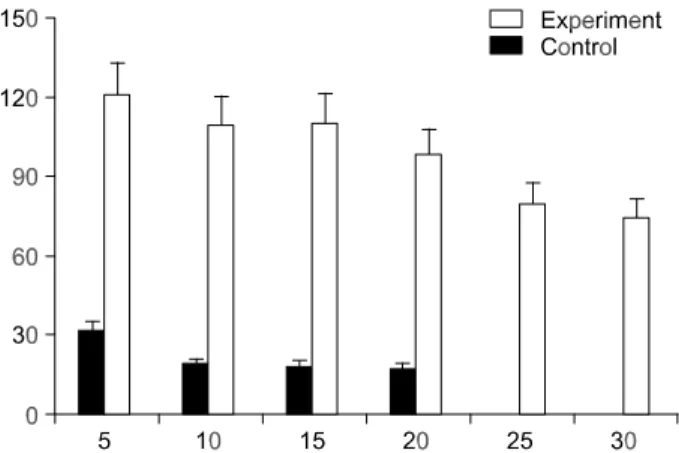
Background: We tested the effect of indomethacine and total spinal anesthesia on the improvement of placental flow during cardiopulmonary bypass on fetal lamb. Material and Method: Twenty fetuses at 120 to 150 days of gestation were subjected to bypass via trans-sternal approach with a 12 G pulmonary arterial cannula and 14 to 18 F venous cannula for 30 minutes. All ewes received general anesthesia with ketamine. In all the fetuses, no an- esthetic agents were used except muscle relaxant. Ten served as a control group in which placenta was worked as an oxygenator during bypass (Control group). The remainder worked as an experimental group in which pretreat- ment with indomethacine and total spinal anesthesia was performed before bypass with the same extracorporeal circulation technique as control group (Experimental group). Observations were made every 10 minutes during a 30-minute bypass and 30-minute post bypass period. Result: Weights of the fetuses ranged from 2.2 to 5.2 kg. In Control group, means of arterial pressure decreased from 44.7 to 14.4 mmHg and means of PaCO2 increased from 61.9 to 129.6 mmHg at each time points during bypass. Flow rate was suboptimal (74.3 to 97.0 ml/kg/min) during bypass. All hearts fibrillated immediately after the discontinuation of bypass. On the contrary, in Experimental group, means of arterial pressure reamined higher (45.8 to 30 mmHg) during bypass (p 0.05). Means of PaCO2 were less ranging from 59.8 to 79.4 mmHg during bypass (p 0.05). Flow rates were higher (78.8 to 120.2 ml/
kg/min) during bypass (p 0.05). There were slower deterioration of cardiac function after cessation of bypass.
Conclusion: In this study, we demonstrated that the placental flow was increased during fetal cardiopulmonary bypass in the group pretreated with indomethacine and total spinal anesthesia. However, further studies with modi- fications of the bypass including a creation of more concise bypass circuit, and a use of axial pump are manda- tory for the clinical application.
(Korean J Thorac Cardiovasc Surg 2004;37:11-18)
양태아를 이용한 심폐우회술에서의 태반혈류개선을 통한 태아심장수술의 기반기술 확립
Key words: 1. Fetus
2. Cardiopulmonary bypass 3. Placenta
Fig. 1. Hematocrits (%) of fetuses were maintained as same during and after cardiopulmonary bypass (minutes). There were no difference in hematocrit levels between control and expe- riemental group.
Fig. 2. In control group, means of arterial pressure (mmHg) decreased from 44.7 to 14.4 mmHg and in experimental group, means of arterial pressure remained higher (45.8 to 30 mmHg) during bypass (minutes).
Fig. 3. In control group, heart rate (beat/min) decreased ab- ruptly from 180 to 75 beat/min after beginning of bypass but in Experimental group, heart rate maintained higher than 150 beat/min during bypass (minutes).
Fig. 4. In Control group, PaO2 (mmHg) was extremely low. In Experimental group, PaO2 was between 101.7 120.9 mmHg during bypass (minutes).
Fig. 5. Means of PaCO2 (mmHg)were less in experimental group ranging from 59.8 to 79.4 mmHg during bypass (minutes) (p 0.05).
Fig. 6. Flow rate (ml/kg/min) were higher (78.8 to 120.2 ml/kg/
min) during bypass (minutes)(p 0.05). There were slower dete- rioration of cardiac function after cessation of bypass.
=국문 초록=
배경:
대상 및 방법:
결과:
결론:
중심 단어