전기 자극으로 유발한 음경 발기력 측정 흰쥐 모델에 대한 HTE001의 발기력 상승효과
임동욱1, 이동헌1, 송미경1, 김미연1,2, 부영민1, 김호철1,2*1)
1: 경희대학교 한의과대학 본초학교실 2: 뉴메드 한의과학기술연구소
Effect of HTE001, an Herbal Formulation, on Electric Stimulation-induced Penile Erection in Rats
Dong Wook Lim1, Donghun Lee1, Mikyoung Song1, Miyeon Kim1,2, Youngmin Bu1, Hocheol Kim1,2*
1: Dept. of Herbal Pharmacology, College of Oriental Medicine, Kyung Hee University 2: Korea Institute of Science and Technology of East Medicine, NeuMed Co. Ltd
ABSTRACT
Objectives : This study was conducted to investigate the effect of HTE001, a multi-herbal mixture consisting of 10 herbs, Cornus Frutus, Schizandrae Fructus, Rubi Fructus, Cnidi Fructus, Acanthopanacis senticosi Radix, Cinnamomi Cortex, Eucommiae Cortex, Allii Bulbus, Rehmanniae Radix and Ginseng Radix, on electrostimulation- induced penile erection in rats.
Methods : Intracavernous pressure (ICP) and mean arterial blood pressure (MAP) were simultaneously monitored through electric stimulation of the cavernous nerve after the oral administration of HTE001 (30, 100, 300 mg/kg) in normal rats. Statistical analysis was performed on maximal intracavernous pressure (ICP), maximal intracavernous pressure/mean arterial blood pressure (ICP/MAP) ratio, and the area under the curve (AUC) of ICP/MAP ratio.
Results : Oral administration of HTE001 300 mg/kg caused the ICP to increase in a frequency- dependent manner. And HTE001 300 mg/kg treatment group showed the highest value in the ICP/MAP ratio and the AUC value of the ICP/MAP ratio compared to the control group at 2 Hz, 6 Hz and 10 Hz, respectively without an effect on the mean arterial blood pressure under the same stimulation of the cavernous nerve.
Conclusions : These results show that HTE001 improve penile erection and prolong the decay period in normal rats without affecting mean arterial blood pressure, and suggest that HTE001 could be a good therapeutic candidate to treat erectile dysfunction.
Key words : HTE001, erectile function, intracavernous pressure, cavernous nerve stimulation, rat
Introduction
Sexual relationships are some of the most important
social and biological relationships in human life. Next to hunger, thirst and sleep, the sexual urge is the most powerful biological drive1). Sexual dysfunction is a
* Corresponding author : Hocheol Kim, Department of Herbology, College of Oriental Medicine, Kyung Hee University, 1 Hoegi-dong Dongdaemun-gu Seoul Republic of Korea
․ Tel : 82-961-0419 ․ E-mail : [email protected]
․ Acceptance : 2009. 8. 26 ․ Adjustment : 2009. 9. 10 ․ Adoption : 2009. 9. 23
common disease with an increasing incidence as a result of longer lifespan, the increasing prevalence of degenerative diseases as well as the increase in injuries and stress associated with industrialized lifestyles2). Sexual dysfunction is reported to occur in 10-52% of men and in 25-63% of women. Men age 40-70 years are found to have 34.8% of moderate to erectile dysfunction (ED)3). ED occurrence is highly correlated with aging, and aging of the global population will result in a substantial increase in the number of men with ED in the future4). Analysis of an aging study showed that the incidence rate of ED rises from 1.2% per year for men aged between 40 years and 49 years to 4.6% for men aged between 60 years and 69 years5). Since the elderly population is growing markedly, the number of men worldwide with ED is estimated to be 322 million by 20256). In Korea, the prevalence of ED was reported to be 11.8%, and that of moderate of ED was 84.3%, which demonstrates that most Korean men over 40 years of age have some form of ED7).
In recent years, there has been renewed activity in the search for traditional herbs to treat ED8), because traditional herbs are a potential source of natural drugs for therapy against ED9,10). In traditional Korean medicine (TKM), male ED usually implies a yang deficiency and thus is called yang-wi (withered yang). Donguibogam, written by Huh, Jun during the 17th century, in particular has much exemplary evidence of treating yang-wi.
HTE001, a multi-herbal mixture consisting of 10 herbs, Cornus officinalis, Schizandra chinensis, Rubus coreanus, Cnidium monnier, Acanthopanax senticosus, Cinnamomum cassia, Eucommia ulmoides, Allium sativum, Rehmannia glutinosa and Panax ginseng, is used to treat yang-deficiency syndrome in TKM. HTE001 was created after more than 50 herbs were screened based on in vivo data of erectile enhancing effects and on TKM composition theory for treatment of sexual health and problems. Schizandra chinensis has long been used as a traditional medicine for tonic and sedative effects and has contributed to vasorelaxation in the isolated rat thoracic aorta11). Rubus coreanus has been reported to be increase the level of testosterone in the blood12). Cornus officinalis has been reported to be increase the levels of RNA in the interstitial cells of the testicle13). Cnidium monnieri has been used mainly for treatment of male impotence and has contributed to relaxed rabbit corpus cavernosum tissue in vitro14). Eleutherococcus senticosus has been
used as a tonic and adaptogen to strength in TKM15). Cinnamomum cassia-derived material in nitric oxide (NO) production in RAW 264.7 cells was determined through the evaluation of NO production16). Eucommia ulmoides increased the expression of nNOS in penile tissue and enhanced the erectile function of diabetic rats17). Allium scorodorpasum has been used mainly as an anti-fatigue agent in many countries18). Rehmannia glutinosa has been widely used in Asian countries for the treatment of renal diseases19). Panax ginseng has been used as a tonic and restorative to maintain physical vitality and showed a dose-related relaxing effect on the isolated rabbit corporal smooth muscle strip20).
In the present study, we investigated the effect of HTE001 on electrical stimulation-induced penile erection in the normal rat model. ICP and MAP were simultaneously monitored through electric stimulation of the cavernous nerve, before and after oral administration of HTE001.
Material and methods
1. Preparation of HTE001
All herbs were purchased from Omni Herb, Daegu, Korea. HTE001 was identified by Professor Dr. Hocheol Kim, and a voucher specimen has been deposited at the Department of Herbal Pharmacology. HTE001 consists of 10 herbs. The composition is Cornus officinalis (18.18%), Schizandra chinensis (9.09%), Rubus coreanus (9.09%), Cnidium monnieri (4.55%), Eleutherococcus senticosus (9.09%), Cinnamomum cassia (9.09%), Eucommia ulmoides (4.55%), Allium sativum (18.18%), Panax ginseng (9.09%) and Rehmannia glutinosa (9.09%). HTE001 was extracted by boiling for 6 hr using a 70% ethanol aqueous mixture. The 70% ethanol filtrate was evaporated and dried in vacuum, and then stored at –20°C.
2. Sample administration
HTE001 were suspended in distilled water and administered orally at three different doses of 30, 100 and 300 mg/kg. Sildenafil was suspended in distilled water and administered orally at a dose of 20 mg/kg using a syringe.
3. Surgical preparation
All surgical procedures were conducted according to
the animal welfare guidelines issued by the Korean Institute of Health and the Korea Academy of Medical Sciences. Male Sprague-Dawley rats (280±10 g) were purchased from Samtako Co., Osan, Korea. The animals were housed under controlled temperature (22±2°C), relative humidity (55±10%), and 12 h light/dark cycle (07:00~19:00) conditions with food and water ad libitum, made available. The rats were anesthetized by an intraperitoneal injection of urethane (1.2 g/kg). The right carotid artery were then exposed and cannulated with a polyethylene-50 tube filled with 50 IU/ml heparinized saline to monitor the mean arterial blood pressure. The lateral prostatic space was exposed though a lower midline abdominal incision, and the major pelvic ganglion was identified by removal of the thin filmy semitransparent fascia covering the lateral prostatic space. The penis was denuded of skin and a catheter tip with a 26-gauge needle connected to a polyethylene tube filled with 50 IU/ml heparinized saline, was inserted into one corpus cavernosum to measure the ICP. These parameters were recorded on a polygraph. Data acquisition and calculation of the derived parameters were performed using an on-line computer system (Chart & Scope, AD Instrument, USA).
4. Electrical stimulation of the cavernous nerve
Electric stimulation consisting of rectangular pulse trains of constant amplitude was given using an electric stimulator (ADInstrument PowerLab, USA). A rat model of erection induced by electric stimulation of the cavernous nerve was first developed by Quinlan in 1989. The major pelvic ganglion was exposed though a midline abdominal incision. A stainless steel bipolar electrode was carefully positioned on the pelvic ganglion.
Electrical stimulation was performed unilaterally at 2 Hz, 6 Hz, and 10 Hz for 60 s. The stimulus interval was 3 min. These conditions were obtained during a preliminary study designed to determine the optimal stimulatory conditions. The measurement was repeated 30 min after the administration of HTE001. Since it has been reported that the half-life of sildenafil after administration in rat was 0.4 h21), the measurement was repeated 10 min after the administration of sildenafil.
5. Statistical analysis
Statistical analysis was performed on the maximal
value of the ICP, MAP, ICP/MAP (%) and Area under curve (AUC) value. Data of the above parameters were compared between before and after HTE001 administration.
All results were presented as mean±SEM. The ANOVA test was used for comparisons between the experimental groups and within each test group. Comparison of the groups means were accomplished using Tukey’s multiple comparison tests. A p value of less than 0.05 was considered statistically significant.
Results
1. Erectile response in normal rats
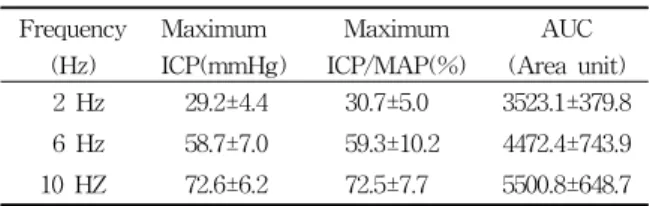
Electric stimulation of the cavernous nerve induced a frequency dependent increase in the ICP in the normal rats. In 10 anesthetized rats, the baseline cavernous pressure ranged from 5.2 to 12.3 mmHg (9.3±2.1 mmHg), and the mean of the maximal ICP ranged from 29.2±4.4 mmHg at 2 Hz to 72.6±6.3 mmHg at 10 Hz. Electric stimulation of the cavernous nerve resulted in an increase in the ICP of approximately 3- or 8 - fold from the baseline, which was frequency dependent.
The ICP/MAP ratio and the AUC value of the ICP/MAP ratio also increased in a frequency-dependent manner after electrical stimulation of the cavernous nerve(Table 1).
Table 1. Frequency Response Relationships of Electric Stimulation of Cavernous Nerve in 10 Anesthetized Rats
Frequency Maximum Maximum AUC
(Hz) ICP(mmHg) ICP/MAP(%) (Area unit) 2 Hz 29.2±4.4 30.7±5.0 3523.1±379.8 6 Hz 58.7±7.0 59.3±10.2 4472.4±743.9 10 HZ 72.6±6.2 72.5±7.7 5500.8±648.7 ICP/MAP, intracavernous pressure/mean arterial blood pressure ; AUC, area under the curve.
2. Effect of HTE001 on MAP in normal rats
In the HTE001 300 mg/kg treatment group, the MAP before and after administration was 97.8±2.1 and 99.3±1.5 mmHg, respectively, and showed no significantly change. However, the sildenafil 20 mg/kg treatment group, the MAP before and after administration was 102.5±3.2 and 85.3±3.1 mmHg, which showed a statistically significant drop in blood pressure(Fig. 1).
0 20 40 60 80 100 120
***
Control Sildenafil 20 mg/kg
HTE001 300 mg/kg
MAP (mmHg)
Fig. 1. Effect of HTE001 in the MAP in the response to electrical stimulation of cavernous nerve
The data are expressed as mean±SD.
*** p< 0.001 significantly not different from before and after administration HTE001. MAP, mean arterial blood pressure.
3. Effect of HTE001 on the erectile response in normal rats
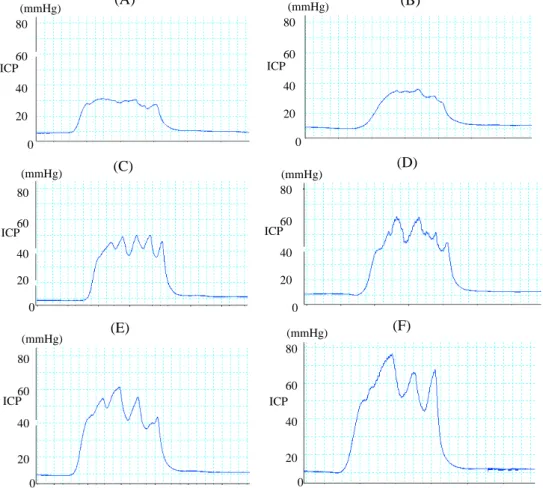
The oral administration of HTE001 caused the ICP to increase in a frequency-dependent manner(Fig. 2).
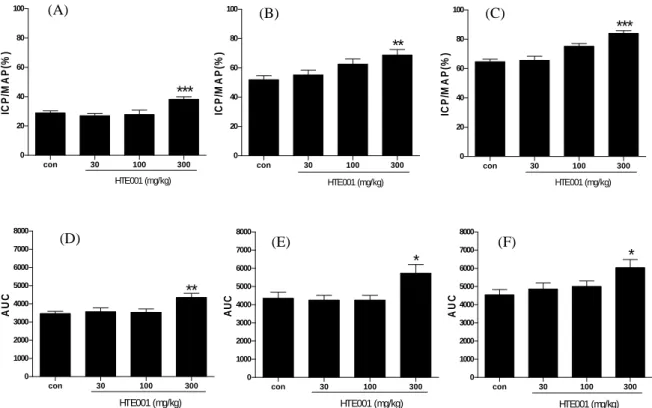
At the 2 Hz frequency stimulation of the cavernous nerve, the ICP of the HTE001 300 mg/kg treatment group was 40.3±1.8 mmHg and the ICP ofthe control and sildenafil 20 mg/kg treatment groups was 31.6±1.7 and 41.9±2.3 mmHg, respectively, which showed a statistically significant increase compared to the control group. The ICP/MAP ratio of the HTE001 300-mg/kg treatment group was 38.2±1.7%, and the ICP/MAP ratio of the control and sildenafil 20 mg/kg treatment groups was 29.1±1.3 and 51.5±4.4%, which showed a statisticallysignificant increase compared to the control group. The AUC value of the ICP/MAP ratio of the HTE001 300 mg/kg treatment group also showed a significant increase compared to the control group. At higher frequencies, such as 6 and 10 Hz, the HTE001 300 mg/kg treatment group showed the highest value for the ICP, the ICP/MAP ratio, and the AUC value of ICP/MAP ratio compared to the control (Fig. 3).
However, the ICP, the ICP/MAP ratio, and the AUC value of the ICP/MAP ratio of the 30- and 100-mg/
kgtreatment groups did not show an effect for any (mmHg) (A)
ICP
0 80
60
40 20
(B)
0 80
60
40 20 ICP
(mmHg)
(C)
0 80 60
40 20 ICP
(mmHg) (D)
0 80 60
40 20 ICP
(mmHg)
(E)
0 80
60
40
20 ICP
(mmHg)
(F)
0 80
60
40
20 ICP
(mmHg)
Fig. 2. Original tracing stimulated at frequency of 2 Hz before HTE001 administration
(A) 2 Hz after HTE001 administration, (B) 6 Hz before HTE001 administration, (C) 6 Hz after HTE001 administration, (D) 10 Hz before HTE001 administration, (E) and 10 Hz after HTE001 administration (F).
0 2000 4000 6000 8000
6 Hz 10 Hz
2 Hz
** *
*** ** ** *
AUC (area unit)
(C)
0 20 40 60 80 100
6 Hz 10 Hz
** **
2 Hz
*
* **
ICP (mmHg)
(A)
: Control
: Sildenafil 20 mg/kg : HTE001 300 mg/kg
0 20 40 60 80 100
***
**
*** ***
*** ***
6 Hz 10 Hz
2 Hz
ICP/MAP (%)
(B)
Fig. 3. Effect of HTE001 on the ICP (A), the ICP/MAP ratio (B) and the AUC value of ICP/MAP ratio (C) in the response to electrical stimulation of cavernous nerve
The data are expressed as mean±SD. * p< 0.05, ** p< 0.01, *** p< 0.001 significantly different from the control group.
con 30 100 300
0 20 40 60 80 100
***
HTE001 (mg/kg)
ICP/MAP(%)
con 30 100 300
0 20 40 60 80 100
**
HTE001 (mg/kg)
ICP/MAP(%)
con 30 100 300
0 20 40 60 80 100
***
HTE001 (mg/kg)
ICP/MAP(%)
con 30 100 300
0 1000 2000 3000 4000 5000 6000 7000 8000
**
HTE001 (mg/kg)
AUC
con 30 100 300
0 1000 2000 3000 4000 5000 6000 7000 8000
*
*
HTE001 (mg/kg)
AUC
con 30 100 300
0 1000 2000 3000 4000 5000 6000 7000 8000
*
HTE001 (mg/kg)
AUC
(A) (B) (C)
(D) (E) (F)
Fig. 4. Effect of HTE001 on ICP/MAP ratio in the stimulate at frequency of 2 Hz (A), 6 Hz (B) and 10 Hz (C). Effect of HTE001 on AUC value of ICP/MAP ratio in the stimulate at frequency of 2 Hz (C), 6 Hz (D) and 10 Hz (F)
The data are expressed as mean±SD. * p<0.05, ** p<0.01, *** p< 0.001 significantly different from the control group. ICP/MAP ratio, intracavernous pressure / mean arterial blood pressure; AUC, area under curve.
frequency(Fig. 4).
Discussion
In the present study, the rats administered HTE001 showed an increased ICP, ICP/MAP ratio, and the AUC value on erectile response during electric stimulation of the cavernous nerve without an effect on the mean arterial blood pressure under the same stimulation of the cavernous nerve.
Penile erection requires a well-coordinated system of vascular, endocrine, and neural networks supplying the male sexual organ. During erection, the cavernous tissues are relaxed, and the influx of a large amount of blood induces a rapid increase in ICP22). Electrical stimulation of the cavernous nerve produced a transient decrease in the mean arterial blood pressure and a sustained increase in the ICP, which persisted beyond the period of stimulation, because the cavernous nerve is known to be a critical pathway responsible for smooth muscle relaxation and penile erection23).
The relaxation of the corpus smooth muscle can be measured by monitoring the ICP and MAP in the rat model, during electrical stimulation of the cavernous nerve24,25). For example, sildenafil has been reported to increase the ICP/MAP ratio and AUC value in the rat model, in which an erection was induced by electric stimulation of the cavernous nerve26). This result indicated that sildenafil was effective for enhancing and prolonging penile erection and is being used to treat ED.
Oral administration of HTE001 300 mg/kg caused the ICP to increase in a frequency-dependent manner.
And HTE001 300 mg/kg treatment group showed the highest value in the ICP/MAP ratio compared to the control group at 2 Hz, 6 Hz and 10 Hz, respectively.
As the frequency increased to 10 Hz, the AUC value of the ICP/MAP ratio was also significantly increased after administration of HTE001 300 mg/kg. The erectile response in the HTE001 treatment group was similar to that of the sildenafil treatment group. In general, the ICP/MAP ratio is the most critical parameter for evaluating penile erection27). The ICP/MAP ratio indicates the extent of relaxation of the corpus cavernosum and deep arteries in the penis, while MAP represents the capacity of blood pumped into the penis.
The calculated cumulative AUC reveals prolonged penile erection28). Some of the constituent herbs in HTE001, Cornus officinalis, Schizandra chinensis, Rubus coreanus, Cnidium monnieri, Cinnamomum cassia, Eucommia
ulmoides, Allium sativum and Rehmannia glutinosa in the treated group did not demonstrate an increased ICP, ICP/MAP ratio, and AUC value in this experiment.
However, in HTE001, their mixture was more effective than a single herb on its own. This result may explain the “harmonizing theory” of herbs empirically used in TKM. When they are administered together; some herbs are synergistic, whereas others are antagonistic.
These results suggest that treatment with HTE001 improve penile erection and prolonged the decay period in normal rats.
In the HTE001 treatment group, the mean arterial blood pressure before and after administration showed no significant change. While the sildenafil treatment group showed a statistically significant drop in blood pressure. The potential vasodilator activity of sildenafil may cause a decrease in blood pressure as a side effect29). This indicates that HTE001 in an optimized dose for penile erection is unlikely to cause hypotension.
In summary, treatment with HTE001, improve penile erection and prolonged the decay period without affecting mean arterial blood pressure. HTE001 could be a good therapeutic candidate to treat erectile dysfunction and unlikely to cause side effects such as hypotension.
However, the precise mechanisms of HTE001 regarding penile erection require further investigation.
Acknowledgements
This work was supported by the Second Stage of Brain Korea 21 project in 2009
References
1. Tharakan B, Manyam BV. Botanical therapies in sexual dysfunction. Phytother Res. 2005 ; 19 : 457-63.
2. Choi YD, Rha KH, Choi HK. In vitro and in vivo experimental effect of Korean red ginseng on erection. J Urol. 1999 ; 162 : 1508-11.
3. Laumann EO, Paik A, Rosen RC. Sexual dysfunction in the United States: prevalence and predictors. JAMA. 1999 ; 281 : 537-44.
4. Feldman HA, Goldstein I, Hatzichristou DG, Krane RJ, McKinlay JB. Impotence and its medical and psychosocial correlates: results of the Massachusetts Male Aging Study. J Urol.
1994 ; 151 : 54-61.
5. Johannes CB, Araujo AB, Feldman HA, Derby CA, Kleinman KP, McKinlay J. Incidence of erectile dysfunction in men 40 to 69 years old:
longitudinal results from the Massachusetts male aging study. J Urol. 2000 ; 163 : 460-3.
6. Ayta IA, McKinlay JB, Krane RJ. The likely worldwide increase in erectile dysfunction between 1995 and 2025 and some possible policy consequences. BJU Int. 1999 ; 84 : 50-6.
7. Son HC, Byun SS, Park EC, Cho KS, Jo MK, Kim SW, Kim, HH, Paick J, Lee CW.
Prevalence of sexual dysfunction in men older than 40 living in Seoul. Korean Journal of Urology. 2002 : 43, 52-61.
8. Campos AR, Lima RC, Jr Uchoa DE, Silveira ER, Santos FA, Rao VS. Pro-erectile effects of an alkaloidal rich fraction from Aspidosperma ulei root bark in mice. J Ethnopharmacol. 2006 ; 104 : 240-4.
9. Drewes SE, George J, Khan F. Recent findings on natural products with erectile-dysfunction activity. Phytochemistry. 2003 ; 62 : 1019-25.
10. Adimoelja A. Phytochemicals and the breakthrough of traditional herbs in the management of sexual dysfunctions. 2000 ; Int J Androl 23 Suppl 2 : 82-4.
11. Park JY, Shin HK, Lee YJ, Choi YW, Bae SS, Kim CD. The mechanism of vasorelaxation induced by Schisandra chinensis extract in rat thoracic aorta. J Ethnopharmacol. 2009 ; 121 : 69-73.
12. Chen K, Fang J, Kuang X, Mo Q. Effects of the fruit of Rubus chingii Hu on hypothalamus- pituitary-sex gland axis in rats. Zhongguo Zhong Yao Za Zhi. 1996 ; 21 : 560-2.
13. Li CS, Zhang GX, Shi TR, Dong XX, Sun P, Li DD, Xu HZ, Chen KJ. Experimental study on effect of the water extract of dogwood fruits on the liver and testis in rats model of kidney- yang deficiency. Zhongguo Zhong Yao Za Zhi.
2003 ; 28 : 743-6.
14. Chen J, Chiou WF, Chen CC, Chen CF. Effect of the plant-extract osthole on the relaxation of rabbit corpus cavernosum tissue in vitro. J Urol.
2000 ; 163 : 1975-80.
15. Deyama T, Nishibe S, Nakazawa Y. Constituents and pharmacological effects of Eucommia and Siberian ginseng. Acta Pharmacol Sin. 2001 ; 22 : 1057-70.
16. Lee HS, Kim BS, Kim MK. Suppression effect of Cinnamomum cassia bark-derived component on nitric oxide synthase. J Agric Food Chem.
2002 ; 50 : 7700-3.
17. Zhang WH, Li G, Dong HS, Liu ZL, Xiong CL.
The effects of eucommia ulmoides oliv on catching action of diabetic rats and myelinated nerve fibers in penile tissues. Zhonghua Nan Ke Xue. 2006 ; 12 : 466-9.
18. Morihara N, Nishihama T, Ushijima M, Ide N, Takeda H, Hayama M. Garlic as an anti-fatigue agent. Mol Nutr Food Res. 2007 ; 51 : 1329-34.
19. Lee BC, Choi JB, Cho HJ, Kim YS. Rehmannia glutinosa ameliorates the progressive renal failure induced by 5/6 nephrectomy. J Ethnopharmacol.
2009 ; 122 : 131-5.
20. Gauthaman K, Adaikan PG, Prasad RN. Aphrodisiac properties of Tribulus Terrestris extract (Protodioscin) in normal and castrated rats. Life Sci. 2002 ; 71 : 1385-96.
21. Walker DK, Ackland MJ, James GC, Muirhead GJ, Rance DJ, Wastall P, Wright PA. Pharmacokinetics and metabolism of sildenafil in mouse, rat, rabbit, dog and man. Xenobiotica. 1999 ; 29 : 297-310.
22. Mizusawa H, Ishizuka O, Nishizawa O. Animal models for studying penile hemodynamics. Asian J Androl. 2002 ; 4 : 225-8.
23. Andersson KE, Wagner G. Physiology of penile erection. Physiol Rev. 1995 ; 75 : 191-236.
24. Chen KK, Chan JY, Chang LS, Chen MT, Chan SH. Intracavernous pressure as an experimental index in a rat model for the evaluation of penile erection. J Urol. 1999 ; 147 : 1124-8.
25. Quinlan DM, Nelson RJ, Partin AW, Mostwin JL, Walsh PC. The rat as a model for the study of penile erection. J Urol. 1989 ; 141 : 656-61.
26. Gemalmaz H, Waldeck K, Chapman TN, Tuttle JB, Steers WD, Andersson KE. In vivo and in vitro investigation of the effects of sildenafil on rat cavernous smooth muscle. J Urol. 2001 ; 165 :
1010-4.
27. Yu JY, Kang KK, Yoo M, Kwon JW. Penile erectile responses to electric stimulation are enhanced by a new phosphodiesterase type-5 inhibitor. Int J Urol. 2005 ; 12 : 299-304.
28. Ueno N, Iwamoto Y, Segawa N, Kinoshita M, Ueda H, Katsuoka Y. The effect of sildenafil on
electrostimulation-induced erection in the rat model. Int J Impot Res. 2002 ; 14 : 251-5.
29. Wada Y, Kikuchi K, Imamura T. A fatal hypotension by sildenafil in an end-stage renal disease patient with hypertension and abnormal pharmacokinetics of the medicine. Nephrology (Carlton). 2009 ; 14 : 357-8.