• 검색 결과가 없습니다.

Effects of Combined Exercise and Acaiberry Ingestion on Insulin and Glycated Hemoglobin in Middle-aged Women

N/A
N/A
Protected

Academic year: 2021

Share "Effects of Combined Exercise and Acaiberry Ingestion on Insulin and Glycated Hemoglobin in Middle-aged Women"

Copied!
8
0
0

로드 중.... (전체 텍스트 보기)

전체 글

(1)

Effects of Combined Exercise and Acaiberry Ingestion on Insulin and Glycated Hemoglobin in Middle-aged Women

Do-Jin Kim

1

, Jong-Hyuck Kim

2*

, Jung-Ho Kwon

3

1

Professor, Department of Rehabilitation Sports, Bucheon University

2

Professor, Department of Beauty & Health, Jungwon University

3

Professor, Department of Military Faculty Yeoju institute of Technology

복합운동과 아사이베리 섭취가 중년여성의 인슐린 및 당화혈색소에 미치는 영향

김도진1, 김종혁2*, 권중호3

1부천대학교 재활스포츠과 교수, 2중원대학교 뷰티헬스학과 교수, 3여주대학교 군사학부 교수

Abstract The purpose of this study was to examine how combined exercise and acaiberry intake make effects on insulin and glycated hemoglobin of middle-aged women. The middle-aged women in their 40s and 50s were classified into three groups - group A which only had acaiberry intake, group B which both had acaiberry intake and combined exercise, and group C which only underwent the combined exercise. The combined exercise was held three times a week for 8 weeks, each for 60 minutes including warming up and cooling down. The aerobic exercise was carried out for 20 minutes with a treadmill walk with HRmax 50-60% and the resistance movement was carried out for 20 minutes with a strength of 50-60% based on 1RM. The participants were told to have the acaiberry drink before breakfast and dinner, by melting 5g of acaiberry powder to water. 2-way RGRM ANOVA was carried out to process the data for comparing each groups. In conclusion, the 8-weeks of combined exercise and acaiberry ingestion therapy did not improve the insulin and glycated hemoglobin. It is more likely to show clear changes in both elements with longer treatments and controlling the amount of ingestion and exercise intensity.

Key Words : Combined exercise, Acaiberry ingestion, Insulin, Glycated hemoglobin, Middle aged women

요 약 본 연구는 중년여성을 대상으로 복합운동과 아사이베리 섭취가 인슐린 및 당화혈색소에 미치는 영향을 알아보는데 목적이 있다. 40-50대 중년여성을 대상으로 아사이베리 섭취군, 아사이베리 섭취+복합운동군, 복합운동군으로 분류하였다.

복합운동은 8주 동안 주 3회, 준비운동과 정리운동을 포함한 60분간 실시하였다. 유산소운동은 HRmax 50-60%으로 20분간 트레드밀 걷기운동을 실시하였으며 저항운동은 1RM기준 50-60% 강도로 20분간 실시하였다. 아사이베리 섭취는 아침과 저녁 식사 전 5g의 아사이베리 파우더를 물에 녹여 섭취하였다. 자료처리는 아사이베리 섭취군, 아사이베리 섭취+복합운동 군, 복합운동군의 비교를 위하여 2-way RGRM ANOVA를 실시하였다. 결론적으로 8주간 복합운동과 아사이베리 섭취는 당화혈색소를 개선시키지 못하였다. 향후 보다 장기간의 처치를 하고 섭취량과 섭취방법, 운동강도 등도 철저하게 통제하 면서 진행을 한다면 인슐린과 당화혈색소의 보다 명확한 변화 양상을 파악할 수 있을 것으로 생각된다.

주제어 : 복합운동, 아사이베리 섭취, 인슐린, 당화혈색소, 중년여성

*Corresponding Author : Jong-Hyuck Kim([email protected]) Received September 4, 2018

Accepted November 20, 2018

Revised November 1, 2018 Published November 28, 2018

(2)

1. Introduction

When we look into the female population of 2016, Korea, 16.3% of women were in their 40s, 16.1% were in their fifties and 21.7% of women were in their 60s or older. It showed that proportion of middle-aged women aged 40-59 was the highest, by showing the rate of 32.4%. The middle-aged women population was about 8,415 thousand, which is about twice of that of 1990[1]. The increase in these middle-aged women shows the importance of preparing and planning for future to solve various economic, physical and emotional problems of the coming age[2].

Middle-aged women experience changes in their biological, psychological, and social roles[3], menopausal symptoms due to hormonal changes as well as changes in physiological aging and physical appearance, and those symptoms also appear in various forms[4,5]. In middle-aged women, various changes such as loss of physiological ability due to aging and loss of physical attractiveness may lead them to feel anxiety and stress[6], which can ultimately make them lose their life motivation and confront stagnation[7], and physical aging can cause health problem such as chronic diseases[8].

In this way, efforts to protect the health of middle-aged people are required, by various methods including encouraging diverse programs and sports activities to relieve the stress of middle-aged women[9]. The aerobic exercise is recommended to relieve stress and to prevent various adult diseases.

Walking exercise is the most basic exercise during physical activity, so it is easy to exercise safely without any economic burden[10].

Recently, our society has been showing a high interest in healthcare to prevent themselves from diseases, since the life expectancy is extended due to rapid economic growth and development of life sciences[11]. Modern people are striving to protect their health from various diseases. Among them, health functional foods have high preference for modern

people due to the convenience of being easily purchased from internet or pharmacy[12].

There is a growing interest in antioxidant foods that can prevent disease and boost anti-aging[13], and products with various physiological functions such as antioxidant activity, cholesterol lowering, and immune function improvement are being developed. These health functional foods are now recognized as a means for maintaining and promoting the health of modern people. In addition, research on the development of food materials, whose main aim is to find out materials which have excellent antioxidant and anti-inflammatory effects among natural products and various fruits, has been actively conducted[13,14].

Acaiberry is rich in antioxidants, polyphenols, and anthocyanins, which are physiologically active substances, and its antioxidant power is known as the best among other edible berries. Antioxidant activity has effects of preventing aging, reducing the risk of heart disease, restoring vision, recovering kidney function, improving blood flow and decreasing cholesterol levels[15].

Therefore, considering that regular exercise improves obesity, blood lipid levels and the immune function, it is necessary to confirm whether the synergy of the combining exercises and acaiberry intake actually have effect on human health. Further, through this study, we would like to investigate the effect of combined exercise and acaiberry intake on insulin and glycated hemoglobin of middle-aged women.

2. Methods

2.1 Subjects of Study

The subjects of this study were middle-aged women in their 40s and 50s, who live in city A of Gyeonggi-do.

To participate in this study, they had to be in good

health, have no cardiovascular disease or metabolic

disease, and should not exercise regularly. All of the

(3)

participants fully understood the purpose of the experiment and all voluntarily agreed to participate.

The participants were divided into three groups and the subjects were randomly assigned. Group A(10) was administered with acaiberry intake, Group B(10) was administered with acaiberry and combined exercise, and Group C(10) was administered with combined exercise. The physical characteristics of the participants are shown in Table 1.

2.2 Experimental Procedures and Contents Body composition test and blood analysis were performed in this study. Fasting for 12 hours was mandatory to conduct the body composition test, and the test was performed using Inbody 520 Bio Space (Korea) after the participants taking rest for 30 minutes before the test.

Blood analysis was conducted twice in total- before the treatment program and after the 8 week program.

Before the blood test, the participants were told to limit the harsh physical activities and rapid changes in their lifestyle for 48 hours. In addition, meals were restricted from 8 pm on the day before the experiment, and from 8 am to 10 pm on the test day. Blood analysis was conducted by collecting 10ml of blood from the brachial vein using a disposable syringe. The collected blood was centrifuged at 3,000rpm for 10 minutes. For analysis, it was stored at about -70°C, and it was transferred to a specialized medical institution.

2.3 Treadmill Stress Test

The maximum treadmill stress test was performed

to determine the level of the exercise program. The participants were told to arrive at the laboratory an hour before the test, and took sufficient rest before measuring their heart rate. The subject's maximum heart rate(HRmax) was measured by treadmill using the Balke protocol[16]. After calculating the maximum heart rate, the target heart rate(THR) was measured using Karvonen's[17] equation using 50 to 60% of the maximum heart rate. Resistance exercise was also performed at 50-60% based on 1RM.

2.4 Exercise Program

There were two exercise programs conducted in this study, and they were performed by participants in group B and C. Group B underwent the acaiberry intake and combined exercise, and Group C underwent the combined exercise without berry intake. The program was planned three times a week, for 8 weeks.

The participants underwent 60 minutes of exercise each time 10 minutes for warming up, 10 minutes for cooling down, and 40 minutes of exercise. The exercise program was held from 11 am to noon at the H College Training Center. The warming up and cooling down were mainly stretching using the upper and lower body. For 40 minutes of exercise, walking exercise with treadmill was performed for 20 minutes at 50-60%

intensity based on the target heart rate, and resistance exercise was performed for 20 minutes at 50-60%

intensity on 1RM centered on the large muscle. Table 2 shows the specific exercise program.

Table 1. Characteristics of the Subjects (M±SD) Variables

Group Age(year) Height(cm) Weight(kg) %Body Fat(%)

A Group(n=10) 53.15±5.10 155.93±4.31 62.98±5.35 31.20±5.26

B Group(n=10) 54.58±5.53 156.18±4.26 68.73±8.03 35.36±5.79

C Group(n=10) 55.42±5.55 156.25±4.47 62.99±3.34 34.05±5.09

M±SD : Mean ± Standard Deviation A Group : acaiberry ingestion group

B Group : acaiberry ingestion + combined exercise group

C Group : combined exercise group

(4)

2.5 Intake Methods of Acai Berry

The acaiberry powder used in the experiment is a product of company S, which is manufactured in Brazil.

It is made up with 85% acaiberry, and 15% dextrin.

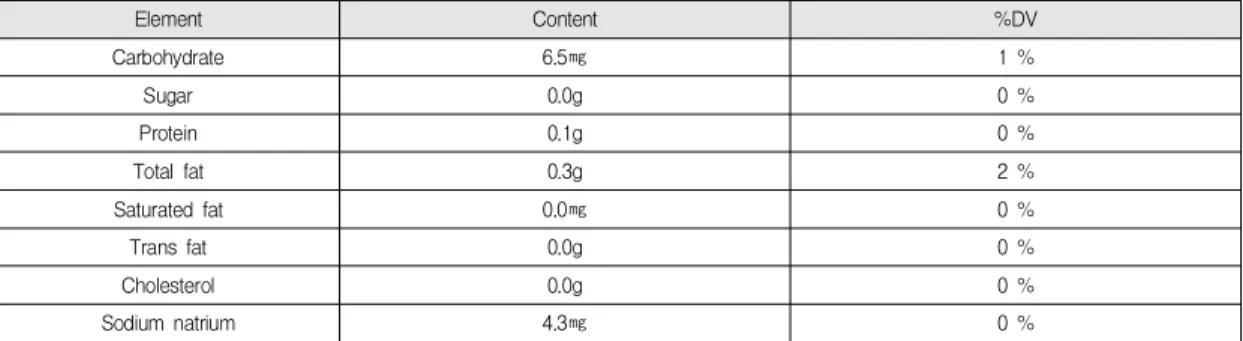
Group A and Group B received 5g of acaiberry powder before breakfast and dinner, and ingested it by melting them in water. The specific components of the acaiberry used in the experiment are shown in Table 3.

2.6 Statistical Analysis

SPSS version 18.0 was used for the analysis of the data following, and all the datum were presented with the mean and standard deviation using descriptive statistics. In addition, analysis of variance was also conducted to analyze the effects between group and treatment. Statistical significance was set at α = .05.

3. Results

3.1 Insulin Results

Table 4 shows the results of insulin analysis of each group. According to Table 4, group A showed 5.41±2.83 μU/ml before the 8 weeks programs, and showed

3.87±2.43μU/ml after 8 weeks. Group B showed 7.80±3.63μU/ml before the program, and 5.38±1.69μ U/ml after 8 weeks. C group showed 5.91±2.87μU/ml and 5.14±2.19μU/ml each before and after 8 weeks. The results of analysis of variance didn't show a significant difference in the interaction effect between time and groups.

3.2 HbAlc Results

Table 5 showed the result of glycated hemoglobin analysis of each group. According to the results of Table 5, Group A showed 5.51±0.34% and 5.57±0.26%

of HbA1c-NGSP each before and after the performance of the program. Group B showed 5.66±0.21% and 5.64±0.17% each before and after the program. Group C showed 5.88±0.43% before the 8 weeks program, and 5.94±0.54% after the program. The results of the ANOVA didn't show a significant difference in time × intergroup interaction effect. In the case of HbA1c-IFCC, group A showed 38.2±3.99mmol/mol and 37.43±2.82mmol/mol each before and after the 8 weeks program. Group B showed 38.50±2.27mmol/mol and 38.50±1.85mmol/mol each before and after the program.

Group C showed 41.25±4.65mmol/mol and Table 2. 8 Week Combined Exercise Program

Division Exercise program Aerobic exercise Resistance exercise Time

Warm-up Stretching 10

Main exercise Treadmill Walking(HRmax 50-60%) Deadlift-dumbbell, Squat, Lunge, Leg curl, Leg

extension, Bench press(1RM 50-60%) 40

Cool-down Stretching 10

Table 3. Acai Berry Component in 5g

Element Content %DV

Carbohydrate 6.5㎎ 1 %

Sugar 0.0g 0 %

Protein 0.1g 0 %

Total fat 0.3g 2 %

Saturated fat 0.0㎎ 0 %

Trans fat 0.0g 0 %

Cholesterol 0.0g 0 %

Sodium natrium 4.3㎎ 0 %

Daily Value(%) : One day standard Nutrition rate

(5)

41.88±6.15mmol/mol each before and after the program.

The results of the ANOVA didn't show a significant difference in time × intergroup interaction effect. Group A's degree of HbA1c-eAG was 111.71±9.75mg/dl and 113.29±7.45mg/dl before and after the performance of the 8 weeks program. Group B showed the degree of 115.88±6.40mg/dl and 115.13±5.06mg/dl before and after the program. Group C showed 122.00±12.39mg/dl and 123.75±15.56mg/dl respectively. The results of the ANOVA didn't show a significant difference in time × intergroup interaction effect.

4. Discussion

4.1 Insulin Change

Insulin is a regulator of blood sugar that reduces the use of fat metabolism, by promoting glycogenolysis in the liver, inhibiting lipolytic enzyme activity in fat tissue, and promoting the storage of triglycerides[18].

The primary function of insulin is to promote glucose transport from the blood into the cells. However, in the

case of insulin resistance, the human body needs more insulin to move a defined amount of glucose into the cells through the cell membrane[19].

Factors that increase insulin resistance include weight gain, increase in body fat, high carbohydrate diet, lack of exercise, increased stress, and menopause.

On the other hand, factors that reduce insulin resistance include exercise, weight loss, meal with high fiber, low saturated fat, and low-fat[20].

The rise of the body's blood sugar become the basis of the mechanism of insulin secretion, which causes glucose to enter the adipocyte. The introduced glucose is used for the synthesis of triglycerides, which leads to increased absorption into the adipocyte, and further to obesity[21]. On the other hand, insulin secretion is reduced because of hypoglycemia when people maintain their stomach empty. This decrease in insulin promotes the mobilization of free fatty acids from adipose tissue and promotes lipid metabolism as an energy source by activating lipase.

Kim et al[22] conducted a swimming exercise program in middle-aged women with obesity, for 60 Table 5. The Changes in Glycated Hemoglobin after Combined Exercise with Acaiberry Ingestion for 8 Weeks

(M±SD)

Items Groups Pre Post

Interaction (Group X Time)

F p

HbA1c-NGSP (%)

A Group 5.51±0.34 5.57±0.26

0.740 0.490

B Group 5.66±0.21 5.64±0.17

C Group 5.88±0.43 5.94±0.54

HbA1c-IFCC (mmol/mol)

A Group 37.29±3.99 37.43±2.82

0.248 0.783

B Group 38.50±2.27 38.50±1.85

C Group 41.25±4.65 41.88±6.15

HbA1c-eAG (mg/dl)

A Group 111.71±9.75 113.29±7.45

0.717 0.500

B Group 115.88±6.40 115.13±5.06

C Group 122.00±12.39 123.75±15.56

M±SD : Mean ± Standard Deviation A Group : acaiberry ingestion group

B Group : acaiberry ingestion + combined exercise group C Group : combined exercise group

Table 4. The Changes in Insulin after Combined Exercise with Acaiberry Ingestion for 8 Weeks (M±SD)

Items Groups Pre Post

Interaction (Group X Time)

F p

Insulin (μU/mL)

A Group 5.41±2.83 3.87±2.43

0.975 0.394

B Group 7.80±3.63 5.38±1.69

C Group 5.91±2.87 5.14±2.19

M±SD : Mean ± Standard Deviation A Group : acaiberry ingestion group

B Group : acaiberry ingestion + combined exercise group

C Group : combined exercise group

(6)

minutes a day, 5 times a week for 12 weeks, with 40-70% HRR. Results showed that insulin has shown a significant effect. Studies of Kim, Choi & Cho[23]

have also conducted an intermittent aerobic exercise in middle-aged women three times a week, 60 minutes each, for 12 weeks and it significantly reduced insulin levels. In a study by Ko, Son & Kang[24], we found that insulin was significantly reduced in middle-aged obese women by training at 40-80% HRR five times a week for 12 weeks.

In this study, the insulin changes in middle-aged women after 8 weeks of treatment showed a decrease after 8 weeks of experimentation in all groups(acaiberry ingestion group, acaiberry ingestion+combined exercise group, combined exercise group). There was no interaction effect between groups. Therefore, walking exercise and acaiberry intake did not improve insulin in this study.

4.2 Glycated Hemoglobin Change

When glucose enters the blood and binds to the hemoglobin of red blood cells that carry oxygen, it is called glycosylated hemoglobin. Once the sugar is added, those sugar move together during the red blood cell's lifespan, which is 120 days. Therefore, examining this could help people to know the blood sugar level of the diabetic person for the last 2-3 months.

When the glycosylated hemoglobin is 5%, blood glucose level is estimated to about 100 mg/dl. When it was 6%, the blood glucose level was 135mg, and was 170mg when it was 7%. It shows that the blood level goes up for 35mg when 1% of glycosylated hemoglobin increase[25].

On the other hand, in EPIC (European Research Invention of Cancer and Nutrition) study, it is reported that the risk of cardiovascular disease is increased to 21% when the hemoglobin in blood is increased by 1%.

Patients with type 2 diabetes with a high level of glycated hemoglobin claimed a 2.2 times higher risk of mortality, a 4.2 times increase in ischemic heart disease, and a 3.3 times increase in cardiovascular

disease[26].

Regarding the effect of HbA1c by exercise, Sigal et al[27] suggested that combined exercise is more effective than aerobic exercise or resistance exercise in the blood glycosylated hemoglobin concentration of type 2 diabetic patients. Wing et al[28] reported a decrease in glycated hemoglobin after a total of 60 weeks of walking for three miles a day in patients with type 2 diabetes. Han[29] reported that, after conducting walking exercise program to type 2 diabetes patients, glycated hemoglobin has decreased.

In a study by Kim[30], the blood glucose and glycated hemoglobin have significantly decreased after conducting 10 weeks of mulberry leaf tea supplementation and combined exercise in the participants group of type 2 diabetic patients. All groups (mulberry leaf tea group, combined exercise group, and tea+exercise group) showed a tendency of significant decrease after 10 weeks when compared with the status before exercise.

In this study, after conducting 8 weeks of treatment, we were able to find out that the HbA1c in middle-aged women have actually increased and decreased in all groups(acaiberry ingestion group, acaiberry ingestion+combined exercise group, combined exercise group) when it is compared to the status before the experiment. However, there was no interactive effect between periods and groups. Therefore, walking exercise and Acai berry intake did not actually improve the glycated hemoglobin in this study.

In conclusion, the 8-week walking exercise and the

intake of acai berries showed a decrease in insulin and

a tendency to increase and decrease in glycated

hemoglobin, but there was no significant change in

statistics. The reason for this is interpreted as the

intake and intake method of acai berries, exercise

intensity and exercise period of 8 weeks were rather

short. In future studies, we will be able to understand

the changes of insulin and glycosylated hemoglobin

more clearly in the long-term treatment, by controlling

the intakes, intake methods and exercise intensity.

(7)

5. Conclusion

In conclusion, the 8-week combined exercise and the intake of acaiberries showed a decrease in insulin and a tendency to increase and decrease in glycated hemoglobin, but there was no significant change in statistics. The reason for this is interpreted as the intake and intake method of acai berries, exercise intensity and exercise period of 8 weeks were rather short. In future studies, we will be able to understand the changes of insulin and glycosylated hemoglobin more clearly in the long-term treatment, by controlling the intakes, intake methods and exercise intensity.

REFERENCES

[1] National Statistical Office. (2017). The life of women in 2016 statistics.

[2] Kim. Y. H. (2015). The Effect of Personal Image Making on Job Satisfaction and Life Satisfaction by Core Self-Evaluation of the Middle Aged and Elderly Individuals: Focusing on Occupational Cluster. Doctoral Thesis. The Graduate School of Konkuk University.

[3] Li. C. C. Shu. B. C. Wang. Y. M & Li. S. M. (2017). The Lived Experience of Midlife Women With Major Depression. Journal of Nursing Research. 25(4), 262-267.

[4] Park. Y. J. Kim. H. W. Lee. E. S. Kim. H. J. Shim. M.

J & Jeon. N. M. (2017). Fourth Edition Maternity &

women's health nursing Ⅱ. Seoul: hyunmoonsa.

[5] Panayota. G. Ioannis. Z. Eleni. A. Kalliopi. K. Areti. S.

Andreas. A. Aikaterini. K. Augoulea. A. Maria. C &

Irene. L. (2012). Determinants of quality of life in Greek middle-age women: A population survey. Maturitas, 71(2), 154-161.

[6] Lee. S. E. Kim. J. K & Kim. B. H. (2015). Subjectivity on Health and Lifestyle among Middle-aged Women-Q Methodological Approach-. Journal of Korea Academia-Industrial cooperation Society, 16(7), 4786-4797.

[7] Han. G. S. (2007). Stress of the Mid-life Stage. The Korean journal of stress research, 15(4), 263-270.

[8] Park. K. M. (2013). A Study of Middle Aged Women's Health Status, Preparation for the Aged, and Perception of Successful Aging. master's thesis. The Graduate

School of Ajou University.

[9] Hwang. I. J. (2012). The effect of Middle-Aged women's satisfaction of swimming participation upon their quality of life. master's thesis. The Graduate School of Hanyang University.

[10] Kim. B. J. (2016). Life Style and Health Behavior among Cancer Survivors based on Korea National Health and Nutrition Examination Survey. master's thesis. The Graduate School of Ulsan University.

[11] Statistics Korea. (2016). http://kosis.kr.

[12] Korea Food & Drug Administration. (2017).

https://www.mfds.go.kr.

[13] Chung. H. J. (2012). Physiological activity of acaiberry(Euterpe oleracea Mart.) extracted with different solvents. Journal of The Korean Society of Food Culture, 27(1), 75-81.

[14] Hong. J. H. (2011). Optimization of extraction conditions for functional components from acai(Euterpe oleracea Mart.) by response surface methodology. Journal of the East Asian Society of Dietary Life, 21(5), 713-722.

[15] Spada. P. D. S. Dani. C. Bortolini. G. V. Funchal. C.

Henriques. J. A. P & Salvador. M. (2009). Frozen fruit pulp of Euterpe oleraceae Mart. (Acai) prevents hydrogen peroxide-induced damage in the cerebral cortex, cerebellum, and hippocampus of rats. Journal of Medicinal Food, 12(5), 1084-1088.

[16] Balke. B. A. (1963). A Simple Field Test for the Assessment of Physical Fitness. Report 63-6. Oklahoma City, OK, Civil Aeromedical Research Institute, 1-8.

[17] Karvonen. M. J. Kentala. E & Mustala. O. (1957). The effects of training on heart rate: a longitudinal study.

Annales medicinae experimentalis et biologiae Fenniae, 35(3), 307-315.

[18] Kwak. H. B. (2015). Review: Skeletal Muscle Mitochondria and Insulin Resistance: The Role of Exercise. The Korean journal of obesity, 24(2), 78-86.

[19] Larry. W. Wilmore. D. & David, L. (2015). Physiology of Sport and Exercise. Daehanmedia.

[20] Park. J. H. (2004). The Effects of Combined Exercise on Adiponectin Concentrations in Obese Middle-aged Women. Doctoral Thesis. The Graduate School of Dong-A University.

[21] Brian. L. M & Thomas. W. O. (2006). Diabetes Mellitus and Periodontal Diseases. Journal of Periodontol, 77(8), 1289-1303.

[22] Kim. Y. K. Lee. J. Y & Lee. S. H. (2016). The Effect of

12-week Swimming Training on Plasma Adipokines and

HOMA Index in Obese Middle-aged Women. Journal of

(8)

The Korean Society of Living Environmental System, 23(6), 751-757.

[23] Kim. J. H. Choi. J. I & Cho. W. J. (2016). The Change of Inflammatory Factors and Insulin Resistance in Different Cardiorespiratory Fitness Levels on Middle Aged Women by Moderate Aerobic Exercise. Korean Journal of Sports Science, 25(1), 1315-1327.

[24] Ko. K. K. Son. B. S. & Kang, S. J. (2016). Effects of Exercise Intensity on Inflammatory Response Index and Insulin Resistance in Obese Middle-aged Women. The official journal of the korean association of certified exercise professionals. 17(2), 49-56.

[25] Rohlfing. C. L. Wiedmeyer. H. M, Little. R. R. England.

J. D. Tennill. A & Goldstein. DE. (2002). Defining the relationship between plasma glucose and HbA(1c):

analysis of glucose profiles and HbA(1c) in the Diabetes Control and Complications Trial. Diabetes Care, 25(2), 275-278.

[26] Klaw. E. Horst. D & Humphreys. K. (2006). Inquirers, triers, and buyers of an alcohol harm reduction self-help organization. Addiction Research and Theory, 14(5), 527-535.

[27] Sigal. R. J. Kenny. G. P. Boule. N. G. Wells GA.

Prud'homme. D. Fortier. M. Reid RD. Tulloch. H. Coyle.

D. Phillips P. Jennings. A & Jaffey. J. (2007). Effects of aerobic training, resistance training, or both on glycemic control in type 2 diabetes: a randomized trial. Annals of internal medicine, 147(6), 357-369.

[28] Wing. R. R. Epstein. L. H. Bayles. M. P. Kriska. A. M.

Nowalk. M. P. & Gooding. W. (1988). Exercise in a behavioural weight control programme for obese patients with non-insulin-dependent diabetes. Diabetes.

Diabetologia, 31(12), 902-909.

[29] Han. J. K. (2007). Effect of walking on Blood Sugar, Glycosylated Hemoglobin, and Insulin of Patients Diagnosed with type 2 Diabets. Korea sport research, 18(5), 11-20.

[30] Kim. I. J. (2013). Effect of Mulberry Leaf Tea Intake and Combined Exercise on Blood Lipids, Blood Glucose and Glycosylated Hemoglobin of Patients with Type 2 Diabetes. Doctoral Thesis. The Graduate School of Keimyung University.

김 도 진(Kim, Do Jin) [정회원]

․2004년 2월 : 한양대학교 석사

․2006년 2월 : 성균관대학교 박사 수료

․2017년 3월 ~ 현재 : 부천대학교 재활스포츠과 교수

․관심분야 : 운동재활, 생리측정, 통 계

․E-Mail : [email protected]

김 종 혁(Kim, Jong Hyuck) [정회원]

․1999년 2월 : 한양대학교경기지도 과(체육학사)

․2001년 8월 : 한양대학교생활스포 츠학과(체육학석사)

․2006년 8월 : 한양대학교 생활스포 츠학과(체육학박사)

․2015년 4월 ~ 현재 : 중원대학교 뷰티헬스학과 교수

․관심분야 : 운동생리학, 건강관리, 피부미용, 스포츠재 활, 육상

․E-Mail : [email protected]

권 중 호(Kwon, Jung Ho) [정회원]

․1980년 2월 : 청주대학교 (체육학 사)

․1985년 8월 : 경희대학교 (체육학 석사)

․1995년 2월 : 명지대학교 (이학박 사)

․1998년 ∼ 현재 : 여주대학교 군사학부 교수

․관심분야 : 특수체육

․E-Mail : [email protected]

수치

Table  1.  Characteristics  of  the  Subjects                                                                                                                      (M±SD) Variables
Table 5 showed the result of glycated hemoglobin analysis of each group. According to the results of Table 5, Group A showed 5.51±0.34% and 5.57±0.26%
Table  4.  The  Changes  in  Insulin  after  Combined  Exercise  with  Acaiberry  Ingestion  for  8  Weeks      (M±SD)

참조

관련 문서

It was summarized as follows that group participating in after-school basketball activities for 12 weeks showed decrease of the body fat(%) and increase

The purpose of this study was to examine the effects of football on PAPS in sports club activity for 12 weeks in middle school boys.. The following

The purpose of this study was to investigate the change of body composition and physical fitness after 12 weeks of practice with middle-aged women centered

The purpose of this study was to investigate how the 8-week aerobic exercise program affects the physical strength and stress of obese women in the

O.(2011) The Effects of Aroma Self-Foot Reflex Massage on Stress and Immune Responses and Fatingue on Middle-Aged Women in Rural Areas Department of Nursing, Graduate School

In this study, 12 weeks of aerobic exercise was conducted in middle-aged women aged 45 to 55 years with a body fat rate of 30% or more to determine the effects of blood

In conclusion, this study has demonstrated that Soru back massage was highly effective in relieving stress related symptoms of middle-aged women..

The purpose of this study was to investigate the effects of 8 weeks trampoline exercise on health promotion (health related fitness, blood lipid) in