Corresponding author:Jin, Hye-Young, Korea National Arboretum,
Tel:+82-31-540-1034, E-mail:[email protected]Received:11 December, 2009. Accepted:3 March, 2010.
- 52 -
국립수목원 열대온실 내 인공배합토의 물리화학적 특성 및 식물 생육 변화에 관한 연구
송정화․진혜영․안태현 국립수목원 전시교육과
A Study on Physicochemical Properties of Artificial Substrates and Changes of Plant Growth in Tropical Plant Resources
Research Center of Korea National Arboretum
Song, Jeong Hwa․Jin, Hye-Young and Ahn, Tai-Hyeon
Department of Horticulture and Education, Korea National Arboretum.ABSTRACT
This study was carried out in the Tropical Plant Resources Research Center of Korea National Arboretum to determine the optimum edaphic environment for the growth of tropical and subtropical plants. The physicochemical properties of artificial substrates and the growth characteristics of tropical and subtropical plants were investigated. Subtropical plants exhibited a high growth rate when cultivated in a substrate of Dry Zone that had physical properties similar to those of arid native soil.
Mediterranean plants showed a low growth rate when grown in a substrate of Subtropical Zone that required changes in acidity. The substrate of Tropical Zone had high organic matter and mineral contents and therefore had good physical properties:this substrate has a good environment for the stimulation of the growth of tropical plants. Our results indicate that the chemical properties such as pH and mineral contents of most artificial substrates need to be more urgently improved than their physical properties in order to ensure better growth of tropical and subtropical plants. Initial management strategies for the construction of new tropical greenhouses were formulated, and data from monitoring studies will be continuously gathered and incorporated in the manual to keep it updated.
Key Words:Tropical, Subtropical, Edaphic Environment, Greenhouse.
I. 서 론
적도 부근에 위치하는 열대림은 기록된 육상 생물종의 50%를 포함하고 있으며, 1km
2당 1000 여종의 나무가 존재할 만큼 생물 다양성을 유지 하고 기후 변화를 조절하는 데에 중심적인 역할 을 한다(BGCI, 2008). 생물 다양성 보존의 기능 외에도 열대식물 중에는 BT산업의 원천소재로 이용할 수 있는 유용한 자원식물이 풍부하여 선 진국에서는 100-200년 전부터 온실을 짓고 식물 을 수집․보존하여 이들 식물의 확보에 많은 투 자를 하고 있다. 이 때문에 현재 열대의 자생지에 서 멸종된 많은 종들도 선진수목원의 온실에 보 존․관리되고 있는 사례도 많다. 향후, 기후 변화 에 대처하기 위한 생물 다양성 보존 및 현대첨단 과학과 접목하여 의약품, 식품의 개발 등 산업적 으로 이용하기 위하여 온실 내 열대 및 아열대 식물의 보존 및 증식 연구가 필요하다. 국립수목 원에서는 주요 열대식물의 지리체계 및 분류군별 수집 및 보존으로 열대식물 기초연구 및 교육적 활용을 위한 기반조성과, 다양한 보존․증식 기 술을 점진적으로 확보하여 열대유용식물의 BT산 업 원천소재 확보․제공을 목적으로 열대자원연 구센터를 건립하여, 광, 기온 등의 지상부 환경은 열대 및 아열대 식물의 자생지와 유사하게 조성 하였으며, 지하부 환경은 인공 배합토를 사용하 여 조성하였다.
온실 내 지하부 환경 조성을 위한 인공 배합토 는 다양한 재료들을 혼합하여 사용하는데, 피트 모스, 코코피트, 바크 등과 같은 유기배지 및 펄 라이트, 버미큘라이트, 제올라이트 등과 같은 무 기배지를 수입하여 많이 이용하고 있다(Hamrick, 1996; Nelson, 1991). 일반적으로 인공 배합토의 재료를 선택할 때에는 pH값, Electric Conductivity (EC)값, 공극률, 액상 및 기상의 비율, 밀도, 보수 력 등의 물리화학성을 고려해야 한다(Bellé and Kämpf, 1994). 특히 유기 재료들은 인공배합토의 물리화학성에 큰 영향을 미치는데, 그들은 배지
내 영양 물질의 유효도를 조절하고, 균형을 유지 시켜 식물의 생육을 촉진시킨다(Guérin et al., 2000; Marfà et al., 2002). 유기물은 부숙 정도에 따라 유효 영양분의 함량이나 pH, EC, CEC (Cation Exchange Capacity) 등이 달라지므로 완 전히 부숙시켜 안정된 유기물을 시용해야 한다 (Lemaire, 1997). 한편 라바(lava), 경석토(pumice), 점토 및 제올라이트 등과 같은 무기질 재료들은 관수량이 많을 때에도 배수가 뛰어나며 통기성도 좋아 배지의 물리성을 유지시키는 데 큰 역할을 하여 독일 달램 식물원(Haegele, 2009)이나 스위 스 취리히 동물원의 마조알라 열대온실(Bauert, 2009) 등 세계적인 열대 온실의 토양 조성에 사 용되고 있다.
본 연구는 열대 및 아열대 식물의 생육에 적합 한 인공 환경을 구명하기 위해 지상부 환경을 인 위적으로 조성한 상태에서 인공 배지 배합에 따 른 식물의 생육반응을 살펴봄으로써 적정한 생육 환경을 제시할 뿐만 아니라 열대온실 배합토 조 성 및 관리업무에 활용될 수 있는 관리 매뉴얼을 발간하고 추후 자원 식물로서 활용성을 높이고자 수행하였다.
II. 재료 및 방법
1. 인공 배합토 조성
본 열대식물자원센터 내 인공 배합토 조성 및
비율은 국립수목원에서 수행한 ‘열대식물의 생태
적 배식기법 및 상세설계 개발 연구(2007)'의 결
과로 독일 베를린 달램식물원(Botanic Garden and
Botanical Museum Berlin-Dahlem)의 열대온실 식
재 토양배합을 정량화하였다. 열대 건조 기후 식
물이 식재되어 있는 Dry Zone(D) 및 Subtropical
Zone 1(ST1), 지중해성 기후 식물이 식재되어 있
는 Subtropical Zone 2(ST2), 열대 식물이 식재되
어 있는 Tropical Zone 1(T1), 열대 습지 식물이
식재되어 있는 Tropical Zone 2(T2)로 나누어 5
종류의 인공 배합토를 사용하였으며, 각 배합토
Code Composition of substrates
D Not fumigated compost 30% + Crushed granite 20% + Lava 20% + Pumice 20% + Clay particle 10%
ST1 Not fumigated compost 30% + Humus 30% + Commercial soil 20% + Crushed granite 10% + Clay particle 10%
ST2 Not fumigated compost 33.2% + Lava 16.7% + Clay particle 16.7% + Decomposed granite 16.7% + Sphagnum peat 16.7%
T1 Not fumigated compost 46.1% + Humus 15.4% + Horse manure 15.4% + Coco peat 7.7% + Hydro ball 7.7% + Rice hull 7.7%
T2 (Crushed granite + Decomposed granite + Pumice) 40% + Sphagnum peat 40% + Clay particle 20%
Table 1. Composition of substrates and code.
의 조성은 표 1과 같다. 훈증처리하지 않은 퇴비, 거름마분 및 부엽토 등의 유기물은 최소 3년 이 상 부숙 및 안정화시켜 사용하였고, 마사토는 3-5mm 크기의 굵은 마사를 씻어서 사용하였다.
2. 인공 배합토 조사 및 분석
배합토 시료는 완전 임의 배치법으로 지름 4.8cm의 Circular Soil Corer를 이용하여 2009년 3월 각 지점에서 2반복으로 채취하였고, 물리화 학성 분석에 앞서 모든 시료는 음건시켰다. 용적 밀도는 추다짐법으로, 입자밀도는 Mass-flask법 을 이용(RDA, 2002)하였으며 공극률은 아래와 같은 수식으로 계산하였다:
공극률(%) = (1-용적밀도/입자밀도) × 100 토양 입도는 한국산업규격 ‘KS F 2302 입도시 험’을 기준으로 체분석을 실시하였으며, 균등 계 수(Uniformity Coefficient)는 아래와 같은 수식으 로 계산하였다:
균등 계수 Cu= D
60
D
10D
60:통과중량백분율 60%에 대응하는 입경, D
10:통과중량백분율 10%에 대응하는 입경
함수량은 Nishimura(2009)의 방법에 따라 24시 간 수분 포화시킨 시료를 4시간 간격으로 무게를 측정한 후, 68시간 뒤에 음건시켜 건조 무게를
측정하였다. 함수량은 아래와 같은 수식으로 계 산하였다:
함수량 = 100 × (A-B)/A A:각 시점에서의 시료 무게, B:건물중
pH 및 EC는 배합토:증류수=1:5(w/v)로 하 여 토양액을 30분간 shaking시킨 후, pH meter (Twin pH B-211; Horiba Ltd., Japan) 및 EC meter (Twin cond B-173; Horiba Ltd., Japan)로 측정하 였다. 유기탄소는 Walkey and Black(1934)의 방법 에 의하여 지시약의 색변화로 측정하였고, 전질소 는 Kjeldahl법(Bremmer and Mulvaney, 1982)을 이 용하였고, 치환성 양이온 K, Mg, Ca, Na은 원자흡 수분광광도계를 이용하였다(NIAST, 2000).
3. 식물 생육 조사
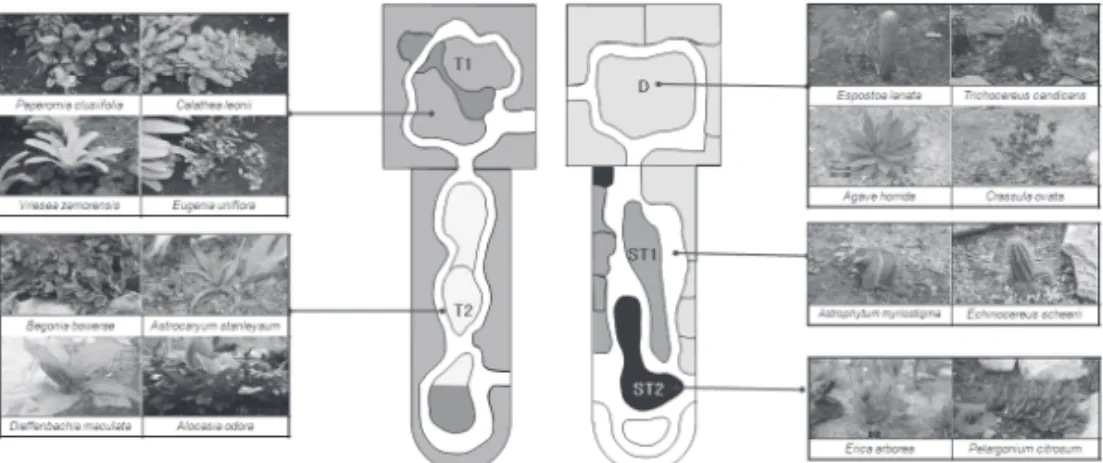
그림 1과 같이 각 5개 지역에서 열대 및 아열 대 식물 총 23종(표 2)에 대하여 2009년 3월부터 2009년 10월까지 1개월 간격으로 식물 생육 조 사를 실시하였다. 식물의 상대생장율은 아래와 같이 식물체의 수고를 측정하여 상대적인 비율로 변환하였다:
상대생장율 = 100 × B/A A:초기 식물체 수고,
B:해당 시기의 식물체 수고
Figure 1. Drawing of Tropical Zone(left) and Subtropical Zone(right) of TPRRC.
Table 2. Scientific name of selected tropical and subtropical plants.
Zone Scientific name
D
Agave horrida ssp. perotensis Aloe alooides
Crassula ovata Espostoa lanata Kalanchoe beharensis
Opuntia phaeacantha Sansevieria parva Strelitzia reginae Trichocereus candicans Welwitchia mirabilis ST1 Astrophytum myriostigma
Echinocereus scheerii
Hebe elliptica
ST2 Erica arborea Pelargonium citrosum
T1 Calathea leonii
Eugenia uniflora
Peperomia clusiifolia Vriesea zamonensis
T2 Alocasia odora
Astrocaryum stanleyaum
Begonia bowerae Dieffenbachia maculata
4. 통계 분석
실험결과의 통계처리는 Statistical Analysis System(SAS Institute Inc., Cary, NC, USA)을 이 용하여 분산분석(ANOVA) 하였으며, Duncan's multiple range test를 이용하여 P = 0.05 수준에서 각 처리간의 유의성을 검증하였다.
III. 결과 및 고찰
1. 국립수목원 열대식물자원연구센터 개황 면적 2,280m
2에 달하는 열대식물자원연구센터 (Tropical Plant Resources Research Center, TPRRC)
는 철골과 이중 복층 유리(5mm
2+6mm
2공기층+
5mm
2)로 구성되었으며, 안쪽은 안전을 위한 강 화유리를 설치하였다. 주에너지는 LPG, 보조에 너지는 지열시스템이며, 여름철 온도조절은 천․
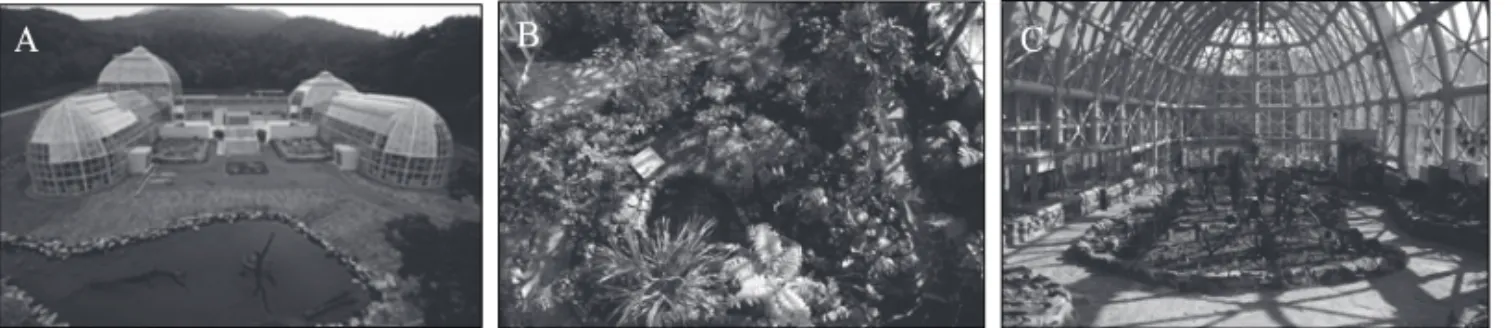
측창 자동․수동개폐로 조정하며, 여름철 고온에 대비한 온실 내부에 강제 배기․환기시스템과 겨 울철 난기류 순환을 위한 순환시스템이 설치되어 있다. 본 센터의 구성은 열대 우림 지역과 아열대 지역(열대 건조 및 지중해성 기후 지역)으로 되어 있으며(그림 2) 열대 우림 지역은 평균 23-24℃
(최저 17℃), 아열대 지역은 평균 20-21℃(최저
15℃)로 유지된다.
Figure 2. View of TPRRC (A), Tropical Zone (B) and Subtropical Zone (C).
Figure 3. Bulk density (A) and particle density (B) of substrates in five zones of TPRRC. Vertical bars represent standard errors of the means.
2. 인공 배합토의 물리적 특성 및 식물의 생육 특성
국립수목원 열대온실 내 열대 및 아열대 식물 이 식재되어 있는 배합토의 용적밀도는 T1 지역 을 제외하고 0.8-1.0g mL
-1이었다(그림 3). 일반 원예작물의 재배에 적합한 용적밀도는 0.35-0.5g mL
-1로 보고되지만(Bunt, 1973), 열대 사바나 기 후(Aw) 지역 중 특히 Cerrado 지역 토양의 용적 밀도는 0.77g mL
-1(Carvalho et al., 2009), 0.98g mL
-1(Bayer et al., 2006), 0.97g mL
-1(Resck et al., 2000)으로 본 온실 내 인공 배합토와 유사한 물 리적 환경을 가지고 있었다. 배수가 잘 되는 사질 토에서 생육이 좋은 Opuntia phaeacantha와 Welwitchia mirabilis의 생장율이 다른 식물에 비 해 유의차 있게 높은 경향을 보인 것도 이 같은 이유라 사료된다(그림 9).
한편, 열대 우림 지역의 토양은 높은 유기 탄 소의 함량으로 입단 형성이 촉진되어 용적 밀도 가 상당히 낮은 경향을 보인다(Carvalho et al.,
2007). T1 지역의 배합토는 용적밀도가 0.44g mL
-1로 다른 지역에 비해 유의차 있게 가장 낮은 데, 높은 유기 탄소의 함량 때문이라고 사료된다.
입자밀도는 대부분 1.2-1.8g mL
-1이고, T1 지역 배합토의 입자밀도가 가장 낮았다(그림 3). T1 지역의 배합토를 구성하는 성분들은 유기 자재가 많으며 코코피트, 왕겨 등과 같이 분자량이 작은 것들로 구성된 반면, D 지역의 배합토에는 Lava 및 Crushed granite와 같이 구성 광물의 분자량이 큰 자재들로 구성되어 있기 때문에 가장 높은 입 자밀도를 보였다.
공극률은 T1 지역에서 60% 이상이었으며 그 외 지역에서의 공극률은 37-44%에 그치고 있어 (그림 4), 인공 배합토의 이상적인 공극률인 80-90%(De Boodt and Verdonck, 1972)에 미치지 못하고 있다. 일반적으로 유기탄소 함량이 증가 하면 입단 형성이 촉진되어 공극률이 높아지는데 (Milanovskii et al., 2002) 이로 인해 T1 지역에서 의 공극률이 가장 높다. Anderson(2001)에 따르
A B C
Figure 5. Grain size and uniformity coefficient (A) and moisture percentage (B) of substrates in five zones of TPRRC. Vertical bars represent standard errors of the means.
Figure 4. Porosity of substrates in five zones of TPRRC.
면 입자 크기가 작아질수록 공극이 작아지며, 공 기보다는 수분이 채워져 쉽게 마르는 것을 방지 할 수 있지만, 다습에 의해 식물 뿌리가 질식될 수도 있다는 단점이 있으므로, 공극률의 확보는 정상적인 식물의 생육에 있어서 중요한 역할을 한다. Nemati(2002)는 두상 관수로 인한 배합토 의 답압 혹은 입자 자체의 성질 때문에 온실 내 인공 배합토에 있어서 가장 일반적인 문제점은 낮은 공극률이라 보고하였다.
그림 5와 같이 T2 지역 배합토의 균등 계수는 다른 배합토에 비해 상대적으로 작아 동일한 지 름의 입자로 구성된 곳이 많은 반면, ST1 배합토 의 입도는 그 분포가 다양한 경향을 보인다. 함수 량은 T1 지역 배합토에서 가장 높으며 포화 후 96시간이 지난 뒤에도 36% 정도의 수분을 유지 하고 있었다(그림 5). Alekseeva(1999)에 따르면
열대 우림 지역의 토양인 Oxisol에서는 Kaolinite 와 Oxides 사이에 형성된 입단으로 인해 보수력 이 뛰어나다고 하였는데, 본 온실 내 T1 지역 배 합토 역시 입단 형성이 촉진되어 함수량이 가장 큰 것이라 사료된다. D 지역의 경우, 포화 후 4시 간부터 함수량이 23%로 유지되어 가장 낮은 함 수량을 보이고 있다. 건조가 되면 그만큼 체내 물 이 없어지므로 세포외 결빙이 덜 일어나게 되어 (Nobel and Zutta, 2008) D 지역의 식물은 겨울철 저온에 대한 내성이 강해진다. 또한 건조됨에 따 라 Glucose, Fructose, Sucrose, Mannitol과 같은 용질의 함량이 증가하게 되어 어는점이 낮아지므 로 이들은 동결방지제 역할을 한다(Goldstein and Nobel, 1994). 따라서 상대적으로 물의 이용이 제 한되어 건조해지기 쉬운 겨울에, 선인장이 건조 기간 동안 저온에 대한 내성이 강해지는 것은 생 태학적으로 상당히 유리하다. 특히 Hylocereus속 선인장의 경우에는 토양이 말랐을 때 뿌리로부터 전달되는 생장을 억제하는 신호가 없어, 토양이 말라도 계속해서 생장하여 4주까지 버틸 수 있으 므로(Nerd and Neumann, 2004), 절대적인 함수 량을 기준으로 관수해야 하는데, Davies and Zhang(1991)은 선인장의 생육에 있어서 함수량 이 7.2% 이하가 되지 않도록 관수 패턴을 조정하 는 것이 중요하다고 보고하였다.
Uniformity Coefficient D:22.22
ST1:35.47
ST2:27.55
T1:34.14
T2:12.98
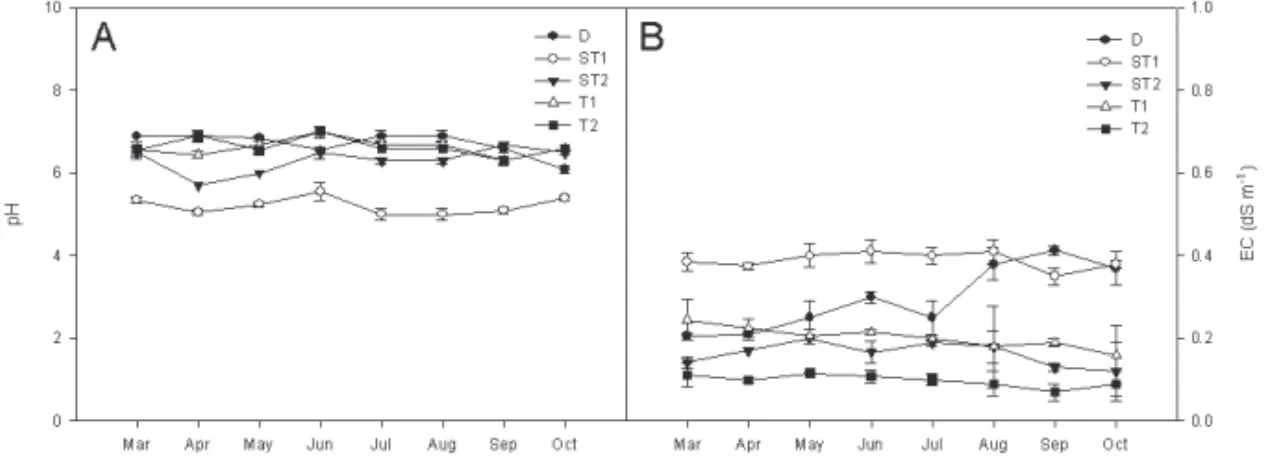
Figure 6. Changes in pH (A) and EC (B) of substrates in five zones of TPRRC. Vertical bars represent standard errors of the means.
Figure 7. Organic carbon (A) and total nitrogen (B) of substrates in five zones of TPRRC. Vertical bars represent standard errors of the means.
3. 인공 배합토의 화학적 특성 및 식물의 생육 특성
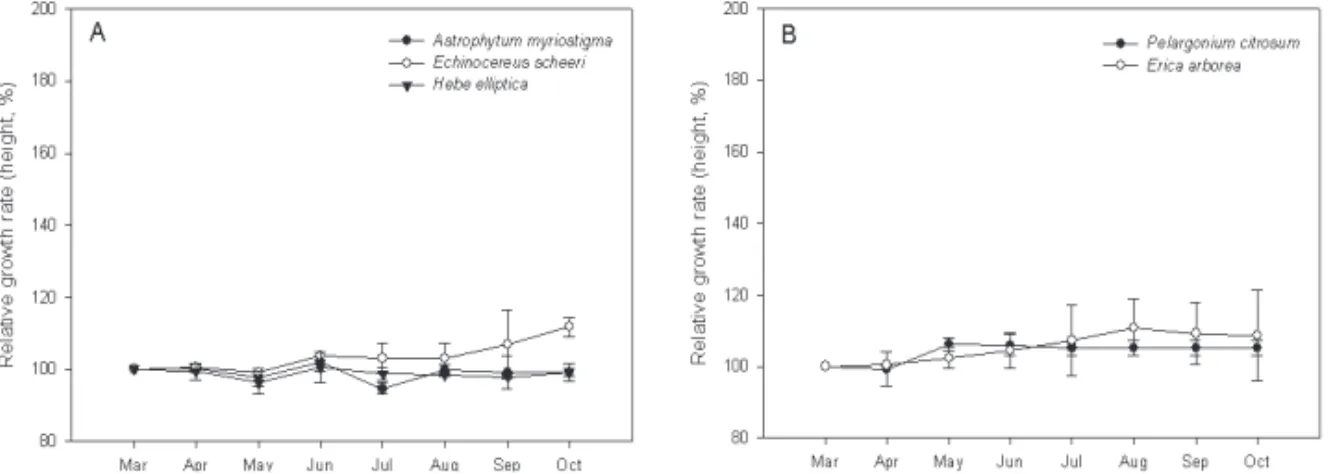
대부분 선인장과 다육 식물들은 pH 변화에 매 우 민감하여, 강염기나 강산 상태에서는 생육이 감소되거나 느려진다(Charles, 2003). 열대 및 아 열대 자생지 토양의 pH는 4.5-5.6으로 약산성을 띠는데(Alekseeva, 2009) 본 온실 배합토의 pH는 5.5-7.0 사이였다(그림 6). ST2 지역에서의 아열 대 식물의 생장율은 다른 지역에 비해 상당히 낮 은 수치를 보이고 있는데(그림 10), 이는 혐염기 성 식물들에 비해 배합토의 pH가 높기 때문이라 사료되며, 차후 산도의 개선이 요구된다. EC는 0.1-0.4dS m
-1로 낮아, 높은 염 농도에서 생육이 현저하게 줄어드는(Nobel, 1988) 선인장 및 다육 식물의 생육에 적합한 수준으로 사료된다. 유기 물의 함량은 EC의 변화에 큰 영향을 미치므로
(Carvalho et al., 2009) 유기 탄소의 함량이 높은 T1과 ST1 지역에서의 EC 값이 다른 지역에 비하 여 높게 나타났다.
토양 내 유기물은 식물체에 영양분을 제공하며 공기와 보수력을 높이고, 입단 형성을 촉진하여 다짐현상을 방지하는 역할을 한다(Milanovskii et al., 2002; Anderson, 2001). 본 온실 내에서는 T1 지역 배합토의 유기 탄소의 함량이 8.47%로 유 의차 있게 가장 많았는데(그림 7), 이는 배합토의 물리성 환경 중 용적밀도와 공극률 등을 개선시 키는 데에 큰 역할을 한 것으로 사료된다. 총 질 소는 T1 지역에서 0.40%로 가장 많았고, ST1 지역 에서는 0.14%이었다(그림 7). 이 수치는 Opuntia chlorotica 자생지 토양의 질소 함량인 0.141%
(Nobel, 1983)과 비슷한 경향을 보여, ST1 지역의
질소 함량이 선인장 자생지 환경과 가장 비슷하여
선인장의 양호한 생육을 기대할 수 있다.
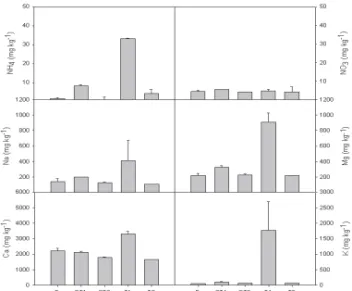
6가지 영양 물질의 함량은 T1 지역이 다른 지 역에 비해 유의차 있게 높았는데(그림 8), 열대 지역의 토양에서 유기물 함량과 치환성 양이온 Ca 및 Mg의 함량, CEC는 양의 상관관계를 가지 므로(Carvalho et al., 2009) 유기물 함량이 높을수 록 식물 영양 물질의 함량 역시 증가함을 알 수 있다. 이는 열대 식물의 생장율에서 현저하게 나 타나는데, 대부분 T1 지역 식물의 생장율은 아열 대 식물의 생장율보다 높고 특히 Calathea leonii 의 경우 250%의 생장율을 보이고 있다(그림 11).
T2 지역에서는 Begonia bowerae의 생장율이 250%로 가장 높았으며, Alocasia odora의 생장율 은 150%에 그치고 있다. 천남성과의 Alocasia odora는 비옥하고 습도가 높으며 배수가 잘 되는 토양에서 생육이 촉진되는데, T1 지역에 비해 T2 지역에서의 영양물질의 함량이 대부분 낮은 경향 을 보였기 때문이라 사료되며 배합토 내 화학성 의 개선이 요구된다.
D 지역과 ST1 지역 배합토에서의 칼륨의 함량 은 50-62mg kg
-1으로 용탈이 어느 정도 진행되어 Opuntia chlorotica 자생지 토양(95mg kg
-1)에 비 해 낮은 것을 알 수 있다(Nobel, 1983). 그러나 Agave를 비롯한 다육식물에 있어서 칼륨이 부족 하면 연백색의 괴사성 점이 잎 뒷면에 나타나면서
‘Banding Disease'가 진행되는데(Nobel, 1988), 이러한 결핍 현상은 보이지 않아 건조 지역 식물들 의 생육에는 지장이 없는 함량이라 사료된다. 양액 을 이용한 선행 연구에서는 KNO
3를 이용하여 양 액 중 질산태질소의 농도를 높일수록, Carnegiea gigantea, Ferocactus acanthodes, Trichocereus chilensis 세 개의 선인장의 경경이 6개월만에 각 각 300%, 60%, 90% 증가하였으며(Nobel, 1983), Opuntia polyacantha(Dodd and Lauenroth, 1975) 및 Mammillaria elegans(Stefanis and Langhans, 1980)의 생장율도 양액 내 질산태질소의 농도에 따라 증가하였다. Stefanis and Langhans(1980)는 Harrisia tortuosa와 Mammillaria elegans의 생육
Figure 8. Nutrients content of substrates in five zones of TPRRC. Vertical bars represent standard errors of the means.
Figure 9. Relative growth rate of nine subtropical plants in D zone.
에서 질산태질소의 농도가 높아질수록 건물중이 증가하여 7mM의 농도에서 가장 크게 생육하였 다고 보고하였는데, 본 인공 배합토의 경우 모두 해당 농도에 미치지 못하고 있어 이에 대한 개선 이 요구된다.
IV. 결 론
본 연구는 열대 및 아열대 식물의 생육에 적합
한 지하부 환경을 구명하기 위해 인공 배합토의
물리성 및 화학성을 분석하였다. 물리화학성이
자생지와 비슷한 조건을 가지고 있었던 건조 식
물이 식재된 배합토의 경우 입자 밀도가 높으나,
입도가 고르게 분포되어 있어 식물체의 생육이
Figure 10. Relative growth rate of five subtropical plants in ST1 (A) and ST2 (B) zone.
Figure 11. Relative growth rate of eight subtropical plants in T1 (A) and T2 (B) zone.
우수했던 반면, 산도의 변화가 필요한 지중해 식 물이 식재된 배합토의 경우 식물체의 생장율이 낮은 경향을 보였다. 높은 유기 탄소의 함량으로 입단 형성이 촉진되어 물리성이 가장 양호한 열 대 식물이 식재된 배합토의 경우 영양물질의 함 량 역시 높아, 대부분의 열대 식물의 생장율이 높 았으며, Calathea leonii의 생육이 가장 촉진되었 다. 열대 습지 식물이 식재되어 있는 배합토는 동 일한 입자가 많아 물리성의 개선이 요구된다. 전 체적으로 배합토의 물리성은 자생지 환경과 비슷 한 편이지만, 용탈이 빨리 진행되는 칼륨과 질산 태질소 등의 영양물질의 함량이 부족하여 화학성 의 개선이 요구된다.
본 연구 결과, 열대 및 아열대 식물이 식재된 인공배합토에 대한 개선 방안이 마련되었다. 이 를 토대로 열대온실 배합토 조성 및 관리업무에
활용될 수 있는 관리 매뉴얼
1)을 일차적으로 작 성하였으며, 지속적인 모니터링을 통한 결과의 축적으로 매뉴얼을 완성시킬 것이다. 이는 기 조 성된 열대 및 아열대 온실의 식물생육관리와 새 로이 온실을 조성하는 경우 식재기반조성에 실질 적인 도움을 줄 수 있으며 추후 열대식물의 자원 식물로서의 활용성을 높일 수 있다.
인 용 문 헌