• 검색 결과가 없습니다.

Moderate Intensity Exercise Has More Positive Effects on The Gene Expression of Inflammasome, M1, M2 Macrophage Infiltration and Brown Adipocyte Markers Compared to High Intensity Exercise in Subcutaneous Adipose of Obese Mice Induced By High Fat Diet

N/A
N/A
Protected

Academic year: 2021

Share "Moderate Intensity Exercise Has More Positive Effects on The Gene Expression of Inflammasome, M1, M2 Macrophage Infiltration and Brown Adipocyte Markers Compared to High Intensity Exercise in Subcutaneous Adipose of Obese Mice Induced By High Fat Diet"

Copied!
8
0
0

로드 중.... (전체 텍스트 보기)

전체 글

(1)

Moderate Intensity Exercise Has More Positive Effects on The Gene Expression of Inflammasome, M1, M2 Macrophage Infiltration and Brown Adipocyte Markers Compared to High Intensity Exercise in Subcutaneous Adipose of Obese Mice Induced By High Fat Diet

Yong-An Kim

1

, Pipit Pitriani

2

, Hee-Geun Park

1

and Wang-Lok Lee

1*

1

Department of Sport Science, Chungnam National University, Daejeon 305-764, Korea

2

Faculty of Sports and Health Education, Indonesia University of Education, West Java 40154, Indonesia Received November 18, 2018 /Revised March 12, 2019 /Accepted March 21, 2019

The purpose of the study was to compare the effect of either moderate or high intensity aerobic ex- ercise on inflammasome, M1, M2 macrophage infiltration and brown adipocyte markers in subcuta- neous adipose tissue of the high fat diet-induced obese mice. The 4 weeks male C57BL/6 mice were randomly assigned to four groups: normal diet control (NC; n=10), high-fat diet control (HC; n=10), high fat diet with moderate intensity exercise (HME; n=10), or high fat diet with high intensity ex- ercise (HIE; n=10) groups. The high fat diet was given 60% calories from fat whereas normal diet was given 18% calories from fat. The moderate intensity exercise group (HME) was set at 10m/min in the first 2 weeks, 12m/min in 3-5 weeks and 14m/min in 6-16 weeks and the high intensity exercise group (HIE) was set at 14m/min in the first 2 weeks, 17m/min in 3-5 weeks and 18m/min in 6-16 weeks. The semi quantitative reverse transcription-polymerase chain reaction (RT PCR) was used to analyze the gene expression. The moderate intensity exercise significantly reduced the expression of NLRP3, F480, CD11c and CD86. Further, the moderate intensity exercise significantly increased CD206 and PGC1α, BMP7 and PRDM. The high intensity exercise significantly reduced NLRP3, CD11c and CD86. Further, the high intensity exercise significantly increased PGC1α and BMP7. In conclusion, moderate intensity exercise has more positive effects on inflammasome, M1, M2 macrophage infiltra- tion and brown adipocyte maskers compared to high intensity exercise in high fat diet induced obese mice.

Key words : Brown adipocyte, inflammasome, intensity exercise, macrophage infiltration, obese

*Corresponding author

*Tel : +82-42-6458, Fax : +82-42-823-0387

*E-mail : [email protected].

This is an Open-Access article distributed under the terms of the Creative Commons Attribution Non-Commercial License (http://creativecommons.org/licenses/by-nc/3.0) which permits unrestricted non-commercial use, distribution, and reproduction in any medium, provided the original work is properly cited.

Journal of Life Science 2019 Vol. 29. No. 3. 303~310 DOI : https://doi.org/10.5352/JLS.2019.29.3.303

Introduction

Obesity is a serious health problem that is dramatically increase and epidemic in most countries [21]. Obesity is characterized by conditions of low-level chronic in- flammation with infiltration of immune cells into adipose tissue progressively [1]. The obesity causes inflammatory changes in white adipose tissue (WAT), characterized by the irregular expression of inflammatory adipokines involv- ing tumor necrosis factor-α (TNF-α) and mono-chemo- attractant protein-1 (MCP-1), and contributes to metabolic complication [14, 16]. Other study has found that there is

a strong correlation between obesity, inflammation and NLRP3 inflammasome expression in abdominal subcuta- neous adipose tissue.

Knockout NLRP3 inflammasome in mice has been re- ported to protect from obesity-associated macrophage acti- vation in adipose tissue, reducing the M1-like macrophage activation in adipose tissue and increasing the expression of M2-like cytokine [4]. Macrophages in adipose tissue play an important role in the formation of chronic inflammatory conditions and metabolic dysfunction [1]. Obese-induced white adipose tissue dysfunction further can lead to meta- bolic complications. White adipose tissue plays a role in energy storage, whereas brown adipose tissue specifically for thermogenic energy expenditure [5].

The main etiological factors for obesity are nutritional

overload and lack of physical activity, indicating that obe-

sity is lifestyle-dependent and can be prevented. Exercise

is an important lifestyle factor widely used as a tool to pre-

vent and improve lifestyle-related obesity and insulin resist-

(2)

ance [9]. Exercise is useful for increasing energy expenditure to prevent a positive energy balance and reducing the acti- vation of inflammation and oxidative stress pathway. Phys- ical activity has long been known to decrease cell size and lipid level, and increase mitochondrial biogenesis in WAT [19]. Moderate exercise training has beneficial effect on body weight, total cholesterol, peritoneal macrophage infiltration and pro-inflammatory cytokine production in high fat diet mice. In rodent models, exercise training increases mi- tochondrial biogenesis and activity in adipose tissue [18].

Exercise training also increases expression of the brown adi- pocyte marker uncoupling protein 1 (UCP1) in adipose tissue. Although these effects are much more pronounced in subcutaneous adipose tissue. Consistent with the increase in UCP1, exercise training increases the presence of brown- like adipocytes in subcutaneous white adipose tissue [17, 20]. Exercise decreases those circulating levels of lipopoly- saccharide (LPS) and TLR 4 activity along with TNF-α, IL-1- β and MCP-1 mRNA levels in white adipose tissue [12].

Our previous study found that moderate exercise training with low fat diet improves lipid metabolism, mitochondrial biogenesis and inflammation process. Further it inhibits mac- rophage infiltration and promotes M2 macrophage markers in the skeletal muscle and adipose tissue in high fat diet induced obese mice [6, 7, 10].

Taken together, moderate intensity exercise has good ef- fects and being extensively researched against obesity and its complications. However, the effects of high intensity ex- ercise have not been investigated widely on obese induced metabolic complication. Further, the effects of both moder- ate and high intensity exercise have not been analyzed on inflammasome, inflammation, macrophage infiltration and browning markers. Therefore, in this study, we test to com- pare the effects of moderate and high intensity on the high fat diet-induced obese metabolic complication.

Materials and Methods

Animal and diet

Male C57BL/6 mice 4 weeks old, n=40 from Central Ex- perimental Animal, Korea were housed in cages (5 mice per cage) with standard experimental laboratory, at temper- ature 22±2˚C, with 60±5% humidity. After one-week adapta- tion period, the mice were feed either a high fat diet (60%

of calories from fat, 20% from carbohydrate, 20% from pro- tein, Orient Bio Inc., #D12492) or a normal diet (18% calories

from fat, 58% from carbohydrate, 24% from protein, Orient Bio Inc., #2018) ad libitum for 15 weeks. The mice were randomly assigned to four groups: normal diet control (NC;

n=10), high fat diet control (HC; n=10), high fat diet with moderate exercise training (HME; n=10), and high fat diet with high intensity exercise training (HIE; n=10) groups.

The mice were weighed and food intake per cage (5 mice) measured weekly. All experiments were approved by the Animal Care and Use Committee at the Chungnam National University (CNU-00494).

Exercise Program

Exercise training will be initiated from the first week un- til the sixteenth week that consists of two type intensity:

moderate and high-intensity exercise. For moderate exercise group (HME) the running speed was set at 10 m/min in the first 2 weeks, 12 m/min in 3-5 weeks and 14 m/min in 6-16 weeks. For high-intensity exercise group (HIE) the running speed was set at 14 m/min in the first 2 weeks, 17 m/min in 3-5 weeks and 18 m/min 6-16 weeks. The exercise training mice placed on a treadmill for 40-60 min/

day, 4 days/week. During exercise, the control group also exposed the same environmental stresses from treadmill noise and vibration. In order to minimize stress during ex- ercise, external stimulation or electrical shock not allowed [14].

All the mice were sacrificed after fasted for 12 hr under anesthesia using a mixture ketamine (80 mg/kg) and xyla- zine (10 mg/kg). The subcutaneous adipose tissue was quickly removed, weighed and frozen in liquid nitrogen and stored at -80˚C until analysis.

RNA extraction and semi quantitative reverse tran- scription-polymerase chain reaction (RT PCR)

Total RNA was extracted from 150 mg subcutaneous adi- pose tissue homogenate using 1 ml Trizol reagent (Ambion, Carlsbad, CA, USA). The total RNA concentration was cal- culated by measuring the absorbance at 260 nm and 280 nm using an ultraviolet spectrophotometer. For cDNA syn- thesis, Maxi RT PreMix kit (iNtRON, Korea) was used ac- cording to the manufacturer’s instructions.

The PCR was set using the following program: 95°C for 2 min, 95°C for 30 sec, 38-40 cycle, the appropriate annealing temperature between 55-57°C for 30 sec and 72°C for 2 min.

After loaded onto 1% of the agarose gel containing ethidium

bromide then measured the PCR band density with Image

(3)

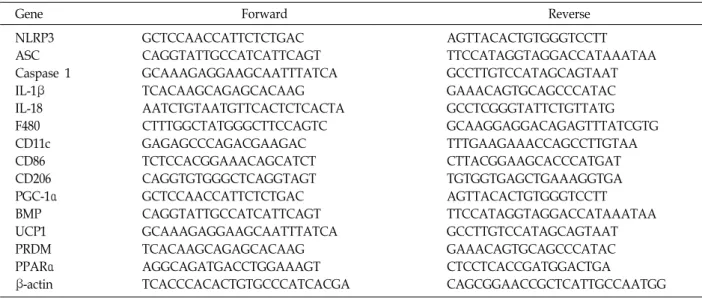
Table 1. Reverse transcription-polymerase chain reaction primer sequences

Gene Forward Reverse

NLRP3 ASC Caspase 1 IL-1β IL-18 F480 CD11c CD86 CD206 PGC-1α BMP UCP1 PRDM PPARα β-actin

GCTCCAACCATTCTCTGAC CAGGTATTGCCATCATTCAGT GCAAAGAGGAAGCAATTTATCA TCACAAGCAGAGCACAAG AATCTGTAATGTTCACTCTCACTA CTTTGGCTATGGGCTTCCAGTC GAGAGCCCAGACGAAGAC TCTCCACGGAAACAGCATCT CAGGTGTGGGCTCAGGTAGT GCTCCAACCATTCTCTGAC CAGGTATTGCCATCATTCAGT GCAAAGAGGAAGCAATTTATCA TCACAAGCAGAGCACAAG AGGCAGATGACCTGGAAAGT TCACCCACACTGTGCCCATCACGA

AGTTACACTGTGGGTCCTT TTCCATAGGTAGGACCATAAATAA GCCTTGTCCATAGCAGTAAT GAAACAGTGCAGCCCATAC GCCTCGGGTATTCTGTTATG GCAAGGAGGACAGAGTTTATCGTG TTTGAAGAAACCAGCCTTGTAA CTTACGGAAGCACCCATGAT TGTGGTGAGCTGAAAGGTGA AGTTACACTGTGGGTCCTT TTCCATAGGTAGGACCATAAATAA GCCTTGTCCATAGCAGTAAT GAAACAGTGCAGCCCATAC CTCCTCACCGATGGACTGA

CAGCGGAACCGCTCATTGCCAATGG Lab 4.0 (Bio-Rad, USA). The mRNA levels were normalized

with β-Actin. The PCR primer sequences for each studied gene are shown in Table 1.

Statistical Analysis

Statistical analysis from RT-PCR data was performed by SPSS V22.0 using one-way ANOVA with LSD post-hoc tests.

Statistical significance was defined as α=0.05.

Results

Fig. 1. Shows the changes of Calorie intake, body weight and subcutaneous adipose tissue. In Calorie intake there is significant increase in HC group compare to NC group.

HIE group have significant effect in calorie intake compared to HC group.

The body weight significantly increases in all group com- pared to NC group. The subcutaneous adipose tissue weight significant increase in HC group and significantly decrease in HME group.

Inflammasome marker

Fig. 2 showed the effect of high fat diet on inflammasome marker with moderate intensity exercise and high intensity exercise. There is a significant increase in HC group com- pared to NC group in NLRP3 mRNA expression.

Macrophage Marker

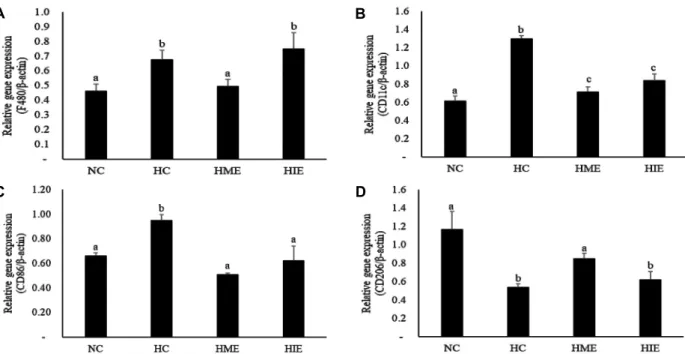
There is a significant increase in all M1 macrophage marker mRNA expression in HC group compared with NC

group. Moderate exercise can decrease the M1 macrophage marker CD11c and CD86. M2 macrophage marker CD206 significant increase by moderate exercise.

Browning Marker

PGC1α, BMP, UCP1, PRDM and PPARα mRNA expre- ssion significant decrease in HC group. Moderate exercise significant increase PGC1α, BMP, PRDM and PPARα mRNA expression compared to HC group. PGC1α mRNA ex- pression significant increase in HIE group compared to HC group.

Discussion

In this study, the body weight and calorie intake were not significantly changed by moderate and high intensity exercise. This results are similar with other research that found exercise does not affect weight loss in groups with high fat diets nor does it affect some inflammation markers such as TNF-alpha, MCP1 and Leptin. Beside that macro- phage infiltration marker F4/80 has decreased slightly with exercise [2].

The reductions in inflammatory gene expression in high

fat diet with exercise were likely the result of decreased

epididymal fat pad size and reductions in gene expression

of MCP-1, F4/80, and the M1 macrophage polarization

marker, CD11c [17]. We found that there is significant de-

creasing size of subcutaneous adipose tissue weight in mod-

erate exercise group but not accompanied with inflamma-

tory cytokine that not change in the group high fat diet

(4)

A B

C

Fig. 1. The change of (A) Body Weight; (B) Subcutaneous Adi- pose Tissue (SAT) weight of high-fat- diet-induced obese mice. Values represent means ± SEM. Different alphabet means significant difference.

A B

C D

E

Fig. 2. Effect of moderate and high intensity exercise on inflam-

masome marker in high-fat diet induced obese mice. (A)

NLRP3 Inflammasome; (B) ASC; (C) Caspase 1; (D) IL-1

β; (E) IL-18. Data represent means ± SEM. Different al-

phabet means significant difference.

(5)

A B

C D

Fig. 3. The effect of moderate and high intensity exercise on macrophage marker in high-fat diet induced obese mice. (A) F480, (B) M1 macrophage marker CD11c, (C) M1 macrophage marker CD86, (D) M2 macrophage marker, CD206. Data represent means ± SEM. Different alphabet means significant difference.

A B

C D

E

Fig. 4. The effect of moderate and high intensity exercise on browning marker in high-fat diet induced obese mice.

(A) PGC1α, (B) BMP7, (C) UCP1, (D) PRDM16, (E) PPAR

α. Data represent means±SEM. Different alphabet means

significant difference.

(6)

with moderate intensity exercise or high intensity exercise.

Several small randomized trials utilizing high-intensity ex- ercise, characterized by brief intermittent bouts of high-in- tensity aerobic exercise have emerged over recent years, and revealed impressive effects on pro-inflammatory production relative to moderate intensity continuous training [15]. The immune response using serum cytokines indicated that high-intensity exercise performed by highly trained obese rodent only generated inflammation that was localized to the skeletal muscle [3].

The previous study found that NLRP3 inflammasome plays a substantial role in sensing obesity–associated in- ducers of caspase-1 activation and therefore regulates the magnitude of the inflammation [6]. Recent study found that there was significant increase of NLRP3 inflammasome but not in ASC and inflammatory cytokine IL1β and IL-18 in high fat diet group compared to normal diet group. However moderate intensity exercise and high intensity exercise has significantly reduced the mRNA expression of NLRP3 in- flammasome. These finding suggest that exercise has mod- est benefits on NLRP3 inflammasome regulation in the high fat diet induced obese mice.

We also did research on M1 and M2 macrophage infiltra- tion marker and found that moderate intensity exercise has significant effect on F480, CD11c, CD86 and CD206 weather high intensity exercise has significant effect only on CD11c and CD86 as M1 macrophage marker. It is evident that moderate intensity exercise with treadmill training have protective effect on white adipose tissue macrophage activa- tion and inflammation [2, 8, 17]. These findings have been supported in other study that mentioned moderate exercise training induced macrophage phenotypic switching from M1 to M2 in adipose tissue [8].

Our previous study has found that aerobic exercise with low fat diet has a positive effect to immune system in obese mice [10, 16]. Another our previous study mentioned that exercise training has beneficial effects on body weight, total cholesterol, peritoneal macrophage and pro-inflammatory cytokine in high fat diet mice [13].

The exercise can make a process browning on white adi- pose tissue. We found that high fat diet with moderate ex- ercise can induced browning marker in subcutaneous adi- pose tissue. 16 wk of exercise training with calorie re- striction does not result in increased UCP1 expression or of any other bright biomarker despite evidence for the mo- lecular remodeling of adipose tissue [11].

BMP7-induced UCP1 expression was markedly dimin- ished in brown pre-adipocytes deficient in both PGC-1α and PGC-1β. In this regard, a new role for BMP7 in brown adi- pogenesis and consequent increased energy expenditure has been suggested. Altogether, data suggest that BMP7 acti- vates a full program of brown adipogenesis including the induction of early regulators of brown fat fate PRDM16 and PGC-1α, increased expression of the brown-specific marker UCP1 and adipogenic transcription factors PPARγ and CCAAT/enhancer-binding proteins, and induction of mi- tochondrial biogenesis via p38 mitogen-activated protein kinase and PGC-1α-dependent pathways [19-22].

Exercise increased the transcript levels of Bmp7 gene and others brown adipocyte-specific markers (Cidea, PRDM16 and UCP1), but did not modulate the native beige adipo- cyte-specific marker Tmem26 [14].

In conclusion moderate intensity exercise has positive ef- fect on inflammasome, macrophage marker, and browning marker in high fat diet induced obese mice. However high intensity exercise has less effect on that.

Acknowledgement

This work was supported by the National Research Foundation of Korea (NRF) grant funded by the Korea gov- ernment (NRF-2014S1A5A2A01016657).

References

1. Bai, Y. and Sun, Q. Macrophage recruitment in obese adi- pose tissue. 2015. Obes. Rev. 16, 127-136.

2. Baynard, T., Vieira-Potter, V. J., Valentine, R. J. and Woods, J. A. 2012. Exercise training effects on inflammatory gene expression in white adipose tissue of young mice. Mediators Inflamm. 28, 202-210.

3. Bessa, A., Oliveira, V. and Espindola, F. 2016. Exercise in- tensity and recovery: Biomarkers of injury, inflammation, and oxidative stress. J. Strength. Con. Res. 30, 311-319.

4. Harms, M. and Seale, P. 2013. Brown and beige fat: devel- opment, function and therapeutic potential. Nat. Med. 19, 1252-1263.

5. Jeong, J. H., Park, H. G., Lee, Y. R. and Lee, W. L. 2015a.

Moderate exercise training is more effective than resveratrol supplementation for ameliorating lipid metabolic complica- tion in skeletal muscle of high fat diet-induced obese mice.

J. Exerc. Nutr. Biochem. 19, 131-137.

6. Jeong, J. H., Lee, Y. R., Park H, G. and Lee, W. L. 2015b.

The effects of either resveratrol or exercise on macrophage

infiltration and switching from M1 to M2 in high fat diet

mice. Obesity 19, 65-72.

(7)

7. Kawanishi, N., Yano, H., Yokogawa, Y. and Suzuki, K.

Exercise training inhibits inflammation in adipose tissue via both suppression of macrophage infiltration and accel- eration of phenotypic switching from M1 to M2 macro- phages in high-fat-diet-induced obese mice. Exerc. Immunol.

Rev. 16, 105-118.

8. Krüger, K., Mooren, F. C. and Eder, K. 2016. Immune and Inflammatory Signaling Pathways in Exercise and Obesity.

Am. J. Lifestyle Med. 10, 268-279.

9. Kwon, S. M., Park, H. G., Jun, J. K. and Lee, W. L. 2014.

Exercise, but not quercetin, ameliorates inflammation, mi- tochondrial biogenesis, and lipid metabolism in skeletal muscle after strenuous exercise by high-fat diet mice. J.

Exerc. Nutr. Biochem. 18, 51-60.

10. Linden, M. A., Pincu, Y., Martin, S. A., Woods, J. A. and Baynard, T. 2014. Moderate exercise training provides mod- est protection against adipose tissue inflammatory gene ex- pression in response to high-fat feeding. Physiol. Rep. 2, 1-13.

11. Nakhuda, A., Josse, A. R., Gburcik, V., Crossland, H., Ray- mond, F., Metairon, S., Good, L., Atherton, P. J., Phillips, S. M. and Timmons, J. A. 2016. Biomarkers of browning of white adipose tissue and their regulation. Am. J. Clin.

Nutr. 104, 557-565.

12. Oliveira, A. G., Araujo, T. G., Carvalho, B. M., Guadagnini, D., Rocha, G. Z., Bagarolli, R. A., Carvalheira, J. B. C. and Saad, M. J. A. 2013. Acute exercise induces a phenotypic switch in adipose tissue macrophage polarization in diet-in- duced obese rats. Obesity 21, 2545-2556.

13. Park, H. G., Lee, Y. R., Jun, J. K. and Lee, W. L. 2014.

Exercise training is more effective than resveratrol supple- mentation on alleviation of inflammation in peritoneal mac- rophages of high fat diet mice. J. Life Sci. 18, 79-87.

14. Park, J. G., Kim, Y. A., Park, H. G. and Lee, W. L. 2018.

Aerobic exercise amelirorated high fat diet induced endoplamic reticulum stress more than polyphenol supple-

mentation in skeletal muscle of obese mice. J. Life Sci. 28, 1186-1192.

15. Ramos, J. S. and Dalleck, L. C. 2015. The impact of high-in- tensity interval training versus moderate intesity continuous triaining on vascular function: a systematic review and meta-analysis. Sports Med. 45, 679-692.

16. Rocha-Rodrigues, S., Rodríguez, A., Gouveia, A. M., Gon- çalves, I. O., Becerril S., Ramírez, B., Beleza, J., Frühbeck, G., Ascensão, A. and Magalhães, J. 2016. Effects of physical exercise on myokines expression and brown adipose-like phenotype modulation in rats fed a high-fat diet. Life Sci.

165, 100-108.

17. Sakurai, T., Ogasawara, J., Shirato, K., Izawa, T., Oh-Ishi, S., Ishibashi, Y., Radák, Z., Ohno, H. and Kizaki, T. 2017.

Exercise training attenuates the dysregulated expression of adipokines and oxidative stress in white adipose tissue.

Oxid. Med. Cell. Longev. 4, 25-31.

18. Schulz, T. J. and Tseng, Y. H. 2013. Brown adipose tissue:

development, metabolism and beyond. Biochem. J. 453, 167- 178.

19. Stanford, K. I., Middelbeek, R. J. W. and Goodyear, L. J.

2015. Exercise effects on white adipose tissue: Beiging and metabolic adaptations. Diabetes 64, 2361-2368.

20. Tseng, Y. H., Kokkotou, E., Schulz, T. J., Huang, T. L., Winnay, J. N., Taniguchi, C. M., Tran, T. T., Suzuki, R., Espinoza, D. O., Yamamoto, Y., Ahrens, M. J., Dudley, A.

T., Norris, A. W., Kulkarni, R. N. and Kahn, C. R. 2008.

New role of bone morphogenetic protein 7 in brown adipo- genesis and energy expenditure. Nature 454, 1000-1004.

21. World Health Organization, “Obesity and Overweight: Fact Sheet,” 2016. [Online]. Available: http://www.who.int/me- diacentre/factsheets/fs311/en/. [Accessed: 20-May-2017].

22. Vandanmagsar, B., Youm, Y. and Ravussin, A. 2011. The

NLRP3 inflammasome instigates obesity-induced inflam-

mation and insulin resistance. Nat. Med. 7, 15-24.

(8)

초록:비만모델에서 중강도 운동에 의한 인플라마좀, 대식세포 침윤, 갈색지방 관련 바이오 마커의 개선 효과

김용안

1

․피핏 피트리아니

2

․박희근

1

․이왕록

1*

(

1

충남대학교 스포츠과학과,

2

인도네시아 사범대학)

비만은 체내 과도한 지방 축적으로 인하여 지방세포 자체에서 염증성 사이토카인이 증가로 인하여 세포의 기 능을 약화시킨다. 규칙적인 운동은 지방분해와 갈색지방 증가로 인해 비만의 치료방법 중 핵심 전략으로 적용되 고 있다. 고강도 운동은 염증성 사이토카인과 근형질세망 스트레스 발생을 초래하여 지방대사에 부정적인 결과를 초래하는 것으로 알려져 있다. 그러나 비만모델에서 중강도 운동과 고강도 운동에 의한 인플라마좀, 대식세포 침 윤, 갈색지방 관련 바이오 마커의 비교연구는 이루어진 바 없다. 따라서 이 연구의 목적은 중강도 유산소 운동과 고강도 운동을 비교하여 인플라마좀(NLRP3, ASC), 대식세포 침윤인자 M1 (CD11c, CD86), M2 (CD206), 갈색지 방(PGC1α, BMP7, PRDM, UCP1) 관련 변인에 우선적인 효과가 있는지 비교분석하고자 하였다. 이 연구의 목적 을 위해 1) 정상식이 그룹(normal diet control, NC; n=10), 2) 60% 고지방식이 그룹(high-fat diet control, HC;

n=10), 3) 중강도 운동 그룹(high fat diet with moderate intensity exercise, HME; n=10), 4) 고강도 운동그룹(high

fat diet with high intensity exercise, HIE; n=10)으로 나누어 실시하였다. 중강도 운동 그룹은 고지방식이 그룹과

비교하여 NLRP3, F480, CD11c, CD8의 발현이 유의하게 낮아졌다. 중강도 운동은 CD206, PGC1α, BMP7, PRDM

이 유의하게 증가하였다. 고강도 운동은 NLRP3, CD11c and CD86은 유의하게 감소한것으로 확인되었다. 그러나

고강도 운동은 PGC1α, BMP7는 증가한다. 이러한 결과는 중강도 운동은 인플라마좀, 대식세포 M1, M2 침윤과

갈색지방 세포 관련 요인의 개선이 효과적인 것으로 나타났다.

수치

Table  1.  Reverse  transcription-polymerase  chain  reaction  primer  sequences
Fig.  1.  The  change  of  (A)  Body  Weight;  (B)  Subcutaneous  Adi- Adi-pose  Tissue  (SAT)  weight  of  high-fat-  diet-induced  obese  mice
Fig.  3.  The  effect  of  moderate  and  high  intensity  exercise  on  macrophage  marker  in  high-fat  diet  induced  obese  mice

참조

관련 문서

 Kernel 1, which has an arithmetic intensity of 0.5 FLOPs/byte, is limited by memory bandwidth to no more than 8 GFLOPS/sec.  Kernel 2, which has an arithmetic intensity of

- The effect of the motif (one wide slit) is to alter the intensity of each main peak, but the position of the main peaks are unchangedD. - intensity envolope →

The purpose of this study was to investigate how the 8-week aerobic exercise program affects the physical strength and stress of obese women in the

The purpose and necessity of this study was to investigate the effects of lactic acid fatigue and body oxidation through myofascial relaxation exercise using small tools

In this study, 12 weeks of aerobic exercise was conducted in middle-aged women aged 45 to 55 years with a body fat rate of 30% or more to determine the effects of blood

The purpose of this study was to investigate the effects of 8 weeks trampoline exercise on health promotion (health related fitness, blood lipid) in

This study was conducted to investigate the effects of a 12-week swimming exercise program on body composition, blood lipids and inflammatory indicators in

(1998) : The effect of passive stretching on delayed onset muscle soreness, and other detrimental effects following eccentric exercise... (2001) : Markers