• 검색 결과가 없습니다.

Evaluation of Plasma Neutrophil Gelatinase-Associated Lipocalin as a Biomarker for Tubular Damage in Diabetic Nephropathy

N/A
N/A
Protected

Academic year: 2021

Share "Evaluation of Plasma Neutrophil Gelatinase-Associated Lipocalin as a Biomarker for Tubular Damage in Diabetic Nephropathy"

Copied!
6
0
0

로드 중.... (전체 텍스트 보기)

전체 글

(1)

31

Evaluation of Plasma Neutrophil Gelatinase-Associated Lipocalin as a Biomarker for Tubular Damage in Diabetic Nephropathy

Keumrock Hwang

1

, Sollip Kim

2

, Hye Won Lee

1

, Woochang Lee

1

, Sail Chun

1

, and Won-Ki Min

1

Department of Laboratory Medicine

1

, University of Ulsan College of Medicine and Asan Medical Center

1

, Seoul;

Department of Laboratory Medicine

2

, Inje University Ilsan Paik Hospital

2

, Goyang, Korea

당뇨병성 신증에서 세뇨관 손상의 표지자로서 혈장 호중구 젤라틴분해효소 연관 리포칼린 측정의 유용성 평가

황금록

1

․김솔잎

2

․이혜원

1

․이우창

1

․전사일

1

․민원기

1

울산의대 서울아산병원 진단검사의학과

1

, 인제의대 일산백병원 진단검사의학과

2

접수일: 12 / 3 / 16 최종재심접수일: 12 / 4 / 18 게재승인일: 12 / 4 / 19 교신저자:전사일

우)138-736 서울 송파구 풍납2동 388-1, 서울아산병원 진단검사의학과 전화 : 02)3010-4513

FAX : 02)478-0884

E-mail : [email protected]

Background: Neutrophil gelatinase-associated lipocalin (NGAL) has recently been introduced as a renal biomarker and an increase in its level suggests tubular injury.

Diabetic nephropathy, a leading cause of end-stage renal disease, causes typical changes characterized by glomerulosclerosis and eventual tubular damage in the kidney. In the present study, we attempted to validate the usefulness of plasma NGAL (pNGAL) as a biomarker for tubular damage in diabetic nephropathy.

Methods: The plasma NGAL levels of 260 diabetes mellitus patients and 50 healthy individuals werewas measured by means of fluorescent immunoassay using with the Triage NGAL test (Biosite, USA). The patients were divided into 3 groups on the basis of their urinary albumin excretion (UAE) levels, and the pNGAL differences among each group were analyzed. The degree of albuminuria and cystatin C-based glomerular filtration rate (GFR) were also compared with the pNGAL levels.

Results: The mean pNGAL levels of the normal subjects and diabetic patients were 61.9 ± 4.81 ng/mL and 93.4 ± 71.78 ng/mL, respectively. pNGAL level was significantly increased in patients with severe albuminuria ( P < 0.001). The pNGAL level was found to be positively correlated with the degree of albuminuria (R

2

= 0.218, P < 0.001) and inversely correlated with GFR (R

2

= 0.269, P < 0.001). Particularly, the pNGAL level of patients with diabetic nephropathy was found to be associated with the renal damage and independent of other factors influencing the renal damage (R

2

= 0.218).

Conclusions: pNGAL level independently reflects renal damage in patients with diabetic nephropathy. Measurement of pNGAL level combined with UAE would help enable to detect both glomerular and tubular damage in diabetic nephropathy patients.

Key Words: NGAL, Diabetic nephropathie, Tubular damage

서 론

당뇨병성 신증은 말기 신질환의 가장 흔한 원인 질환으로 당뇨병의 이환율과 사망률 증가에 지대한 영향을 미친다[1,

2]. 당뇨병성 신증은 지속적인 고혈당과 당뇨병에 동반된 혈 역학적 요인들로 인한 사구체와 세뇨관 및 신간질의 손상으 로 발생하게 된다[3,4]. 특히, 당뇨병으로 인한 세뇨관의 위 축은 비가역적인 신손상을 일으켜 말기 신질환으로의 진행을

J Lab Med Qual Assur 2012 ; 34:31-6

(2)

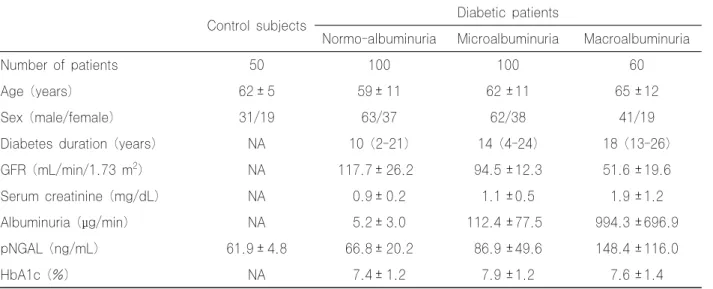
Table 1. Clinical and laboratory findings of control subjects and diabetic patients

Control subjects Diabetic patients

Normo-albuminuria Microalbuminuria Macroalbuminuria

Number of patients 50 100 100 60

Age (years) 62 ± 5 59 ± 11 62 ±11 65 ±12

Sex (male/female) 31/19 63/37 62/38 41/19

Diabetes duration (years) NA 10 (2-21) 14 (4-24) 18 (13-26)

GFR (mL/min/1.73 m

2

) NA 117.7 ± 26.2 94.5 ±12.3 51.6 ±19.6

Serum creatinine (mg/dL) NA 0.9 ± 0.2 1.1 ±0.5 1.9 ±1.2

Albuminuria (μg/min) NA 5.2 ± 3.0 112.4 ±77.5 994.3 ±696.9

pNGAL (ng/mL) 61.9 ± 4.8 66.8 ± 20.2 86.9 ±49.6 148.4 ±116.0

HbA1c (%) NA 7.4 ± 1.2 7.9 ±1.2 7.6 ±1.4

Abbreviations : NA, not applicable; GFR, glomerular filtration rate; pNGAL, plasma neutrophil gelatinase-associated lipocalin.

가속시킨다[5,6]. 당뇨병성 신증은 약 20-40%의 당뇨병 환 자에서 나타나며, 일반적으로 진단 후 약 10년 무렵 미세 알 부민뇨(20-200 µg/min)가 배설되는 초기 신증(incipient nephropathy) 기간을 거쳐, 지속적으로 다량의 알부민이 소변으로 배설되는(>200 µg/min) 현성 신증(overt nephr- opathy)으로 진행한다[4]. 초기 신장병증 기간에는 가역적 인 신손상이 일어나지만 일단 현성 신장병증으로 진행하면 비가역적인 신손상이 일어나 말기 신질환으로 진행하므로, 초기 신장병증 단계에서 당뇨병성 신증을 진단하여 치료를 시작하는 것이 환자의 예후에 매우 중요하다[1]. 현재 당뇨 병성 신증의 진행 경과를 분류하는 기준으로 사용하는 소변 알부민 배설량은 당뇨병성 신증의 사구체 손상은 반영하지만 세뇨관 손상의 정도는 잘 반영하지 못하기 때문에[7], 당뇨 병성 신증의 세뇨관 손상의 정도를 특이적으로 평가하기 위 해 민감하고 신뢰성 있는 표지자가 필요하다.

호중구 젤라틴분해효소 연관리포칼린(Neutrophil gelatinase associated lipocalin, NGAL)은 최근 급성 및 만성 신손상 에서 신세뇨관 손상을 평가하는데 유용한 표지자로 주목받고 있다[8]. 정상적으로 NGAL은 분자량이 작아 대부분 사구체 로 여과된 후, 근위 세뇨관으로 재흡수된다. 세뇨관이 손상되 면 NGAL 재흡수가 감소하는 동시에 세뇨관 상피세포의 NGAL 생성이 증가하여 혈장과 소변의 NGAL 농도가 증가 하게 된다[9].

본 연구에서는 당뇨병 환자에서 혈장 NGAL 농도를 측정 함으로써 당뇨병성 신증의 세뇨관 손상을 반영하는 표지자로 써 혈장 NGAL 측정의 유용성을 평가하고자 하였다.

대상 및 방법

1. 대상

2010년 8월부터 10월까지 서울아산병원 내분비내과에서

진료를 받은 제 1형 및 제 2형 당뇨병 환자 260명을 대상으 로 하였고, 환자들의 소변 알부민 배설량을 기준으로 세 집단 으로 나누어 분석하였다. 당뇨병성 신증은 지속적인 알부민 뇨(>200 µg/min)를 보이는 환자에서 다른 기저 신질환을 가지고 있지 않는 경우 임상적으로 진단하였다. 정상대조군 으로 본원 건강검진센터를 방문한 30세 이상 60세 미만의 건 강인 50명을 선별하여 당뇨병 환자들의 NGAL 결과와 비교 하여 분석하였다. 정상대조군은 당뇨병, 신장질환, 고혈압, 심혈관 질환의 병력 및 약물 복용력이 없었다. 전자의무기록 을 검토하여 환자들과 정상 대조군의 인적사항, 임상정보 및 검사실 소견을 확인하였다.

2. 혈장 NGAL 농도의 측정

당뇨병 환자와 정상대조군의 혈장 검체를 이용하여 형광면 역분석법으로 NGAL 농도를 측정하였다. 현장검사 장비인 Triage NGAL test (Biosite, San Diego, CA, USA)를 이용하였고, 제조사의 지침에 따라 검사하였다. 검출된 혈장 NGAL 농도는 ng/mL로 표현하였다. 당뇨병 환자의 8시간 동안 채집한 소변으로 분당 알부민 배설량을 측정하였다. 면 역측정법으로 환자들의 혈청 cystatin C 농도를 구하여 (Abbott laboratories, Abbott Park, IL, USA) 사구체 여과율을 계산하였다.

3. 통계처리 및 분석

통계분석에는 SPSS version 12.0 (SPSS Inc. Chicago,

IL, USA) 소프트웨어 프로그램을 이용하였다. 분석한 결과

값은 평균±표준편차의 형태로 표현하였다. 정상대조군과 당

뇨병성 신증 집단 사이에 NGAL 결과값을 비교하기 위해 일

원배치분산분석을 이용하였고, 정규분포를 따르지 않는 경우

Kruskal Wallis 검사를 시행하였다. 혈장 NGAL과 사구체

여과율 및 소변 알부민 배설량의 비교를 위해 Pearson 상관

(3)

Fig. 2. Plasma neutrophil gelatinase-associated lipocalin (pNGAL) levels of control subjects and diabetic patients. Dots indicate the pNGAL levels of patients who showed much higher pNGAL levels than other patients in the same group.

(A)

(B) (C)

Fig. 1. Levels of plasma neutrophil gelatinase-associated lipocalin (pNGAL) (A), urinary albumin excreation (UAE) (B) and glomerular filtration ratio (GFR) (C) of normal control and diabetic patients.

계수를 이용한 상관분석을 시행하였다. 또한, 혈장 NGAL이 당뇨병성 신증에서 다른 변수와 독립적으로 신손상을 반영하 는 표지자임을 평가하기 위해 다변량 회귀분석을 시행하였다.

P값이 0.05 미만일 때 유의한 결과로 판정하였다.

결 과

당뇨병 환자들은 소변 알부민 배설량에 따라서 정상 알부 민뇨(<20 µg/min) 환자, 미세 알부민뇨(20-200 µg/min) 환자, 거대 알부민뇨(>200 µg/min) 환자의 세 집단으로 나 누어졌다. 환자들의 연령은 평균 61 ± 11세였고, 남자 166 명 여자 94명이었다. 환자들은 당뇨병 진단 후 평균 10 ± 7 년 경과되어 있었다. 정상대조군의 혈장 NGAL 농도는 평균 61.9 ± 4.81 ng/mL이었으며, 당뇨병 환자들의 혈장 NGAL 농도는 평균 93.4 ± 71.78 ng/mL였다(Table 1, Fig. 1).

당뇨병성 신증이 진행할수록 환자들의 혈장 NGAL 농도

는 의미있게 증가하였으며(P<0.001), 동일한 당뇨병성 신증

집단에 속한 환자들 중에서도 혈장 NGAL 농도가 집단의 평

균값보다 매우 높게 나타나는 환자들이 있었다(Fig. 2). 당

뇨병 환자들의 혈장 NGAL 농도는 소변 알부민 배설량과 양

의 상관관계를 보이며 증가하였고(R

2

=0.218, P<0.001),

사구체 여과율과는 음의 상관관계를 보였다(R

2

=0.269,

P<0.001) (Fig. 3). 다변량 회귀분석 결과 95%의 신뢰구

(4)

(A) (B)

Fig. 3. (A) Positive correlation between the pNGAL levels and the degree of albuminuria in diabetic patients (R

2

= 0.218, P < 0.001). (B) Negative correlation between pNGAL levels and glomerular filtration rate (GFR) in diabetic patients (R

2

= 0.269, P < 0.001).

Table 2. Multiple regression analysis of plasma neutrophil gelatinase-associated lipocalin (pNGAL), cystatin C-based glomerular filtration ratio (GFR), and other factors associated with albuminuria

Variables Odd ratio

pNGAL (per 1 ng/mL) 3.385 [2.959-4.175]

Cystatin C, GFR -

R

2

0.218

간에서 혈장 NGAL이 1 ng/mL 증가할 때마다 소변 알부민 배설량이 3.385 µg 증가하는 상관관계를 보였으며 (R

2

=0.218), 혈장 NGAL은 환자들의 연령, 성별, 사구체 여과율과 독립적으로 당뇨병성 신증의 중증도를 반영하였다 (Table 2).

고 찰

NGAL은 리포칼린 패밀리에 속한 22-25 kDa의 단백으 로 신장, 전립선, 폐, 소화관 등의 상피세포에서도 낮은 농도 로 만들어진다[8,10]. 소변 NGAL 농도는 일반적으로 혈장 혹은 혈청 NGAL 농도와 비례하며, 소변 및 혈장 NGAL은 심혈관 수술, 신이식, 신독성 약물 투여 후 발생한 급성 세뇨 관 손상을 조기에 검출하는데 도움을 주는 생화학적 표지자 로 알려져 있다[11]. 또한 NGAL은 사구체신염, 다낭 신질 환과 같은 만성 신질환의 병태생리에 관여하며, 만성 신질환 의 중증도 및 신손상의 진행과 연관되어 있다[12].

본 연구에서 저자들은 당뇨병 환자들을 당뇨병성 신증의 임상적 중증도에 따라 분류하여 각 집단의 혈장 NGAL 농도 를 측정하고 정상대조군의 결과와 비교하였다. 정상대조군에 비해 당뇨병 환자들의 혈장 NGAL 농도가 유의하게 증가되 어 있었으며, 환자들의 혈장 NGAL 농도는 당뇨병성 신증이

진행할수록 의미있게 증가하였다. 한편, 정상대조군의 혈장 NGAL 농도는 정상 알부민뇨를 보이는 환자군과 유의한 차 이를 보이지 않았는데, 이는 본 연구에 사용한 현장검사장비 의 분석가능범위가 60-1,300 ng/mL이므로 60 ng/mL이 하의 NGAL 농도를 측정할 수 없었기 때문인 것으로 추정된 다. 본 연구에서 정상대조군의 혈장 NGAL 농도는 대부분 60 ng/mL 이하였는데 정상인의 혈청 NGAL 농도를 약 50 ng/mL로 보고한 이전 연구 결과들로 미루어 볼 때[13,14], 실제 정상대조군의 혈장 NGAL 농도는 측정된 61.9±4.8 ng/mL 보다 낮았을 것으로 예상된다. Bolignano 등[13]은 정상인과 정상 알부민뇨를 보이는 제 2형 당뇨병 환자들의 소변 및 혈청 NGAL 농도를 측정하여 정상인에 비해 정상 알부민뇨를 보이는 당뇨병 환자들의 NGAL이 의미 있게 증 가된 결과를 제시하며, 당뇨병성 신증을 조기에 발견하는 표 지자로 NGAL을 사용할 수 있음을 보고 한 바 있었다. 본 연 구에서는 정상군과 정상 알부민뇨를 보이는 당뇨병 환자들의 혈장 NGAL 농도가 의미 있는 차이를 보이지 않았지만, 정 상대조군의 혈장 NGAL 농도를 정확히 측정할 수 없었기 때 문에 보다 낮은 범위의 혈장 NGAL을 측정할 수 있는 장비 로 재검하는 것이 필요할 것으로 생각된다.

당뇨병성 신증의 진행단계에 따라 환자들을 분류하였을 때

신증이 진행할수록 각 집단에 속한 환자들의 혈장 NGAL 농

(5)

도가 의미 있게 높아지는 것이 관찰되었다. 한편, 같은 집단 내에 속한 환자들 중에서도 혈장 NGAL 농도가 다른 환자들 에 비해 크게 증가되어 있는 환자들이 있었는데, 이들은 같은 집단에 속한 다른 환자들에 비해 세뇨관 손상이 보다 진행되 어 있는 환자들일 가능성이 있다. 이를 뒷받침하기 위해서는 추후 NGAL이 증가되어 있던 환자들에서 소변 단백 전기영 동을 시행하여 세뇨관성 단백뇨 양상을 관찰하는 것이 도움 이 될 수 있을 것으로 생각된다. 환자들의 혈장 NGAL 농도 는 소변 알부민 배설량과 양의 상관관계를 보였으며 사구체 여과율과는 음의 상관관계를 보였는데, 이는 지속적으로 거 대 알부민뇨를 보이고 사구체 여과율이 감소한 중증의 당뇨 병성 신증 환자에서 NGAL 농도가 증가되어 있었던 이전 연 구들의 결과와 일치하는 소견이었다[13,15,16]. 특히 본 연 구에서는 혈장 NGAL이 환자의 연령이나 성별, 사구체 여과 율과 같이 환자의 검사결과에 영향을 줄 수 있는 요인들과 독 립적으로 신손상을 반영하는 결과를 보여, 혈장 NGAL이 당 뇨병성 신증을 진단할 수 있는 의미 있는 표지자가 될 수 있 을 것으로 생각된다.

저자들은 혈장 NGAL이 당뇨병성 신증 환자에서 신손상 을 독립적으로 반영하는 지표임을 확인하였다. 당뇨병성 신 증이 의심되는 환자에서 소변 알부민 배설량을 측정하는 동 시에 혈장 NGAL을 측정하면, 당뇨병성 신증의 사구체 손상 뿐만 아니라 세뇨관 손상의 정도도 평가할 수 있을 것으로 생 각한다. 특히, 혈장 NGAL은 사구체 손상에 비해 세뇨관 손 상이 더 진행되어 있는 당뇨병성 신증의 조기 발견에 도움을 주는 생화학적 지표로 사용 될 수 있을 것으로 기대된다.

요 약

배경: 호중구 젤라틴분해효소 연관 리포칼린 (Neutrophil gelatinase-associated lipocalin, NGAL)은 최근 세뇨관 손상을 반영하는 표지자로 주목받고 있다. 말기신질환의 주 된 원인이 되는 당뇨병성 신증에서는 특징적으로 점진적인 사구체경화증과 세뇨관 손상이 일어난다. 저자들은 당뇨병성 신증에서 세뇨관 손상을 반영하는 표지자로서 혈장 NGAL 측정의 유용성을 평가하고자 하였다.

방법: 260명의 당뇨병 환자와 50명의 정상대조군의 혈장 NGAL 농도를 Triage NGAL test 장비(Biosite, USA)를 이용하여 형광면역분석법으로 측정하였다. 당뇨병 환자들을 소변 알부민 배설량에 따라 세 집단으로 나누어, 정상대조군 과 환자군 사이의 혈장 NGAL 농도를 비교하였다. 또한, 환 자들의 소변 알부민 배설량과 사구체 여과율을 혈장 NGAL 농도와 비교하여 분석하였다.

결과: 정상대조군의 혈장 NGAL 농도는 61.9±4.8 ng/

mL였고, 당뇨병 환자의 혈장 NGAL 농도는 93.4±71.78 ng/mL였다. 혈장 NGAL 농도는 심한 알부민뇨를 보이는 환자에서 의미있게 증가되어 있었다(P<0.001). 혈장 NGAL 은 환자들의 소변 알부민 배설량의 정도와 양의 상관관계를

보였으며(R

2

=0.218, P<0.001), 사구체 여과율과는 음의 상관관계를 보였다(R

2

=0.269, P<0.001). 특히, 혈장 NGAL 농도는 신손상에 영향을 줄 수 있는 다른 요인들과 독립적으로 당뇨병성 신증의 신손상의 정도를 반영하였다(R

2

= 0.218).

결론: 당뇨병성 신증 환자에서 혈장 NGAL은 독립적으로 신손상을 반영하였다. 당뇨병 환자에서 당뇨병성 신증을 평 가할 때 소변 알부민 배설량의 측정과 함께 혈장 NGAL을 측정하면 환자들의 사구체 손상과 신세뇨관 손상을 동시에 평가할 수 있을 것으로 기대된다.

참 고 문 헌

1. Nielsen SE, Andersen S, Zdunek D, Hess G, Parving HH, Rossing P. Tubular markers do not predict the decline in glomerular filtration rate in type 1 diabetic patients with overt nephropathy. Kidney Int 2011;79:1113-8.

2. Finne P, Reunanen A, Stenman S, Groop PH, Grönhagen-Riska C. Incidence of end-stage renal disease in patients with type 1 diabetes. JAMA 2005;294:1782-7.

3. Gilbert RE and Cooper ME. The tubulointerstitium in progressive diabetic kidney disease: more than an aftermath of glomerular injury? Kidney Int 1999;56:1627-37.

4. Park JT and Kang SW. Pathogenesis of diabetic nephropathy.

Korean J Med 2009;77:670-7. ( 박정탁 및 강신욱. 당뇨병성 신증의 병태생리. 대한내과학회지 2009;77:670-7.)

5. Jeon YK, Kim MR, Huh JE, Mok JY, Song SH, Kim SS, et al. Cystatin C as an early biomarker of nephropathy in patients with type 2 diabetes. J Korean Med Sci 2011;26:258-63.

6. Thomas MC, Burns WC, Cooper ME. Tubular changes in early diabetic nephropathy. Adv Chronic Kidney Dis 2005;12:177-86.

7. Nielsen SE, Schjoedt KJ, Astrup AS, Tarnow L, Lajer M, Hansen PR, et al. Neutrophil Gelatinase-Associated Lipocalin (NGAL) and Kidney Injury Molecule 1 (KIM1) in patients with diabetic nephropathy: a cross-sectional study and the effects of lisinopril.

Diabet Med 2010;27:1144-50.

8. Chaudhary K, Phadke G, Nistala R, Weidmeyer CE, McFarlane SI, Whaley-Connell A. The emerging role of biomarkers in diabetic and hypertensive chronic kidney disease. Curr Diab Rep 2010;10:37-42.

9. Devarajan P. NGAL in acute kidney injury: from serendipity to utility. Am J Kidney Dis 2008;52:395-9.

10. Malyszko J, Malyszko JS, Koc-Zorawska E, Kozminski P, Mysliwiec M. Neutrophil gelatinase-associated lipocalin in dialyzed patients is related to residual renal function, type of renal replacement therapy and inflammation. Kidney Blood Press Res 2009;32:464-9.

11. Bolignano D, Coppolino G, Romeo A, De Paola L, Buemi A,

(6)

Lacquaniti A, et al. Neutrophil gelatinase-associated lipocalin (NGAL) reflects iron status in haemodialysis patients. Nephrol Dial Transplant 2009;24:3398-403.

12. Bolignano D, Donato V, Coppolino G, Campo S, Buemi A, Lacquaniti A, et al. Neutrophil gelatinase-associated lipocalin (NGAL) as a marker of kidney damage. Am J Kidney Dis 2008;52:595-605.

13. Bolignano D, Lacquaniti A, Coppolino G, Donato V, Fazio MR, Nicocia G, et al. Neutrophil gelatinase-associated lipocalin as an early biomarker of nephropathy in diabetic patients. Kidney Blood Press Res 2009;32:91-8.

14. Bolignano D, Coppolino G, Romeo A, Lacquaniti A, Buemi M.

Neutrophil gelatinase-associated lipocalin levels in chronic haemodialysis patients. Nephrology (Carlton) 2010;15:23-6.

15. Zachwieja J, Soltysiak J, Fichna P, Lipkowska K, Stankiewicz W, Skowronska B, et al. Normal-range albuminuria does not exclude nephropathy in diabetic children. Pediatr Nephrol 2010;25:1445-51.

16. Nielsen SE, Hansen HP, Jensen BR, Parving HH, Rossing P.

Urinary neutrophil gelatinase-associated lipocalin and

progression of diabetic nephropathy in type 1 diabetic patients

in a four-year follow-up study. Nephron Clin Pract

2011;118:c130-5.

수치

Table 1. Clinical and laboratory findings of control subjects and diabetic patients
Fig. 1. Levels of plasma neutrophil gelatinase-associated lipocalin (pNGAL) (A), urinary albumin excreation (UAE) (B) and glomerular filtration ratio (GFR) (C) of normal control and diabetic patients.
Fig. 3. (A) Positive correlation between the pNGAL levels and the degree of albuminuria in diabetic patients (R 2

참조

관련 문서