• 검색 결과가 없습니다.

Early and Long-term Outcomes of Pneumonectomy for Treating Sequelae of Pulmonary Tuberculosis

N/A
N/A
Protected

Academic year: 2021

Share "Early and Long-term Outcomes of Pneumonectomy for Treating Sequelae of Pulmonary Tuberculosis"

Copied!
6
0
0

로드 중.... (전체 텍스트 보기)

전체 글

(1)

http://dx.doi.org/10.5090/kjtcs.2012.45.2.110 ISSN: 2233-601X (Print) ISSN: 2093-6516 (Online)

Department of Thoracic and Cardiovascular Surgery,

1

Severance Hospital, Yonsei University College of Medicine,

2

Gangnam Severance Hospital, Yonsei University College of Medicine

Received: August 31, 2011, Revised: October 24, 2011, Accepted: November 18, 2011

Corresponding author: Kyung Young Chung, Department of Thoracic and Cardiovascular Surgery, Severance Hospital, Yonsei University College of Medicine, 50 Yonsei-ro, Seodaemun-gu, Seoul 120-749, Korea

(Tel) 82-2-2228-2140 (Fax) 82-2-393-6012 (E-mail) [email protected]

C

The Korean Society for Thoracic and Cardiovascular Surgery. 2012. All right reserved.

CC
This is an open access article distributed under the terms of the Creative Commons Attribution Non-Commercial License (http://creative- commons.org/licenses/by-nc/3.0) which permits unrestricted non-commercial use, distribution, and reproduction in any medium, provided the original work is properly cited.

Early and Long-term Outcomes of Pneumonectomy for Treating Sequelae of Pulmonary Tuberculosis

Chun Sung Byun, M.D.

1

, Kyung Young Chung, M.D.

1

, Kyoung Sik Narm, M.D.

1

, Jin Gu Lee, M.D.

1

, Daejin Hong, M.D.

2

, Chang Young Lee, M.D.

1

Background: Pneumonectomy remains the ultimate curative treatment modality for destroyed lung caused by tuber- culosis despite multiple risks involved in the procedure. We retrospectively evaluated patients who underwent pneu- monectomy for treatment of sequelae of pulmonary tuberculosis to determine the risk factors of early and long-term outcomes. Materials and Methods: Between January 1980 and December 2008, pneumonectomy or pleuro- pneumonectomy was performed in 73 consecutive patients with destroyed lung caused by tuberculosis. There were 48 patients with empyema (12 with bronchopleural fistula [BPF]), 11 with aspergilloma and 7 with multidrug re- sistant tuberculosis. Results: There were 5 operative mortalities (6.8%). One patient had intraoperative uncontrolled arrhythmia, one had a postoperative cardiac arrest, and three had postoperative respiratory failure. A total of 29 patients (39.7%) suffered from postoperative complications. Twelve patients (16.7%) were found to have post- pneumonectomy empyema (PPE), 4 patients had wound infections (5.6%), and 7 patients required re-exploration due to postoperative bleeding (9.7%). The prevalence of PPE increased in patients with preoperative empyema (p=0.019). There were five patients with postoperative BPF, four of which occurred in right-side operation. The only risk factor for BPF was the right-side operation (p=0.023). The 5- and 10-year survival rates were 88.9% and 76.2%, respectively. The risk factors for late deaths were old age (≥50 years, p=0.02) and low predicted post- operative forced expiratory volume in one second (FEV1) (<1.2 L, p=0.02). Conclusion: Although PPE increases in patients with preoperative empyema and postoperative BPF increases in right-side operation, the mortality rates and long-term survival rates were found to be satisfactory. However, the follow-up care for patients with low pre- dicted postoperative FEV1 should continue for prevention and early detection of pulmonary complication related to impaired pulmonary function.

Key words: 1. Tuberculosis 2. Pneumonectomy 3. Bronchopleural fistula 4. Empyema

5. Lung function

(2)

INTRODUCTION

The role of the thoracic surgeon in managing pulmonary tuberculosis has decreased remarkably since the advent of ef- fective antimicrobial agents and better socioeconomic status.

However, pneumonectomy or pleuropneumonectomy is still often required to treat complications of pulmonary tuber- culosis such as destroyed lung, empyema, bronchopleural fis- tula (BPF), or multidrug resistant (MDR) tuberculosis [1].

Solid pleural symphysis and dense fibro-vascular adhesion around the hilum result in intraoperative difficulties in pneu- monectomy for inflammatory lung disease. Also, the under- lying disease of destroyed lung and a poor health status fur- ther worsen a patient’s outcome in the postoperative period.

For these reasons, some surgeons have advised to be cautious when deciding whether to perform pneumonectomy [2-4].

However, recent studies have reported acceptably low mortal- ity rates after pneumonectomy for chronic infections [5-9].

We retrospectively evaluated the patients who underwent pneumonectomy or pleuropneumonectomy for treating seque- lae of pulmonary tuberculosis to determine the risk factors for early and long-term unfaroble outcomes.

MATERIALS AND METHODS

Between January 1980 and December 2008, 73 consecutive patients who underwent pneumonectomy due to destroyed lung caused by tuberculosis were retrospectively reviewed.

Preoperative data collection involved patient demographic da- ta, medical and surgical histories, preoperative medications, presenting symptoms, chest roentgenogram, computed tomog- raphy, sputum smear and culture test for acid-fast bacilli, fi- beroptic bronchoscopy, preoperative treatment modality, pul- monary function tests, and a quantitative pulmonary perfusion scan. Predicted postoperative (PPO) forced expiratory volume in one second (FEV1) was calculated as follows: PPO FEV1=preoperative FEV1×contribution of contralateral lung.

1) Operative technique

The patients were intubated with a double lumen endo- tracheal tube and placed in lateral decubitus position. In most cases, surgery was performed through a posterolateral thor-

acotomy incision. An extrapleural approach (pleuropneumon- ectomy) was used when the pleural space was completely ob- literated due to previous inflammation or empyema. A bron- chial stump was stapled and reinforced with pericardial fat or parietal pleura. In some cases, however, reinforcement was omitted based on the choice of the surgeons. In case of spill- age to some extent taking place despite careful dissection, co- pious saline or antiseptic solution irrigation was performed during operation.

(1) Postoperative complications and mortality: Due to the chronic nature of the underlying diseases, in many in- stances postoperative complications occurred later than 30 days. Therefore, postoperative complications were included on either a 60-day or in-hospital basis. The occurrence of com- plications requiring treatment (postpneumonectomy empyema [PPE], BPF, bleeding, vocal cord palsy, wound infection or wound deheiscence) was investigated.

(2) Follow-up: The follow-up data were obtained from the outpatient clinic chart reviews or by telephone calls to the patients or their families.

(3) Statistics: Statistical analyses for any correlation be- tween the risk factors and the occurrence of complications were performed with the Chi-square test or Fisher’s exact test. For survival analysis, the Kaplan-Meier method was used. Parametric variables were expressed as mean±standard deviation and non-parametric variables were expressed as frequency. A p-value less than 0.05 was considered to be statistically significant. All statistical analyses were performed with the SPSS ver. 12.0 (SPSS Inc., Chicago, IL, USA).

RESULTS

Out of 73 patients there were 25 women and 48 men with

a mean age of 45.9 years (range, 19 to 70 years). The pa-

tients usually presented with the clinical signs of chronic in-

fection and destroyed lung including cough with sputum, a

mild to moderate degree of exertional dyspnea, chest dis-

comfort, fever, or hemoptysis. There were 46 patients with

empyema (12 with BPF), 11 with aspergilloma, and 7 with

MDR tuberculosis. Drainage through the most dependent site

was done initially in 34 patients. Sixty-one patients had a his-

tory of pulmonary tuberculosis, 28 patients were treated with

(3)

Table 1. Patient demographics

Variables Values

Sex Male Female Age (yr) Combined disease

Empyema Without BPF With BPF Aspergilloma MDR tuberculosis Preoperative FEV1 (L)

≥1.8

<1.8

Predicted postoperative FEV1 (L)

≥1.2

<1.2 Operation side

Right Left

Operation time (min) Range

48 (65.8) 25 (34.2) 45.9±14.2

36 (49.3) 12 (16.4) 11 (15.1) 7 (9.6)

27 (38.6) 43 (61.4)

35 (71.4) 14 (28.6)

24 (32.9) 49 (67.1) 282.6±88.2 135−590 Values are presented as number (%) or mean±standard deviation.

BPF=bronchopleural fistula; MDR=multidrug resistant; FEV1=

forced expiratory volume in 1 second.

Table 2. Postoperative complications

Complication No. (%)

Postpneumonectomy empyema With BPF

Without BPF Postoperative bleeding Vocal cord palsy Wound problem

Wound infection Wound dehiscence

12 (16.7) 5 (6.9) 7 (9.7) 7 (9.7) 2 (2.8) 8 (11.1)

4 (5.6) 4 (5.6) BPF=bronchopleural fistula.

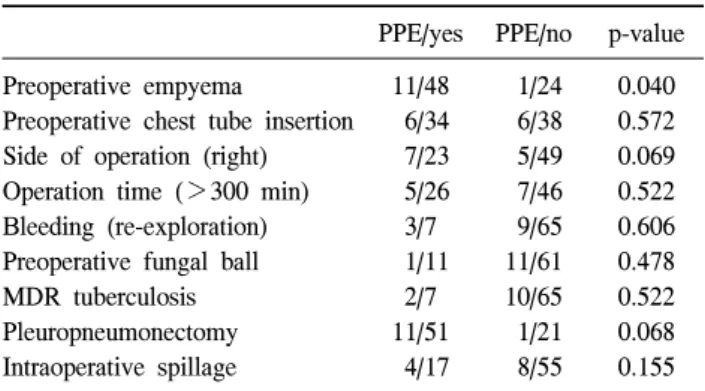
Table 3. Analysis of the risk factors for postpneumonectomy em- pyema

PPE/yes PPE/no p-value Preoperative empyema

Preoperative chest tube insertion Side of operation (right) Operation time (>300 min) Bleeding (re-exploration) Preoperative fungal ball MDR tuberculosis Pleuropneumonectomy Intraoperative spillage

11/48 6/34 7/23 5/26 3/7 1/11

2/7 11/51 4/17

1/24 6/38 5/49 7/46 9/65 11/61 10/65 1/21 8/55

0.040 0.572 0.069 0.522 0.606 0.478 0.522 0.068 0.155 PPE=postpneumonectomy empyema; MDR=multi drug resistance.

anti-tuberculous drugs preoperatively, and 9 patients were treated with second line anti-tuberculous medication for pul- monary tuberculosis.

The mean operation time was 282.6±88.2 minutes (range, 135 to 590 minutes). Twenty-four patients underwent right- side operation and 49 underwent left-side resection. The pre- operative mean FEV1 was 1.68±0.54 L/min (range, 0.66 to 3.50 L/min) and the mean PPO FEV1 was 1.43±0.39 L/min (range, 0.66 to 2.50 L/min) (Table 1). Intraoperative spillage took place in 17 patients during operation in 51 cases (33.3%).

There were 5 operative mortalities (6.8%). One patient had excessive bleeding due to a subclavian vessel injury and de- veloped ventricular fibrillation that could not be corrected.

One patient had intraoperative ventricular fibrillation and ex- pired due to arrhythmia during the postoperative course.

Postoperative pneumonia and subsequent respiratory failure occurred in 3 patients.

Among 72 patients, excluding one intraoperative death, a total of 29 patients (40.3%) suffered from postoperative com-

plications: 12 (16.7%) patients had PPE, 4 (5.6%) wound in- fections, 4 (5.6%) wound deheiscence, 7 (9.7%) postoperative bleeding requiring re-exploration, and 2 (2.8%) vocal cord palsy requiring arytenoid reduction. BPF was documented in 5 patients (6.9%) (Table 2).

PPE was the most common postoperative complication.

The prevalence of PPE increased in patients with preoperative empyema (p=0.04) (Table 3). Among 7 patients with PPE without BPF, 4 patients proceeded to undergo the Clagett procedure successfully and 3 patients were discharged with open-tube drainage. There were 5 patients with BPF and 4 occurred during right-side operation. The only risk factor for BPF was right-side operation (p=0.023).

Sixty-eight patients were followed for a median of 96.7

months (range, 6 to 353 months). The 5- and 10-year surviv-

al rates were 88.9% and 76.2%, respectively. The causes of

late death were pneumonia or respiratory failure in 8 and cor

pulmonale in 2. The causes of the remaining 5 late deaths

(4)

Fig. 1. Long-term survival curve of patients after pneumo- nectomy for pulmonary tuberculosis. (A) overall survival (B) sur- vival according to postoperative expected forced expiratory vol- ume in one second (FEV1) and (C) survival according to age.

could not be determined.

The risk factors for late death were old age (≥50 years, p=0.02) and low predicted postoperative FEV1 (<1.2 L, p=0.02) (Fig. 1).

DISCUSSION

The present study shows that the mortality rate after pneu- monectomy for pulmonary tuberculosis was acceptable con- sidering the difficulties with the surgical technique and pa- tients with poor health status. However, the postoperative complication rate (40.3%) was still high, the prevalence of PPE was higher in patients with preoperative empyema, and BPF was more common in right-side operation. Compared with the high complication rate, the long-term survival rate was found to be satisfactory.

Pneumonectomy for a benign inflammatory lung disease has been considered a high-risk procedure [2-4]. In particular, pneumonectomy for pulmonary tuberculosis is riskier than for other inflammatory disease [5,10-12]. There are three main reasons why the complication rate increases after pneumo- nectomy in patients with tuberculosis. First, tuberculosis com- monly occurs in individuals with poor general health status and the progression to destroyed lung worsens the general status of tuberculosis patients. Second, preoperative empyema is much more commonly associated with tuberculosis than with other underlying diseases of destroyed lung. Third, most patients with tuberculosis have an infected cavity in the pa- renchyma that attaches strictly to the upper part of the thora- cic wall, and it is sometimes impossible to separate it without perforation [5].

Although pneumonectomy for tuberculosis has been consid-

(5)

ered a high-risk procedure, there are situations when pneumo- nectomy or pleuropneumonectomy remains the only curative treatment modality. Those cases include destroyed lung, un- controlled hemoptysis, main bronchial stenosis, MDR strain, and significant symptoms such as productive cough, or repeti- tive hospitalization. Several authors have reported a 1.1−

8.5% operative mortality from pneumonectomy for inflamma- tory lung disease [2,6-9,13]. We experienced a 6.8% early mortality, which was not statistically significant compared with the mortality (4.5%) of pneumonectomy for lung cancer during the same period at our institution (p=0.841).

The major concerns among postoperative complications are PPE and BPF. The risk factors reported for these undesirable complications reported in the literature were the presence of preoperative empyema, aspergilloma, excessive blood loss, right-side operation, intraoperative spillage during operation, and re-exploration for hemorrhage [2,5,9,13]. The current study revealed that the presence of preoperative empyema was a risk factor for the development of PPE.

The presence of preoperative empyema has been considered an important risk factor for PPE [5]. Odell and Henderson [14] reported a PPE rate of 45.7% when pneumonectomy through an empyema was performed. On the other hand, Shiraishi et al. [13] recommended pleuropneumonectomy for the treatment of empyema with destroyed lung and reported operative mortality rates of 8.5% and PPE at 9.6% with this procedure. However, our data shows a high PPE rate of 21.6% in 51 pleuropneumonectomy patients. This result is thought to be due to an unrecognized intraoperative spillage due to the presence of preoperative empyema.

Due to the anatomical differences between the right and left main bronchi, destroyed lung occurs more frequently on the left side [15]. In this series, 49 out of 73 (67.1%) patients had left lung destruction. However, BPF followed by pneu- monectomy occured less frequently in left-side operations due to anatomical peculiarities. The right bronchial stump is more exposed in the pleural space and less likely to be naturally buttressed by mediastinal tissues than the left bronchial stump [16]. This study also showed that there were 5 patients with BPF and 4 of these BPF occurred during right-side operation with statistical significance (p=0.023).

Although there are a few papers that have reported long

term survival rates after pneumonectomy for chronic in- flammatory lung disease, the long-term survival rates in our series would seem to be satisfactory. Shiraishi et al. [13] re- ported a 5-year survival rate of 83% and Kim et al. [9] re- ported 5- and 10-year survival rates of 94% and 88%, respectively. The risk factors for late deaths were old age and low predicted postoperative FEV1. Postoperative FEV1 is known as a risk factor for early and long-term survival after pneumonectomy and predicted postoperative FEV1 is corre- lated with actual postoperative FEV1 [17,18]. This study re- vealed that low predicted postoperative FEV1 is the risk fac- tor for long-term survival after pneumonectomy for tuber- culosis and most patients died of pulmonary complications al- though some patients were lost to follow-up eventually. These results suggest that pulmonary complications related to im- paired pulmonary function may lead to late death. Therefore, continued surveillance should focus on prevention and early detection during the follow-up care of patients with low pre- dicted postoperative FEV1, even if there are no early complications.

There are some limitations to this study. First, the study was retrospective and conducted at a single center. Second, we could not follow-up with some patients completely be- cause we were short of regular surveillance 2 years after op- eration in the case of patients without postoperative compli- cations. Third, preoperative FEV1 does not reflect the accu- rate postoperative FEV1, so a patient's prognosis can be pre- dicted more reliably by measuring postoperative FEV1.

CONCULSION

Although postoperative empyema increases in patients with preoperative empyema and postoperative BPF increases in right-side operation, the mortality rates and long-term survival rates seem to be satisfactory. However, the follow-up care of patients with low postoperative predicted FEV1 should con- tinue for prevention and early detection of pulmonary compli- cations related to impaired pulmonary function.

REFERENCES

1. McLaughlin JS, Hankins JR. Current aspects of surgery for

(6)

pulmonary tuberculosis. Ann Thorac Surg 1974;17:513-25.

2. Massard G, Dabbagh A, Wihlm JM, et al. Pneumonectomy for chronic infection is a high-risk procedure. Ann Thorac Surg 1996;62:1033-7.

3. Massard G, Roeslin N, Wihlm JM, Dumont P, Witz JP, Morand G. Pleuropulmonary aspergilloma: clinical spectrum and results of surgical treatment. Ann Thorac Surg 1992;54:

1159-64.

4. Shirakusa T, Ueda H, Saito T, Matsuba K, Kouno J, Hirota N. Surgical treatment of pulmonary aspergilloma and Asper- gillus empyema. Ann Thorac Surg 1989;48:779-82.

5. Halezeroglu S, Keles M, Uysal A, et al. Factors affecting postoperative morbidity and mortality in destroyed lung.

Ann Thorac Surg 1997;64:1635-8.

6. Ashour M. Pneumonectomy for tuberculosis. Eur J Cardio- thorac Surg 1997;12:209-13.

7. Blyth DF. Pneumonectomy for inflammatory lung disease.

Eur J Cardiothorac Surg 2000;18:429-34.

8. Conlan AA, Lukanich JM, Shutz J, Hurwitz SS. Elective pneumonectomy for benign lung disease: modern-day mortal- ity and morbidity. J Thorac Cardiovasc Surg 1995;110(4 Pt 1):1118-24.

9. Kim YT, Kim HK, Sung SW, Kim JH. Long-term outcomes and risk factor analysis after pneumonectomy for active and sequela forms of pulmonary tuberculosis. Eur J Cardiothorac Surg 2003;23:833-9.

10. Stevens MS, de Villiers SJ, Stanton JJ, Steyn FJ. Pneumo-

nectomy for severe inflammatory lung disease. Results in 64 consecutive cases. Eur J Cardiothorac Surg 1988;2:82-6.

11. Pomerantz M, Madsen L, Goble M, Iseman M. Surgical management of resistant mycobacterial tuberculosis and oth- er mycobacterial pulmonary infections. Ann Thorac Surg 1991;52:1108-11.

12. Brown J, Pomerantz M. Extrapleural pneumonectomy for tuberculosis. Chest Surg Clin N Am 1995;5:289-96.

13. Shiraishi Y, Nakajima Y, Koyama A, Takasuna K, Katsuragi N, Yoshida S. Morbidity and mortality after 94 extrapleural pneumonectomies for empyema. Ann Thorac Surg 2000;70:

1202-6.

14. Odell JA, Henderson BJ. Pneumonectomy through an empy- ema. J Thorac Cardiovasc Surg 1985;89:423-7.

15. Ashour M. The anatomy of left bronchus syndrome. Clin Anat 1995;8:256-61.

16. Darling GE, Abdurahman A, Yi QL, et al. Risk of a right pneumonectomy: role of bronchopleural fistula. Ann Thorac Surg 2005;79:433-7.

17. Mineo TC, Schillaci O, Pompeo E, Mineo D, Simonetti G.

Usefulness of lung perfusion scintigraphy before lung cancer resection in patients with ventilatory obstruction. Ann Tho- rac Surg 2006;82:1828-34.

18. Leo F, Scanagatta P, Baglio P, et al. The risk of pneumo-

nectomy over the age of 70: a case-control study. Eur J

Cardiothorac Surg 2007;31:780-2.

수치

Table 3. Analysis of the risk factors for postpneumonectomy em- em-pyema
Fig. 1. Long-term survival curve of patients after pneumo- pneumo-nectomy for pulmonary tuberculosis

참조

관련 문서