introduction
Primary total joint arthroplasty is generally performed under general anesthesia (GA) or spinal anesthesia (SA). Historically, GA has been considered the gold standard for hip and knee arthroplasty. However, total hip and knee arthroplasty is now commonly performed under SA, especially for the elderly patient
with comorbidities1). The optimal anesthetic technique for hip and knee arthroplasty remains controversial.
Several studies have reported advantages of SA, such as de
creased blood loss and infection, need for transfusion, and thromboembolic events compared with GA25). In contrast, Moiniche et al.6) reported that regional anesthesia may not be advantageous. SA and epidural anesthesia may cause hypoten
sion, motor blockade, urinary retention and pruritus7). Lessire et al.8) reported a significant decrease in cardiac output in patients undergoing total hip arthroplasty under GA with epidural aug
mentation.
The purpose of this study was to compare perioperative room time and adverse events in thirty days following primary unilat
eral total knee arthroplasty (TKA) among patients who under
went the surgery under GA or SA.
The primary hypothesis of this study was that the incidence of adverse events and perioperative room time would not differ be
Comparison of ShortTerm Complications of General and Spinal Anesthesia for Primary Unilateral Total Knee Arthroplasty
Yong Bok Park, MD
1, Won Seok Chae, MD
2, Sin Hyung Park, MD
1, Ji Soo Yu, MD
1, Sun Geun Lee, MD
1, and Soo Jae Yim, MD
1Departments of 1Orthopedic Surgery and 2Anesthesiology and Pain Medicine, Soonchunhyang University Bucheon Hospital, Soonchunhyang University College of Medicine, Bucheon, Korea
purpose: To compare the occurrences of perioperative complications of two anesthetic techniques (general anesthesia [GA] and spinal anesthesia [SA]
in patients undergoing primary unilateral total knee arthroplasty (TKA).
Materials and Methods: Patients who underwent unilateral primary TKA due to osteoarthritis from January 2005 to January 2014 were retrospectively reviewed. They were divided into two groups: GA (n=490) and SA (n=746). The operation duration, length of perioperative stay in the operation room and occurrences of adverse events in postoperative 30 days (mean, 29.7±3.1 days) were compared. Before multivariate linear or logistic regression analysis, different baseline characteristics were adjusted in the statistical models.
results: There were significant intergroup differences in mean age (GA, 68.4±7.2 years; SA, 70.7±7.5 years; p<0.001) and mCCI (GA, 3±1.4; SA, 3.2±1.5; p<0.001). The GA group required longer preoperative room time (+9.4 minutes; p<0.001), postoperative room time (+12.7 minutes;
p<0.001), and postoperative hospital stay (+2.5 days; p=0.001) and had more surgical site infections (5 [1%] vs. 0 [0%]; p=0.005) and blood transfusion (205 [41.8%] vs. 262 [35.1%]; p=0.01). No differences in operative duration and other adverse events were identified.
conclusions: We should cautiously consider that GA may be associated with slightly increased preoperative and postoperative room times, postoperative hospital stay, transfusion and surgical site infection rates in primary unilateral TKA.
Keywords: Knee, arthroplasty, anesthesia, general, Spinal, complications pISSN 2234-0726 · eISSN 2234-2451
Knee Surgery & Related Research
Received January 27, 2016; Revised (1st) April 2, 2016;
(2nd) May 23, 2016; Accepted June 12, 2016 Correspondence to: Soo Jae Yim, MD
Department of Orthopedic Surgery, Soonchunhyang University Bucheon Hospital, 170 Jomaruro, Wonmigu, Bucheon 14584, Korea Tel: +82326215260, Fax: +82326215018
Email: [email protected]
96
This is an Open Access article distributed under the terms of the Creative Commons Attribution NonCommercial License (http://creativecommons.org/licenses/bync/4.0/) which permits unrestricted noncommercial use, distribution, and reproduction in any medium, provided the original work is properly cited.
Copyright © 2017 KOREAN KNEE SOCIETY www.jksrr.org
tween patients undergoing primary elective unilateral TKA using two types of anesthesia after adjustment for patient demograph
ics.
Materials and Methods
1. patient Selection and demographics
Patients who underwent primary TKA due to osteoarthritis from January 2005 to January 2014 in our institution were in
cluded and evaluated. Exclusion criteria were 1) any history of infection, fracture, or dislocation of the involved joint, 2) inflam
matory joint disease including rheumatoid arthritis, and 3) bi
lateral TKA. Most primary bilateral TKAs were performed with a 1 week interval between procedures on each side. Thus, the patients who underwent bilateral TKA were excluded to avoid statistical bias and interpretation error. The list of the patients was collected by the medical record team according to the recorded operation code. Orthopedic residents investigated the event of complications. The anesthetic record was made by the anesthesi
ologist himself or an anesthetic nurse.
A total of 1,581 patients were operated from January 2005 to January 2014. Of those, 1,236 patients were finally enrolled and divided into the GA group (n=490) and SA group (n=746).
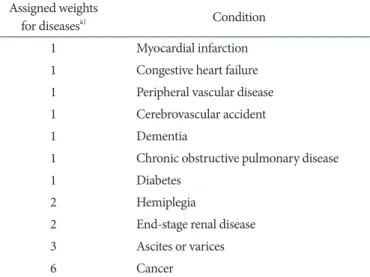
Patient demographics including age, sex, height, and weight were evaluated via medical records. The mean body mass index (BMI) was calculated. Based on the available comorbidity data in the medical records, a modified Charlson Comorbidity Index (mCCI)9) was generated. The mCCIs have been shown to be sim
ilar in efficacy to the original Charlson Comorbidity Index9,10). Underlying diseases were scored to calculate the mCCI, as fol
lows: 1 point for acute myocardial infraction, congestive heart failure, peripheral vascular disease, cerebrovascular accident, dementia, chronic obstructive pulmonary disease, and diabetes mellitus; 2 points for hemiplegia and endstage renal disease; 3 points for ascites or varices; and 6 points for cancer. One point was added for each decade after 40 years of age (Table 1).
2. anesthesia, Surgical techniques, and rehabilitation protocol
The decision to use GA or SA was at one senior anesthesiolo
gist’s discretion based on patient age, comorbidities, past medical history, and operative risk stratification. SA was not performed in patients with bleeding tendency, severe hypovolemia, increased intracranial pressure, severe aortic stenosis or mitral valve steno
sis, sepsis and the refusal of the anesthesia. In some cases (aortic stenosis or previous lumbosacral surgery), GA was preferred over
SA. If the patient did not have contraindicated conditions for SA, then the type of anesthesia was determined considering predicted complications, surgical schedule, and patient’s preference. Older patients with a greater number of comorbidities were more likely to receive SA.
For patients in the SA group, 8–12 mg of 0.5% hyperbaric bu
pivacaine was injected into the subarachnoid space at the L3–4 interspace in the lateral decubitus position. The hyperbaric bupi
vacaine dose was determined by height and weight. Intravenous sedation using propofol was performed in the SA group during the operation. It was also used for intubation in the GA group.
After intubation, GA was maintained with nitrous oxide in com
bination with oxygen, desflurane, and fentanyl. Rocuronium bro
mide was used as a muscle relaxant. The operative technique was not different in accordance with the anesthetic technique.
All operations were performed by one senior author. The press
fit condylar TKA (PFC; Mitek, Johnson & Johnson, Raynham, MA, USA) and Scorpio NRG (Stryker Inc., Mahwah, NJ, USA) were used. The medial parapatellar approach was used in all cases. Bone resection of the tibial plateau and distal femur was performed using a measured resection technique. Proximal tibial osteotomy was performed using an extramedullary alignment device along the longitudinal axis of the tibia. The proximal tibial posterior slope was fixed as 0 degree. A trial insert was applied to check varus/valgus instability, patellar tracking, and instru
mental liftoff. Instrumental liftoff due to a narrow flexion gap was managed by posterior cruciate ligament release or adding a
Table 1. Modified Charlson Comorbidity Scoring System Assigned weights
for diseasesa) Condition
1 Myocardial infarction
1 Congestive heart failure 1 Peripheral vascular disease
1 Cerebrovascular accident
1 Dementia
1 Chronic obstructive pulmonary disease
1 Diabetes
2 Hemiplegia
2 Endstage renal disease
3 Ascites or varices
6 Cancer
a)Assigned weights for each condition that a patient has. The total equals to scores. For each decade >40 years of age, a score of 1 is added to the above score.
posterior tibial slope. Patellar resurfacing was not performed in all cases.
Lowmolecularweight heparin was used beginning postopera
tive day 1 and stopped 7 days postoperatively. The straight leg elevation exercise was started on the day of operation. Continu
ous passive range of motion (ROM) exercise and partial weight bearing was allowed after removal of negative suction drainage (2 or 3 days postoperatively). Full weight bearing was started 7 days postoperatively.
3. operation duration and length of perioperative Stay in the operation room
Operation duration and perioperative and postoperative stay were assessed using anesthetic records. Preoperative stay was defined as the time between arrival of patients into the operation room and the start of an incision. The operation duration was defined as the time between the first incision and wound closure.
Postoperative stay was defined as the time between completion of wound closure and transfer of patients from the operation room.
All SA was performed in the operation room. Hospital stay was defined as the number of days from admission to discharge.
4. adverse events
Patients with no complications were discharged 2 weeks post
operatively. Postoperative followup was performed 3 and 4 weeks postoperatively. All adverse events up to 4 postoperative weeks were analyzed. Mean followup period for perioperative complication analysis was 29.7±3.1 days. The followup rate until thirty postoperative days was 99.3%. Major complications were classified as follows: death, ventilator use for >48 hours, un
planned intubation, stroke or cerebrovascular accident, thrombo
embolic event, surgical site infection (SSI) , sepsis or septic shock, cardiac arrest, myocardial infarction, acute renal failure, return to the operating room, wound dehiscence, prosthesis failure, and peripheral nerve injury. Minor complications were classified as follows: urinary tract infection, pneumonia, progressive renal in
sufficiency, readmission, transfer to intensive care unit, etc. (dys
uria, hematochezia, erosive gastritis, paroxysmal supraventricular tachycardia, and pulmonary congestion).
5. Statistical analysis
Preoperative demographics were compared between the two groups using independent ttests or MannWhitney Utests for continuous variables and chisquare tests or Fisher exact tests for categorical variables.
For comparison of perioperative room times, length of stay,
blood transfusion, and adverse events according to the type of anesthesia, a bivariate linear regression was performed. Multivar
iate linear or logistic regression analysis was performed for each outcome variable after adjustment for age and mCCI. Statistical analyses were performed using IBM SPSS ver. 24.0 (IBM Co., Ar
monk, NY, USA) with a confidence interval (CI) of 95%.
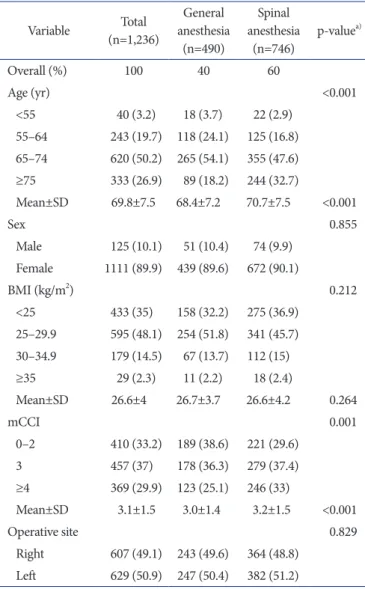
Table 2. Demographic Characteristics and Comorbidities of Patients Variable Total
(n=1,236)
General anesthesia
(n=490)
Spinal anesthesia
(n=746) pvaluea)
Overall (%) 100 40 60
Age (yr) <0.001
<55 40 (3.2) 18 (3.7) 22 (2.9) 55–64 243 (19.7) 118 (24.1) 125 (16.8) 65–74 620 (50.2) 265 (54.1) 355 (47.6) ≥75 333 (26.9) 89 (18.2) 244 (32.7)
Mean±SD 69.8±7.5 68.4±7.2 70.7±7.5 <0.001
Sex 0.855
Male 125 (10.1) 51 (10.4) 74 (9.9) Female 1111 (89.9) 439 (89.6) 672 (90.1)
BMI (kg/m2) 0.212
<25 433 (35) 158 (32.2) 275 (36.9) 25–29.9 595 (48.1) 254 (51.8) 341 (45.7) 30–34.9 179 (14.5) 67 (13.7) 112 (15)
≥35 29 (2.3) 11 (2.2) 18 (2.4)
Mean±SD 26.6±4 26.7±3.7 26.6±4.2 0.264
mCCI 0.001
0–2 410 (33.2) 189 (38.6) 221 (29.6)
3 457 (37) 178 (36.3) 279 (37.4)
≥4 369 (29.9) 123 (25.1) 246 (33)
Mean±SD 3.1±1.5 3.0±1.4 3.2±1.5 <0.001
Operative site 0.829
Right 607 (49.1) 243 (49.6) 364 (48.8) Left 629 (50.9) 247 (50.4) 382 (51.2) Values are presented as number (%).
SD: standard deviation, BMI: body mass index, mCCI: modified Charlson Comorbidity Index.
a)pvalues were derived from independent ttests or MannWhitney Utests for continuous variables and chisquare tests or Fisher exact tests for categorical variables.
results
1. patient demographics
Endotracheal GA was performed in 490 of 1,236 patients (mean age, 68.4±7.2 years [range, 45 to 89 years]; 51 males and 439 females), and SA was performed in 746 of 1,236 patients (mean age, 70.7±7.5 years [range, 46 to 92 years]; 74 males and 672 fe
males). There was a significant intergroup difference in the mean age (p<0.001), but not in sex distribution (p=0.855). There was a significant difference in the mCCI (3.0±1.4 in the GA group and 3.2±1.5 in the SA group; p<0.001). Mean BMI was not sig
nificantly different between the groups (p=0.264). There was no significant difference in the operative site (GA group: right, 243, left, 247; SA group: right, 364, left, 382; p=0.829) (Table 2).
2. operation duration and length of perioperative Stay in the operation room
On multivariate analysis, GA was associated with increased preoperative room time (+9.4 minutes [95% CI, +6.7 to +12.2];
p<0.001) and postoperative room time (+12.7 minutes [95%
CI, +10.4 to +15.1]; p<0.001). The operation duration was 112.1±21.6 minutes (range, 60 to 235 minutes) in the GA group and 111.4±15.4 minutes (range, 70 to 215 minutes) in the SA group. There was no significant difference in the multivariate analysis (p=0.717). Postoperative hospital stay was significantly longer in the GA group than in the SA group (+2.5 days in the GA group [95% CI, +1.1 to +3.9]; p=0.001) (Table 3).
3. adverse events
On multivariate analysis, the incidence of blood transfusion was significantly increased in the GA group (205, 41.8%) than in the SA group (262, 35.1%) (odds ratio [OR], 1.077 [95% CI, 1.018 to 1.138]; p=0.01). The GA group exhibited a higher incidence
of SSI (5 [1%] vs. 0 [0%]) (OR, 1.010 [95% CI, 1.018 to 1.138];
p=0.005).
The incidences of other adverse events (death, ventilator use for more than 48 hours, unplanned intubation, stroke or cerebro
vascular accident, thromboembolic event, sepsis or septic shock, cardiac arrest, myocardial infarction, acute renal failure, return to the operating room, wound dehiscence, prosthesis failure, peripheral nerve injury, urinary tract infection, pneumonia, pro
gressive renal insufficiency, readmission, and transfer to intensive care unit) did not differ between the two groups (Table 4).
discussion
The purpose of this study was to compare perioperative room times, adverse events in thirty days following primary unilateral TKA performed using either GA or SA. The principal finding of our study was that GA was associated with increased preopera
tive and postoperative room times, postoperative hospital stay, SSI rate, and requirement for blood transfusion.
The type of anesthesia is an important issue for better outcomes of surgery. Several studies have reported benefits of SA, including reduction in thromboembolic events, blood transfusion, and the potential for use in postoperative pain management2,11,12). How
ever, disadvantages of SA in terms of hemodynamic compromise have also been reported6,7). In addition, concerns over the use of SA include the potential for delayed operation start due to technical difficulties, procedure failure, and less optimal muscle relaxation, which makes surgical site exposure and adequate placement of the prosthesis more difficult.
The postoperative room time following GA is dependent on the recovery of spontaneous respiration and muscle relaxation.
In contrast, this is not necessary in SA. Thus, postoperative room time following GA is usually longer than that following
Table 3. Operating Room Time and Length of Stay According to Type of Anesthesia Variable General anesthesia
(n=490) Spinal anesthesia (n=746)
Bivariate linear regression Multivariate linear regressiona) Betab) (95% CI) pvalue Betab) (95% CI) pvalue Preop room time (min) 65.4±32.2 56.4±16.1 9.01 (6.29 to 11.73) <0.001 9.42 (6.67 to 12.17) <0.001 Operative time (min) 112.1±21.6 111.4±15.4 0.71 (–1.36 to 2.78) 0.499 –0.38 (–2.44 to 1.68) 0.717 Postop room time (min) 56.1±21.7 43.9±19.6 12.23 (9.9 to 14.57) <0.001 12.74 (10.39 to 15.1) <0.001 Postop length of
hospitalization (day) 27.4±14.1 25.6±11.3 1.84 (0.41 to 3.26) 0.012 2.49 (1.07 to 3.91) 0.001 Values are presented as mean±standard deviation.
CI: confidence interval, Preop: preoperative, Postop: postoperative.
a)Multivariate linear regression analysis was performed for each outcome variable adjusted for age and modified Charlson Comorbidity Index.
b)Unstandardized beta coefficient represents unit change in the outcome variable of general anesthesia compared to that of spinal anesthesia.
SA. However, the preoperative room time in the GA group was significantly longer than that in the SA group in this study. In the GA group, the elderly patients, especially those who had severe comorbidity, necessitated careful dosage calculation and longer induction time to prevent hemodynamic fluctuation and a sud
den decrease of cardiac output13,14). In our institution, there is a trend of using more monitoring devices and longer induction time for geriatric patients who undergo GA; however, this is sub
ject to the anesthesiologist’s judgement in general and thus our
findings might not be applicable to the other hospitals.
Our findings suggested no difference in the operation time be
tween the two groups. The type of anesthesia used had a minimal effect on the TKA procedure.
GA was associated with the longer postoperative hospital stay.
This may because if a patient had a postoperative complication, discharge was delayed due to the need of intensive pain control or more rehabilitation. Detailed causes of delayed discharge could not be clearly compared between the two groups because most of Table 4. Postoperative Adverse Events According to Type of Anesthesia
Variable General anesthesia
(n=490) Spinal anesthesia (n=746)
Bivariate linear regression Multivariate linear regressiona) ORb) (95% CI) pvalue ORb) (95% CI) pvalue Any adverse event 221 (45.1) 280 (37.5) 1.367 (1.085 to 1.724) 0.008 1.092 (1.032 to 1.155) 0.002 Any severe adverse event 14 (2.9) 14 (1.9) 1.538 (0.721 to 3.282) 0.261 1.015 (0.998 to 1.032) 0.089
Death 1 (0.2) 1 (0.1) 1.524 (0.060 to 38.587) 0.766 1.001 (0.997 to 1.006) 0.605
Ventilator use for more than
48 hours 2 (0.4) 1 (0.1) 3.053 (0.292 to 65.807) 0.363 1.004 (0.998 to 1.009) 0.211
Unplanned intubation 2 (0.4) 1 (0.1) 3.053 (0.292 to 65.807) 0.363 1.004 (0.998 to 1.009) 0.211 Stroke or cerebrovascular
accident 0 (0) 1 (0.1) N/A 0.999 (0.996 to 1.002) 0.515
Thromboembolic event 1 (0.2) 4 (0.5) 0.379 (0.019 to 2.574) 0.387 0.998 (0.991 to 1.005) 0.589
Surgical site infection 5 (1) 0 (0) N/A 1.010 (1.003 to 1.018) 0.005
Sepsis or septic shock 0 (0) 0 (0) N/A
Cardiac arrest 1 (0.2) 1 (0.1) 1.524 (0.060 to 38.587) 0.766 1.001 (0.997 to 1.006) 0.605
Myocardial infarction 1 (0.2) 1 (0.1) 1.524 (0.060 to 38.587) 0.766 1.001 (0.996 to 1.006) 0.696 Acute renal failure 1 (0.2) 4 (0.5) 0.379 (0.019 to 2.574) 0.387 0.998 (0.991 to 1.005) 0.564
Return to the operating room 1 (0.2) 0 (0) N/A 1.002 (0.999 to 1.006) 0.177
Wound dehiscence 5 (1) 3 (0.4) 2.553 (0.624 to 12.494) 0.201 1.007 (0.997 to 1.016) 0.157
Prosthesis failure 1 (0.2) 1 (0.1) 1.524 (0.060 to 38.587) 0.766 1.001 (0.997 to 1.006) 0.605 Peripheral nerve injury 1 (0.2) 1 (0.1) 1.524 (0.060 to 38.587) 0.766 1.001 (0.996 to 1.006) 0.655 Any minor adverse event 218 (44.5) 280 (37.5) 1.334 (1.058 to 1.682) 0.015 1.085 (1.025 to 1.148) 0.005 Blood transfusion 205 (41.8) 262 (35.1) 1.329 (1.051 to 1.679) 0.017 1.077 (1.018 to 1.138) 0.01 Urinary tract infection 1 (0.2) 3 (0.4) 0.506 (0.025 to 3.969) 0.556 0.998 (0.992 to 1.005) 0.58
Pneumonia 3 (0.6) 4 (0.5) 1.143 (0.224 to 5.205) 0.862 1.003 (0.994 to 1.011) 0.56
Progressive renal insufficiency 1 (0.2) 1 (0.1) 1.524 (0.06 to 38.587) 0.766 1.000 (0.996 to 1.005) 0.875
Readmission 4 (0.8) 4 (0.5) 1.527 (0.359 to 6.484) 0.551 1.003 (0.994 to 1.013) 0.475
Transfer to intensive care unit 6 (1.2) 6 (0.8) 1.529 (0.476 to 4.914) 0.464 1.007 (0.996 to 1.018) 0.232 Etc. (dysuria, acute
gastroenteritis, paroxysmal supraventricular tachycardia, and pulmonary congestion)
14 (2.9) 15 (2) 1.433 (0.678 to 3.011) 0.339 1.015 (0.997 to 1.032) 0.098
Values are presented as frequency (%).
OR: odds ratio, CI: confidence interval, N/A: not available.
a)Multivariate logistic regression analysis was performed for each adverse event adjusted for age and modified Charlson Comorbidity Index.
b)Odds ratio represents the odds that each adverse event will occur in the general anesthesia group compared to that in the spinal anesthesia group.
early postoperative clinical outcomes including ROM and pain visual analog scale (VAS) score were not available on the medical records, which is one of the limitations of this study.
The SSI rate was significantly high in the GA group. Some stud
ies associated total hip or knee replacement under GA with a higher risk of SSI compared with epidural anesthesia or SA15,16). Although correlation between GA and the risk of SSI has not been established, several studies have demonstrated higher inci
dences of SSI after GA. GA results in a higher level of stress re
sponses because it does not completely block afferent inputs and autonomic responses17). Moreover, vasoconstriction under GA impairs tissue perfusion and decreases tissue oxygen tension18). Volatile anesthetics and opioids impair neutrophil, macrophage, dendritic cell, Tcell, and natural killer cell functions, and thus diminish host defenses19). In contrast, epidural anesthesia or SA provides a sympathetic blockade, and greater vasodilatation could result in improved tissue oxygenation20,21), increased num
bers of polymorphonuclear cells at surgical sites22), and better maintenance of regional normothermia23).
Deep vein thrombosis (DVT) and pulmonary embolism (PE) remain potentially catastrophic complications of total joint arthroplasty. Regional anesthesia has been reported to protect against DVT and PE in patients undergoing total joint arthro
plasty24,25). However, no such tendency was evident in this study.
The number of cases was small and serious results were not noted. However, the interpretation of our results was limited by the retrospective study design where we did not evaluate asymp
tomatic DVT and PE prospectively. Despite such limitations, it is interesting that the prevalence of symptomatic DVT and PE was not significantly different between the two groups.
Regional anesthesia reduces the need for blood transfusion in total joint arthroplasty3,26,27). However, several studies reported discrepant results12,28,29). In total hip arthroplasty, Modig and Karl
strom30) reported that the use of epidural anesthesia, compared with GA, resulted in a preganglionic sympathetic blockade that has several beneficial effects: redistribution of blood flow away from muscle and bone to skin and subcutaneous tissues; reduc
tion in mean arterial pressure, pulmonary arterial pressure, right atrial pressure and peripheral venous pressure; and peripheral dilatation of the arteries and veins of the extremity, resulting in less bleeding and easier attainment of hemostasis. Although TKA was generally performed under tourniquet control and most bleeding occurred after surgery, GA was associated with an increased requirement for blood transfusion in this study. The difference between the two groups might be due to postoperative bleeding during the period of remaining anesthetic effect after
surgery.
This study has several limitations. First, this study involved a retrospective analysis of medical records. The decisions between GA and SA were based on the anesthesiologists’ judgment ac
cording to patient’s age and comorbidities. However, there might be more concerned variables such as patient characteristics, and surgical schedule. However, assuming that they could not be controlled in the real clinical situations, we treated their effects as random errors. We thought that the observed sample size was sufficiently large to cover the random errors. Although we adjusted the significantly different baseline characteristics in the statistical models to figure out the true difference in postopera
tive outcomes between the two groups, the interpretation has limitations due to the retrospective design. Second, data collec
tion of complications was limited to thirty days after surgery. As some complications such as PE and DVT could occur after thirty postoperative days, we could not compare the long term differ
ences of the two anesthetic techniques. Third, data that represent shortterm clinical outcomes (pain VAS score and ROM) were not available on the medical records. Thus, shortterm clinical outcomes could not be compared. Fourth, the differences in ad
verse events to thirty postoperative days between the two groups were very small: with less than 1% difference, we could not ascer
tain its clinical significance.
conclusions
We should cautiously consider that GA may be associated with slightly increased preoperative and postoperative room times, postoperative hospital stay, transfusion and SSI rates in patients undergoing primary unilateral TKA.
conflict of interest
No potential conflict of interest relevant to this article was re
ported.
references
1. Indelli PF, Grant SA, Nielsen K, Vail TP. Regional anesthesia in hip surgery. Clin Orthop Relat Res. 2005;441:2505.
2. Modig J, Borg T, Karlstrom G, Maripuu E, Sahlstedt B.
Thromboembolism after total hip replacement: role of epi
dural and general anesthesia. Anesth Analg. 1983;62:17480.
3. Rashiq S, Finegan BA. The effect of spinal anesthesia on blood transfusion rate in total joint arthroplasty. Can J Surg.
2006;49:3916.
4. Davis FM, Laurenson VG, Gillespie WJ, Wells JE, Foate J, Newman E. Deep vein thrombosis after total hip replace
ment: a comparison between spinal and general anaesthesia.
J Bone Joint Surg Br. 1989;71:1815.
5. Pugely AJ, Martin CT, Gao Y, MendozaLattes S, Callaghan JJ. Differences in shortterm complications between spinal and general anesthesia for primary total knee arthroplasty. J Bone Joint Surg Am. 2013;95:1939.
6. Moiniche S, Hjortso NC, Hansen BL, Dahl JB, Rosenberg J, Gebuhr P, Kehlet H. The effect of balanced analgesia on early convalescence after major orthopaedic surgery. Acta Anaesthesiol Scand. 1994;38:32835.
7. Gedney JA, Liu EH. Sideeffects of epidural infusions of opi
oid bupivacaine mixtures. Anaesthesia. 1998;53:114855.
8. Lessire H, Pfisterer M, SchweppeHartenauer ML, Puchstein C. Hemodynamic effects of a combination of general and peridural anesthesia during anesthesia induction in geriatric patients. Anaesthesist. 1991;40:3759.
9. Sundararajan V, Henderson T, Perry C, Muggivan A, Quan H, Ghali WA. New ICD10 version of the Charlson comor
bidity index predicted inhospital mortality. J Clin Epide
miol. 2004;57:128894.
10. Charlson ME, Pompei P, Ales KL, MacKenzie CR. A new method of classifying prognostic comorbidity in longitu
dinal studies: development and validation. J Chronic Dis.
1987;40:37383.
11. Sharrock NE, Haas SB, Hargett MJ, Urquhart B, Insall JN, Scuderi G. Effects of epidural anesthesia on the incidence of deepvein thrombosis after total knee arthroplasty. J Bone Joint Surg Am. 1991;73:5026.
12. Jorgensen LN, Rasmussen LS, Nielsen PT, Leffers A, Al
brechtBeste E. Antithrombotic efficacy of continuous extra
dural analgesia after knee replacement. Br J Anaesth. 1991;
66:812.
13. Hosseinzadeh H, Eidy M, Golzari SE, Vasebi M. Hemody
namic stability during induction of anesthesia in elderlypa
tients: propofol + ketamine versus propofol + etomidate. J Cardiovasc Thorac Res. 2013;5:514.
14. Kanonidou Z, Karystianou G. Anesthesia for the elderly.
Hippokratia. 2007;11:1757.
15. Kopp SL, Berbari EF, Osmon DR, Schroeder DR, Hebl JR, Horlocker TT, Hanssen AD. The impact of anesthetic man
agement on surgical site infections in patients undergoing total knee or total hip arthroplasty. Anesth Analg. 2015;121:
121521.
16. Chang CC, Lin HC, Lin HW, Lin HC. Anesthetic manage
ment and surgical site infections in total hip or knee replace
ment: a populationbased study. Anesthesiology. 2010;113:
27984.
17. Nishiyama T, Yamashita K, Yokoyama T. Stress hormone changes in general anesthesia of long duration: isoflurane
nitrous oxide vs sevofluranenitrous oxide anesthesia. J Clin Anesth. 2005;17:58691.
18. Buggy D. Can anaesthetic management influence surgical
wound healing? Lancet. 2000;356:3557.
19. Sacerdote P, Bianchi M, Gaspani L, Manfredi B, Maucione A, Terno G, Ammatuna M, Panerai AE. The effects of tramadol and morphine on immune responses and pain after surgery in cancer patients. Anesth Analg. 2000;90:14114.
20. Treschan TA, Taguchi A, Ali SZ, Sharma N, Kabon B, Sessler DI, Kurz A. The effects of epidural and general anesthesia on tissue oxygenation. Anesth Analg. 2003;96:15537.
21. Kabon B, Fleischmann E, Treschan T, Taguchi A, Kapral S, Kurz A. Thoracic epidural anesthesia increases tissue oxy
genation during major abdominal surgery. Anesth Analg.
2003;97:18127.
22. Mauermann WJ, Nemergut EC. The anesthesiologist’s role in the prevention of surgical site infections. Anesthesiology.
2006;105:41321.
23. Kurz A, Sessler DI, Lenhardt R. Perioperative normothermia to reduce the incidence of surgicalwound infection and shorten hospitalization: study of Wound Infection and Tem
perature Group. N Engl J Med. 1996;334:120915.
24. Kim KI, Cho KY, Jin W, Khurana SS, Bae DK. Recent Ko
rean perspective of deep vein thrombosis after total knee arthroplasty. J Arthroplasty. 2011;26:11126.
25. Silbersack Y, Taute BM, Hein W, Podhaisky H. Prevention of deepvein thrombosis after total hip and knee replacement:
lowmolecularweight heparin in combination with inter
mittent pneumatic compression. J Bone Joint Surg Br. 2004;
86:80912.
26. Hu S, Zhang ZY, Hua YQ, Li J, Cai ZD. A comparison of regional and general anaesthesia for total replacement of the hip or knee: a metaanalysis. J Bone Joint Surg Br. 2009;91:
93542.
27. Maurer SG, Chen AL, Hiebert R, Pereira GC, Di Cesare PE.
Comparison of outcomes of using spinal versus general an
esthesia in total hip arthroplasty. Am J Orthop (Belle Mead NJ). 2007;36:E1016.
28. Nielson WR, Gelb AW, Casey JE, Penny FJ, Merchant RN, Manninen PH. Longterm cognitive and social sequelae of
general versus regional anesthesia during arthroplasty in the elderly. Anesthesiology. 1990;73:11039.
29. Kohro S, Yamakage M, Arakawa J, Kotaki M, Omote T, Namiki A. Surgical/tourniquet pain accelerates blood coagu
lability but not fibrinolysis. Br J Anaesth. 1998;80:4603.
30. Modig J, Karlstrom G. Intra and postoperative blood loss and haemodynamics in total hip replacement when per
formed under lumbar epidural versus general anaesthesia.
Eur J Anaesthesiol. 1987;4:34555.