http://dx.doi.org/10.12750/JET.2016.31.4.355
Evaluation of Antifreeze Proteins on Miniature Pig Sperm Viability, DNA Damage, and Acrosome Status during Cryopreservation
Daeyoung Kim
Department of Life Science, College of Bio-Nano Technology, Gachon University, 1342 Seongnamdaero, Sujung-gu, Seongnam 13120 Republic of Korea
ABSTRACT
The cryopreservation of sperm has become the subject of research for successful artificial insemination technologies.
Antifreeze proteins (AFPs), one of the factors necessary for effective cryopreservation, are derived from certain Antarctic organisms. These proteins decrease the freezing point of water within these organisms to below the temperature of the surrounding seawater to protect the organism from cold shock. Accordingly, a recent study found that AFPs can increase the motility and viability of spermatozoa during cryopreservation.
To evaluate this relationship, we performed cryopreservation of boar sperm with AFPs produced in the Arctic yeast Leucosporidium sp. AFP expression system at four concentrations (0, 0.01, 0.1, and 1 µg/ml) and evaluated motility using computer assisted sperm analysis. DNA damage to boar spermatozoa was measured by the comet assay, and sperm membrane integrity and acrosome integrity were evaluated by flow cytometry. The results showed that motility was positively affected by the addition of AFP at each concentration except 1 µg/ml (p<0.001).
Although cryopreservation with AFP decreased the viability of the boar sperm using, the tail DNA analyses showed that there was no significant difference between the control and the addition of 0.1 or 0.01 μg/ml AFP. In addition, the percentage of live sperm with intact acrosomes showed the least significant difference between the control and 0.1 μg/ml AFP (p<0.05), but increased with 1 μg/ml AFP (p<0.001). Our results indicate that the addition of AFP during boar sperm cryopreservation can improve viability and acrosome integrity after thawing.
(Key words: Antifreeze protein, Miniature Pig Sperm, Cryopreservation, DNA integrity)
* Correspondence: Daeyoung Kim Tel: +82-31-750-4761
E-mail: [email protected]
INTRODUCTION
Spermatozoal function needs to be preserved through effective storage for successful artificial insemination (AI) and in vitro fertilisation (Medeiros et al., 2002). The most widely used storage method is cryopreservation; however, this method presents potentially damaging stresses, such as cold, osmotic, and toxic shocks (Watson, 2000), stresses that cause the production of reactive oxygen species, inducing DNA damage (Aitken et al., 1998; Donnelly et al., 1999; Perez-Cerezales et al., 2009; Villani et al., 2010). Because studies have shown that DNA damage occurs during cryopreservation, scientists have made efforts to solve this problem (Boe-Hansen et al., 2005;
Cabrita et al., 2005; Fraser and Strzezek, 2007; Perez-Cerezales et al., 2010). The low temperatures at which sperm is preserved induce the formation of sharp ice crystals, which can fatally damage the sperm cell cytoplasm, cytoskeleton, and genome
structure (Isachenko et al., 2003). Accordingly, preventing ice crystallisation could help maintain sperm integrity, and regulating the freezing rate and including cryoprotectants could minimize such damage (Johnson et al., 2000).
Antifreeze proteins (AFPs), which are derived from the body fluids of certain Antarctic organisms, have a high affinity for ice crystals (Park et al., 2012). AFPs prevent the growth of the ice crystals, even in subzero temperatures, by binding to the ice through hydrogen bonds (Davies et al., 2002;
DeLuca et al., 1998), and organisms expressing AFPs exhibit cold tolerance and can survive at very low temperatures (Bayer-Giraldi et al., 2011; Lee et al., 2012). Thus, the application of such molecules as sperm cryoprotectants could help to maintain spermatozoal survival and function after thawing; indeed, previous studies demonstrated the effects of AFPs in sperm cryopreservation. For instance, the inclusion of low concentrations of AFPs during bull sperm cryopreservation
improved the post-thaw viability, osmotic resistance, and acrosome integrity relative to the control (Prathalingam et al., 2006). AFP cryoprotectants improve sperm quality in vertebrate spermatozoa and in primordial germ cells: zebra fish primordial germ cell cryopreservation shows that small amounts of AFPs could enhance post thaw viability and DNA integrity (Riesco et al., 2012).
The DNA damage and reductions in cell viability, osmotic resistance, and acrosome integrity induced by freezing stress subsequently cause reductions in fertility (Aitken et al., 1998).
Single cell gel electrophoresis (neutral comet assay), a common way to test sperm DNA integrity, detects DNA breakages by separating DNA fragments from undamaged DNA, generating the shape of a tail and head of a comet, respectively (Singh et al., 1988); the length of the comet tail indicates the extent of DNA damage within the cell. A previous study found that freezing resulted in increased DNA in boar sperm in comparison to fresh sperm (Fraser and Strzezek, 2005).
Recently, SYBR-14 and propidium iodide (PI) have been used as viability probes for mammalian sperm (Foster et al., 2011; Klimowicz-Bodys et al., 2012; Niu et al., 2011). Garner et al. discovered that this simple staining protocol was useful to determine the viability of spermatozoa by flow cytometry (Garner and Johnson, 1995). The unlabeled (PI- SYBR-) spermatazoa were considered debris because the expression indicated that these cells did not contain DNA, whereas the spermatozoa stained with SYBR14 but not PI (PI- SYBR+) were considered viable because the expression indicated that the plasma membrane was intact. The PI+ SYBR- spermatozoa were considered dead, and the PI+ SYBR+ spermatozoa were considered to be dying (Partyka et al., 2010).
The acrosomal status has been evaluated using florescent probes that recognise the targets inside the acrosome, thus labelling sperm with damaged or reacted acrosomes (Martinez-Pastor et al., 2010). Fluorescein isothiocyanate- conjugated pea (Pisum sativum) agglutinin (FITC-PSA), which binds to the glucosidic residues of the acrosomal membrane, has been used in studies of various species (Bencharif et al., 2012; Nagy et al., 2003; Nur et al., 2010; Orgal et al., 2012).
In contrast, there have been no previous studies about the effect of AFPs on the post-thaw DNA and membrane integrity of boar sperm. Thus, to improve the cryopreservation protocols for sperm, we examined the effect of AFPs on sperm viability
and DNA damage after a freeze thaw cycle.
MATERIALS and METHODS
Ejaculate collection and processing
Ejaculates were collected from miniature pigs in Kangwon National University (aged 8 years). After ejaculation, the semen was diluted with modified Modena B extender (mMB, 6 g glucose, 0.45 g EDTA, 1.38 g sodium citrate, 0.2 g sodium bicarbonate, 1 g Tris base, 0.5 g citric acid, 0.01 g cysteine, 0.8 g BSA, and 0.06 g kanamycin sulfate; pH 7).
The diluted semen was packed and delivered to the laboratory in Incheon at 17°C for 3 hrs.
Preparation of AFPs
AFP (24.9 kDa, Korea Polar Research Institute) was produced using a Leucosporidium sp. expression system.
Recombinant LeIBP (Leucosporidium ice-binding protein) was produced using a Pichia expression system, and purified as described in a previous study (Park et al., 2012). Briefly, the codon-optimised mature LeIBP gene was synthesised and cloned into the pPICZαA expression vector (Invitrogen, USA).
The plasmid was transformed into P. pastoris strain X33(Invitrogen Co., CA, USA), and the recombinant cells were incubated in 24 ml of BMGY (Buffered Glycerol- complex Medium, 1% yeast extract, 2% peptone, 100 mM potassium phosphate, pH 6.0, 1.34% YNB, 4 × 10⁻⁵% biotin and 0.5% methanol) medium at 28°C for 48 hrs and 5 ml methanol was added daily to induce the expression of recombinant LeIBP. The eluted LeIBP was further purified using a Superdex 200 size-exclusion column (Thermo Fisher Co., USA). The purified LeIBP fractions, according to SDS-PAGE and Western blot analyses, were pooled. UV spectrophotometry was used for determining the concentration of LeIBP at an extinction coefficient of 26,930 M−1 cm−1 at 280 nm
Boar sperm cryopreservation
The semen diluted with mMB extender was centrifuged at 400 × g for 10 min at 17°C; for the analyses, the samples were washed 3 times with mMB extender to isolate the spermatozoa. The supernatant was discarded and the pellet was
diluted in lactose-egg yolk solution (LEY extender). The purified sperm pellet was suspended in cooling extender (LEY solution: 80% v/v lactose solution [310 mM] and 20% v/v egg yolk with 100 μg/ml kanamycin sulfate) at a density of approximately 1.5 × 10⁹ sperm/ml. The sperm suspensions was subjected to a gradual cooling stage of 1°C every 5 min in ice water. Freezing extender (LEYGO solution: 89.5% v/v LEY extender; 9% v/v glycerol; 1.5% v/v Orvus ES Paste [OEP];
100 mM trehalose; and 0, 0.01, 0.1, or 1 μg/ml AFP [KOPRI, Incheon, Korea]) was added to the suspensions when a temperature of 5°C had been reached. The sperm suspensions were loaded into 0.25 ml straws and stored in liquid nitrogen.
Sperm evaluation Post-thaw sperm motility
The sperm motility was evaluated using a computer-assisted sperm analysis (CASA) system (Hamilton Thorne, Inc., Beverly, MA, USA). The cryopreserved sperm samples were incubated in a 50°C water bath for 20 sec, and the thawed sperm was transferred to 15 ml tubes and diluted with 10 ml mMB extender pre-warmed to 37°C. After dilution, the sperm cells were centrifuged at 300 × g for 5 min at room temperature. The sperm concentrations were adjusted to 5 × 10⁷ sperm/ml with mMB. For analysis, 3 μl of the sperm sample was placed in a counting chamber (20μm deep) and observed using a microscope; at least 10 predetermined fields were analysed. The CASA evaluation yielded the path velocity (VAP), velocity of straight-line motion (VSL), track speed (VCL), and lateral amplitude of the sperm.
Post-thaw sperm DNA integrity
The cryopreserved sperm samples were thawed and washed three times, similar to the procedure for the CASA. The diluted sperm cells were incubated with a 2%
1-mercaptoethanol solution for 2 hr at 4°C, centrifuged (400 × g, 5 min), and resuspended in 500 μl Ca2+- and Mg2+-free phosphate buffered saline. The sperm samples (10 μl) were mixed with 50 μl 0.7% low-melting agarose (Bio Rad, Berkeley, CA, USA), and 50 µl of the sperm agarose mixture was coated onto a prepared comet slide (Trevigen, Maryland,
USA). The slides were incubated at 4°C with CometAssay lysis solution (Trevigen) in a Coplin jar. After a 2 hr incubation, an RNase and proteinase treatment (2.5 M NaCl, 5 mM Tris, and 0.05% SLS, pH 7.5 with 20 μg/ml RNase A and 1 mg/ml proteinase K) was performed for 4 h to remove the RNA and proteins. After draining off the treatment solution, the slides were placed in a Coplin jar with 33 ml alkaline solution (0.6 g NaOH and 250 μl 200 mM EDTA; pH 13) in the dark for 30 min at room temperature. The slides were placed in an electrophoresis tray filled with electrophoresis solution (10.8 g Tris base, 0.93 g EDTA, and 5.5 g boric acid; 1000 ml). Electrophoresis was performed for 1 hr at 12 V and 300 mA, following which, slides were placed in distilled water for 20 min and 70% ethanol for 5 min and then stained with SYBR Green fluorescent dye and incubated in the dark for 5 minutes at 4°C. Each sperm comet shape was imaged using a fluorescent microscope, and each image was analysed by a comet analysing program (COMETSCORE, TriTek, Sumerduck, Virginia, USA).
Plasma membrane integrity of boar sperm
To stain the sperm with SYBR14 and PI (LIVE/DEAD Sperm Viability Kit, Invitrogen, Eugene, OR, USA), the samples were first diluted with BTS extender to a concentration 1 × 10⁶ spermatozoa/ml. Aliquots of 500 μl were mixed with SYBR14 and PI at final concentrations of 100 nM and 12 μM, respectively, prior to the flow cytometric analysis, which was performed using an FC 500 series cytometer (Beckman Coulter, Inc., Miami, FL, USA). The flow cytometric data were analysed using the CXP program (Beckman Coulter, Inc.).
Acrosome integrity of boar sperm
The sperm acrosome integrity was assessed using a fluorescein isothiocyanate (FITC-PNA; Lectin from Arachis hypogaea, Sigma-Aldrich, St. Louis, MO, USA)/ PI fluorescent staining technique (Nagy et al., 2003). Aliquots of 500 μl of the post-thaw sperm samples (1 × 10⁶/ml spermatozoa) were mixed with 10 μl of FITC-PNA (50 μg/ml) and PI (12 μM) working solution and the mixture was incubated at 37°C for 5 min before flow cytometric analysis.
Statistical analysis
The data were processed using the R statistical program (R
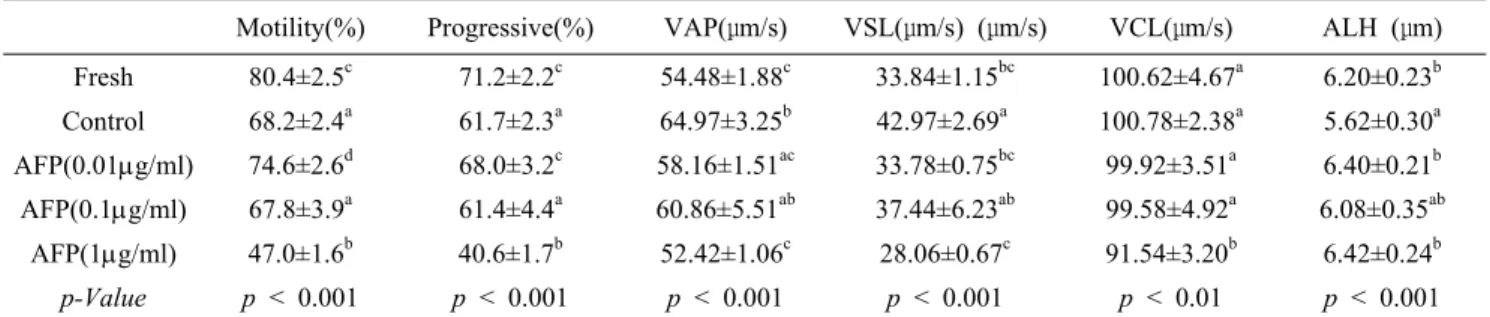
Table 1. Mean values of the sperm quality analysis of boar sperm cryopreservation added AFP
Motility(%) Progressive(%) VAP(μm/s) VSL(μm/s) (μm/s) VCL(μm/s) ALH (μm)
Fresh 80.4±2.5c 71.2±2.2c 54.48±1.88c 33.84±1.15bc 100.62±4.67a 6.20±0.23b
Control 68.2±2.4a 61.7±2.3a 64.97±3.25b 42.97±2.69a 100.78±2.38a 5.62±0.30a
AFP(0.01g/ml) 74.6±2.6d 68.0±3.2c 58.16±1.51ac 33.78±0.75bc 99.92±3.51a 6.40±0.21b AFP(0.1g/ml) 67.8±3.9a 61.4±4.4a 60.86±5.51ab 37.44±6.23ab 99.58±4.92a 6.08±0.35ab
AFP(1g/ml) 47.0±1.6b 40.6±1.7b 52.42±1.06c 28.06±0.67c 91.54±3.20b 6.42±0.24b
p-Value p < 0.001 p < 0.001 p < 0.001 p < 0.001 p < 0.01 p < 0.001 The parameters are Path Velocity (VAP), Velocity of Straight-line motion (VSL), Track Speed (VCL), Lateral Amplitude (ALH).
Results are expressed as means ± SD of 5 or 6 different experiments with a total number of anlaysed sperm of 6764 (Fresh semen), 7389 (Control), 5996 (0.01mg/ml AFP added semen), 6558 (0.1mg/ml AFP added semen), and 6621 (1mg/ml AFP added semen).
Different letters (a, b, c, d) show significant differences ( p < 0.01 or p < 0.001).
Table 2. Effects of AFP on the DNA integrity of boar sperm
Group Tail DNA (%) Tail Length (µm) Olive Moment
Control 7.1 ± 8.1ab 2.2 ± 2.4 0.75 ± 0.87ab
AFP(0.01g/ml) 6.5 ± 7.5a 1.9 ± 1.5 0.59 ± 0.63a
AFP(0.1g/ml) 11.6 ± 7.5ab 2.5 ± 1.4 1.04 ± 0.72ab
AFP(1g/ml) 13.4 ± 9.6b 3.0 ± 1.8 1.29 ± 0.92b
p-Value p <0.05 p=0.324 p <0.05
Each data represents the means ± SD, with a minimum of 20 cells scored per experiment for each samples. Different letters (a, b) show significant differences (p < 0.05).
Development Core Team). The data were expressed as the means ± SD and analysed using ANOVA and Tukey statistical tests to determine the limit of detection for the viability and DNA damage after cryopreservation. Differences were considered significant at P<0.05.
RESULTS AND DISCUSSION
Motility and viability
The effects of AFP on the motility and viability were measured with a CASA system (Table 1). The sperm motility was positively affected by the addition of the lower concentrations of AFP (excepting 1 μg/ml). The percentage of both motility and progressive motility were higher for the sperm cryopreserved in the presence of 0.01μg/ml AFP than for the control sperm and sperm cryopreserved with 0.1 μg/ml AFP but was not significantly different between the control and 0.1 μg/ml AFP; in contrast, these properties were lower for the sperm cryopreserved with 1 μg/ml AFP. In particular, the percentage of progressive motility was not significantly different between the fresh sperm and the sperm with 0.01 μ
g/ml AFP. Most of the motion parameters analysed (VAP, VSL, and VCL) were decreased by the addition of AFP compared to the control, whereas the lateral amplitude was increased. The analyses of all of the motion parameters, except for the VCL (p<0.01), showed that there were significant differences among the frozen semen samples (p<0.001).
Sperm DNA integrity
The addition of AFP significantly improved the sperm DNA integrity, as based on the tail DNA, tail length, and olive moment parameters (Table 2). The tail DNA analysis showed that there was no significant difference between the control semen and semen cryopreserved 0.1 or 0.01 μg/ml AFP, but the percentage of tail DNA was higher for the semen cryopreserved with 1 μg/ml AFP than for the semen cryopreserved with 0.01 μg/ml AFP (13.4% ± 9.6 vs. 6.5 ± 7.5; p<0.05). There was no significant difference in the tail length between the groups (p=0.324). The olive moment was higher for the sperm cryopreserved with 1 µg/ml AFP than for the sperm cryopreserved 0.01 μg/ml AFP, but there were no significant differences between the control and 0.1 or 0.01 µg/ml AFP. Conversely, there was a significant difference in
Figure 1. Flow cytometric analysis of boar sperm labeled with PI and SYBR. Panel (A) Control; (B-D) (0.01, 0.1, and 1mg/ml), AFP supplemented frozen-thawed sperm groups. PI+ SYBR- quadrant contains dead spermatozoa; PI+ SYBR+ quadrant contains dying spermatozoa; PI- SYBR- quadrant contains debris; PI- SYBR+ quadrant contains live spermatozoa.
Table 3. Effects on plasma membrane integrity of post-thawed boar sperm in LEYGO extender added AFP
Spermatozoa Dead (PI+ SYBR-) Dying (PI+ SYBR+) Live (PI- SYBR+)
Control 51.9 ± 5.5a 9.3 ± 5.0ab 38.8 ± 0.8c
AFP(0.01g/ml) 45.2 ± 7.6a 18.4 ± 7.3a 36.4 ± 0.9d
AFP(0.1g/ml) 47.8 ± 19.0a 18.8 ± 19.3a 33.4 ± 0.7a
AFP(1g/ml) 72.0 ± 0.9b 0.46 ± 0.1b 27.5 ± 0.9b
p-Value p < 0.001 p < 0.001 p < 0.001
Different letters (a, b, c, d) show significant differences (p < 0.001).
the olive moment between 1 and 0.01 µg/ml AFP (p<0.05).
Plasma membrane integrity
The SYBR/PI analysis using flow cytometry revealed the membrane integrity of the thawed boar sperm (Figure 1 and Table 3). The percentage of live spermatozoa was higher for the control sperm than for the sperm cryopreserved with AFP
(p<0.001). However, there were no significant differences in most of the other parameters between the control semen and the semen cryopreserved with AFP, except that the addition of 1 μg/ml AFP (p<0.001) resulted in dead. Nevertheless, the analyses of all of the parameters indicated a difference between the control and experimental groups (p<0.001).
Figure 2. Flow cytometric analysis of boar sperm labeled with PI and FITC-PNA. Panel (A) Control; (B-D) (0.01, 0.1, and 1mg/ml), AFP supplemented frozen-thawed sperm groups. PI+ PNA- quadrant contains dead acrosome-intact; PI+ PNA+ quadrant contains dead acrosome-damaged; PI- PNA- quadrant contains viable acrosome-intact; PI- PNA+ quadrant contains viable acrosome-reacted.
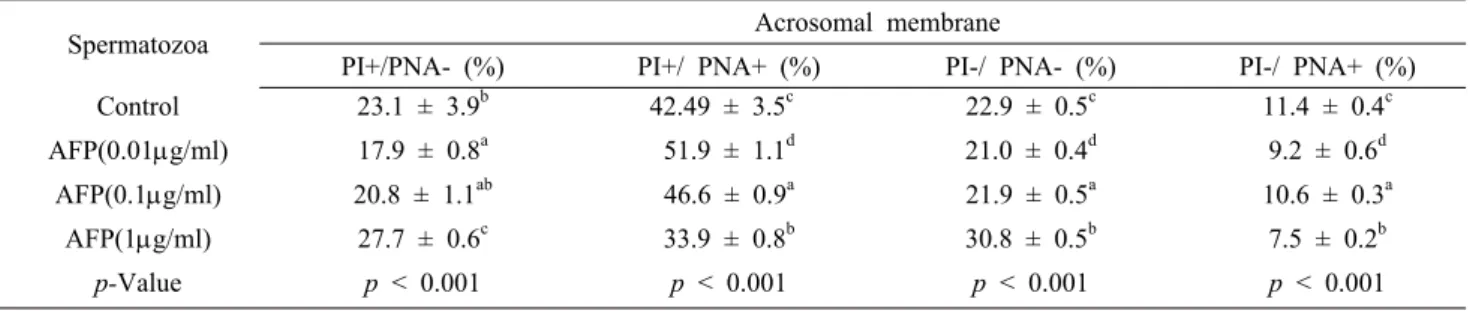
Table 4. Effects on acrosome integrity of frozen-thawed boar sperm in LEYGO extender added AFP
Spermatozoa Acrosomal membrane
PI+/PNA- (%) PI+/ PNA+ (%) PI-/ PNA- (%) PI-/ PNA+ (%)
Control 23.1 ± 3.9b 42.49 ± 3.5c 22.9 ± 0.5c 11.4 ± 0.4c
AFP(0.01g/ml) 17.9 ± 0.8a 51.9 ± 1.1d 21.0 ± 0.4d 9.2 ± 0.6d
AFP(0.1g/ml) 20.8 ± 1.1ab 46.6 ± 0.9a 21.9 ± 0.5a 10.6 ± 0.3a
AFP(1g/ml) 27.7 ± 0.6c 33.9 ± 0.8b 30.8 ± 0.5b 7.5 ± 0.2b
p-Value p < 0.001 p < 0.001 p < 0.001 p < 0.001
Different letters (a, b, c, d) show significant differences (p < 0.001).
Acrosome intrgrity
The boar sperm acrosome integrity was examined by FITC-PNA/PI staining (Figure 2 and Table 4). The percentage of live sperm with intact acrosomes (FITC-PNA-/PI-) showed a slightly significant difference between the control and 0.1 μ g/ml AFP (22.9% ± 0.5 vs. 21.9% ± 0.5; p<0.05) and increased
for the sperm with 1 μg/ml AFP (p<0.001). Also the percentage of live sperm with reacted acrosome (FITC-PNA+/PI-) showed the least significant difference between the control and 0.1 μg/ml AFP (11.4% ± 0.4 vs. 10.6% ± 0.3; p<0.05) and decreased with 1 μg/ml AFP and 0.01 μg/ml AFP (p<0.001).
DISCUSSION
We have demonstrated that AFP, used during the freezing of miniature pig sperm, has effects on DNA damage and membrane integrity. Although the membrane integrity decreased in the AFP treatment groups compared with the control, the motility significantly improved with the addition of 0.01 μg/ml AFP. However, the DNA damage was not significantly reduced according to the comet assay. These results support previous findings concerning the positive effects of AFPs (Jo et al., 2011;
Kawahara et al., 2009; Lee et al., 2012).
Our experiments were performed to evaluate which concentration of AFP would provide the most effective protection against cold shock during the cryopreservation of boar sperm. After AFPs were discovered, antifreeze glycoproteins (AFGPs) and several other AFPs were found (Logsdon and Doolittle, 1997). Several studies have used AFP and the expression of AFP genes to inhibit the growth of ice crystals to protect cells due to characterization of AFP (Bayer-Giraldi et al., 2011; Gwak et al., 2010). The main function of AFPs is to inhibit both recrystallisation and ice crystal formation, reducing cellular damage (Chaytor and Ben, 2010; Rubinsky et al., 2010). Because AFPs inhibit the formation of ice crystals, the freezing and melting points of water become different. This phenomenon is called the thermal hysteresis effect and is a quantitative indicator representing the effect of AFPs; this effect can be measured using a nanoliter osmometer (Kristiansen et al., 2011). AFPs, which are components of certain Antarctic organisms, depress the freezing point of water below the temperature of the surrounding seawater to protect the organism from freezing, and AFP has been applied to the cryopreservation of red blood cells, mesenchymal stem cells, germ cells, and even tissues, such as cardiac valves, bones, and corneas
Sperm cryopreservation has been used in many important ways in the swine industry: enhancing herd productivity, assisting biosecurity measures, encouraging international exchange, facilitating gender selection technology, and permitting rational gene banking (Bailey et al., 2008). However, it is difficult to prevent cold shock, which, through morphological and biochemical effects, may results in damage to the cytoskeleton and cellular organelles, loss of embryo viability, and cell death (Makarevich et al., 2010). Thus, cryoprotectants have been examined as agents that could be used
to avoid cold shock damage during cryopreservation (Almlid and Johnson, 1988; Dong et al., 2009; Jeong et al., 2009; Pena et al., 2003).
In a recent study, special concern was given to efficient cryopreservation protocols for human embryonic stem cells (hESCs) (Malpique et al., 2012) and, indicated that the surface-based vitrification of hESCs is the most efficient technique for the cryopreservation of intact hESC colonies.
According to another report, freezing may be useful to preserve tissue for transplantation because the survival of the resident innate immune cells in adrenal gland tissue decreases after cryopreservation (Alabedalkarim et al., 2012), with the allogenic grafts of adrenal gland tissue prompting weaker rejection responses due to the decreased leukocytes in the tissue after cryopreservation. Additionally, ice-free cryopreservation instead of conventional frozen cryopreservation was considered for the preservation of allogeneic heart valves (Huber et al., 2012), and many scientists are studying the cryopreservation of germ cells and other cells, tissues, and organs. Cryopreservation, as confirmed by the evaluation of damage caused to the bull sperm cytoskeleton after thawing, alters perinuclear theca proteins, such actin and dystrobrevin, and also the nucleoskeleton (Felipe-Perez et al., 2012); such damage could cause fertilisation failure. Forero-Gonzalez et al. (Forero-Gonzalez et al., 2012) compared the effects of two freezing techniques (conventional and automated) and three cryoprotectants (glycerol, ethylene glycol, and dimethyl formamide) on post thaw sperm motility and the integrity of acrosomal, plasma, and mitochondrial membranes. Indeed, cryopreservation garners attention in various fields because of its wide applicability.
In the present study, we evaluated quality characteristics, such as motility, DNA integrity, membrane integrity, and acrosome integrity, to confirm the effect of AFP on the effects of cold shock during cryopreservation. Our results indicate the addition of AFP at a specific concentration (0.01 µg/ml) results in the highest motility and progressive motility after thawing, findings that support the idea that AFP can help to maintain cell viability during the freeze-thaw process (Jo et al., 2011(Prathalingam et al., 2006; Younis et al., 1998).
Additionally, it is important to note that extenders, along with AFP, have been effective for the maintenance of germ cell viability (Martinez-Paramo et al., 2009; Palasz and Mapletoft, 1996). In addition to boar sperm (Inglis et al., 2006), it has been reported that somatic cells also benefit from the
decreased cold shock damage conferred by AFP (Beirao et al., 2012; Makarevich et al., 2010). The high motility of sperm cryopreserved with AFP was observed using a CASA after thawing, reflecting the cryoprotectant properties of AFP.
However, excessive AFP concentrations decreased the motility and others parameters, such as the progressive motility, VAP, VSL, and VCL. Therefore, high concentrations of AFP may be detrimental to boar sperm motility and may be explained by decreased DNA integrity and membrane integrity. According to the comet assay results, the DNA integrity is maintained using AFP at 0.01 μg/ml but not at 1 μg/ml. The present study analysed several DNA integrity parameters, including the tail DNA (%), tail length (μm), and olive moment, to reveal damage to the sperm DNA. The DNA integrity of the sperm in extender with 0.01 μg/ml AFP was better than that of the sperm in extender with 1 μg/ml AFP. However, the DNA integrity of the sperm cryopreserved with 0.1 or 1 μg/ml AFP was not significantly different compared to the control sperm, a result that is in agreement with previous reports (Riesco et al., 2012). The plasma membrane integrity was also analysed with PI and SYBR14 staining to provide information about the effect of AFP. Partyka et al.; Partyka et al., 2010) made a similar observation using the same fluorescent dye for the assessment of fresh fowl semen. We observed that more boar sperm in the control group were alived when compared to the sperm cryopreserved with AFP. Thus, AFP at high concentration has a cytotoxic effect on boar spermatozoa after thawing. Our results related to acrosome integrity are in agreement with the study by Younis et al. (Younis et al., 1998) which indicated an increased proportion of chimpanzee sperm intact acrosomes post-thaw in the presence of AFPIII, suggesting that the AFPs helped to maintain the chimpanzee sperm acrosomal membranes by inhibiting capacitation and the subsequent acrosomal reaction. However, Rubinsky et al.
(Rubinsky et al., 1990) suggested that AFPs might stabilize the transmembrane electrolyte gradients by blocking calcium ion channels, thereby partly inhibiting the capacitation reaction.
Prathalingam et al. (Prathalingam et al., 2006) proposed that the reason for their discrepant results was because of the media and the different cooling curves. The results for bovine sperm showed no significant difference between the control sperm and sperm in extender with AFPs. Despite these experiments, the effects of AFPs on acrosome integrity during cryopreservation are unclear; however, our results showed that
the acrosome integrity of sperm in extender with 1 μg/ml AFP was much better than the other treatment.
The addition of AFP in the cryopreservation of boar sperm acts as an effective cryoprotectant and might maintain the acrosome integrity of cryopreserved sperm. Although the addition of AFP causes a disruption of the plasma membrane, the concentration of 0.01 μg/ml AFP is optimal because it retains a high motility. However, our results of the acrosome integrity revealed the benefit of AFP (1 μg/ml). Thus, further studies will be necessary to confirm the effect of AFP on the fertility of cryopreserved boar sperm and to determine the reasons for the different acrosome integrity results between the present and previous studies.
ACKNOWLEDGEMENTS
This research was supported by Basic Science Research Program through the National Research Foundation of Korea (NRF) funded by the Ministry of Education, Science and Technology (No.2012-0001770) and the National Agenda Project of the Korea Research Council of Fundamental Science and Technology (KRCF; No.PG12010) and the Korea Polar Research Institute (KOPRI; No.PE12210).
REFERENCES
Aitken, R.J., Gordon, E., Harkiss, D., Twigg, J.P., Milne, P., Jennings, Z., Irvine, D.S., 1998. Relative impact of oxidative stress on the functional competence and genomic integrity of human spermatozoa. Biol. Reprod. 59(5):1037-1046.
Alabedalkarim, N.M., Bozhok, G.A., Legach, E.I., Ustichenko, V.D., Zubov, P.M., Bilyavskaya, S.B., Dudetskaya, G.V., Bondarenko, T.P., Hoffmann, M.W., 2012. Outcome of adrenal tissue fragments allotransplantation: The impact of cryopreservation. Cryobiology 65(3):188-195.
Almlid, T., Johnson, L.A., 1988. Effects of glycerol concentration, equilibration time and temperature of glycerol addition on post-thaw viability of boar spermatozoa frozen in straws. J.
Anim. Sci. 66(11): 2899-2905.
Bailey, J.L., Lessard, C., Jacques, J., Breque, C., Dobrinski, I., Zeng, W., Galantino-Homer, H.L., 2008. Cryopreservation of boar semen and its future importance to the industry.
Theriogenology 70(8): 1251-1259.
Bayer-Giraldi, M., Weikusat, I., Besir, H., Dieckmann, G., 2011. Characterization of an antifreeze protein from the polar diatom Fragilariopsis cylindrus and its relevance in sea ice. Cryobiology 63(3): 210-219.
Beirao, J., Zilli, L., Vilella, S., Cabrita, E., Schiavone, R., Herraez, M.P., 2012. Improving sperm cryopreservation with antifreeze proteins: effect on gilthead seabream (Sparus aurata) plasma membrane lipids. Biol Reprod 86(2):59.
Bencharif, D., Amirat-Briand, L., Garand, A., Anton, M., Schmitt, E., Desherces, S., Delhomme, G., Langlois, M.L., Barriere, P., Destrumelle, S., Vera-Munoz, O., Tainturier, D., 2012. The advantages of using a combination of LDL and glutamine in comparison with TRIS egg yolk and Equex(R) STAMP extenders in the cryopreservation of canine semen. Res. Vet. Sci. 93(1):440-447.
Boe-Hansen, G.B., Ersboll, A.K., Greve, T., Christensen, P., 2005. Increasing storage time of extended boar semen reduces sperm DNA integrity. Theriogenology 63(7):2006-2019.
Cabrita, E., Robles, V., Rebordinos, L., Sarasquete, C., Herraez, M.P., 2005. Evaluation of DNA damage in rainbow trout (Oncorhynchus mykiss) and gilthead sea bream (Sparus aurata) cryopreserved sperm. Cryobiology 50(2):144-153.
Chaytor, J.L., Ben, R.N., 2010. Assessing the ability of a short fluorinated antifreeze glycopeptide and a fluorinated carbohydrate derivative to inhibit ice recrystallization.
Bioorg. Med. Chem. Lett. 20(17):5251-5254.
Davies, P.L., Baardsnes, J., Kuiper, M.J., Walker, V.K., 2002.
Structure and function of antifreeze proteins. Philos. Trans.
R. Soc. Lond. B. Biol. Sci. 357(1423):927-935.
DeLuca, C.I., Comley, R., Davies, P.L., 1998. Antifreeze proteins bind independently to ice. Biophys. J. 74(3):1502- 1508.
Dong, Q., Hill, D., VandeVoort, C.A., 2009. Interactions among pre-cooling, cryoprotectant, cooling, and thawing for sperm cryopreservation in rhesus monkeys. Cryobiology 59(3):268-274.
Donnelly, E.T., McClure, N., Lewis, S.E., 1999. Antioxidant supplementation in vitro does not improve human sperm motility. Fertil. Steril. 72(3):484-495.
Felipe-Perez, Y.E., Valencia, J., Juarez-Mosqueda Mde, L., Pescador, N., Roa-Espitia, A.L., Hernandez-Gonzalez, E.O., 2012. Cytoskeletal proteins F-actin and beta-dystrobrevin are altered by the cryopreservation process in bull sperm.
Cryobiology 64(2):103-109.
Forero-Gonzalez, R.A., Celeghini, E.C., Raphael, C.F., Andrade, A.F., Bressan, F.F., Arruda, R.P., 2012. Effects of bovine sperm cryopreservation using different freezing techniques and cryoprotective agents on plasma, acrosomal and mitochondrial membranes. Andrologia 44 Suppl 1:154-159.
Foster, M.L., Love, C.C., Varner, D.D., Brinsko, S.P., Hinrichs, K., Teague, S., Lacaze, K., Blanchard, T.L., 2011. Comparison of methods for assessing integrity of equine sperm membranes. Theriogenology 76(2):334-341.
Fraser, L., Strzezek, J., 2005. Effects of freezing-thawing on DNA integrity of boar spermatozoa assessed by the neutral comet assay. Reprod. Domest. Anim. 40(6):530-536.
Fraser, L., Strzezek, J., 2007. Is there a relationship between the chromatin status and DNA fragmentation of boar spermatozoa following freezing-thawing? Theriogenology 68(2):248-257.
Garner, D.L., Johnson, L.A., 1995. Viability assessment of mammalian sperm using SYBR-14 and propidium iodide.
Biol. Reprod. 53(2):276-284.
Gwak, I.G., Jung, W.S., Kim, H.J., Kang, S.H., Jin, E., 2010.
Antifreeze protein in Antarctic marine diatom, Chaetoceros neogracile. Mar. Biotechnol. (NY) 12(6):630-639.
Huber, A.J., Aberle, T., Schleicher, M., Wendel, H.P., Brockbank, K.G., 2012. Characterization of a simplified ice-free cryopreservation method for heart valves. Cell Tissue Bank 14(2):195-203.
Inglis, S.R., Turner, J.J., Harding, M.M., 2006. Applications of type I antifreeze proteins: studies with model membranes &
cryoprotectant properties. Curr. Protein Pept. Sci.
7(6):509-522.
Isachenko, E., Isachenko, V., Katkov, II, Dessole, S., Nawroth, F., 2003. Vitrification of mammalian spermatozoa in the absence of cryoprotectants: from past practical difficulties to present success. Reprod. Biomed. Online 6(2):191-200.
Jeong, Y.J., Kim, M.K., Song, H.J., Kang, E.J., Ock, S.A., Kumar, B.M., Balasubramanian, S., Rho, G.J., 2009. Effect of alpha-tocopherol supplementation during boar semen cryopreservation on sperm characteristics and expression of apoptosis related genes. Cryobiology 58(2):181-189.
Jo, J.W., Jee, B.C., Lee, J.R., Suh, C.S., 2011. Effect of antifreeze protein supplementation in vitrification medium on mouse oocyte developmental competence. Fertil. Steril.
96(5):1239-1245.
Johnson, L.A., Weitze, K.F., Fiser, P., Maxwell, W.M., 2000.
Storage of boar semen. Anim. Reprod. Sci. 62(1-3):143-172.
Kawahara, H., Higa, S., Tatsukawa, H., Obata, H., 2009.
Cryoprotection and cryosterilization effects of type I antifreeze protein on E. coli cells. Biocontrol Sci. 14(2):49-54.
Klimowicz-Bodys, M.D., Batkowski, F., Ochrem, A.S., Savic, M.A., 2012. Comparison of assessment of pigeon sperm viability by contrast-phase microscope (eosin-nigrosin staining) and flow cytometry (SYBR-14/propidium iodide (PI) staining) [evaluation of pigeon sperm viability]. Theriogenology 77(3):628-635.
Kristiansen, E., Ramlov, H., Hojrup, P., Pedersen, S.A., Hagen, L., Zachariassen, K.E., 2011. Structural characteristics of a novel antifreeze protein from the longhorn beetle Rhagium inquisitor. Insect Biochem. Mol. Biol. 41(2):109-117.
Lee, S.G., Koh, H.Y., Lee, J.H., Kang, S.H., Kim, H.J., 2012.
Cryopreservative Effects of the Recombinant Ice-Binding Protein from the Arctic Yeast Leucosporidium sp. on Red Blood Cells. Appl. Biochem. Biotechnol. 167(4):824-834.
Logsdon, J.M., Jr., Doolittle, W.F., 1997. Origin of antifreeze protein genes: a cool tale in molecular evolution. Proc.
Natl. Acad. Sci. USA 94(8):3485-3487.
Makarevich, A.V., Kubovicova, E., Popelkova, M., Fabian, D., Cikos, S., Pivko, J., Chrenek, P., 2010. Several aspects of animal embryo cryopreservation: anti-freeze protein (AFP) as a potential cryoprotectant. Zygote 18(2):145-153.
Malpique, R., Tostoes, R., Beier, A.F., Serra, M., Brito, C., Schulz, J.C., Bjorquist, P., Zimmermann, H., Alves, P.M., 2012. Surface-based cryopreservation strategies for human embryonic stem cells: A comparative study. Biotechnol.
Prog. 28(4):1079-1087.
Martinez-Paramo, S., Barbosa, V., Perez-Cerezales, S., Robles, V., Herraez, M.P., 2009. Cryoprotective effects of antifreeze proteins delivered into zebrafish embryos. Cryobiology 58(2):128-133.
Martinez-Pastor, F., Mata-Campuzano, M., Alvarez-Rodriguez, M., Alvarez, M., Anel, L., de Paz, P., 2010. Probes and techniques for sperm evaluation by flow cytometry.
Reprod. Domest. Anim. 45 Suppl 2:67-78.
Medeiros, C.M., Forell, F., Oliveira, A.T., Rodrigues, J.L., 2002. Current status of sperm cryopreservation: why isn't it better? Theriogenology 57(1):327-344.
Nagy, S., Jansen, J., Topper, E.K., Gadella, B.M., 2003. A triple-stain flow cytometric method to assess plasma- and acrosome-membrane integrity of cryopreserved bovine
sperm immediately after thawing in presence of egg-yolk particles. Biol. Reprod. 68(5):1828-1835.
Niu, Z.H., Huang, X.F., Jia, X.F., Zheng, J., Yuan, Y., Shi, T.Y., Diao, H., Yu, H.G., Sun, F., Zhang, H.Q., Shi, H.J., Feng, Y., 2011. A sperm viability test using SYBR-14/propidium iodide flow cytometry as a tool for rapid screening of primary ciliary dyskinesia patients and for choosing sperm sources for intracytoplasmic sperm injection. Fertil. Steril.
95(1):389-392.
Nur, Z., Zik, B., Ustuner, B., Sagirkaya, H., Ozguden, C.G., 2010. Effects of different cryoprotective agents on ram sperm morphology and DNA integrity. Theriogenology 73(9):1267- 1275.
Orgal, S., Zeron, Y., Elior, N., Biran, D., Friedman, E., Druker, S., Roth, Z., 2012. Season-induced changes in bovine sperm motility following a freeze-thaw procedure. J. Reprod. Dev.
58(2):212-218.
Palasz, A.T., Mapletoft, R.J., 1996. Cryopreservation of mammalian embryos and oocytes: recent advances. Biotechnol.
Adv. 14(2):127-149.
Park, K.S., Do, H., Lee, J.H., Park, S.I., Kim, E., Kim, S.J., Kang, S.H., Kim, H.J., 2012. Characterization of the ice-binding protein from Arctic yeast Leucosporidium sp.
AY30. Cryobiology 64(3):286-296.
Partyka, A., Nizanski, W., Lukaszewicz, E., 2010. Evaluation of fresh and frozen-thawed fowl semen by flow cytometry.
Theriogenology 74(6):1019-1027.
Pena, F.J., Johannisson, A., Wallgren, M., Rodriguez Martinez, H., 2003. Antioxidant supplementation in vitro improves boar sperm motility and mitochondrial membrane potential after cryopreservation of different fractions of the ejaculate.
Anim. Reprod. Sci. 78(1-2):85-98.
Perez-Cerezales, S., Martinez-Paramo, S., Beirao, J., Herraez, M.P., 2010. Evaluation of DNA damage as a quality marker for rainbow trout sperm cryopreservation and use of LDL as cryoprotectant. Theriogenology 74(2):282-289.
Perez-Cerezales, S., Martinez-Paramo, S., Cabrita, E., Martinez- Pastor, F., de Paz, P., Herraez, M.P., 2009. Evaluation of oxidative DNA damage promoted by storage in sperm from sex-reversed rainbow trout. Theriogenology 71(4):605-613.
Prathalingam, N.S., Holt, W.V., Revell, S.G., Mirczuk, S., Fleck, R.A., Watson, P.F., 2006. Impact of antifreeze proteins and antifreeze glycoproteins on bovine sperm during freeze-thaw. Theriogenology 66(8):1894-1900.
Riesco, M.F., Martinez-Pastor, F., Chereguini, O., Robles, V., 2012. Evaluation of zebrafish (Danio rerio) PGCs viability and DNA damage using different cryopreservation protocols. Theriogenology 77(1):122-130.
Rubinsky, B., Arav, A., Mattioli, M., Devries, A.L., 1990. The effect of antifreeze glycopeptides on membrane potential changes at hypothermic temperatures. Biochem Biophys Res Commun 173, 1369-1374.
Rubinsky, L., Raichman, N., Lavee, J., Frenk, H., Ben-Jacob, E., Bickler, P.E., 2010. Antifreeze protein suppresses spontaneous neural activity and protects neurons from hypothermia/re-warming injury. Neurosci. Res. 67(3):256-259.
Singh, N.P., McCoy, M.T., Tice, R.R., Schneider, E.L., 1988.
A simple technique for quantitation of low levels of DNA damage in individual cells. Exp. Cell Res. 175(1):184-191.
Villani, P., Spano, M., Pacchierotti, F., Weimer, M., Cordelli, E., 2010. Evaluation of a modified comet assay to detect DNA damage in mammalian sperm exposed in vitro to different
mutagenic compounds. Reprod. Toxicol. 30(1):44-49.
Watson, P.F., 2000. The causes of reduced fertility with cryopreserved semen. Anim. Reprod. Sci. 60-61:481-492.
Younis, A.I., Rooks, B., Khan, S., Gould, K.G., 1998. The effects of antifreeze peptide III (AFP) and insulin transferrin selenium (ITS) on cryopreservation of chimpanzee (Pan troglodytes) spermatozoa. J. Androl. 19(2):207-214.
Received December 20 2016, Revised December 28, 2016, Accepted December 29, 2016