Korean Journal of Microbiology (2015) Vol. 51, No. 4, pp. 444-447 pISSN 0440-2413
DOI http://dx.doi.org/10.7845/kjm.2015.5062 eISSN 2383-9902
Copyright ⓒ 2015, The Microbiological Society of Korea
단 보
SeO
2의 메티실린-내성 황색포도상구균에 대한 생육 억제 효과
한영환*
동국대학교 의생명공학과
Inhibitory effect of SeO
2on cell growth of methicillin-resistant Staphylococcus aureus
Yeong-Hwan Han*
Department of Medical Biotechnology, Dongguk University. Gyeongju 38066, Republic of Korea
(Received December 2, 2015; Accepted December 21, 2015)
ABSTRACT: This study was carried out to determine the antibacterial activity of SeO2 against pathogenic bacteria, methicillin-resistant Staphylococcus aureus (MRSA). Using the disc diffusion method, SeO2 showed higher antibacterial activity against Gram-positive bacteria than Gram-negative bacteria used in this study. Coccus-form bacteria showed much susceptible to SeO2, compared to bacillus-form bacteria. Compared to antibiotics-susceptible S. aureus, antibiotics used in this study showed lower antibacterial activity against MRSA. As 200-500 μg/disc of SeO2 was applied, diameters of clear zone for S. aureus and MRSA were 20-32.7 mm and 13.5-17.9 mm, respectively. For MRSA, minimal inhibitory concentration of SeO2 was 40 μg/ml. When SeO2 was added in culture broth, cell growth of MRSA was inhibited. These results will be applied to determine antibacterial mechanism of MRSA and other pathogenic microorganisms.
Key words: Staphylococcus aureus, inhibitory effect, methicillin resistant, MIC, SeO2
*For correspondence. E-mail: [email protected];
Tel.: +82-54-770-2213; Fax: +82-54-770-2386
황색포도상구균(Staphylococcus aureus)은 0.8–1.0 μm 크 기의 그람 양성, 통성혐기성 구균으로 식중독뿐만 아니라 피 부의 화농, 중이염, 장염, 방광염 등의 원인균이다. 최근 대부 분의 항생물질에 저항성을 나타내는 methicillin-resistant S.
aureus (MRSA)가 출현하여, 패혈증, 심내막염, 뇌수막염, 폐 렴, 골수염 등의 전신 감염을 일으키기도 한다. MRSA에 의한 폐렴 및 패혈증의 사망률은 20% 이상으로 비교적 높은 편으로 알려져 있다. MRSA는 β-lactam 뿐만 아니라 다른 계열의 항 생제에 대해서도 내성으로, vancomycin 또는 teicoplanin 등 glycopeptide 계열 항생제가 사용되고 있다.
MRSA에 대한 국내 연구는 항생제 및 화합물에 대한 연구 (Yoo et al., 2007; Lee et al., 2009; Ding et al., 2011; Visutthi et al., 2011; Kim et al., 2012), 미생물을 이용한 항균활성 연구 (Lim, 1995; Lee et al., 2012; Ji et al., 2015)와 천연물의 항균활
성에 대한 연구(Seong, 2004; Shin and Seong, 2006; Lee et al., 2007) 등이 보고되어 왔다.
이산화셀레니움(SeO2)은 유리공업의 착색제, 사진인화용 토너에 사용되어 왔다. SeO2의 열 안정성(녹는점; 340°C) 및 우수한 수용성(20°C; 38.4 g/100 ml)의 특성이 있다. 현재까지 SeO2를 이용한 항균활성에 관한 연구 보고는 확인할 수 없었 다. 항생제 내성 S. aureus가 유발하는 농가진 등의 피부병에 SeO2의 사용 가능성에 대한 기초연구를 수행함이 본 연구의 목적이다.
실험에 사용한 균주는 국내 균주 분양기간으로 부터 입수 하여 계대 배양하여 사용하였다(Table 1). 세균 배양용 배지는 MB cell (Kisanbio사) 제품을 사용하였다. SeO2은 일본 대정 화금(주)사 제품을, 항생제 methicillin은 Sigma사, 항생제 감 수성 paper disc는 Sensi-Discs (BD BBL)를 사용하였다. Paper disc (Advantec, thin 8 mm)는 Toyo Roshi Kaisha 사 제품을 사 용하였다. 액체배양 생육 측정용 분광광도계(spectrophoto- meter)는 Optizen (Mecasys)을 사용하였다.
SeO2의 MRSA에 대한 생육 억제 효과∙ 445
Korean Journal of Microbiology, Vol. 51, No. 4 Table 1. The bacterial strains used in this study
Species Strains Species Strains
Escherichia coli KCTC 2617a Staphylococcus aureus KCTC 1621
Salmonella typhimurium KCTC 1925 Staphylococcus aureus (MRSA) CCARM 3795
Proteus bulgaris KCTC 2512 Staphylococcus aureus (MRSA) CCARM 3089
Pseudomonas aeruginosa KCTC 2513 Staphylococcus aureus (MRSA) CCARM 3090
Bacillus subtilis KCCM 12151 Staphylococcus aureus (MRSA) CCARM 3095
Bacillus cereus KCTC 1012 Staphylococcus aureus (MRSA) CCARM 3108
Streptococcus mutans KCTC 3065
a KCTC, Korean Collection for Type Cultures, Daejeon; KCCM, Korean Culture Center of Microorganisms, Seoul; CCARM, Culture Collection of Antimicrobial Resistant Microbes, Seoul
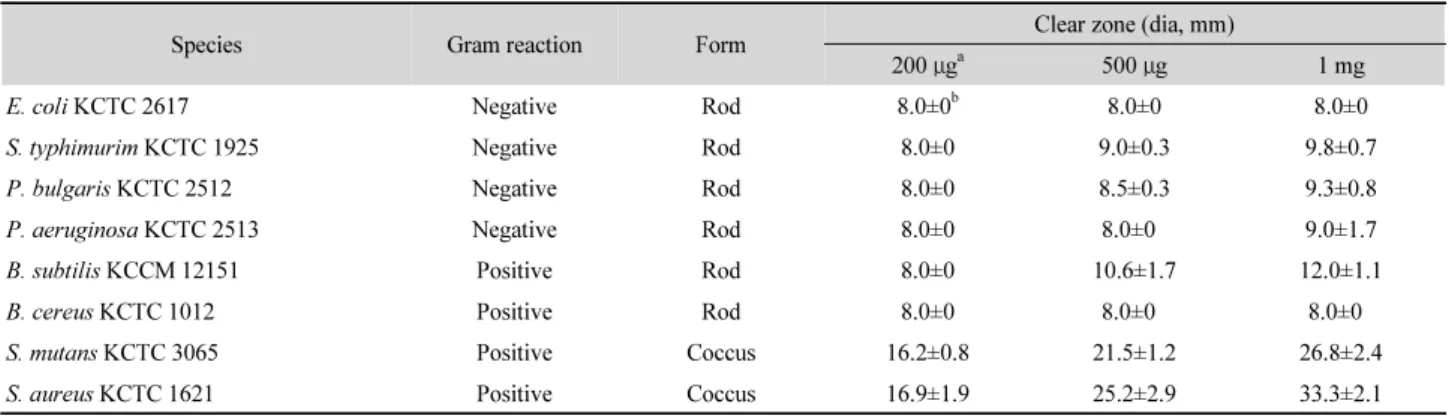
Table 2. Effect of SeO2 on cell growth of Gram-positive and Gram-negative bacteria
Species Gram reaction Form Clear zone (dia, mm)
200 μga 500 μg 1 mg
E. coli KCTC 2617 Negative Rod 8.0±0b 8.0±0 8.0±0
S. typhimurim KCTC 1925 Negative Rod 8.0±0 9.0±0.3 9.8±0.7
P. bulgaris KCTC 2512 Negative Rod 8.0±0 8.5±0.3 9.3±0.8
P. aeruginosa KCTC 2513 Negative Rod 8.0±0 8.0±0 9.0±1.7
B. subtilis KCCM 12151 Positive Rod 8.0±0 10.6±1.7 12.0±1.1
B. cereus KCTC 1012 Positive Rod 8.0±0 8.0±0 8.0±0
S. mutans KCTC 3065 Positive Coccus 16.2±0.8 21.5±1.2 26.8±2.4
S. aureus KCTC 1621 Positive Coccus 16.9±1.9 25.2±2.9 33.3±2.1
a Loading amount on 8-mm disc.
b Average±STD for 5-6 replicates. 8.0±0 means no antibacterial activity.
Table 3. Antibacterial activity of various antibiotics against S. aureus and methicillin-resistant S. aureus (MRSA)
Loading amount (μg/disc)
Size of clear zone (dia, mm)a
S. aureus KCTC1621
S. aureus CCARM 3089
(MRSA)
Ampicillinb 10 51.8±3.0c 7.3±0.2
Streptomycin 10 22.3±1.2 12.4±1.1
Chloramphenicol 30 32.8±1.6 20.0±1.1
Tetracycline 30 32.3±1.5 8.9±0.5
Vancomycin 30 24.8±0.9 15.7±1.8
Methicillind 30 42.6±1.7 8.0±0
a Antibacterial activity was determined by the disc diffusion method.
b 10-30 μg of antibiotics/7-mm Sensi-disc was used.
c Average±STD for 5-6 replicates.
d 30 μg/8-mm paper disc (thin) was used.
생육저지환의 측정은 disc diffusion 방법으로 수행하였다.
한천배지에 전 배양된 각 배양액 100 μl를 도말한 다음, 10 μl loading된 paper disc를 정치하였다. 37°C의 항온기에서 3일 동 안 배양한 다음, 생육저지환의 직경(dia, mm)으로 시료의 생육 억제 정도를 판별하였다. 최소생육억제농도(MIC)의 측정을 위하여 시험관에 배지 10 ml을 분주한 다음, 접종 농도가 5%
가 되도록 접종하였다. SeO2 용액을 각각의 농도에 맞추어 첨 가한 다음, 항온기(37°C)에서 24시간 동안 배양후 탁도(OD660) 를 측정하였다.
사용한 균주 중 그람 양성균에 대해 SeO2의 항균활성은 없 거나 미미하였다. 그람 양성균에 대해 간균 형태의 Bacillus 속 보다는 구균 형태의 Streptococcus, Staphylococcs속의 세균에 대해 더 우수한 항균활성을 보여 주었다(Table 2). 이 결과는 세균의 구조 및 형태에 따르는 SeO2의 항균활성에 대해 더 많 은 종 및 균주를 대상으로 연구할 필요성이 제기 되었다.
황색포도상구균과 MRSA에 대해 항생제 감수성을 비교하 여 실험한 결과, 알려진 바와 같이 사용한 모든 항생제에 대해 MRSA의 항생제에서 감수성이 작은 것으로 나타났다(Table 3). 항생제–감수성 S. aureus의 ampiciilin 및 methicillin에 대
한 항생제 감수성은 매우 크게 나타났으나, MRSA 균주 특성 에서 예측되는 바와 같이 가장 작게 나타났다. MRSA에 대한 chloramphenicol과 vancomycin은 다른 항생제와 비교시 상대 적으로 우수한 결과를 보여주었다. 농도별 SeO2적용하였을 때, 항생제 실험의 결과와 같이 MRSA에서 낮은 항균활성을
446 ∙ Yeong-Hwan Han
미생물학회지 제51권 제4호
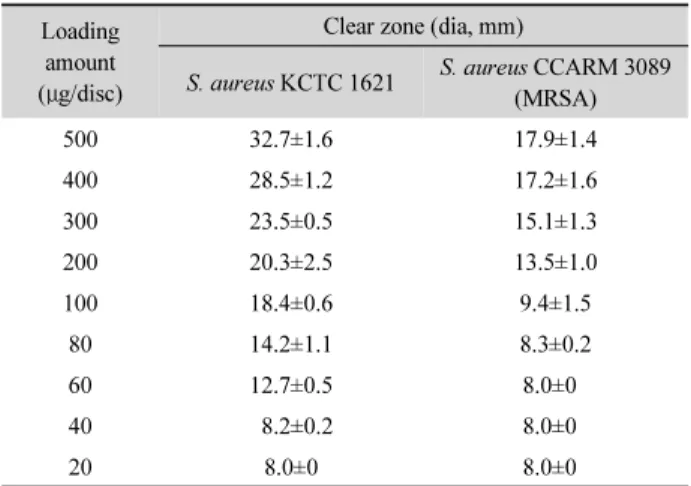
Table 4. Antibacterial activity of SeO2 against S. aureus and methicillin- resistant S. aureus CCARM 3089 (MRSA)
Loading amount (μg/disc)
Clear zone (dia, mm)
S. aureus KCTC 1621 S. aureus CCARM 3089 (MRSA)
500 32.7±1.6 17.9±1.4
400 28.5±1.2 17.2±1.6
300 23.5±0.5 15.1±1.3
200 20.3±2.5 13.5±1.0
100 18.4±0.6 9.4±1.5
80 14.2±1.1 8.3±0.2
60 12.7±0.5 8.0±0
40 8.2±0.2 8.0±0
20 8.0±0 8.0±0
Table 5. Antibacterial activity of SeO2 against methicillin-resistant S.
aureus CCARM 3089 (MRSA) Strain of S. aureus (MRSA) in CCARM
Clear zone (dia, mm)
200 μga 500 μg 1 mg
3795 8.5±0.3b 11.8±0.7 13.3±1.1
3089 10.3±0.4 16.8±0.8 17.3±1.7
3090 10.3±0.5 14.8±0.2 14.5±0.3
3095 9.5±0.2 15.0±0.8 15.5±0.6
3108 8.8±0.3 16.2±0.6 16.8±0.7
a Loading amount on 8-mm disc.
b Average±STD for 5-6 replicates. 8.0±0 means no antibacterial activity.
Fig. 1. Addition effect of SeO2 on cell growth of methicillin-resistant S.
aureus CCARM 3089. Cell growth was carried out at 37°C in Brucella broth with shaking (120 rpm) and then, determined spectrophotometrically at OD660.
Table 6. Antibacterial activity of SeO2 against methicillin-resistant S.
aureus CCARM 3089 (MRSA)
Viable cells (CFU/ml) Final concentration of SeO2 (%)a
Time (h) 0 0.5 1.0
0 1.3±0.8×10⁵ 1.8±0.3×10⁵ 1.2±0.4×10⁵ 5 8.2±1.9×10⁵ 4.3±3.9×10⁴ 6.1±2.8×10⁴ 10 1.6±0.7×10⁸ 4.0±0.4×10⁴ 8.0±5.6×10⁴ 15 3.5±3.2×10⁷ 6.0±2.8×10⁴ 6.3±2.4×10⁴ 20 6.8±3.3×10⁷ 1.3±1.2×10⁶ 1.2±0.2×10⁵
a Cells were cultivated at 37°C for 24 h on Brucella agar.
보여주었다(Table 4). 200–500 μg/disc의 농도에서 S. aureus 의 생육저지환 직경은 20.3–32.7 mm, MRSA의 경우 13.5–
17.9 mm로 작게 나타났다. SeO2첨가 배양액에 대한 MRSA 생육 측정 결과, 40 μg/ml의 농도에서 생육이 억제되었다.
여러 MRSA 균주의 SeO2에 대해 200–1,000 μg/disc 범위에 서 항균활성을 측정한 결과, loading 농도에 따라 항균활성이 증가함을 나타내었다(Table 5). SeO2가 첨가된 액체 배지에서 MRSA에 대한 항균활성 측정 결과, 0.5% 및 1.0%가 첨가된 배 지에서의 세균 생육은 억제되었다(Fig. 1). 이 결과는 배양 시간 경과에 따르는 viable cell 농도 측정의 결과, 첨가되지 않은 대조 군의 viable cell 농도는 증가하였으나 첨가군의 viable cell 농도 는 증가하지 않은 결과와 일치하였다(Table 6). Fig. 1 및 Table 6의 결과는 SeO2의 항균 활성이 bacteriostatic 특성임을 나타내 었다. 그람 양성 세균에 대해 SeO2의 항균 활성이 더 우수한 결 과는 그람 양성 세균의 세포벽을 구성하는 peptidoglycan 생성 과 연관되어 있을 것으로 추론된다. SeO2의 항균활성이 실험 한 그람 음성균에 대해 적게 나타나는 이유가 그람 음성균 외 막의 구조 및 조성과 관련이 있는지, 실험한 그람 양성균에 대
해 Streptococcus, Staphylococcus 속 구균이 Bacillus 속 간균 보다 더 우수한 이유에 대해 후후 규명하고자 한다. 본 연구는 독성이 있는 SeO2가 어떻게 MRSA에 대해 항균활성이 있는 지를 감수성 S. aureus와 비교하여 항균활성 기작에 관련된 기 초 연구로 수행하였다.
적 요
본 연구는 SeO2의 메티실린–내성 S. aureus에 대한 항세균 활성을 규명하고자 수행하였다. Disc diffusion method를 이용 하여 SeO2의 항세균 활성을 측정한 결과, 그람 양성 세균이 그 람 음성 세균과 비교시 우수하였다. 사용한 그람 양성 세균 중 Streptococcus, Staphylococcs 속 세균이 Bacillus 속 간균과 비 교시 더 우수하였다. 사용한 모든 MRSA에 항균활성이 나타났 다. 항생제의 생육저지환을 측정한 결과, 사용한 모든 항생제 에 대해 MRSA의 항균활성이 작게 나타났다. 200–500 μg/disc
SeO2의 MRSA에 대한 생육 억제 효과∙ 447
Korean Journal of Microbiology, Vol. 51, No. 4 범위의 SeO2적용시 S. aureus 및 S. aureus CCARM (MRSA)
에 대한 생육저지환의 직경은 각각 20–32.7 mm 및 13.5–17.9 mm이었다. SeO2의 MRSA에 대한 최소생육억제농도는 40 μg/ml이었다. 액체배지에 0.5% 및 1%의 SeO2를 첨가한 결과, MRSA의 생육이 억제 되었다. 본 SeO2의 항균활성 실험 결과 는 추후, SeO2의 항균활성 기작의 규명, 병원성 세균 및 항생제–
내성 미생물에 적용될 수 있다고 판단된다.
References
Ding, R., Xue-Chang Wu, X.C., Qian, C.D., Teng, Y., Li, Q., Zhan, Z.J., and Zhao, Y.H. 2011. Isolation and identification of lipopeptide antibiotics from Paenibacillus elgii B69 with Inhibitory activity against methicillin-resistant Staphylococcus aureus. J. Microbiol. 49, 942–949.
Ji, K., Jeong, T.H., and Kim, Y.T. 2015. Anti-MRSA properties of prodigiosin from Serratia sp. PDGS 120915. J. Life Sci. 25, 29– 36.
Kim, S.G., Kim, M.J., Jin, D.C., Park, S.N., Cho, E., Freire, M.O., Jang, S.J., Park, Y.J., and Kook, J.K. 2012. Antimicrobial effect of ursolic acid and oleanolic acid against methicillin-resistant Staphylococcus aureus. Korean J. Microbiol. 48, 212–215.
Lee, D.S., Eom, S.H., Jeong, S.Y., Shin, H.J., Je, J.Y., Lee, E.W., Chung, Y.H., Kim, Y.M., Kang, C.K., and Lee, M.S. 2012.
Anti-methicillin-resistant Staphylococcus aureus (MRSA) sub-
stance from the marine bacterium Pseudomonas sp. UJ-6.
Environ. Toxicol. Pharmacol. 35, 171–177.
Lee, D.S., Jeong, S.Y., Kim, Y.M., Lee, M.S., Ahn, C.B., and Je, J.Y.
2009. Antibacterial activity of aminoderivatized chitosans against methicillin-resistant Staphylococcus aureus (MRSA). Bioorgan.
Medicin. Chem. 17, 7108–7112.
Lee, J.W., Ji, Y.J., Lee, S.O., and Lee, I.S. 2007. Effect of Saliva miltiorrhiza Bunge on antimicrobial activity and resistant gene regulation against methicillin-resistant Staphylococcus aureus (MRSA). J. Microbiol. 45, 350–357.
Lim, Y.H. 1995. Structure elucidation of a potent anti-MRSA antibiotic, AM3, produced by Streptomyces sp. J. Kor. Soc. Appl. Biol.
Chem. 38, 516–521.
Seong, I. 2004. Antimicrobial activities of Scutellaria baicalensis and Phellodendrom amurense against MRSA and Candida. Kor. J.
Microbiol. 40, 17–22.
Shin, S.H. and Seong, I.H. 2006. Antimicrobial activity of the extracts from Paeonia japonica against methicillin-resistant Staphy- lococcus aureus. Korean J. Microbiol. 42, 54–58.
Visutthi, M., Potjanee Srimanote, P., and Voravuthikunchai, S.P. 2011.
Responses in the expression of extracellular proteins in methicillin- resistant Staphylococcus aureus treated with rhodomyrtone. J.
Microbiol. 49, 956–964.
Yoo, J.C., Kim, J.H., Ha, J.W., Park, N.S., Sohng, J.K., Lee, J.W., Park, S.C., Kim, M.S., and Seong, C.N. 2007. Production and biological activity of laidlomycin, anti-MRSA/VRE antibiotic from Streptomyces sp. CS684. J. Microbiol. 45, 6–10.