http://www.ecevr.org/ 125
CLINICAL
EXPERIMENTAL VACCINE
RESEARCH
Current Information on Immunization in Organ Transplant Recipients
Organ transplantation is one of the most effective therapeutic modalities for patients with acute or chronic end-stage liver or kidney disease, but infectious complications significantly impact the morbidity and mortality among organ transplant recipients.
Some of these infectious complications are vaccine-preventable diseases; thus, vacci- nation of organ transplant recipients should not be overlooked. Current guidelines support the completion of a vaccination schedule prior to transplantation because the efficacy and safety of vaccines are lower in solid organ transplant (SOT) recipients than in immunocompetent individuals as a result of their underlying chronic disease and the administration of post-transplantation immunosuppressive therapy, which can decrease the immune response of these patients to a vaccine [1-4]. Compared with post-transplant primary vaccination, pre-transplant immunization reduces morbidity and increases protective antibody titers [5]. Thus, vaccination should be scheduled as early as possible when transplantation is planned.
Vaccines in Organ Transplant Candidates and Recipients
Influenza vaccine
Influenza is one of the common endemic viral diseases that is associated with higher morbidity and mortality in SOT recipients than in immunocompetent patients. Fol- lowing infection with pandemic influenza A H1N1, 57%-70% of organ transplant pa- tients required hospital admission, and the resulting mortality was 4%-21% [6-8]. Fur-
© Korean Vaccine Society.
This is an Open Access article distributed under the terms of the Creative Commons Attribution Non-Com- mercial License (http://creativecommons.org/licenses/
by-nc/4.0) which permits unrestricted non-commercial use, distribution, and reproduction in any medium, pro- vided the original work is properly cited.
K O R E A N V A C C I N E S O C I E T Y
K O R E A N K O R E A N A C C I N E O C I E T Y V
S
Clin Exp Vaccine Res 2016;5:125-131 http://dx.doi.org/10.7774/cevr.2016.5.2.125 pISSN 2287-3651 • eISSN 2287-366X
Youn Jeong Kim, Sang Il Kim
Division of Infectious Disease, Department of Internal Medicine, Seoul St. Mary’s Hospital, College of Medicine, The Catholic University of Korea, Seoul, Korea
Received: June 7, 2016 Revised: June 20, 2016 Accepted: June 25, 2016
Corresponding author: Sang Il Kim, MD Division of Infectious Disease, Department of Internal Medicine, Seoul St. Mary’s Hospital, College of Medicine, The Catholic University of Korea, 222 Banpo-daero, Seocho-gu, Seoul 06591, Korea
Tel: +82-2-2258-6002, Fax: +82-2-2258-1254 E-mail: [email protected]
No potential conflict of interest relevant to this article was reported.
Solid organ transplant recipients need emphases on immunization that result in certainly de- crease the risk of vaccine preventable diseases. Organ transplant candidate should complete the recommended full vaccination schedule as early as possible during the courses of under- lying disease because the patients with end stage liver or renal disease have reduced immune response to vaccine. Furthermore, live attenuated vaccines are generally contraindicated after transplantation. This review summarizes current information and the evidences regarding the efficacy and safety of immunization in adult solid organ transplant candidates and recipients.
Keywords: Vaccines, Immunization, Organ transplantation
Vaccination strategies in patients with solid organ
transplant: evidences and future
perspectives
thermore, influenza infection was related to graft rejection in 19.5% of kidney transplant recipients [8]. Although estimates of the immunogenicity of influenza vaccine vary between studies, some reports indicated that organ transplant recipi- ents have poorer antibody responses to influenza vaccination than patients on dialysis or healthy controls [9-11]. The types of immunosuppressive agents, the intensity of immunosup- pression, age, and early period after transplant was associat- ed with lower antibody responses [12-14].
The definite evidence to guide the optimal timing of influ- enza vaccination is still lacking. Administration of the inacti- vated seasonal influenza vaccine is recommended annually in pre- and post-transplantation periods; however, it should not be administered any earlier than 3-6 months after trans- plantation [15]. The Kidney Disease/Improving Global Out- comes (KDIGO) guidelines suggest that patients who are at least one month post-transplantation should receive an influ- enza vaccination before the start of the influenza season [16].
The live attenuated influenza vaccine (LAIV) is administered intranasally by spray and can cause mild to severe respiratory symptoms related to viral replication, therefore LAIV is contra- indicated for immunosuppressed patients including SOT re- cipients. Several trials concerning a booster dose, a higher dose, or the use of adjuvant or intradermal vaccination are evaluated for their ability to overcome the relatively low im- munogenicity of inactivated influenza vaccines in transplant recipients. Unfortunately, the booster strategy after a single standard dose of influenza vaccine did not significantly im- prove the immunogenicity of this vaccine in transplant recipi- ents [17,18]. A recent randomized controlled trial comparing high dose intradermal versus standard intramuscular influ- enza vaccination showed that high dose intradermal vaccina- tion has the potential to enhance immunogenicity in certain groups [19]. Further studies will be needed to improve the im- munogenicity of influenza vaccines in transplant recipients.
Pneumococcal vaccines
The estimated incidence of invasive pneumococcal disease in transplant recipients is 28-36 per 1,000 patients per year, which is higher than that in the general population [20,21].
Currently, the pneumococcal polysaccharide 23-valent vac- cine (PPSV23) and pneumococcal conjugate 13-valent vac- cine (PCV13) are licensed for use globally. Unfortunately, there have been reports that PPSV23 has low immunogenicity in organ transplant recipients, and one study showed that both the total antibody concentration and the number of serotypes
with protective antibodies significantly decrease by 15 months after PPSV23 vaccination [22-24]. Advisory Committee on Immunization Practices (ACIP) of United States recommend- ed that adults aged ≥19 years who have immunocompromis- ing conditions, including SOT recipients, and who have not previously received PCV13 or PPSV23, should receive a dose of PCV13 first, followed by a dose of PPSV23 at least 8 weeks later. Subsequent doses of PPSV23 should follow current PPSV23 recommendations for high risk adults [25]. However, there have been few well-designed studies on the effective- ness of conjugated pneumococcal vaccines in SOT recipients (Table 1) [26-29]. One randomized, double-blind, placebo- controlled trial found no enhancement of pneumococcal vaccination immunogenicity by priming the recipients with the pneumococcal conjugate 7-valent vaccine before admin- istering PPSV23, compared with that of a single dose of PPSV23 [26,27]. In contrast, a cost effectiveness analysis found that the addition of one dose of PCV13 to the previously recom- mended PPSV23 doses for adults with immunocompromised conditions potentially reduces both the risk of disease and the costs of related treatments [30].
Hepatitis A vaccines
Fulminant hepatitis due to hepatitis A virus may develop in patients with chronic hepatitis or end stage liver disease [31,32].
Guidelines recommend hepatitis A vaccination in all sero- negative patients with end-stage liver disease or renal disease [33]. Ideally, the serologic studies for hepatitis A should be performed prior to transplantation. Hepatitis A vaccines show reduced efficacy in patients with dialysis or end-stage liver disease compared with that in healthy control subjects, and the antibody titers in these patients may decrease rapidly Table 1. Conjugated pneumococcal vaccine studies in organ trans- plant recipients
Transplant organ Vaccine Efficacy Reference
Kidney PCV7 vs. PPSV23 Conjugate vaccine does not improve the durability of response
[21]
Liver PCV7/PPSV23 vs.
PPSV23 Similar (85.7% vs. 91.2%) [26]
Heart, lung PCV7/PPSV23 No benefit from the
additional PPSV23 dose [29]
Kidney PCV7/PPSV23 vs.
PPSV23/PPSV23 Similar (87.5% vs. 87.1%) [27]
PCV7, pneumococcal conjugate 7-valent vaccine; PPSV23, pneumococcal polysa- ccharide 23-valent vaccine.
over time [34,35]. The seropositive rate in liver and kidney transplant recipients after two doses of the hepatitis A vac- cine was initially high at 97.4%, but it declined to 59.3% two years later [36]. It is not clear if these low antibody titers result in a lack of clinical immunity; further studies are needed to evaluate this question.
Hepatitis B vaccines
Hepatitis B virus (HBV) reactivation has been observed in SOT recipients due to immunosuppression [37]. Routine HBV vac- cination is recommended for all seronegative patients with end-stage liver disease or renal disease because HBV can be transmitted by organ transplant or transfusion and because vaccine immunogenicity may be suboptimal after transplan- tation [33]. HBV vaccines have a lower efficacy in patients with end-stage renal disease or end-stage liver disease than they do in healthy control subjects [38,39]. Moal et al. [40] re- ported a considerable decrease in anti-HBV antibody titers and a loss of protective HBV immunity during the first year following kidney transplantation, especially in patients with an initial anti-HBV antibody titer of <100 IU/L. A HBV vacci- nation schedule with a higher dose of vaccine showed a bet- ter antibody response rate in patients with end-stage liver disease. Furthermore, the administration of four doses of the intramuscular recombinant HBV vaccine led to seroconver- sion in 88% of patients who were on dialysis; in contrast, the traditional three-dose schedule is associated with low sero- conversion rates of 65%-76% [41-43].
Varicella-Zoster vaccine
Herpes zoster results from a reactivation of latent varicella- zoster virus (VZV) infection. The risk of fatal complications, such as disseminated VZV, is greater in immunosuppressed individuals than in immunocompetent persons. A live atten- uated virus vaccine for VZV (Zostavax) has recently been in- troduced, and this vaccine is effective in preventing herpes zoster in older patients [44]. Among patients aged ≥60 years with end-stage renal disease, receipt of the herpes zoster vac- cine was associated with a lower incidence of herpes zoster (adjusted hazard ratio, 0.49; 95% confidence interval, 0.29 to 0.85) [45].
Generally, the use of live-attenuated vaccines is not rec- ommended after transplantation because of the possibility of vaccine-related viral disease. Live vaccines should be admin- istered at least four weeks prior to transplant [4,46]. After VZV vaccine administration in a group of pediatric liver transplant
recipients, 97% of patients remained seroprotected at follow- up (median follow-up time, 1.7 years), and no VZV-related diseases were reported [47]. However, there is a case report about fatal disseminated varicella zoster infection following zoster vaccination in an immunocompromised patient [48].
A clinical trial for an inactivated zoster vaccine is ongoing, and this formulation may play a pivotal role in the post-trans- plant setting.
Tetanus, diphtheria toxoid and pertussis
High response rates to tetanus vaccination have been observ- ed in transplant recipients, ranging from of 85%-100%. How- ever, patients who are immunosuppressed via treatment with an anti-CD20 monoclonal antibody show lower immune re- sponses to tetanus vaccination than patients receiving con- ventional immunosuppressive medication [11]. Additionally, short-term response rates to diphtheria vaccination were as high as 88.5% in SOT recipients [11]. However, a rapid loss of anti-tetanus and anti-diphtheria antibodies has been observ- ed after transplantation [49-51].
Pertussis is a highly contagious infectious disease caused by Bordetella pertussis, and transplant recipients have a high- er chance of contracting this disease from health care work- ers or family members. ACIP in United States recommends that adults aged 19-64 years who have not previously received a dose of tetanus, diphtheria toxoid, and pertussis vaccine (Tdap) receive a single dose of Tdap [52,53]. They also recom- mend that persons aged 65 years or older who have or who anticipate having close contact with an infant aged less than 12 months (e.g., grandparents, child-care providers, and health- care practitioners) and who previously have not received Tdap should also receive a single dose of Tdap, both to protect aga- inst pertussis and to reduce the likelihood of its transmission to babies with underdeveloped immune systems. After the initial Tdap vaccination, all persons should continue to re- ceive a booster of tetanus-diphtheria vaccine every 10 years throughout life, whether or not they are organ transplant pa- tients.
Varicella
Most adult transplant candidates already have immunity to varicella from natural infection or childhood vaccination;
however, this disease is potentially life-threatening in patients who are immunosuppressed following organ transplantation [54-56]. The ACIP recommends the routine vaccination of children and of susceptible persons who have close contact
with persons at high risk for serious complications of varicel- la [57]. The varicella vaccine is a live attenuated vaccine that is contraindicated for immunocompromised patients. SOT candidates should take a varicella serologic test before trans- plantation, and varicella vaccine should be administered be- fore transplantation to any candidates who are seronegative for anti-varicella antibodies [1,2,4]. There are some reports about the safety and effectiveness of varicella vaccination in pediatric transplant patients receiving low-dose immuno- suppression (Table 2) [47,58,59]. The seroprotection rate for
varicella following post-transplant immunization in a group of pediatric living donor liver transplant recipients was 32%, and the seroprotection rate after second-dose vaccination for recipients with primary vaccine failure was 50% [58].
Measles, mumps, and rubella
SOT candidates who are identified by serologic tests as not having antibodies against measles, mumps, or rubella should complete vaccination with the measles, mumps, and rubella vaccine (MMR) before transplantation. MMR is a live attenu- ated vaccine, so it is contraindicated after transplantation, es- pecially in adults. Immunity to rubella is especially important in female transplant candidates who are of childbearing age because of the risks for congenital rubella syndrome if these patients contract rubella while pregnant. There are some re- ports about the safety of the MMR vaccine in pediatric SOT recipients; however, no data are available in adult SOT recipi- ents [60,61].
Table 2. Varicella vaccine studies in organ transplant recipients Transplant
organ Median
age (mo) Efficacy
(%) Side effect Reference
Liver, intestine 26 86 Disseminated rash 25% [59]
Liver 15.6 97 Local: 54.8%
Systemic: 64.5% [47]
Liver 17 32 No serious adverse events [58]
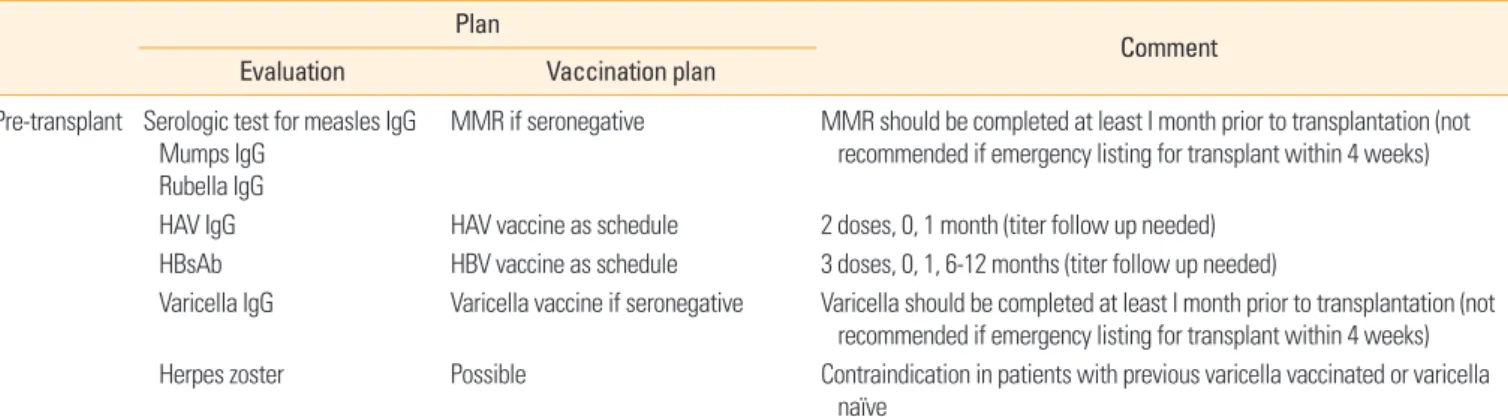
Table 3. Recommended vaccine schedule in adult solid organ transplant recipients
Plan Comment
Evaluation Vaccination plan
Pre-transplant Serologic test for measles IgG Mumps IgG
Rubella IgG
MMR if seronegative MMR should be completed at least I month prior to transplantation (not recommended if emergency listing for transplant within 4 weeks) HAV IgG HAV vaccine as schedule 2 doses, 0, 1 month (titer follow up needed)
HBsAb HBV vaccine as schedule 3 doses, 0, 1, 6-12 months (titer follow up needed)
Varicella IgG Varicella vaccine if seronegative Varicella should be completed at least I month prior to transplantation (not recommended if emergency listing for transplant within 4 weeks) Herpes zoster Possible Contraindication in patients with previous varicella vaccinated or varicella
naïve No need for serologic test, check
vaccine history Tdap (if no history of Tdap with 10 years) Pneumococcal vaccines
Age of <64, first dose of Tdap, then Td every 10 years
PCV13 1 dose followed by a dose of PPSV23 at least 8 weeks later Post-transplant Serologic test for HAV, HBV HAV, HBV if needed Same as pre-transplant periods
Vaccine start 2-6 months after transplant except annual influenza Catch-up vaccination according
to vaccine history and serology
Tdap (or Td) Age of <64, first dose of Tdap, then Td every 10 years
Pneumococcal vaccine PCV13 1 dose followed by a dose of PPSV23 at least 8 weeks later if PPSV23 vaccinated first, can re-vaccine PPSV23 at least 5 years later or PCV13 at least 1 year later if high risk for pneumococcal infection (limited data)
Herpes zoster Contraindication
Annual vaccine Influenza Live influenza vaccine is contraindication, others are strongly recommended
Special
vaccination Meningococcal disease
HPV
Haemophilus influenza type B (Hib) Yellow fever
Splenic dysfunction, conjugate vaccine is preferred Recommended but limited data
Not recommended routine adult SOT recipients Contraindication
MMR, measles, mumps, and rubella vaccine; HAV, hepatitis A virus; HBsAb, hepatitis B surface antibody; HBV, hepatitis B virus; Tdap, tetanus, diphtheria toxoid, and pertussis vaccine; Td, tetanus-diphtheria vaccine; PCV13, pneumococcal conjugate 13-valent vaccine; PPSV23, pneumococcal polysaccharide 23-valent vaccine; HPV, human papillomavirus; SOT, solid organ transplant.
Immunization for Healthcare Workers and Close Contacts of Transplant Recipients
Healthcare workers and close contacts of transplant recipi- ents should be immunized against all vaccine preventable diseases to provide the transplant recipient with additional protection from these diseases [4]. Healthcare workers and close contacts can receive all indicated vaccines, including live attenuated vaccines. However, viral shedding has been reported after the administration of some live attenuated vac- cines, so frequent handwashing should be maintained for a two-week period following vaccination with these types of vaccines [3,4,62,63].
Conclusion
SOT recipients have a higher risk of vaccine-preventable dis- eases than the general population especially if they have not been properly immunized prior to receiving the transplant.
Although the immune response may be suboptimal in trans- plant recipients, immunization is crucial to decreasing the morbidity and mortality from vaccine-preventable diseases in these patients. Whenever possible, physicians should con- sider scheduling vaccination early in the course of end-stage organ disease and postponing the transplantation (Table 3).
Live attenuated vaccines are generally contraindicated after transplantation, although there are increasing data regarding the safety of the varicella vaccine, especially in pediatric trans- plant recipients. Based on the beneficial effect of herd immu- nity, the vaccination of health care workers and close contacts of transplant patients is important to protect immunocom- promised patients from diseases.
ORCID
Youn Jeong Kim http://orcid.org/0000-0001-5870-1801 Sang Il Kim http://orcid.org/0000-0001-9361-7381
References
1. Chow J, Golan Y. Vaccination of solid-organ transplanta- tion candidates. Clin Infect Dis 2009;49:1550-6.
2. Sester M, Gartner BC, Girndt M, Sester U. Vaccination of the solid organ transplant recipient. Transplant Rev (Or- lando) 2008;22:274-84.
3. Kotton CN. Immunization after kidney transplantation-
what is necessary and what is safe? Nat Rev Nephrol 2014;
10:555-62.
4. Danzinger-Isakov L, Kumar D; AST Infectious Diseases Community of Practice. Guidelines for vaccination of sol- id organ transplant candidates and recipients. Am J Trans- plant 2009;9 Suppl 4:S258-62.
5. L’Huillier AG, Wildhaber BE, Belli DC, et al. Successful se- rology-based intervention to increase protection against vaccine-preventable diseases in liver-transplanted chil- dren: a 19-yr review of the Swiss national reference center.
Pediatr Transplant 2012;16:50-7.
6. Kumar D, Michaels MG, Morris MI, et al. Outcomes from pandemic influenza A H1N1 infection in recipients of sol- id-organ transplants: a multicentre cohort study. Lancet Infect Dis 2010;10:521-6.
7. Ng BJ, Glanville AR, Snell G, et al. The impact of pandemic influenza A H1N1 2009 on Australian lung transplant re- cipients. Am J Transplant 2011;11:568-74.
8. Smud A, Nagel CB, Madsen E, et al. Pandemic influenza A/H1N1 virus infection in solid organ transplant recipi- ents: a multicenter study. Transplantation 2010;90:1458- 62.
9. Crespo M, Collado S, Mir M, et al. Efficacy of influenza A H1N1/2009 vaccine in hemodialysis and kidney transplant patients. Clin J Am Soc Nephrol 2011;6:2208-14.
10. Felldin M, Studahl M, Svennerholm B, Friman V. The an- tibody response to pandemic H1N1 2009 influenza vac- cine in adult organ transplant patients. Transpl Int 2012;
25:166-71.
11. Eckerle I, Rosenberger KD, Zwahlen M, Junghanss T. Se- rologic vaccination response after solid organ transplan- tation: a systematic review. PLoS One 2013;8:e56974.
12. Cordero E, Perez-Ordonez A, Aydillo TA, et al. Therapy with m-TOR inhibitors decreases the response to the pan- demic influenza A H1N1 vaccine in solid organ transplant recipients. Am J Transplant 2011;11:2205-13.
13. Hayney MS, Welter DL, Francois M, Reynolds AM, Love RB. Influenza vaccine antibody responses in lung trans- plant recipients. Prog Transplant 2004;14:346-51.
14. Siegrist CA, Ambrosioni J, Bel M, et al. Responses of solid organ transplant recipients to the AS03-adjuvanted pan- demic influenza vaccine. Antivir Ther 2012;17:893-903.
15. Kumar D, Blumberg EA, Danziger-Isakov L, et al. Influen- za vaccination in the organ transplant recipient: review and summary recommendations. Am J Transplant 2011;
11:2020-30.
16. Kidney Disease: Improving Global Outcomes (KDIGO) Transplant Work Group. KDIGO clinical practice guide- line for the care of kidney transplant recipients. Am J Trans- plant 2009;9 Suppl 3:S1-155.
17. Manuel O, Humar A, Chen MH, et al. Immunogenicity and safety of an intradermal boosting strategy for vaccina- tion against influenza in lung transplant recipients. Am J Transplant 2007;7:2567-72.
18. Manuel O, Pascual M, Hoschler K, et al. Humoral response to the influenza A H1N1/09 monovalent AS03-adjuvanted vaccine in immunocompromised patients. Clin Infect Dis 2011;52:248-56.
19. Baluch A, Humar A, Eurich D, et al. Randomized controll- ed trial of high-dose intradermal versus standard-dose in- tramuscular influenza vaccine in organ transplant recipi- ents. Am J Transplant 2013;13:1026-33.
20. Fiorante S, Lopez-Medrano F, Ruiz-Contreras J, Aguado JM. Vaccination against Streptococcus pneumoniae in solid organ transplant recipients. Enferm Infecc Microbiol Clin 2009;27:589-92.
21. Kumar D, Humar A, Plevneshi A, et al. Invasive pneumo- coccal disease in solid organ transplant recipients: 10-year prospective population surveillance. Am J Transplant 2007;
7:1209-14.
22. Blumberg EA, Brozena SC, Stutman P, Wood D, Phan HM, Musher DM. Immunogenicity of pneumococcal vaccine in heart transplant recipients. Clin Infect Dis 2001;32:307- 10.
23. McCashland TM, Preheim LC, Gentry MJ. Pneumococcal vaccine response in cirrhosis and liver transplantation. J Infect Dis 2000;181:757-60.
24. Lindemann M, Heinemann FM, Horn PA, Witzke O. Long- term response to vaccination against pneumococcal anti- gens in kidney transplant recipients. Transplantation 2012;
94:50-6.
25. Centers for Disease Control and Prevention (CDC). Use of 13-valent pneumococcal conjugate vaccine and 23-valent pneumococcal polysaccharide vaccine for adults with im- munocompromising conditions: recommendations of the Advisory Committee on Immunization Practices (ACIP).
MMWR Morb Mortal Wkly Rep 2012;61:816-9.
26. Kumar D, Chen MH, Wong G, et al. A randomized, dou- ble-blind, placebo-controlled trial to evaluate the prime- boost strategy for pneumococcal vaccination in adult liver transplant recipients. Clin Infect Dis 2008;47:885-92.
27. Tobudic S, Plunger V, Sunder-Plassmann G, Riegersperger
M, Burgmann H. Randomized, single blind, controlled trial to evaluate the prime-boost strategy for pneumococ- cal vaccination in renal transplant recipients. PLoS One 2012;7:e46133.
28. Kumar D, Welsh B, Siegal D, Chen MH, Humar A. Immu- nogenicity of pneumococcal vaccine in renal transplant recipients: three year follow-up of a randomized trial. Am J Transplant 2007;7:633-8.
29. Gattringer R, Winkler H, Roedler S, Jaksch P, Herkner H, Burgmann H. Immunogenicity of a combined schedule of 7-valent pneumococcal conjugate vaccine followed by a 23-valent polysaccharide vaccine in adult recipients of heart or lung transplants. Transpl Infect Dis 2011;13:540-4.
30. Cho BH, Stoecker C, Link-Gelles R, Moore MR. Cost-effec- tiveness of administering 13-valent pneumococcal conju- gate vaccine in addition to 23-valent pneumococcal poly- saccharide vaccine to adults with immunocompromising conditions. Vaccine 2013;31:6011-21.
31. Vento S, Garofano T, Renzini C, et al. Fulminant hepatitis associated with hepatitis A virus superinfection in patients with chronic hepatitis C. N Engl J Med 1998;338:286-90.
32. O’Grady JG. Fulminant hepatitis in patients with chronic liver disease. J Viral Hepat 2000;7 Suppl 1:9-10.
33. Lobermann M, Borso D, Hilgendorf I, Fritzsche C, Zettl UK, Reisinger EC. Immunization in the adult immuno- compromised host. Autoimmun Rev 2012;11:212-8.
34. Arslan M, Wiesner RH, Poterucha JJ, Gross JB Jr, Zein NN.
Hepatitis A antibodies in liver transplant recipients: evi- dence for loss of immunity posttransplantation. Liver Tran- spl 2000;6:191-5.
35. Stark K, Gunther M, Neuhaus R, et al. Immunogenicity and safety of hepatitis A vaccine in liver and renal trans- plant recipients. J Infect Dis 1999;180:2014-7.
36. Gunther M, Stark K, Neuhaus R, Reinke P, Schroder K, Bi- enzle U. Rapid decline of antibodies after hepatitis A im- munization in liver and renal transplant recipients. Trans- plantation 2001;71:477-9.
37. Kanaan N, Kabamba B, Marechal C, et al. Significant rate of hepatitis B reactivation following kidney transplantation in patients with resolved infection. J Clin Virol 2012;55:
233-8.
38. Chow KM, Law MC, Leung CB, Szeto CC, Li PK. Antibody response to hepatitis B vaccine in end-stage renal disease patients. Nephron Clin Pract 2006;103:c89-93.
39. Villeneuve E, Vincelette J, Villeneuve JP. Ineffectiveness of hepatitis B vaccination in cirrhotic patients waiting for liv-
er transplantation. Can J Gastroenterol 2000;14 Suppl B:
59B-62B.
40. Moal V, Motte A, Vacher-Coponat H, Tamalet C, Berland Y, Colson P. Considerable decrease in antibodies against hep- atitis B surface antigen following kidney transplantation. J Clin Virol 2015;68:32-6.
41. Dominguez M, Barcena R, Garcia M, Lopez-Sanroman A, Nuno J. Vaccination against hepatitis B virus in cirrhotic patients on liver transplant waiting list. Liver Transpl 2000;
6:440-2.
42. Bruguera M, Rodicio JL, Alcazar JM, Oliver A, Del Rio G, Esteban-Mur R. Effects of different dose levels and vacci- nation schedules on immune response to a recombinant DNA hepatitis B vaccine in haemodialysis patients. Vac- cine 1990;8 Suppl:S47-9.
43. Bel’eed K, Wright M, Eadington D, Farr M, Sellars L. Vac- cination against hepatitis B infection in patients with end stage renal disease. Postgrad Med J 2002;78:538-40.
44. Gagliardi AM, Andriolo BN, Torloni MR, Soares BG. Vac- cines for preventing herpes zoster in older adults. Cochrane Database Syst Rev 2016;3:CD008858.
45. Tseng HF, Luo Y, Shi J, et al. Effectiveness of herpes zoster vaccine in patients 60 years and older with end-stage re- nal disease. Clin Infect Dis 2016;62:462-7.
46. Pergam SA, Limaye AP; AST Infectious Diseases Commu- nity of Practice. Varicella zoster virus (VZV) in solid organ transplant recipients. Am J Transplant 2009;9 Suppl 4:S108- 15.
47. Posfay-Barbe KM, Pittet LF, Sottas C, et al. Varicella-zoster immunization in pediatric liver transplant recipients: safe and immunogenic. Am J Transplant 2012;12:2974-85.
48. Costa E, Buxton J, Brown J, Templeton KE, Breuer J, Johan- nessen I. Fatal disseminated varicella zoster infection fol- lowing zoster vaccination in an immunocompromised patient. BMJ Case Rep 2016;2016: bcr2015212688.
49. Pedrazzi C, Ghio L, Balloni A, et al. Duration of immunity to diphtheria and tetanus in young kidney transplant pa- tients. Pediatr Transplant 1999;3:109-14.
50. Huzly D, Neifer S, Reinke P, et al. Routine immunizations in adult renal transplant recipients. Transplantation 1997;
63:839-45.
51. Kruger S, Muller-Steinhardt M, Kirchner H, Kreft B. A 5-year follow-up on antibody response after diphtheria and teta- nus vaccination in hemodialysis patients. Am J Kidney Dis 2001;38:1264-70.
52. Centers for Disease Control and Prevention (CDC). Up-
dated recommendations for use of meningococcal conju- gate vaccines: Advisory Committee on Immunization Prac- tices (ACIP), 2010. MMWR Morb Mortal Wkly Rep 2011;
60:72-6.
53. Centers for Disease Control and Prevention (CDC). FDA approval of expanded age indication for a tetanus toxoid, reduced diphtheria toxoid and acellular pertussis vaccine.
MMWR Morb Mortal Wkly Rep 2011;60:1279-80.
54. Lauzurica R, Bayes B, Frias C, et al. Disseminated varicella infection in adult renal allograft recipients: role of myco- phenolate mofetil. Transplant Proc 2003;35:1758-9.
55. Fehr T, Bossart W, Wahl C, Binswanger U. Disseminated varicella infection in adult renal allograft recipients: four cases and a review of the literature. Transplantation 2002;
73:608-11.
56. Ishikawa N, Tanabe K, Shimmura H, Tokumoto T, Toma H.
Primary varicella virus in adult renal transplant recipients:
case reports. Transplant Proc 2000;32:1952-3.
57. Marin M, Guris D, Chaves SS, Schmid S, Seward JF; Advi- sory Committee on Immunization Practices, Centers for Disease Control and Prevention (CDC). Prevention of varicella: recommendations of the Advisory Committee on Immunization Practices (ACIP). MMWR Recomm Rep 2007;56:1-40.
58. Kawano Y, Suzuki M, Kawada J, et al. Effectiveness and safety of immunization with live-attenuated and inacti- vated vaccines for pediatric liver transplantation recipi- ents. Vaccine 2015;33:1440-5.
59. Weinberg A, Horslen SP, Kaufman SS, et al. Safety and im- munogenicity of varicella-zoster virus vaccine in pediatric liver and intestine transplant recipients. Am J Transplant 2006;6:565-8.
60. Kano H, Mizuta K, Sakakihara Y, et al. Efficacy and safety of immunization for pre- and post- liver transplant chil- dren. Transplantation 2002;74:543-50.
61. Shinjoh M, Miyairi I, Hoshino K, Takahashi T, Nakayama T.
Effective and safe immunizations with live-attenuated vac- cines for children after living donor liver transplantation.
Vaccine 2008;26:6859-63.
62. Ali T, Scott N, Kallas W, et al. Detection of influenza anti- gen with rapid antibody-based tests after intranasal influ- enza vaccination (FluMist). Clin Infect Dis 2004;38:760-2.
63. Chaves SS, Haber P, Walton K, et al. Safety of varicella vac- cine after licensure in the United States: experience from reports to the vaccine adverse event reporting system, 1995- 2005. J Infect Dis 2008;197 Suppl 2:S170-7.