Cure Characteristics, Mechanical Properties, Abrasion Property and Thermal Properties of EVM/EPM Blends Containing Flame Retardants
Il Kyung Sung, Won Ki Lee, and Chan Young Park
†Dept. of Polymer Engineering, Pukyong National University, Busan 48547, Korea (Received May 12, 2017, Revised May 22, 2017, Accepted May 25, 2017)
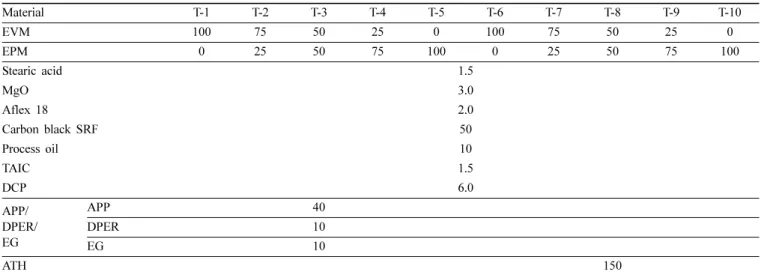
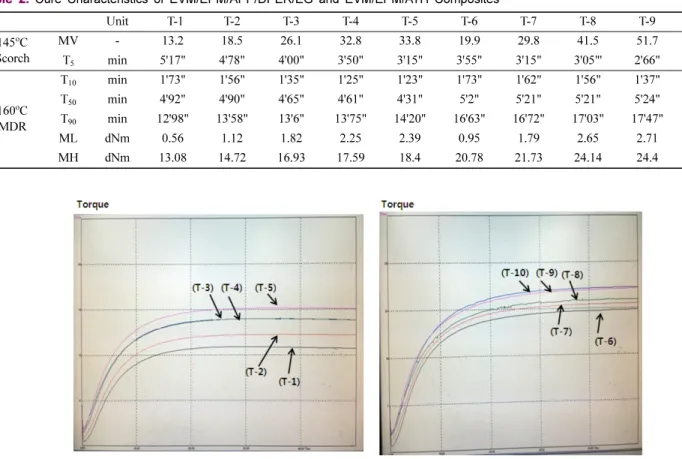
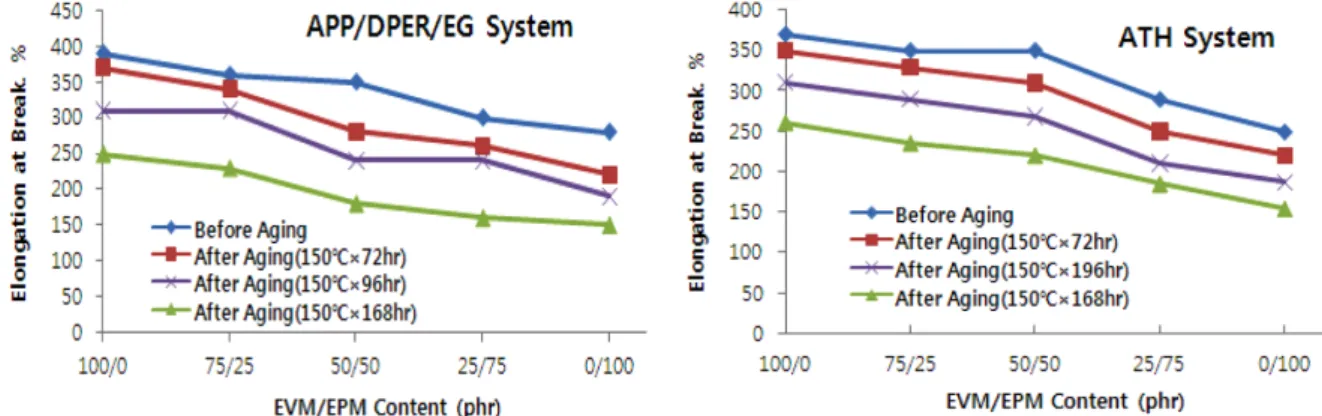
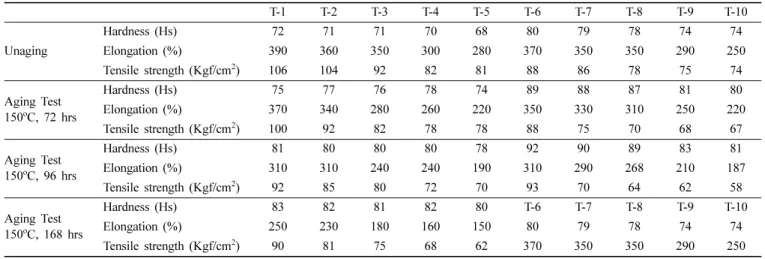
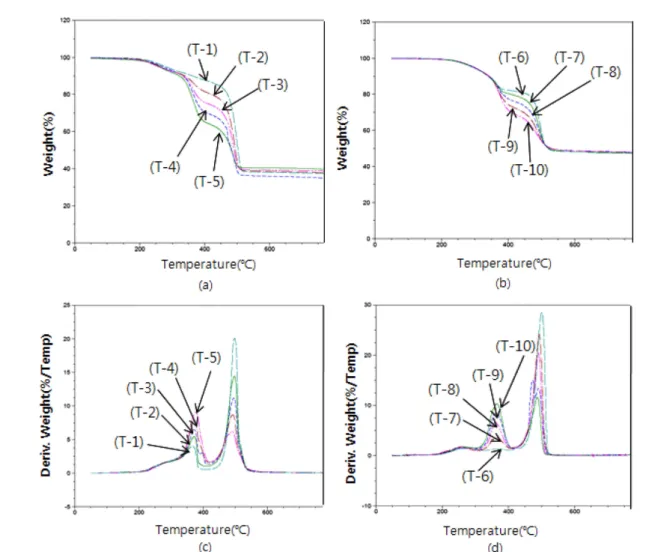
Abstract: The curing behavior, mechanical properties, hot-air aging resistance, abrasion properties,thermal properties, etc., of EVM/EPM/APP (ammonium polyphosphate)/DPER (dipentaerythritol)/EG (expandable graphite) and EVM/EPM/ATH (aluminium trihydroxide) flame retarding systems in ethylene vinyl acetate rubber (EVM) blends with EPM (ethylene pro- pylene rubber) were sequentially examined. For both flame retarding systems, the torque values increased with the content of EPM rubber and with the vulcanization time. As the content of EPM rubber increased, the scorch time became shorter, whereas the optimum cure time followed an increasing trend. For the EVM/EPM/APP/DPER/EG flameretarding system, as the content of EPM rubber increased, the hardness did not change,whereas the tensile strength and elongation at break decreased. A hot-air aging resistance test at 150°C showed that the heat resistance decreased with the EPM content regard- less of the kinds and contents of flame retardants. As the EPM content increased, the abrasion rate became higher and the abrasion resistance of the EVM/EPM/APP/DPER/EG flame retarding systems exceeded that of the EVM/EPM/ATH flame retarding counterparts. In comparison with the EVM/EPM/ATH flame retarding systems, the thermal stability of the EVM/
EPM/APP/DPER/EG flame retarding system showed an increasing tendency.
Keywords: EVM, EPM, EVM/EPM/APP/DPER/EG, EVM/EPM/ATH, scorch time, optimum cure time
Introduction
오늘날 고분자재료는 일상생활의 거의 모든 곳에서 사용되 고 있으나 가연성에 의한 화재 위험은 그 응용을 제한하고 있 다.
1,2따라서 고분자 재료의 점화 또는 타는 성질을 감소시키 는 것은 연구자들에게 매우 매력적인 주제이다. 할로겐 함유 화합물은 고분자 재료에 대한 효과적인 난연제이나
3환경적 인 관심 때문에 몇 가지 할로겐 함유 난연제들은 점차 사용 이 금지되고 있다.
4비독성이고 환경적으로 무해하지만 비할 로겐 화합물, 특히 무기물질은 많은 사용량을 요구함으로써 고분자 재료의 기계적 성질을 손상시킨다. 인을 기반으로 한 난연제는 효과적인 비할로겐으로서 빠르게 발전하고 있으며 난연고분자 재료에 널리 사용되고 있다.
5-8하지만 인을 기반 으로 한 난연제는 고분자 재료를 가소화함으로써 모듈러스, 유리전이온도 및 강도 등을 낮춘다.
9삼산화안티몬을 포함한 무기산화물은 그들 스스로는 난연성을 발현시키지 못하며 다 만 상승제로서 작용하여 브롬이나 발포성 난연제의 난연효과 를 개선시킨다. 고분자 재료의 난연성을 효과적으로 개선시 키기 위한 다른 방법은 고분자 재료를 나노 크기의 무기입자 로 보강하는 것이며 이러한 방법에 의하여 비교적 적은 양의
충진제로 난연성을 개선하고 기계적 성질을 유지하거나 향상 시킬 수 있다. 탄성소재의 연소하기 쉬운 성질을 감소시키기 위한 몇 가지 방안으로서
10-13먼저 난연성을 부여할 수 있는 하나 또는 두 가지 요소를 포함하는 난연성 단량체나 난연성 고분자를 블렌딩하는 것이다. 두번 째는 탄성체를 특정한 시 약으로 처리하는 것이며 마지막으로 고무를 통상적인 난연제 로써 혼련하는 것으로 고분자 혼련물에 난연제를 첨가하는 경 우 일반적으로 난연제의 이행이 발생한다. 또한 고분자 재료 내부로 대부분의 난연제가 침출하는 경우에는 고분자 재료와 이들 첨가제의 비상용성 때문에 물리적 성질 및 기계적 성질 이 나빠지는 결과를 초래할 뿐만 아니라 제품의 내구성을 감 소시키고 제품의 성능에도 영향을 미치게 된다. 고분자 재료 의 블렌딩은 양호한 기계적 성질, 동적 성질, 가공성 및 노화 성질 등의 물성을 갖는 새로운 소재를 만든다. 고분자 블렌드 물의 물성은 일반적으로 고분자 재료의 성질
14, 블렌드 조성
15-17및 계면 접착
18-22등의 요소에 의하여 제어된다. 난연성 고무 를 배합하는 경우에 고려해야 할 매우 중요한 한 가지 요소 는 고무의 고유한 물리적 성질 및 기계적 성질과 개질된 연 소 특성을 절충하는 것이다.
23,24하지만 개질된 고무가 사용 되는 분야는 고무의 물리적 성질 및 기계적 성질에 있어서 생 기는 변화의 수용 여부를 결정한다. 예를들어 고무의 기계적 성질이 주요 관심사인 타이어 산업에 있어서 탄성 모듈러스
†