Effect of Nicotinic Acid on Sperm Characteristic and Oocyte Development after In Vitro Fertilization using Cryopreserved Boar Semen
Yu-Jin Kim1, Sang-Hee Lee1, Yeon-Ju Lee1, Hae-In Oh1, Hee-Tae Cheong2, Boo-Keun Yang1, Seunghyung Lee1,3 and Choon-Keun Park1,†
1College of Animal Life Science, Kangwon National University, Chuncheon 200-701, Republic of Korea
2College of Veterinary Medicine, Kangwon National University, Chuncheon 200-701, Republic of Korea
3Institute of Animal Resources, Kangwon National University, Chuncheon 200-701, Republic of Korea
ABSTRACT
The objective of this study was to investigate the efficiency of nicotinic acid on sperm cryosurvival and fertilization ability in frozen-thawed boar semen. Boar semen was collected by glove-hand method and was frozen using freezing solution treated to 0, 5, 10 and 20 mM of nicotinic acid. The frozen sperm for sperm characteristic analysis was thawed such as viability, acrosome reaction, and mitochondrial integrity. The frozen-thawed sperm was estimated by SYBR14/PI double staining for viability, FITC-PNA/PI double staining for acrosome reaction and Rhodamine123/PI double staining for mitochondrial integrity using a flow cytometry. The embryo was estimated in vitro development and DCFDA staining for reactive oxygen species assessment. As results, frozen-thawed sperm viability was significantly higher in 5 and 10 mM (61.1 ± 1.5%, 64.7 ± 2.0%) of nicotinic acid than other groups (0 mM, 52.1 ± 2.3%; 20 mM, 47.8
± 5.1%, P<0.05). The live sperm with acrosome reaction was significantly higher in 5 and 10 mM of nicotinic acid (26.1 ± 1.8%, 24.9 ± 1.5%) than other groups (0 mM, 35.3 ± 0.8%; 20 mM, 36.5 ± 1.9%, P<0.05). The live sperm with mitochondrial integrity was significantly higher in 5 and 10 mM (84.2 ± 3.6%, 88.4 ± 2.3%) of nicotinic acid than other groups (0 mM, 77.3 ± 4.4%; 20 mM, 73.3 ± 3.6%, P<0.05). Blastocyst rate of in vitro development was significantly higher in 10 mM (17.0 ± 1.3%) of nicotinic acid than other groups (0 mM, 9.4 ± 0.5%; 5mM, 12.6 ± 0.8%; 20 mM, 5.0 ± 1.0%, P<0.05). Moreover, total cell number was higher in 5 and 10 mM (53.6 ± 2.9%, 57.9
± 2.8%) of nicotinic acid than other groups (0 mM, 41.0 ± 1.4%; 20 mM, 23.2 ± 2.8%, P<0.05). Hydrogen peroxide in embryos was lower in 5 mM nicotinic acid (0.7 ± 0.1%) than other groups (0 mM, 1.0 ± 0.1%; 10mM, 0.9 ± 0.0%; 20 mM, 1.4 ± 1.0%, P<0.05). In conclusion, nicotinic acid-treated semen improves cryosurvival and quality of spermatozoa. Also, the fertilized oocytes with nicotinic acid improve quality of embryo and blastocyst formation.
(Key words : frozen-thawed semen, nicotinic acid, spermatozoa, cryosurvival, embryo)
*This research was supported by Bio-industry Technology Development Program (IPET 31060-05-1-CG000), Ministry for Food, Agriculture, Forestry and Fisheries, Republic of Korea.
†Correspondence : [email protected]
INTRODUCTION
Cryopreservation technique has various advantages of long- term storage and being powerful tool of gene preservation and restoration of endangered species. Also, frozen semen is widely used for system improvement preservation of superior breed and fertility in domestic animals. However, because of cold shock, oxidative stress and reactive oxygen species (ROS) ge- neration (Baishya et al., 2014) during for freezing and thawing process, frozen-thawed sperm loses its viability, motility (Wat- son, 2000), mitochondrial integrity and gets more damage of acrosome membrane (Curry, 2000). Also, abnormal morphology
increases (Bertoldo et al., 2014).
Several studies has reported that the supplement of anti- oxidants in the freezing extender was improved the quality of semen for cryopreservation (Sarıozkan et al., 2009). To improve the quality of semen, several methods are used - supplying of extender (Bresciani et al., 2013), controlling of cooling rate (Varisli et al., 2013) and containing the additive (Yeste et al., 2014). Protein (Beirão et al., 2012), sucrose (Chen et al., 1993) and antioxidant (Gadea et al., 2011) were contained into freezing extender for sperm cryopreservation. Addition of antioxidant in freezing extender has reported to improve the viability, motility, plasma membrane integrity and decreased ROS (Gualtieri et
al., 2014) of sperm during cryopreservation.
Nicotinic acid was a type of antioxidant and a precursor of nicotinamide adenine dinucleotide (NAD) source of vitamin B3. The nicotinic acid is controls the NAD and NAD phosphate (NADP) coenzyme involved in the mitochondria. NAD and its relative NADP help the produce energy by involving in the mechanism of the TCA cycle. Some studies have reported that effect of supplement the nicotinic acid have been used to induced cell death in hepatocytes and induce of hydrogen peroxide in mice (Dou et al., 2013). Also nicotinic acid has been used to improve the viability, mitochondrial integrity in storage of liquid miniature pig sperm (Lee et al., 2014).
However, there is no study about influence of nicotinic acid on boar sperm cryopreservation. Therefore, the objective of this study is to evaluate the characteristic and development of cryopreserved boar sperm with nicotinic acid and assess de- velopment of oocytes in embryos in vitro fertilized with the cryopreserved boar sperm.
MATERIALS AND METHODS
All experiment procedures that included animals followed the scientific and ethical regulations proposed by the European Animal Experiment Handling License Textbook (Baumans et al., 1997) and board approval (No: KIACUC-09-0139) was attained from the Animal Experiment Ethics Committee in Kangwon National University, Republic of Korea.
1. Semen Collection
Fresh semen samples from 3 miniature pigs housed at a Kangwon National University farm (Republic of Korea) were collected using a glove-hand method. Collected semen was di- luted 1 × 10⁷ spermatozoa using Modena B (30.0 g/l glucose, 2.25 g/l EDTA, 2.50 g/l sodium citrate, 1.00 g/l sodium bicar- bonate, 5.00 g/l tris, 2.50 g/l citric acid, 0.05 g/l cysteine and 0.30 g/l gentamicin sulfate) and transported to the laboratory within 2 hours. Semen used in the experiment had normal move- ment of more than 70% and viability of more than 80% and storaged at 18℃ refrigerator.
2. Preparation of Freezing Solution
1st Lactose Egg-yolk (LEY) freezing solution was made 11%
α-lactose (L2643, Sigma, St. Louis, USA) by the addition of 20% egg-yolk and centrifuged at 3,000 rpm for 30 minutes at
4℃. As the 1st freezing solution, different concentration of ni- cotinic acid 0, 5, 10 and 20 mM were supplied to supernatant and pH was adjusted to pH 6.1, which before addition of nico- tinic acid. 2nd freezing solution was produced by 1st freezing solution included 9% glycerol (G6279, Sigma) and 1.5% Orvus Es Paste (OEP, Equex® STM paste, Nova Chemical Sales Inc, Scituate, USA) and storaged at 4℃ refrigerator.
3. Semen Cryopreservation and Thawing
Semen was centrifuged at 1,500 rpm for 5 minutes in 18℃ and remove the supernatant. Semen was diluted 1 × 10⁹ sperma- tozoa/mL using 1st freezing solution and was cooling at 5℃ within 1.5∼2 hours. Semen contained 1st freezing solution was reedited by 2nd freezing solution that one-half volume of 1st freezing solution used to dilute semen. Then, semen diluted by 1st and 2nd freezing solution packed in 0.25 mm straw. 0.25 mm straw was pre-freezing for 10 minutes on a 10 cm from the liquid nitrogen. The frozen semen in 0.25 mm straw was observed the viability and motility where it thawed for 45 seconds at 38℃ in water-bath and cryopreserved.
4. Analysis of Sperm Characteristics
Flow cytometry methods and assessment of semen were pro- cessed using the manufacturer’s protocol (Lee et al., 2014).
The evaluation of frozen-thawed sperm was determined with a LIVE/DEAD sperm viability kit (L7011, Invitrogen, Gaithers- burg, USA), Lectin from Arachis hypogaea (FITC-PNA; L7381, Sigma) FITC-PNA and Rhodamine 123 (R8004, Sigma) with Propidium Iodide (PI, 2 µM) by fluorescence staining. The frozen semen thawed for 45 seconds at 38℃ in water-bath and centrifuged at 1,500 rpm for 5 minutes at 18℃. After the su- pernatant remove, semen was diluted with 1 × 10⁷ spermato- zoa/mL using Modena B and was stained with 40 nM of SYBR- 14,2 µM of FITC-PNA and 2 µM of Rhodamine 123. After semen diluted for 5 min at 38℃ in dark, 2 µM of PI was added to diluted for 5 minutes at 38℃ in dark. Stained sperms were centrifuged 1,500 rpm for 5 minutes and the supernatant was removed. And pellet was resuspended in 500 µL of PBS (—). Then, stained sperm using dye were analyzed by flow cytometry (BD FACSCantoTMII, BD Biosciences, San Diego, USA) which were calculated live, dying, acrosome reaction and mitochondrial integrity of live or all sperm from CELL- Quest, version 6.0 software for influence of nicotinic acid on cryopreservation in boar sperm (Lee et al., 2015).
5. Collection of Oocytes
Porcine ovaries were collected at the butchery and ovary was transported within 2 hours in the laboratory by dipping to saline (0.9%, NaCl) in 34 to 36℃. Ovary washed the Saline (0.85%, NaCl) and 10 ml syringe needle of 18 gauge was collected follicular fluid at 2∼6 mm of follicle. Collected fo- llicular fluid was settle down at room temperature and washed with Phosphate buffer saline-polyvinyl alcohol (PBS-PVA). Cu- mulus oocytes complexes (COCs) were collected by stereosco- pic microscope. Maturation medium of COCs used TCM-199 by the basic culture medium which supplemented with 10%
(v/v) porcine follicular fluid (pFF), 10 µl/ml hCG, 1 µl/ml EGF, FSH and LH. After washed three times in PBS- PVA of collected COCs incubated at 39℃, 5% CO2 for 22 hours. After 22 hours, the maturated COCs were washed three times in TCM-199 which supplemented with 10% (v/v) pFF and 1 µl/ ml EGF and incubated at 39℃, 5% CO2 for 22 hours.
6. In Vitro Fertilization
After in vitro maturation, COCs denuded 0.1% hyaluronidase (H3506, Sigma) to remove a cumulus cells. After remove the cumulus cells, oocyte was injected 50 µl of mTBM which su- pplemented with 2 mg/ml Bovine Serum Albumin (BSA; A6003, Sigma) until fertilized with sperm. Frozen semen trea- ted different concentration of nicotinic acid (0, 5, 10 and 20 mM) thawed for 45 seconds at 38℃ in water-bath and diluted Belts- ville thawing solution (BTS) 4 ml. Semen was centrifuged at 1,500 rpm for 5 minutes at 18℃ and remove the supernatant.
And semen was diluted to 1 × 10⁵ spermatozoa/ml using mTBM supplemented with 4 mg/ml BSA (A4503, Sigma). Then, dilu- ted semen was infect to mTBM included oocyte and incubated at 39℃, 5% CO2 for 6 hours.
7. In Vitro Culture
Fertilized oocytes used pipet to remove the cumulus cells and sperm by attached to embryos. Embryos were washed three times in Porcine Zygote Medium-3 (PZM-3) which supplemen- ted with 3 mg/ml BSA and incubated at 39℃, 5% CO2 for 48 hours. After 48 hours, embryos were incubated at 39℃, 5%
CO2 for 144 hours in 4-well dish. Early Blastocyst formation was confirmed after 6∼7 days and total cell counting on 7- day.
8. Assessment of Hydrogen Peroxide Levels in Embryos
Embryonic ROS levels were measured by stained Carboxy-
DCFDA (C-369, Invitrogen). 16 cell∼morula cells were collec- ted incubation at 168 hours, and fixed 4% paraformaldehyde at 15 minutes. Fixed 16 cell∼morula cells were stained 20 µm of DCFDA at 30 minutes in dark and washing with PBS-PVA. 16 cell∼morula cells were observed with a fluorescence micro- scope (ECLIOSE TE 300, Nikon, Tokyo, Japan). The fluorescence level were analysis using Multi Gauge V3.0.
9. Blastocyst Total Cell Counting
Blastocysts were stained with Hoechst 33342 (B2261, Sigma).
After blastocysts were immersed to 0.2% PBS-PVA-BSA at 5 minutes, and fixed to 4% paraformaldehyde for 5 minutes. Then, blastocyst was stained with 1 µl/ml Hoechst at 30 minutes in dark. Total cells of each blastocysts were observed with a fluorescence microscope.
10. Statistical Analysis
All the experimental data are presented as mean ± standard error of the mean (S.E.M.). The statistical significance of di- fference was assessed by General Linear Model (G.L.M.) using SAS version 9.3.
RESULTS
The effect of nicotinic acid on viability of frozen-thawed sperm shows in Fig. 1. The percentages of live sperm were higher in 5 (61.1 ± 1.5%) and 10 mM (64.7 ± 2.0%) than 0 (52.2 ± 2.3%) and 20 mM (47.8 ± 5.1%). And, 10mM of nicotinic acid was significantly higher than 0 and 20 mM in live sperm percentage (P<0.05). The percentages of dying sperm were significantly lower in 10 mM (20.5 ± 2.5%) of nicotinic acid than 0 (35.2 ± 2.9%), 5 (29.4 ± 1.7%), and 20 mM (36.6
± 2.9%, P<0.05).
The effect of nicotinic acid on acrosome reaction with live sperm and all sperm of frozen-thawed sperm is shows in Fig.
2. The percentages of live sperm with acrosome reaction were lower in 5 (26.1 ± 1.8%) and 10 mM (24.9 ± 1.5%) of nico- tinic acid than 0 (35.3 ± 0.8%) and 20 mM (36.5 ± 1.9%).
And, 10 mM of nicotinic acid was significantly lower than 0 and 20 mM in live sperm with acrosome reaction (P<0.05).
The percentages of all sperm were lower in 5 (32.2 ± 1.9%) and 10 mM (35.6 ± 1.1%) than 0 (42.3 ± 2.1%) and 20 mM (45.0 ± 3.2%) of nicotinic acid. And, 5 mM of nicotinic acid was significantly lower than 0 and 20 mM in all sperm with
Fig. 1. Flow cytometric dot-plot of boar sperm population cryopreserved in freezing extender supplemented with nicotinic acid, effect of nicotinic acid on live (black bar) and dying (white bar) in frozen-thawed boar sperm (A), (B). a~c Values with differents uper scripts in the same column with live sperm and dying sperm are significantly different (P<0.05, n=4).
Fig. 2. Flow cytometric dot-plot of boar sperm population cryopreserved in freezing extender supplemented with nicotinic acid, effect of nicotinic acid on live (black bar) and all (white bar) in frozen-thawed boar sperm (A), (B). a~c Values with differents uper scripts in the same column with live sperm and all sperm are significantly different (P<0.05, n=4).
Fig. 3. Flow cytometric dot-plot of boar sperm population cryopreserved in freezing extender supplemented with nicotinic acid, effect of nicotinic acid on live (black bar) and all (white bar) in frozen-thawed boar sperm (A), (B). a,b Values with differents uper scripts in the same column with live sperm and all sperm are significantly different (P<0.05, n=4).
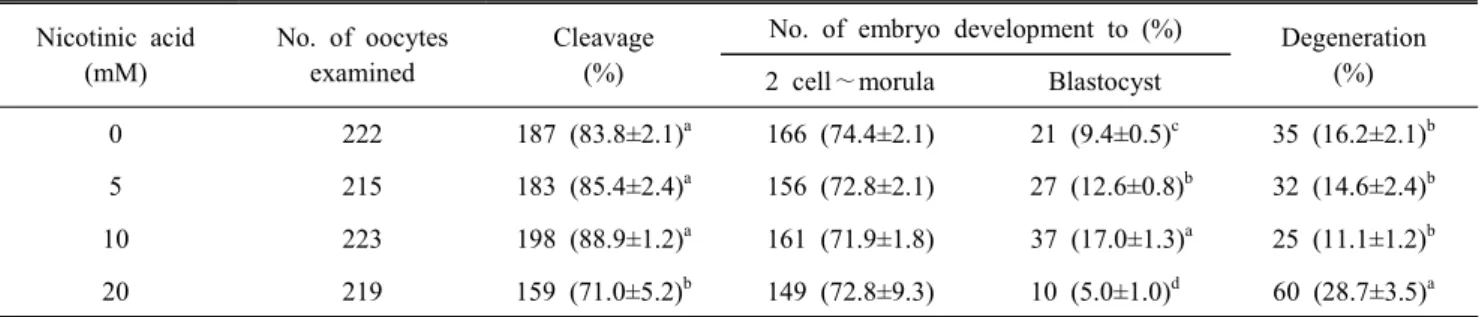
Table 1. In vitro development of oocytes of 168 hour after fertilized with frozen-thawed semen supplemented with nicotinic acid in pigs
Nicotinic acid (mM)
No. of oocytes examined
Cleavage (%)
No. of embryo development to (%) Degeneration 2 cell∼morula Blastocyst (%)
0 222 187 (83.8±2.1)a 166 (74.4±2.1) 21 (9.4±0.5)c 35 (16.2±2.1)b
5 215 183 (85.4±2.4)a 156 (72.8±2.1) 27 (12.6±0.8)b 32 (14.6±2.4)b
10 223 198 (88.9±1.2)a 161 (71.9±1.8) 37 (17.0±1.3)a 25 (11.1±1.2)b
20 219 159 (71.0±5.2)b 149 (72.8±9.3) 10 (5.0±1.0)d 60 (28.7±3.5)a
a∼d Values in the same column with different superscripts are significantly different (P<0.05, n=4).
acrosome reaction (P<0.05).
The effect of nicotinic acid on mitochondrial integrity with live sperm and all sperm of frozen-thawed sperm is shows in Fig. 3. The percentages of live sperm with mitochondrial inte- grity were higher in 5 (84.1 ± 3.6%) and 10 mM (88.4 ± 2.3
%) than 0 (77.3 ± 4.4%) and 20 mM (73.3 ± 3.6%) of nicotinic acid in live sperm with mitochondrial integrity. And, 10 mM of nicotinic acid was significantly higher than 0 and 20 mM in live sperm percentage (P<0.05). The percentages of all sperm with mitochondrial integrity were higher in 5 (58.1 ± 6.8%) and 10 mM (66.8 ± 3.4%) of nicotinic acid than 0 (45.3 ± 5.4%) and 20 mM (41.7 ± 5.6%) in all sperm with mitochon-
drial integrity. And, 10 mM of nicotinic acid was significantly higher than 20 mM in live sperm percentage (P<0.05).
The effect of in vitro development on embryo fertilized using frozen-thawed semen treated 0, 5, 10 and 20 mM of nicotinic acid shows in Table 1. Cleavage rates were significantly lower in 20 mM (71.0 ± 5.2%) than 0 (83.8 ± 2.1%), 5 (85.4 ± 2.4
%) and 10 mM (88.9 ± 1.2) of nicotinic acid (P<0.05). Blasto- cyst rates were significantly higher in 10 mM (17.0 ± 1.3) than 0 (9.4 ± 0.5), 5 (12.6 ± 0.8%) and 20 mM (5.0 ± 1.0) (P<0.05).
And, Degeneration rates of embryos were significantly lower in 20mM (28.7 ± 3.5%) than 0 (16.2 ± 2.1%), 5 (14.6 ± 2.4%), and 10 mM (11.1 ± 1.2%) of nicotinic acid (P<0.05).
The effect of total cell number on blastocyst formation of embryos fertilized using frozen-thawed semen treated 0, 5, 10 and 20 mM of nicotinic acid is show in Fig. 4. The percen- tages of total cell number rate were higher in 5 (53.6 ± 2.9%) and 10 mM (57.9 ± 2.8%) than 0 (41.7 ± 1.4%) and 20 mM (23.2 ± 2.8%) of nicotinic acid. Then, 5 and 10 mM of nicotinic acid was significantly lower than 0 and 20 mM in total cell number rate of blastocyst (P<0.05). Moreover, we determined whether hydrogen peroxide regulates embryo production in frozen-thawed sperm. As Fig. 5, the percentage of ROS gene- ration was significantly lower in 5 mM (0.7 ± 0.1%) of nicotinic acid than 0 (1 ± 0.1%), 10 (0.9 ± 0.0%), and 20 mM (1.4 ± 0.1%, P<0.05).
DISCUSSION
In this study, we evaluated the efficiency on cryopreserva- tion of sperm with nicotinic acid and in vitro development of embryos fertilized by frozen-thawed semen with nicotinic acid in pigs. In boar sperm, cryopreservation was adverse effect
Fig. 4. Image of nucleus (A) and total cell number (B) of blasto- cysts at 168 h after in vitro fertilization using frozen-thawed semen supplemented with nicotinic acid in pigs. a~c Diffe- rents uper script letters indicate a significant difference (P<
0.05). Number of brackets were presented total blastocyst.
Scale bar, 50 µm; Blue, Hoechst 33342.
Fig. 5. Fluorsecence photomicrograph (A) and relative intensity level (B) of hydrogen peroxide in embryos after 168 h at in vitro fertilization using frozen-thawed semen supplement- ed with nicotinic acid in pigs. a~c Differents uper script letters indicate a significant difference (P<0.05). Scale bar: 100 µm, Green: DCFDA stained embryo, n=3.
such as reduce of motility, increasing of membrane damage and increasing of DNA damage (Eriksson and Rodriguez-Martinez, 2000), because of cold shock by oxidative stress and ROS generation during freezing and thawing process (Gadea et al., 2004). To prevent the adverse effect widely used supplement of antioxidant method in frozen semen (Chanapiwat et al., 2014). Moreover, high quality of frozen-thawed semen can improve antioxidant ability and development of embryos in human (Donnelly et al., 1998), cattle (Petrunkina et al., 2007), pigs (El Shourbagy et al., 2006).
NAD/NADP regulates mitochondrial biogenesis in rodents (Stein and Imai, 2012). NAD/NADP ratio was essential for mitochondrial function and mitochondria which was produced by ATP activity (Stein and Imai, 2012). Also mitochondrial membrane potential of sperm was related with early apoptosis, reduce of motility and decrease of fertilize function (Amaral et al., 2013). The survival of the sperm was associated with ROS and mitochondria in the sperm preventing the generation of oxidative stress (Fang et al., 2014). These results suggest that nicotinic acid can stimulate mitochondrial activity and protect ROS-mediated damage of sperm as antioxidants. (Ben Abdallah
et al., 2012). Sperm capacitation, acrosome reaction, and outer acrosomal membrane damage are increased by intracellular Ca2+ (Breitbart et al., 2002). Nicotinic acid adenine dinucleo- tide phosphate (NAADP) was regulated with intracellular Ca2+
in human jurkat T cells (Berg et al., 2000) and NADH keep the sperm plasma membrane, mitochondria, and scavenger ROS (Delmas et al., 2005).
Effect of nicotinic acid on sperm motility maintained a large amount of ATP activity (Halangk et al., 1990). Actually, half of the ATP was used to maintain the motility in cattle and sheep (Halangk et al., 1990). The activation of ATP signaling pathway was released mitochondrial by metabolites such as NAD, NADH and nicotinamide adenine dinucleotide phosphate (NADPH, Verdin et al., 2010). NAD, NADP and NADPH could belong to the fundamental common mediators of various biological process (Ying, 2008). NAD and NADP produce im- pact factors such as mitochondrial activates, oxidative stress, prevent of cell death and aging process. Also NADPH was important in cellular antioxidants systems and prevented of ROS (Fleury et al., 2002). Therefore, the supplemented nicotinic acid helps intact mitochondria by metabolism produce mito- chondrial integrity by these enzymes.
During the semen freezing, nicotinic acid was activated by the coenzyme. Adjusting the Ca2+ and capacitation was inhi- bited by coenzyme. Therefore, to increase the survival rate of sperm, acrosome reaction was in hibited, and the coenzyme was increasing mitochondrial integrity. Thus, we will study about Ca2+, capacitation and mitochondria coenzyme by sperm with nicotinic acid.
The calcium signal was controlled in NAADP that release Ca2+ from organelles (Lee, 2001). Excessive nicotinic acid cau- sed intracellular calcium overload don’t control NAADP (Peng and Jou, 2010). Also, excessive concentration of intracellular Ca2+ accelerates acrosome reaction in sperm. Eventually, im- proper acrosome reaction in pre-fertilization was being about apoptosis and unable to fertilize the oocyte (Breitbart, 2002).
Therefore, excessive nicotinic acid affect sperm characteristic, we determined that 20 mM nicotinic acid was negative control group.
In this study, frozen-thawed sperm using 5 and 10 mM ni- cotinic acid supplemented in freezing extender was increased to blastocyst formation. This result suggests that addition of nicotinic acid in freezing extender was improved fertility of frozen-thawed sperm. High quality sperm was fertilized with
oocyte which was development by healthy fetal (Gualtieri et al., 2014) and the higher the cleavage rate was to help de- velopment of blastocyst and hatching blastocyst stage (Cruz et al., 2011). Therefore, frozen-thawed semen supplemented with nicotinic acid was beneficial for growth of the embryos such as, the blastocyst rate and total cell number of blastocyst.
Unstable oxygen molecules produce ROS which are hydrogen peroxide, superoxide ion and hydroxyl radical that affect the mammal cells (Chaube et al., 2014). The growth of embryos was related with ROS, and supplement of antioxidants can scavenge of ROS (Zini and Al-Hathal et al., 2011). Generally, mitochondria of sperm produce energy though ATP pathway, which was involved in sperm-oocyte interaction, development of embryo and formation of blastocysts (Sawosz et al., 2012).
This study was observed that mitochondria integrity in embryo of 5 and 10 mM nicotinic acid groups were higher than other groups. We also observed that sperm mitochondria regulate cleavage rate, blastocyst rate, and blastocysts of embryos.
Finally, supplement of 5 and 10 mM nicotinic acid in free- zing extender has positive effect on survival, acrosomal intact and mitochondrial integrity in frozen-thawed boar semen. Es- pecially 10 mM group have a greater effect of frozen-thawed semen quality than other groups. Moreover, in vitro develop- ment of oocytes after fertilized with 10 mM of nicotinic acid has enhanced oocyte cleavage, blastocyst rate and total cell number of blastocyst. We suggest that this result will help study of freezing sperm and development in vitro.
REFERENCES
Amaral A, Lourenco B, Marques M and Ramalho-Santos J.
2013. Mitochondria functionality and sperm quality. Repro- duction 146(5):R163-R174.
Baishya S, Biswas R, Kadirvel G, Deka B, Kumar S, Sinha S, Dutta D and Saikia G. 2014. Effect of conventional and con- trolled freezing method on the post thaw characteristics of boar spermatozoa. Animal Reproduction Science 149(3):231- 237.
Baumans V, Bernoth EM, Bromage N, Bunyan J, Erhardt W, Flecknell P, Gregory N, Hackbarth H, Morton D and War- wick MC. 1997. Recommendations for euthanasia of expe- rimental animals: Part 2. Laboratory Animals 31(1):1-32.
Beirao J, Zilli L, Vilella S, Cabrita E, Schiavone R and Herraez MP. 2012. Improving sperm cryopreservation with antifreeze
proteins: Effect on gilthead seabream (Sparus aurata) plasma membrane lipids. Biology of Reproduction 86(2):59.
Ben Abdallah F, Fetoui H, Zribi N, Fakfakh F and Ammar- Keskes L. 2012. Antioxidant supplementations in vitro im- prove rat sperm parameters and enhance antioxidant enzyme activities against dimethoate-induced sperm damages. And- rologia 44(s1):272-279.
Berg I, Potter BV, Mayr GW and Guse AH. 2000. Nicotinic acid adenine dinucleotide phosphate (NAADP+) is an essen- tial regulator of T-lymphocyte Ca2+-signaling. The Journal of Cell Biology 150(3):581-588.
Bertoldo MJ, Guibert E, Tartarin P, Guillory V and Froment P.
2014. Effect of metformin on the fertilizing ability of mouse spermatozoa. Cryobiology 68(2):262-268.
Breitbart H. 2002. Intracellular calcium regulation in sperm ca- pacitation and acrosomal reaction. Molecular and Cellular Endocrinology 187(1):139-144.
Bresciani C, Morini G, Bettini R, Bigliardi E, Di Ianni F, Ca- bassi C, Sabbioni A and Parmigiani E. 2013. Reproductive efficiency of a new modified boar semen extender for liquid storage. Livestock Science 157(1):384-388.
Chanapiwat P, Kaeoket K and Tummaruk P. 2014. Improve- ment of the frozen boar semen quality by docosahexaenoic acid (DHA) and L-cysteine supplementation. African Journal of Biotechnology 11(15):3697-3703.
Chaube SK, Shrivastav TG, Prasad S, Tiwari M, Tripathi A, Pandey AN and Premkumar KV. 2014. Clomiphene citrate Induces ROS-mediated apoptosis in mammalian oocytes.
Open Journal of Apoptosis 2014.
Chen Y, Foote R and Brockett C. 1993. Effect of sucrose, tre- halose, hypotaurine, taurine, and blood serum on survival of frozen bull sperm. Cryobiology 30(4):423-431.
Cruz M, Gadea B, Garrido N, Pedersen KS, Martínez M, Perez- Cano I, Muñoz M and Meseguer M. 2011. Embryo quality, blastocyst and ongoing pregnancy rates in oocyte donation patients whose embryos were monitored by time-lapse ima- ging. Journal of Assisted Reproduction and Genetics 28(7):
569-573.
Curry MR. 2000. Cryopreservation of semen from domestic livestock. Reviews of Reproduction 5(1):46-52.
Delmas D, Jannin B, Latruffe N and Latruffe PN. 2005. Res- veratrol: Natural properties against atherosclerosis, associated pro-inflammatory effects and aging. Molecular Nutrition &
Food Research 49(5):377-395.
Donnelly ET, Lewis SE, McNally JA and Thompson W. 1998.
In vitro fertilization and pregnancy rates: The influence of sperm motility and morphology on IVF outcome. Fertility and Sterility 70(2):305-314.
Dou X, Shen C, Wang Z, Li S, Zhang X and Song Z. 2013.
Protection of nicotinic acid against oxidative stress-induced cell death in hepatocytes contributes to its beneficial effect on alcohol-induced liver injury in mice. The Journal of Nu- tritional Biochemistry 24(8):1520-1528.
El Shourbagy SH, Spikings EC, Freitas M and St John JC.
2006. Mitochondria directly influence fertilisation outcome in the pig. Reproduction 131(2):233-245.
Eriksson B and Rodriguez-Martinez H. 2000. Effect of free- zing and thawing rates on the post-thaw viability of boar spermatozoa frozen in FlatPacks and Maxi-straws. Animal Reproduction Science 63(3):205-220.
Fang L, Bai C, Chen Y, Dai J, Xiang Y, Ji X, Huang C and Dong Q. 2014. Inhibition of ROS production through mito- chondria-targeted antioxidant and mitochondrial uncoupling increases post-thaw sperm viability in yellow catfish. Cryo- biology 69(3):386-393.
Fleury C, Mignotte B and Vayssière JL. 2002. Mitochondrial reactive oxygen species in cell death signaling. Biochimie 84(2):131-141.
Gadea J, Molla M, Selles E, Marco M, Garcia-Vazquez F and Gardon J. 2011. Reduced glutathione content in human sperm is decreased after cryopreservation: Effect of the addi- tion of reduced glutathione to the freezing and thawing extenders. Cryobiology 62(1):40-46.
Gadea J, Sellés E, Marco MA, Coy P, Matás C, Romar R and Ruiz S. 2004. Decrease in glutathione content in boar sperm after cryopreservation: Effect of the addition of reduced glu- tathione to the freezing and thawing extenders. Theriogeno- logy 62(3):690-701.
Gualtieri R, Barbato V, Fiorentino I, Braun S, Rizos D, Longo- bardi S and Talevi R. 2014. Treatment with zinc, d-aspartate, and coenzyme Q10 protects bull sperm against damage and improves their ability to support embryo development. The- riogenology 82(4):592-598.
Halangk W, Troger U and Bohnensack R. 1990. Quantification of aerobic energy turnover in epididymal bull spermatozoa.
Biochimica et Biophysica Acta (BBA)-Bioenergetics 1015 (2):243-247.
Lee HC. 2001. Physiological functions of cyclic ADP-ribose
and NAADP as calcium messengers. Annual Review of Pharmacology and Toxicology 41(1):317-345.
Lee SH, Lee KJ, Woo JS, Lee SH, Cheong HT, Yang BK and Park CK. 2014. Characteristic changes in Korean native cattle spermatozoa frozen-thawed with l-cysteine and/or ca- talase. Journal of Embryo Transfer 29(2):163-169.
Lee SH and Park CK. 2015. Effect of magnetized extender on sperm membrane integrity and development of oocytes in vitro fertilized with liquid storage boar semen. Anmial Re- production Science.
Lee YJ, Lee SH, Lee ES, Lee ST. Cheong HT, Yang BK, Lee SH and Park CK. 2014. Effect of nicotinic acid on fresh semen characteristics in miniature pigs. Journal of Embryo Transfer. 29:385-391.
Peng TI and Jou MJ. 2010. Oxidative stress caused by mi- tochondrial calcium overload. Annals of the New York Academy of Sciences 1201(1):183-188.
Petrunkina A, Waberski D, Günzel-Apel A and Topfer-Petersen E. 2007. Determinants of sperm quality and fertility in do- mestic species. Reproduction 134(1):3-17.
Sarıozkan S, Bucak MN, Tuncer PB, Ulutaş PA and Bilgen A.
2009. The influence of cysteine and taurine on microscopic- oxidative stress parameters and fertilizing ability of bull semen following cryopreservation. Cryobiology 58(2):134- 138.
Sawosz F, Pineda L, Hotowy A, Jaworski S and Prasek M. 2012.
Influence of Ag nanoparticles, ATP and biocomplex of Ag
nanoparticles with ATP on morphology of chicken embryo pectoral muscles. Ann Warsaw Univ. Life Sci. 51:127-132.
Stein LR and Imai S. 2012. The dynamic regulation of NAD metabolism in mitochondria. Trends in Endocrinology & Me- tabolism 23(9):420-428.
Varisli O, Scott H, Agca C and Agca Y. 2013. The effects of cooling rates and type of freezing extenders on cryosurvi- val of rat sperm. Cryobiology 67(2):109-116.
Verdin E, Hirschey MD, Finley LW and Haigis MC. 2010.
Sirtuin regulation of mitochondria: Energy production, apop- tosis, and signaling. Trends in Biochemical Sciences 35(12):
669-675.
Watson P. 2000. The causes of reduced fertility with cryopre- served semen. Animal Reproduction Science 60:481-492.
Yeste M, Estrada E, Pinart E, Bonet S, Miró J and Rodríguez- Gil JE. 2014. The improving effect of reduced glutathione on boar sperm cryotolerance is related with the intrinsic eja- culate freezability. Cryobiology 68(2):251-261.
Ying W. 2008. NAD+/NADH and NADP+/NADPH in cellular functions and cell death: Regulation and biological conse- quences. Antioxidants & Redox Signaling 10(2):179-206.
Zini A and Al-Hathal N. 2011. Antioxidant therapy in male infertility: fact or fiction. Asian J. Androl. 13(3):374-381.
Received February 17, 2015, Revised February 20, 2015, Accepted March 10, 2015