Presence of Leukemia-maintaining Cells in Differentiation-resistant Fraction of K562 Chronic Myelogenous Leukemia
Hong-Rae Lee 1† , Mi-Ju Kim 1 , Gahee Ha 1 , So-Jung Kim 2 , Sun-Hee Kim 1 * and Chi-Dug Kang 1 *
1 Department of Biochemistry, Pusan National University School of Medicine, Yangsan 626-870, Korea
2 MD-PhD program, Pusan National University School of Medicine, Yangsan 626-870, Korea Received January 18, 2013 /Revised February 13, 2013 /Accepted February 14, 2013
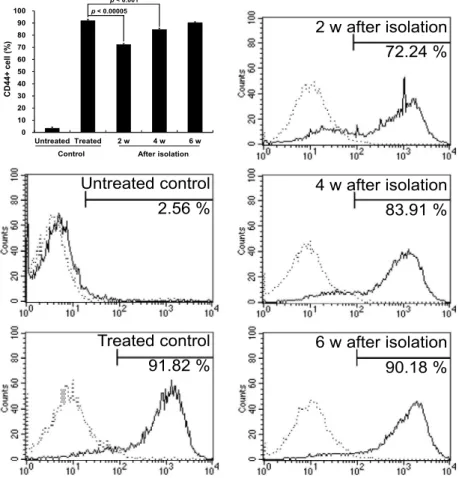
The present study investigated whether leukemia-maintaining cells reside in a differentiation-resistant fraction using a megakaryocytic differentiation model of K562 cells. Treatment with phorbol-12-myr- istate-13-acetate (PMA) significantly inhibited the colony-forming efficiency of the K562 cells. At a PMA concentration of 1 nM or higher, colony was not formed, but approximately 40% of K562 cells still survived in soft agar. Approximately 70% of colony-forming cells that were isolated following the removal of PMA after exposure to the agent were differentiated after treatment with 10 nM PMA for 3 days. The differentiation rate of the colony-forming cells was gradually increased and reached about 90% 6 weeks after colony isolation, which was comparable to the level of a PMA-treated K562 control.
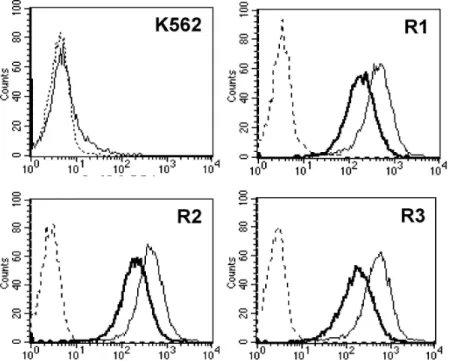
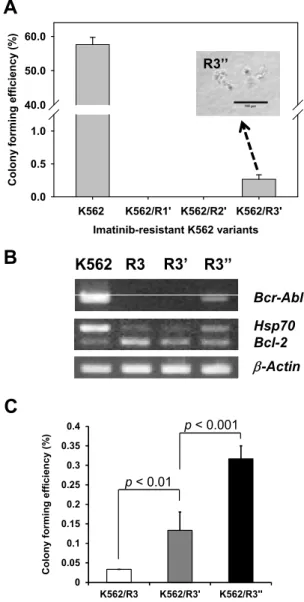
Meanwhile, imatinib-resistant variants from the K562 cells, including K562/R1, K562/R2, and K562/R3 cells, did not show any colony-forming activity, and most imatinib-resistant variants were CD44 positive. After 4 months of culture in drug-free medium, the surface level of CD44 was de- creased in comparison with primary imatinib-resistant variants, and a few colonies were formed from K562/R3 cells. In these cells, Bcr-Abl, which was lost in the imatinib-resistant variants, was re-ex- pressed, and the original phenotypes of the K562 cells were partially recovered. These results suggest that leukemia-maintaining cells might reside in a differentiation-resistant population. Differentiation therapy to eliminate leukemia-maintaining cells could be a successful treatment for leukemia if the leukemia-maintaining cells were exposed to a differentiation inducer for a long time and at a high dose.
Key words : Chronic myelogenous leukemia, differentiation-resistance, imatinib, leukemia-maintaining cells, phorbol-12-myristate-13-acetate
*Corresponding authors
*Tel:+82-51-510-8082, Fax:+82-51-510-8086
*E-mail : [email protected] (C. D. Kang)
*Tel:+82-51-510-8081, Fax:+82-51-510-8086
*E-mail : [email protected] (S. H. Kim)
†
Present address : Research Center, Dongnam Institute of Radiological & Medical Science, Busan, Korea
This is an Open-Access article distributed under the terms of the Creative Commons Attribution Non-Commercial License (http://creativecommons.org/licenses/by-nc/3.0) which permits unrestricted non-commercial use, distribution, and reproduction in any medium, provided the original work is properly cited.
ISSN (Online) 2287-3406 Journal of Life Science 2013 Vol. 23. No. 2. 197~206 DOI : http://dx.doi.org/10.5352/JLS.2013.23.2.197
Introduction
Although modern tumor therapy has achieved consid- erable progress, cancer is still one of the leading causes of death. Current failure with cancer treatment is not usually due to a lack of primary clinical responses including com- plete remission, but to recurrence or metastasis after initial therapies. The concept that cancer is driven by cancer-initiat- ing or maintaining cells (popularly known as cancer stem cells, CSC) has recently attracted a great deal of attention
[37]. While conventional cancer therapies have targeted well the bulk tumor cells, there is now compelling evidence that cancer-initiating cells may be responsible for recurrence or metastasis of cancers after successful initial induction of re- mission due to their resistance to traditional cancer treat- ments such as surgery, radiotherapy and chemotherapy [46].
It has been demonstrated that the cancer stem cells share several important characteristics of normal stem cells, in- cluding the capacity for self-renewal, the ability to differ- entiate, migrate and metastasize, a relative quiescence, acti- vation of telomerase and antiapoptotic pathways, the in- creased expression of multidrug-resistance proteins, and ro- bust DNA repair activity [25, 44], and consequently show high resistance to anticancer drugs [11] and radiotherapy [13].
Current therapies have been developed largely against the
bulk tumor cells, since they have been usually developed
by their ability to shrink tumors. Therefore, even therapies
that cause complete regression of tumors might spare
enough cancer stem cells to allow regrowth of the tumors.
A number of therapeutic strategies directed at CSCs are be- ing studied experimentally. The approaches include ablation using antitumor agents that target prospective markers of CSCs (e.g., monoclonal antibodies and activated immune cells), reversal of chemo- or radioresistance mechanisms op- erative in CSC, CSC pathway interference, differentiation therapy, disruption of protumorigenic CSC-microenviron- ment interactions, antiangiogenic or antivasculogenic ther- apy, and disruption of immunoevasion pathways [18, 19].
These strategies can be potentially combined with current anticancer treatments to enhance responsiveness and reduce the possibility of recurrence and dissemination.
Among these strategies, differentiation therapy may be attractable at least in leukemia, since acute promyelocytic leukemia (APL) can be successfully treated with all-trans reti- noic acid (ATRA), a natural derivative of vitamin A, which unlike other chemotherapies, does not directly kill the malig- nant cells. ATRA induces the terminal differentiation of the leukemic cells, after which these differentiated leukemic cells undergo spontaneous apoptosis [1, 2, 22]. In addition, it has been demonstrated in experimental models that the quies- cent CSCs could be differentiated into more mature tumor cells in various solid tumors, such as human glioblastoma by activation of bone morphogenic protein-signaling path- ways [35], medulloblastoma by inhibition of Notch pathway [16], breast cancer by expression of the let-7 miRNA [45]
and treatment with salinomycin [21], and epigenetic differ- entiation therapy [29].
However, it has been reported that 2 or 3 years after ATRA plus chemotherapy-based regimens more than 7 % of patients had relapsed [17, 36]. The relapse might be due to the dormant leukemic stem cells, which may be resistant to differentiation induction. Since CSCs have self-renewal ac- tivity, they should be resistant to differentiation induction.
Or not, CSC population could not be maintained and tumor would be regressed by differentiation therapy. In the present study, it was studied if leukemia-maintaining cells reside in differentiation-resistant fraction, using a megakaryocytic dif- ferentiation model of K562 cells, which was characterized as a multipotential leukemia stem cell line [30].
Materials and Methods Cell and culture
K562 cell line was obtained from the American Type Culture Collection (Manassas, VA, USA). The imatinib-re-
sistant K562 variants, including K562/R1, K562/R2, and K562/R3 cells, were isolated from K562 cells by culturing in the presence of gradually increasing concentrations of im- atinib [28]. The cells were grown in suspension in RPMI 1640 medium (GIBCO Invitrogen cell culture, Grand Island, NY, USA) supplemented with 10% (v/v) heat-inactivated FBS (GIBCO Invitrogen cell culture), 100 units/ml penicillin (Sigma-Aldrich Corp. St. Louis, MO, USA) and 100 mg/ml streptomycin (Sigma-Aldrich Corp.). Cells were maintained at 37°C in a humidified atmosphere containing 5% CO 2 in 95% air and fed with fresh medium every 2 or 3 days. Viable cell counts were performed by trypan blue dye exclusion.
Soft agar colony assay
The soft agar colony assay was performed as described below. Each well of a 96-well culture plate was coated with 50 μl bottom agar mixture in RPMI 1640 medium containing 10% FBS, 0.5% agar (Sigma-Aldrich Corp.). The bottom layer was overlaid with 50 μl top agar mixture in RPMI 1640 me- dium containing 10% FBS, 0.35% agar containing 100 cells for K562 cells or 1×10 4 cells for K562/R3 cells. After in- cubation at 37˚C, 5% CO₂for 14 days in a humidified atmos- phere, colonies larger than 100 μm in diameter were scored by counting under an inverted microscope (Olympus CKX 41, Tokyo, Japan) equipped with a camera (Olympus DP72, Tokyo, Japan) and image analyzer (Olympus DP2-BSW, Tokyo, Japan) to determine colony size. Sometimes, colonies were stained with 1 mg/ml MTT solution (Sigma-Aldrich Corp.).
Cell proliferation assay
Cell proliferation was analyzed with Cell Counting Kit-8 (Sigma-Aldrich Corp.), according to manufacturer’s manual.
Briefly, cells (2×10 3 cells/200 μl/well) were seeded in a 96-well plate. After incubation, 10 μl of the CCK-8 solution was added to each well of the plate. After incubation for 1 hour in the 37 o C incubator, the absorbance was measured at 450 nm using a PowerWave X340 Microplate Reader (Bio-Tek Instruments, Winooski, VT, USA). A calibration curve was prepared using the data obtained from the wells that contain known numbers of viable cells. All experiments were repeated with at least two experiments in triplicate.
Flow cytometric analysis
The flow cytometric analysis was performed on a
FACSCanto II Flow Cytometer (BD Biosciences, San Jose,
0 10 20 30 40 50 60 70 80
0 0.25 0.5 1 2 4
C ol ony f or m ing e ff ic ie nc y ( % )
PMA concentration (nM)
A)
0 10 20 30 40 50
1 2 4
A li v e s ingl e c e ll ( % )
PMA concentration ( nM )
B)
C)
0.25 nM
0 nM 0.5 nM
1 nM 2 nM 4 nM
A) B)
C)
0.25 nM
0 nM 0.5 nM
1 nM 2 nM 4 nM
A B
C
Fig. 1. Inhibition of soft agar colony forming efficiency of K562 cells by treatment with PMA. A) The colony forming efficiency of K562 cells was determined after 2 weeks culture in soft agar in the presence or absence of PMA at various concentrations.
The colonies larger than 100 μm in diameter were counted. B) The number of single or double cells, which survived in soft agar in the presence of PMA at high concentrations. The soft agar containing cells was stained with MTT after 2 weeks culture and the stained cells were counted. C) The photographs of MTT-stained colonies in soft agar were taken after 2 weeks culture on inverted microscope at magnification of x40. The length of scale bar is 200 μm. Each bar represents the mean value±SE for 3 independent experiments
CA, USA). Cell suspensions were analyzed after staining with mouse anti-human CD44-FITC (BD Biosciences). At least 10,000 events were acquired and analyzed using FACSDiva software (BD Biosciences).
RT-PCR
Total RNA was isolated using an RNeasy Mini Kit (QIAGEN, Valencia, CA, USA) according to the manu- facturer’s protocol from K562 and its imatinib-resistant var- iants and one microgram of extracted total RNA was used to synthesize cDNA. RT-PCR was performed with PTC-100 Peltier Thermal Cycler-100 (MJ Research, INC., Waltham, MA, USA) using with the following primers [28]. Bcr-Abl (forward), 5’-GACATGCCATAGGTAGCAATTTCCC-3’, and (reverse), 5’-ACATCACGC CAGTCAACAGTCTGG-3’;
Hsp70 (forward), 5’-TCATCTCTGCATGTAGA AACCGGA- 3’, and (reverse), 5’-CGAGGCCGACAAGAAG AAGGTG-3’;
Bcl-2 (forward), 5’-CCGCTACCGCCGCGACTTC-3’, and (reverse), 5’-AAACAGAGGCCGCATGCTG-3’; ACTB (forward),
5’-TCCATCCTGGCCT CGCTGTC-3’, and (reverse), 5’
-GCATTTGCGGTGGAC GATGG-3’.
Statistical analysis
For comparison of groups, the unpaired Student t-test was performed. A P value below 0.05 was considered statistically significant in all experiments.
Results
Inhibition of soft agar colony forming efficiency of K562 Cells by PMA-induced differentiation
To determine if leukemia-maintaining cells can form colo-
nies in differentiation-inducing condition, K562 cells were
treated with phorbol-12-myristate-13-acetate (PMA, Sigma-
Aldrich Corp.), which is known to induce megakaryocytic
differentiation of K562 cells through activation of the protein
kinase C/extracellular signal-regulated kinase/90-kDa ribo-
somal S6 kinase/nuclear factor-κB pathway [26, 27]. When
2.56 % Untreated control
91.82 % Treated control
72.24 % 2 w after isolation
90.18 % 6 w after isolation 83.91 % 4 w after isolation
0 10 20 30 40 50 60 70 80 90 100
Untreated Treated 2 w 4 w 6 w
CD44+ cell (%)
Control After isolation p < 0.00005
p < 0.001
Fig. 3. Resistance of colony forming cells in the presence of PMA to PMA-induced differentiation. The colonies formed by removal of PMA after exposure to 4 nM PMA for 3 days were isolated and expanded for the indicated times. After that, the cells were treated with 10 nM PMA for 3 days and determined with flow cytometer for the expression of CD44 surface marker of PMA-induced differentiation. Each bar represents the mean value±SD for three independent experiments. A representative flow cytometric analysis of three independent experiments was shown. Dot line indicated the isotype control.
K562 cells were treated with PMA at various concentrations for 2 weeks in soft agar, colony forming efficiency and col- ony size of K562 cells were significantly inhibited and at 1 nM or more concentration of PMA, colony was not formed (Fig. 1 A and C). However, at this high concentration of PMA approximately 40% of K562 cells still survived as single or double cells in soft agar (Fig. 1 B and C). These results demonstrate that induction of differentiation can inhibit col- ony-forming activity in soft agar, which is highly correlated with tumorigenicity [3, 6].
Recovery of colony forming activity of PMA-treated K562 cells after removal of PMA
Since there were single or double cells surviving in dor- mant state after exposure to PMA, it was examined if the PMA-treated dormant K562 cells would be able to regrow and form colony after removal of PMA. After exposure of K562 cells to various concentrations of PMA for various peri-
0 2 4 6 8 10 12 14 16 18
1 day 2 day 3 day 4 day 5 day
C o lo n y f o rm in g e ff ic ie n c y ( % )
1 nM 2 nM 4 nM