1. INTRODUCTION
As a possible solution to the issue of green- house gas emissions from fossil fuels, and more specifically carbon dioxide emissions, the use of biomass is becoming increasingly important.
However, in terms of heat and power pro- duction, biomass has limits due to its low bulk
density, which increases the transportation and storage costs in comparison to fossil fuels (Rentizelas et al., 2009). Thus, the densification of biomass in the form of pellets has a number of economic benefits, and has led to an in- crease in the global production of wood pellets.
However, the use of wood residues and sawdust in pellet manufacture increases the price of
Original Article
Effect of Process Parameters and Kraft Lignin Additive on The Mechanical Properties of Miscanthus Pellets 1
Chang Ha Min
2⋅Byung Hwan Um
2,†ABSTRACT
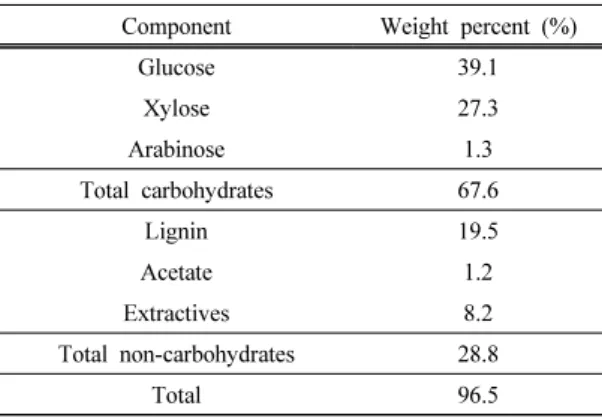
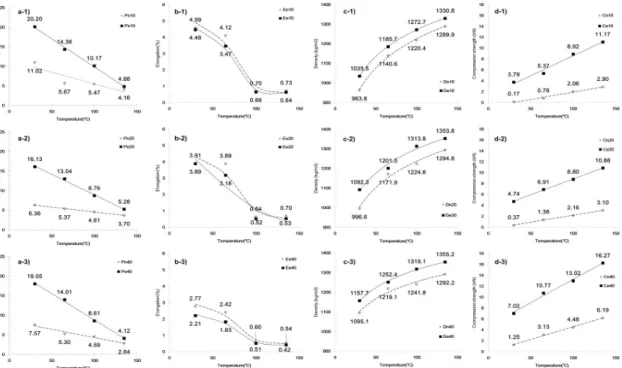
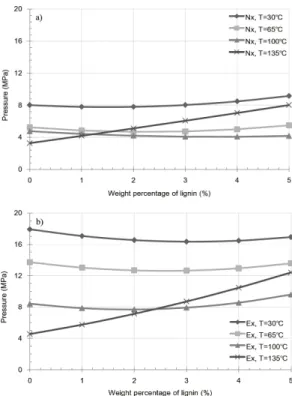
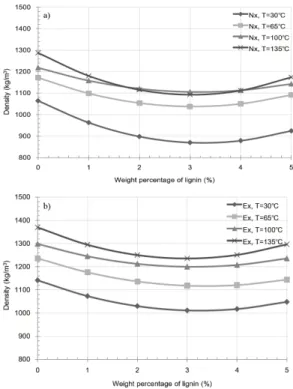
Miscanthus had a higher lignin content (19.5 wt%) and carbohydrate (67.6 wt%) than other herbaceous crops, resulting in higher pellet strength and positive effect on combustion. However, miscanthus also contains a high amount of hydrophobic waxes on its outer surface, cuticula, which limits the pellet quality. The glass transition of lignin and cuticula were related to forming inter-particle bonding, which determined mechanical properties of pellet. To determine the effects of surface waxes, both on the pelletizing process and the pellet strength were compared with raw and extracted samples through solvent extraction. In addition, to clarify the relationship between pellet process parameters and bonding mechanisms, the particle size and temperature are varied while maintaining the moisture content of the materials and the die pressure at constant values. Furthermore, kraft lignin was employed to determine the effect of kraft lignin as an additive in the pellets. As results, the removal of cuticula through ethanol extractions improved the mechanical properties of the pellet by the formation of strong inter-particle interactions. Interestingly, the presence of lignin in miscanthus improves its mechanical properties and decreases friction against the inner die at temperatures above the glass transition temperature (T
g) of lignin. Consequently, it could found that the use of kraft lignin as an additive in pellet reduced friction in the inner die upon reaching its glass transition temperature.
Keywords : biomass, miscanthus, pellet, kraft lignin, solid fuel
1
Date Received July 4, 2017, Date Accepted August 20, 2017
2
Department of Chemical Engineering and Research Center of Chemical Technology Hankyong National University, Anseong, Gyeonggi-do 17579, Republic of Korea
†