Korean J Community Living Sci 26(4) : 749~760, 2015 http://dx.doi.org/10.7856/kjcls.2015.26.4.749
한국형 농작업 안전보건 농가 인증제도 수립을 위한 프레임워크 및 평가항목 설계
김 인 수ㆍ채 혜 선
†ㆍ이 경 숙ㆍ김 경 란 농촌진흥청 국립농업과학원
A Framework and Evaluation Index Design for Establishing Agricultural Work Safety and Health Farm Certification Systems in Korea
Insoo KimㆍHye-Seon Chae
†ㆍKyung-Suk LeeㆍKyung-Ran Kim
National Institute of Agricultural Sciences, Rural Development Administration, Jeonju, Korea 1)
ABSTRACT
This study establishes a safe and healthy farm certification system for Korean farmers and presents the certification system and assessment items. Existing certification systems for safety and health were compared through a review of local and international studies as well as an examination of advanced examples. Then the certification system and assessment items were objectively verified through an expert evaluation process. As a result, four domains of certification participation, implementation, certification evaluation, and post management were identified as components of the certification system. For assessment measures, 6 categories, 21 factors, and 96 items were derived. The results are expected to be used as basic data in establishing a foundation for the implementation and operation of a certification system appropriate for distinct characteristics of the Korean agricultural sector.
Key words: safety & health certification system, agricultural work, framework, evaluation index
I. 서론
농업은 다양한 산업분야 중에서 직업관련 전 세계 적으로 재해 순위와 위험도가 가장 높은 위험한 산업 으로 알려졌으며(Lee 2012), 농작업 관련 직업성 사
고 및 질환에 대한 관리는 더더욱 중요한 문제로 제 기되고 있다. 국제노동기구(ILO) 통계자료에 의하면 농업은 타 산업에 비하여 재해율이 높아 광업, 건설 업과 함께 3대 위험 산업으로 분류되고 있다(BLS 2008). 이미 미국과 유럽 등의 선진국에서는 국가적
This work was supported by the Research Program for Agricultural Science & Technology Development (Project No.
PJ01007903) of the Rural Development Administration of the Republic of Korea.
접수일: 2015년 10월 12일 심사일: 2015년 10월 28일 게재확정일: 2015년 10월 29일
†
Corresponding Author: Hye-Seon Chae Tel: +82-63-238-4168 E-mail: [email protected]
This is an Open-Access article distributed under the terms of the Creative Commons Attribution Non-Commercial
License (http://creativecommons.org/licenses/by-nc/3.0) which permits unrestricted non-commercial use, distribution,
and reproduction in any medium, provided the original work is properly cited.
으로 고위험 산업인 농업에 대해 재해예방 및 관리대 책에 많은 정책적 관심을 가지고 있다(ILO 2003). 우 리나라의 경우, 고용노동부의 산업재해 현황에 따르 면 전체 산업연천인율 6.9에 비해 농작업 관련 재해 율도 13.8로 2.4배 높게 나타났으며, 전체 산업재해 사망 만인율 1.5 대비 농업재해 사망 만인율 2.4로 재해의 중증도가 높은 것으로 보고되었다(MOEL 2012).
최근 농촌진흥청의 농어업인의 업무상 질병 및 손상 통계자료에 의하면 농업인의 업무상 손상 발생률은 3.0%(2013년)을 보였고, 업무상 질병 유병률 5.0%
(2012년)로 높은 수치를 보이고 있다. 농작업 관련 업무상 손상 발생률은 수도작과 과수(3.5%), 밭(2.7%), 축산(2.3%), 시설(2.9%)순으로 조사되었으며, 업무상 질병 유병률의 경우에는 작목별로 밭(6.6%), 수도작 (5.9%), 과수(5.8%), 시설(3.0%), 축산 (1.1%) 순으 로 나타났다(RDA 2012, 2013a). 국내의 농작업 재해 현황은 작목에 따라 다소 차이는 있으나 전반적으로 높은 재해율을 보여 재해예방을 위한 대책이 시급한 실정이다. 더욱이 현재 농가인구 감소추세와 더불어 고령화가 심해지고(KOSTAT 2013), 여성화 등 농업 인력 조건 악화는 농업인의 건강상태에 영향을 미치 고 있다(Lee et al. 2010). 또한 비닐하우스 및 축산 등의 시설농업 비중의 증가와 농업의 기계화가 진전 되었음에도 불구하고 여전히 농작업 재해율이 점차 적으로 증가하는 추세를 보여, 보다 구체적인 예방관 리 체계에 대한 노력이 절실히 필요한 실정이다.
주요 선진국가의 사례를 보면, 사회복지제도가 발 달된 유럽의 경우 기본적으로 농업인을 포함한 자영 업까지 산업안전보건법을 동등하게 적용하도록 되어 있으며, 프랑스에서는 농작업의 특성을 반영한 보상 보험을 농업사회보장기구(Mutulaité Socilae Agricole, MSA)에서 별도로 운영하고, 안전보건 규제는 노동법 전 및 사회보장법전에 의해 일반 근로자와 동일하게 적용시키고 있다. 핀란드는 1979년부터 산업보건 전 문가, 보건소, 정부 관계기관, 농업인 등이 협력하여 농업인 산업보건 서비스를 개발하였다. 1981년부터 는 농업인 산업보건 특별 훈련 프로그램을 운영하고 있으며, 여기에서는 농작업의 건강 유해요인, 개인보 호구 활용, 농작업 유해요인 진단, 농촌지도요원, 농
업 산업보건 관계자, 농업인 등을 대상으로 교육을 실시해 오고 있다. 이러한 교육과정을 이수한 농촌지 도요원은 현장방문과 인터뷰를 통하여 농가현장 안 전점검을 실시하고, 산업보건 의사, 간호사, 물리치료 사 등이 농업인의 건강을 체크한 후 건강과 안전 향 상을 위한 권고안을 제시해 준다. 농가가 본 프로그 램에 참여하면 산재보험료의 20%를 감면 해주는 혜 택이 주어진다.
우리나라는 선진국과 비교하면 농업인의 농작업 재해예방을 위한 안전보건 관리체계 대한 연구는 다 소 늦어진 감이 있다. 2004년 농림부의 농림어업인 삶의 질 향상 및 농산어촌지역개발에 관한 촉진법
을 제정하여 최초로 농업인 업무상 재해 지원을 위한 법적근거를 마련하여 2005년부터 농업인의 안전을 위해 농작업 안전시범마을 조성 사업을 통해 농업인 의 농작업 안전관리에 대한 인식과 능력향상, 농작업 재해 예방관리를 위한 지원체계 모델을 확립해 가고 있으나, 지속적인 운용 및 체계적 관리에는 한계점이 있었다. 최근에는 우리나라는 농업분야에 농어업인 의 안전보험 및 안전재해 예방에 관한 법률안(2014.
12)이 상정되어 농작업 안전과 보건 분야 실천의 기 틀이 마련되었고, 2016년 1월에 시행을 앞두고 있어 향후 농작업 안전재해에 대한 인식 확산과 농작업 안 전사고 예방에 새로운 전환점이 될 것으로 기대하고 있다. 본 법률에 근거하여 농업인의 신체나 재산에 대한 손해를 예방할 수 있는 안전보건경영체계 구축 이 요구되어진다. 기존의 농작업 재해예방관리체계 가 구축되지 못한 시점에서 국내 농업의 특성을 반영 한 재해예방을 위한 제도적 보상지원과 더불어 안전 보건 농가 인증체계의 도입은 향후 농작업 재해예방 을 위한 중요한 방안이 될 것이다.
이에 본 연구에서는 농가의 안전보건 인증제도의 신뢰성을 제고하고, 국내 농업 현실에 적합한 인증제 도의 수립을 위한 기초 연구로 인증체계 프레임워크 및 평가항목을 도출하여 향후 한국형 안전농가 인증 제도 구축을 위한 기반 설계를 모색하고자 한다.
II. 연구방법
본 연구는 한국형 안전보건 농가 인증제도 수립을 위한 기초연구로 인증체계 구성 및 평가 지표를 도출 하고자 수행하였다. 안전보건 농가 인증제도의 인증 체계 설계 및 평가지표 선정의 오류 및 편향을 방지 하고, 객관성 및 실효성을 확보하기 위해 다음과 같 은 흐름으로 진행하였다.
첫째, 본 연구는 우리나라 농업의 특성에 적합한 농가의 안전보건 인증제도 구축을 위해 국내외 선행 연구 검토 및 문헌고찰을 통해 안전보건 인증제도의 인증체계 분석과 평가 항목을 도출하였다.
둘째, 1차 연구에서 도출된 결과를 기반으로 관련 전문가 평가를 통해 인증체계 구성안 및 평가항목을 설계하였다. 효율적인 추진과 연구 방향의 타당성을 위해 전문가에 의한 전문가 집단 인터뷰(Focus group interview, FGI)를 진행하였다. FGI에 참여한 전문가 집단은 농작업 관련 안전보건의 견해를 충분히 반영 될 수 있도록 농작업 안전보건 분야에 종사하는 연구 기관 연구사 2명, 인간공학 전문가 3명, 환경보건 관 련 전문가 2명으로 모두 7명으로 구성하였다.
셋째, 2차에서 설계된 인증체계와 선정된 평가항 목에 대한 객관적 검증을 위해 농업관련 전문가를 대 상으로 구성의 체계성, 내용의 적합성, 현장 적용성, 평가항목의 중요도 등을 온라인으로 조사하였다. 온 라인 조사 대상자는 직업의학, 산업의학, 예방의학, 인간공학, 산업보건 위생 등 관련 교수 8명, 농작업 환경개선, 생활환경, 편이장비지원 등 농업현장을 직 접 경험하고 있는 시·군 기술센터 담당자 12명, 관 련 산업계 종사자 7명으로 모두 27명의 관련 전문가 가 참여하였다. 온라인 조사과정은 전자우편으로 진 행하여 전문가 의견과 체계구성 및 평가항목에 대한 중요도를 선택하는 방식으로 진행되었고, 조사과정 에서 평가항목 및 지표들의 구조체계 내에서 현실적 으로 적용될 수 있거나 앞으로 적용될 수 있는 지표 들을 중심으로 재구성하는 방식으로 진행 하였다.
III. 결과 및 고찰
1. 농업 안전보건 인증을 위한 인증체계
1) 농작업 관련 안전보건 관련 인증제도 고찰
본 연구에서는 지속 가능한 한국형 안전보건 농가 인증제도의 초기 정착과 운용을 위해 국내외 안전보 건 관련 시스템과 선행되고 있는 인증제도 사례를 비 교·분석하였다.안전보건경영시스템은 1996년 ISO 14001인 환경 경영시스템을 접목한 영국 표준협회(British standards institution, BSI)의 BS 8800이라는 산업안전보건경영 시스템 지침을 기반으로 1999년 BSI를 주축으로 여러 인증기관들이 OHSAS 18001(Occupational Health &
Safety Assessment Series)을 개발하면서 전 세계에 보급되었다. 미국의 경우는 사업장의 안전보건수준 을 향상시키기 위해 노사협의체의 적절한 역할을 찾 고자 미국산업안전보건청이 인증하는 자율안전보건 프로그램(Voluntary Protection Program, VPP)이 1982년부터 운영되고 있으며, 인증과 법적인 인센티 브를 제공하고 있다(KOSHA 2013). 그 밖에 호주, 뉴 질랜드 등 세계 각국에서는 국가별, 인증기관별 다양 한 형태의 안전보건경영시스템 인증제도를 권고하고 있고, ILO는 2001년 ILO-OSH 2001(Guidelines on Occupational Safety and Health Management System, Guidelines on OSH-MS)를 제정하여 자율적인 참여 를 유도하고 있다(KOSHA 2013).
우리나라에서는 1997년 안전보건공단에서 BS 8800를 참조하여 개발한 KOSHA 18001의 제정을 시 작으로(KISA 2009), 1999년 시행한 KOSHA 2000을 2003년 KOSAH 18001로 개칭하여 제조부문과 건설 부문으로 나누어 운영하고 있다(Kang 2011). 또한 2001년 한국인정원은 OHSAS 18001와 동일한 규격 과 운영절차를 갖고 있는 K-OHSMS 18001이라는 안 전보건경영시스템을 개발보급하고 있으며(Ha et al.
2003b), 사업장에서 안전보건경영시스템은 안전사고 재해예방과 사업장의 안전의식 향상, 지속적인 개선 에 많은 도움을 주는 것으로 보고되고 있다(Ha et al.
2003a).
Clean business CSF YFC SFA FOHS
Country Korea U.S U.S U.K Finland
Objective
Improve the safety and health levels and reduction of turnover rate of small workplaces
Encourage the activities of small self-employed farmers for the voluntary improvement of safety and health levels
Enforcement following the legal inhibition of rural children’s use of agricultural machines by the US Department of Labor
Promote safe farms through the self assessment of agricultural work environment by farmers
Reduce the disaster rate of agricultural work through general safety and health measures including field checks, education, and examination
Certification agency
Korea Occupational Safety and Health Agency (KOSHA)
University of Iowa, regional hospitals, insurance companies, Occupational Safety and Health Research Institute
Regional agricultural technology centers, schools
-
(Agricultural) safety and health centers, agricultural social insurances
Operation
method Voluntary Voluntary Recommendation Voluntary Voluntary
Targets General workplace
(50 or less workers) General farmers Rural children aged
14-15 or younger General farmers General farmers
Assessment
∙ Check the performance of safety measures, work
∙ Environment improvement measures
∙ Work process improvement measures
∙ Other safety and health measures
∙ Check agricultural machines,
∙ Building safety
∙ Outdoor work safety
∙ Knowledge about how to use agricultural machines, etc.
∙ Machines, falls, tools, agricultural chemicals, administrative process, crops (grains, livestock, farm products)
∙ Safety by type of crop (livestock/plants),
∙ Exposure to chemical/
biological hazards
∙ Use of personal protection equipment
Assessment procedure
1. Supervise, check and evaluate risks (select targets, technical support)
2. Apply for participation 3. Request financial support 4. Screening of financial
support 5. Improve facilities 6. Verify improvements 7. Provide fund (approval) 9. Post management
1. Health examination 2. Safety check 3. Safety and health
education, 4. Insurance support
system
1. Complete a certain education program (tractor, grinder, etc.)
2. Certification 3. Consent by parents 4. Permission for using
agricultural machines
1. Download assessment tool through the Internet 2. Self assessment by
farmers
1. Periodic health examinations 2. Questionnaire survey 3. Field check 4. Intermediate assessment
Incentive
∙ Support for facilities
∙ Improvement cost
∙ Discount of health insurance premiums,
∙ Provision of assistant tools for agricultural work
∙ Agricultural machine license (fine for
unlicensed use) None
∙ 20% discount on insurance premiums for agricultural work accidents
Table 1. A comparison of safety and health management certification systems
이러한 안전보건경영시스템의 특징을 살펴보면,여러 국가에서 OHSAS 18001 표준을 기반으로 작업 장 내의 위험성 관리 및 예방 활동을 통한 재해 사고 율 감소를 위해 자국의 특성에 적합한 형태로 적용되 고 있다. OHSAS 18001은 ISO 14001 표준의 PDCA 지속적 향상 추구모델을 채택하고 있고, 안전보건 위
험성의 관리가 용이하며, 호환성이 있어 인증 또는 개별인증이나 통합시스템 인증이 가능하다. 또한 안 전보건경영체계에서 인증은 기업으로 하여금 표준이 요구하는 사항을 준수하게 함으로써 실행을 통한 지 속적인 개선과 성장을 유도하는데 기여하고 있다.
국내외에서 선행되고 있는 대표적 안전보건 관련
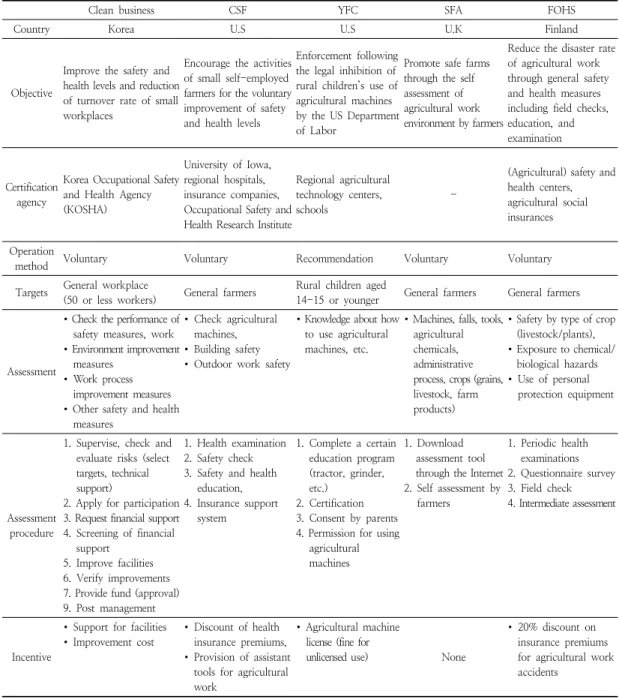
인증제도를 살펴보면, 우리나라의 경우 소규모 일반 사업장을 중심으로 안전보건수준 향상 및 이직률 감 소를 목적으로 신청 사업장에 대한 시설개선 컨설팅 을 통해 인증을 부여하는 방식의 Clean 사업장 사업 이 진행 중이다. 반면에 미국의 경우 일반 농업인의 안전보건수준 향상을 위한 Certified Safe Farm(CSF) 와 미국 노동부에서 법으로 농촌 어린이의 농기계 사 용에 대한 인증으로 Youth Farm Safety Education and Certification Program(YFC) 인증제도가 운영 중 에 있다. 영국의 경우는 농업환경을 농업인이 자체적 으로 평가하여 농작업 안전을 향상시키는 Self Farm Assessment(SFA), 핀란드의 농업안전보건센터와 농 업사회보험을 연계한 인증제도인 Farmers’ Occupational Health Services(FOHS)에서는 농장 현장점검, 교육 등 일반 농업안전보건사업이 적용되고 있다. 유럽 및 미국 등의 선진국의 사례의 경우 농업분야의 안전보 건과 관련한 다양한 인증제도가 제공되고 있으나 한 국과 일본을 비롯한 아시아의 경우 일반 사업장 중심 으로 적용되고 있다.
안전보건 관리 인증과 관련 있는 선진사례를 중심 으로 국외(미국, 영국, 핀란드 등)와 국내(KOSHA) 인증제도 사례를 분석한 결과는 Table 1과 같다.
2) 선진사례의 시사점
기존의 농작업 관련 선진 사례를 검토한 결과, 각 나라의 농업환경에 적합한 인증제도를 적용하고 있 다. 주요 특징으로는 교육을 통한 안전보건 정보전 달, 농업인의 자발적인 참여를 통한 안전실천, 지속 적 평가관리, 인센티브 제공 등을 볼 수 있었다. 국내 외 안전보건 관련 검토 결과를 요약하면, 첫째, 안전 보건 관리체계는 경영 시스템의 일부로 자리 잡고 있 으며, 인증체계의 규격화 및 통합화를 통해 자발적인 노력을 추구하고 있다. 특히 안전보건과 관련된 사고 예방에 대한 노력과 재해저감의 성과관리 등 지속적 으로 관리·개선하고 있다. 둘째, 현재 국내외에서 통용되고 있는 인증제도는 OHSAS 18001과 K-OHSMS 18001로 PDCA 사이클 모델을 기반으로(Ha et al.
2003b), 체계의 호환성 및 개별인증이나 통합 시스템 인증을 받을 수 있는 모듈화된 인증체계 방식을 따르
고 있다. 셋째, 안전보건 시스템의 활성화하기 위한 방법으로 보상보험과 연계한 인증 사업장에 대한 보 험요율 인하 등의 인센티브를 통해 자발적 참여를 위 한 효과적 방법을 제시하고 있다. 넷째, 인증획득은 안전 위험성의 원천적 관리, 안전사고 예방과 지속적 인 개선을 위한 체계적인 접근방법으로 안전사고 예 방 관리를 목적으로 하고 있다.
이와 같이 안전보건 인증관련 선진 사례 분석을 통해 한국 농업의 특성을 고려한 안전보건 인증체계 수립을 위해서는 농작업 재해 예방·관리 사업이 체 계적이고 지속적으로 이루어질 수 있는 인증체계 설 계가 요구된다. 또한 농작업 재해 예방의 실효성 있 는 체계 구축을 위해서는 소규모의 자영농이 많은 농 업특성, 다작목 경작 등의 국내 농작업 환경 특성이 반영된 안전보건 체계 및 프로세스 구축이 필요하다.
무엇보다도 책임 있는 전담연구 및 관리기관이 마련 되어 정확한 현황파악과 이에 기초한 국가사업 시행, 평가 등의 연구, 교육, 지원 사업이 이루어져야 할 것 이다. 또한 지속 가능한 인증제도 정착을 위해서는 끊임없는 개선이 가능하도록 PDCA 순환적 모델 개 념이 밑바탕이 되어할 것으로 판단된다.
3) 농가의 안전보건 인증체계의 개념적 프레임워크
한국형 안전보건 농가 인증체계 수립을 위한 구성 체계 도출을 위해 국내외 선진사례에 대한 검토와 더 불어 전문가 FGI를 통해 초안을 작성하였고, 오류 및 편향을 방지하기 위해 전자메일 방식의 전문가 조사 를 함께 실시하였다. 본 연구에서는 안전보건 농가인 증을 위한 주체별 역할 및 세부적 수행절차는 제외하 였으며, 이는 향후 연구과제로 남겨 두기로 한다.인증체계 구성은 선진사례에서 적용된 인증절차를 참고하되, 기존의 국내 농작업 환경을 고려하였다. 1 차로 전문가 FGI를 통해 구성 체계와 구성요소, 인증 절차에 대한 초안을 설계하였다.
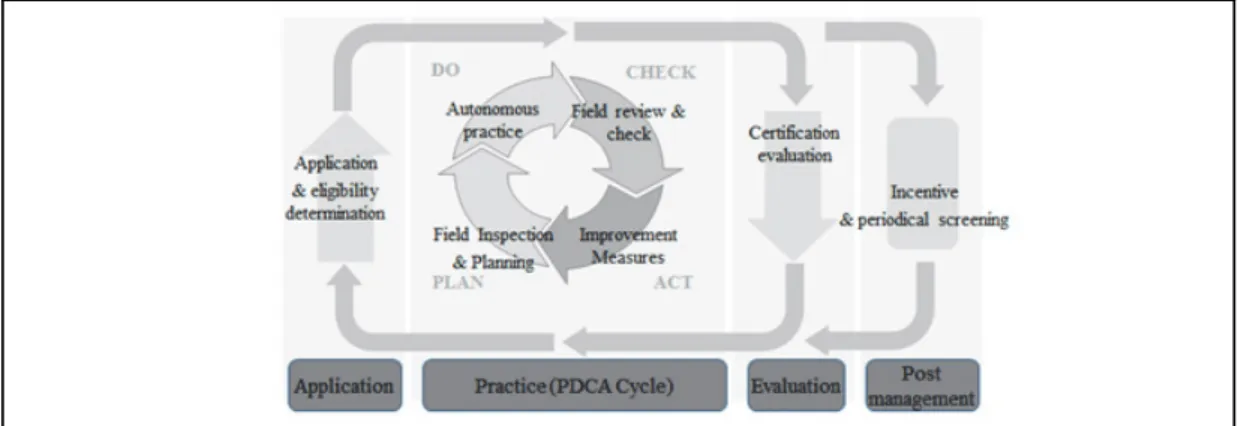
구성 체계: 안전보건 농가 인증관리 체계는 영역 별로 크게 인증참여, 안전보건 실행, 인증평가, 사후 관리 등의 4개의 분야로 구성하였다. 인증참여 분야 는 인증참여 농가의 자격여부 판단, 참여 신청 농가 접수 등과 관련된 영역이 포함되며, 안전보건 실행
Fig. 1. A conceptual system of the safety and health farm certification system
Application for the safety and health certification and determination of qualification
↓
Farm visit and field inspection
↓
Safety and health education and practices
↓
Field check and improvement measures
↓
Judgment of suitability for safety and health certification
↓
Issuance of certificate, periodic confirmation
Fig. 2. A safe and healthy farm certification process
체계는 PDCA 관점에서 현장점검(Walk-through survey), 자율적 안전보건 실천, 안전보건 전문가 참 여형 안전보건 개선(Participatory Action Oriented Training, PAOT)(Kim et al. 2010), 개선 및 조치 등 으로 구성 될 수 있다. 그리고 인증평가 영역은 인증 체계에서 기본적으로 갖추어야 할 안전보건 실행을 평가하며, 일정 점수 이상을 획득하는 경우 인증하는 것으로 제안하고 평가지표 관리 등의 영역을 포함하 게 된다. 사후관리 영역은 인증농가에 대한 인센티브 제공 및 주기적 확인심사 등이 이루어지게 된다. 본
연구에서 제안하는 안전보건 농가 인증 구성체계의 개념적 프레임워크는 Fig. 1과 같다.
안전농가 인증절차 및 평가: 농가의 안전보건 인 증에 대한 심사는 신청접수, 자격여부 판정, 현장방 문 조사, 안전보건 교육, 안전보건 실천, 농가 현장 안전보건 현황 확인 및 심사, 심사결과 적합여부 판 정, 안전인증서 발급, 매년 정기적 확인심사의 순으 로 진행하도록 설계하였다. 인증평가 심사는 표준지 표를 기반으로 안전보건 지식 평가, 기록 및 관리 평
가, 안전보건 실천 평가로 나뉘며 안전보건 지식 평 가는 교육 등을 통한 안전보건관리 지식의 습득수준 을 심사한다. 기록 및 관리 심사는 농작업 안전보건 교육이수, 각종 점검 및 기록수행 수준 등을 심사하 는 것으로 안전보건 관리의 행정적 관리 수준을 심사 하는 것이다. 또한 안전보건 실천 심사의 경우에는 주요 농작업 및 농업환경에 대한 안전수행 수준을 평 가하는 것으로 농작업 수행 방법, 농기계 관리, 농약 사용 관리 등이 포함 될 수 있다. 인증 이후 심사는 확인심사의 형태로 진행되며 인증기준에 적합한 안 전보건을 유지관리하고 있는지에 대하여 심사할 수 있다(Fig. 2).
농업 현장 지도사 및 학계 전문가를 대상으로 한 2차 온라인 조사는 인증체계 구성개념의 체계성, 인 증 구성요소 및 인증절차에 대한 적합성, 국내 농가 적용 가능성 등에 대하여 조사하였다. 평가항목에 대 하여 5점 척도(1. 전혀 적합하지 않음, 2. 별로 적합 하지 않음, 3. 보통, 4. 약간 적합함, 5. 매우 적합함) 를 기준으로 평가와 의견을 수렴하였다.
전문가 조사 평가결과, 인증체계 개념의 체계성 4.3점, 인증 구성요소 및 인증절차에 대한 적합성 4.2 점으로 보통이상의 타당성을 보였으나, 국내 농업 현 장 적용 가능성에 대한 평가는 3.4점으로 다른 항목 에 비해 낮게 평가되었다. 본 인증체계에 대해여 계 획, 실행, 검토, 개선 등의 PDCA 및 인증구성 요소들 간의 개념 체계에 대한 제시 등은 긍정적 평가가 된 반면에 국내 농업 현장에 적용 시에 농업인의 자발적 인증참여를 유도할 수 있는 방안 및 인증이 주는 실 효성 등에 대한 구체적 제시가 필요하다는 의견 등이 제기되었다. 또한 향후 연구에서 정량 및 정성적 인 증평가 지표에 대한 체계성, 안전보건 전문가의 역할 및 적절한 개입 수준, 인증절차와 인증구성요소, 평 가항목과의 유기적인 관계 정의 등 추가연구에 대한 제언 등을 수렴할 수 있었다.
본 연구에서 제시한 인증체제 및 절차에 대한 전 문가 의견을 종합해보면, 첫째, 현장 적용을 위해 농 업인의 자발적 참여 의식 및 신청을 유도할 수 있는 방법과 농작업 안전농가 인증의 혜택(보험의 요율 인 하 등의 인센티브 등) 및 목적 등에 대한 구체적 제시
가 필요하다. 둘째, 인증제도 운용체계에 있어 주체 별 역할조직에 대한 권한 및 책임, 인증체제의 유연 한 실행을 위한 인프라 구축 등에 대한 명확한 정의 가 요구된다. 셋째, 농작업 재해 예방의 주요 실행방 안인 PDCA 사이클 내의 안전요소, 개선사항 등 실효 성을 위한 접근방법에 대한 구체적 실행방안과 실제 적 실행 방법론에 대한 연구가 요구된다. 넷째, 고령 의 농업인, 농가의 규모 및 작목의 특성, 개인적 사항 등 우리나라의 농업현실을 고려하여 실효성 있는 인 증절차의 세분화에 대한 인증모듈에 대한 설계방안 이 고려된다. 특히 농작업과 관련된 주요 직업병 발 생은 작목(시설, 노지, 수도, 과수, 축산 등)에 따라 다른 위험·유해요인이 존재하므로(RDA 2006b) 이 에 대한 인증모듈이 중요하다. 끝으로, 인증 실행 및 재평가, 인증 이후의 지속성 및 지속적 관리를 위한 프로그램 수립이 필요할 것이다. 이에 본 연구를 기 초로 보다 실효성 높은 인증제도의 정착을 위해 전문 가의 의견을 수렴한 후속연구가 필요하다.
2. 안전보건 농가인증 평가항목 설계
1) 안전보건 농가인증 평가 지표의 1차 도출
본 연구에서 안전보건 농가 평가지표는 현장 평가 시에 객관적으로 적용될 수 있는 주요항목을 의미한 다. 이를 위해 본 연구에서는 농작업 관련 국내외 선 진사례 및 문헌조사 이후, FGI를 통해 인증평가에 활 용한 지표도출 및 분류체계를 검토하였다.먼저 안전농가 평가 지표를 도출하기 위해 국내외 농작업 안전보건에 관한 연구 및 체크리스트, 농작업 적용 사례 등을 분석하였다(Table 2). 전문가 집단 인터뷰 결과, 최종적으로 1차 평가항목에 대한 분류 및 분석결과, 170분류, 760항목을 도출할 수 있었다.
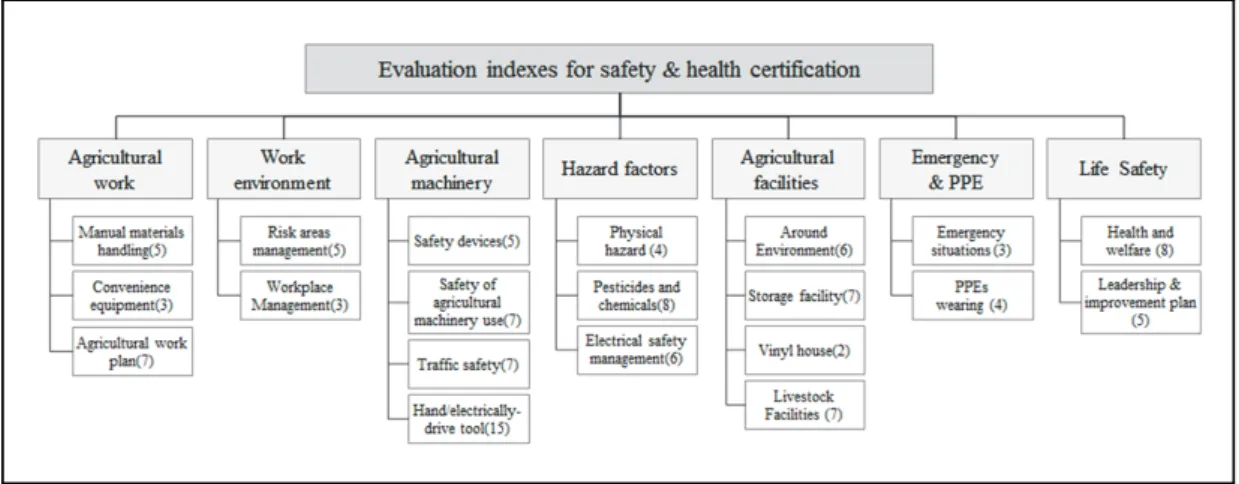
1차 검토된 내용을 토대로 FGI를 통해 공통된 내 용 및 중복되어 평가결과를 과대 추정하는 문제가 발 생할 우려가 있는 내용은 통합하고, 국내 농업환경에 적합도가 떨어지는 항목은 제외하였다. 1차 평가항목 설계결과, 대분류(7개), 중분류(20개), 항목(104개) 위계로 구분 정리하였고, 모두 121 평가 항목을 도출 하였다(Fig. 3).
Studies Contents (number of Indexes) Indexes
RDA, 2006a Safe farm zone composition and operational strategies(23)
Epidemiological information on farm work-related accidents and diseases(6), safety category(6), health category(6), general health promotion category(5)
RDA, 2013b Agriculture workplace safety and health checklist(13)
Pesticide safety management(2), farm machinery safety(6), greenhouses work safety(2), livestock operations safety(3)
Lee, 2010 Occupational disease of farmers(6) Accidents, musculoskeletal diseases, pesticide poisoning, respiratory disease, skin disease, infectious disease
RDA, 2007 Farmers safety training program(4) Promote safety awareness, musculoskeletal diseases, pesticide poisoning prevention, safe use of farm machinery
NIOSH(U.S) CSF(Certified Safe Farm)(34)
Occupational health history(8), health screenings(6), safety and health knowledge checking(6), agricultural machinery inspection(4), building inspection(5), outdoor environmental hazard assessment(5)
Park et al. 2009 Farm work and living environment safety evaluation index(28)
Work organization(2), working postures(3), agricultural work aids tool (3), agricultural machinery(3), storage and transportation of crops(4), maintenance workplace(2), work environment(3), pesticides and fuels(3), safety and hygiene management(3), life management(2)
RDA, 2010 Farm work and living environment safety guidelines(81)
Working plan(6), working posture(6), farm work assist device(5), hand tool management(6), agricultural equipment and machinery safety system(12), machine safety management(7), crop storage and the transport(4), workplace maintenance(5), dangerous substances(16), safety and hygiene(9), life management(5 )
RDA, 2009 PAOT materials development:
Agri Checkpoint(100)
Transport and storage(14), worktable and hand tools(14), farm machinery safety(12), tractors & cultivators safety(8), physical environment(13), harmful chemical substance management(5), environmental protection (6), welfare institutions(8), village cooperative(8), allotment of work(12)
Kim et al. 2010 PAOT program(49)
Transport and storage of crops(7), worktable and hand tools(8), using safe agricultural machinery(10), farm work environment management(14), resting and work-sharing (4), based safety management(6)
Kim et al. 2014a Kim et al. 2014b
Safety evaluation index of livestock workers(36)
Farm safety(5), work accidents(5), agricultural operations and safety management level(18), farm general information(8)
KOSHA(Korea) Clean workplace certification standards(25)
Safety practices(7), improved working conditions(5), work process improvement(2), other safety and health(3), verify compliance with health and safety systems(8)
Washington University (U.S)
VPP: self-evaluation of a company’s readiness(131)
Document preservation(12), management and leadership(43), Employee engagement(30), farm work task analysis (19), risk prevention and control programs(11), safety and health education(16)
FOSH(Finland) Hazard assessment and management(4) Workload, psychological hazards, hygienic occupational hazards, safety hazards
MTT(Finland) Agricultural work safety and health management checklist(27)
Workplace arrangement(9), traffic safety(5), livestock management (2), agricultural machinery and tools(2),
lifting work(9)
WorkSafe(Austria) 15 minute farm safety checklist(42) Safety awareness(5), tractor and equipment(10), silos and workplace(8), chemicals(10), physical environment(9)
Safe
Farms(Canada) Farm safety and health checklist(93)
Family workers participation(3), Employer responsibility and management(14), agricultural machinery and mobile equipment(25), pesticide management(9), electrical safety(6), ladder(2), facilities(25), personal protective protection(4), health farm(5)
PEI
(Prince Edward Island)
Agricultural safety checklist(64)
First Aids(3), farm equipment and machinery(14), chemicals(6), fuel tank(9), electrical safety(8), facility management(13), ladder safety(5), hand/electric tools(6)
Table 2. A review of the literature on agricultural work assessment
Fig. 3. Main and subsidiary elements in the assessment of farms for safety and health certification
농가의 안전보건 인증을 위한 평가모형의 주요인 은 물자취급 및 육체적 작업과 관련된 “농작업 수행”, 농업이 수반되는 장소와 관련 있는 “농작업 환경”, 농 작업 수행을 위해 사용되는 운반기계 및 작업기 등과 관련된 “농기계 사용”, 농업인과 농작업 시에 물리 적·화학적, 전기와 관련된 “유해·위험 요소”, 농업 생산물 저장 또는 생산을 위해 설치된 건물 등의 시 설에서의 안전보건과 관련한 “농업시설”, 농작업 시 사고발생 및 개인보호를 위한 “응급상황대처 및 개인 보호구”, 농업인의 건강 및 자율안전 실천과 관련 있 는 “생활안전” 등의 7개 카테고리로 구성되었다.
2) 전문가 조사를 통한 적합성 검증 및 인증평가 항목 도출
전문가 조사는 1차 산출물에서 도출한 평가지표의 구성체계와 평가항목에 대하여 “1점=매우 부적합”,
“2점=부적합”, “3점=보통”, “4점=적합”, “5점=매우 적 합”의 5점 척도로 조사하였다. 설문조사 대상은 농작 업 안전보건과 인증제도에 식견이 있다고 판단되는 전문가들을 임의로 선정하였으며, 주로 농업기술센 터 담당자와 농작업안전보건 시험사업에 참여 경험 이 있는 교수진 및 관계 전문가들을 대상으로 하였 다. 총 44명을 대상으로 전자우편으로 발송하여 27명 의 응답을 얻을 수 있었다.
주요평가 지표항목에 대한 응답결과, 지표 구성에
대한 체계성은 4.0점으로 보통이상으로 평가되었고, 항목에 대한 적합성은 3.8점으로 보통수준, 농업 현 장에 대한 적용성에 대해서는 3.5점으로 분석되었다.
그리고 세부적인 항목에 대하여 4.0점(중요함) 이상 을 기준으로 판별할 때 121개 항목 가운데 14개 항목 은 4.0점 이하로 비교적 중요하지 않게 조사되었다.
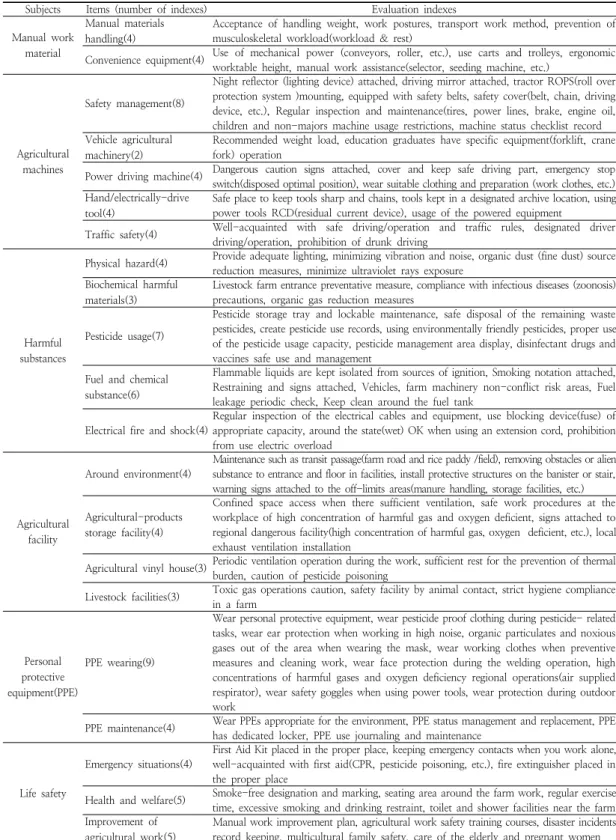
최종적으로 평균이 4.0점 이하 항목이거나 중복되거 나 현실적으로 평가의 객관성이 낮은 항목은 제외하 고, 전문가 조사에서 추가의견이 높은 항목을 추가하 여 최종적으로 96개 항목으로 선정되었다. 그리고 지 표체계의 주요소와 하부요소와의 독립성을 고려하여 6개의 주요소와 21개의 하부요소로 구성하였다 (Table 3).
본 연구에서는 농작업 안전보건과 관련된 주요 평 가항목을 도출하였으나 농가의 안전보건 인증체계 내에서의 정량화 및 점수체계 제시에는 한계가 있었 다. 이에 향후 정성적 또는 정량적 평가 영역에 대한 분류 및 항목 선별, 인증 절차상에 상호작용이 요구 되는 농업인 실천항목과 전문가 검토에 대한 항목 및 방법, 인증취득 기준 점수 등에 대한 정의 등이 요구 된다. 또한 국내농업의 특성을 고려한 모듈별 인증평 가 항목을 개발하여 확장성 및 유연성을 고려한 모듈 별 지표선정 등의 추후 연구를 진행할 필요가 있다.
Subjects Items (number of indexes) Evaluation indexes
Manual work material
Manual materials handling(4)
Acceptance of handling weight, work postures, transport work method, prevention of musculoskeletal workload(workload & rest)
Convenience equipment(4) Use of mechanical power (conveyors, roller, etc.), use carts and trolleys, ergonomic worktable height, manual work assistance(selector, seeding machine, etc.)
Agricultural machines
Safety management(8)
Night reflector (lighting device) attached, driving mirror attached, tractor ROPS(roll over protection system )mounting, equipped with safety belts, safety cover(belt, chain, driving device, etc.), Regular inspection and maintenance(tires, power lines, brake, engine oil, children and non-majors machine usage restrictions, machine status checklist record Vehicle agricultural
machinery(2)
Recommended weight load, education graduates have specific equipment(forklift, crane fork) operation
Power driving machine(4) Dangerous caution signs attached, cover and keep safe driving part, emergency stop switch(disposed optimal position), wear suitable clothing and preparation (work clothes, etc.) Hand/electrically-drive
tool(4)
Safe place to keep tools sharp and chains, tools kept in a designated archive location, using power tools RCD(residual current device), usage of the powered equipment
Traffic safety(4) Well-acquainted with safe driving/operation and traffic rules, designated driver driving/operation, prohibition of drunk driving
Harmful substances
Physical hazard(4) Provide adequate lighting, minimizing vibration and noise, organic dust (fine dust) source reduction measures, minimize ultraviolet rays exposure
Biochemical harmful materials(3)
Livestock farm entrance preventative measure, compliance with infectious diseases (zoonosis) precautions, organic gas reduction measures
Pesticide usage(7)
Pesticide storage tray and lockable maintenance, safe disposal of the remaining waste pesticides, create pesticide use records, using environmentally friendly pesticides, proper use of the pesticide usage capacity, pesticide management area display, disinfectant drugs and vaccines safe use and management
Fuel and chemical substance(6)
Flammable liquids are kept isolated from sources of ignition, Smoking notation attached, Restraining and signs attached, Vehicles, farm machinery non-conflict risk areas, Fuel leakage periodic check, Keep clean around the fuel tank
Electrical fire and shock(4)
Regular inspection of the electrical cables and equipment, use blocking device(fuse) of appropriate capacity, around the state(wet) OK when using an extension cord, prohibition from use electric overload
Agricultural facility
Around environment(4)
Maintenance such as transit passage(farm road and rice paddy /field), removing obstacles or alien substance to entrance and floor in facilities, install protective structures on the banister or stair, warning signs attached to the off-limits areas(manure handling, storage facilities, etc.)
Agricultural-products storage facility(4)
Confined space access when there sufficient ventilation, safe work procedures at the workplace of high concentration of harmful gas and oxygen deficient, signs attached to regional dangerous facility(high concentration of harmful gas, oxygen deficient, etc.), local exhaust ventilation installation
Agricultural vinyl house(3) Periodic ventilation operation during the work, sufficient rest for the prevention of thermal burden, caution of pesticide poisoning
Livestock facilities(3) Toxic gas operations caution, safety facility by animal contact, strict hygiene compliance in a farm
Personal protective equipment(PPE)
PPE wearing(9)
Wear personal protective equipment, wear pesticide proof clothing during pesticide- related tasks, wear ear protection when working in high noise, organic particulates and noxious gases out of the area when wearing the mask, wear working clothes when preventive measures and cleaning work, wear face protection during the welding operation, high concentrations of harmful gases and oxygen deficiency regional operations(air supplied respirator), wear safety goggles when using power tools, wear protection during outdoor work
PPE maintenance(4) Wear PPEs appropriate for the environment, PPE status management and replacement, PPE has dedicated locker, PPE use journaling and maintenance
Life safety
Emergency situations(4)
First Aid Kit placed in the proper place, keeping emergency contacts when you work alone, well-acquainted with first aid(CPR, pesticide poisoning, etc.), fire extinguisher placed in the proper place
Health and welfare(5) Smoke-free designation and marking, seating area around the farm work, regular exercise time, excessive smoking and drinking restraint, toilet and shower facilities near the farm Improvement of
agricultural work(5)
Manual work improvement plan, agricultural work safety training courses, disaster incidents record keeping, multicultural family safety, care of the elderly and pregnant women
Table 3. The final selection of evaluation items and indices
IV. 요약 및 결론
농가의 안전보건 인증 제도를 농업분야에 도입하 기 위해 국내 농업 및 농작업 특성을 반영하여 안정 적으로 안착시킬 수 있는 것인가에 대한 문제가 제기 될 수 있다. 농가의 안전 인증제도는 농업인의 참여 유도와 자율적 실천, 제도적 지원, 농작업 재해 저감 효과 등의 필요성을 만족해야 정착될 수 있을 것이 다. 본 연구에서는 한국형 농가의 안전보건 인증제도 수립을 위한 기초조사로 인증체계 및 절차, 평가항목 을 제안하였다. 문헌검토 및 선진사례 분석, 전문가 조사를 통해 인증체계 및 평가항목에 대한 체계성, 인증절차의 적합성, 적용 가능성 등에 대하여 종합적으 로 평가하였다. 본 연구 결과, 인증참여, 실행(PDCA), 인증평가, 사후관리 등의 4개 영역의 인증체계를 구 성할 수 있었고, 평가지표는 6개 범주 21개의 하부요 인으로 분류할 수 있었다.
기존의 농업인의 농작업 재해예방에 대하여 체계 화되지 못한 시점에서 국내 농가 안전보건 인증체계 수립을 위한 본 연구는 의미가 있을 것으로 판단된다.
본 연구에서 제시한 인증체계 및 평가항목은 인증제 도 수립을 위한 기초연구로 활용될 수 있을 것이다.
향후 연구로는 인증체계 구성요소들에 대한 구체적 실행방안 농가의 작목 특성을 고려한 인증모듈 체계 설계에 대한 개발, 현장 평가 등을 통한 현실적 적용 방안에 대한 연구가 수행될 필요가 있다.