416 Korean J Radiol 9(5), October 2008
Radiation Exposure to Premature Infants in a Neonatal Intensive Care Unit in
Turkey
Objective: The aim of this work was to determine the radiation dose received by infants from radiographic exposure and the contribution from scatter radiation due to radiographic exposure of other infants in the same room.
Materials and Methods: We retrospectively evaluated the entrance skin doses (ESDs) and effective doses of 23 infants with a gestational age as low as 28 weeks. ESDs were determined from tube output measurements (ESD TO ) (n = 23) and from the use of thermoluminescent dosimetry (ESD TLD ) (n = 16). Scattered radiation was evaluated using a 5 cm Perspex phantom. Effective doses were estimated from ESD TO by Monte Carlo computed software and radiation risks were estimated from the effective dose. ESD TO and ESD TLD were correlated using linear regression analysis.
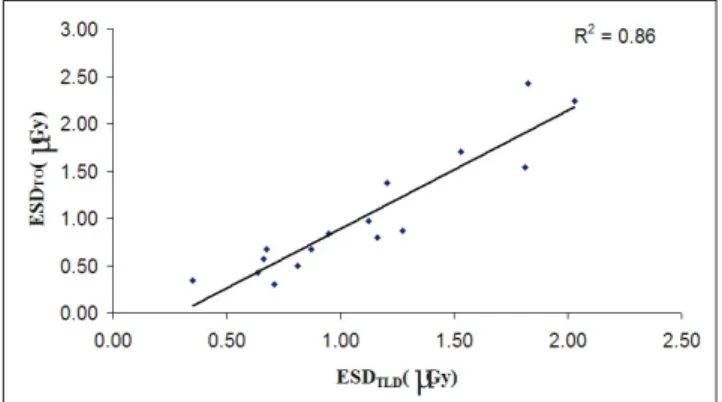
Results: The mean ESD TO for the chest and abdomen were 67 μ Gy and 65 μ Gy per procedure, respectively. The mean ESD TLD per radiograph was 70 μ Gy. The measured scattered radiation range at a 2 m distance from the neonatal intensive care unit (NICU) was (11-17 μ Gy) per radiograph. Mean effective doses were 16 and 27 μ Sv per procedure for the chest and abdomen, respectively. ESD TLD was well correlated with ESD TO obtained from the total chest and abdomen radiographs for each infant (R
2= 0.86). The radiation risks for childhood cancer estimated from the effective dose were 0.4 × 10
-6to 2 × 10
-6and 0.6 × 10
-6to 2.9 × 10
-6for chest and abdomen radiographs, respectively.
Conclusion: The results of our study show that neonates received acceptable doses from common radiological examinations. Although the contribution of scat- ter radiation to the neonatal dose is low, considering the sensitivity of the
neonates to radiation, further protective action was performed by increasing the distance of the infants from each other.
iagnostic radiology is increasingly used in the assessment and treatment of neonates requiring intensive care. It is often necessary to perform a large number of radiographic examinations that depend on the birth weight of the infant, gestational age and medical problems (1). The age at which exposure takes place is critical in the determination of radiation risk. During fetal development and early childhood, intense tissue proliferation and differentiation takes place, and it is known that proliferating cells are more susceptible to the induction of cancer (2). Radiographic examinations of neonates are particularly critical because of delayed radiogenic cancers as a consequence of a relative longer life expectancy. The small size of neonates, especially of premature infants, places all organs within the useful beam, resulting in a higher effective dose per radiograph than may be the case with older children and adults. Therefore, radiation doses for neonatal X-ray examina- Turan Olgar, PhD
1Esra Onal, MD
2Dogan Bor, PhD
1Nurullah Okumus, MD
2Yildiz Atalay, MD
2Canan Turkyilmaz, MD
2Ebru Ergenekon, MD
2Esin Koc, MD
2Index terms : Radiation dose Entrance skin dose Effective dose Radiography
DOI:10.3348/kjr.2008.9.5.416
Korean J Radiol 2008 ; 9 : 416-419 Received October 17, 2007; accepted after revision March 24, 2008.
1