Generation of Transgenic Rice without Antibiotic Selection Marker through Agrobacterium -mediated Co-transformation System
Soo-Kwon Park
1†, Tackmin Kwon
1†, Jong-Hee Lee
1, DongJin Shin
1, Woon-Ha Hwang
1, You-Chun Song
1, Jun-Hyun Cho
1, Min-Hee Nam
1, Seung-Ho Jeon
1Sang-Yeol Lee
2and Dong-Soo Park
1*
1
Function Crop Resource Development Division, Department of Functional Crop, National Institute of Crop Science, RDA, Miryang 627-803, Korea
2
Division of Applied Life Science, Gyeongsang National University, Jinju 660-701, Korea
Received August 10, 2012 /Revised September 24, 2012 /Accepted September 26, 2012Development of transgenic plant increasing crop yield or disease resistance is good way to solve the world food shortage. However, the persistence of marker genes in crops leads to serious public con- cerns about the safety of transgenic crops. In the present paper, we developed marker-free transgenic rice inserted high molecular-weight glutenin subunit (HMW-GS) gene (Dx5) from the Korean wheat cultivar ‘Jokyeong’ using Agrobacterium-mediated co-transformation method. Two expression cassettes comprised of separate DNA fragments containing only the Dx5 and hygromycin resistance (HPTII) genes were introduced separately into Agrobacterium tumefaciens EHA105 strain for co-infection. Each EHA105 strain harboring Dx5 or HPTII was infected into rice calli at a 3: 1 ratio of EHA105 with Dx5 gene and EHA105 with HPTII gene expressing cassette. Then, among 66 hygromycin-resistant trans- formants, we obtained two transgenic lines inserted with both the Dx5 and HPTII genes into the rice genome. We reconfirmed integration of the Dx5 and HPTII genes into the rice genome by Southern blot analysis. Wheat Dx5 transcripts in T
1rice seeds were examined with semi-quantitative RT-PCR.
Finally, the marker-free plants containing only the Dx5 gene were successfully screened at the T
1generation. These results show that a co-infection system with two expression cassettes could be an efficient strategy to generate marker-free transgenic rice plants.
Key words : Agrobacterium-mediated co-transformation, high-molecular-weight glutenin subunit (HMW-GS) gene, hygromycin (HPTII) resistance, marker-free transgenic rice, two expression cassettes
†S.-K. P. and T. K. contributed equally to the article.
*Corresponding author
*Tel:+82-55-350-1184, Fax:+82-55-352-3059
*E-mail : [email protected]
Introduction
Rice is predominant staple food with wheat in the world and it provides more than 23% of the world’s dietary energy supply. Rice is also a good source of thiamine, riboflavin and dietary fibre[18]. During the last 40 years, the techno- logical advances for conventional breeding led to the devel- opment of high-yielding and disease resistant varieties of rice in world food production. However, Population in the world is currently growing at a rate of around 1.10% per year and it is estimated that it will become 8.5 billion by 2025 [1]. Forty % of more rice production by 2030 was de- manded to satisfy the growing demand. And the agricultural environment conditions have been recently changing due to global temperature warming. However, there may be a way
to overcome this issue through genetic engineering with con- ventional breeding [1].
Antibiotic genes such as hygromycin phosphotransferase II (HPTII) have been used as selectable markers in a part of the plant transformation process to select transgenic cells from which intact transgenic plants can be regenerated [10].
The bar gene which was herbicide resistance from Streptomycies hygroscopicus detoxifies the herbicide glufosinate. This gene has been widely used as a selectable marker in plant transformation systems. Even though sev- eral risk-assessment reports have shown that the selectable marker genes and their products do not alter the re- productive biology or potential for gene flow and do not increase the risks for adverse effects to other organisms, the persistence of selectable marker genes in crops destined for field cultivation and human food leads to serious public con- cerns about the safety of transgenic crops [14,17].
Several genetic engineering techniques such as Cre-loxP
system were developed to generate marker free transgenic
plant. The Cre-loxP recombination system of bacteriophage PI needs expression of the Cre protein which cause the re- combination between loxP sites. The recombination between loxP sites results in excision and circularization of interven- ing DNA. However, the Cre-loxP recombination system re- quires either the transient expression of cre gene, crossing with a recombinase-expressing line, or an inducible factor to turn on the expression of cre gene [3]. Multi-Auto- Transformation (MAT) vector system was also developed to select marker-free transgenic plants. In MAT system, the on- cogenes of Agrobacterium such as ipt, iaaM/H, and rol con- trol the endogenous levels of plant hormones and regenerate transgenic plants, and then are removed by the R/RS system [12]. Co-transformation is a method for production of mark- er free transformations based on Agrobacterium-mediated transformation. For this strategy, three transformation ap- proaches were developed: introduction of two T-DNAs in separate Agrobacterium strains, introduction of two T-DNA carried by different replicons within the same Agrobacterium strain, and introduction of two T-DNAs located on the same replicon within an Agrobacterium strain[8]. In this study, we modified the pCAMBIA1300 vector for introduction of target gene and generated the marker free transgenic rice through the co-transformation system with two Agrobacterium cells.
Materials and Methods Cloning of the wheat Dx5 glutenin gene
‘Jokyeong’ (Triticum aestivum L. cv. Jokyeong) was used for cloning the Dx5 glutenin gene. The Dx5 gene was ampli- fied by polymerase chain reaction (PCR) of genomic DNA using the primers Dx5-F (primer sequences: 5‘-AGGG TACCGAGATGGCTAAGC GGTTAG-3‘) and Dx5-R (primer sequences: 5‘-GATCTAGATCACTGGCTGGCCGAC AATG-3‘), which were designed from a GenBank sequence (accession no. X12928). The PCR temperature cycling conditions were 4 min at 94°C, followed by 40 cycles of 94°C for 30 sec, 60°C for 30 sec, 72°C for 2 min, and a final extension at 72°C for 10 min. The amplified products were separated on a 1%
agarose gel and visualized with ethidium bromide. The am- plified products were sub-cloned using a TOPO TA Cloning kit for sequencing (Invitrogen, Carlsbad, CA, USA).
DNA constructs
To make a marker-free vector, we first inserted GluB1 pro- moter, which regulates seed storage protein genes in the en-
dosperm of rice seeds [21] into the to the pCAMBIA1300 bi- nary vector. The HPTII expression cassette (CaMV 35S pro- moter-HPTII gene-CaMV 35S terminator) in the pCAMBIA1300 binary vector was removed by XhoI and EcoRI restriction enzyme treatment. After klenow enzyme treatment for blunt ligation, the vector was self-ligated.
Then, amplified the Dx5 gene with the EcoRI and KpnI re- striction enzyme sites was constructed into modified pCAMBIA1300 binary vectors under the control of GluB1 promoter. The positive selectable marker cassette for co-transformation used an empty pCAMBIA1300 binary vec- tor (Fig. 1B).
Agrobacterium handling
Agrobacterium tumefaciens EHA105 was transformed with Dx5 cloned binary vectors and an empty vector containing HPTII for the selectable marker using the freeze-thaw meth- od [4]. Transformants were selected on YEP media contain- ing kanamycin (50 mg/l). Transformation was confirmed by a restriction analysis and PCR amplification of plasmids mini-prepped from each Agrobacterium strain [2].
Rice co-transformation
Mature seeds of Oryza sativa L. subsp. japonica var.
‘Dongjin’ were used to induce callus formation on callus induction (CI) medium (N
6salts [6] with vitamins, 2.5 g/l proline, 2 mg/l 2,4-D, 0.5 g/l casamino acid, 30 g/l sucrose and 2 g/l gelrite, pH 5.7). After 21 days incubation in the dark at 25°C, the scutellum-derived calli were excised and preincubated on CI medium for 1 week. Agrobacterium was grown for 2 days on YEP solid medium containing antibiotics at 25°C. Agrobacterial cells were resuspended in suspension medium (N6 salts with vitamins, 2 mg/l 2,4-D, 0.5 g/l casamino acid, 30 g/l sucrose, and 10 g/l glucose, pH 5.7) with 200 μM acetosyringone as a final concentration.
After two Agrobacterium cells were mixed in a 3:1 ratio of
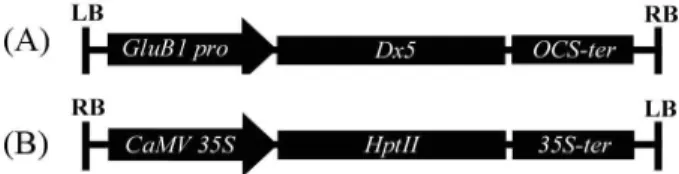
Fig. 1. Vector constructs expressing the
Dx
5 (A) and hygromycin phosphotransferase II (B) genes in binary vectors.GluB1 pro
, glutelin B1 promoter;OCS-ter
, octopine synthase ter- minator;CaMV 35S
, cauliflower mosaic virus promoter;35S-ter
, 35S terminator; RB, right border; LB, left border.EHA105 with Dx5 gene expressing cassette and EHA105 with HPTII gene expressing cassette, the calli were trans- formed by swirling in a mixture of Agrobacterium cultures for 30 min. The calli were blotted on Whatman no. 1 paper and cocultivated on cocultivation medium (N
6salts with vi- tamins, 2 mg/l 2,4-D, 0.5 g/l casamino acid, 30 g/l sucrose, 10 g/l glucose, and 2 g/l gelrite, pH 5.2 with 200 μM aceto- syringone as a final concentration). After 3 days, the calli were washed with liquid CI medium supplemented with 250 mg/l cefotaxime and 150 mg/l timentin and placed on the selection medium (CI medium supplemented with 50 mg/l hygromycin, 250 mg/l cefotaxime). After selection and re- generation, the regenerated plantlets were acclimatized and grown in a greenhouse.
PCR analyses of transformants
PCR was performed with the GeneAmp System 9700 (Applied Biosystems, Foster City, CA, USA) with a gene-spe- cific primer set (Dx5; forward 5'-GGGACAATACGAGC AGCAAA-3', reverse 5'-CTTGTTCCGGTT GTTGCCAT-3', HPTII; forward 5'-CGCTTCTGCGGGCGATTT-3', reverse 5'-CCCATTCGGACCGCAAGGA-3') and EF Taq DNA poly- merase (Solgent Co. Seoul, South Korea). Each reaction mix- ture (30 μM) consisted of 10 mM Tris-HCl (pH 9.0), 1.5 mM MgCl
2, 40 mM KCl, 250 μM dNTPs, and 1 U Taq DNA polymerase. Amplified products were separated on a 1%
agarose gel, stained with ethidium bromide, and visualized with an ultraviolet illuminator.
Southern hybridization analysis
Rice genomic DNA was prepared using the CTAB ex- traction method [19]. Aliquots of 5 μg of purified DNA were digested with restriction endonuclease (EcoRI), size-fractio- nated on a 0.8% agarose gel, and the DNA was transferred to a nylon membrane through capillary blotting in 10× SSC (Gene Screen, DuPont, Wilmington, DE, USA). The blots were labeled using AlkPhos Direct (Amersham, GE Healthcare. Piscataway, NJ, USA) according to the manu- facturer’s instructions. After hybridization, the filters were washed for 30 min at 55°C to remove unlabelled probe.
Subsequently, CD-star Detection Reagent (Amersham, GE Healthcare) was used to detect and generate signals.
RNA extraction and RT-PCR analysis
T
1generation seeds were frozen in liquid nitrogen and then ground to powder using a mortar and pestle. Total
RNA was extracted using a method reported previously [15].
The isolated RNA preparations were reverse-transcribed with oligo-dT primer and a First Strand cDNA Synthesis kit for RT-PCR (Roche Co., Basel, Switzerland) with gene-specif- ic primers. The primers were as follows: Dx5 forward 5'-GGGACAATACGAGCAGCAAA-3', Dx5 reverse 5'-CTT GTTCCGGTTGTTGCCAT-3'; OsActin primers were used as internal standards for mRNA expression profiling[16,20].
The PCR conditions consisted of initial denaturation at 94°C for 4 min, followed by 30 cycles at 94°C for 1 min, 60°C for 1 min, 72°C for 1 min, and a final extension at 72°C for 10 min. The experiments were repeated three times, and all produced similar results. The OsActin control primers were 5'-GGAACTGGTATGGTCAAGGC-3' and 5'-AGTCTCATG GATACCCGCAG-3' [5].
Results
Vector construction and Agrobacterium transformation for marker-free transgenic rice
Co-transformation experiments were conducted using two expression cassettes containing separate linear DNA fragments with the Dx5 and hygromycin resistance (HPTII) genes. The marker-free vector cassette was constructed with the modified pCAMBIA1300, which was changed for the GluB1 promoter after removing the cauliflower mosaic virus promoter (CaMV35S) (Fig. 1A). The positive selectable mark- er cassette for co-transformation used an empty pCAMBIA1300 vector (Fig. 1B). The HPTII coding sequence was under the control of CaMV35S and was followed by the OCS termination sequence from Agrobacterium tumefa- ciens; HMW glutenin subunit Dx5 coding sequences were flanked by endosperm-specific GluB1 promoters from rice.
The two expression binary vectors were separately in- troduced into the A. tumefaciens EHA105 strain for plant transformation. Each binary vector was rescued from the EHA105 strain harboring HPTII and Dx5, and the HPTII and Dx5 genes were validated by PCR analysis.
Generation of marker-free Dx5 transgenic rice plant
Each EHA105 strain harboring Dx5 expression vector or
HPTII expression vector was cultured in YEP medium for
plant transformation. The cultured cells were resuspended
to OD
600=0.1 in AAM medium [11], and each Dx5 and HPTII
cell was added at a 3: 1 ratio. These mixed cells were co-in-
fected into rice calli. The transformed calli were selected
Table 1. Co-transformation efficiency calculated during regeneration in rice transformation experiments
Gene No. of transformants No. of plants containing the
Dx
5 Frequency of co-transformation (%)Dx5
66 2 3.0with hygromycin because we co-infected calli with the HPTII gene. We obtained 66 independent hygromycin-resistant transformants through co-infection in the Agrobacterium transformation system.
Genomic DNA from 66 independent T
0transformants was extracted and insertion of the HPTII and Dx5 genes was ana- lyzed by PCR with gene specific primers. As shown in Fig.
2, the HPTII gene was amplified in all transformants, but no PCR products of ‘Jokyeong’ and ‘Dongjin’ (negative con- trols) were detected. Next, we investigated insertion of the Dx5 gene into the rice genome within transformants by PCR analysis. Among 66 independent transgenic lines, the Dx5 gene was amplified as a PCR product in only two trans- formants (2 and 7 lines), which was the same PCR product size of Jokyeong and the plasmid used as positive controls (Fig. 2). This result indicates that only two transgenic lines harbored both the Dx5 and HPTII genes. The co-trans- formation frequency was about 3% in our experimental con- ditions (Table 1).
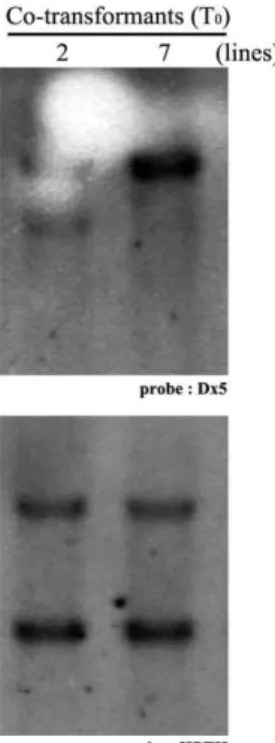
We performed Southern blot analysis with the Dx5 and HPTII genes as probes to validate their insertion and guess segregation ratio of the marker-free plant in T
1plants. Two signal bands in both selected transformants lines (2 and 7 lines) were detected when we used the HPTII gene as a probe; however, two integrations of the Dx5 gene occurred
Fig. 2. Identification of co-transformants by gene specific primer sets.
HPTII
(upper panel) andDx
5 (lower panel) genes were amplified usingHPTII
andDx
5 specific primer sets, respectively. M, molecular marker; Jokyeong, Korean wheat cultivar; Dongjinbyeo (Korean rice cultivar), non-transgenic plant; plasmid, vector construct; 1-13, co-transformant transgenic lines. Genomic DNAs from each plant were used as the template forDx
5 andHPTII
specific amplification. The reaction products of the sam- ple plant were analyzed by electrophoresis on a 1.0%agarose gel.
in transformant line 2 and a single integration was found in transformant line 7 (Fig. 3). To examine whether these two transformants were different, we analyzed the insertion position of the Dx5 gene in the two transformants by flank- ing T-DNA sequencing analysis. The Dx5 integration posi- tion of the line 2 was in chromosomes 2 and 8, the Dx5 integration position of the line 7 was in chromosomes 10 (data not shown). These results indicating that even though the HPTII gene was integrated into the rice genome in a similar pattern, transformant lines were independent trans- genic rice plants.
Dx5 gene expression analysis in the co-transformed rice plants
Because Dx5 expression in rice endosperm is important for rice flour quality and we used the GluB1 promoter to express Dx5, total RNA from randomly selected T
1gen- eration transgenic seeds (lines 2 and 7) was extracted, and Dx5 gene transcript level was examined by semi-quantitative
Fig. 3. Southern hybridization analysis of
Dx
5 (upper panel) andHPTII
(lower panel) genes from T0co-transformants. The 0.28 kb (Dx
5) and 0.54 kb (HPTII
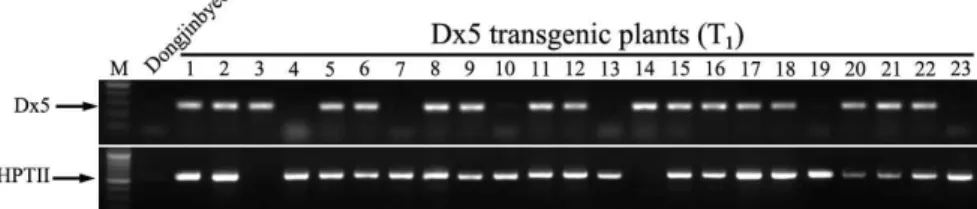
) fragments were ampli- fied by PCR using specific primer sets as the probe.Fig. 5. PCR analysis of T1progeny (line 2 in Fig. 2) to select marker-free transgenic plants containing only the
Dx
5 gene. M, molecular marker; Dongjinbyeo, non-transgenic plant as negative control; 1-23, T1progeny lines from T0co-transformants containing both theDx
5 andHPTII
genes. The reaction products were analyzed by electrophoresis on a 1.0% agarose gel.Fig. 4. Expression analysis of the
Dx
5 gene from T1 seeds.RT-PCR was performed with
Dx
5 T1 seed transcripts to measureDx
5 mRNA expression.
Gene-specific PCR primers (forward and reverse primers) were designed to amplify theDx
5 gene.OsActin
was used as the control. The amplified products were analyzed by elec- trophoresis on a 1.0% agarose gel.RT-PCR. The Dx5 transcripts were successively expressed in the T
1generation transgenic seeds (lines 2 and 7), whereas Dx5 expression in ‘Dongjin’ was not detected (Fig. 4).
OsActin expression was used as a quantitative control.
Selection of marker-free plants harboring the Dx5 gene at the T
1generation
To select Dx5 marker-free plants harboring only the Dx5 gene, 72 T
1generation seeds of the transformant line 2 were planted in soil and genomic DNA was extracted from leaves of plantlets after 4 weeks. Insertion of the Dx5 and HPTII genes was investigated by PCR analysis. As shown in Fig.
5, most of the transgenic lines harbored both the Dx5 and HPTII genes, and some inserted only the HPTII gene.
However, transgenic 3 and 14 lines contained only the Dx5 gene (Fig. 5). This result shows that marker-free plants con- taining only the Dx5 gene were successfully screened at the T
1generation and that co-infection using the Agrobacterium transformation system was an efficient strategy to produce marker-free transgenic rice plants.
Discussion
Generation of marker-free transgenic plant is important way to solve the public concerns about the safety of anti- biotics and herbicides [8]. In this paper, we used the Agrobacterium-mediated co-transformation method with two expression cassettes comprised of separate DNA fragments containing the Dx5 and HPTII resistance genes to produce transgenic rice plants free of herbicide and antibiotic resist- ance genes (Fig. 1). This method is one way to separate se- lectable marker genes from transgenes at the transformation stage. Agrobacterium-mediated transformation is usually used for this purpose, because separate integration events occur more regularly using this method than with direct gene delivery methods. A wide range of variations have been reported, and it is difficult to provide a comprehensive evaluation on the general applicability of the different meth- ods [8]. However, co-transformation frequencies are higher than expected for independent events. The co-trans- formation frequency in our experimental conditions was 3%
(Table 1). In a previous report, co-transformation frequency in rice was about from 2% to 14%[13]. This result indicates that transformation efficiency is dependent on rice cultivar and the experimental conditions.
Several research groups tried to develop transgenic plant with one T-DNA, which without antibiotic or herbicide marker genes, and then screened transformants harboring transgene by PCR analysis with genomic DNA [9]. This ap- proach needs a considerable time and physical labor, and the efficiency of screening of insertion of T-DNA is lower.
The Cre-loxP system was developed to remove target gene
by cleavage of site-specific DNA fragment from genomic
DNA [7]. However, this approach requires another insertion
of cre gene and there is concern about another
recombination. In co-transformation approach, because se-
lectable marker gene can subsequently be removed from the
plant genome during segregation and recombination that oc- curs during sexual reproduction, there is no imprecise excision.
Wheat high molecule-weight glutelin subunits (HMW- GSs) are major determinants for bread quality such as gluten elasticity [22]. HMW-GSs are specifically found in the wheat, not rice. We used the Dx5 gene, which is one of HMW-GS gene, and validated the insertion of the Dx5 gene in trans- formants through PCR analysis with gene specific primers and Southern blot analysis (Fig. 2, 3). The GluB1 promoter derived from a glutelin gene can express the high-level for- eign gene in monocot such as rice and barley[23]. The Dx5 transcripts in the marker-free transgenic lines were stably expressed in T
1generation rice seeds (Fig. 4). Finally, we obtained two or three marker-free plants containing only the Dx5 gene through Agrobacterium-mediated co-transformation at the T
1generation stage of the transformant lines (2 and 7 lines). According to flanking T-DNA sequencing and Southern blot analysis, The Dx5 integration position of the two transformant lines was different. And the Dx5 gene tran- scripts of line 2 were slightly higher than line 7 (Fig. 4).
These results indicating that line 2 and 7 were revealed as independent lines. The morphological characteristics of the marker-fee transgenic rice expressing the Dx5 gene were similar with that of ‘Dongjin’ (data not shown). Our mark- er-fee transgenic rice expressing the Dx5 gene in this study is first trial using Agrobacterium-mediated co-transformation in the world.
Taken together, although generating marker-free plants based on Agrobacterium-mediated co-transformation using two different expression cassettes was more time consum- ing, this method was an efficient strategy to produced mark- er-free transgenic rice plants.
Acknowledgement
This work was supported by a grant from the Department of Functional Crop, NICS, RDA (No. PJ008717), Republic of Korea.
References
1. Ahmad, P., Ashraf, M., Younis, M., Hu, X., Kumar, A., Akram, N. A. and Al-Qurainy, F. 2012. Role of transgenic plants in agriculture and biopharming.
Biotechnol. Adv
. 30, 524-540.2. An, G., Evert, P. R., Mitra, A. and Ha, S. B. 1988.
Plant molec-
ular biology manual
.3. Chakraborti, D., Sarkar, A., Mondal, H. A., Schuermann, D., Hohn, B., Sarmah, B. K. and Das, S. 2008. Cre/
lox
system to develop selectable marker free transgenic tobacco plants conferring resistance against sap sucking homopteran insect.Plant Cell Rep.
27, 1623-1633.4. Chen, H., Nelson, R. S. and Sherwood, J. L. 1994. Enhanced recovery of transformants of Agrobacterium tumefaciens af- ter freeze-thaw transformation and drug selection.
BioTechniques
16, 664-668, 670.5. Cho, J. I., Ryoo, N., Ko, S., Lee, S. K., Lee, J., Jung, K. H., Lee, Y. H., Bhoo, S. H., Winderickx, J., An, G., Hahn, T.
R. and Jeon, J. S. 2006. Structure, expression, and functional analysis of the hexokinase gene family in rice (Oryza sativa L.).
Planta
. 224, 598-611.6. Chu, C. C., Wang, C. S., Sun, C. S., Hsu, C., Yin, K. C., Chu, C. Y. and Bi, F. Y. 1975. Establishment of an efficient medium for anther culture of rice through comparative ex- periments on the nitrogen sources.
Sci. Sin.
18, 659-668.7. Cuellar, W., Gaudin, A., Solorzano, D., Casas, A., Nopo, L., Chudalayandi, P., Medrano, G., Kreuze, J. and Ghislain, M.
2006. Self-excision of the antibiotic resistance gene nptII us- ing a heat inducible Cre-
lox
P system from transgenic potato.Plant Mol. Biol
. 62, 71-82.8. Darbani, B., Eimanifar, A., Stewart, C. N. Jr. and Camargo, W. N. 2007. Methods to produce marker-free transgenic plants.
Biotechnol. J.
2, 83-90.9. de Vetten, N., Wolters, A. M., Raemakers, K., van der Meer, I., ter Stege, R., Heeres, E., Heeres, P. and Visser, R. 2003.
A transformation method for obtaining marker-free plants of a cross-pollinating and vegetatively propagated crop.
Nature Biotech
. 21, 439-44210. Gleave, A. P., Mitra, D. S., Mudge, S. R. and Morris, B. A.
1999. Selectable marker-free transgenic plants without sex- ual crossing: transient expression of cre recombinase and use of a conditional lethal dominant gene.
Plant Mol. Biol
. 40, 223-235.11. Hiei, Y., Ohta, S., Komari, T. and Kumashiro, T. 1994.
Efficient transformation of rice (
Oryza sativa L.)
mediated by agrobacterium and sequence analysis of the boundaries of the T-DNA.Plant J.
6, 271-282.12. Khan, R. S., Nakamura, I. and Mii, M. 2011. Development of disease-resistant marker-free tomato by R/RS site-specific recombination.
Plant Cell Rep.
30, 1041-1053.13. Komari, T., Hiei, Y., Saito, Y., Murai, N. and Kumashiro, T. 1996. Vectors carrying two separate T-DNAs for co-trans- formation of higher plants mediated by Agrobacterium tu- mefaciens and segregation of transformants free from se- lection markers.
Plant J
. 10, 165-174.14. Kuiper, H. A., Kleter, G. A., Noteborn, H. P. and Kok, E.
J. 2001. Assessment of the food safety issues related to genet- ically modified foods.
Plant J
. 27, 503-528.15. Li, Z. and Trick, H. N. 2005. Rapid method for high-quality RNA isolation from seed endosperm containing high levels of starch.
BioTechniques
38, 872, 874, 876.16. McElroy, D., Zhang, W., Cao, J. and Wu, R. 1990. Isolation
초록:아그로박테리움 동시 형질전환 시스템을 통한 항생제 선발 마커가 없는 형질전환벼의 생산 박수권
1․권택민
1․이종희
1․신동진
1․황운하
1․송유천
1․조준현
1․남민희
1․전승호
1․이상열
2․박동수
1*
(
1농촌진흥청 국립식량과학원 기능성작물부,
2경상대학교 대학원 응용생명과학부)
작물의 수확량이나 병 저항성을 증가시키는 형질전환 식물체 개발은 세계 식량 부족을 해결하는 좋은 방법이다. 하지 만 항생제나 제초제의 사용은 형질전환 작물의 안전에 대해서 일반 사람들의 심각한 우려를 초래한다. 본 연구에서는, 아그로박테리움을 이용한 동시 형질전환 방법을 이용하여 한국의 밀 재배종인 ‘조경밀’의 유전자인, 고분자 글루테닌 서브유닛[high molecular-weight glutenin subunit (HMW-GS)] Dx5가 삽입된 마커프리 형질전환벼를 개발하였다. 각각 Dx5 유전자와 하이그로마이신(HPTII) 저항성 유전자만으로 구성된 두 종류의 발현 카셋트(Two expression cassettes)를 독립적으로 아그로박테리움 EHA105에 도입하였고, Dx5와 HPTII가 도입된 각각의 EHA105 아그로박테리움을 3:1 비율 로 혼합하여 벼 캘러스에 접종하였다. 66개의 HPTII 저항성 형질전환체 중에서 벼 게놈에 Dx5와 HPTII가 모두 삽입된 2개의 형질전환 라인을 획득하였다. Dx5와 HPTII가 벼 게놈에 도입된 것을 Southern blot을 통해서 다시 확인하였다.
또한, semi-quantitative RT-PCR을 통해 형질전환벼 T
1세대 종자의 밀 Dx5 전사여부를 확인하였고 결국, Dx5 유전자만
을 가지는 마커프리 형질전환벼를 T
1세대에서 선발할 수 있었다. 본 연구 결과는 두 종류의 발현 카셋트를 사용한 아그
로박테리움 동시 접종 시스템이 마커프리 형질전환벼를 생산하기 위한 효과적인 전략이 될 수 있음을 보여준다.
of an efficient actin promoter for use in rice transformation.
Plant Cell
2, 163-171.17. Ramessar, K., Peremarti, A., Gomez-Galera, S., Naqvi, S., Moralejo, M., Munoz, P., Capell, T. and Christou, P. 2007.
Biosafety and risk assessment framework for selectable marker genes in transgenic crop plants: a case of the science not supporting the politics.
Transgenic Res
. 16, 261-280.18. Roy, P., Orikasa, T., Okadome, H., Nakamura, N. and Shiina, T. 2011. Processing conditions, rice properties, health and environment.
Int. J. Environ. Res. Public Health
8, 1957-1976.19. Thompson, B. G., Anderson, R. and Murray, R. G. 1980.
Unusual polar lipids of Micrococcus radiodurans strain Sark.
Can. J. Microbiol
. 26, 1408-1411.20. Volkov, R. A., Panchuk, I. I. and SchoZ, F. 2003.
Heat-stress-dependency and developmental modulation of gene expression: the potential of house-keeping genes as
internal standards in mRNA expression profiling using real-time RT-PCR.
J. Exp. Bot.
54, 2343-2349.21. Wu, C. Y., Adach, T., Hatano, T., Washida, H., Suzukiand, A. and Takaiwa, F. 1998. Promoters of Rice Seed Storage Protein Genes Direct Endosperm-Specific Gene Expression in Transgenic Rice.
Plant Cell Physiol.
39, 885-889.22. Yan, Y., Hsam, S. L., Yu, J. Z., Jiang, Y., Ohtsuka, I. and Zeller, F. J. 2003. HMW and LMW glutenin alleles among putative tetraploid and hexaploid European spelt wheat (Triticum spelta L.) progenitors.
Theor. Appl. Genet
. 107, 1321-1330.23. Yang, L., Kajiura, H., Suzuki, K., Hirose, S., Fujiyama, K.
and Takaiwa, F. 2008. Generation of a transgenic rice seed-based edible vaccine against house dust mite allergy.