Received: February 04, 2019 Revised: March 15, 2019 Accepted: March 18, 2019
구강증상경험의 비교 연구
박지영 ・정기옥
경북전문대학교 치위생과
A comparative study of subjective oral
symptom experiences according to gender in adolescents of multi-cultural families
Ji-Young Park ・Gi-Ok Jung
Department of Dental Hygiene, Kyungbuk College
Corresponding Author: Gi-Ok Jung, Department of Dental Hygiene, Kyungbuk College, 77 Daehak-ro, Yeongju-si, Gyeongbuk, 36133, Korea, Tel: 82-54-630-5257, Fax: 82-54-630-5054, E-mail:
Abstract
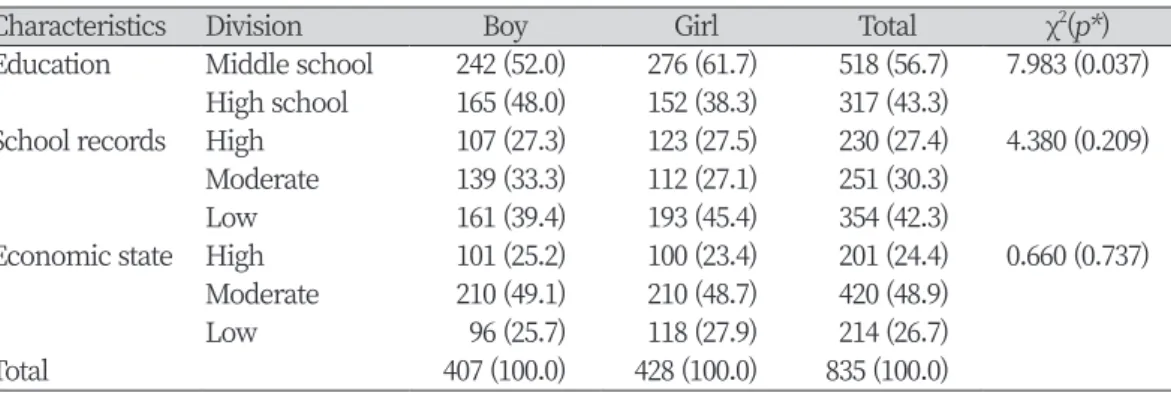
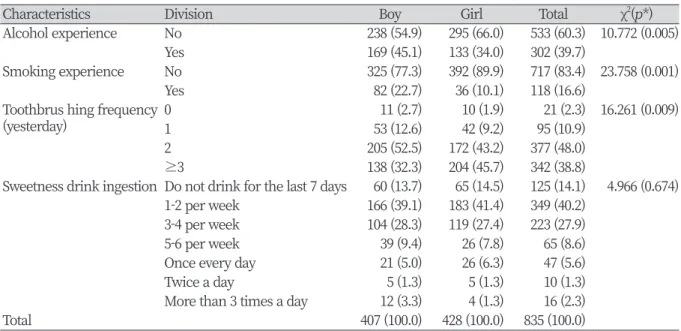
Objectives: The purpose of this study was to investigate the factors affecting subjective oral symptoms according to the gender of youth from multi-cultural families in Korea using data from the 14th (2018) Korean Youth Health Behavior Survey. Methods: The independent variables used in this study consisted of gender and sweet drink intake. The dependent variable was experience of subjective oral symptoms. Compensation variables consisted of general characteristics of school type, academic performance, economic status, drinking status, smoking status, and number of tooth brushings day before. The subjects of the study were 835 children of multi-cultural families whose parents were foreigners. All statistical analyses were performed by complex samples cross-tabulation analysis and complex samples logistic regression analysis.
Statistical analysis was performed using the PASW statistical package 21.0 (Statistical Packages for Social Science Inc., Chicago, IL, USA). A significance level of 0.05 was used for statistical significance. Results: The composite sample logistic regression analysis showed that there was a statistically significant difference between gender and intake of sweet drinks in experience of subjective oral symptoms. Conclusions: These results suggest that factors influence subjective oral symptoms in Korean multi-cultural adolescents. Therefore, I hope that they will be used as basic data for the introduction and development of a customized oral health education program for improving oral health of multi-cultural adolescents.
Key Words : Gender, Multi-cultural family youth, Oral symptom experience, Youth risk
behavior survey