PGHN
Review Article
Types of Special Infant Formulas Marketed in Korea and Their Indications
Suk Jin Hong
Department of Pediatrics, Daegu Catholic University School of Medicine, Daegu, Korea
Infant formula is classified into standard cow’s milk-based and special formulas. This review aimed at summarizing the types of special milk formulas currently sold in Korea, and the appropriate indications for the use of these formulas;
lactose free formula, soy-based formula, protein hydrolysate formula, amino acid-based formula, preterm formula, medium chain triglyceride formula, low-phosphorus formula, protein-energy-enriched formula, and formulas for in- born errors of metabolism.
Key Words: Infant formula, Lactose, Soybeans, Protein hydrolysates
Received:March 23, 2018, Revised:April 23, 2018, Accepted:May 4, 2018
Corresponding author: Suk Jin Hong, Department of Pediatrics, Daegu Catholic University School of Medicine, 33 Duryugongwon-ro 17-gil, Nam-gu, Daegu 42472, Korea. Tel: +82-53-650-4246, Fax: +82-53-653-9681, E-mail: [email protected]
Copyright ⓒ 2018 by The Korean Society of Pediatric Gastroenterology, Hepatology and Nutrition
This is an openaccess article distributed under the terms of the Creative Commons Attribution NonCommercial License (http://creativecommons.org/licenses/by-nc/4.0/) which permits unrestricted noncommercial use, distribution, and reproduction in any medium, provided the original work is properly cited.
INTRODUCTION
Breast milk is the best source of nutrition for all infants. Thus, breastfeeding is highly recommended.
However, infant formula can be used in the follow- ing instances: 1) the mother refuses to breastfeed; 2) breastfeeding is medically contraindicated; and 3) there is an inadequate supply of breast milk. This type of milk is classified into standard cow’s milk-based and special formulas. The present study aimed at summarizing the types of special milk for- mulas currently sold in Korea. Moreover, the appro- priate indications for the use of these milk formulas were identified.
LACTOSE-FREE FORMULA
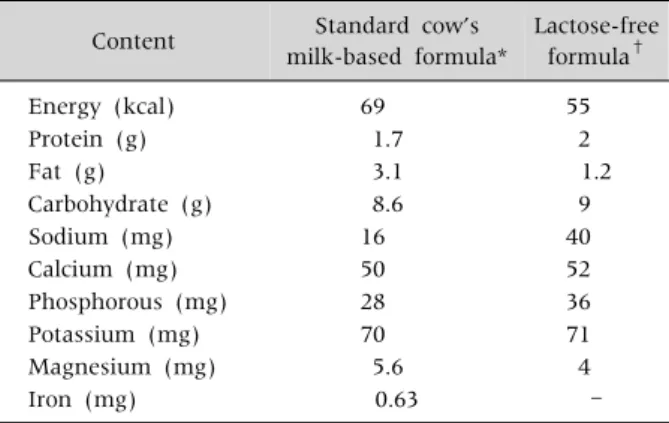
This type of milk formula is often used for acute diarrhea. It does not contain lactose, maltodextrin is the main source of carbohydrates and digestible car- bohydrates such as rice and bananas are used instead. This formula has a lower fat content, which prevents fat malabsorption, as compared to the 30%
fat content in standard formula. Moreover, vegetable oil and medium chain triglyceride (MCT) oil are present because they can be easily digested. It has in- creased amount of protein, and the iron content in this type of formula is decreased to inhibit the growth of pathogenic intestinal bacteria. However, the electrolyte content is increased to prevent dehy- dration due to diarrhea (Table 1).
Table 1. Comparison of Nutrients of Standard Cow’s Milk-Based Formula and Lactose-Free Formula
Content Standard cow’s milk-based formula*
Lactose-free formula†
Energy (kcal) 69 55
Protein (g) 1.7 2
Fat (g) 3.1 1.2
Carbohydrate (g) 8.6 9
Sodium (mg) 16 40
Calcium (mg) 50 52
Phosphorous (mg) 28 36
Potassium (mg) 70 71
Magnesium (mg) 5.6 4
Iron (mg) 0.63 –
*Namyang Dairies’ product, †Absolute Baby Well DiarrheaⓇ (Maeil Dairies Co., Ltd., Seoul, Korea).
This type of milk formula is used in treating diar- rhea and supplementing water, electrolytes, and nu- trients during acute gastroenteritis. It can also be used for lactose intolerance caused by lactase defi- ciency resulting from mucosal damage. If acute in- fectious diarrhea lasts longer than two weeks, post- infectious diarrhea can be considered. Secondary lactose intolerance is caused by a decrease in lactase level in the surface of the small intestine after acute gastroenteritis, which is severe enough to cause damage to the small intestinal mucosa. Rotaviral en- teritis is a typical example [1].
However, the use of lactose-free formula is not ad- vised to all patients with acute diarrhea because there is no evidence showing that it promotes the re- covery of those with acute diarrhea or that it pre- vents lactose intolerance during the acute phase.
Most patients with acute gastroenteritis do not pres- ent with lactose intolerance and usually recover well with breastfeeding or formula feeding [2,3].
Lactose-free formula has minimal iron and low fat content, which can lead to malnutrition in long-term feeding. Thus, it should only be used within 1 to 2 weeks when utilized as a single source. Recovery from lactose intolerance usually takes 2 to 4 weeks.
Thus, the use of soy-based formula or extensively hy- drolyzed formula is recommended for long-term feeding.
The following brands are available in Korea:
Absolute Baby Well DiarrheaⓇ (Maeil Dairies Co., Ltd., Seoul, Korea), Imperial Dream XO DoctorⓇ (Namyang Dairies Co., Ltd., Seoul, Korea), True Mom Medi-DiarrheaⓇ (Ildong Foodis Co., Ltd., Seoul, Korea), and Novalac ADⓇ (Novalac, Yongin, Korea).
SOY-BASED FORMULA
Soy-based formula is made from protein isolated from soybean. It was developed for infants who can- not tolerate milk protein or lactose. It is as nutritious as breast milk or the standard cow’s milk-based for- mulas and can be used for long-term feeding.
This milk formula does not contain lactose, and its sources of carbohydrates include corn maltodextrin, which is the main source of carbohydrates, corn syr- up solids, and sucrose. Its fat content is similar to that of standard cow’s milk-based formulas. However, vegetable fat (soy, palm, sunflower, coconut, etc.) was used. It contains essential fatty acids which can be easily absorbed. In addition, 100% protein iso- lated from soybean and fortified with methionine, carnitine, and taurine is used. Because the biological activity of soy protein is lower than that of standard milk formula, it contains more protein. Methionine is added for nitrogen balance, and it also contains carnitine and taurine, which are not found in soy- bean.
Soy protein is nutritionally valuable after heat treatment, and heat-stable substances are still ob- served after heat treatment. Phytate and phytoes- trogen are among these substances. Soy-based for- mula contains 20% more calcium and phosphorus than the standard cow’s milk-based formulas be- cause it is a conjugate to phytate, which consists of up to 30% of total phosphorus [4]. In addition, be- cause soy phytates also bind iron and zinc, all soy-based formulas are fortified with iron and zinc [5]. Since it contains isoflavones, which is a kind of phytoestrogen, an individual’s neurobehavioral and sexual developments have been a cause of concern.
However, according to a long-term study by Strom et al. [6] and Merritt and Jenks [7], soy-based formula
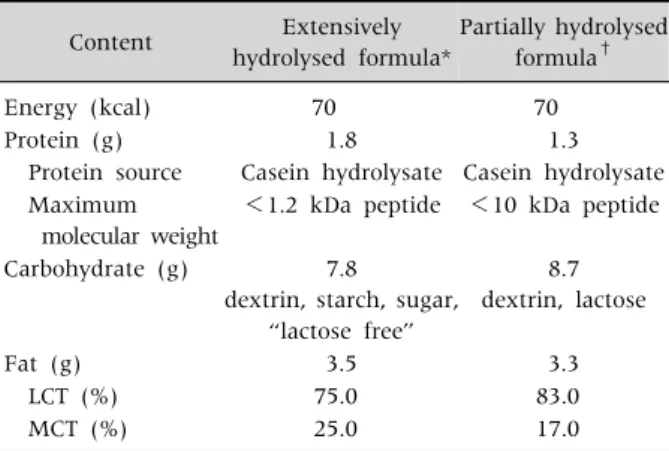
Table 2. Comparison of Nutrients of Extensively Hydrolysed Formula and Partially Hydrolysed Formula
Content Extensively hydrolysed formula*
Partially hydrolysed formula†
Energy (kcal) 70 70
Protein (g) 1.8 1.3
Protein source Casein hydrolysate Casein hydrolysate Maximum
molecular weight
<1.2 kDa peptide <10 kDa peptide
Carbohydrate (g) 7.8
dextrin, starch, sugar,
“lactose free”
8.7 dextrin, lactose
Fat (g) 3.5 3.3
LCT (%) 75.0 83.0
MCT (%) 25.0 17.0
LCT: long-chain triglyceride, MCT: medium chain triglyceride.
*Absolute Baby Well HAⓇ, †Absolute Baby Well SensitiveⓇ (Maeil Dairies Co., Ltd., Seoul, Korea).
has not affected human development, reproduction, and endocrine function. Moreover, isoflavones were not detected in soy-based formulas sold recently in Korea.
This formula contains as much as 600 to 1,300 ng/mL of aluminum (4 to 65 ng/mL in human milk).
Deposition in the bone and brain is possible in pre- mature infants with reduced renal function or in children with renal failure. Aluminum can interfere with calcium absorption in premature infants and can lead to osteopenia. However, this mineral does not affect the bone density of term infants with nor- mal renal function. Therefore, soy-based formula is not recommended for premature infants [8].
Based on the 2008 guidelines of the American Academy of Pediatrics, we have summarized the in- dications for the use of soy-based formula [4]. In term infants, it can be used for galactosemia and he- reditary lactase deficiency. Moreover, babies with vegetarian parents can also use this formula. In the case of cow-milk protein allergy, protein hydrolysate formula is used because 10% to 14% of individuals show evidence of sensitization to soy. However, in the case of immunoglobulin E (IgE)-mediated cow-milk allergy, the sensitization ratio is extremely low. Thus, soy-based formula can be used. According to Katz et al. [9], 64 of 66 patients with IgE-mediated
cow-milk allergy tolerated soy, and none had a pro- ven allergy to this protein. Thus, soy-based formula is a reasonable alternative for feeding patients with IgE-mediated cow-milk allergy. In patients with non-IgE-mediated cow-milk allergy, such as cow- milk protein-induced enteropathy or enterocolitis, the use of milk formula derived from extensively hy- drolyzed protein or synthetic amino acids instead of soy-based formula must be recommended. Soy pro- tein-based formulas may be indicated when clin- ically significant secondary lactose intolerance oc- curs after acute gastroenteritis. Soy formulas are not recommended for premature infants. Furthermore, it does not prevent or manage infantile colic. More- over, it does not protect healthy or high-risk infants from atopic disease. If there is no indication, then its use is not beneficial compared to standard cow’s milk-based formulas.
The following brands are available in Korea:
Absolute Baby Well SOYⓇ (Maeil Dairies Co., Ltd.), Imperial Dream XO AllergyⓇ (Namyang Dairies Co., Ltd.), and True Mom Medi-SoyⓇ (Ildong Foodis Company).
PROTEIN HYDROLYSATE FORMULA
This formula is made for infants who cannot di- gest milk protein or have severe milk intolerance. It contains protein hydrolysate obtained by hydro- lyzing milk protein using enzymes. Moreover, this milk formula does not require digestion, and it is easy to absorb and has low antigenicity. It is classi- fied into partially hydrolyzed formula and ex- tensively hydrolyzed formula according to the degree of hydrolysis (Table 2).
Extensively hydrolyzed formula
Extensively hydrolyzed formula is made by hydro- lyzing milk protein to an extent that does not cause an immune response (amino acids, peptides <1.5 kDa) [10]. The source of carbohydrates is maltodex- trin, sugar, starch, corn syrup, and the main source is maltodextrin. However, it does not contain lactose.
Fat from vegetable oil or MCT oil is used because it
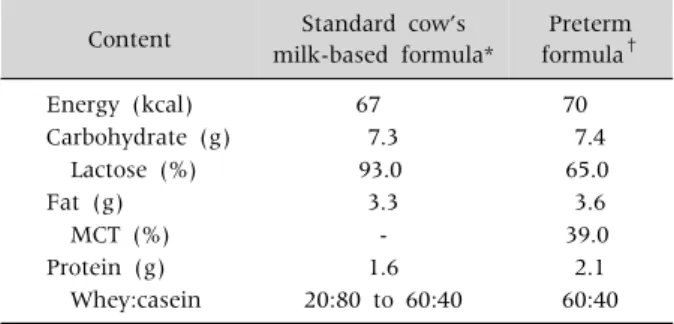
Table 3. Nutrients of Preterm Formula Content Standard cow’s
milk-based formula*
Preterm formula†
Energy (kcal) 67 70
Carbohydrate (g) 7.3 7.4
Lactose (%) 93.0 65.0
Fat (g) 3.3 3.6
MCT (%) - 39.0
Protein (g) 1.6 2.1
Whey:casein 20:80 to 60:40 60:40 MCT, medium chain triglyceride.
*Maeil Dairies’ product, †Absolute PremiⓇ (Maeil Dairies Co., Ltd., Seoul, Korea).
can be easily absorbed, and this formula also con- tains essential fatty acids. The taste is not good due to a specific amino acid or peptide. The higher the de- gree of hydrolysis, the worse the taste. Moreover, it has a high osmolarity, which can cause osmotic diarrhea.
This formula is used in the treatment of milk and soy protein allergy as well as cow milk allergy.
However, since antigenicity cannot be eliminated completely, amino acid-based formula should be used in children with food allergies who have no ef- fect on extensively hydrolyzed formula [11]. It can also be used in cases of serious malabsorption due to gastrointestinal diseases, such as intestine failure, short bowel syndrome, and liver and pancreatic diseases. Because this formula does not contain lac- tose, it can be used for galactosemia or lactose intolerance. Absolute Baby Well HAⓇ (Maeil Dairies Co., Ltd.) is available in Korea.
Partially hydrolyzed formula
Milk protein was broken down into small peptides (3-10 kDa). However, it has some antigenicity. In re- lation to this, this formula is not used in patients di- agnosed with milk protein allergy. Rather, it is used to prevent allergic diseases, such as atopic dermati- tis, in high-risk infants with a family history of allergies. In addition, this formula has lactose. Thus, it cannot be used for galactosemia or lactose into- lerance. It is not as tasteless as the extensively hydro- lyzed formula. Absolute Baby Well SensitiveⓇ (Maeil Dairies Co., Ltd.) is available in Korea. Absolute Baby Well “HA”Ⓡ is an extensively hydrolyzed formula.
However, in the case of overseas products, milk for- mulas labeled with “HA” or “hypoallergenic” are partially hydrolyzed formulas. Thus, caution must be exercised when purchasing such formulas.
AMINO ACID-BASED FORMULA
In amino acid-based formula, the protein is com- posed of synthetic free amino acids with no peptide.
In addition, this formula has no milk protein and lac tose content. There is a certain amount of fat from
MCT oil. It also has a high osmolarity (340 mOsm/kg H2O, NeocateⓇ; Nutricia, Shiphol, the Netherlands).
In children with milk protein allergy, this formula can be used when the symptoms persist despite us- ing extensively hydrolyzed formula because of se- vere protein hypersensitivity or when babies cannot be fed because of refusal to consume extensively hy- drolyzed formula [11,12]. It can also be used as an enteral nutrition therapy for individuals with Crohn’s disease. NeocateⓇ is available in Korea.
PRETERM FORMULA
Premature infants have greater nutritional needs to achieve optimal growth, and there are several rea- sons for this. First, they have smaller nutrient stores compared with term infants. Second, these babies have immature gastrointestinal tract, which is char- acterized by decreased gastrointestinal motility and reduced intestinal enzyme activity. Third, their med- ical conditions increase metabolic energy require- ments [13]. Thus, human milk fortifier or preterm formula, which is specially manufactured, is re- quired to meet the high nutritional needs of pre- mature infants. These products have higher amounts of calories, proteins, vitamins, and minerals than standard milk formula (Table 3).
Because of the low activity of lactase, if the carbo- hydrate is supplied only in the form of lactose, diges- tion will not be easy, and this can increase intestinal osmolarity and cause diarrhea. Glucoamylase, which
hydrolyzes glucose polymer, is found in the in- testinal mucosa and is well developed during early pregnancy. Thus, glucose polymer accounts for 50-60% of total carbohydrates in preterm formulas [14]. Whey protein is properly digested by wa- ter-soluble proteins and has a faster gastric emptying time at higher whey component. In preterm for- mulas, the whey-to-casein ratio is increased to 60:40, which is the same as that of breast milk, to promote digestion and absorption. To help develop body pro- teins in premature infants, a large amount of amino acid is required. Thus, the protein content is in- creased. This formula contains two amino acids, cys- teine, and taurine, which are conditionally essential proteins in premature infants. In premature infants, lipase secretion in the pancreas as well as bile acid production and secretion are low. Thus, in this for- mula, fat from MCT, which is easily absorbed, ac- counts for 20-50% of the total calories from fat.
However, its long-chain triglyceride (LCT) content is low. Vegetable oil is a source of essential fatty acids, and to increase lipid absorption, this formula in- creases the content of beta-palmitate, which is abun- dant in breast milk [15].
It is a common practice to use premature infant formula until the infant is 34 to 36 weeks or reaches a body weight of 2.5 to 3.0 kg. Then, the infant for- mula is substituted with breast milk or standard milk formula. However, the duration of use varies depending on the amount of lactation, gestational age, intrauterine growth retardation, postnatal growth rate, and complications.
The following formulas are available in Korea:
Absolute PremiⓇ (Maeil Dairies Co., Ltd.) and Premie FormulaⓇ (Namyang Dairies Co., Ltd.).
MCT FORMULA
This milk formula facilitates the digestion and ab- sorption of fat. It contains a large amount of fat from MCT instead of LCT. Dietary fat is mainly in LCT form, it is digested and absorbed, and it is trans- ported to the lymphatic system. MCT does not re- quire bile or pancreatic enzymes and is directly ab-
sorbed into the portal circulation bound to albumin.
MCT formula has 85% of total fat from MCT. Thus, it is easily absorbed. In addition, this formula is lac- tose-free.
It can be used for digestive enzyme deficiency (pancreatitis, hepatitis, biliary atresia, etc.), absorp- tion disorders due to a decrease in the absorption area (short bowel syndrome), and lymphatic diseases (chylothorax and intestinal lymphangiectasia).
Essential fatty acids are included in LCT but not in MCT. Therefore, when using MCT formula, essential fatty acid supplementation is necessary, and gen- erally, it is mixed with other milk formulas rather than used alone. Absolute MCT formulaⓇ (Maeil Dairies Co., Ltd.) is available in Korea.
LOW-PHOSPHORUS FORMULA
The calcium-to-phosphorus ratio is approximately 2:1 for breast milk, 1.2:1 for cow’s milk, 1.5:1 for standard milk formula, and 4:1 for low-phosphorous formula. When the concentration of phosphorus in the blood of newborns is increased, the phosphorus content must be decreased. The nutritional compo- nent of low-phosphorous formula is similar to that of standard milk formula and is obtained by lowering the phosphorus content and thereby adjusting the ratio of calcium and phosphorus to 4:1.
Parathyroid hormone regulates the calcium and phosphorus levels in the body. Due to immature par- athyroid function, newborns who are formula fed may not properly respond to a relatively high phos- phorus level. Hyperphosphatemia can result in late-onset neonatal hypocalcemia and tetany, and in this case, low-phosphorous formula can be applied.
When the calcium and phosphorus concentrations are normalized, low-phosphorous formula should be replaced with the standard milk formula, and this formula must not be used for a long period of time without proper indications. Absolute Baby Well LPⓇ (Maeil Dairies Co., Ltd.) is available in Korea.
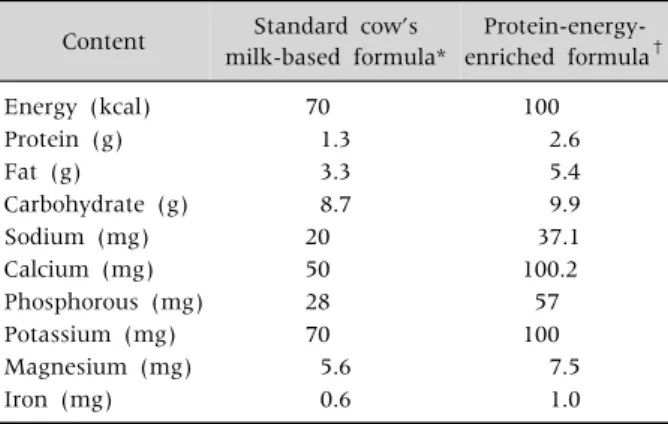
Table 4.Nutrients of Protein-Energy-Enriched Formula Content Standard cow’s
milk-based formula*
Protein-energy- enriched formula†
Energy (kcal) 70 100
Protein (g) 1.3 2.6
Fat (g) 3.3 5.4
Carbohydrate (g) 8.7 9.9
Sodium (mg) 20 37.1
Calcium (mg) 50 100.2
Phosphorous (mg) 28 57
Potassium (mg) 70 100
Magnesium (mg) 5.6 7.5
Iron (mg) 0.6 1.0
*Maeil Dairies’ product, †InfatriniⓇ.
PROTEIN-ENERGY-ENRICHED FORMULA
This formula has a high calorie content and is made for infants with growth insufficiency. The cal- orie content of the standard cow’s milk-based for- mulas and general special formulas range from 60 to 70 kcal/100 mL, whereas that of protein-energy-en- riched formula is 100 kcal/100 mL. The protein con- tent is twice as that of standard milk formula, and the whey-to-casein ratio is 60:40, which is similar to that of breast milk. Carbohydrates in this formula contains of lactose and maltodextrin in the same proportion, on the other hands, most of the carbohy- drates in standard milk formula are lactose. It con- trols the osmolarity and potential renal solute load of this formula. Its osmolarity is high (360 mOsm/kg H2O, InfatriniⓇ; Nutricia), which is higher than that of standard milk formula but lower than that of oth- er milk formulas fortified with nutritional supple- ment products (378-452 mOsm/kg H2O) [16,17]. For reference, when the calorie content of the standard cow’s milk-based formula is 100 kcal/100 mL, its os- molarity reaches approximately 400 mOsm/kg H2O (Table 4).
In premature infants or those with growth defi- ciencies, low birth weight, and various diseases re- sulting to poor weight gain, this formula can be used to facilitate catch-up growth. In this case, a lot of nu- trition is required, and increased calorie density can
increase calorie and protein intake. This single bal- anced nutritional formula is available for infants (0–
12 months) or those weighing up to 9 kg. InfatriniⓇ is available in Korea.
MILK FORMULAS FOR INDIVIDUALS WITH INBORN ERRORS OF
METABOLISM
Inborn errors of metabolism are inherited meta- bolic disorders in which a specific enzyme defect in- terferes with the normal metabolism of carbohy- drate, protein, or fat. Due to decreased or absent en- zyme activity, certain ingredients accumulate in the body to toxic levels, and the levels of other in- gredients that the body normally produces may decrease.
These special formulas are used for inborn errors of metabolism and have limited metabolites and precursors. In Korea, Maeil Dairies Co., Ltd. pro- duces several types of these formulas.
Phenylketonuria (PKU) formula
PKU is an inherited disorder that increases the lev- els of phenylalanine in the blood caused by in- sufficient phenylalanine hydroxylase, which is the enzyme that converts the amino acid phenylalanine to tyrosine. If PKU is not treated, phenylalanine can build up to toxic levels in the body, causing irrever- sible damage to the central nervous system. This milk formula removes phenylalanine and replen- ishes tyrosine.
Methylmalonic propionic acidemia (MPA) formula
Propionic acidemia is an inherited metabolic dis- order that is caused by a defective form of the en- zyme propionyl-coenzyme A (CoA) carboxylase, which results in the accumulation of propionic acid.
Methylmalonic acidemia is also an inherited meta- bolic disorder in which methylmalonic acid accumu- lates due to methylmalonyl-CoA deficiency. It is a kind of organic acid disorder, and abnormal levels of organic acids can be toxic. MPA formula does not
contain methionine and valine.
Urea cycle disorder (UCD) formula
Urea cycle disorder (UCD) is an inherited metabol- ic disorder caused by a mutation that results in a de- ficiency of enzymes in the urea cycle. This system serves to remove ammonia from the blood. Nitrogen accumulates in the form of ammonia, which is a highly toxic substance, resulting in hyperammonemia.
Protein intake should be limited to prevent ammonia accumulation in the blood. UCD formula is com- posed of essential amino acids, and its nonessential amino acid content is minimized.
Leucine-free formula
Isovaleric acidemia is a metabolic disorder charac- terized by abnormal leucine metabolism caused by isovaleric acid CoA dehydrogenase deficiency. Isova- leric acid, which is a metabolite of leucine, is not me- tabolized and is released into the urine at a high concentration. Leucine-restricted diet is required.
This formula does not contain leucine.
BCAA-free formula
Maple syrup urine disease is a disease in which the branched-chain amino acids (BCAA) valine, iso- leucine, and leucine are not metabolized due to the deficiency of branched chain α-ketoacid dehyd- rogenase. In individuals with this disease, the intake of BCAA must be strictly limited. BCAA-free formula does not contain valine, isoleucine, and leucine.
Methionine-free formula
Homocystinuria is a metabolic disorder caused by a deficiency in cystathionine synthase or 5-methyl- tetrahydrofolate homocysteine methyltransferase.
Homocysteine and methionine levels are elevated in the patient’s blood, resulting in various devel- opmental disorders. Methionine intake should be limited in patients with homocystinuria. Methio- nine-free formula removes methionine and fortifies cystine, which is inadequate in individuals with homocystinuria.
Protein-free formula
This formula is indicated for patients who need to limit their protein and amino acid intake as well as increase their calorie, mineral, and vitamin intake.
Half of the total calories are derived from fat, and protein and amino acids are not included. This for- mula can be used in conditions, such as methyl- malonic aciduria, propionic aciduria, and urea cycle disorder.
REFERENCES
1. Chandrasekaran R, Kumar V, Walia BN, Moorthy B.
Carbohydrate intolerance in infants with acute diar- rhoea and its complications. Acta Paediatr Scand 1975;64:483-8.
2. Chouraqui JP, Michard-Lenoir AP. Feeding infants and young children with acute diarrhea. Arch Pediatr 2007;14 Suppl 3:S176-80.
3. Turck D. Prevention and treatment of acute diarrhea in infants. Arch Pediatr 2007;14:1375-8.
4. Bhatia J, Greer F. Use of soy protein-based formulas in infant feeding. Pediatrics 2008;121:1062-8.
5. Erdman JW Jr, Fordyce EJ. Soy products and the hu- man diet. Am J Clin Nutr 1989;49:725-37.
6. Strom BL, Schinnar R, Ziegler EE, Barnhart KT, Sammel MD, Macones GA, et al. Exposure to soy-based formula in infancy and endocrinological and re- productive outcomes in young adulthood. JAMA 2001;
286:807-14.
7. Merritt RJ, Jenks BH. Safety of soy-based infant for- mulas containing isoflavones: the clinical evidence. J Nutr 2004;134:1220S-24S.
8. American Academy of Pediatrics, Committee on Nutrition. Aluminum toxicity in infants and children.
Pediatrics 1996;97:413-6.
9. Katz Y, Rajuan N, Goldberg MR, Eisenberg E, Heyman E, Cohen A, et al. Early exposure to cow's milk protein is protective against IgE-mediated cow's milk protein allergy. J Allergy Clin Immunol 2010;126:77-82.e1.
10. Giampietro PG, Kjellman NI, Oldaeus G, Wouters- Wesseling W, Businco L. Hypoallergenicity of an ex- tensively hydrolyzed whey formula. Pediatr Allergy Immunol 2001;12:83-6.
11. Kelso JM, Sampson HA. Food protein-induced enter- ocolitis to casein hydrolysate formulas. J Allergy Clin Immunol 1993;92:909-10.
12. Sampson HA, James JM, Bernhisel-Broadbent J.
Safety of an amino acid-derived infant formula in chil- dren allergic to cow milk. Pediatrics 1992;90:463-5.
13. American Academy of Pediatrics, Committee on Nutrition, Barness LA. Pediatric nutrition handbook.
Elk Grove Village, IL: American Academy of Pediatrics, 2009.
14. Klein CJ. Nutrient requirements for preterm infant formulas. J Nutr 2002;132(6 Suppl 1):1395S-577S.
15. Carnielli VP, Luijendijk IH, van Goudoever JB, Sulkers EJ, Boerlage AA, Degenhart HJ, et al. Feeding pre- mature newborn infants palmitic acid in amounts and
stereoisomeric position similar to that of human milk:
effects on fat and mineral balance. Am J Clin Nutr 1995;61:1037-42.
16. Fomon SJ, Ziegler EE. Renal solute load and potential renal solute load in infancy. J Pediatr 1999;134:11-4.
17. Clarke SE, Evans S, Macdonald A, Davies P, Booth IW.
Randomized comparison of a nutrient-dense formula with an energy-supplemented formula for infants with faltering growth. J Hum Nutr Diet 2007;20:329-39.