Introduction
1. Clinical data for sinusitis
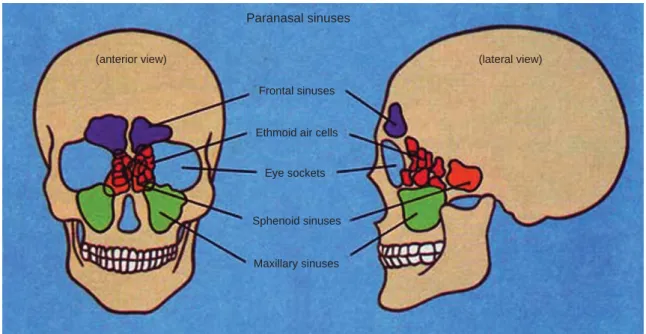
Sinuses are hollow air spaces in the human body. There are four pairs of cavities, or sinuses, known as paranasal sinuses divided into subgroups that are named according to the bones within which the sinuses lie: a) the frontal sinus- es, superior to the eyes, in the frontal bone, which forms the hard part of the forehead, b) the ethmoidal sinuses, which are formed from several discrete air cells within the ethmoid bone between the nose and the eyes, c) the sphenoidal sinuses, in the sphenoid bone at the center of the pituitary gland, and d) the maxillary sinuses, also call- ed the maxillary antrechea and the largest of the paranasal sinuses, are under the eyes, in the maxillary bones (Fig. 1) [1]. Among these sinuses in the facial skeleton, maxillary sinuses are the largest of the paranasal sinuses and may exhibit several types of infections. Calvin Wells [2] was
the first to use the presence of periosteal new bone forma- tion in the maxillary sinus as an indicator for the preval- ence of sinusitis in a past population.
Maxillary sinusitis, observed in the area of the maxillary sinus floor as well as on walls of the sinus, is broadly de- fined as inflammation of the mucosa of the paranasal sinu- ses and functions as the body’s first defense against air borne particulates and pathogens. Chronic or repeated in- flammation of the sinus mucosa usually damages the sur- rounding bony tissue. Destruction of bone may also occur because of application of excessive force during tooth ex- traction or because of periapical abscessing [3].
Presently respiratory tract infection is a common factor for morbidity and mortality in the entire world [4]. Expo- sure to poor quality air can affect the upper respiratory tract including the nose, maxilla, sphenoid, ethmoid and frontal sinuses [5]. Inflammation may also result from in- haling inorganic and organic gases like sulphur dioxide, smoke from tobacco, carbon dioxide, carbon monoxide and allergies from pollen [6,7]. The quality of indoor and outdoor air plays a major role in the health of the respira- tory tract. The indoor air is polluted by the cooking activ- ities that uses bio fuel in a closed structure and the outdoor air is polluted by mining, smelting and contact with smoke
Maxillary Sinusitis from India: A Bio-cultural Approach
Veena Mushrif-Tripathy
Deccan College Post Graduate and Research Institute
(Received 6 December 2013, revised 12 January 2014, accepted 6 March 2014, Published Online 30 March 2014)
Abstract: This paper identifies the presence and etiology of maxillary sinusitis in archaeological populations from protohistoric (1500 B.C.) and medieval (around 17thcentury) India. 339 human skeleton remains found at the archaeological sites of Chalcolithic Nevasa (1500~600 B.C.), Inamgaon (1000~700 B.C.), Balathal (2000 B.C.), Megalithic Kodumanal (400 B.C.~100 A.D.), Early Historic Navdatoli (200 B.C.), Kodumanal (100~300 A.D.) and Jotsoma (17thc A.D.) were studied. Macroscopic physical examination revealed that 9 individuals out of 74 observable individuals (12.16%) suffered from inflammation. Of this, 6 were male while 3 were female.
Considering the ethnographic aspects, the study reveals that inflammation possibly caused by inhaling polluted air for a long duration or because of dental disease. Also, apart from pollution in domestic zones, external pollution because of vocation is also discussed in this study using relevant ethnographic parallels.
Keywords:India, Sinus, Indoor pollution, Occupational, Ethnoarchaeology, Leprosy
The author (s) agree to abide by the good publication practice guideline for medical journals.
The author (s) declare that there are no conflicts of interest.
Correspondence to : Veena Mushrif-Tripathy (Deccan College Post Graduate and Research Institute)
E-mail : [email protected]
http://dx.doi.org/10.11637/kjpa.2014.27.1.11 Original Article
in vocational environments. As Roberts mentions [1], the effect and the severity of the lesion depends on the time of exposure to pollutants and the development of related respiratory disorders along with specific human behavior such as the occupations practiced by different groups of people including children, adult males and females and older individuals.
At the same time, climatic conditions are also responsi- ble for the presence/absence of particular pathology in human populations-damp, cold or dry weather has specific implications. Concurrently, factors such as crowded dwel- lings, poor sanitation, the presence of associated respira- tory infections and chronic exposure to dense smoke and quality of the fuel are also influencing elements. Wells [8]
while reviewing the diseases of maxillary sinus explains that damp weather is more harmful than a dry climate. He also saw the crowded dwellings in the medieval period from England and the use of sea coal as two of the major reasons behind the sinusitis. Such crowding and densely populated dwellings increase the frequency and duration of social contact by increasing the transmission of airborne infectious diseases such as tuberculosis and leprosy [9].
Furthermore studies conducted by Rajpandey [10] on com- munities in Nepal showed that the straw and wood burning activities in closed structures result in more cases of chro- nic bronchitis in females than males. Thus, it is observed that the presence of maxillary sinusitis highlights the res-
piratory health status of past human population.
Apart from respiratory reasons, infection of the maxil- lary sinus is through the floor of the sinuses from periapi- cal abscessing or periodontal disease. The thin layer of bone between the apex of the molar roots and the maxillary sinus may be resorbed as a result of periapical abscessing.
Destruction of bone may also occur if excessive force is applied during tooth extraction [3]. While discussing this particular pathological change, Wells [8] mentioned that this kind of ‘secondary’ sinusitis most commonly results from the upward extension of periodontal disease which may or may not been associated with a carious tooth. It is common to find one or more fistulae extending from a tooth socket into the antrum. These fistulae vary in size and shape.
2. Bioarchaeological data for maxillary sinusitis
Identifying maxillary sinusitis in the ancient skeletons is quite a difficult task. The fragmentary nature of the human remains is the major hurdle to carrying out any kind of observation. Most of the time, the maxillary sinus is either broken or missing. Sometimes, the maxilla is intact and no observation can be possible from the outeside. In such cases, the tentative presence of inflammation can be de- tected only by a radiograph [11]. Confirmation is possible either by CT (Computed Tomography) or with the help of endoscopy, which are very expensive methods.
12 Veena Mushrif-Tripathy
Paranasal sinuses
(anterior view) (lateral view)
Frontal sinuses
Ethmoid air cells
Eye sockets
Sphenoid sinuses
Maxillary sinuses
Fig. 1.Location of sinuses in skull.
There are some studies conducted on the pathology of maxillary sinusitis on skeletal collections from medieval Europe and America [1,2,8,12-17]. In India, the work on this pathology has received academic attention only in recent times. Reddy examined the relationship between environment and maxillary sinusitis in archaeological con- text [18]. Out of the 228 skeletal remains excavated from the site of Inamgaon (Pune dist., Maharashtra), it was pos- sible to study 62 maxillae. Out of the 62 maxillae, only one case of maxillary sinusitis was identified by her [18].
In this paper, her findings are included to present an over- all picture of the lesion. The author duly acknowledges her work in this paper. More recently, occurrence of maxillary sinusitis was confirmed on a female specimen from a Chal- colithic Nevasa in Ahmednagar District, Maharashtra [19].
The accidental finding of maxillary sinusitis from Nevasa and the restudy of the Inamgaon material confirmed the presence of maxillary sinusitis in these early agro-pastoral populations. It is also important to see the occurrence of sinusitis in other skeletal assemblages from different local- ities and time brackets. In this regard the skeletal remains from sites like Kodumanal (Periyar district, Tamil Nadu), Balathal (Udaipur distritct, Rajastan), and Jotsoma (Kohima district, Nagaland) offer potential for observing the pre- sence of sinusitis and its prevalence within these popula- tions. As these sites were recently excavated and the ske- letal analysis was going on, it was a good opportunity to
identify sinusitis in these assemblages and to understand the distribution by sex wise distribution of this pathology.
The initial hypothesis was that there will be more cases of maxillary sinusitis within these populations, predominant- ly in females.
Materials and Methods
1. Materials
For this study, samples were selected from four sites studied by the present author and two sites which were studied by Reddy [18]. The skeletal remains of 269 indivi- duals were considered for this study. Maxillae of 74 indi- viduals presented intact sinus walls and floors for inspec- tion. In the case of Nevasa, only adults were considered.
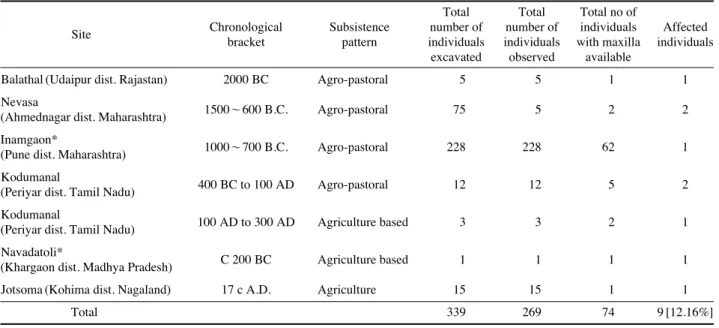
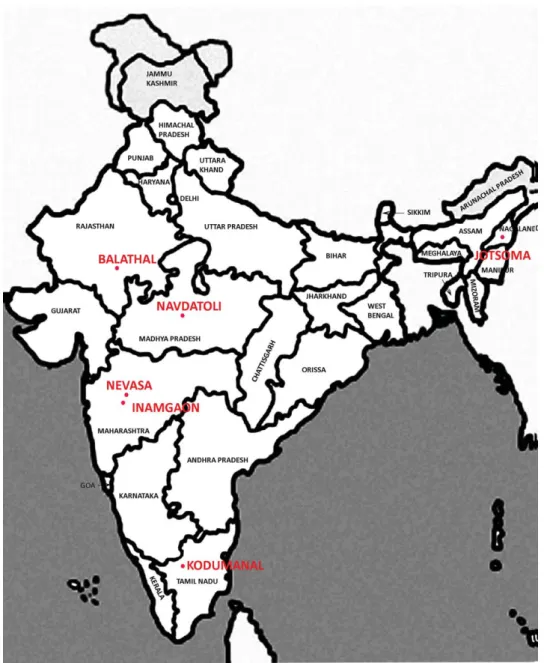
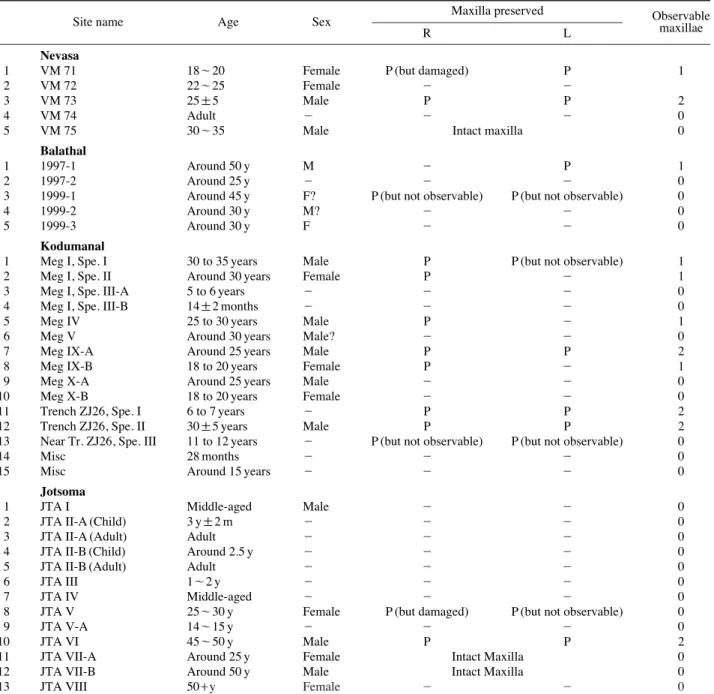
The sample from Inamgaon, observed by Reddy, included adult and sub-adult segments. Two cases of maxillary sin- usitis were identified from Chalcolithic Nevasa, and Chal- colithic Inamgaon, Chalcolithic, Balathal, Megalithic Jot- soma and Early Historic Navdatoli each had one affected maxillary sinusitis. Three cases were encountered in the skeletal remains from the Megalithic site of Kodumanal (Fig. 2). Table 1 provides the chronology, location and number of skeletal remains excavated from each site. Table 2 provides the number of individuals with maxillae pre- served for direct inspection of the sinuses for each site
Table 1.Sites mentioned in the text with their chronology and cases of maxillary sinusitis
Total Total Total no of
Site Chronological Subsistence number of number of individuals Affected bracket pattern individuals individuals with maxilla individuals
excavated observed available
Balathal (Udaipur dist. Rajastan) 2000 BC Agro-pastoral 5 5 1 1
Nevasa 1500~600 B.C. Agro-pastoral 75 5 2 2
(Ahmednagar dist. Maharashtra) Inamgaon*
1000~700 B.C. Agro-pastoral 228 228 62 1
(Pune dist. Maharashtra)
Kodumanal 400 BC to 100 AD Agro-pastoral 12 12 5 2
(Periyar dist. Tamil Nadu) Kodumanal
100 AD to 300 AD Agriculture based 3 3 2 1
(Periyar dist. Tamil Nadu)
Navadatoli* C 200 BC Agriculture based 1 1 1 1
(Khargaon dist. Madhya Pradesh)
Jotsoma (Kohima dist. Nagaland) 17 c A.D. Agriculture 15 15 1 1
Total 339 269 74 9 [12.16%]
*Reported by N. Reddy (2002)
observed by the present author. The results from Inamgaon and Navdatoli are also presented as they showed the exis- tence of maxillary sinusitis.
Nevasa, Inamgaon, Balathal and Kodumanal are locat- ed in a semi-arid region, whereas Jotsoma is located in a humid region. Even though these sites belong to different temporal and geographical zones, the main subsistence economy of these people was agriculture and crop cultiva- tion supported by pastoral activities like the raising of cattle, sheep and goat, buffalo and pig. Therefore, these sites are categorized as agro-pastoral communities.
The excavations of the habitation area of Inamgaon, Nevasa and other Chalcolithic sites from Deccan suggest that the areas covered by these villages were approximate- ly 1 to 3 hectares with the population numbering about 200 to 600 people. In the case of Inamgaon, the area was about 5 hectares and the population was 6000 people. Nevasa had a population of about 1000 people. The house plans reveal- ed at Inamgaon show that although the houses were built close to each other they had an intervening space of about 1~2 m in between which would have served as a lane.
They were large rectangular houses (7×5 m) with partition 14 Veena Mushrif-Tripathy
Fig. 2.Approximate location of sites mentioned in the text.
walls between them. Each house had a low mud wall and gable roof. Inside, there was a large oval fire pit with a raised wall for controlling the fire. Some people lived in round huts, probably those following a semi-nomadic existence and those who were extremely poor lived in pit dwellings [20] (Fig. 3).
2. Method
Although for this study 269 individuals were considered,
only 74 specimens had sinuses available for direct inspec- tion. Observation with the naked eyes was made on 79 pre- served maxillae from 74 individuals, wherever the maxil- lary floor was visible. There was no access to endoscopy for this study. In case of VM 73 it was very difficult to see the lesion directly as the maxilla was intact; however the broken portions of the nasal and ethmoid bones, gave an opportunity to see the sinus floor with some difficulty.
No radiographic equipment or CT scan was used during the analysis.
Table 2.Sitewise details of maxillae preserved
Site name Age Sex Maxilla preserved Observable
R L maxillae
Nevasa
1 VM 71 18~20 Female P (but damaged) P 1
2 VM 72 22~25 Female - -
3 VM 73 25±5 Male P P 2
4 VM 74 Adult - - - 0
5 VM 75 30~35 Male Intact maxilla 0
Balathal
1 1997-1 Around 50 y M - P 1
2 1997-2 Around 25 y - - - 0
3 1999-1 Around 45 y F? P (but not observable) P (but not observable) 0
4 1999-2 Around 30 y M? - - 0
5 1999-3 Around 30 y F - - 0
Kodumanal
1 Meg I, Spe. I 30 to 35 years Male P P (but not observable) 1
2 Meg I, Spe. II Around 30 years Female P - 1
3 Meg I, Spe. III-A 5 to 6 years - - - 0
4 Meg I, Spe. III-B 14±2 months - - - 0
5 Meg IV 25 to 30 years Male P - 1
6 Meg V Around 30 years Male? - - 0
7 Meg IX-A Around 25 years Male P P 2
8 Meg IX-B 18 to 20 years Female P - 1
9 Meg X-A Around 25 years Male - - 0
10 Meg X-B 18 to 20 years Female - - 0
11 Trench ZJ26, Spe. I 6 to 7 years - P P 2
12 Trench ZJ26, Spe. II 30±5 years Male P P 2
13 Near Tr. ZJ26, Spe. III 11 to 12 years - P (but not observable) P (but not observable) 0
14 Misc 28 months - - - 0
15 Misc Around 15 years - - - 0
Jotsoma
1 JTA I Middle-aged Male - - 0
2 JTA II-A (Child) 3 y±2 m - - - 0
3 JTA II-A (Adult) Adult - - - 0
4 JTA II-B (Child) Around 2.5 y - - - 0
5 JTA II-B (Adult) Adult - - - 0
6 JTA III 1~2 y - - - 0
7 JTA IV Middle-aged - - - 0
8 JTA V 25~30 y Female P (but damaged) P (but not observable) 0
9 JTA V-A 14~15 y - - - 0
10 JTA VI 45~50 y Male P P 2
11 JTA VII-A Around 25 y Female Intact Maxilla 0
12 JTA VII-B Around 50 y Male Intact Maxilla 0
13 JTA VIII 50++y Female - - 0
The study also tried to understand the relationship bet- ween age and sex distribution of the disease. The age and sex estimates of the individuals are based on the methodolo- gies given in ‘Standards for Data Collection from Human Skeletal Remains’ [21]. Age estimates were based on dental formation, eruption and attrition, as well as degree of cra- nial suture closure. Degenerative lesions were considered following Buikistra and Ubelaker [21]. For sex determina- tion, the angle of the sciatic notch and the muscular attach- ment areas on skull and mandible were examined: the supra- orbital ridge, nuchal crest, mastoid process and mental eminence etc. General muscular attachment areas in post- cranial bones were also considered for sex determination.
Pathological changes of maxillary bone in premolar and molar area were keenly observed and dental conditions including periapical abscess, caries, wear pattern, alveolar resorbtion were recorded using the methodology describ- ed by Merrett and Pfeiffer [3]. Not all the categories men- tioned in their publication were included in the present study. Some of the categories mentioned by them are omit- ted as the present samples do not exhibiting those types of bone changes. Instead one additional category was created by the present author to describe observed bone changes to maxillary floor.
The classification of the lesion as follows;
1) Spicules: To describe a continuum of bone deposition on the periosteal surface of the bone.
2) Pitting: Described as holes in the periosteal surface of the bone that are less than 1 mm in diameter for low density and medium density pits. At higher density, adjacent pits fuse to create holes 3~5 mm in diameter in the periosteal surface. Pits represent bone resorption, and they may be associated with the hypervasculariza- tion that occurs during the initial stages of inflammation.
3) Cysts: Hemispherical depressions in the bone, with a smooth interior surface and no bony projections into the volume of the cyst.
4) Lobules: Rounded masses of bone on the periosteal sur- face of the sinus.
5) Hole: A hole with rounded margin is formed due to penetration by roots of teeth.
Results
There are 269 individuals represented in these six site samples, but only 74 individuals (79 maxillae) were avail- able for inspection. A total of nine individuals (9/74, 12.
16 Veena Mushrif-Tripathy
Fig. 3.Line drawing of house cluster from Chalcolithic site Inamgaon (H-House, S-Silo, FP-Fire pit, B-burial, PL-Platform for bin).
16%) had maxillary sinusitis or inflammation of the sinus cavity (Table 1). The observations also show that 9 out of 79 maxillae (11.39%) are affected. Following is a descrip- tion of each case from these six sites. The description of Inamgaon and Navdatoli is based on Reddy’s account [18].
1. Nevasa
There are two cases from the Chalcolithic site of Nevasa.
Out of 5 adult individuals, one female and one male, were affected by sinusitis [19]. Only the maxillary floors of adult crania were examined as most of the sub-adult maxillae are damaged or covered with the soil which is difficult to remove.
The maxillary fragment preserved for VM 71 belongs to a female aged 18~20 years. It provides adequate space
to observe the lesion. Confirmed maxillary sinusitis is identified in the left sinus cavity. The floor on the right side is partially damaged post-mortem. The lesion is, a cyst, a hemispherical depression in the bone with a smooth inferior surface and no bony projections into the cyst. The maximum length of the cyst is 11.51 mm and its breadth is 9.20 mm (Fig. 4).
For VM 73, a male aged 30~35 years, observation was difficult as the floors of the maxillary sinuses could not be seen directly. Moderate bone growth is evident in the left side of the maxillary floor area, which appears as a patch of bone formation with lower density in the radio- graph, and appears like a crater. The lesion is tentatively identify as a cysts. The lesion cannot be measured as it is inaccessible for measurements.
The first left maxillary molar is heavily worn and has Fig. 4.Nevasa VM 71: (Female, 18~20 years), Cyst formation on L maxilla floor.
a b
c
attrition of grade 8 where the pulp cavity is slightly expos- ed. Both left maxillary premolars also worn out and have grade 7 attrition [21]. The second left maxillary molar is lost ante-mortem, probably a few months before the death as the alveolar bone is not yet fused completely. The loss of the second molar was probably due to caries. There is also alveolar bone resorption around the first molar (Fig.
5). This strongly suggests that the sinusitis was caused by infection through the dental root.
2. Inamgaon
Excavations at Inamgaon yielded 228 burials. 251 indi- viduals have been studied by Lukacs and Walimbe [22].
Of these individuals, 62 were observed by Reddy [18] and
one individual was identified with maxillary sinusitis.
The individual INM 228 has three minor depressions on the left maxillary floor in the area above the second pre- molar, measuring approximately 9 mm×2.5 mm. In these, pitting is evident in three areas. The right maxilla is not available for examination as it was not preserved. Accord- ing to Lukacs and Walimbe [22] this is a male individual aged around 12~14 years at the time of death.
Positive diagnosis of this lesion is difficult since the bone is marginally affected.
3. Kodumanal
Kodumanal is a site with Megalithic and early Historic occupational layers. The excavation yielded 15 individuals 18 Veena Mushrif-Tripathy
a b
c
Fig. 5.Nevasa VM 73: (Male, 30~35 years), Cyst formation on L maxilla floor.
and a detailed report of this assemblage is published [23].
There are three cases identified from the site.
A female specimen (Meg I, sp. II) of around 30 to 35 years has evidence of the infection of the right maxillary fragment with five teeth in situ. The broken state of the fragment allows direct inspection of the floor. This area has also suffered from post mortem damage resulting in the exposure of molar root tips on the floor. Slight resorp- tion of the floor with some bone remodeling in the form of pitting appears on the maxillary floor. The bone changes are not very prominent and post-mortem damage hampers positive diagnosis of the lesion. It may be noted that the molar teeth of this individual have slight to moderate wear and no other dental pathology. Therefore, the role of denti- tion as a probable cause for infection is ruled out.
Another individual (Meg IV), a male aged around 25 to 30 years, has a broken fragment of the right maxilla with
six teeth in situ. The right maxilla gives evidence of bone remodeling in the form of pitting in the area (around 1 cm) above the RPm1 and M1 roots, also exposing roots of these teeth on the maxillary sinus floor. The floor above M2 and M3 is normal in appearance. The left maxilla is not in the collection for comparison. None of molars show signifi- cant grades of attrition. This confirms that dentition plays no role in the bone change. The possible etiology of this lesion can therefore be attributed to air borne infection.
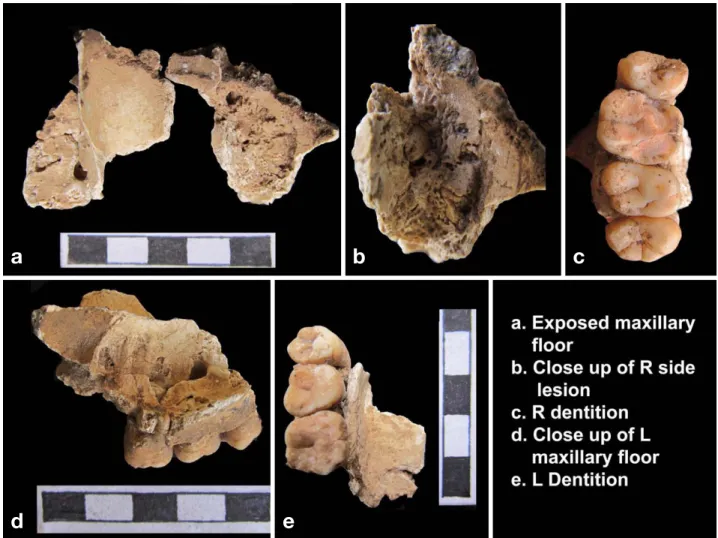
The next specimen is from Trench ZJ 26, sp II, a male adult aged around 30 years. Both maxillary broken frag- ments are preserved in the collection and can be inspected directly. Confirmed diagnosis of maxillary sinusitis can be made for the bone on the right side. The complete sinus floor from Pm2 to M3 shows severe bone remodeling involving an area of around 3 cm. It can be classified as having a lobular pattern. Roots of these teeth are exposed
a b c
d e
Fig. 6.Kodumanal, Trench ZJ 26, Spe. II: (Male, Around 20 years), Lobules bone changes on R maxilla floor.
on the floor. On the left side, the bone displays slight poro- sity above the Pm2. Dentition show only moderate amount of attrition, which indicates that the lesion on the right maxillary sinus floor is more likely to have been caused by air borne infection (Fig. 6).
4. Navdatoli
The Early Historic site of Navdatoli is located on the southern bank of the river Narmada [24]. The reported ske- leton came from the small excavation conducted in 1992.
20 Veena Mushrif-Tripathy
Fig. 7. Balathal 1997-1: (Male, around 50 years), Spicules on L maxilla.
a b
c
This individual has a lesion in the left maxilla [18]. The following is the description. There is obvious bone loss;
the length of the lesion is 8.18 mm with breadth of approx- imately (7.19 mm) and with depth (7.56 mm).
The edges are very smooth and rounded which indicates that this was a prolonged problem caused by chronic sinusi- tis. Secondary bone formation (osteoblast activity) is also seen inside the cavity. The cavity becomes deeper in the anterior side. It can be classified as a cyst.
The lesion is positioned above the first molar. Roots of the first molar are exposed and are open for inspection but this is post-mortem wear of the bone and is not indicative of any dental pathology.
5. Balathal
The case from the Chalcolithic site of Balathal [25,26],
specimen no. 1997-1, is a male aged around 50 years. This individual shows inflammation in the left side of the maxil- lary floor. Part of the left maxilla with orbital margin and zygomatic bone and part of the hard pallet is preserved in the collection. The observation of the pathology is clear due to breakage of this part. In this case, the lesion is charac- terized by spicules. The infected area is about 1 cm in width and 1.5 cm by height (Fig. 7). The right maxilla is missing for further comparison. Many of the teeth from both maxilla and mandible have been lost ante mortem.
On the left side, the second and third molars are lost ante mortem and the first molar has been lost post mortem.
This specimen presents pathological changes that sug- gest leprosy [27]. While describing various etiologies of sinus, Roberts [1] mentions that immunodeficiency disor- ders [28] and infections such as leprosy [13,29] influence the onset of infection in the maxillary sinus. There are Fig. 8.Jotsoma VI: (Male, Around 45 years), penetrating lesion on L maxillary floor.
a b c
d e f
reservations and discussions on the relationship between the presence of leprosy and sinusitis together in one indi- vidual. Therefore it is interesting to observe that both lep- rosy and sinusitis co-exist on this specimen.
6. Jotsoma
The burial site of Jotsoma, Nagaland yielded skeletal remains of thirteen individuals. Of the thirteen, one male specimen (JTA VI) is of around 45 years and exhibits the lesions of maxillary sinusitis [30].
The maxillary sinus floors on the right and left have different morphological features. The right side displays a transverse ridge in the region superior to M1. This ridge is absent on the left side; and a slight porosity is observed on that side. Also two distinct holes of 3.0 mm in diameter are seen on this floor. The holes are deep and penetrating through the bone, reaching the sinus floor near the root area of LM1 and LM3. The edges of the holes are smooth on both exterior and interior aspects, indicating that they are ante-mortem in origin (Fig. 8).
The possible etiology causing the infection on the floor of the sinuses may be periapical abscessing and associated periodontal disease. The thin layer of bone between the apex of the molar roots and the maxillary sinus may be resorbed as a result of periapical abscessing. Disruption of the mucosa on the floor of the sinus may allow pathogens of dental origin access to the sinus. The maxillary sinusitis on JTA VI appears to be of dental origin. For this individual the first molar, LM1, was lost ante-mortem. The shedding of this tooth could very well be attributed to caries, though confirmation of the lesion is not possible as the tooth is already lost. Nevertheless, the second premolar (LPm2) has caries on the distal aspect, which strongly indicates severe infection for the neighboring tooth.
Discussion
The findings provide very good data on various expres- sions of the lesions of maxillary sinusitis. The result from Navdatoli and Balathal should be read with caution as there is only one specimen that could be observed, and in each case that individual was affected. But this should not be taken to mean that 100% of each of these populations was affected by sinusitis.
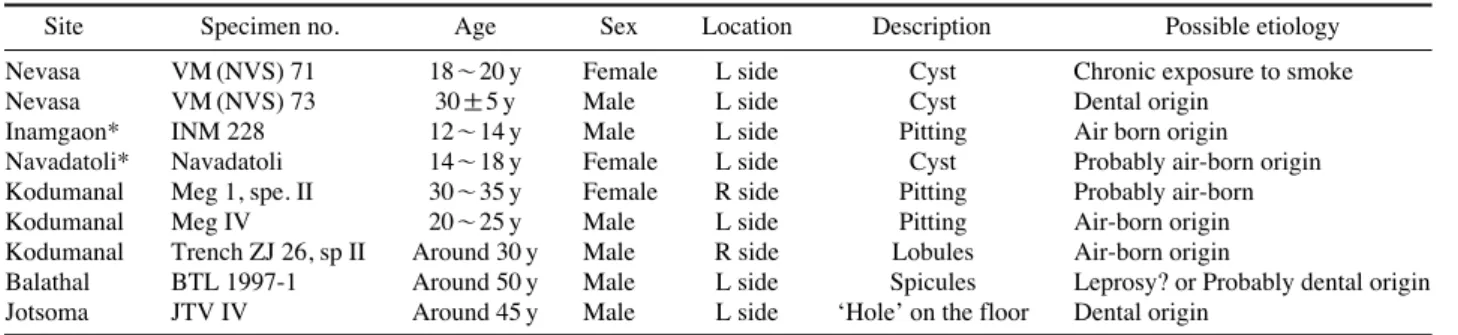
Regarding the distribution of the lesions by, three females and six males are affected. The prolonged expression in the form of cysts is seen in the female cases at younger ages in comparison with their male counterparts. The female from Navdatoli is even younger (14~18 years old) than the Nevasa female (18~20 years old). Other maxillae show slight pitting on them, probably indicating the initial stages of the lesion. There is only one male individual from Inamgaon that is affected and he is an adolescent (12~14 y). Among the adult male individuals, three are in age bracket of early 20s to early 30s and two are in old adult category of 45 to 50 years. Of these six male cases two suggest air borne pathology and three are related to dental health and one is probably associated with leprosy (Table 3).
The study shows that a dental origin of the pathology is more common in males than in females. Periapical lesions can be the initial foci for hematogenous spread of infec- tion [31]. According to the study conducted by Liebe- Harkort [32] on adult and subadult Swedish Romans of the Iron Age, there was a clear co-occurrence of periapical lesions and maxillary sinusitis linked by fistulous tracts.
Merrett & Pfeiffer [3] found a relationship between dental pathology and sinusitis in 28% of their cases. There is a strong possibility for oral bacteria to be transmitted from the mouth through the middle meatus to the maxillary 22 Veena Mushrif-Tripathy
Table 3.Identified cases of Maxillary sinusitis with their possible aetiologies
Site Specimen no. Age Sex Location Description Possible etiology
Nevasa VM (NVS) 71 18~20 y Female L side Cyst Chronic exposure to smoke
Nevasa VM (NVS) 73 30±5 y Male L side Cyst Dental origin
Inamgaon* INM 228 12~14 y Male L side Pitting Air born origin
Navadatoli* Navadatoli 14~18 y Female L side Cyst Probably air-born origin
Kodumanal Meg 1, spe. II 30~35 y Female R side Pitting Probably air-born
Kodumanal Meg IV 20~25 y Male L side Pitting Air-born origin
Kodumanal Trench ZJ 26, sp II Around 30 y Male R side Lobules Air-born origin
Balathal BTL 1997-1 Around 50 y Male L side Spicules Leprosy? or Probably dental origin Jotsoma JTV IV Around 45 y Male L side ‘Hole’ on the floor Dental origin
*Pathology reported by Reddy (2002)
sinus [33] suggesting a closer association between dental pathology and sinusitis than is directly observable. Further, the presence of chronic periapical infections in combina- tion with a compromised immune system leads to poor resistance and a disease-related stress may lead to overall poor health to individuals.
Many studies examine the effect of exposure to smoke by humans, with a particular focus on mothers and children.
Studies in different areas of the world and especially in developing countries [34-38] have elaborated the effect on the health of children. The exposure to CO (carbon monoxide) and PM (particular matter) is much higher in indoor cooking [39].
Even in present day societies where modern technologies have played a major role in changing fuel use for food pre- paration, some 3 billion people, almost world’s half of the population, still rely on solid fuels (e.g. dung, wood, agri- cultural residues, charcoal, coal) for their basic energy needs. According to the World Health Organization (WHO) report in 2002 [40], the indoor smoke from solid fuels accounted for the third highest disability-adjusted life years for children 0 to 4 years of age in low income countries [38].
Cooking and heating with solid fuels both lead to high levels of indoor air pollution, mainly a complex mix of health-damaging pollutants (e.g. particulate matter and carbon monoxide).
In households with limited ventilation (as is common in many developing countries), exposure experienced by household members, particularly women and young chil- dren who spend a large proportion of their time indoors, has been measured to be many times higher than World Health Organization (WHO) guidelines and national stan- dards [41,42]. Girls are at most risk as they are often re- quested to help their mothers with household chores. At the same time infants are exposed to pollutants as they are close to their mothers when they are engaged in domestic chores. This leads to severe obstruction or damage to chil- dren’s lungs because they are more vulnerable [43]. Two important components for this damage are: a. average pol- lution levels at home, and b. the length of time for which each person in the home is exposed to at that level. Women and young children (until they can walk), and girls (as they learn kitchen skills) are often exposed for at least 3~5 hours a day, often more. In some communities, and in cold weather, exposure will be for a much longer period of time for each day [40].
Ethnographic observations of the living conditions in villages of today provide information about the cooking practices and the environment hazards of the people. A similar of ethnoarcheological study is currently in progress by the present author, which highlights the pathological implications of heavy accumulation of smoke seen in the kitchen area in rural houses. They are either rectangular or circular in pattern with one door for the entry. Most of the time, cooking with dried wood as fuel is done inside the house where there is no window or proper way of ven- tilation. The rooms are very dark. If there are 4~5 people in one household, cooking for this many people will require about 60 to 90 minutes in the morning and same in the evening. Considering this fact, the lady who cooks the food has to spend 2~3 hours every day front of the chullas (domestic hearths using clay and firewood), with constant exposure of smoke. Even after the cooking is finished, smoke lingers in the kitchen area for a long time as there Fig. 9.Smoke inhalation in indoor and outdoor cooking by ladies.
Indoor pollution
Outdoor pollution
are no windows. Not only is the environment inside the house polluted but also, the outside environment is conta- minated with dust and other particles which create irritation in the upper respiratory tract (Fig. 9).
According to this study, some of the ladies who cook food in these circumstances constantly complain of heada- che and head colds. The quality of the firewood also plays a crucial part as the quantity and density of the smoke is dependent on the type of wood that is used for cooking.
Problems increase in the monsoon season because of wet firewood which creates heavy smoke. Sometimes, other materials such as dry leaves or grass are used and they also create a lot of smoke. If the mother is keeping her child near her in the kitchen, that child also gets exposed to the smoke. If one pictures a similar situation in the early communities living in the village, we see the potential for the occurrence of this problem in early agro-pastoral popu- lations. As seen in Figure 3, excavations reveal that the ground plan of the house from the Chalcolithic period is almost the same plan as that in houses in rural India today.
Though the ethnoarcheological work conducted by Nir- mala Reddy was confined to the Rajastan, she mentions
‘similar settings except that instead of circular huts, square or rectangular houses are found in Deccan region.’ She
discusses etiologies for the occurrence of maxillary sinusi- tis in archaeological populations such as air pollution from different fuels, the aridity or humidity within environment, the diet of the people and dental pathology.
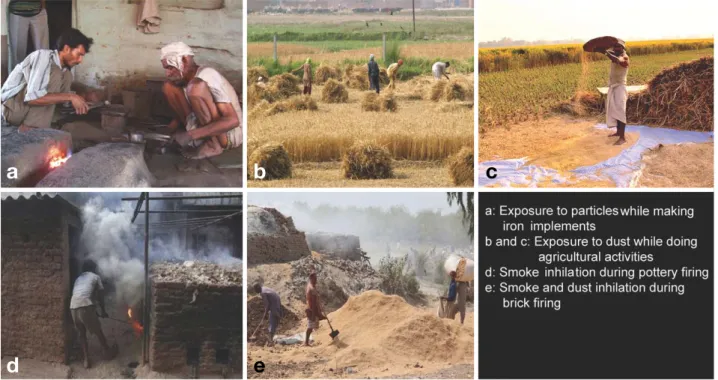
Another body of literature discusses the effect of inhala- tion of polluted air or particles related to occupation or outdoor activities [44,45]. Occupational habits such as burning and smelting activities, building activities, and even the exposure to dust due to agricultural activities can lead to irritation to upper respiratory tract [46]. This was evident in the research conducted by Mustajbegovic [47], on fire fighters which suggested a significantly higher prevalence of dyspnea, nasal catarrh, and sinusitis. Even in the ancient societies, with the advancement in techno- logy and agricultural production, many different occupa- tional activities developed. It is evident that people were engaged in metal smelting, pottery making, brick making, leather making, quarrying etc. where there was a constant exposure to the polluted air and unwanted particles (Fig.
10). Even different agricultural activities such as burning of weeds for preparing land for agriculture, cutting the dry crops and removing the husks from the grains creates a high potential for sinusitis.
In this context it is interesting to see the skeletal patho- 24 Veena Mushrif-Tripathy
Fig. 10. Exposure to polluted air and particles due to different occupations.
a b c
d e
logy in the Kodumanal male specimen which suggests he was probably frequently exposed to smoke. There is con- textual evidence for the occupation of this person. The site is Early Historic, and provides remains of iron smelting activities. This male individual is middle aged, showing no trace of dental anomalies. The man had degenerative pathologies like bone changes in costo-clavicular joint and Schrmol’s node and marginal lipping on a vertebral body, most likely associated with mechanical stress (Fig.
11). The archaeological and anthropological evidence may suggest that the person was involved in heavy physical activity. At the same time the presence of sinusitis is pos- sibly indicates the involvement in burning or smelting related occupation. Although there are many ways that he could have been exposed to the pollutants, certain voca- tional activities may have played a role. This is only one of the probable reasons.
The transition from a hunting-gathering way of life to agriculture caused permanent settlements to arise, decreas- ing population mobility and increasing population density.
This change resulted in exposure to many infections and diseases. Increased intake of carbohydrates in the diet has an adverse impact on overall health and in particular, dental health. The high occurrence of caries, antemortem tooth loss, periodontal problems and calcified dental plaque sug- gest the dire state of dental health [48] and oral hygiene.
In combination with the health hazards mentioned, re- petitive pregnancies further stressed both maternal and child health. As the body’s resistance was challenged, in- fections became rampant in these settled villages. Infec- tions like maxillary sinusitis can be viewed as major indi- cators of the adverse effect of cultural practices on health of the lady-of-the-house and others. The observed maxil- lary sinus skeletal pathology may have other implications Fig. 11.Bone changes due to habitual/occupational stress on Kodumanal male individual ZJ 26, Spe. II.
a c
b d
such as colds, fever and other respiratory infections within the population. There are many studies on the infant mor- tality rates in agricultural societies [49,50]. The existence of maxillary sinusitis provides indirect evidence for under- standing the high rates of child mortality in any given soci- ety probably due to higher and lower respiratory route infections. Evidence of leprosy from Balathal along with maxillary sinusitis has indicated levels of exposure from different pathogens and certain types of skeletal pathology observed on the Nevasa sub-adults may indicate certain infections related to polluted environments [19].
Various reasons have been encounter as etiology behind sinusitis and both males and females have infections. Two young individuals show maxillary sinus pathology of den- tal origin. Exposure to polluted air from domestic activities such as cooking and contact to dust or smoke and other particles present in the surrounding environment and cer- tain vocations could be a vital cause of respiratory tract infections, including maxillary sinusitis. Leprosy can be one of the reasons, for at least one individual in present sample. The present study was significantly limited by the absence of CT scans or endoscopic examinations of complete and intact maxilla. The next stage of the research will include these technologies for better understanding regarding the distribution of affected individuals. There is also the need for extended documentation of ethnographic evidence which will useful for pathological identification and interpretation.
The samples described in this paper do not have maxillas from sub-adults. If these sub-adults are included in the future studies, it may reveal the impact of childhood expo- sure to polluted air upon the prevalence of maxillary sinu- sitis and other markers (including rib and vertebral lesions) of respiratory tract inflammation. It is also important to note that maxillary sinusitis is not a direct cause for high infant mortality rates but it may be a major indication of unhealthy living conditions that contribute significantly to childhood mortality.
Acknowledgements
The author acknowledges Prof. S. R. Walimbe for his suggestions to improve the draft. The author thanks Ms.
Reddy, as some of her data was used in the present paper.
Thanks to Mr. K. Charkraborthy, for his assistance in creat-
ing map. The author thanks to Ms. Lathashree Kolla for helping to improve the writing in the manuscript.
References
1. Roberts CA. A bioarcheological study of maxillary sinusitis.
Am J Phys Anthropol. 2007; 133:792-807.
2. Wells C. Chronic sinusitis with alveolar fistulae of mediae- val date. Journal of Laryngol Otol. 1964; 78:320-22.
3. Merrett DC, Pfeiffer S. Maxillary sinusitis as in an indicator of respiratory health in past populations. Am J Phys Anthro- pol. 2000; 111:301-18.
4. World Health Organization. Preventing disease through healthy environments. Geneva: World Health Organization;
2006.
5. Slavin RG, Sheldon L, Bernstein IL. The Diagnosis and management of Sinusitis: A Practise Parameter Update.
Journal of Allergy ClinImmunol. 2005; 116:S13-S47.
6. Chen BH, Hong CJ, Pandey MR. Indoor air pollution in developing countries. World Health Stat Q. 1990; 43:127- 38.
7. D’Souza RM. Housing and environmental factors and their effects on the health of children in the slums of Karachi, Pakistan. J Bio Soc Sci. 1997; 29:271-81.
8. Wells C. Disease of maxillary sinus in antiquity. Medical and Biological Illustration. 1977; 27:173-8.
9. Chen PCY. Longhouse dwelling, social contact and the prevalence of leprosy and tuberculosis among native tribes of Sarawak. Soc Sci Med. 1988; 26:1073-7.
10. Rajpandey M. Prevalence of chronic bronchitis in a rural community of the hill region of Nepal. Thorax. 1984; 39:
331-9.
11. Maestre-Ferrín L, Galán-Gil S, Carrillo-García C, Peñar- rocha-Diago M. Radiographic findings in the maxillary sinus: comparison of panoramic radiography with computed tomography. Int J Oral Maxillofac Implants. 2011; 26:341- 6.
12. Gregg JB, Gregg PS. Dry bones: Dakota territory reflected.
An illustrative descriptive ananlysis of health and well be- ing of previous people and culture as mirrored in their re- mains. Sioux Falls SD: Sioux Printing Press; 1987.
13. Boocock P, Roberts C, Manchester K. Maxillary sinusitis in Medieval Chichester, England. Am J Phys Anthropol.
1995; 98:483-95.
14. Panhuysen RGA, Coenen V, Bruintjes TD. Chronic maxil- lary sinusitis in medieval Maastrichi, The Netherlands. Int J Osteoarchaeol. 1997; 7:610-14.
15. Lewis ME. Impact of industrialization: Comparative study of child health in four sites from medieval and post medie- 26 Veena Mushrif-Tripathy
val England (A.D. 850-1859). Am J Phys Anthropol. 2002;
119:211-23.
16. Buckley HR, Tayles N. Skeletal Pathology in a Prehistoric PacificIsland Sample: Issues in Lesion Recording, Quanti- fication, and Interpretation. Am J Phys Anthropol. 2003;
122:303-24.
17. Merrett D. Maxillary Sinusitis among the Moatfield people.
In: Williamson RF, Pfeiffer S. editors. Bones of the ances- tors. The archaeology and osteobiography of the Moatfield Ossuary. Canada: Archaeological Survey of Canada (Mer- cury Series Archaeological Paper163). Canadian Museum of Civilization Gatineau, Quebec. 2003; p. 241-61.
18. Reddy NK. An ethnoarchaeological investigation into the maxillary sinusitis: Pathology of the Chalcolithic record.
Unpublished M.A. Dissertation submitted to Deccan Col- lege Post Graduate and Research Institute. Pune; 2002.
19. Mushrif V, Walimbe SR. Human skeletal remains from Chalcolithic Nevasa: Osteobiographic analysis. London:
British Archaeological Report, International Series 1476;
2006.
20. Dhavalikar MK. The First Farmers of the Deccan. Pune:
Ravish Publishers; 1988; p.13-4.
21. Buikstra JE, Ubelaker DH. Standards for Data Collection from Human Skeletal Remains. Arkansas: Arkansas Arch- aeological Survey Research Series, No.44; 1994.
22. Lukacs JR, Walimbe SR. Excavations at Inamgaon, Vol- ume II: The physical anthropology of human skeletal re- mains: Part i: An osteobiographic analysis. Pune: Deccan College Research Institute; 1986.
23. Mushrif-Tripathy V, Walimbe SR, Rajan K. Human skele- tal remains from megalithic Kodumanal. Delhi: Aryan Books International; 2011.
24. Sankalia HD, Deo SB, Ansari ZD. Chalcolithic Navdatoli:
The excavations at Navdatoli 1957-59. Poona-Baroda: Dec- can College Research Institute and M.S. University Publi- cations; 1971.
25. Misra VN. Radiocarbon chronology of Balathal, district Udaipur, Rajasthan. Man and Environment. 2005; 30:54-60.
26. Robbins G, Mushrif V, Misra VN, Mohanty RK, Shinde V.
Biographies of the skeleton: Palaeopathological conditions at Balathal. Man and Environment. 2006; 31:50-65.
27. Robbins G, Mushrif-Tripathy V, Misra VN, Mohanty RK, Shinde V, Gray KM, Schug MD. Ancient skeletal evidence for leprosy in India (2000 B.C.). PLoS ONE. 2009; 4(5):
e5669. DOI:10.1371/journal.pone.0005669.
28. Reid TE, Shearer WT. Recurrent sinusitis and immunode- ficiency. Immunol Allergy Clin N Am. 1994; 14:143-69.
29. Hauhnar CZ, Kaur S, Sharma VK, Mann, SBS. A clinical and radiological study of the maxillary antrum in leproma- tous Leprosy. Indian Journal of Leprosy. 1992; 64:487-94.
30. Mushrif-Tripahty V, Walimbe SR, Tosi J, Vasa D. 2009.
Human skeletal remains from megalithic Jotsoma. Kolkata:
Center for Archaeological Studies and Training, Eastern India; 2009.
31. Ortner DJ, Putschar WGJ. Identification of pathological conditions in human skeletal remains. Washington, D.C.:
Smithsonian Institution. 2003.
32. Liebe-Harkort C. Cribra orbitalia, sinusitis and linear ena- mel hypoplasia in Swedish Roman iron age adults and sub- adults. Int. J. Osteoarchaeol. 2010 [Epub]. DOI: 10.1002/
oa.1209.
33. Paju S, Bernstein JM, Haase EM, Scannapieco AF. Mole- cular analysis of bacterial flora associated with chronically inflamed maxillary sinuses. J Med Micro. 2003; 52:591-7.
34. Smith KR, Samet JM, Romieu I, Bruce N. Indoor air pol- lution in developing countries and acute lower respiratory infections in children. Thorax. 2000; 55:518-32.
35. Naeher LP, Leaderer BP, Smith KR. Particulate matter and carbon monoxide in highland Guatemala: Indoor and out- door levels from traditional and improved wood stoves and gas stoves. Indoor Air. 2000a; 10:200-5.
36. Saksena S, Singh PB, Prasad R, Prasad R, Malhotra P, Joshi V, et al. Exposure of infants to outdoor and indoor air pollu- tion in low-income urban areas-A case study of Delhi. J Expos Analy and Environmental Epidemiology. 2003; 13:
219-30.
37. Fullerton DG, Semple S, Kalambo F, Suseno A, Malamba R, Henderson G, et al. Biomass fuel use and indoor air pol- lution in homes. Malawi Occup Environ Med. 2009; 66:777- 83.
38. Balakrishnan K, Ramaswamy P, Sambandam S, Thangavel G, Ghosh S, Johnson P, et al. Air pollution from household solid fuel combustion in India: an overview of exposure and health related information to inform health research priori- ties. Glob Health Action. 2011; 4:10.3402/gha.v4i0.5638.
39. Naeher LP, Smith KR, Leaderer BP, Mage D, Grajeda R.
Indoor and Outdoor PM2.5 and CO in high and low dentsity Guatemalan villages. J Exp Analy and Environmental Epi- demiology. 2000b; 10:544-51.
40. World Health Organization. Addressing the links between indoor air pollution, household energy and human health.
Based on the WHO-USAID Consultation on the Health Impact of Household Energy in Developing Countries (Meet- ing report). Geneva, Additional information: ww.who.int/
indoorair/publications/en/. 2002.
41. Bruce N, Perez-Padilla R, Albalak R. Indoor air pollution in developing countries: a major environmental and public health challenge. Bull of the World Health Organization.
2000; 78:1078-92.
42. Smith KR. Biofuels, Air Pollution, and Health: A Global
Review. New York: Plenum; 1987.
43. Smith KR, Mehta S, Maeusezahl-Feuz M. Chapter 18:
Indoor smoke from household use of solid fuels. In: Ezzati M, Rodgers A, Lopez AD, Hoorn SV, Murray CJL, editors.
Comparative quantification of health risks: The global bur- den of disease due to selected risk factors Vol 2. Geneva:
World Health Organization. 2004; p. 1435-93.
44. Lewis ME, Roberts CA, Manchester K. Comparative study of the prevalence of maxillary sinusitis in later Medieval urban and rural populations in Northern England. Am J Phys Anthropol. 1995; 98:497-506.
45. Molleson T, Cox M. The Spital fields Project, Vol. 2: The anthropology. The middling sort (Council for British Arch- aeology Research Report 85). York: Council for British Archaeology; 1993.
46. McCurdy SA, Ferguson TJ, Goldsmith DF, Parker JE, Schen- ker MB. Respiratory health of Californian rice farmers. Am J Respir Crit Care Med. 1996; 153:1553-9.
47. Mustajbegovic J, Zuskin E, Schachter EN, Kern J, Vrcic- Keglevic M, Heimer S, et al. Respiratory function in active firefighters. Am J Indus Med. 2001; 40:55-62.
48. Lukacs JR. Dental paleopathology: Methods for reconstruct- ing dietary patterns. In: Iscan MY, Kennedy KAR, editors.
Reconstruction of life from skeleton. New York: Alan R.
Liss; 1989. p. 261-86.
49. Cohen MN. Health and the rise of civilization. New York:
Yale University Press; 1989.
50. Larsen CS. Bioarchaeology: Interpreting behaviour from the human skeleton. United Kingdom: Cambridge Univer- sity press; 1997.
28 Veena Mushrif-Tripathy