I. Introduction
Predictable regeneration of large alveolar defects with complex morphology can pose a significant clinical challenge, particularly when there is a signif- icant vertical component involved. The presence of sufficient bone volume is an important prerequisite for dental implant placement1,2,3,4). Guided bone regeneration (GBR) is an accepted surgical proce- dure intended to increase the quantity and quality of host bone in localized defects of the alveolar ridge5). Methods described to increase the rate of bone for- mation and to augment the bone quantity include the utilization of autografts, allografts, xenografts, and alloplastic bone substitutes6).
Autogenous bone is considered the "gold stan- dard" for grafting alveolar defects. Despite being highly effective, these techniques subject patients to a second surgical site, which may increase morbidi- ty, hospital stay, recovery, and cost7). There is also a greater risk for wound infection, more blood loss, and a slower return to normal function. It is also reasonably challenging to contour and can undergo significant and unpredictable resorption8). For this reason, researchers continue to work toward the development of a graft materal that is osteogenic, osteoinduction, and osteoconductive.
Allogenic bone is the most commonly used alter- native to the autogenous harvest. The allografts most commonly used are demineralized freeze-
The effects of platelet-rich plasma(PRP) in combination with anorganic bovine bone(Bio-Oss ) on the early
wound healing of rabbit cranial defects
Dong-Woong Lim1, Hyun-Seon Jang1,4, Ju-Chol Park2,4, Heoung-Jung Kim3,4, Jong-Woo Lee1, Chong-Kwan Kim5,6, Byung-Ock Kim1,4
Dept. of Periodontology, College of Dentistry, Chosun University1 Dept. of Oral Histology, College of Dentistry, Chosun University2 Dept. of Oral Anatomy, College of Dentistry, Chosun University3
Oral Biology Research Institute, Chosun University4 Dept. of Periodontology, College of Dentistry, Yonsei University5 Research Institute for Periodontal Regeneration, Yonsei University6
대한치주과학회지 : Vol. 35, No. 1, 2005
*This study was supported by a grant of the Korea Health 21 R & D Project, Ministry of Health & Welfare, Republic of Korea (03-PJ1- PG1-CH08-0001).
Corresponding author : Byung-Ock Kim , Department of Periodontology, College of Dentistry, Chosun University, 421 Seoseok- Dong, Dong-Ku, Gwang-ju, 501-759, Korea, Tel:+82-62-220-3856, Fax: +82-62-224-4664, E-mail: [email protected]
deried allograft (DFDBA) and freeze-dried bone allograft (FDBA), and controversy exists with respect to the osteoinductive potential of these materials. It has been shown that the inductive capacity varies for DFDBA processed from different bone banks, and even different batches from the same bank respond differently. Also, the bioactivity of DFDBA seems to be dependent on the age of the donor, since the younger the donor, the more osteoinduc- tive properties in the graft material9). Controversial results and patient's concerns about disease trans- mission have encouraged the development of xenografts and alternatives. Both have shown good biocompatibility and osteoconductive potential, but the clinical outcomes with these bone substitutes are unpredictable10,11,12,13). The lack of predictability in osseous regenerative procedures using bone grafts suggests that improvement in the osteoinductive and oeteoconductive properties of these materials is highly desirable.
Clinicians are constantly attempting to improve the results obtained with anorganic bovine bone alone by adding barrier membranes14), fibrin glue15,16), platelet concentrates17), autogenous bone18,19), osteogenic protein 19), and other nonauto- genous grafting materials20). In 1990, Gibble and Ness21)introduced fibrin glue, alternatively referred to as fibrin sealant or fibrin gel, a biomaterial that was developed in response to the necessity for improved hemostatic agents with adhesive proper- ties. Platelet-rich plasma gel is an autogenous modi- fication of fibrin glue that has been described and used in various applications with apparent clinical success22). PRP is potentially useful as an adjunct to allograft and xenograft materials in oral and maxillo- facial bone and implant reconstructive surgery.
Platelets are very important in the wound healing process. They quickly arrive at the wound site and begin the coagulation process. They release multi-
ple wound healing growth factors and cytokines, including platelet-derived growth factor (PDGF), transforming growth factor-β(TGF-β), insulin-like growth factor-1 (IGF-1), vascular endothelial cell growth factor (VEGF), platelet-derived epidermal growth factor (PDEGF), platelet factor 423,24). These growth factors are thought to contribute to initial bone regeneration and increase vascularity, and vital features of heal the bone graft25,26,27).
The aim of the this study is to evaluate the effect of PRP on the early wound healing of rabbit cranial defects.
II. Materials and Methods
1. Animal surgical procedureFifteen New Zealand white male rabbits between 2.8 and 4 kg were included in this randomized, blinded, and prospective study. Each rabbit was anesthetized with Ketamine Hcl (5 mg/kg) and Xylazine Hcl (1.5 ml/kg). The fur was shaved over the cranium, which was prepared and draped in a sterile fashion. An incision was made to the bony cranium and the periosteum was reflected. By means of a trephine bur (external diameter : 8mm), four standardized 'through-and-through' bone defect were created with copious irrigation. The four cra- nial defects were randomly grafted with Bio-Oss (Geistlich, Wolhusen/Switzerland) only, Bio-Oss with PRP, PRP only, and no graft as a control(Figure 1). The four defects were covered with nonre- sorbable PTFE membrane (Tefgen , Lifecore Biomedical, Inc, U.S.A.). The wound was closed with resorbable suture materials, and the rabbits were extubated and allowed to recover(Table 1). At the end of the surgical procedure, all animals received a single intramuscular injection of antibi- otics Gentamicin (0.1 ml/kg).
2. PRP Preparation
The 10 mL of autogenous blood drawn from each rabbit was combined with 1.5 mL of Anticoagulant dextrose citrate (ACDC) to prevent coagulation. The blood was spun in a centrifuge (Placon, Oscotec, Korea) at 2,000G for 3 minutes to separate the plas- ma containing the platelets from the red blood cells.
The plasma was drawn off the top of the test tube, and centrifuged for an additional 5 minutes at 5,000G to separate the platelets. The platelet-poor plasma (PPP) was separated from the PRP and the buffy coat. The buffy coat and the PRP, approxi- mately 1 mL, were resuspended and added to the grafting material within minutes. One thousnad units of topical thrombin powder (Dirabine , Korea United Pharm. inc, Korea) was reconstituted with 1 mL of 10% calcium gluconate (Calmia , Korea United Pharm. inc, Korea)(Figure 2).
Platelet counts were performed on six samples, including a peripheral blood count, a PPP count, and a PRP count. The platelets were counted with a standard hemocytometer (Sigma, USA), and the total was calculated for each sample.
3. Evaluation
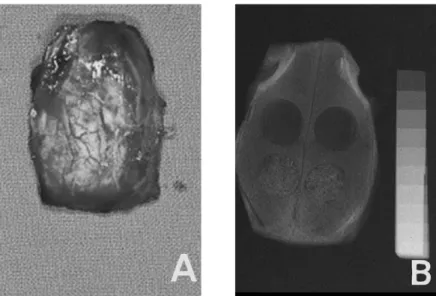
Rabbits were killed using phentobarbital, 100 mg/kg intravenously at 1,2, and 4 weeks. There were 5 rabbits in each group. The entire cranium was removed with a reciprocating saw, without encroaching on the grafted areas(Figure 3, A).
1) Radiographic evaluation
Radiographs were taken of the rabbit calvaria in its entirety before histologic sections were per- formed. A aluminum step-wedge was used in each radiograph for comparison(Figure 3, B). The radi- ographs were scanned and images were analyzed with a ImageJ 1.31v software on a IBM computer.
2) Histologic evaluation
The rabbit calvarias were fixed in 4% paraform- aldehyde, and decalcified in hydrochloric acid decalcifying solution (Fisher Scientific, Tustin, CA) at 4℃ for 2-4 weeks. It was embedded in paraffin and cut into 6㎛ thickness. The sections were stained with H&E and observed by optical microscope.
3) Statistical methods
Numerical data was presented as mean plus one standard deviation. One way analysis of variance (ANOVA) with fisher's Tukey test was used for mul- tiple comparisons to compare with the control. The probability level of p < 0.05 was regarded as statisti- cally significant.
III. Results
1. Platelet countPlatelet counts that the PRP preparation technique used in this study produced a highly concentrated source of platelets. The mean peripheral blood platelet count was 150,500/㎜3, with a range of Table 1. The four groups randomly grafted at the cranial defects.
Group n Graft materials Membrane
control 5 no graft PTFE (Tefgen )
PRP 5 PRP PTFE (Tefgen )
Bio-Oss 5 Bio-Oss PTFE (Tefgen )
Bio-Oss with PRP 5 Bio-Oss with PRP PTFE (Tefgen )
112,000 to 174,000/㎜3. The mean platelet count PPP was 34,000/㎜3, with a range of 10,000 to 60,000/㎜3. The mean platelet count in PRP was 606,000/㎜3, with a range from 425,000 to 752,000/
㎜3. These values confirmed the platelet sequestra- tion ability of the process and quantified the con- centration as 402% of baseline platelet counts(Table 2; Figure 4).
Figure 1. Photographs of the surgical sites A, Rabbit cranium with surgical sites prepared B, Rabbit cranium with surgical sites grafted
Figure 2. Preparation of platelet-rich plasma A, Blood was taken from the marginal ear vein B, Separation of three layers after second centrifuge
2. Radiographic evaluation
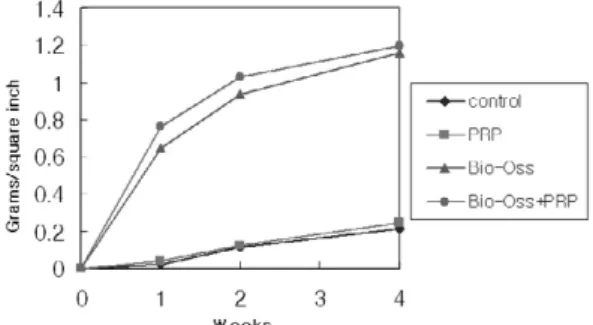
Figure 5 demonstrates the bone density as deter- mined radiographically. Bio-Oss group and Bio- Oss with PRP group showed a significant increase in radiographic bone density when compared to the control and PRP group at all 3 time points(p<0.01).
However, at no time was there a statistically signifi- cant difference in radiographic density when Bio- Oss alone was compared to Bio-Oss with PRP group(p>0.05). There is no significant difference in radiographic density when control was compared to PRP group (p>0.05) (Table 3).
3. Histologic evaluation
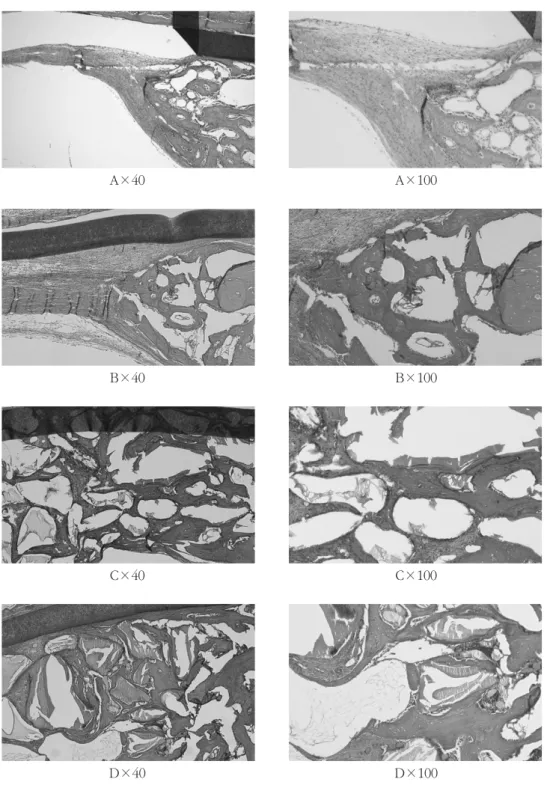
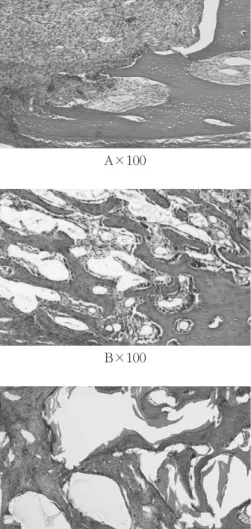
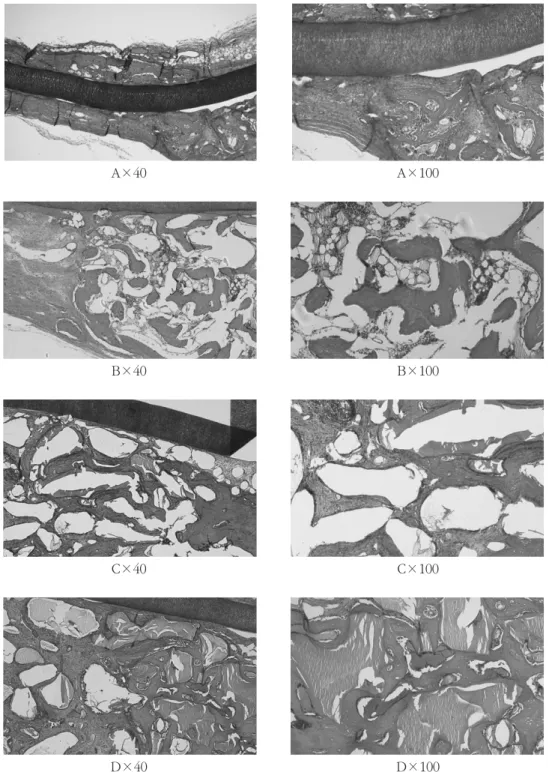
In all specimens, the defects were completely closed by the PTFE membrane and all group showed an increase in bone formation over time(Figure 6,7,8). The perforated areas were filled with loose fibrous tissue in control group and filled
with dense fibrous tissue in PRP group(Figure. 6 A,B). There was active osteoblastic activity and immature bone formation at the border of the defect in control and PRP group, it was similar histological- ly between control and PRP group. A slightly increase osteoblastic and osteoid layers was seen when PRP group was compared with control(Figure. 6,7,8 A,B). A slightly increase in osteoblastic and osteoid layers was seen for Bio-Oss group compared with control and PRP group(Figure 6,7,8 A,B,C). There were osteoblastic and osteoid layers at the border of the defect and around grafted bone particles in Bio-Oss group and Bio-Oss with PRP group at 1 week(Figure 6 C,D), more osteoblastic and osteoid layers of Bio-Oss with PRP group were seen than that of Bio-Oss group.
There was newly formed bone at the border of the defect and around grafted bone particles in Bio-Oss group and Bio-Oss with PRP group at 2, 4 weeks(Figure 7,8 C,D). The grafted bone particles have been incorporated in mature new bone and Figure 3. Gross and radiographic examination of surgical site
A, Rabbit cranium specimen was taken at 4 weeks
B, Radiograph of a rabbit cranium harvested after 4 weeks of healing
was resorbed during the remodeling process in Bio- Oss with PRP group at 4 weeks(Figure 8 D). New bone formation was increased in Bio-Oss with PRP compared those of Bio-Oss alone.
All group showed an increase in bone formation at 4 weeks as compared with 1,2 weeks (Figure 6,7,8). There was no difference at newly formed bone when control group was compared with PRP group (Figure 6,7,8 A,B) and Bio-Oss group was compared with Bio-Oss with PRP group (Figure 6,7,8 C,D). The individual particles of the bovine bone material were clearly identifiable and they were found to be surrounded by varying amounts of newly formed bone without being encapsulated by loose fibrous connective tissue in Bio-Oss and
Bio-Oss with PRP group at all time.
IV. Discussion
In the scope of bone regeneration, the augmenta- tion of bone defects using autogenous bone to be the gold standard. But, autogenous bone is not always available in sufficient volume for grafting.
The ideal grafting material remains the subject of continued research. Researchers strive continuously to improve upon current bone grafting techniques and provide faster and denser regeneration. Growth factors are a realistic way to improve both soft tissue and bony wound healing. Platelets contain angio- genic, mitogenic, and vascular growth factors in Table 2. Platelet Counts (platelet count/㎣): 402%
increase
Blood PPP PRP
A 167,000 10,000 664,000
B 148,000 10,000 425,000
C 174,000 45,000 723,000
D 112,000 60,000 752,000
E 159,000 50,000 597,000
F 143,000 28,000 475,000
평 균 150,500 34,000 606,000
Blood : whole blood, PPP : platelet-poor plasma, PRP : platelet-rich plasma
Figure 4. Average platelet counts Blood : whole blood, PPP : platelet-poor plasma, PRP : platelet-rich plasma
Table 3. Amount of bone fill determined radi- ographically over the 4 weeks.
1 week 2 week 4 week
control 0.02 ± 0.01 0.04 ± 0.02 0.21 ± 0.05 PRP 0.04 ± 0.01 0.13 ± 0.02 0.24 ± 0.04 Bio-Oss 0.65 ± 0.06* 0.94 ± 0.15* 1.16 ± 0.02*
Bio-Oss + PRP 0.76 ± 0.17* 1.03 ± 0.08* 1.20 ± 0.06*
mean ± SD (gram/square inch) analyzed by a ImageJ 1.31v software
statistical analysis : one-way ANOVA with fisher's Tukey test ; P<0.05
* : Significantly different from corresponding control ( P<0.05 )
Figure 5. Amount of bone fill determined radi- ographically over the 4 weeks.
their granules28). TGF-β, PDGF, and VEGF are known to ve produced by platelets and released during degranulation. TGF-βhas been shown to stimulate proliferation and collagen synthesis by osteoblasts and osteoblast precursors25). It also may act as a chemotactic agent in recruiting pre- osteoblasts to the site of bone injury. PDGF also stimulates mitogenesis of osteoblastic precursors29,30). Although there are numerous cytokines and growth factors that play a role in the specific temporal sequence that occurs during bone graft healing, TGF-βand PDGF most likely con- tribute to the early influx of cells and stimulation of proliferation. The biologic of autogenous and recombinant growth factors such as TGF-βand PDGF and underlying mechanisms were investigat- ed in numerous studies31,32). These factors belong to a class of biologic mediators with an important stim- ulatory and regulatory function on cellular processes such as mitogenesis, differentiation, and chemotaxis, as well as angioneogenesis during bone and soft tis- sue healing. Studies on application of single or com- bination growth factors using PDGF or PDGF/IGF-1 have been shown to enhance the early cascade of tissue repair processes both in vitro33,34)and in vivo35,36,37).
Marx and associates25)attributed the osteoregener- ative effect of PRP to an increased release of PDGF and TGF-βand the resultant enhanced stimulation of angiogenesis, mitogenesis of marrow stem cells and preosteoblasts, and their activation and differen- tiation into mature osteoblasts. In vitro studies showed that the combination of certain cytokines and growth factors increased osteoblast proliferation and differentiation38). Also Kawase and associates39) suggested that growth factor might have a potential for enhancing collagen synthesis in periodontal liga- ment and osteoblastic cells. It is therefore a reason- able hypothesis that increasing the concentration of
platelets in a bone defects in a bony defect may lead to improved and faster healing. Recent reports have suggested that more rapid epithelialization, more dense and mature bone with better organized tra- beculae, and greater bone regeneration take place when PRP is added to bone autografts and allografts25,40,41). Most of these reports also suggest that PRP improves the handling properties of the grafts material with which it is combined, facilitating graft placement and stability.
Marx and coworkers25) performed the first and most compelling study available on the use of PRP in combination with bone grafts. The authors claimed that the bone grafts combined with PRP showed a maturity index more than twice and slightly less than twice the actual maturity at 2 and 4 months, respectively.
Anitua40)reported the results of the use of PRP in a series of patients who underwents tooth extraction because of root fracture or periodontitis. The sites treated with PRP demonstrated more mature bone, with better organized trabeculae and greater bone regeneration. Also, the epithelialization was described based on subjective observations as very good to excellent. PRP is thought to accelerate soft tissue healing by promoting a more rapid revascu- larization and reepithelialization of flaps and cell proliferation. However, because of the limited abili- ty to extrapolate the data to human conditions, fur- ther investigations of PRP in combination with xenograft materials such as anorganic bovine bone is obviously necessary.
Bio-Oss is natural bovine bone that is complete- ly deproteinized to prevent a potential immune response42,43). Electron microscopic evaluation shows that this material has a structural configura- tion similar to human bone. Its compressive strength and modulus of elasticity are also similar to the val- ues for human bone44).
Khalid45)reported that the bovine bone materials posseessed the best potential of osteoconductive grafting material, followed by the biograss crystals and the hydroxyapatite particles respectively. In this study, the bovine bone materials showed significant increase in newly formed bone when compared to the no graft as a control. Also, there was more newly formed bone area in the bovine bone group than in the control group at 1, 2, 4 weeks.
In this study, radiographic assessment did not show any significant difference between Bio-Oss group and Bio-Oss with PRP group. It showed a significant increase in bone density when Bio-Oss and Bio-Oss with PRP were grafted, compared to ungrafted control and PRP group, at nearly every evaluation point. The clinical significance of these data is difficult to determine because any radiopaque bone grafting material will look more dense on a radiograph. However, this is not consis- tent with previous studies, which showed signifi- cantly greater bone density at 1 and 2 months when evaluating digitized radiographs and computed tomography scans when PRP was added to Bio-Oss in rabbit cranial defects17). Also, Marx and associ- ates25)showed a 1.62- to 2.16-fold increase in radio- logic bone density at 6 and 2 months, respectively, when PRP was added to autogenous bone, as evalu- ated with panoramic radiographs. The previously report, however, studied human mandibular conti- nuity defects.
In the present study Bio-Oss group and Bio-Oss with PRP group showed a significant increase in newly formed bone when compared to control and PRP group at all time. Also, adding PRP to Bio-Oss resulted in a significant increase in bone area at all time periods compared with Bio-Oss alone. Suba and associates46)reported the results of the use of PRR in extraction site of beagle dog. The combined use with beta-tircalcium phosphate (Cerasorb ) and
PRP results in more intense bone regeneration, especially in early phase.
Aghloo47) showed a histomorphometric increase in bone formation with the addition of PRP to Bio- Oss in non-critical sized defects in the rabbit crani- um. These results conflict with those of Wiltfang and associates48). They reported that the bone rege- naration in critical-size defects of pig's frontal region.
PRP did not add additional benefit when xenogenic bone substitute were used. however, a significant effect on bone regeneration was found in the auto- genous group initially when PRP in added. Also, Furst49)reported that minipig sinus grafted core sam- ples were evaluated histological after grafting with bovine hydroxyapatite alone and bovine hydroxya- patite with PRP. The authors found no histologic benefit by the addition of PRP.
These inconsistent results may be due to the dif- ferent experimental systems and different animal employed in their experiments. Therefore the bioac- tive effects of PRP on bone wound healing and min- eralized tissue formation depend on the local osseous environment where PRP has been applied.
Also, the majority of the bony regeneration took place within the first month of healing. Significant differences might have been seen in early wound healing between bone alone and bone with PRP, had samples been evaluated before 1 month.
In conclusion, this study has clearly demonstrated that the addition of PRP to Bio-Oss in the rabbit cranial defect model was shown to be potentially beneficial at early bone healing. Also, Deproteinized bovine bone materials had the good osteoconduc- tive properties and served as a space maintainer suc- cessfully. However, this study was designed to eval- uated non-critical sized cranial defects. Further stud- ies need to evaluate the potential benefits of PRP in healing critical sized defects.
V. Conclusion
Platelets are very important in the wound healing process. They quickly arrive at the wound site and begin the coagulation process. They release multi- ple wonud healing growth factors and cytokines, including platelet-derived growth factor (PDGF), transforming growth factor-β(TGF-β), insulin-like growth factor-1, vascular endothelial cell growth fac- tor (VEGF), platelet-derived epidermal growth fac- tor, platelet factor 4. These growth factors are thought to contribute to initial bone regeneration and increased vascularity, vital features of a healing bone graft. This study is to evaluate the effect of PRP on the early wound healing of rabbit cranial defects.
Fifteen New Zealand white male rabbits between 2.8 and 4 kg were included in this randomized, blinded, prospective study. By means of a trephine bur (external diameter : 8mm), four standardized 'through-and-through' bone defect were created with copious irrigation. The four cranial defects were randomly grafted with Bio-Oss , Bio-Oss mixed with PRP, PRP alone, and no graft as a con- trol. The Four defects were covered with nonre- sorbable PTFE membrane (Tefgen , Lifecore Biomedical, Inc., U.S.A.). The wound was closed with resorbable suture materials. Rabbits were killed using phentobarbital, 100 mg/kg intravenously at 1, 2, and 4 weeks. Radiographs were taken of the rab- bit cranium in its entirety before histologic sections were performed. A aluminum step-wedge was used in each radiograph for camparison. Specimens were treated with hydrochloric acid decalcifying solution (Fisher Scientific, Tustin, CA) and sectioned by bisecting the 8-mm diameter defects. The histologic specimens were prepared in the usual fashion with H&E staining at 6 ㎛ in thickness. Also, six speci- mens were sampled analysed for platelet count. The
following results were obtained through the in vivo study.
1. In platelet count test, PRP group is 4 times higher platelet concentration than normal.
2. In radiographic evaluation, Bio-Oss group and Bio-Oss with PRP group showed a signifi- cant increase in radiographic bone density when compared to the control and PRP group at all 3 time points (p<0.01). However, signifi- cant increase was not seen at all time when control group was compared with PRP group (P>0.05). There was also no significant differ- ence between Bio-Oss and Bio-Oss with PRP group at 1, 2, and 4weeks (P>0.05).
3. In histologic evaluation, all grafting materials showed an increase in bone formation over a time. Bio-Oss and Bio-Oss with PRP group showed a increase in newly formed bone when compared to control and PRP group at 1, 2 and 4 weeks. Also, a increase in new bone formation was seen when Bio-Oss with PRP was compared with Bio-Oss alone.
The results has suggested that the addition of PRP to Bio-Oss in the rabbit cranial defects model was shown to be potentially beneficial at early bone healing. PRP might positively influence the early bone wound healing.
VI. References
1. Shanaman, R. Filstein, M. R. Danesh-Meyer, M.
J.. "Localized ridge augmentation using GBR and platelet-rich plasma: case reports." Int J Periodontics Restorative Dent 2001;21:345-355.
2. Buser, D. Bragger, U. Lang, N. P. et. al..
"Regeneration and enlargement of jaw bone using guided tissue regeneration." Clin Oral
Implants Res 1990;1:22-32.
3. Buser, D. Dula, K. Belser, U. et, al.. "Localized ridge augmentation using guided bone regener- ation. I. Surgical procedure in the maxilla." Int J Periodontics Restorative Dent 1993;13:137-179.
4. Becker, W. Dula, K. Belser, U. et. al.. "Localized ridge augmentation using absorbable pins and e-PTFE barrier membranes: A new surgical tech- nique. Case reports." Int J Periodontics Restorative Dent 1994;14:49-61.
5. Hammerle, C. H. Karring, T.. "Guided bone regeneration at oral implant sites."
Periodontology 2000 1998;17:151-175.
6. Sanchez, A. R. Sheridan, P. J. Kupp, L. I.. "Is platelet-rich plasma the perfect enhancement factor? A current review." Int J Oral Maxillofac Imp2003;18:93-103.
7. Nkenke, E. Schultze-Mosgau, S. Radespiel- Troger, M. et. al.. "Morbidity of harvesting of chin grafts: a prospective study." Clin Oral Implants Res 2001;12:495-502.
8. Yunger, E. M. Chapman, M. W.. "Morbidity at bone graft donor sites." J Orthop Trauma 1989;3:192-195.
9. Schwartz, Z. Somers, A. Mellonig, J. T. et. al..
"Ability of comercial demineralized freeze-dried bone allograft to induce new bone formation is dependent on donor age but not gender." J Periodontol 1998;69:470-478.
10. Carmagnola, D. Berglundh, T. Araujo, M. et. al..
"Bone healing around implants paced in a jaw defect augmented with Bio-Oss : An experi- mental study in dogs." J Cin periodontol 2000;27:799-805.
11. Carmagnola, D. Berglundh, T. Lindhe, J.. "The effect of fibrin glue on the integration of Bio-Oss with bone tissue: An experimental study in labrador dogs." J Clin Periodontol 2002;29:377- 381.
12. Zitzmann, N. U. Scharer, P. Marinello, C. P. et, al... "Alveolar ridge augmentation with Bio-Oss : A histologic study in humans." Int J Periodontics Restorative Dent 2001;21:288-295.
13. Tal, H.. "Autogenous masticatory mucosal grafts in extraction socket seal procedures: A compari- son between sockets grafted with demineralized freeze-dried bone and deproteinized bovine bone material." Clin Oral Implants Res 1999;10:289-296.
14. Houser, B. E. Mellonig, J. T. Brunsvold, M. A.
et. al.. "Clinical evaluation of anorganic bovine bone xenograft with a bioabsorbable collagen barrier in the treatment of molar furcation defects." Int J Periodontics Restorative Dent 2001;21:161-169.
15. Hallman, M. Cederlund, A. Lindskog, S. et. al..
"A clinical histologic study of bovine hydroxyap- atite in combination with autogenous bone and fibrin glue for maxillary sinus floor augmenta- tion. Results after 6 to 8 months of healing." Clin Oral Implants Res 2001;12:135-143.
16. Yildirim, M. Spiekermann, H. Biesterfeld, S..
"Maxillary sinus augmentation using xenogenic bone substitute material Bio-Oss in combina- tion with venous blood: A histlogic and histo- morphometric study in humans." Clin Oral Implants Res 2000;11:217-229.
17. Kim, E. S. Park, E. J. Choung, P. H.. "Platelet concentration and its effect on bone formation in calvarial defects: An experimental study in rabbits." J Prosthet Dent 2001;86:428-433.
18. Maiorana, C. Santoro, F. Rabagliati, M. et. al..
"Evaluation of the use of iliac cancellous bone and anorganic bovine bone in the reconstruction of the atrophic maxilla with titanium mesh: A clinical and histologic investigation." Int J Oral Maxillofac Implants 2001;16:427-432.
19. Mcallister, B. S. Margolin, M. D. Cogan, A. G..
"Residual lateral wall defects following sinus grafting with recombinant human osteogenic protein-1 or Bio-Oss in the 7 chimpanzee." Int J Periodontics Restorative Dent 1998;18:227-239.
20. Kim, S. G. Kim, H. K. Im, S. C.. "Combined implantation of particulate dentine, plaster of Paris, and a bone xenograft (Bio-Oss ) for bone regeneration in rats." J Craniomaxillofac Surg 2001;29:282-288.
21. Gibble, J. Ness, P.. "Fibrin glue: The perfect operative sealant?" Transfusion 1990;30:741-747.
22. Hood, A. G. Hill, A. G. Reeder, G. D..
"Perioperative autologous sequestraction. III: A new physiologic glue with wound healing prop- erties." Proc Am Acd Cardiovasc Perfusion 1993;14::126-130.
23. Linder, B. L. Chernoff, A. Kaplan, K. L. et. al..
"Release of PDGF from human platelets by arachidonic acid." Proc Natl Acad Sci USA 1979;76:4107-4111.
24. Mohle, R. Green, D. Moore, M.A. et. al..
"Constitutive production and thrombin-induced release of VEGF by human megakaryocytes and platelets." Proc Natl Acad Sci USA 1997;94:663- 668.
25. Marx, R. E. Carlson, E. R. Eichsraedt, R. M. et.
al.. "Platelet-rich plasma: Growth factor enhancement for bone grafts." Oral Surg Oral Med Oral Pathol Oral Radiol Endod 1998;85:638- 646.
26. Pierce, G. F. Mustoe, T. A. Altrock, B.W. et. al..
"Role of platelet-derived growth factor in wound healing." J Cell Biochem 1991;45:319-326.
27. Antoniades, H. N.. "Human platelet derived growth factor (PDGF) : Purification of PDGF-I and PDGF-II and separation of their reduced sub-units." Proc Natl Acad Sci USA 1981;78:7314- 7317.
28. Maloney, J. P. Silliman, C. C. Ambruso, D. R. et.
al.. "In vitro release of vascular endothelial growth factor during platelet aggregation." Am J Physiol 1998;2755:1054-1061.
29. Sandy, J. Davies, M. Prime, S. et. al.. "Signal pathways that transduce growth factor-stimulat- ed mitogenesis in bone cells." Bone 1998;23:17- 26.
30. Horner, A. Bord, S. Kemp, P. et. al..
"Distribution of platelet-derived growth factor(PDGF): A chain mRNA, protein, and PDGF-alpha receptor in rapidly forming human bone." Bone 1996;19:353-62.
31. Lind, M.. "Growth factor stimulation of bone healing. Effects onosteoblasts, Osteomies, and implant fixation." Acta Orthop Scand Suppl 1998;328:2-37.
32. Solheim, E.. "Growth factors in bone." Int Orthops 1998;22:410-416.
33. Canalis, E,. McCarthy, T. L. Centrella, M..
"Effects of platelet - derived growth factor on bone formation in vitro." J Cell Physiol 1989;140:530-537.
34. Stephan, E.B. Renjen, R. Lynch, S.E. et. al..
"Platelet-derived growth factor enhancement of a mineral-collagen bone substitute." J Periodontol 2000;71:1887-1892.
35. Lynch, S. E. Ruiz de Castilla, G. Williams, R.C.
et. al.. "The effects of short-term application of a combination of platelet-derived and insulln-like growth factors on periodontal wound healing." J Periodontol 1991;62:458-467.
36. Lynch, S. E. Buser, D. Hernandez, R. A. et al..
"Effects of PDGF/IGF-1 combination on bone regeneration around titanium dental implants.
Results of a pilot study on beagle dogs." J Periodontol 1991;62:710-716.
37. Stefani, C. M. Machado, M. A. Sallum, E. A. et.
al.. "Platelet-derived growth factor/insullin-like growth factor-1 around implants placed into
extraction sockets: A histometric study in dogs."
Implant Dent 2000;9:126-132.
38. Lind, M. Overgaard, S. Nguyen, T. et. al..
"Transforming growth factor-beta stimulates bone on growth Hydroxyapatite-coated implants studied in dogs." Acta Orthopaedica Scandinavia 1996;67:611-616.
39. Kawase, T. Okuda, K. Yoshie, H.. "Platelet-rich plasma derived fibrin clot formation stimulates collagen synthesis in periodontal ligament and osteoblastic cells in vitro" J Periodontol 2003;74:858-864.
40. Anitua, E.. "Plasma rich in growth factors:
Preliminary results of use in the preparation of future sites for implats." Int J Oral Maxillofac Implants 1999;14:529-525.
41. Kassolis, J. D. Rosen, P.S. Reynilds, M. A..
"Alveolar ridge and sinus augmentation utilizing platelet-dried bone allograft: Case series." J Periodontol 2000;71:1654-1661.
42. Hislop, W.S. Finlay, P. M. Moos, K. F.. "A pre- liminary study into the uses of anorganic bone in oral and maxillofacial surgery" Br J Oral Maxillofac Surg 1993;31:149-153.
43. Indovina, A. Block, M. S.. "Comparison of 3 bone substitutes in canine extraction sites." J Oral Maxillofac Surg 2002;60:53-58.
44. Thaller, S. R. Hoyt, J. Borieson, K..
"Reconstruction of calvarial defects with anor- ganic bovine bone mineral (Bio-Oss ) in a rab- bit model." J Craniofac Surg 1993;4:79-84.
45. Khalid, A. Ruhaimi, A. L.. "Bone graft substi- tutes: A comparative qualitative histologic review of current osteoconduction grafting materials."
Int J Oral Maxillofac Implants 2001;16:105-114.
46. Suba, Z. Takacs, D. Kovacs, K. et. al.. "Alveolar bone regeneration stimulated by a combination of platelet-rich plasma and Cerasorb graft in Beagle dogs. Histological and histomorphomet- ric studies." Fogorv Sz 2004;97:143-149.
47. Aghaloo, T. L. Moy, P. K. Freymiller, E. G..
"Evaluation of platelet-rich plasma in combina- tion with anorganic bovine bone in the rabbit cranium: A pilot study." Int J Oral Maxillofac Implants 2004;19:59-65.
48. Wiltfang, J. Kloss, F. R. Kessler, P. et. al..
"Effects of platelet-rich plasma on bone healing in combination with autogenous bone and bone substitutes in critical-size defects. An animal experiment." Clin Oral Implants Res 2004;15:187-193.
49. Furst, G. Gruber, R. Tangl, S. et. al.. "Sinus grafting with autogenous platelet-rich plasma and bovine hydroxyapatite. A histomorphomet- ric study in minipigs." Clin Oral Implants Res 2003;14:500-508.
사진부도 설명
Figure 6. (A) A light micrograph of control at 1 week postoperatively: The perforated areas were filled with loose fibrous tissue. There was osteoblastic and osteoid layers from cortical bone margin.
(B) A light micrograph of PRP group at 1 week postoperatively : The perforated areas were filled with dense fibrous tissue. There was osteoblastic and osteoid layers from cortical bone margin.
(C) A light micrograph of Bio-Oss group at 1 week postoperatively : There were osteoblastic and osteoid layers at the border of the defect and around deproteinized bovine bone material parti- cles.
(D) A light micrograph of Bio-Oss with PRP group at 1 week postoperatively: There was formation of new bone from cortical bone margin. Osteoprogenitor cells and preosteoblasts were seen on the periphery of the graft materials.
Figure 7. (A) A light micrograph of control at 2 week postoperatively : The perforated areas were filled with dense fibrous tissue. There was formation of new bone from cortical bone margin.
(B) A light micrograph of PRP group at 2 week postoperatively : The perforated areas were filled with dense fibrous tissue. There was formation of new bone from cortical bone margin.
(C) A light micrograph of Bio-Oss group at 2 week postoperatively : There was formation of new bone from cortical bone margin. Osteoprogenitor cells and preosteoblasts were seen on the periphery of the graft materials.
(D) A light micrograph of Bio-Oss with PRP group at 2 week postoperatively : There was forma- tion of new bone from cortical bone margin. The graft materials have been incorporated into the newly formed bone matrix.
Figure 8. (A) A light micrograph of control at 4 week postoperatively : The perforated areas were filled with dense fibrous tissue. There was formation of new bone from cortical bone margin.
(B) A light micrograph of PRP group at 4 week postoperatively : The perforated areas were filled with dense fibrous tissue. There was formation of new bone from cortical bone margin.
(C) A light micrograph of Bio-Oss group at 4 week postoperatively : There was formation of new bone from cortical bone margin. The graft materials have been incorporated into the newly formed bone matrix.
(D) A light micrograph of Bio-Oss with PRP group at 4 week postoperatively : There was forma- tion of new bone from cortical bone margin. The graft materials have been incorporated in mature new bone and was resorbed during the remodeling process.
사진부도 ( I )
A×40 A×100
B×40 B×100
C×40 C×100
D×40
Figure 6. Light micrographs at 1 week postoperatively; control (A), PRP (B), Bio-Oss (C), and Bio-Oss with PRP (D). (H&E×40, ×100)
D×100
사진부도 ( II )
A×40 A×100
B×40 B×100
C×40 C×100
D×40
Figure 7. Light micrographs at 2 week postoperatively; control (A), PRP (B), Bio-Oss (C), and Bio-Oss with PRP (D). (H&E×40, ×100)
D×100
사진부도 ( III )
A×40 A×100
B×40 B×100
C×40 C×100
D×40
Figure 8. Light micrographs at 4 week postoperatively; control (A), PRP (B), Bio-Oss (C), and Bio-Oss with PRP (D). (H&E×40, ×100)
D×100
-국문초록-
혈소판 농축 혈장과 혼합된 이종골 이식재(Bio-Oss )가 가토 두개골 결손부 초기 치유에 미치는 영향
임동웅1, 장현선1,4, 박주철2,4, 김흥중3,4, 이종우1, 김종관5,6, 김병옥1,4
조선대학교 치과대학 치주과학교실1
조선대학교 치과대학 구강조직학교실2
조선대학교 치과대학 구강해부학교실3
조선대학교 치과대학 구강생물학연구소4
연세대학교 치과대학 치주과학교실5
연세대학교 치과대학 치주조직 재생연구소6
혈소판 농축 혈장은 구강과 안면부 재건수술에 새로이 사용되는 유용한 첨가물이다. 혈소판은 상처 치유과 정에서 매우 중요하며, 혈소판은 상처부위에 빠르게 도달하여 응고를 형성한다. 그리고 다양한 성장인자를 분 비한다. 이러한 성장인자는 골의 형성과 혈관의 증가, 골 이식재의 치유에 관여하는 것으로 생각된다. 본 연구 의 목적은 실험 동물을 통하여 혈소판 농축 혈장에 함유된 혈소판의 정량화를 통한 성장인자 함유량을 추정하 고, 방사선학적, 조직학적 평가를 통해 혈소판 농축 혈장이 초기의 골형성에 미치는 영향에 대한 평가를 하는데 있다.
15마리의 가토 두개골에 6 mm trephine bur(외경 8 mm)를 이용하여 경뇌막의 손상을 주지 않도록 하면서 4 개의 결손부를 형성하였다. 각각의 두개골 결손부는 Bio-Oss 만 이식한 군, PRP만 이식한 군, PRP와 Bio-Oss 를 혼합하여 이식한 군, 그리고 아무것도 이식하지 않은 군을 대조군으로 설정하였다. 각각의 재료를 이식한 후 비흡수성 차폐막(Tefgen )을 위치시키고 흡수성 봉합사로 일차봉합을 시행하였다. 각 군 당 술 후 1, 2, 4주의 치유기간을 설정하였다. 동물을 희생시키고 두개골을 절제하였다. 먼저 방사선학적인 골 밀도 측정을 시행하 고, 조직학적 평가를 위해 통법에 따라 조직 표본을 제작한 후 광학현미경으로 관찰하였다. 또한 가토 귀 변연 정맥에서 채취한 10 ㎖의 혈액을 원심분리하여 혈소판 함유량을 평가하여 다음과 같은 결과를 얻었다.
1. 혈소판 농축 혈장은 일반 혈액에 비해 약 4.02배 많은 수의 혈소판이 함유되어 있었다.
2. 방사선적인 평가에서 1, 2, 4주 사이에 대조군과 비교하여 Bio-Oss 에 PRP를 이식한 군에서 골의 밀도는 큰 차이를 보이고 있다(p<0.01). 하지만, 동일한 시기에 PRP만 이식한 군과 대조군의 차이는 발견할 수 없 었으며(p>0.05), Bio-Oss 만 이식한 군과 Bio-Oss 에 PRP를 이식한 군의 차이 또한 발견할 수 없었다 (p>0.05).
3. 조직학적 평가에서 모든 이식재는 시간이 경과할수록 골 형성이 증가함을 알 수 있었다. 대조군에 비해 PRP만 이식한 군에서 더 두꺼운 섬유성 결합을 보이고 있다. 대조군과 PRP만 이식한 군과 비교해 Bio-Oss 와 Bio-Oss 에 PRP를 혼합 이식한 군에서 골의 형성이 더 진행됨을 알 수 있었다. Bio-Oss 에 PRP를 혼
합 이식한 군이 Bio-Oss 만 이식한 군에서보다 더 많은 신생골 형성을 관찰할 수 있다.
이상의 결과에서 가토의 두개골 결손부에 Bio-Oss 에 PRP를 혼합 이식하였을 경우 결손부의 초기 골 형성을 촉진 할 수 있음을 시사하였다.
주요어 : 혈소판 농축 혈장, Bio-Oss ,PRP