저비용 항공사의 웹사이트 품질, e-만족, e-신뢰, e-충성도 간의 구조적 관계 연구
1)인옥남*, 김승리**
The Relationships of Website Quality, e-Satisfaction, e-Trust, and e-Loyalty in Low-Cost Carriers
In, Ok Nam*, Kim, Seung Lee**
요 약
최근 정보통신기술의 발달로 대부분 웹사이트의 외관과 디자인이 훌륭하게 제작되고, 이용도 손쉽게 할 수 있도 록 제작되고 있다. 특히 저비용 항공사에서는 웹사이트의 품질이 고객의 항공기 예약과 구매에 직결되기 때문에 웹 사이트 품질이 고객의 충성도에 중요한 요인으로 작용하게 된다. 저비용 항공사에 대한 고객의 충성도는 긍정적 구 전과 재구매와 직결되기 때문에 웹사이트 품질향상에 많은 노력이 필요하다. 본 연구는 저비용 항공사 웹사이트 품 질의 속성을 도출하고, 웹사이트 품질이 e-만족, e-신뢰,e-충성도에 영향을 미치는지에 대해서 검증하였다. 또한 e- 만족, e-신뢰, e-충성도의 영향요인을 검증하였다. 가설검증결과 저비용 항공사의 웹사이트 품질, e-만족, 그리고 e- 신뢰는 e-충성도에 유의한 영향을 미치고, 웹사이트 품질은 e-만족과 e-신뢰에 유의한 영향을 미치는 것으로 연구 되었다. 하지만 e-만족은 e-신뢰에 영향을 미치지 않는 것으로 연구되었다.
▸Keywords : 웹사이트 품질, e-만족, e-신뢰, e-충성도, 저비용 항공사
Abstract
The A low-cost carriers(LCC)' website represents their public face to the world. Futhermore, distribution through their own websites is generally regarded as the being most cost effective for airlines The Internet website has become an effective marketing vehicle for low-cost carriers(LCC).
The objective of this study was to examine theoretical relationship of website quality, e-satisfaction, e-trust, and e-loyalty to the low-cost carriers' website. The study sample included respondents who had visited any LCC websites in the last 12 months. Data were collected by
∙제1저자 : 인옥남, 교신저자 : 김승리
∙투고일 : 2013. 6. 23, 심사일 : 2013. 8. 14, 게재확정일 : 2013. 10. 11.
* 광주여자대학교 항공서비스학과 조교수(Dept. of Airline service, Kwangju Women's University)
**호남대학교 항공서비스학과 강사(Dept. of Airline Service, Honam University)
conducting a web-based survey to maintain respondents’ anonymity and overcome time and place constraints. From the 334 usable data obtained, hypotheses are tested using structural equation modeling. The results indicate that website quality, e-satisfaction, and e-trust are antecedents of e-loyalty in loyalty relationships between passengers and low-cost carriers' websites. Website quality positively influences e-satisfaction, e-trust while e-satisfaction. However, contrary to our expectation, e-satisfaction has a negative effect on e-trust. Managerial implications are provided following presentation of the findings.
▸Keywords : Website Quality, e-Satisfaction, e-Trust, e-Loyalty, Low-Cost Carriers
I. 서 론
A low-cost carriers(LCC)' website represents their public face to the world. Websites are frequently the first point of contact between a company and their customers[1].
Futhermore, distribution through their own websites is generally regarded as the being most cost effective for airlines. They are thus attempting to migrate consumers from traditional channels to their own online channels as fast as possible[2]. Since websites serve as an important point of contact for most LCC, assessing their quality of their website is important as a way to understand whether LCC are providing quality of interaction to satisfy website users. This is especially importance for LCC selling air tickets and services on their websites. Passengers must be satisfied with their experience with the website or they will not return. Thus, the assessment of website quality has become a priority for LCC.
Previous studies have clearly demonstrated that a high quality website can attract more browsers and shoppers compared to competing low quality sites[3, 4, 5]. As a result, website quality has been recognized as a core determinant of an online company's success[6]. In this sense, understanding the differences among passengers profile, such as the perception of website quality and its effect on e-satisfaction, e-trust, and e-loyalty, is fundamental for LCC that aim to increase customers’ positive experiences and loyalty to their websites[7]. Therefore, further understanding the relationships between website quality and
the related variables which e-satisfaction, e-trust, and e-loyalty, that effect it is the main concern of this study.
This study is structured as follows. We first discuss the concept and relationship of website quality, e-satisfaction, e-trust, and e-loyalty. Then, we describe the methodology and discuss the results of an empirical study. We conclude by noting the implications of the study’s findings.
II. Literature Review
1. Website Quality
There is a growing body of research addressing the topic of managing website quality. Website quality is an instrument for assessing the quality of website from the perspective of the customer[8, 9].
Given its importance, website quality is widely studied in the course website literature[10].
Aladwani and Palvia(2002) have defined customer’s perception of website quality as “users’
evaluations of a website’s features meeting users’
needs and reflecting overall excellence of the
website[11]. That is, LCC needs to have a clear
knowledge of what online customers expect for the
quality that a website should offer. Numerous prior
researchers have presented outstanding methods for
measuring website quality by hypothesizing about
their own dimensions of website quality. Vishwanath
and Barnett(2005), has identified numerous website
quality dimensions, including information quality,
ease-of-use, usability, aesthetics, trust building technologies and emotional appeals[12]. Chang and Chen(2008) used the four dimensions(technical adequacy, content quality, specific content, and appearance) of website quality[13] developed by Alawani and Palvia(2002) to capture those aspects of a website[11]. Furthermore, Ho and Lee(2007) made a scale of five dimensions – information quality, security, functionality, customer relationship and responsiveness –[14] and Park and Gretzel(2007) identified six dimensions – fulfillment, ease of use, security, visual, responsiveness and information. We have focused on four dimensions:
ease of use, security/privacy, information and responsiveness[15].
Studies carried out in the online environment have shown that website quality is an antecedent of e-satisfaction, of e-trust[16], and of e-loyalty[17];
we, therefore, propose the following hypotheses:
H1 : Website quality is positively related to e-satisfaction in LCC’s website.
H2 : Website quality is positively related to e-trust in LCC’s website.
H3 : Website quality is positively related to e-loyalty in LCC’s website.
2. e-Satisfaction
Consumer satisfaction is defined by Oliver(1981, p.27) as " the summary psychological state resulting when the emotion surrounding disconfirmed expectations is coupled with a consumer's prior feelings about the consumer experience"[18]. In other words, satisfaction is "the outcome of an evaluative process, where consumers examine the results of their prior service use and decide whether or not to continue using the service"[19]. In the online environment, and taking into account that the authors assume the definitions used for traditional sales channels[17], we define
e-satisfaction as the contentment of the customer with respect to his or her prior purchasing experience with a given website[20]. The rationale is that customers’
satisfying experiences with a LCC’c website quality become the source of their trusting beliefs about the LCC. Previous studies of e-satisfaction posit that satisfaction is an antecedent of trust[21]. A positive effect of satisfaction on trust can be expected in the online environment as well, so we propose the following hypothesis:
H4 : E-satisfaction is positively related to e-trust in LCC’s website.
Satisfaction has been shown to be positively related to loyalty[22] and this effect also occurs in online environment. Shankar et al.(2003) indicated that the effect of satisfaction on loyalty is stronger online than offline[23], so we propose the following hypothesis:
H5 : E-satisfaction is positively related to e-loyalty in LCC’s website.
3. e-Trust
E-trust has been conceptualized as “online trust
includes consumer perception of how the site would
deliver on expectation, how believable the site’s
information is, and the level of confidence in
site”[24]. E-trust has been the subject of various
studies[25] and in the airline sector one study
warns of the emergence of opaque practices in LCC,
such as incomplete information or prices much lower than
the real final price[26]. Trust in the website is of special
importance; there must be no inaccurate information,
unauthorized use of credit card information, violation of data
privacy or unauthorized transactions[27], since the lack of
security, guarantees, regulation and legal protection is the
principal reason for not buying through the internet[28]. A
number of previous studies have modeled e-trust as having
a direct impact on e-loyalty and have tested the positive
relationship of e-trust with e-loyalty[29, 30, 31], so we
propose the following hypothesis:
H6 : There is positive and direct relationship between e-trust and e-loyalty in LCC’s website.
3. e-Loyalty
Customer loyalty has been defined as “a deeply held commitment to rebuy or repatronize a preferred product/service consistently in the future, thereby causing repetitive same-brand or same brand-set purchasing, despite situational influences and marketing efforts having the potential to cause switching behavior”[22]. The concept of e-loyalty extends the traditional loyalty concept to online consumer behavior. Anderson and Srinivasan(2003) defined e-loyalty as “the customer’s favorable attitude toward an electronic business resulting in repeat buying behavior”[20]. In addition, e-loyalty refers to a consumer’s intention to buy from a website[17] or intention to revisit to a website[32].
In this study, e-loyalty to a LCC website was defined as a passengers’ intention to revisit a LCC website of Olviver’s(1999) conceptualization[22]. Loyalty toward a website may be cultivated and strengthened as online consumers repetitively use various quality functions and services offered by the website[33]. Identifying and understanding there various predictors of e-loyalty can help a website succeed in a fierce online business environment[34].
III. Research Method
1. Study Sample and Data Collection
This study is an applied field study and the method employed is descriptive and quantitative.
The study sample included respondents who had visited any LCC websites in the last 12 months.
Data were collected by conducting a web-based survey to maintain respondents’ anonymity and overcome time and place constraints, thus helping
our study to contact respondents more easily than with other survey methods such as personal and telephone interview and other self-administered survey techniques[4], between July 2 and October 3 2012. The respondents were volunteers who were also interested in the research topic. A total of 348 responses were received. After eliminating duplicate responses, a total of 334 usable responses were included in the sample for analysis. Descriptive statistics was applied to provide the profile of the respondents. The structural equation modeling (SEM) was also used to examine the hypothesized relationship among the constructs in this study. The required data is gathered through stratified random sampling method using a research-made questionnaire with four demographic and 23 specialized questions.
2. Measurement Development
We have measured the website quality construct by reference to the contributions of the following authors: for the construction of the ease of use and security/privacy dimensions from Casaló et al.(2007)[25], the information dimension from Ho and Lee(2007)[14] and Li et al.(2002)[35], the responsiveness dimension from Ho and Lee(2007)[14], and Parasuraman et al.(2005)[3].
E-trust was measured by four items, which were developed by Monliner et al.(2007)[36] who studied e-trust in. Finally, to measure both e-satisfaction(three items) and e-loyalty(four items), we followed Oliver(1999)[22] and Flavián et al.(2006)[17]. Each item was measured on a seven-point Likert scale(i.e. 1 = disagree strongly;
7 = agree strongly).
2. Data Analysis
This study used AMOS 18.0 to test relationships
hypothesised and used SPSS 18.0 to analyse the
data which include descriptive statistics. Path
analysis was conducted and the path coefficients
were estimated in this study(Arbuckle, 1999). This
analysis method permits systematic constraints on
Variables
Respondents Freque ncy(s) %
Gender Male 150 44.9
Female 184 55.1
Age
18-24 58 17.4
25-34 122 36.6
35-44 94 28.2
45-54 41 12.3
55 and over 19 5.5
Education Level
High school or below 39 11.6
College 116 34.7
Graduate school or above 179 53.7
Occupation
Public servants 45 13.5
Manufacturing 70 21.1
Business 98 29.3
Unemployment (e.g. student, retired,
housewife)
121 36.1 Table 1. Characteristics of Respondents
Factor Measures CFA
loading t-val ue Ease of
Use (CR=.8
4, AVE=.5
4)
LCC's website is easy to use .87 29.72 It is easy to fine the information I
amlooking for (schedules, flights) .85 28.30 It is easy to make the booking .77 27.06
Security and Privacy (CR=.9 1, AVE=.6
3
I feel secure with the electronic
payment systemof this company .92 28.01 The website has the technical
capacity to ensure that my data will
not be intercepted by third parties .87 28.01 I feel safe giving the company my
personal data .86 30.20
The website does not use my
personal data without my consent .78 24.12 Informat
ion (CR=.8
9, AVE=.5
3)
The information of the website is
good, accurate and concise .79 31.27 The information is useful and
resolves doubts .76 28.16
The website provides me with information adapted to my preferences
.75 24.77 Respons
iveness (CR=.8 7, AVE=.6
6)
I think that in the event of problems(complaints) they respond quickly
.85 26.34
I think that it tells me what to do in
case of problem .83 25.36
e-Satisf action (CR=.7
9, AVE=.6
1)
I amsatisfied with my decision to
purchase from this website .86 31.52 My choice to purchase from this
website was a wise one .84 31.06 I think I didthe right thingbybuying
from this website .81 36.72
e-Trust (CR=.8 4, AVE=.5
2)
It has always provided me with
positive experiences .89 22.41 It has always kept its promises .85 23.21 I have always beenable tocount on
its support and assistance .82 24.32 It has always had a good reputation .77 25.31 Table 2. Summary of Measurement Scale
causal relationships among variables, such that
models can be tested only for hypothesized paths[36].
IV. Results
1. Sample Description
Of these 334 questionnaires, 44.9% of the responses were from male respondents, while 55.1%
were from females. The respondents of ages 18-44 (82.2% accounted for the biggest portion of the sample. More than 88.4% of the respondents’
education was at college level or above. Of the respondents, 36.1% were unemployment (e.g.
student, retired, housewife), 29.3% were business, followed by manufacturing(21.1%) and so on. The detailed demographic profile is shown in Table 1.
2. Analysis of the Measurement Model
We first developed the measurement model by conducting confirmatory factor analysis(CFA). The SEM was then estimated for hypotheses testing. The model was assessed by the maximum likelihood
method using AMOS 18.0. To evaluate the fit of the
models, a chi-square with degrees of freedom,
normed fit index(NFI), GFI, adjusted goodness of fit
index(AGFI), comparative fit index(CFI), and
RMSEA were employed. A good fit is normally
deemed to exist when NFI, GFI and CFI were all
greater than 0.9, AGFI was greater than 0.8, and
RMSEA was less than 0.08.
e-Loyalt y (CR=.8
2, AVE=.5
7)
I seldom consider switching to
another website .93 29.43
As longas present servicecontinues,
I doubt that I would switch website .91 30.19 I try to use the website whenever I
need to make a purchase .89 28.34 When I need to make a purchase,
this website is my first choice .85 22.87 Note: t-value is significant at p<.05 when the t-value exceeds 1.96.
Dependent
Predictor Website
Quality e-Satisfact
ion e-Trust e-Loyalty Direct
effects e-Satisfact
ion .721 - n.s. .816
e-Trust .672 n.s. - .853
e-Loyalty - .816 .853 -
Indirect effects e-Satisfact
ion - - - -
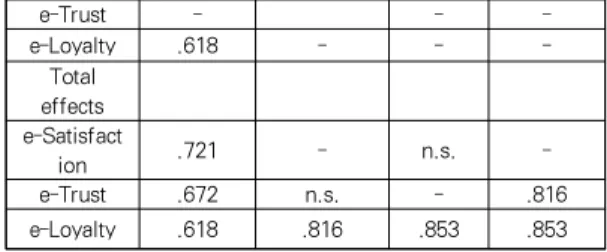
Table 3. Direct, Indirect and Total Effects
e-Trust - - -
e-Loyalty .618 - - -
Total effects e-Satisfact
ion .721 - n.s. -
e-Trust .672 n.s. - .816
e-Loyalty .618 .816 .853 .853
Note: a. All nonzero effects are significant atp<.05. b.
n.s. means a non-significant effect.
The results of the measurement of website quality, e-satisfaction, e-trust, and e-loyalty were acceptable (
=258.61, df=164 (p-value=0.00), GFI=.941, AGFI=.913, CFI=..932, NFI=.943, RMSEA= .042, RMR=.025) for the testing the model. After purifying the measurement model, each construct was evaluated separately by examining the indicator loading, construct reliability, convergent validity, and discriminant validity. All of the loadings of the items on their latent constructs were statistically significant (t-value>2). The reliability assessment was based on the composite reliability(CR) and average variance extracted(AVE). As shown in Table 2, the CRs ranged from 0.79 to 0.91 and the AVEs ranged from 0.52 to 0.66, both above their respective recommended cut-off levels of 0.70 and 0.50.
Furthermore, the item loading ranged from 0.75 to 0.93, which was above the recommended cut-off level of 0.60, demonstrating adequate convergent validity.
Lastly, discriminant validity was tested. we performed the chi-square difference test for all the constructs in pairs to examine whether the restricted model was significantly different from the freely estimated model. In the restricted model, the correlation was fixed at 1 for the pair of constructs under examination. A significant chi-square different indicated discriminant validity between the pair of constructs. The results of the chi-square differences ranged from 12.6 to 505(p<0.01), suggesting that the constructs under analysis were distinct and discriminately valid.
3. Analysis of the SEM
Table 3 shows the various fit indices calculated
for the model. A comparison of all fit indices with
their corresponding recommended values indicated a
good fit (
=247.69, df=159 (p-value=0.00),
GFI=.937, AGFI=.922, CFI=.948, NFI=.936,
RMSEA=.046, RMR=.021). Table 3 shows the
structural model estimates, where the estimate
parameters were standardized path coefficients, and
all path coefficients, except for the path of
e-satisfaction to e-loyalty, were significant at the
95% level.
Casual path Estimat
es t-value Results
H1 Website
quality→e-Satisfaction .282 2.314 Accept H2 Website quality→e-Trust .474 5.357 Accept
**
H3 Website
quality→e-loyalty .269 3.514 Accept H4 e-Satisfaction→e-Trust .531 0.134 Reject H5 e-Satisfaction→e-Loyalty .522 7.522 Accept
**
H6 e-Trust→e-Loyalty .412 2.332 Accept Note:** denotedp<.01.
Table 4. Test Results of Hypothesis
H1 posited that website quality would positively affect e-satisfaction, and the results in Table 3 provided support for this hypothesis ( =.28, p <.01).
The results also showed that website quality positively influenced e-trust ( =.47, p <.001), providing strong support for H2 . H3 proposed that website quality would positively affect e-loyalty, and the result strongly supported this( =.26, p <.001).
Unexpectedly, e-satisfaction did not influence e-trust ( =.53, p >.5); thus, H4 was not supported.
As respected in H5 and H6 , e-satisfaction was related positively related to e-loyalty( =.52, p <.001) and e-trust influenced e-loyalty ( =.41, p <.001), and both hypotheses were thus supported.
Table 3 also shows the R
2values, which indicated how well the antecedents explained an endogenous variables. Altogether, the predictors accounted for 82.4% of the variation in e-satisfaction, 65.1% of the variation in e-trust, and 61.9% of the variation in e-loyalty. Finally, Table 4 summarizes the decomposition of the effects of the constructs in the model on website quality, e-satisfaction, e-trust, and e-loyalty.
V. Conclusions
The examination of online customers behavior deserves continuous endeavor from both academic scholars and industry practitioners. Website quality is clearly critical in driving traffic, making people
stay, and eventually attracting people to purchase online products. In an online purchase context, e-loyalty is a difficult challenge that may require consideration by LCC wishing to differentiate themselves from competitors. E-loyalty brings high rate of customer retention and reduced cost for recruiting new customers. The purpose of this study is to propose a comprehensive model of the e-loyalty development process by conceptualizing that e-loyalty is influenced by website quality, e-satisfaction, and e-trust. This study tests all of the impacts that these factors can have on each other and in turn on customer e-loyalty, and presents a comprehensive model on their relationship which goes beyond what previous researches have studied.
The results of the SEM provided support for a
proposed structural model to examine the
hypotheses. The model was tested to verify the
hypotheses relating to purchase with experience
customers, and the results(see. Table 4). Our
results confirm that the e-loyalty of LCC website
customer is affected by satisfaction and trust in a
website, which in turn are determined by website
quality. The website quality has an impact on both
e-satisfaction and e-trust. It means that the high
quality of website, the more customer e-satisfaction
and e-trust because of high website quality suited to
the customer's need enables customers to reduce the
costs of serching and processing.. Further,
e-satisfaction has an impact on e-loyalty but has not
an influence through e-trust. When comparable to
the physical environment in the real world,
researchers indicate that website interface features
provide cues in virtual service encounters which
trigger customers' emotional responses. Affective
reactions are of crucial important for the customers'
evaluation of website quality[37, 38]. However,
trust beliefs is long term relationships, thus the
weaker relationship between e-satisfaction and
e-trust. When passengers evaluate LCC's website
quality through accumulated interactions in long
term relationships.
The present study contributes to the existing literature by providing empirical support for the research into e-loyalty to an LCC website. Results from this study suggest that website quality, e-satisfaction, and e-trust are a strong determinant of e-loyalty to the LCC website. Furthermore, the same causal relationship occurs in the off-line model, developed by Forgas et al. (2010)[38] who deal with perception of the service, satisfaction, trust and loyalty of the passenger towards the airline companies. This means that for the intention to revisit, purchase, and recommend, the website to exist, affect towards it has to be produced, in the same way as in order to fly again with the same airline company, affect towards it has first to be produced. The results show that the process leading to e-loyalty in the context of experienced purchasers of e-tickets passes through website quality, e-satisfaction, and e-loyalty. To improve e-satisfaction, airline management needs to improve the passengers’ expectations of the website, on the basis of improving the quality dimensions of the website.
Any study has limitations, and the main one here is that the sample does not consider the passengers of foreign LCC operating the same route in South Korea. It would be fruitful, for future studies, to expand the sample in this direction. Also, the results were obtained in a specific industry, that of LCC, and one must be cautious in generalizing them to other sectors. Future study could examine the improvements made over time. Also, LCC website would be evaluated by many users of various ages, gender, educational and social levels in order to discover any differences in their preferences.
Finally, the concepts presented in this framework could be extended to other market domains.
Acknowledgements
The authors would like to thank the constructive
comments offered by three anonymous reviewers.
참고문헌
[1] Downes, P. K., "Creating a Practice Website,”
British Dental Journal, Vol. 202, pp. 597-604.
2007.
[2] Lubbe, B., “The Effect of Internet Apprehension and Website Satisfaction on Air Travelers’
Adoption of An Airline’s Website,” Journal of Air Transport Management, Vol. 13, No. 2, pp.
75-80, 2007.
[3] Parasuramna, A., Zeithaml, V. A. and A.
Malhotra., “E-S-QUAL: A Multiple-item Scale for Assessing Electronic Service Quality,”
Journal of Service Research, Vol. 7, No. 3, pp.
213-233, 2005.
[4] Wang, Y. D. and H. H. Emurian., “An Overview of Online Trust: Concepts, Elements, and Implications,” Computers in Human Behavior, Vol. 21, No. 1, pp. 105-125, 2005.
[5] Yoo, B., and Donthu, N., "Developing a Scale to Measure Perceived Quality of an Internet Shopping Site(SITEQUAL)," Quarterly Journal of Electronic Commerce, Vol. 2, No. 1, pp.
31-46, 2001.
[6] Wolfinbarger, M. F., and Gilly, M. C., "ETAILQ:
Dimensionalizing, Measuring and Predicting e-Tailing Quality," Journal of Retailing, Vol. 79, No. 3, pp. 183-198, 2003.
[7] Harison, E. and A. Boonstra., “Reaching New Altitudes in E-commerce: Assessing The Performance of Airline Websites,” Journal of Air Transport Management, Vol. 14, No. 2, pp.
92-98, 2008.
[8] Barnes, S. J. and R. T. Vidgen., “An Evaluation of Cyber-bookshops: The WebQual Method,”
International Journal of Electronic Commerce, Vol. 6, No. 1, pp. 11-30, 2001.
[9] Barnes, S. J. and R. T. Vidgen., “An Integrative
Approach to the Assessment of E-commerce
Quality,” Journal of Electronic Commerce
Research, Vol. 3, No. 3, pp. 114-127, 2002.
[10] Stole, L. andK. H. Lee., “Modeling the Effect of Experience on Student Acceptance of Web-based Courseware,” Internet Research, Vol. 13, No. 5, pp. 364-373, 2003.
[11] Aladwani, A. M. and P. C. Palvia., “Developing and Validating an Instrument for Measuing User-perceived Web Quality,” Information &
Management, Vol. 39. No. 6, pp. 467-476, 2002.
[12] Vishwanath, A. and G. A. Barnett., “An Empirical Investigation into the structure of Bidding in Online Auctions,” Electronic Markets, Vol. 15, No. 3, pp. 261-268, 2005.
[13] Chang, H. H. and S. W. Chen., “The Impact of Online Store Environment Cues on Purchase Intention: Trust and Perceived Risk as a Mediator,” Online Information Review, Vol. 32, No. 6, pp .818-841, 2008.
[14] Ho, C. I. and Y. L. Lee., “The development of an E-travel Service Quality Scale,” Tourism Management, Vol. 28, No. 6, pp. 1343-1449, 2007.
[15] Park, Y. A. and U. Gretze., “Success Factors for Destination Marketing Web Sites: A Qualitative Meta-Analysis," Journal of Travel Research, Vol.
46, No. 1, pp. 46-63, 2007.
[16] Sahadev. S., and Purani, K., "Modelling the Consequences of e-Service Quality," Marketing Intelligence & Planning, Vol. 26, No. 6, pp.
605-620, 2008.
[17] Flavián, C., Guinalíu, M. and R. Gurrea., “The role Playerd by Perceived Usability, Satisfaction and Consumer Trust on Website Loyalty,”
Information & Management, Vol. 43, No. 1, pp.
1-14, 2006.
[18] Oliver, R. L., “Measurement and Evaluation of Satisfaction Processes in Retail Settings,”
Journal of Retailing, Vol. 57, No. 3, pp. 25-48, 1981.
[19] Bhattacherjee, A., “An Empirical Analysis of the Antecedents of Electronic Commerce Service Continuance,” Decision Support Systems, Vol.
32, No. 2, pp. 201-214, 2001.
[20] Anderson, R. E. and S. S. Srinivasan.,
“E-satisfaction and E-loyalty: A Contingency Framework,” Psychology and Marketing, Vol. 20, No. 2, pp .123-138, 2003.
[21] Sahadev, S. and K. Purani., “Modelling the Consequences of E-service Quality,” Marketing Intelligence & Planning, Vol. 26, No. 6, pp.
605-620, 2008.
[22] Oliver, R. L., “Whence Customer Loyalty?,”
Journal of Marketing, Vol. 63, No. 4, pp. 33-44, 1999.
[23] Shankar, V., Smith, A. K. and A.
Rangaswamy., “Customer Satisfaction and Loyalty in Online and Offline Environments,”
International Journal of Research Marketing, Vol. 20, No .2, pp. 153-175, 2003.
[24] Bart, Y., Shankar, V., Sultan, F. and G. L.
Urban., “Are the Drivers and Role of Online Trust the Same For All Web Sites and Consumers? A Large-Scale Exploratory Empirical Study,” Journal of Marketing, Vol.
69(October), pp. 133-152, 2005.
[25] Casaló, L. V., Flavián, C., and M. Guinalíu.,
“The Role of Security, Privacy, Usability and Reputation in the Development of Online Banking,” Online Information Review, Vol. 31, No. 5, pp. 583-603, 2007.
[26] Torres, A. M., Barry, C. and M. Hogan.,
“Opaque Web Practices among Low-cost Carriers,” Journal of Air Transport Management, Vol. 15, No. 6, pp. 299-307, 2009.
[27] Gefen, D., Karahanna, E. and D. W. Straub.,
“Trust and TAM in Online Shopping: An Integrated Model,” MIS Quarterly, Vol .27, No.
1, pp. 51-90, 2003.
[28] Perea, T., Dellaert, B. G. C. and K. De Ruyter.,
“What Drives Consumers to Shop Online? A
Literature Review,” International Journal of
Service Industry Management, Vol. 15, No. 1,
pp. 102-121, 2004.
[29] Polites, G. L., Williams, C. K., Karahanna, E.
and L. Seligman., “A Theoretical Framework for Consumer E-satisfaction and Site Stickiness:
An Evaluation in the Context of Online Hotel Reservations,” Journal of Organizational Computing and Electronic Commerce, Vol. 22, No. 1, pp. 1-37, 2012.
[30] Yavas, U., Karatepe, O. M., Avici, T., and Tekinkus, M., "Antecedents and Outcomes of Service Recovery Performance: An Empirical Study of Frontline Employee in Turkish Banks,"
International Journal of Bank Marketing, Vol.
21, No. 5, pp. 255-265, 2003.
[31] Cry, D., “Modeling Web Site Design across Cultures: Relationships to Trust, Satisfaction and E-loyalty,” Journal of Management Information Systems, Vol. 24, No. 4, pp. 47-72, 2008.
[32] Cyr, D., Hassanein, K., Head, M., and A.
Ivanov., “The Role of social Presence in Establishing Loyalty in E-service Environments,” Interacting with Computers, Vol. 19, No. 1, pp. 43-56, 2007.
[33] Reichheld, F. and P. Schefter., “E-loyalty: Your Secret Weapon on The Web”, Harvard Business Review, Vol. 78, No. 4, pp. 105-113, 2000.
[34] Chiou, J., “The Antecedents of Consumers’
Loyalty toward Internet Service Providers,"
Information & Management, Vol. 41, No. 6, pp.
685-695, 2004.
[35] Li, Y. N., Tan, K. C. and M. Xie., “Measuring Web-based Service Quality,” Total Quality Management, Vol. 13, No. 5, pp. 685-700, 2002.
[36] Yoon, C. and S. Kim., “Developing the Causal Model of Online Store Success,” Journal of Organizational Computing & Electronic Commerce, Vol. 19, No. 4, pp. 265-284, 2009.
[37] Bauer, H. H. Falk, T. and Hammerschmidt, M.,
"eTransQual: A Transaction Process-based approach for Capturing Service Quality in Online Shopping," Journal of Business Research, Vol.59,
No. 6, pp. 866-875, 2006.
[38]Kim, S. L., and In, O. N., “The Impact of Travel Agency’s Website Quality on Customer Satisfaction and Repurchase Intention,” Journal of the Korea Society of Computer and Information, Vol. 18, No. 5, pp.121-131, 2013.
[39] Forgas, S., Moliner, M. A., Sáanchez, J. and R.
Palau., “Antecedents of Airline Passenger Loyalty: Low-cost versus Traditional Airlines,”
Journal of Air Transport Management, Vol. 16, No. 4, pp. 229-233, 2010.
저 자 소 개