유해화학물질 배출량 변화에 관한 연구:
배출저감계획서 작성 대상물질 중심으로
임지영*
,** · 이명지**
,*** · 김현지*** · 류지성* · 윤대식* · 장용철** · 이청수***
†*화학물질안전원 사고예방심사1과, **충남대학교 환경공학과, ***화학물질안전원 사고총괄훈련과
A Study on the Emission Changes in Reduction Chemical Substances in Korea
JiYoung Im*
,**, MyeongJi Lee**
,***, HyunJi Kim***, JiSung Ryu*, DaeSik Yun*, YongChul Jang**, and ChungSoo Lee***
†*Accident Prevention and Assessment Division 1, National Institute of Chemical Safety
**Department of Environmental Engineering, Chungnam National University
***Accident Coordination and Training Division, National Institute of Chemical Safety
ABSTRACT
Objectives: The purpose of this study was to investigate changes among the nine kinds of reduction chemical substances in Korea over the period of 2008-2017. We will define basic data for improving the management methods for reducing chemical substances.
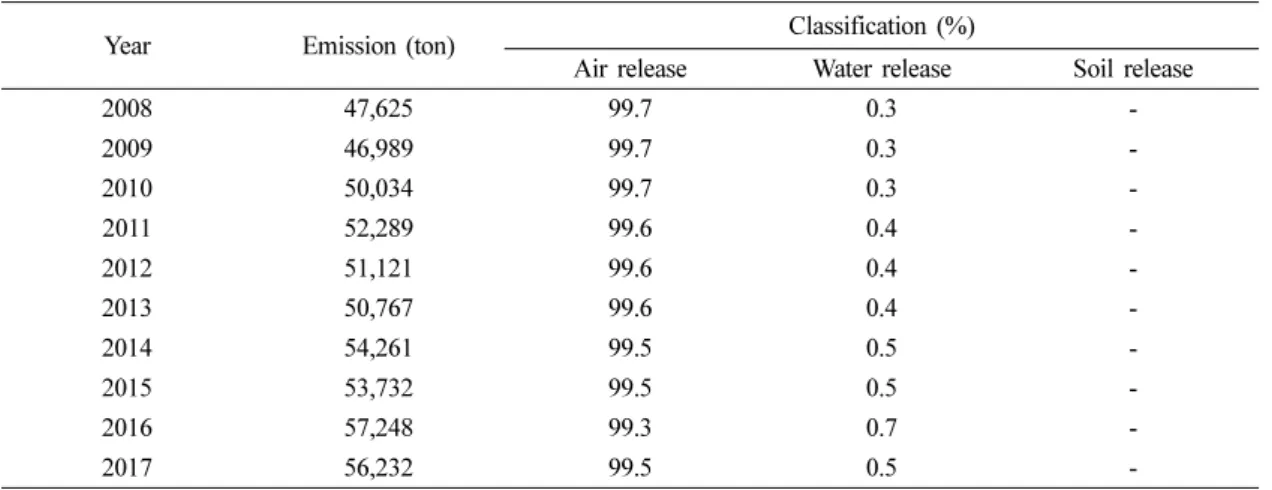
Methods: A survey of hazardous pollutant emissions for 2008-2017 was conducted through the pollutant Release and Transfer Register homepage. Nine kinds of designated reduction chemical substances (Benzene, Vinyl chloride, Trichloro ethylene, 1,3-butadiene, Dichloro methane, Tetrachloro ethylene, N,N-dimethylformamide, Acrylo nitrile, and Chloroform) provided the study subjects. The emission of hazardous chemicals and health effects used the National Health Statistics and Integrated Chemicals Information System (ICIS) as a reference.
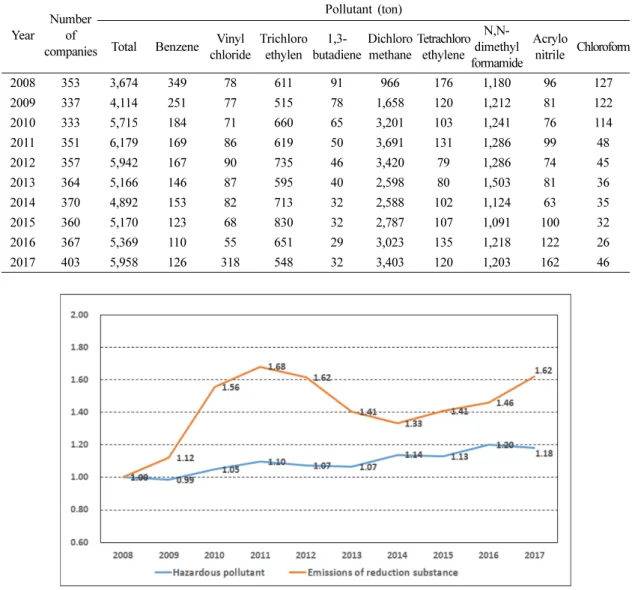
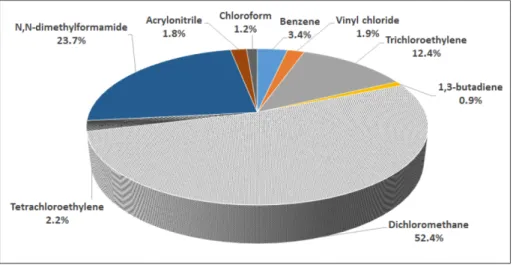
Results: Hazardous pollutant emissions increased by 1.2 times over the past decade, and nine types of reduction chemical substances increased by 1.6 times. By region, the emissions of reduction chemical substances over the last 10 years were in the order of Chungbuk, Gyeonggi, and Gyeongbuk. Emissions of Dichloro methane was the highest in Chungbuk and Gyeongbuk. N,N-dimethylformamide was the highest in Gyeonggi. Carcinogen pollutant emissions showed a tendency to increase continuously. In addition, group 1 carcinogen emissions showed a tendency to decrease.
Conclusion: In the last decade, the amount of hazardous chemical emissions has been continuously increasing.
Hazardous chemical emissions require facility improvement for continuous emissions reduction. More research on reduction of emissions is needed.
Key words: Chemical substance emissions, reduction chemical substances, carcinogen emissions, chemical management
†