KISEP Original Article 생생 물물물물 정신의 학생생 정신의 학정신의 학정신의 학 Vol. 12, No. 1, May 2005
정신분열병 환자의 작동기억 이상에 대한 기능적 자기공명영상 연구
박여진*·김태석*·노사봉*·배치운*·김정진* 이수정*·이 철*·백인호*·이창욱*†
Working Memory Deficits in Patients with Schizophrenia:fMRI Investigation
Yuh-Jin Park, M.D.,* Tae-Suk Kim, M.D.,* Sa-Bong Roh, M.D.,* Chi-Un Pae, M.D.,* Jung-Jin Kim, M.D.,* Soo-Jung Lee, M.D.,* Chul-Lee, M.D.,* In-Ho Paik, M.D.,* Chang-Uk Lee, M.D.*†
bjective:Impaired processing of working memory is one of the cognitive deficits seen in patients with schizophrenia. This aimed at corroborating the differences in the brain activities involved in the process of working memory between patients with schizophrenia and the control subjects.
Method:Fourteen patients with schizophrenia and 12 healthy volunteers were recruited in this study. Fun- ctional magnetic resonance imaging(fMRI) was used to assess cortical activities during the performance of a 2-back visual working memory paradigm using the Korean alphabet as mnemonic content.
Results:Group analysis revealed that left lateral prefrontal cortex and right parietal lobule showed decreased cortical activities in the patient group. On the other hand, an increased activation in left superior and middle frontal gyrus, left middle temporal gyrus, right cuneus, both occipital lobes, right fusiform gyrus and right cingulate gyrus. The activation in left anterior lobe and both declive of cerebellum was also increased.
Conclusions:This study showed a decreased activation in left lateral prefrontal and right parietal neural networks from the patient group and confirmed the earlier findings on the impaired working memory of patients with schizophrenia using fMRI investigation. The regions implicated in our study suggest an abnormal fun- ctioning of the fronto-parietal cortical areas that are critical to the information processing stream, which might be correspondent to common pathophysiology rather than a common etiology in schizophrenia.
KEY WORDS:Schizophrenia・Working memory・fMRI.
O
ABSTRACT
*가톨릭대학교 의과대학 정신과학교실
Department of Psychiatry, Kangnam St. Mary’s Hospital, The Catholic University of Korea College of Medicine, Seoul, Korea
†교신저자:이창욱, 137-701 서울 서초구 반포동 505
전화) (02) 590-1532, 전송) (02) 536-8744 E-mail) [email protected]
서 론
작동기억이란 단기기억의 일종으로 정보를 능동적으 로 유지하고 있다가 이를 행동의 목적에 적절하도록 조 작하는 과정이다. 작동기억은 계획하기, 결정하기, 문제 해 결과 같은 고도의 인지 기능에 필수적인 것으로 이에 필 요한 선택적인 정보를 일시적으로 저장하고 처리하는 기 능이며, 개념적으로는 음운고리(phonological loop)와 시 공간적 그림판(visuospatial sketchpad)이라는 하위체 계에 일시적으로 저장된 정보가 중앙 집행 장치를 통해 처리되는 과정을 일컫는 용어이다.1) 이 기능은 뇌에 분포 하는 신경망에 의해 이루어지며 여기에는 외측 전전두엽 (lateral prefrontal cortex)과 두정엽(parietal cortex) 의 회로가 중요한 역할을 한다고 알려져 있다.2)
많은 임상적, 신경심리학적 연구들의 결과들은 정신분 열병 환자에서의 전전두엽의 기능장애를 간접적으로 암 시하고 있으며, 배외측 전전두엽(DLPFC;dorsolateral prefrontal cortex)은 작동기억에 중요한 부위3)4)라고 알려져 있으므로 정신분열병 환자에서 작동기억의 장애 가 있으리라는 추측을 가능하게 한다.
지금까지 많은 연구들이 정신분열병 환자의 작동기억 장애를 보고해 왔다.5-7) 이는 정신분열병의 경과 동안 일정하게 유지되는 핵심적인 증상8)으로 약물치료에 잘 반응하지 않고 지속된다고 알려져 있으며,9) 정신분열병 환자의 건강한 친척에서도 관찰되므로 정신분열병의 유 전적 취약성에 대한 행동상의 표지로서의 가능성도 제 시되고 있다.10)
그동안 양전자 방출 단층촬영술(PET)이나 단일양자 방출전산화 단층촬영술(SPECT)을 이용하여 정신분열 병 환자의 작동기억을 처리한 연구들이 많이 행해졌으나, 기능적 자기공명영상(fMRI)을 사용하게 됨으로서 신호 대비용 약품을 사용하지 않고도 기존의 영상기법보다 공 간 및 시간적 해상도가 탁월한 영상을 얻게 되어 뇌기능 연구에 새로운 장이 마련되었다.
최근까지의 fMRI를 이용한 정신분열병 환자에서의 작 동기억에 대한 연구결과들은 일관되지 않으며 연구 디자 인에 따라 서로 배치되는 소견이 보고 되고 있다. 대부분 의 연구들은 작동기억 과제를 수행하는 동안 정상 대조 군과 비교하여 정신분열병 환자에서 전전두엽의 활성의 저하를 보고하고 있다.11-22) 그러나 일부 연구에서는 정
상 대조군과 환자군에서 배외측 전전두피질의 활성이 비 슷하거나,23) 오히려 환자군에서 증가되는 결과를 보여 주었다.17)24-26)
그동안 국내에서도 PET나 SPECT을 이용한 연구27) 가 있었으나 fMRI를 이용하여 정신분열병 환자에서 작 동기억을 연구한 시도는 드물다. 이에 본 연구는 작동기 억 과제로서 문자를 보여주고 이를 수행하는 동안 fMRI 를 이용하여 건강한 대조군과 정신분열병 환자의 작동기 억 수행 정확도의 차이, 그리고 두뇌 활성화의 차이를 비 교하고자 시도되었다.
이에 우리는 두 가지 가설을 설정하였다. 정신분열병 환자의 작동기억 수행은 정상인과는 차이가 있을 것이며, 작동기억 과제를 수행하는 동안 전전두 부위, 그리고 연 합 두정엽 부위에서 비정상적 활성화 패턴이 관찰될 것 이라고 가정하였다.
방 법
1. 연구대상
가톨릭대학교 강남성모병원에 입원하여 정신장애 진단 및 통계 편람 4판의 진단기준(DSM-Ⅳ)28)에 의해 정신 분열병으로 진단된 14명의 환자(남자 8명, 여자 6명)와 12명의 정상대조군이 본 연구에 참여하였다. 환자군과 대조군은 18세에서 45세 사이의 연령, 지능지수 75 이 상, 오른손잡이였으며, 경련성 장애나 의식소실이 있는 두부 외상 및 신경학적 질환의 병력이 없었고 알코올과 약물 의존의 과거력도 없었다. 정상 대조군은 주요 정신 질환이나 신경계 질환의 과거력이 없거나 정신질환의 가 족력이 없는 사람을 대상으로 하였다. 모든 피검자들은 본 연구에 대한 목적 및 방법 등에 대하여 전반적인 설 명을 들은 후 서면 동의를 하였으며 본 연구는 강남성모 병원 임상시험윤리위원회에서 승인하였다.
정신분열병 환자의 증상 정도는 Brief Psychiatric Ra- ting Scale(BPRS)29)로 평가하였으며 치매와 섬망을 배제하기 위해 Mini-Mental State Examination(MM- SE)30)를 사용하였다. 또한 피검자와 피검자의 부모의 사회경제적 수준을 평가하기 위해 Hollingshead 척도31) 를 이용하였고 피검자의 전반적인 지능수준은 Raven’s Standard Progressive Matrices(SPM)32)로 평가하였 다. 이 모든 평가 도구들은 정신과 전문의에 의해 시행되 었다.
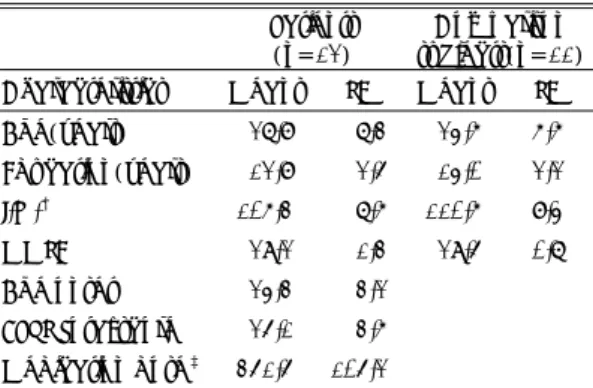
정신분열병 환자들은 fMRI 촬영을 하기 전에 최종 결 과에 혼란을 야기할 수 있는 과제 수행 중 정서적 스트 레스 정도를 평가하기 위해서 2-back 작동기억 검사를 예비적으로 시행하였다. 예비 검사에서 과제 수행의 어 려움으로 정서적 좌절을 느껴 최저한계 이하의 수행 정 확도(80% 미만의 정답 반응률)를 나타낸 환자는 fMRI 검사에서 제외되었다. 2명의 정신분열병 환자와 1명의 정상대조군이 이러한 선별과정을 통하여 제외되었다. 따 라서 12명의 환자군과 11명의 대조군이 최종적으로 검 사를 완료하였으며 사회인구학적 변수에 대한 환자군과 정상 대조군 간의 유의한 차이는 보이지 않았다(표 1).
모든 환자들은 chlorpromazine 등가용량(125~500 mg/day)의 비정형 항정신병 약물(olanzapine 8명, ris- peridone 4명)로 치료받았다.
2. MRI Parameters
자기공명영상은 1.5T MR scanner(Magnetom Vision
Plus, Siemens, Erlangan, Germany)로 EPI(echo pla- nar imaging) 기법(반복시간(TR)/에코시간(TE)=3000/
60msec, 숙임각(flip angle)=90, field-of-view 240
×240mm, matrix 크기 64×64)을 이용한 BOLD (blood oxygenation level dependent) 기법으로 신경 활성과 연관된 영상 차를 측정하였다. 전체 뇌를 포함하 는 영역에 대해 6mm 두께의 22~24개 축상면 영상을 얻었으며 총 95개의 영상 중에 첫 5개의 영상은 T1 시 그널 균형화(equilibration)를 위한 처리 과정 동안에 제 외되었다. T1 영상(spin Echo sequence, TR/TE=100 msec/minimum, 256×128 in plane matrix, 6mm slice thickness)이 기능 영상의 영상융합(co-registration) 과 정교화(normalization)를 위해 사용하였다. 뇌 기능 촬영 이 후 피험자들의 고 해상도 해부학적 구조에 대한 정보는 3D-FLASH(fast low-angle shot) sequence (sagittal orientation, TE/TR=4/9.7msec, FA=12, slice thickness=1.25mm, 256×192 in-plane ma- trix)를 이용하여 얻었다.
3. 기능적 자기공명영상을 위한 과제 패러다임 fMRI의 과제 패러다임으로 한글 문자(가, 나, 다, …) 를 이용한 2-back 작동기억 검사를 시행하였다. 대상자 들은 연쇄적 시각 작동기억 검사를 시행 받았고 전전 화 면에 제시된 문자가 다시 제시되었을 때 반응하도록 하 였다(그림 1). 수행 과제는 Pressentation software (Version 4.06, Neurobehavioral Systems, CA)를 사 용하여 프로그램화 되었으며, 시각 자극은 MRI실 밖에 위치한 스크린에 제시되었다. 피험자는 두부코일에 부착 된 거울을 통해 이를 볼 수 있었고 문자가 보이는 시각 (viewing angle)은 약 5도였으며 주변의 시야는 봉쇄되 었다. 피검자는 목표 자극을 인지했을 경우 오른쪽 엄지 손가락을 들도록 교육받았다. 또한 운동 과제 효과의 균 형을 맞추기 위해 피검자는 휴식기 동안 무작위로 배열 된 시각 자극에 대하여 엄지손가락을 들도록 교육받았 Table 1. Demographic and clinical characteristics of
patients with schizophrenia and healthy comparison subjects
Patients
(n=12)
Comparison subjects(n=11) Characteristics* Means SD Means SD Age(years) 027.8 007.3 024.6 6.6 Education(years) 012.8 002.5 014.0 2.2
I.Q.† 106.3 007.6 110.6 8.4
MMSE 029.2 001.3 029.5 0.7
Age onset 024.3 003.2
BPRS Total score 025.1 003.6 Medication dose‡ 351.5 105.2
*:Patients and healthy comparison subjects were matched throughout all the demographic variables (Mann Whitney U test, p>0.1)
†:Measured by Raven’s Standard Progressive Mat- rices(SPM)
‡:Chloropromazine equivalent, mg/day
IQ:Intelligent Quotient, MMSE:mini-mental state examination, BPRS:Brief Psychiatric Rating Scale
Fig. 1. Illustration of the 2-back working memory paradigm:The visual cue, 1 second in duration, was presented every 2.5 seconds. An example illustrates that the target letter(marked with an asterisk) is the one which coinsides with the letter that is presented two letters back in the time sequence.
* *
1sec 2.5sec
가 다 마 라 마 라 바
Time
다. 각 자극의 지속시간은 1초로 매 2.5초마다 제시되었 다. 12개의 자극이 30초의 한 단위로 4번 주어졌으며 그 사이에 5번의 30초간 휴식기가 있어 그 동안 피검자 들은 거울의 한 가운데 위치한 작은 십자가 모양을 응시 하도록 하였다. 목표 자극은 총 48개였으며 전체 자극의
30%를 차지하였다. 목표 자극의 순서는 무작위로 할당 되었다.
4. 영상 데이터의 분석
대상자의 fMRI 자료는 Random Field Theory33)를 기
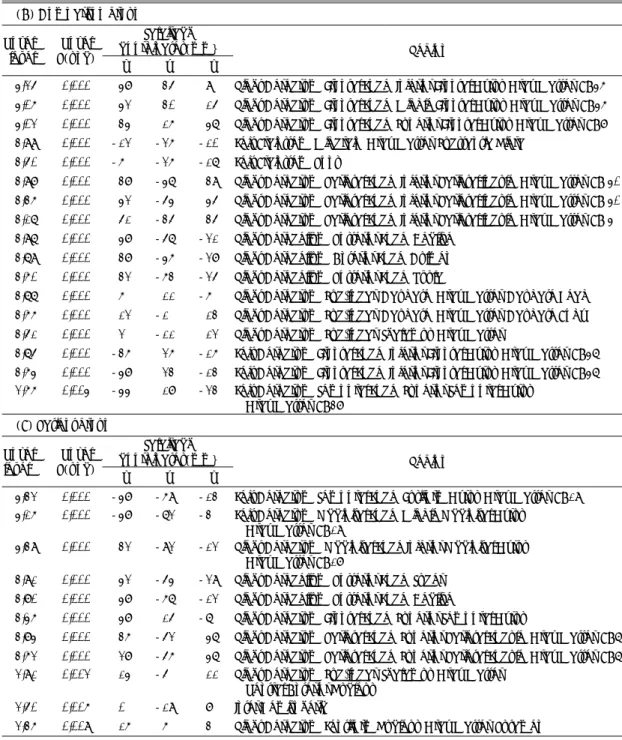
Table 2. Group activation at uncorrected p<0.01. Anatomical location of the maximum activation is given along with ts Broadmann’s area nomanclature(BA)
(A) Comparison group
Talairach coordinates{mm}
Voxel level Z
Voxel
P(unc) x y z
Region
4.25 0.000 -48 -35 -9 Right Cerebrum, Frontal Lobe, Inferior Frontal Gyrus, Gray Matter, BA46 4.06 0.000 -42 -30 -15 Right Cerebrum, Frontal Lobe, Middle Frontal Gyrus, Gray Matter, BA46 4.02 0.000 -34 -16 -47 Right Cerebrum, Frontal Lobe, Superior Frontal Gyrus, Gray Matter, BA8 3.99 0.000 -12 -26 -10 Left Brainstem, Midbrain, Gray Matter, Substantia Nigra
3.50 0.000 -6 -26 -17 Left Brainstem, Pons
3.98 0.000 -38 -47 -39 Right Cerebrum, Parietal Lobe, Inferior Parietal lobule, Gray Matter, BA 40 3.36 0.000 -42 -54 -45 Right Cerebrum, Parietal Lobe, Inferior Parietal lobule, Gray Matter, BA 40 3.17 0.000 -51 -35 -35 Right Cerebrum, Parietal Lobe, Inferior Parietal lobule, Gray Matter, BA 4 3.97 0.000 -48 -57 -21 Right Cerebellum, Posterior Lobe, Declive
3.79 0.000 -38 -46 -28 Right Cerebellum, Anterior Lobe, Culmen 3.60 0.000 -32 -63 -25 Right Cerebellum, Posterior Lobe, Uvula
3.77 0.000 -6 -11 -6 Right Cerebrum, Sub-lobar, Caudate, Gray Matter, Caudate Head 3.66 0.000 -12 -1 -13 Right Cerebrum, Sub-lobar, Caudate, Gray Matter, Caudate Body 3.51 0.000 -2 -11 -12 Right Cerebrum, Sub-lobar, Thalamus, Gray Matter
3.75 0.000 -36 -26 -16 Left Cerebrum, Frontal Lobe, Inferior Frontal Gyrus, Gray Matter, BA47 3.64 0.000 -48 -23 -13 Left Cerebrum, Frontal Lobe, Inferior Frontal Gyrus, Gray Matter, BA47 2.66 0.004 -44 -18 -23 Left Cerebrum, Temporal Lobe, Superior Temporal Gyrus,
Gray Matter, BA38 (B) Patient group
Talairach coordinates{mm}
Voxel level Z
Voxel P(unc)
x y z
Region
4.32 0.000 -48 -69 -13 Left Cerebrum, Temporal Lobe, Fusiform Gyrus, Gray Matter, BA19 4.16 0.000 -48 -72 -3 Left Cerebrum, Occipital Lobe, Middle Occipital Gyrus,
Gray Matter, BA19
4.39 0.000 -32 -92 -12 Right Cerebrum, Occipital Lobe,Inferior Occipital Gyrus, Gray Matter, BA18
3.91 0.000 -42 -54 -29 Right Cerebellum, Posterior Lobe, Tuber 3.80 0.000 -48 -67 -12 Right Cerebellum, Posterior Lobe, Declive
3.46 0.000 -48 -15 -7 Right Cerebrum, Frontal Lobe, Superior Temporal Gyrus
3.84 0.000 -36 -52 -47 Right Cerebrum, Parietal Lobe, Superior Parietal Lobule, Gray Matter, BA7 3.62 0.000 -28 -56 -47 Right Cerebrum, Parietal Lobe, Superior Parietal Lobule, Gray Matter, BA7 2.91 0.002 -14 -5 -11 Right Cerebrum, Sub-lobar, Thalamus, Gray Matter,
Ventral Anterior Nucleus 2.50 0.006 -0 -19 -8 Inter-Hemispheric
2.36 0.009 -16 -6 -3 Right Cerebrum, Lentiform Nucleus, Gray Matter, Putamen
초로 한 SPM99 software(http://www.fil.ion.ucl.ac.uk) 로 옮겨져 분석하였다. 통계 처리를 하기 전에 최소 제곱 법(a least-square approach)34)를 이용하여 머리의 움 직임에 따른 신호 처리의 오차를 제거하였다. 이 후 피 험자의 자료는 Talairach 좌표35)로 전환되고, 6mm의 FWHM(full-width at half maximum)을 갖는 3차원 가우시안 커널(Gaussian kernel)을 이용하여 정교화 된 영상을 평면화(smoothing) 하였다.
피험자의 휴식기와 활성화기의 영상정보처리를 위해 SPM의 일반선형모델(general linear model)을 사용하 여 각 픽셀(pixel)의 통계학적 유의성을 측정하였다. 개 별-수준 분석(individual-level analysis)을 마친 후, SPM99의 2단계 계층 분석법(hierarchical two-stage
analysis method)을 이용하여 환자군과 대조군의 군 집-수준 활성을 검사하였다. 이 임의효과 분석법(random effect analysis method)은 스캔보다는 다상간의 오차 분산(error variance)을 측정하므로 대상 모집단의 더 강력한 일반화를 제공한다.36) 분석된 t 통계값은 Z 점수 로 정규화 되었고 의미 있는 활성군(clusters of signifi- cant activation)은 활성의 높이(height)와 공간적(spa- tial) 범위(p<0.05)의 결합 기대 확률분포(probability distribution;Z=2.58, p<0.005)를 이용하여 정의하였
다.37)38) Talairach 좌표 상의 활성의 위치는 각각에 해
당하는 해부학적 용어와 브로드만 영역(Broadmann area;이하 BA)의 숫자로 전환하였다.
Table 3. Group comparison results at uncorrected at p<0.01. Anatomical location of the maximum activation is given along with ts Broadmann’s area nomanclature(BA)
(A) Comparison > Patient Talairach coordinates{mm}
Voxel level Z
Voxel
P(unc) x y z
Region
3.73 0.000 -43 -16 -24 Left Cerebrum, Temporal Lobe, Superior Temporal Gyrus, Gray Matter, BA38 2.60 0.005 -26 -13 -20 Left Cerebrum, Frontal Lobe, Inferior Frontal Gyrus, Gray Matter, BA47 3.61 0.000 -21 -30 -16 Right Cerebrum, Sub-lobar, Caudate, Gray Matter, Caudate Tail 3.81 0.000 -51 -4 -40 Left Cerebrum, Frontal Lobe, Middle Frontal Gyrus, Gray Matter, BA6 3.54 0.000 -6 -10 -5 Right Cerebrum, Caudate, Gray Matter, Caudate Head
3.25 0.001 -8 -12 -5 Left Cerebrum, Caudate, Gray Matter, Caudate Head
3.53 0.000 -49 -13 -8 Left Cerebrum, Temporal Lobe, Superior Tempotal Gyrus, Gray Matter, BA22 3.24 0.001 -43 -16 -17 Left Cerebrum, Sub-lobar, Insula, Gray Matter, BA13
3.36 0.000 -29 -36 -1 Left Cerebrum, Temporal Lobe, Sub-Gyral, Gray Matter, Hippocampus 3.26 0.001 -8 -27 -7 Left Brainstem
(B) Comparison < Patient Talairach coordinates{mm}
Voxel level Z
Voxel
P(unc) x y z
Region
4.25 0.000 -8 -27 -42 Left Cerebrum, Limbic Lobe, Cingulate Gyrus, Gray Matter, BA31 3.60 0.000 -18 -72 -52 Right Cerebrum, Parietal Lobe, Precuneus, Gray Matter, BA7 3.47 0.000 -2 -10 -40 Right Cerebrum, Limbic Lobe, Caudate Gyrus
3.44 0.000 -32 -54 -18 Right Cerebrum, Posterior Lobe, Declive 2.56 0.005 -48 -66 -18 Right Cerebrum, Posterior Lobe, Declive 3.18 0.001 -18 -62 -24 Left Cerebrum, Anterior Lobe
2.17 0.015 -32 -62 -24 Left Cerebrum, Posterior Lobe, Declive
3.09 0.001 -42 -82 -6 Right Cerebrum, Occipital Lobe, Middle Occipital Gyrus, Gray Matter, BA19 2.97 0.001 -36 -80 -28 Left Cerebrum, Occipital Lobe, Superior Occipital Gyrus
2.53 0.006 -26 -60 -22 Left Cerebrum, Frontal Lobe, Middle Frontal Gyrus, Gray Matter, BA10 2.41 0.008 -34 -46 -26 Left Cerebrum, Frontal Lobe, Superior Frontal Gyrus, Gray Matter, BA9
결 과
1. 과제수행도
모든 환자군과 대조군은 주어진 fMRI 촬영 과정을 성
공적으로 수행하였다. 환자군과 대조군의 과제 정확도는 각각 85.8±9.6%, 93.6±5.5%로, 두 군 간의 의미 있는 차이를 나타내었다(Mann Whitney U test, Z=-2.108, p=0.035).
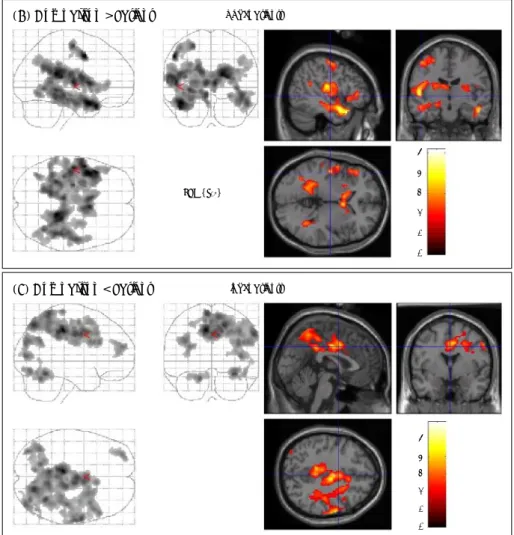
Fig. 2. The SPM results of the group comparison between schizophrenia group and matched healthy control group are shown on the glass window.
inc_patients
5 4 3 2 1 0 (B) Comparison < Patient
(A) Comparison > Patient
5 4 3 2 1 0 SPM{T16}
dec_patients
Fig. 3. Group activation results of patients and comparison subjects on a 3D rendered brain. Red areas indicate the regions in which patients had lesser activation than comparison subjects. Green areas indicate the regions in which patients had greater activation than comparison subjects(for all comparisons, p<0.05, cluster size>200, according to SPM99, uncorrected).
2. 기능적 자기공명영상 결과:개별적 효과(Individual effect)
우측 상전두이랑(superior frontal gyrus), 양측 하전 두이랑(inferior frontal gyrus), 우측 하두정엽(inferior parietal lobe)은 대조군에서만 선택적으로 활성화 되었다.
반면, 우측 상측두이랑, 우측 상두정엽(superior pa- rietal lobule, BA7), 좌측 중후두이랑(middle occi- pital gyrus, BA19), 우측 하후두이랑(inferior occi- pital gyrus, BA18), 좌측 대상이랑(cingulate gyrus), 좌측 방추이랑(fusiform gyrus)의 활성은 환자군에서 만 관찰되었다.
소뇌에서는 우측 편도(tonsil)가 두 군 모두에서 활성 화 되었으며 우측 융기(tuber)는 대조군에서만 활성화 되었고 양측 경사(declive)는 환자군에서만 활성화 되 었다(표 2).
3. 기능적 자기공명영상 결과:두군 간의 비교 과제를 수행하는 동안의 신경 활성의 차이를 알아보기 위해 두 군을 비교하였다(표 3, 그림 2, 3).
환자군에서 대조군에 비해 상대적인 신호(signal)의 감소를 나타낸 신경 기질을 살펴본 결과 대뇌와 소뇌에 서 광범위한 신경망이 관찰되었다. 여기에는 좌측 중심 앞이랑(precentral gyrus, BA6), 좌측 후전두이랑(in- ferior frontal gyrus, BA47)이 포함되었다.
반면 대조군과 비교하여 환자군에서 상대적인 증가를 보이는 부위는 좌측 상전두이랑(superior frontal gyrus, BA9), 좌측 중전두이랑(middle frontal gyrus, BA10), 좌측 중측두이랑(middle temporal gyrus), 우측 설전부 (precuneus, BA7), 우측 중후두이랑(middle occipital gyrus, BA19), 양측 상후두이랑(superior occipital gyrus), 우측 방추이랑, 우측 설상부(cuneus), 우측 대 상이랑(cingulate gyrus)이었다. 소뇌의 경우, 좌측 전엽 (anterior lobe), 양측 경사(declive)에서 증가된 활성을 보였다.
고 찰
본 연구는 작동기억 과제 수행의 정확성을 측정하여 정신분열병 환자의 작동기억에 장애가 있음을 보여주었 다. 이러한 장애는 대조군과 비교했을 때 구조적인 차이 를 시사하는 기능적 활성의 차이와 관련이 있었다. 이는
정신분열병 환자에서 언어적 혹은 공간적 작동기억을 검 사한 기존의 fMRI 소견과 일치하며,39) 이는 신경회로의 비정상적 활성을 시사한다.
정신분열병 환자는 건강한 대조군과 비교하였을 때 좌 측 배외측 전전두엽에서 상대적으로 감소된 활성을 보였 다. 이는 정신분열증 환자군에서 과제 수행의 정확도의 감소를 보이면서 좌측 배외측 전전두엽의 활성의 증
가17)24-26) 혹은 비슷한 활동23)이 관찰된다는 것을 보고
한 몇몇의 예를 제외하고는 기존의 대부분의 연구들11-22) 에서의 결과와 일치하는 것이라 하겠으며 이는 다른 작 동기억 패러다임을 이용한 연구들에서도 비슷하다.
외측 전전두영역(lateral prefrontal areas, BA10/46) 은 작동기억 처리의 조작, 통합, 실행기능의 조절에 관
여한다.40)41) 전전두피질 중에서도 이들 부위는 특히 이
중의 과제를 수행할 때, 두 번째 작업을 처리하는 동안 이전의 처리를 유지(holding)하고 있는 것과 연관이 있 다고 알려져 있다.42) 최근의 Bertolino등에 의한 proton magnetic resonance spectroscopic imaging(H1- MRSI) 연구43)에서 정신분열증 환자에서 배외측 전전두 피질에서 신경 통합성의 신경화학적 표지인 N-acety- lasparate의 수치가 감소된다고 보고하기도 하였다.
본 연구에서 정신분열병 환자군은 대조군과 비교하였 을 때 소뇌와 후두엽 활성의 상대적인 증가를 보여주었 다. 이러한 결과는 정신분열병 환자의 명확한 소뇌 신경 망의 활성의 상대적인 증가가 정신분열병 환자의 정보 처리과정에 있어 일차적인 회로의 장애를 보상하기 위 해 이들 부위를 과도하게 사용하는 것으로 예측할 수 있 다는 이전의 결과44)와 일치한다. 따라서 이러한 부위의 활성 증가도 정신분열병 환자의 비효율적인 작동기억 기능을 의미할 수 있다.
소뇌는 운동 조정(motor coordination)이나 계획하기 와 같은 역할 뿐만 아니라 집중과 고도의 인지 조절을 매개하는 중요한 부위로 인식되어 왔다.45)46) 소뇌 신경 망의 비정상적인 활성은 집중의 감소에 영향을 주고 나 아가 작동기억 처리에 영향을 준다는 것을 시사한다. 시 각적 형체를 이용한 Gold 등의 연구에서47) 정신분열증 환자의 작동기억의 장애는 작동기억 용량의 감소보다는 주의력의 결함에 따른 결과라는 것을 제시하였다. 이러 한 결과들은 소뇌가 정신분열병에서 일정한 영향을 받 는 중요한 신경기질(neural substrate)이라는 관점을 지 지한다.48)49)
결론적으로, 본 연구에서 정신분열병 환자는 작동기억 의 수행에 장애가 있으며 작동기억 처리 과정 동안 비정 상적 신경 활성이 있음을 증명하였다. 그동안 국내에서 fMRI를 이용하여 정신분열병 환자에서 작동기억을 연 구한 시도는 드물다. 또한 본 연구에서 사용된 2-back 작동 기억 검사법은 기존의 다른 검사법보다 비교할 때 훨씬 간단하고 문제해결(problem solving) 과정이 없어 좀 더 순수한 작동기억에 가까운 측정50)을 할 수 있었다 는 장점이 있었다.
그러나 본 연구는 비교적 적은 수의 대상자에게 시행 되어 결과를 일반화하기에는 한계가 있다. 그리고 참여 한 모든 정신분열병 환자들은 항정신병 약물을 복용하 고 있는 상태이므로 결과에 있어 약물에 의한 영향을 충 분히 배제하지 못하였다. 또한 배외측 전전두피질의 세 분화된 영역의 기능에 대한 지식의 부족으로, 그룹 간 활 성화의 차이를 보이는 많은 영역들의 고유한 의미와 중 요성을 충분히 설명할 수가 없었다.
또한 고려해야 할 점으로 본 연구 결과가 배외측 전 전두피질의 저활성(hypofrontality)을 보여주어 그동안 의 많은 연구들과 일치하는 결과를 보여주고 있지만 과 활성(hyperfrontality)을 보이는 다른 연구들과 결과가 상이한 이유를 살펴보아야 할 필요가 있다. 이에 대한 외적 요인들을 고려해보자면, 정신분열병 환자들에게서 나타나는 뇌실질의 변화, 나이에 따른 뇌혈류량의 변화, 성별에 의한 차이들이 결과 분석에 혼란변수로 작용할 수 있을 것이다.51) 그리고 정상인에 비해 정신분열병 환 자 개개인에서 과제의 수행과 뇌 활성화의 위치에 큰 차 이가 나타나는 변이성(variability)도 무시할 수 없는 변 수이다. 이전 연구에서 집단간 비교의 경우 이러한 변이 성으로 인해 활성화가 묻혀버릴 수 있다는 점도 지적된 바 있다.25)52) 또한 환자에게 주어지는 과제의 난이도도 너무 쉽거나 어렵다면 결과를 왜곡할 수 있다.
이러한 외부적 요인들 외에도 비정상적인 정보처리와 같은 내부적 요인도 고려해보아야 할 것이다. 즉, 정신분 열병 환자들은 배외측 전전두피질의 병리로 인해 비정 상적인 신경 회로 전략(neural strategy)을 가지게 되고, 그로 인해 대조군과 다르게 작동기억정보를 처리할 것 임을 추측할 수 있다.
따라서 결과를 해석함에 있어 이러한 요인들을 고려 하여 좀 더 주의를 기울여야 할 것이며 정신분열증과 관 련된 신경학적 차이를 좀 더 명확하게 규명하기 위해 좀
더 세분화된 디자인의 연구들이 필요할 것이다. 이러한 연구들로서 서로 다른 양식의 자극을 주어 활성화되는 부위를 비교하는 연구라든지, 환자에게 주어지는 작업량 을 달리하여 과제 수행도의 변화와 함께 활성도의 변화 를 비교해보는 연구들18)이 진행되고 있으며 앞으로 좀 더 많은 후속 연구가 필요하다고 생각된다.
중심 단어:정신분열병・작동기억・기능자기공명영상.
참 고 문 헌
1. Baddeley A. Working memory. Science 1992;255:556-559.
2. Rowe JB, Toni I, Josephs O, Frackowiak RS, Passing- ham RE. The prefrontal cortex: response selection or maintenance within working memory? Science 2000;
288:1656-1660.
3. Friedman HR, Goldman-Rakic PS. Coactivation of pre- frontal cortex and inferior parietal cortex in working memory tasks revealed by 2DG functional mapping in the rhesus monkey. J Neurosci 1994;14:2775-2788.
4. Petrides M, Alivisatos B, Meyer E, Evans AC. Fun- ctional activation of the human prefrontal cortex during the performance of verbal working memory tasks. Proc.
Natl Acad Sci 1993;90:878-882.
5. Park S, Holzman PS. Schizophrenics show spatial wor- king memory deficits. Arch Gen Psychiatry 1992;49:
975-982.
6. Barch DM, Carter CS, Braver TS. Selective deficits in prefrontal cortex function in medication-naive patients with schizophrenia. Arch Gen Psychiatry 2001;58:280-288.
7. Carter C, Robertson L, Nordahl T, Chaderjian M, Kraft L, O’Shora-Celaya L. Spatial working memory deficits and their relationship to negative symptoms in unmedicated schizophrenia patients. Biol Psychiatry 1996;
40:930-932.
8. Park S, Puschel J, Sauter BH, Rentsch M, Hell D.
Spatial working memory deficits and clinical symptoms in schizophrenia: a 4-months follow-up study. Biol Psy- chiatry1999;46:392-400.
9. Goldberg TE, Weinberger DR. Effects of neuroleptic medications on the cognition of patients with schizophr- enia: a review of recent studies. J Clin Psychiatry 1996;
57 Suppl 9:62-65.
10. Park S, Holzman PS, Goldman-Rakic PS. Spatial wor- king memory deficits in the relatives of schizophrenic patients. Arch Gen Psychiatry 1995;52:821-828.
11. Weinberger DR, Berman KF, Zec RF. Physiologic dys- function of dorsolateral prefrontal cortex in schizophrenia:
I. Regional cerebral blood flow evidence. Arch Gen Psy- chiatry 1986;43:114-124.
12. Weinberger DR, Berman KF, Illowsky B. Physiological
dysfunction of dorsolateral prefrontal cortex in schizo- phrenia, III: a new cohort and evidence for a monoami- nergic mechanism. Arch Gen Psychiatry 1988;45:609-615.
13. Berman KF, Zec, RF, Weinberger DR. Physiologic dys- function of dorsolateral prefrontal cortex in schizo- phrenia: II. Role of neuroleptic treatment, attention, and mental effort. Arch Gen Psychiatry 1986;43:126-135.
14. Berman KF, Torrey EF, Daniel DG, Weinberger DR.
Regional cerebral blood flow in monozygotic twins discordant and concordant for schizophrenia. Arch Gen Psychiatry 1992;49:927-934.
15. Andreasen NC, Rezai K, Alliger R. Hypofrontality in neuroleptic-naive patients and in patients with chronic schizophrenia. Arch Gen Psychiatry 1992;49:943-958.
16. Callicort JH, Ramsey NF, Tallent K. Functional mag- netic resonance imaging brain mapping in psychiatry:
methodological issues illustrated in a study of working memory in schizophrenia. Neuropsychopharmacology 1998;18:186-196.
17. Callicott JH, Bertolino A, Mattay VS, Langheim FJ, Duyn J, Coppola R, et al. Physiological dysfunction of the dorsolateral prefrontal cortex in schizophrenia revi- sited. Cereb Cortex 2000;10:1078-1092.
18. Callicott JH, Mattay VS, Verchinski BA, Marenco S, Egan, MF, Weinberger D. Complexity of prefrontal cortical dysfunction in shizophrenia: More than up or down. Am J Psychiatry 2003;160:2209-2215.
19. Weinberger DR, Berman KF. Prefrontal function in schizophrenia: confounds and controversies. Philos Trans R Soc Lond B Biol Sci 1996;351:1495-1503.
20. Yurgelun-Todd DA, Waternaux CM, Cohen BM, Gruber SA, English CD, Renshaw PF. Functional magnetic resonance imaging of schizophrenic patients and com- parison subjects during word production. Am J Psychi- atry 1996;153:200-205.
21. Carter CS, Perlstein W, Ganguli R, Brar J, Mintun M, J.D. Functional hypofrontality and working memory dysfunction in schizophrenia. Am J Psychiatry 1998;
155:1285-1287.
22. Menon V, Anagnoson RT, Mathalon DH, Glover GH, Pfefferbaum A. Functional neuroanatomy of auditory working memory in schizophrenia: relation to positive and negative symptoms. Neuroimage 2001;13:433-446.
23. Honey GD, Bullmore ET, Sharma T. De-coupling of cognitive performance and cerebral functional response during working memory in schizophrenia. Schizophr Res 2002;53:45-56.
24. Manoach DS, Press DZ, Thangaraj V, Searl MM, Goff DC, Halpern E, et al. Schizophrenic subjects activate dorsolateral prefrontal cortex during a working memory task, as measured by fMRI. Biol Psychiatry 1999;45:
1128-1137.
25. Manoach DS, Gollub RL, Benson ES, Searl MM, Goff DC, Halpern E, et al. Schizophrenic subjects show ab- errant fMRI activation of dorsolateral prefrontal cortex
and basal ganglia during working memory performance.
Biol Psychiatry 2000;48:99-109.
26. Ramsey NF, Koning HA, Welles P, Cahn W, Van Der Linden JA, Kahn RS. Excessive recruitment of neural system subserving logical reasoning in schizophrenia.
Brain 2002;125:1793-1807.
27. Kim JJ, Cho SS, Kim MS, Son JW, Lee JS, Lee DS, et al. Comparison of the brain activation patterns during focused attention and working memory using positron emission tomography. J Korean Neuropsychiatr Assoc 2001;40:270-278.
28. American Psychiatric Association. Diagnostic and stati- stical manual of mental disorders, 4th ed(DSM-IV).
Washington DC: American Psychiatric Association;1994.
29. Overall JE, Gorham DR. The Brief Psychiatric Rating Scale. Psychol Rep 1962;10:799-812.
30. Folstein MF, Folstein SE, McHugh PR. “Mini-Mental State”: a practical method for grading the cognitive state of patients for the clinician. J Psychiatr Res 1975;12:
189-198.
31. Hollingshead AB. Two Factor Index of Social Position.
1st ed. New Haven, Yale University Press;1965.
32. Raven JC,Court JJ, Raven J. Raven’s Progressive Ma- trices and Vocabulary Scale. Oxford England: Oxford Psychologists Pres;1995.
33. Worsley K. Testing for a signal with unknown location and scale in a stationary Gaussian random field. Ann Statist 1995;23:608-639.
34. Friston KJ, Holmes AP, Poline JB. Analysis of fMRI time-series revisited. Neuroimage 1995;2:45-53.
35. Talairach J, Tournoux P. Co-planar Stereotaxic Atlas of the Human Brain. New York: Thieme;1988.
36. Friston KJ, Holmes AP, Worsley KJ. How many sub- jects constitute a study? Neuroimage 1999;10:1-5.
37. Poline JB, Worsley KJ, Evans AC, Friston KJ. Com- bining spatial extent and peak intensity to test for acti- vations in functional imaging. Neuroimage 1997;5:83-96.
38. Wright IC, Ellison ZR, Sharma T, Friston KJ, Murray RM, McGuire PK. Mapping of gray matter changes in schizophrenia. Schizophr Res 1999;35:1-14.
39. Walter H, Wunderlich AP, Blankenhorn M, Schafer S, Tomczak R, Spitzer M, et al. No hypofrontality, but absence of prefrontal lateralization comparing verbal and spatial working memory in schizophrenia. Schizophr Res 2003;61:175-184.
40. D’Esposito M, Detre JA, Alsop DC, Shin RK, Atlas S, Grossman M. The neural basis of the central executive system of working memory. Nature 1995;378:279-281.
41. Collette F, Van der Linden M. Brain imaging of the central executive component of working memory. Ne- urosci Biobehav Rev 2002;26:105-125.
42. Koechlin E, Basso G, Pietrini P, Panzer S, Grafman J.
The role of the anterior prefrontal cortex in human cog- nition. Nature 1999;399:148-151.
43. Bertolino A, Sciota D, Brudaglio F, Altamura M, Blasi
G, Bellomo A, et al. Working memory deficits and levels of N-acetylaspartate in patients with schizophreniform disorder. Am J Psychiatry 2003;160:483-489.
44. Quintana J, Wong T, Ortiz-Portillo E, Marder SR, Mazziotta JC. Right lateral fusiform gyrus dysfunction during facial information processing in schizophrenia.
Biol Psychiatry 2003;53:1099-1112.
45. Allen G, Buxton RB, Wong EC, Courchesne E. Atten- tional activation of the cerebellum independent of motor involvement. Science 1997;275:1940-1943.
46. Courchesne E, Allen G. Prediction and preparation, fun- damental functions of the cerebellum. Learn Mem 1997;
4:1-35.
47. Gold JM, Wilk CM, McMahon RP, Buchanan RW, Luck SJ. Working memory for visual features and con- junctions in schizophrenia. J Abnorm Psychol 2003;112:
61-71.
48. Deicken RF, Feiwell R, Schuff N, Soher B. Evidence
for altered cerebellar vermis neuronal integrity in schi- zophrenia. Psychiatry Res 2001;107:125-134.
49. Okugawa G, Sedvall G, Nordstrom M, Andreasen N, Pierson R, Magnotta V, et al. Selective reduction of the posterior superior vermis in men with chronic schi- zophrenia. Schizophr Res 2002;55:61-67.
50. Goldman-Rakic P. Prefrontal cortical dysfuntion in schizophrenia: the relevance of working memory. In:
Carroll BJ, Barrett JE, editors. Psychopathology and the Brain. New York: Raven Press;1991.
51. Yurgelun-Todd DA, Renshaw PF. Applications of fun- ctional MR imaging to research in psychiatry. Neuroim- aging Clin N Am 1999;9:295-308.
52. Schroder J, Wenz F, Schad LR, Baudendistel K, Knopp MV. Sensorimotor cortex and supplememtary motor area changes in schizophrenia. A study with functional magnetic resonance imaging. Br J Psychiatry 1995;167:
197-201.