스마트 그린시티 구현을 위한 스마트 공원 설계․관리 방향
†
김용국*․송유미**․조상규***
*
건축공간연구원 부연구위원․
**건축공간연구원 연구원․
***건축공간연구원 선임연구위원
Design and Management Direction of Smart Park for Smart Green City
Kim, Yong-Gook*․Song, Yu-Mi**․Cho, Sang-kyu***
*
Associate Research Fellow, Architecture & Urban Research Institute
**
Assistant Research Fellow, Architecture & Urban Research Institute
***
Senior Research Fellow, Architecture & Urban Research Institute
ABSTRACT
The purpose of this study is to propose a direction for designing and managing a smart park for realizing a smart green city and to present measures in the landscape field to foster related industries. The research process is as follows. First, the concept of a smart park was operationally defined through a literature review, and three principles to be considered in the process of creation and management were established. Second, in terms of the three principles, problems and implications for improvement were derived through an analysis of established cases of smart parks in new and pre-existing cities. Third, a pool of designs and management standards for each spatial component of a smart park was prepared through literature and case studies, and then further refined through brainstorming with experts in related fields. Fourth, measures were suggested to the government, local governments, and the landscape field to promote smart park creation and management. The main findings are as follows. First, the concept of a smart park is defined as “a park that contributes to securing the social, economic, and environmental sustainability of cities and local communities by supporting citizens' safe and pleasant use of parks and improving the management and operational efficiency by utilizing the digital, environment, and material technologies.” Second, the three principles of smart parks are to improve the intrinsic value of parks, to improve the innovative functions of parks to solve urban problems, and to make the design, construction, and management process smart. Third, improvement implications were derived through the analysis of cases of smart parks creation in new and pre-existing cities. Fourth, the directions for smart park design and management were suggested in five aspects: green area, hydroponic facility area, road and plaza area, landscape facilities area, and park design method. Fifth, as for policy implications for revitalizing the construction and management of smart parks, the development of smart park policy business models by city growth stage, and park type, the promotion of pilot projects, the promotion of smart park projects in connection with the Korean New Deal policy, and smart park policies led by landscape experts were presented.
Key Words: Smart City, Urban Park, COVID-19, Landscape Design & Management
†: 본 연구는 건축도시공간연구소 기본연구 "지속가능한 스마트시티 구현을 위한 도시설계 전략" 결과를 토대로 발전시킨 논문임.
Corresponding author: Yong-Gook Kim, Associate Research Fellow, Architecture & Urban Research Institute, Sejong 30103, Korea, Tel.: +82-44-417-9821, E-mail: [email protected]
Ⅰ. 서론
코로나바이러스감염증-19(이하 COVID-19) 발생 이후 도시 공원의 가치가 재조명 받고 있다. 구글은 안드로이드 사용자 데이터를 분석해 COVID-19 발생 이후 실내 다중시설의 이용 률은 낮아진 반면, 공원 이용률은 급격하게 증가했다는 결과를 제시했다(Google, 2020). 시민들은 여가 욕구를 충족시키기 위 해 감염 위험성이 상대적으로 낮은 생활권 공원을 찾은 것으로 보인다. 2020년 10월 기준, COVID-19에 대한 뚜렷한 해결책이 부재한 가운데 녹색갈증을 해소하기 위한 시민들의 공원 이용 은 지속될 것으로 예상된다. 정부와 지자체는 팬데믹 시대의 공원 이용 증가에 대응해 감염 위험으로부터 안전하고 쾌적한 공원 공간의 설계와 관리․운영 방안을 마련해야 한다. 또한, 국가 정책 기조인 스마트․그린 뉴딜을 실현하기 위해 공원을 기후변화 적응․완화와 신재생에너지의 생산 거점으로 활용하 기 위한 전략과 실행 방안을 제시할 필요가 있다. 이러한 맥락 속에서 4차 산업혁명 시대의 혁신 기술과 서비스를 수용한 스 마트 공원의 활성화가 필요하다.
기술 발전은 시민의 라이프스타일과 도시 공간을 변화시켰 다. 18세기 말 증기기관 기반의 기계화를 통한 1차 산업혁명, 19~20세기 초 전기 에너지 기반의 대량생산 체제 구축을 통한 2 차 산업혁명, 20세기 후반 컴퓨터와 인터넷 기반의 3차 산업혁명 모두 신기술이 시민의 모빌리티와 커뮤니케이션 방식, 그리고 도 시 형태의 변화에 직접적인 영향을 미친 사례이다(Samjong KP- MG Economic Research Institute, 2016). 21세기의 기술 발전은
과거와 비교할 수 없을 정도로 빠른 속도로 진행하고 있다. 인 공지능(AI), 사물인터넷(IoT), 클라우드(Cloud), 빅데이터(Big data), 모바일(Mobile) 등으로 대표되는 4차 산업혁명 시대의 스마트 기술은 급격히 시민의 일상과 도시 공간에 스며들고 있 다. 조경, 건축, 도시계획․설계 분야 전문가 집단과 행정 기관 은 스마트 기술의 발전과 COVID-19 발생에 따른 시민 라이프 스타일의 변화를 수용하기 위한 도시 공간의 새로운 조성․관 리 방향과, 구체적인 계획․설계․시공․관리․운영 기준을 마 련해야 한다.
국내 스마트시티 정책은 1990년대 ‘ICT 중심 산업 클러스터’, 2000년대 ‘유비쿼터스시티’, 2010년대 중반 이후 ‘스마트시티’로 변해왔다. 2000년대 추진된 유비쿼터스시티 정책은 첨단 정보 통신기술 분야의 역할이 중요하다는 점을 부각했을 뿐, 도시의 물리적 공간에 대한 새로운 역할을 부여하지 못했다(Kim et al., 2018). 결과적으로, 유비쿼터스시티는 정주 공간으로서의 도시 의미와 기능을 상실하여, 시민들이 체감하지 못하는 기술 중심의 도시로 인식되었다(Choi, 2018). 스마트시티는 기술이 아닌 사람과 공간 중심이 되어야 한다. 건축물․지구․도시 단 위뿐만 아니라, 공원녹지, 가로, 광장 등 공공공간을 시민들이 안전하게 이용할 수 있도록 하고, 효율적으로 관리하기 위한 스마트 기술과 서비스의 적용이 필요하다.
정부는 100대 국정과제와 8대 혁신성장 선도사업의 하나로 스마트시티를 선정하여 적극적인 재정 지원과 규제 개선을 추 진하고 있다. 펜데믹 시대의 스마트시티 정책은 공원을 포함한 생활권 도시 공공공간의 스마트화 방안을 고려해야 한다. CO
국문초록
본 연구의 목적은 스마트 그린시티 구현을 위한 스마트 공원의 설계․관리 방향을 제안하고, 관련 산업 육성을 위한 조경 분야의 대응 방안을 제시하는 것이다. 연구 과정은 다음과 같다. 첫째, 문헌 연구를 통해 스마트 공원의 개념을 조작적으로 정의하고, 조 성․관리 과정에서 고려해야 할 세 가지 원칙을 설정했다. 둘째, 스마트 공원의 세 가지 원칙 차원에서 신도시와 기성도시에 기 조 성된 스마트 공원 조성 사례 분석을 통해 문제점과 개선 시사점을 도출했다. 셋째, 문헌 연구와 사례 조사를 통해 스마트 공원의 공간 구성 요소별 설계․관리 기준 풀을 마련한 후, 관련 분야 전문가들과의 브레인스토밍을 통해 정제했다. 넷째, 스마트 공원 조 성․관리 활성화를 위한 정부․지자체와 조경 분야의 대응 방안을 제시했다. 주요 연구 결과는 다음과 같다. 첫째, 스마트 공원의 개념을 “디지털․환경․ 재료 기술 등을 활용하여 시민들의 안전하고 쾌적한 공원 이용과 관리․운영의 효율 개선을 지원하여, 도시 및 지역사회의 사회․경제 및 환경적 지속가능성 확보에 기여하는 공원”으로 조작적 정의했다. 둘째, 스마트 공원의 세 가지 원칙으 로 공원의 본질적 가치 개선, 도시문제 해결을 위한 혁신적 기능 향상, 설계와 조성․관리 과정의 스마트화를 제시했다. 셋째, 신도시 와 기성 도시에 조성된 스마트 공원 조성 사례 분석을 통해 개선 시사점을 도출했다. 넷째, 녹지 영역, 수경시설 영역, 도로 및 광장 영역, 조경 시설물 영역, 공원 설계 방법 등 다섯 가지 측면에서의 스마트 공원 설계․관리 방향을 제시했다. 다섯째, 스마트 공원 조성․관리 활성화를 위한 정책적 시사점으로 도시 성장 단계와 공원 유형별 스마트 공원 정책사업 모델 발굴 및 시범사업 추진, 한국형 뉴딜 정책과 연계한 스마트 공원 사업 추진, 조경 전문가가 주도하는 스마트 공원 정책 추진의 필요성 등을 제시했다.
주제어: 스마트시티, 도시공원, 코로나바이러스감염증-19, 조경 설계․관리
VID-19와 같은 사회적 재난 대응은 물론 그린 뉴딜의 핵심 사 업으로 제시된 ‘스마트 그린도시’ 구현을 위한 공원 활용 전략 을 마련해야 한다. 스마트시티와 연계한 생활권 공원의 확충과 정비․관리 정책은 도시 포용성과 안전성 제고는 물론, 스마트 시티에 대한 국민적 지지를 얻는 데 효과적일 수 있기 때문이다.
최근 정부와 지자체는 신도시, 기성도시 등 도시 성장단계별 로 맞춤형 스마트시티 모델을 구축하고 있다(MOLIT, 2019).
그 과정에서 공원을 스마트 기술과 서비스의 공간적 플랫폼으 로 활용하고자 하는 시도가 늘어나고 있다. 도시 성장단계별 주요 정책 추진 사항은 다음과 같다. 첫째, 신도시 차원이다.
국가시범도시로 조성되는 부산 에코델타시티의 10대 혁신 요 소 가운데 하나가 스마트 공원이다(Figure 1 참조). 도시공원 의 고유 기능인 여가, 휴식, 운동, 체험 등 다양한 활동에 스마 트 기술을 연계할 계획이며, 에코델타시티의 중심부에 위치한 공원을 스마트 기술이 집약적으로 배치된 스마트 랜드마크 공 원으로 조성할 예정이다(Busan Metropolitan City, 2019). 또 다른 스마트시티 국가시범도시인 세종 행정중심복합도시 5-1 생활권은 조경면적 1,024,942m
2를 대상으로 스마트 서비스를 구축하기 위해 ‘스마트 조경(공원녹지 등) 기본 및 실시설계용 역 설계공모’를 실시했다.
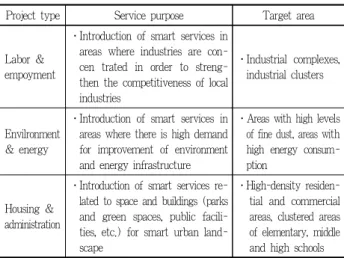
둘째, 기성 도시 차원이다. 정부는 2020년부터 스마트 챌린 지 사업을 시티형, 타운형, 솔루션 등 3개 유형으로 구분해 공 모를 실시했다. ‘2020년 스마트타운 챌린지 예비사업 공모지침’
은 주거․행정 부문의 사업 유형에 공원녹지 기반의 스마트도 시서비스를 포함하고 있다(Table 1 참조). 2017년부터 추진된
‘스마트시티형 도시재생 사업’과 2020년부터 시행된 ‘생활밀착 형 도시재생 스마트기술 지원사업’ 역시 노후 도시의 정주 여 건과 주민 편의 증진을 위한 스마트 기술․서비스 연계형 공원 조성 및 재정비 사업 추진이 가능하다. 지자체 차원에서 충청 남도는 주민 이용도가 높은 시설의 차별화된 조성을 통해 도심 지 정주 환경을 개선하고, 원도심을 활성화하기 위한 ‘행복한 도시 만들기’ 공모사업을 2017년부터 추진하고 있으며, 사업 유
형에 스마트 공원 조성 부문이 포함되어 있다.
정부와 지자체 차원에서 공원, 가로와 같은 생활권 도시 공 공공간 기반의 스마트 정책과 사업을 추진하고자 하는 의지가 높아져 있다. 그러나, 공원을 스마트하게 조성․관리하기 위한 방식에 대해서는 불투명한 상태이다. 스마트 공원은 조경 산업 분야의 새로운 성장 동력이 될 수 있다. 화장술로서의 스마트 가 아닌 시민들의 안전하고 쾌적한 공원 이용과 효율적 공원 관리 수단으로 활용하기 위한 스마트 공원의 설계․관리 방향 을 제시해야 한다. 본 연구의 목적은 스마트 그린시티 구현을 위한 스마트 공원의 설계․관리 방향을 제안하고, 관련 산업 육성을 위한 조경 분야의 대응 방안을 제시하는 것이다. 연구 의 주요 내용은 첫째, 스마트 공원의 개념과 원칙을 설정한다.
문헌 연구를 통해 스마트 공원의 개념을 조작적으로 정의하고, 조성․관리 과정에서 고려해야 할 세 가지 원칙을 설정했다.
둘째, 스마트 공원의 세 가지 원칙 차원에서 신도시와 기성도 시에 기 조성된 스마트 공원 조성 사례 분석을 통해 문제점과 개선 시사점을 도출했다. 셋째, 스마트 공원의 공간 구성 요소 별 설계․관리 방향을 제시했다. 문헌 연구와 사례 조사를 통 해 도출된 공간 구성 요소별 설계․관리 기준 풀을 관련 분야 전문가들과의 브레인스토밍을 통해 정제했다. 넷째, 스마트 공 원 조성․관리 활성화를 위한 정부․지자체와 조경 분야의 대 응 방안을 제시했다.
Ⅱ. 스마트 공원의 개념과 기본 원칙
1. 스마트 공원의 개념
스마트 공원 정책 수립과 사업 추진을 위해서는 스마트 공원 의 개념을 정립해야 한다. 스마트 공원의 개념은 스마트시티
Project type Service purpose Target area
Labor &
empoyment
․Introduction of smart services in areas where industries are con- cen trated in order to streng- then the competitiveness of local industries
․Industrial complexes, industrial clusters
Envilronment
& energy
․Introduction of smart services in areas where there is high demand for improvement of environment and energy infrastructure
․Areas with high levels of fine dust, areas with high energy consum- ption
Housing &
administration
․Introduction of smart services re- lated to space and buildings (parks and green spaces, public facili- ties, etc.) for smart urban land- scape
․High-density residen- tial and commercial areas, clustered areas of elementary, middle and high schools Source: MOLIT(2020): 2
Table 1. Example of smart town challenge project types
Figure 1. Basic plan of smart landmark park in Busan Eco Delta Ctiy
Source: Busan Metropolitan City(2019): 185
개념 속에서 유추할 수 있다. 스마트시티는 단순 기술 중심의 도시가 아니라, 기존의 지속가능한 발전과 지속가능한 도시 개 념의 연장선상에서 현대 도시의 기술 발전이 주는 혜택과 기회 요인을 도시 정책 수립과 집행 과정에 활용하는 개념이다. 스 마트시티에 관한 기존 논의를 종합하면 스마트시티는 “IoT, 센 서 네트워크, 모바일, 컴퓨팅 파워 등 급속하게 발전하는 4차 산업혁명 기술을 활용해 시민과 도시 공간에서 발생하는 빅데 이터를 수집․분석해 가치 있는 데이터를 재생산하고, 이를 공 급․피드백할 수 있는 시스템을 구축함으로써 보다 포용적․
혁신적․회복탄력적 환경을 구현하는 도시”로 정의할 수 있다.
스마트 공원의 선행 연구들에서는 다음과 같이 스마트 공원 의 개념을 정립했다. Yun (2014)는 “IT 기술을 활용한 도시공 원으로, 도시민과 도시공원의 상호작용 속에서 이용자 중심의 서비스를 제공하여 지속적으로 도시공원의 기능을 강화할 수 있는 공원”이라고 정의했다. Lee and Cho (2018)는 “자연환경 및 문화, 놀이, 운동, 교육, 체험 등 다양한 공원녹지 인프라와 첨단 IoT 기술을 융합하여 자연, 인간, 커뮤니티 회복이 가능토 록 각종 서비스와 경험을 제공하며, 지능형으로 관리되는 공 원”으로 정의했다. Truch and Sutanto (2018)은 “이해관계자 들의 이익을 위해 사물인터넷(IoT)를 효과적으로 사용하여 관 리․운영이 향상된 공원”이라고 정의했다.
Loukaitou-Sideris et al.(2018)은 “접근성, 지역사회 적합성, 건강 증진, 안전성, 회복탄력성, 수자원 및 에너지 효율성, 운영 및 유지․보수 효율성 등 일련의 가치를 구현하기 위해 환경 기술, 디지털 및 자재 기술을 사용하는 공원”이라고 정의했다.
Lee et al.(2019)은 “적용 가능한 다양한 첨단 기술을 활용하여 이용자의 공원 체험을 향상하고, 효율적으로 공원의 운영․유 지․관리를 돕고, 기존 전통적인 공원의 기능을 넘어 적극적으 로 도시가 직면한 사회 및 환경문제를 지속가능성의 측면에서 해결하는 데 도움이 될 수 있는 공원”으로 정의했다.
이러한 관점을 종합하여 본 연구에서는 스마트 공원을 “디 지털․환경․ 재료 기술 등을 활용하여 시민들의 안전하고 쾌 적한 공원 이용과 관리․운영의 효율 개선을 지원하여, 도시 및 지역사회의 사회․경제 및 환경적 지속가능성 확보에 기여 하는 공원”으로 조작적 정의했다.
2. 스마트 공원의 기본 원칙
정부와 지자체가 스마트시티 정책과 연계한 스마트 공원 정 책사업을 추진하기 위해서는 공통적으로 지켜야 할 기본 원칙 의 설정이 필요하다. 기본원칙에 근거해 구체적인 스마트 공원 의 계획․설계․조성․관리․운영이 이루어져야 한다. 본 연구 에서는 스마트 공원의 세 가지 기본 원칙을 제시했다. 첫째, 스 마트 공원은 공원의 본질적 가치를 개선하는 방향으로 조성․
관리해야 한다. 스마트 공원은 디지털 기술로 포장된 공원을 의미하지 않는다. 스마트 공원은 휴식, 산책, 놀이, 스포츠, 사 회적 교류, 문화예술 체험, 생태 교육 등 공원의 본질적 가치를 구현하는 데 있어 필요한 스마트 기술과 서비스를 선택적으로 도입해야 한다. 센서, 통신망, 그 밖의 스마트도시기반시설은 공원 의 본질적 가치를 향상시키고, 공원 경관을 해치지 않는 ‘보이지 않는 기술(Calm-Tech)’을 지향할 필요가 있다. 2018년 UCLA Luskin 센터에서 발표한 ‘Smart Parks: A Toolkit’ 보고서에서 제시한 스마트 공원의 8가지 가치 기준인 접근성(access), 지역 사회 적합성(community fit), 건강(health), 안전(safety), 회복 탄력성(resilience), 물(water), 에너지(energy), 운영․관리(operations
& maintenance) 등은 스마트 공원의 조성․관리 과정에서 고 려해야 할 본질적 가치 요소이다(Loukaitou-Sideris et al., 2018)(Table 2 참조).
둘째, 스마트 공원은 도시문제 해결을 위한 혁신적 기능 향 상을 추구한다. 포스트 코로나 시대의 공원은 사회적 재난에 대응한 방재 기능, 체온 등 건강상태 측정 기능, 사회적 거리두 기 유도를 위한 새로운 공간 설계 기법의 도입이 필요할 것이 다. 그 밖에도 폭염, 미세먼지와 같은 환경 문제에 대응하고, 비 만, 정신질환 등의 건강 문제 해결을 위한 스마트 기술과 서비 스의 도입이 필요하다. 경찰청에 따르면 공원 내 범죄 건수는 2001년 2,476건에서 2010년 5,420건으로 약 2배가 증가했다 (Landscape Times, 2019). 폭염․미세먼지 경보 발령 일수가 매년 시민들의 건강을 심각하게 위협하고 있으며, 비만 유병률 과 스트레스 인지율 역시 증가하는 추세이다. 스마트 공원은 스마트 기술과 서비스를 활용하여 공원과 공원 주변 지역의 사 회경제 및 환경적 문제 해결에 적극적으로 개입하는 공원을 의 미한다. 기존의 공원 설계 및 관리․운영 방식으로는 얻을 수 없었던 혁신적 기능을 제공해야 한다. 스마트 공원은 보다 안 전하고, 기후변화와 환경 재난․재해에 적극 대응하며, 시민들 의 신체활동과 정신건강 증진에 기여할 수 있어야 한다.
셋째, 스마트 공원은 설계와 조성․관리 과정의 스마트화를
추구한다. 기존의 방식이 주로 설계자의 능력과 직관에 근거한
다면, 스마트 공원 설계는 빅데이터 분석 등 검증된 증거에 기
반을 둔 설계(evidence-based design)를 강조해야 한다. 설계
과정 역시 실제 이용자의 의견을 반영해 설계를 진행해야 하며,
설계 결과물을 구현하는 과정에서도 보다 스마트한 방향으로
진화해야 한다. 설계 대안을 가상현실(VR)로 구현할 경우, 완
공 전에 다양한 이용 주체의 선호나 의견을 반영하는 것이 가
능하다. 택티컬 어바니즘(tactical urbanism) 이론에 입각하여
시험 설계를 구현하는 등 단계적 조성 방식을 적용하여 설계
과정의 스마트화를 추구할 수 있다. 이러한 시스템을 통해 다
양한 설계 대안을 구현해 볼 수 있고, 실제 수요자의 체험과 효
과 검증을 바탕으로 영구적인 설계안을 도출할 수 있다.
Ⅲ. 스마트 공원 조성․관리 사례 분석
1. 사례 분석의 틀
사례 분석 대상지는 도시 성장단계별 스마트 공원 조성․관 리 현황을 알아보기 위해 신도시의 세종 호수공원과 기성 도시 의 대구 국채보상운동기념공원을 선정하였다.
사례 분석 요소는 다음과 같다. 첫째, 일반 현황이다. 일반 현황 분석 요소는 선행 연구를 토대로 설정했다. Lee and Cho(2018)는 스마트 공원 사례 분석 요소로 공원에 도입된 스 마트 기술과 서비스를 사용했다. Lee et al.(2019)은 스마트 공 원에 도입된 서비스 유형을 안전, 친환경 및 생태, 활동성으로
구분해 사례조사를 실시했다. 본 연구는 이를 반영해 일반 현 황 분석 요소를 사업 위치와 규모, 사업비, 사업 추진 주체, 도 입 기술․서비스로 구분했다. 둘째, 스마트 공원의 세 가지 기 본 원칙이다. 스마트 공원의 조성․관리 기본 원칙으로 설정한
‘공원의 본질적 가치 개선’, ‘도시문제 해결을 위한 혁신적 기능 향상’, ‘설계와 조성․관리 과정의 스마트화’로 구분해 사례 분 석을 실시했다(Table 3 참조).
사례 분석 방법은 문헌조사, 현장조사, 인터뷰 조사를 활용 했다. 문헌조사를 통해 대상지의 일반현황을 파악했으며, 현장 조사와 인터뷰 조사를 통해 대상지의 조성․관리 현황을 파악 하였다. 관련 연구 문헌과 계획서․설계서를 수집하여 개별 사 례지에 적용된 스마트 기술․서비스․시설을 조사했다. 사례 대상지 답사는 2019년 5월부터 8월까지 약 3개월에 걸쳐 진행 되었으며, 문헌 조사를 통해 파악된 스마트도시서비스의 확인 과 함께 스마트 공원 조성․관리의 3가지 기본 원칙에 맞춰 현 장 조사를 실시했다. 또한, 사례 공원의 지자체 관리부서 담당 자와 관리․운영 실무를 담당하고 있는 기관의 담당자를 대상 으로 한 인터뷰 조사를 통해 공원에서 제공되는 스마트 서비스 의 운영․활용 현황, 시민들의 인지도․활용도, 그리고 스마트 기술과 서비스를 설치․관리․운영하는 과정에서의 애로사항 을 조사했다.
2. 신도시: 세종 호수공원 1) 일반 현황
세종 호수공원은 세종특별자치시 행정중심복합도시의 중심 에 위치해 있는 친환경 휴식․문화 공간이다. 호수를 중심으로 수상무대섬, 축제섬, 물놀이섬, 물꽃섬, 습지섬 등의 5개 주요 테마섬으로 구성되어 있고, 8.8km의 산책로와 4.7km의 자전거 도로가 설치되어 있다. 행정중심복합도시건설청은 한국토지주 택공사(LH)와 함께 2018년부터 세종 호수공원 일대에 ‘스마트
Division Contents Note
Case site
New town ․Sejong Lake Park -
Established
city ․Daegu national debt redemption move-
ment memorial park -
Ana- lysis ments ele-
General information
․Location, area, project cost, main agent of project, introduced technology and service
Literature search
Principles of smart park
․Improvement of the essential value of the park
․Improvement of the function innova- tively to solve urban problem
․Smart design and smart process of cre- ation and management
Literature search, field
inves- tigation, interview
Table 3. Case site and analysis elementsValue criteria Main content
Access
․Location in a location where all citizens can access equally
․Easily accessible by foot or bicycle
․Space design, facility installation, and program opera- tion in consideration of the use of vulnerable groups such as the elderly and the disabled
Community fit
․Establishment and management in consideration of the physical, ecological, social and cultural conditions of the location where the park is located
․Selection of species suiTable for the region, space design in consideration of the socio-economic charac- teristics of residents in surrounding areas, installation of facilities, and program operation
Health
․To induce various physical activities for the health and well-being of residents, and to create and manage mental illnesses such as stress and depression
․Operate a program to produce and sell healthy food Safety ․Provide a safe, secure and comfortable environment
․Install facilities such as streetlight and CCTV and apply CPTED positively
Resilience
․Create and manage resiliently against changes in external factors such as environmental disasters such as climate change, environmental damage due to development activities, fine dust, heat waves, and floods and rapid changes in population
Water ․Design to conserve and reuse water
․Consider the installation of hydroponic facilities and drinking fountains, irrigation, and flood adaptation
Energy
․Conserve energy and expand and apply the use of new and renewable energy sources such as solar power
․To consider street arrangement considering wind road, Reduction of air conditioner usage through greening on the roof and sode of the building, and production of energy for own facility operation through solar panel installation
Operations &
maintenance ․Efficient and effective operation and management to achieve higher satisfaction, safety, and cost reduction Source : Loukaitou-Sideris
et al.(2018) : 23-32
Table 2. Value criteria of smart park
시티 홍보체험존’을 설치․운영하고 있다. AR․VR 서비스, 공 공 Wi-Fi, 스마트 공원등, 서비스 안내 키오스크 등 다양한 스 마트 서비스를 제공하고 있다(NAACC, 2018). 2019년에는 민 간 공모를 통해 스마트 디지털 사이니지, 태양광 모바일 충전 벤치, 스마트 그림자 조명, 스마트 빛의 거리, 스마트 파크케어 등 서비스 7종을 확대․제공하고 있다(NAACC, 2019). 스마트 시티 홍보체험존은 스마트시티 기술을 보유한 스타트업 또는 전문 기업에게 공모를 통한 실증 기회를 제공하고자 하는 목적 을 갖고 있다(Table 4 참조)
2) 스마트 공원의 기본 원칙
스마트시티 홍보체험존에서는 ‘공원의 본질적 가치 개선’과
‘도시문제 해결을 위한 혁신적 기능 향상’ 측면에서 다양한 스 마트 기술과 서비스의 도입을 시도했다. 유지․관리 비용 절감, 수목 생육과 공원 시설의 효율적 관리, 사용자 친화적 공원 정 보 안내 시스템 구축 등을 위해 디지털․환경․재료 기술을 시 범 적용했다. 칼라 투광등, 칼라 그림자, 스마트 열주등, 하트 센서 조명 등의 스마트 공원등은 공원 방문객에게 새로운 시각 적 경험을 제공하며, 사람을 인식하여 자동으로 조도를 조절함 으로써 에너지 절감 효과를 창출한다. 공원 진입로․산책로, 광 장 등에 설치된 스마트 공원등은 세종 호수공원만의 독특한 야 간 경관을 창출하고, 수변 공간, 식재 공간과의 경계를 설정하 여 해당 장소의 위요감을 형성하는 데 기여한다. 센서를 기반 으로 토양, 기상, 수목의 상태 등을 모니터링하여 효율적인 수
목 관리가 가능하도록 하는 스마트 파크 케어 서비스를 도입했 다. 태양광 에너지 패널․원격 제어 네트워크․관수 시설 등이 무분별하게 설치된 스마트 파크 케어 서비스는 공원 경관을 해 치는 요소로 작용하고 있다(Figure 2 참조). 방문객이 직접 참 여하여 전광판 정보를 조작할 수 있는 디지털 사이니지를 설치 했다. 현장 조사 결과, 디지털 사이니지를 통한 정보 표출 서비 스는 스마트폰 사용에 익숙하지 않는 계층의 이용도가 낮은 것 으로 나타났다. QR 코드를 통해 웹페이지에 접속하고, 표출하 고자 하는 내용을 업로드하는 과정이 복잡하기 때문인 것으로 판단된다. 또한, 손상되거나, 정보가 표출되지 않는 디지털 사 이니지 디스플레이는 공원 경관을 해치는 요인으로 작용하고 있다(Figure 2 참조).
3. 기성도시: 대구 국채보상운동기념공원 1) 일반 현황
국채보상운동기념공원(구 동인공원)은 1907년 대구에서 시 작된 국채보상운동의 시민정신 기념과 1998년 제2 국채보상운 동을 통한 국가 경재난 극복을 기념하기 위해 1999년에 조성되 었다. 대구광역시 중구 동인동에 위치해 있고, 면적은 42,509m
2이다. 2016년 대구시는 ‘사물인터넷 테스트베드 기반 구축사업’
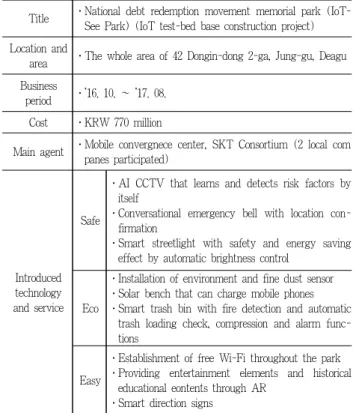
을 추진하여 국채보상운동기념공원을 국내 최초의 스마트 공 원 ‘IoT-See Park’로 조성하였다(Table 5 참조). 국내 최초의 스마트 공원 조성사업으로 ‘IoT가 구현된 공원을 본다’라는 의 미와 안전한(safe), 편리한(easy), 친환경(eco) 공원이라는 의 미에서 ‘IoT-See Park’로 명명했다. SK텔레콤이 사업자로 참여 하여 사물인터넷(IoT), 인공지능(AI), 증강현실(AR), 빅데이 터 등 첨단 기술을 활용하여 안전, 편의, 친환경의 3가지 테마 로 9개의 서비스를 구축하였다. 해당 시범사업은 타 공원에도 확대 적용이 가능한 ‘스마트 공원 표준 모델’을 제시하는 것을 목표로 세계적 역사기념공원으로서의 위상 정립, 스마트하고 안전한 공원 문화 조성, 공원 운영 최적화와 산업 콘텐츠 강화 에 초점을 두고 진행되었다. 2017년 사업이 완료되었고, 현재 대구시설공단에서 관리․운영하고 있다.
Title Smart city experience zone
Location
and area ․Dasom-ro (about 1km), Sejong city and nearby lake park
Business period
․(`17.12.) Completion of the 1st experience zone construction
․(`18.10.) Completion of the 2nd experience zone construc-
․(`19.~) Conduct service evaluation, take over to the local tion government, and review spread application
Cost ․Total KRW 40 billion (including installation and operation expenses)
Main agent ․National agency for administrative city construction, Korea land & housing corporation
Introduced technology and service
․(1st) Free Wi-Fi, AR service, VR experience booth, Smart reminder, Smart street and park lights, Service information kiosks, Electric vehicle charging stations
․(2nd) Smart health fit, VR & Hologram MR-based disa- ster safety, Solar power mobile charging bench, smart light street, Smart digital signage, Smart park care, Smart shadow lighting
Source: LH(2019) ; NAACC(2018) ; NAACC(2019)
Table 4. Overview of smart city experience zonea: Smart park care b: Digital signage
Figure 2. Smart park care system and digital signage2) 스마트 공원의 기본 원칙
안전 테마의 스마트 서비스로 기존의 방범 CCTV 기능을 강 화한 인공지능 CCTV가 설치되어 있다. 영상을 통해 방문객의 움직임 패턴을 분석하고, 이에 따라 위험 상황으로 인식되는 경우 빠른 알람을 제공하여 관리자가 위급 상황에 신속히 대응 할 수 있도록 한다. 이는 위급 상황에서 골든타임을 확보하는 데 중요한 역할을 한다. 관리․운영 담당자 인터뷰 조사 결과, 해당 시스템을 통한 영상 자료는 지속적으로 수집하나, 적극적 으로 활용되고 있지 않는 것으로 확인되었다. 담당자는 위급 상황시 빠르게 경찰서와 관리 사무소에 연결해주는 대화형 비 상벨 서비스를 공원에서 제공하고 있는 스마트 서비스 중 가장 활용도가 높은 서비스로 지목했다.
환경․에너지 관련 스마트 서비스로 보행자를 인식하여 가 로등의 밝기를 자동으로 조절하여 에너지를 절약하는 스마트 가로등, 친환경 에너지인 태양광을 이용한 벤치와 쓰레기통, 미 세먼지 센서를 공원 곳곳에 설치했다. 스마트 가로등 서비스를 위한 센서는 인공지능 CCTV, 비상벨, Wi-Fi 네트워크 등의 시설과 함께 기존 가로등에 부착되어 있어 공원 경관을 해치는 주요한 요인으로 작용하고 있다(Figure 3 참조). 태양광 쓰레 기통은 내부 센서를 통해 쓰레기 상황을 파악하고, 축적된 에 너지를 이용하여 압축하는 서비스로 쓰레기가 넘쳐 이용객들
에게 불쾌감을 줄 수 있는 상황을 방지한다. 태양광 벤치는 저 장한 에너지를 이용하여 휴대폰 등 스마트 기기의 유․무선 충 전 서비스를 제공하며, 야간에는 조명 기능도 제공한다. 관리․
운영 담당자 인터뷰 조사 결과, 태양광 쓰레기통은 압축력이 다소 떨어지는 문제점이 있고, 태양광 벤치는 방문객이 휴식을 취하기 위한 목적으로 도입된 시설임에도 불구하고, 그늘이 없 는 곳에 설치되어 현장조사 당시 이용률이 상대적으로 낮은 것 으로 확인되었다. 미세먼지 센서 설치를 통해 환경 정보를 수집 하고 있으나, 이를 활용한 사례는 없는 것으로 나타났다.
편의 증진을 위한 스마트 서비스로는 스마트폰과 QR 코드 를 이용한 수목 정보 제공 서비스, 스마트 안내 서비스, 스마트 방향 표지판 시설, 증강현실서비스 등이 있다. 스마트 방향 표 지판은 회전이 되는 LED 패널로 구성되어 있어 다양한 목적지 에 대한 방향과 정보를 제공한다. 증강현실 서비스는 국채보상 운동이라는 역사적 사건을 기념하기 위해 조성된 공원의 특성 을 활용한 스마트 서비스를 제공한다. 국채보상운동에 대한 배 경과 목적, 관련 인물 등의 내용 전달을 스마트폰 화면을 통한 증강현실(AR) 서비스로 제공하고, 게임과 접목해 방문객의 관 심과 흥미를 유도하고자 했다(Figure 3 참조). 그러나, 시범적 인 성격의 서비스로 호환되는 스마트폰의 유형이 제한적이고, 콘텐츠의 완성도가 상대적으로 낮다. 공공 Wi-Fi 서비스는 공 원 조성 당시 망을 설치하지 못하여 기존 시설물에 수신기를 부착하는 형태로 제공하고 있으며, 관리․운영 담당자 인터뷰 조사 결과, 연결이 원활하지 않고, 고장 시 조치에 어려움이 있 는 것으로 나타났다.
4. 사례 분석의 종합
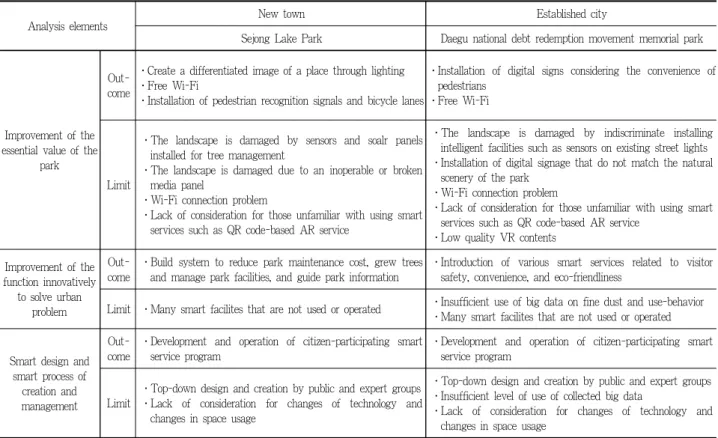
스마트 공원의 조성․관리 기본 원칙 측면에서 신도시와 기 성 도시에 구현된 스마트 공원 사례를 분석한 결과, 다음과 같 은 성과와 한계가 도출됐다(Table 6 참조). 첫째, 공원의 본질 적 가치 개선 측면에서 많은 문제를 나타내고 있다. 스마트 공 원 사업을 추진하는 지자체는 가시적 성과를 드러내기 위해 공 원 경관과 어울리지 않는 각종 센서, Wi-Fi망 등의 스마트 시
a: Smart streetlignt b: AR service
Figure 3. Smart streetlight and AR serviceTitle ․National debt redemption movement memorial park (IoT-
See Park) (IoT test-bed base construction project) Location and
area ․The whole area of 42 Dongin-dong 2-ga, Jung-gu, Deagu Business
period ․’16. 10. ~ ’17. 08.
Cost ․KRW 770 million
Main agent ․Mobile convergnece center, SKT Consortium (2 local com panes participated)
Introduced technology and service
Safe
․AI CCTV that learns and detects risk factors by itself
․Conversational emergency bell with location con- firmation
․Smart streetlight with safety and energy saving effect by automatic brightness control
Eco
․Installation of environment and fine dust sensor
․Solar bench that can charge mobile phones
․Smart trash bin with fire detection and automatic trash loading check, compression and alarm func- tions
Easy
․Establishment of free Wi-Fi throughout the park
․Providing entertainment elements and historical educational eontents through AR
․Smart direction signs Source: Daegu Metropolitan City(2017)
Table 5. Overview of Daegu national debt redemption movement memorial park (IoT-See Park)
설물을 설치했다. 도심 속 자연이라는 공원의 장소적 특수성을 고려하지 않고, 정보통신 분야 전문기업 중심으로 사업을 추진 했기 때문에 발생한 문제라고 판단된다. 공원, 광장, 보행가로 등 도시 공공공간을 기반으로 하는 스마트시티 정책 사업은 조 경, 도시설계, 건축 등의 공간 설계 및 관리․운영 전문가가 의 사결정 과정의 주축이 필요가 있다.
둘째, 도시문제 해결을 위한 혁신적 기능 향상 측면에서는 범죄 예방, 공원 유지․관리비 절감, 미세먼지 대응, 수목 생육 상태 개선, 신재생에너지 활용 증진 등을 목적으로 다양한 스 마트 기술과 서비스가 적용되었다. 문제는 이용성과 활용성이 부족하다는 점이다. 환경 및 미세먼지 센서는 전문성을 갖춘 공원 관리 인력 부족, 데이터를 수집하는 통합운영센터와의 연 결성 문제, 수집된 데이터의 활용 방안 미흡 등의 복합적 문제 를 나타내고 있다. 신재생에너지 활용 증진을 목적으로 설치된 태양광 스마트 벤치의 이용률을 낮은 수준이다. 백화점식으로 스마트 설비를 전시하는 것을 지양해야 한다. 영유아 보육, 노 인 복지, 기후변화 적응 등 지역사회별 문제 해결을 위한 공원 서비스의 개선에 효과적으로 적용할 수 있는 스마트 기술과 서 비스를 선택적․효율적으로 활용할 필요가 있다.
셋째, 설계와 조성․관리 과정의 스마트화 측면은 매우 미흡 한 실정이다. 현장조사와 인터뷰 조사를 통해 스마트공원 조성 초기 단계에서는 제공 서비스를 하향식으로 제공자 측에서 결
정하고 구축하였고, 이후 운영․관리 과정에서 수집한 정보를 활용하여 추가서비스 적용 및 공간 구성 등은 잘 이루어지지 않고 있었다. 아직까지는 디지털 설비가 부착된 공원을 스마트 공원으로 칭하는 수준으로, 빅데이터와 VR․AR 등의 스마트 기술을 활용해 공원의 공간․시설․프로그램 설계와 조성․관 리 방향을 논의할만한 수준으로 발전하지 못했다. 또다른 문제 는 열린 설계에 대한 고려하다는 점이다. 기술 발전 속도가 가 속되는 상황에 대한 대비가 부족하다. 급속하게 구식이 될 수 있는 스마트 시설물은 공원 경관을 해치고, 불필요한 공간을 차지하는 요인이 될 수 있다. 이를 방지하기 위해서는 기존의 공간을 새로운 기술․서비스․시설로 쉽게 대체할 수 있도록 있도록 유연하고, 가변적인 공간 설계 방식을 고려해야 하겠다.
사례 분석 결과, 다음의 시사점이 도출됐다. 첫째, 공원을 스 마트하게 만들고, 관리할 수 있도록 지원하는 설명서가 필요하 다. 스마트시티가 기술 중심적이라는 비판은 오늘날에도 유효 하다. 스마트 기술과 시설물이 설치되는 도시 공간의 성격과 맥락에 대한 고려가 부족하다. 공원 공간과 어울리지 않고, 이 용자가 필요로 하지 않는 스마트 기술과 시설물은 이용되지 않 고 방치되며, 공원 경관을 해치는 천덕꾸러기가 된다. 기술보다 는 공간을, 공간보다는 사람을 고려해야 한다. 현재 우리 도시 의 공원이 시민의 안전하고, 쾌적하며, 편리한 이용을 저해하는 요인을 찾아내고, 문제 해결을 위한 맞춤형 스마트 기술과 시
Analysis elements New town Established city
Sejong Lake Park Daegu national debt redemption movement memorial park
Improvement of the essential value of the
park
come Out-
․Create a differentiated image of a place through lighting
․Free Wi-Fi
․Installation of pedestrian recognition signals and bicycle lanes
․Installation of digital signs considering the convenience of pedestrians
․Free Wi-Fi
Limit
․The landscape is damaged by sensors and soalr panels installed for tree management
․The landscape is damaged due to an inoperable or broken media panel
․Wi-Fi connection problem
․Lack of consideration for those unfamiliar with using smart services such as QR code-based AR service
․The landscape is damaged by indiscriminate installing intelligent facilities such as sensors on existing street lights
․Installation of digital signage that do not match the natural scenery of the park
․Wi-Fi connection problem
․Lack of consideration for those unfamiliar with using smart services such as QR code-based AR service
․Low quality VR contents Improvement of the
function innovatively to solve urban
problem
come Out- ․Build system to reduce park maintenance cost, grew trees
and manage park facilities, and guide park information ․Introduction of various smart services related to visitor safety, convenience, and eco-friendliness
Limit ․Many smart facilites that are not used or operated ․Insufficient use of big data on fine dust and use-behavior
․Many smart facilites that are not used or operated
Smart design and smart process of
creation and management
come Out- ․Development and operation of citizen-participating smart
service program ․Development and operation of citizen-participating smart
service program Limit ․Top-down design and creation by public and expert groups
․Lack of consideration for changes of technology and changes in space usage
․Top-down design and creation by public and expert groups
․Insufficient level of use of collected big data
․Lack of consideration for changes of technology and changes in space usage
Table 6. Results of smart park creation and management case analysis
설물을 공원 공간과 조화를 이루도록 설치․관리해야 한다.
둘째, 도시 성장 단계별 스마트 공원 설계․시공 활성화를 위해 관련 계획과 제도를 정비해야 한다. 신도시의 공원은 4차 산업혁명 기술과 서비스의 테스트베드로 활용할 필요가 있다.
자율주행차, PM(personal mobility), 드론, 배달 로봇 등 기성 도시에 적용하는 데 제약이 큰 스마트 서비스의 선도적 적용 대상이 될 수 있다. 이를 위해서는 국가시범도시와 제3기 신도 시 등 신도시형 스마트 공원 설계 지침을 마련해 스마트도시기 반시설의 배치․형태․외관․높이 등을 규제할 필요가 있다.
기성 도시의 경우, 지능화된 시설과 정보 수집․처리 장치의 설치와 관리․운영 기준을 마련해야 하겠다. 기성 도시의 경우 스마트 서비스를 제공하기 위해 기존의 공원 시설에 센서, CCTV, Wi-Fi 장비, 비상벨 등의 정보 수집․처리 장치를 부 착하여 미관을 해치는 사례가 다수 발견됐다. 정부는 이러한 문제 해결을 위해 ‘지능화된 시설 및 정보 수집․처리 장치의 설치 및 관리․운영 지침(안)’을 마련할 필요가 있겠다.
Ⅳ. 스마트 공원의 설계․관리 방향
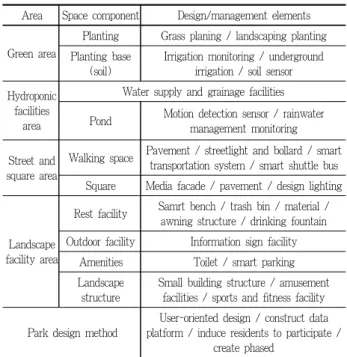
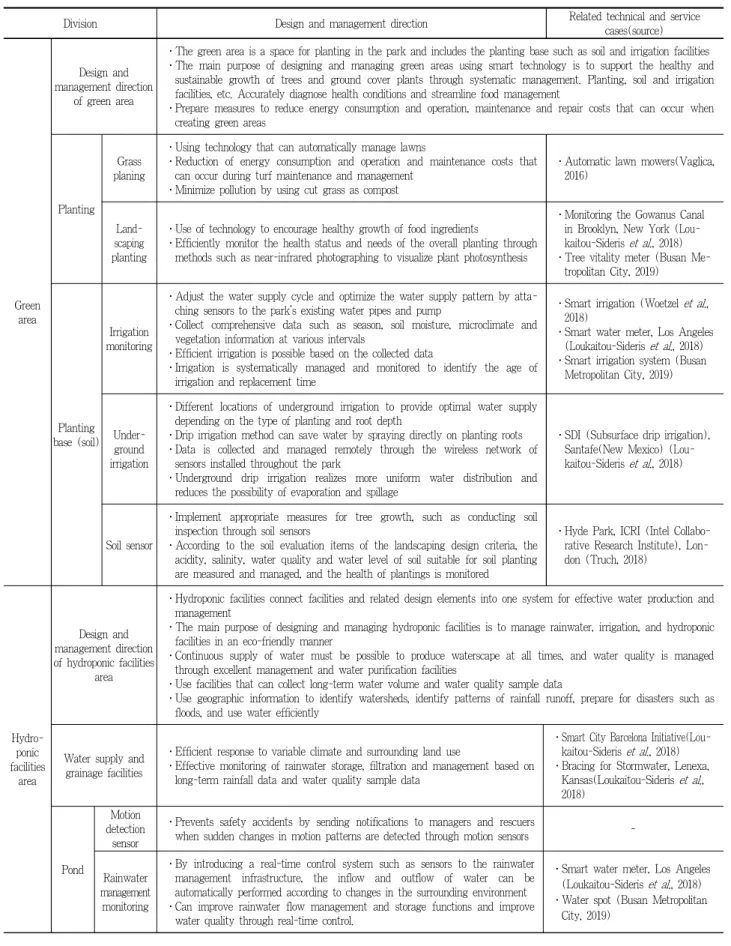
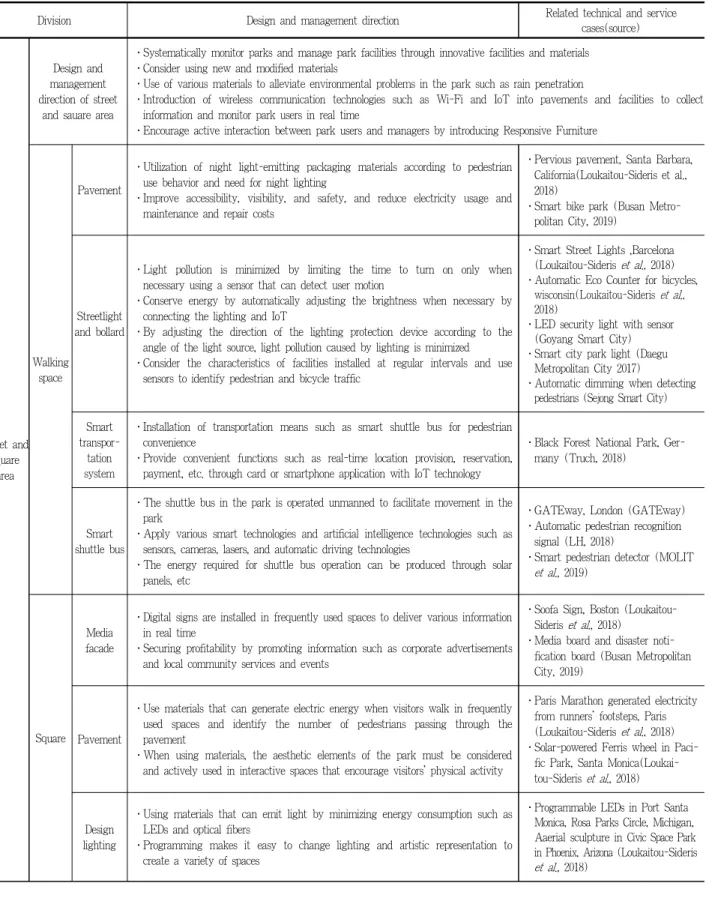
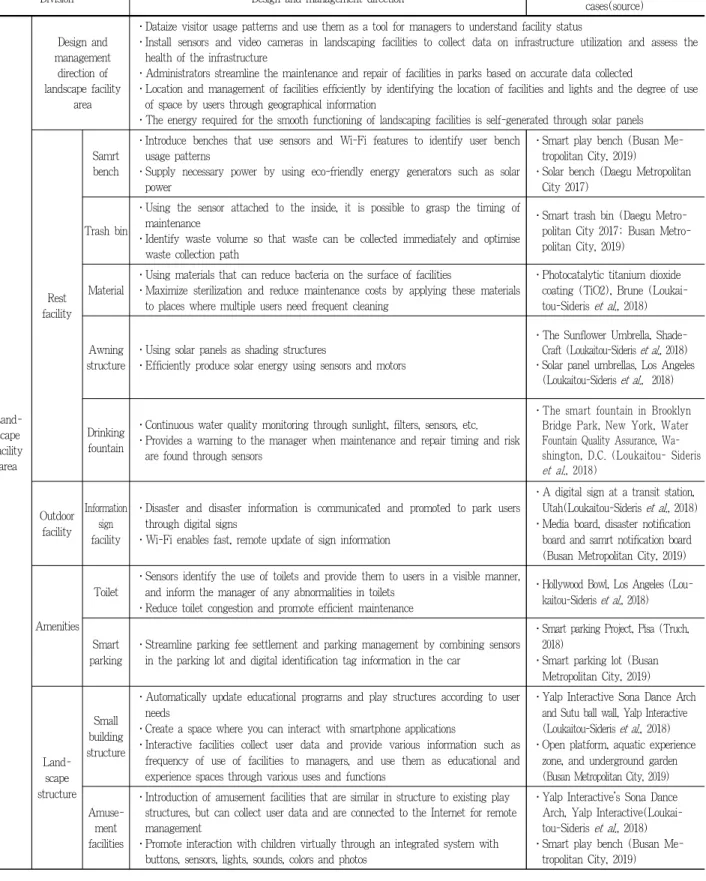
1. 스마트 공원의 공간 구성 및 설계․관리 요소 스마트 공원의 설계․관리 영역과 공간 구성 요소는 「건설 기술진흥법」제44조에 따른 조경설계기준과 조경공사시방서, 그리고 「도시공원 및 녹지 등에 관한 법률」내용을 반영해 설정 했다. 설계․관리 영역은 녹지 영역, 수경시설 영역, 도로 및 광 장 영역, 조경시설물 영역, 그리고 공원 설계 방법 등 5개 영역 으로 구분했다(Table 7 참조). 스마트 공원의 공간 구성 요소 별 계․관리 방향은 다음과 같은 방향으로 설정했다. 첫째, UCLA Luskin 센터에서 발표한 ‘Smart Parks: A Toolkit’을 기초로 스마트시티 국가 시범도시(세종,부산)와 국․내외 스마 트 기술․서비스 관련 사례를 토대로 스마트 공원의 공간 구성 요소별 풀을 작성했다. 둘째, 스마트도시와 관련된 조경 및 도 시설계 관련 학계 전문가 3인과 연구진의 두 차례에 걸친 브레 인스토밍을 통해 기술적 완성도와 적용 필요도를 고려해 공간 구성 요소별 스마트 설계․관리 방향을 정리했다.
2. 공간 구성 요소별 설계․관리 방향 1) 녹지 영역
「도시공원 및 녹지 등에 관한 법률」 제2조에서 ‘공원녹지’룰 쾌적한 도시환경 조성과 시민의 휴식 및 정서 함양을 위한 도 시공원, 식생이 자라는 장소와 같은 공간 또는 시설로 정의하 고 있다. 녹지는 도시민의 건강과 휴식과 같은 비물리적 혜택 제공과 동시에 도시 자연 경관 향상과 같이 물리적으로도 중요
한 역할을 수행한다. 스마트 공원의 설계와 관리에서 녹지 영 역은 공원 내 식재를 위한 공간으로 식재와 토양, 관수 시설 등 식재 기반을 포함한다. 녹지 영역 설계 및 관리에 스마트 기술 을 접목시키는 주요 목적은 수목 및 지피 식물의 건전한 생육 을 위해 체계적인 관리를 지원하는 것이며, 이를 위해 식재 관 리의 효율화와 운영 및 관리 비용을 절감하는 방안 등을 포함 한다(Table 8 참조).
2) 수경시설 영역
수경 시설 영역은 호수, 연못, 폭포 등 물을 이용해 경관을 연출하는 시설을 말한다. 수조, 급․배수 설비, 순환 설비 등이 포함되는데, 효과적인 물 연출과 관리를 위해서 수경 시설 들 이 하나의 시스템으로 연결되어야 한다. 스마트 공원에서 수경 시설 영역은 스마트 기술을 도입하여 친환경적으로 우수 및 관 수를 관리하고, 체계적으로 수경 시설을 관리하여 물을 효율적 으로 이용하는 것에 그 목적이 있다. 수경시설에는 지속적으로 수원이 공급되어 항상 수경 연출이 가능해야 하고, 수질 샘플 데이터 수집 및 분석 등을 통해 수질이 오염되지 않도록 관리 되어야 한다(Table 8 참조).
3) 도로 및 광장 영역
도로 및 광장 영역의 설계는 산책 등을 위한 보행 공간과 보행 에 필요한 가로 시설물을 포함한다. 해당 영역에서는 스마트 시 설과 신재료 등을 활용하여 공원 내 상황을 모니터링하고, 공원
Area Space component Design/management elements Green area
Planting Grass planing / landscaping planting Planting base
(soil) Irrigation monitoring / underground irrigation / soil sensor Hydroponic
facilities area
Water supply and grainage facilities Pond Motion detection sensor / rainwater
management monitoring Street and
square area
Walking space Pavement / streetlight and bollard / smart transportation system / smart shuttle bus Square Media facade / pavement / design lighting
Landscape facility area
Rest facility Samrt bench / trash bin / material / awning structure / drinking fountain Outdoor facility Information sign facility
Amenities Toilet / smart parking Landscape
structure Small building structure / amusement facilities / sports and fitness facility Park design method User-oriented design / construct data
platform / induce residents to participate / create phased
Table 7. Space component and design/management elements of smart park
Division Design and management direction Related technical and service cases(source)
Green area
Design and management direction
of green area
․The green area is a space for planting in the park and includes the planting base such as soil and irrigation facilities
․The main purpose of designing and managing green areas using smart technology is to support the healthy and sustainable growth of trees and ground cover plants through systematic management. Planting, soil and irrigation facilities, etc. Accurately diagnose health conditions and streamline food management
․Prepare measures to reduce energy consumption and operation, maintenance and repair costs that can occur when creating green areas
Planting Grass planing
․Using technology that can automatically manage lawns
․Reduction of energy consumption and operation and maintenance costs that can occur during turf maintenance and management
․Minimize pollution by using cut grass as compost
․Automatic lawn mowers(Vaglica, 2016)
Land- scaping planting
․Use of technology to encourage healthy growth of food ingredients
․Efficiently monitor the health status and needs of the overall planting through methods such as near-infrared photographing to visualize plant photosynthesis
․Monitoring the Gowanus Canal in Brooklyn, New York (Lou- kaitou-Sideris
et al., 2018)
․Tree vitality meter (Busan Me- tropolitan City, 2019)
Planting base (soil)
Irrigation monitoring
․Adjust the water supply cycle and optimize the water supply pattern by atta- ching sensors to the park's existing water pipes and pump
․Collect comprehensive data such as season, soil moisture, microclimate and vegetation information at various intervals
․Efficient irrigation is possible based on the collected data
․Irrigation is systematically managed and monitored to identify the age of irrigation and replacement time
․Smart irrigation (Woetzel
et al., 2018)
․Smart water meter, Los Angeles (Loukaitou-Sideris
et al., 2018)
․Smart irrigation system (Busan Metropolitan City, 2019)
Under- ground irrigation
․Different locations of underground irrigation to provide optimal water supply depending on the type of planting and root depth
․Drip irrigation method can save water by spraying directly on planting roots
․Data is collected and managed remotely through the wireless network of sensors installed throughout the park
․Underground drip irrigation realizes more uniform water distribution and reduces the possibility of evaporation and spillage
․SDI (Subsurface drip irrigation), Santafe(New Mexico) (Lou- kaitou-Sideris
et al., 2018)
Soil sensor
․Implement appropriate measures for tree growth, such as conducting soil inspection through soil sensors
․According to the soil evaluation items of the landscaping design criteria, the acidity, salinity, water quality and water level of soil suitable for soil planting are measured and managed, and the health of plantings is monitored
․Hyde Park, ICRI (Intel Collabo- rative Research Institute), Lon- don (Truch, 2018)
Hydro- ponic facilities
area
Design and management direction of hydroponic facilities
area
․Hydroponic facilities connect facilities and related design elements into one system for effective water production and management
․The main purpose of designing and managing hydroponic facilities is to manage rainwater, irrigation, and hydroponic facilities in an eco-friendly manner
․Continuous supply of water must be possible to produce waterscape at all times, and water quality is managed through excellent management and water purification facilities
․Use facilities that can collect long-term water volume and water quality sample data
․Use geographic information to identify watersheds, identify patterns of rainfall runoff, prepare for disasters such as floods, and use water efficiently
Water supply and grainage facilities
․Efficient response to variable climate and surrounding land use
․Effective monitoring of rainwater storage, filtration and management based on long-term rainfall data and water quality sample data
․Smart City Barcelona Initiative(Lou- kaitou-Sideris
et al., 2018)
․Bracing for Stormwater, Lenexa, Kansas(Loukaitou-Sideris
et al., 2018)
Pond
Motion detection
sensor
․Prevents safety accidents by sending notifications to managers and rescuers
when sudden changes in motion patterns are detected through motion sensors -
Rainwater management
monitoring
․By introducing a real-time control system such as sensors to the rainwater management infrastructure, the inflow and outflow of water can be automatically performed according to changes in the surrounding environment
․Can improve rainwater flow management and storage functions and improve water quality through real-time control.
․Smart water meter, Los Angeles (Loukaitou-Sideris
et al., 2018)
․Water spot (Busan Metropolitan City, 2019)
Table 8. Desing and management direction by space compnent of smart park
Table 8. Continued
Division Design and management direction Related technical and service
cases(source)
Street and square
area
Design and management direction of street
and sauare area
․Systematically monitor parks and manage park facilities through innovative facilities and materials
․Consider using new and modified materials
․Use of various materials to alleviate environmental problems in the park such as rain penetration
․Introduction of wireless communication technologies such as Wi-Fi and IoT into pavements and facilities to collect information and monitor park users in real time
․Encourage active interaction between park users and managers by introducing Responsive Furniture
Walking space
Pavement
․Utilization of night light-emitting packaging materials according to pedestrian use behavior and need for night lighting
․Improve accessibility, visibility, and safety, and reduce electricity usage and maintenance and repair costs
․Pervious pavement, Santa Barbara, California(Loukaitou-Sideris et al., 2018)
․Smart bike park (Busan Metro- politan City, 2019)
Streetlight and bollard
․Light pollution is minimized by limiting the time to turn on only when necessary using a sensor that can detect user motion
․Conserve energy by automatically adjusting the brightness when necessary by connecting the lighting and IoT
․By adjusting the direction of the lighting protection device according to the angle of the light source, light pollution caused by lighting is minimized
․Consider the characteristics of facilities installed at regular intervals and use sensors to identify pedestrian and bicycle traffic
․Smart Street Lights ,Barcelona (Loukaitou-Sideris
et al., 2018)
․Automatic Eco Counter for bicycles, wisconsin(Loukaitou-Sideris
et al., 2018)
․LED security light with sensor (Goyang Smart City)
․Smart city park light (Daegu Metropolitan City 2017)
․Automatic dimming when detecting pedestrians (Sejong Smart City) Smart
transpor- tation system
․Installation of transportation means such as smart shuttle bus for pedestrian convenience
․Provide convenient functions such as real-time location provision, reservation, payment, etc. through card or smartphone application with IoT technology
․Black Forest National Park, Ger- many (Truch, 2018)
Smart shuttle bus
․The shuttle bus in the park is operated unmanned to facilitate movement in the park
․Apply various smart technologies and artificial intelligence technologies such as sensors, cameras, lasers, and automatic driving technologies
․The energy required for shuttle bus operation can be produced through solar panels, etc
․GATEway, London (GATEway)
․Automatic pedestrian recognition signal (LH, 2018)
․Smart pedestrian detector (MOLIT
et al., 2019)
Square Media facade
․Digital signs are installed in frequently used spaces to deliver various information in real time
․Securing profitability by promoting information such as corporate advertisements and local community services and events
․Soofa Sign, Boston (Loukaitou- Sideris
et al., 2018)
․Media board and disaster noti- fication board (Busan Metropolitan City, 2019)
Pavement
․Use materials that can generate electric energy when visitors walk in frequently used spaces and identify the number of pedestrians passing through the pavement
․When using materials, the aesthetic elements of the park must be considered and actively used in interactive spaces that encourage visitors' physical activity
․Paris Marathon generated electricity from runners’ footsteps, Paris (Loukaitou-Sideris
et al., 2018)
․Solar-powered Ferris wheel in Paci- fic Park, Santa Monica(Loukai- tou-Sideris
et al., 2018)
Design lighting
․Using materials that can emit light by minimizing energy consumption such as LEDs and optical fibers
․Programming makes it easy to change lighting and artistic representation to create a variety of spaces
․Programmable LEDs in Port Santa
Monica, Rosa Parks Circle, Michigan,
Aaerial sculpture in Civic Space Park
in Phoenix, Arizona (Loukaitou-Sideris
et al., 2018)
Table 8. Continued
Division Design and management direction Related technical and service
cases(source)
Land- scape facility
area
Design and management
direction of landscape facility
area
․Dataize visitor usage patterns and use them as a tool for managers to understand facility status
․Install sensors and video cameras in landscaping facilities to collect data on infrastructure utilization and assess the health of the infrastructure
․Administrators streamline the maintenance and repair of facilities in parks based on accurate data collected
․Location and management of facilities efficiently by identifying the location of facilities and lights and the degree of use of space by users through geographical information
․The energy required for the smooth functioning of landscaping facilities is self-generated through solar panels
facility Rest Samrt bench
․Introduce benches that use sensors and Wi-Fi features to identify user bench usage patterns
․Supply necessary power by using eco-friendly energy generators such as solar power
․Smart play bench (Busan Me- tropolitan City, 2019)
․Solar bench (Daegu Metropolitan City 2017)
Trash bin
․Using the sensor attached to the inside, it is possible to grasp the timing of maintenance
․Identify waste volume so that waste can be collected immediately and optimise waste collection path
․Smart trash bin (Daegu Metro- politan City 2017; Busan Metro- politan City, 2019)
Material ․Using materials that can reduce bacteria on the surface of facilities
․Maximize sterilization and reduce maintenance costs by applying these materials to places where multiple users need frequent cleaning
․Photocatalytic titanium dioxide coating (TiO2), Brune (Loukai- tou-Sideris
et al., 2018)
Awning
structure ․Using solar panels as shading structures
․Efficiently produce solar energy using sensors and motors
․The Sunflower Umbrella, Shade- Craft (Loukaitou-Sideris
et al., 2018)
․Solar panel umbrellas, Los Angeles (Loukaitou-Sideris
et al., 2018)
Drinking fountain
․Continuous water quality monitoring through sunlight, filters, sensors, etc.
․Provides a warning to the manager when maintenance and repair timing and risk are found through sensors
․The smart fountain in Brooklyn Bridge Park, New York, Water Fountain Quality Assurance, Wa- shington, D.C. (Loukaitou- Sideris
et al., 2018)
Outdoor facility
Information sign facility
․Disaster and disaster information is communicated and promoted to park users through digital signs
․Wi-Fi enables fast, remote update of sign information
․A digital sign at a transit station, Utah(Loukaitou-Sideris
et al., 2018)
․Media board, disaster notification board and samrt notification board (Busan Metropolitan City, 2019)
Amenities
Toilet ․Sensors identify the use of toilets and provide them to users in a visible manner, and inform the manager of any abnormalities in toilets
․Reduce toilet congestion and promote efficient maintenance
․Hollywood Bowl, Los Angeles (Lou- kaitou-Sideris
et al., 2018)
Smart
parking ․Streamline parking fee settlement and parking management by combining sensors in the parking lot and digital identification tag information in the car
․Smart parking Project, Pisa (Truch, 2018)
․Smart parking lot (Busan Metropolitan City, 2019)
Land- scape structure
Small building structure
․Automatically update educational programs and play structures according to user needs
․Create a space where you can interact with smartphone applications
․Interactive facilities collect user data and provide various information such as frequency of use of facilities to managers, and use them as educational and experience spaces through various uses and functions
․Yalp Interactive Sona Dance Arch and Sutu ball wall, Yalp Interactive (Loukaitou-Sideris
et al., 2018)
․Open platform, aquatic experience zone, and underground garden (Busan Metropolitan City, 2019) Amuse-
facilities ment
․Introduction of amusement facilities that are similar in structure to existing play structures, but can collect user data and are connected to the Internet for remote management
․Promote interaction with children virtually through an integrated system with buttons, sensors, lights, sounds, colors and photos
․Yalp Interactive’s Sona Dance Arch, Yalp Interactive(Loukai- tou-Sideris
et al., 2018)
․Smart play bench (Busan Me-
tropolitan City, 2019)
시설을 체계적으로 관리할 수 있도록 설계해야 한다. 특히 반 응형 시설물(responsive furniture)의 도입은 이용자와 관리자 의 적극적인 상호작용을 도울 수 있다(Table 8 참조).
4) 조경 시설물 영역
조경 시설물은 공원 이용자의 편의를 위한 시설물로 관리 시 설물, 편의 시설물, 옥외 시설물 등을 포함한다. 조경 시설물에 신서 및 CCTV 등을 설치하여 공원 이용자의 데이터를 수집하 고, 이용․행동 패턴을 데이터화 하며, 관리자가 시설물의 상태 를 즉각적으로 파악할 수 있는 도구로 활용될 수 있다. 예를 들 어 이용자의 공간 활용 데이터는 조명의 위치 등 시설물의 효 율적인 배치에 활용할 수 있다(Table 8 참조).
5) 공원 설계 방법
스마트 공원 설계 방법으로는 설계 및 조성․관리 방법에서 의 스마트화를 추구하고 있으며, 이용자 중심 설계, 데이터 플랫 폼 구축, 주민 참여 유도, 단계적 조성 등이 있다(Table 8 참조).
Ⅴ. 결론 및 시사점
COVID-19로 인해 생활권 공원에 대한 정책적 관심이 높아
지고 있다. 시민들은 녹색갈증(biophilia)을 해소하기 위해 실내 여가 시설에 비해 상대적으로 감염 위험성이 낮고, 사회적 스 트레스를 해소할 수 있는 공원을 찾고 있다. 언택트(untact) 문 화의 확산과 스마트 그린 뉴딜 정책 기조에 따라 펜데믹 시대 의 공원은 스마트 기술과 서비스의 적용 필요성이 높아질 것이 다. 이러한 관점에서 본 연구는 스마트 그린시티 구현을 위한 공원 설계․관리 방향을 제안하고, 관련 산업 육성을 위한 조 경 분야의 대응 방안을 제시하는 것을 목적으로 수행되었다.
연구를 통해 스마트 공원의 개념을 조작적으로 정의하고, 세 가지 기본 원칙을 제시했다. 스마트 공원의 기본원칙을 토대로 신도시와 기성도시에 조성된 스마트 공원 사례를 분석하여 개 선 시사점을 도출했다. 또한, 문헌조사와 전문가 자문회의를 통 해 스마트 공원의 공간 구성 요소별 설계․관리 방향을 제안했 다. 펜데믹 시대의 스마트 공원 조성․관리 활성화를 위한 정 책적 시사점은 다음과 같다.
첫째, 도시 성장단계와 공원 유형별로 포스트 코로나 시대 대응형 스마트 공원 정책 모델을 발굴하고, 시범사업을 추진해 야 한다(Figure 4 참조). 정부의 스마트도시 정책 기조를 반영 해 신도시․기성도시․노후도시 유형별 스마트 공원의 정책 사업화 모델을 제시해야 한다. 또한, 소공원, 어린이공원, 근린 공원, 도시자연공원구역 등 공원 유형별 추진 가능한 스마트 공원 사업 모델을 발굴해야 한다. 발굴된 사업 모델은 국가시
Table 8. Continued