163
Original Article
Korean College of Clinical PharmacyAvailable online at http://www.kccp.or.kr pISSN: 1226-6051
인삼이 혈압에 미치는 영향: 체계적 문헌고찰 및 메타분석
하혜민#·오다현#·천부순
*
인제대학교약학대학
(2016
년5
월12
일접수·2016
년6
월17
일수정·2016
년6
월18
일승인)
Effect of Ginseng on Blood Pressure: A Systematic Review and Meta-Analysis
Hye Min Ha
#, Da Hyun Oh
#, and Pusoon Chun*
College of Pharmacy, Inje University, Gyeongsangnam-do 50834, Republic of Korea (Received May 12 2016
·Revised June 17 2016
·Accepted June 18 2016)
Ginseng is one of the most widely used herbal medicines, being distributed in 35 countries worldwide.1) Among the various kinds of ginseng, Korean ginseng (Panax ginseng Meyer), Chinese ginseng (Panax notoginseng), and American ginseng (Panax quinquefolium L.) are the most popular in the world. Accumulating evidence suggests that ginsenosides, also called ginseng saponins, are the major pharmacologically active ingredients of ginseng and the saponin content varies among different types of ginseng.2,3)
Ginseng has been shown in clinical studies to have beneficial effects in the treatment of fatigue, erectile dysfunction, and diabetes.4-6) In addition, consumption of ginseng significantly
improved working memory capacity and cognitive performance in healthy individuals and Alzheimer patients.7,8) Furthermore, a growing number of studies have reported pharmacological activities and the potential benefits of ginseng in blood pre- ssure (BP) control. Treatment of ginsenosides has been shown to stimulate overexpression of endothelial nitric oxide synthase (eNOS) and promote production and secretion of nitric oxide (NO), leading to vasodilation in human endothelial cells.9,10) The vasorelaxation effect of ginseng is also considered to be associated with inhibitory effects of ginsenosides on voltage- independent Ca2+ entry and corporal phosphodiesterases, re- sulting in increased cyclic adenosine monophosphate (cAMP)
ABSTRACT
Objective: A meta-analysis was performed to determine effect of ginseng on blood pressure. Methods: The databases of PubMed,
Embase, Cochrane Library, RISS, DBpia, KISS, and Koreamed were searched for all published studies from inception to January 2016. The following terms were used: “ginseng”, “hypertension”, and “blood pressure”. Using the Review Manager 5, mean differences (MDs) were pooled to measure the effect of ginseng on blood pressure compared to that of placebo. Results: Eleven randomized controlled trials were included. In this meta-analysis, ginseng treatment significantly lowered systolic blood pressure (SBP) in a dose-independent way (MD: −1.99, p = 0.04). In subgroup analysis, 8-12 week consumption of ginseng achieved significantly greater reduction in SBP (MD: −3.14, p = 0.03), while single administration of ginseng failed to show BP-lowering effect. When ingested over 8-12 weeks, ginseng significantly lowered diastolic blood pressure (DBP) (MD: −1.96, p = 0.03). No significant association was found between ginseng dose and the magnitude of BP-lowering effect. However, a significant positive relationship was observed between baseline SBP level and the magnitude of SBP reduction (r = 0.848, p = 0.033). Such a relationship was not seen in DBP. Conclusion: Consumption of ginseng for 8-12 weeks achieved significant reductions in SBP and DBP in a dose-independent way. There was a significant positive relationship between baseline SBP level and the magnitude of SBP reduction.
KEY WORDS: American ginseng, Korean red ginseng, Korean white ginseng, blood pressure, randomized controlled trial
*Correspondence to: Pusoon Chun, College of Pharmacy, Inje University, 197 Inje-ro, Gimhae, Gyeongsangnam-do 50834, Republic of Korea Tel: +82-10-3245-5683, Fax: 82-55-320-3940
E-mail: [email protected]
#The first and second authors contributed equally to this manuscript.
164 / Korean J Clin Pharm, Vol. 2 6 , No. 2 , 201 6
and cyclic guanosine monophosphate (cGMP).11-13)
Nevertheless, clinical effect of ginseng on blood pressure is inconsistent. Chung and his colleague demonstrated a signifi- cant decrease in SBP at 10 weeks of posttreatment of ginseng.14) On the contrary, in the study by Stavro et al.,15) ginseng use had no effect either on systolic blood pressure (SBP) or diastolic blood (DBP) (after 12-week treatment. Moreover, in the study by Stavro et al., 16) a decrease in DBP was observed at 160 minutes after ginseng consumption while in the study by Jovanovski et al.,17) ginseng use increased DBP at 3 hours of posttreatment of ginseng. A meta-analysis was performed to determine effect of ginseng on blood pressure.
Materials and methods Literature search
A systematic literature search was performed to identify publications reporting the effect of ginseng on blood pressure.
The databases of PubMed, Embase, Cochrane Library, RISS, DBpia, KISS, and Koreamed were searched for all published studies from inception to January 2016. We also hand-searched the reference lists of the identified articles and Journal of Ginseng Research for additional pertinent publications. The following terms were used with functions of “AND” and “OR”:
“ginseng”, “hypertension”, and “blood pressure”.
Study selection and data extraction
Two investigators (HMH and DHO) independently identified relevant studies and extracted detailed information from each study. Discrepancies were resolved through a consensus dis- cussion with a third investigator (PC).
Any study that met all of the following criteria was included:
(1) investigating the effect of ginseng on blood pressure; (2) randomized controlled trial (RCT) that compared the changes in blood pressure between ginseng group and placebo group.
Articles were excluded in accordance with the following criteria: (1) reviews, conference abstract or paper, editorial, letter, note, and supplement; (2) studies without sufficient data for estimating a mean difference (MD) between ginseng and placebo group. There was no limitation on the language.
The extracted information included the first author’s name, year of publication, country of study population, age and health status of subjects, dose of ginseng, treatment period, and blood pressure at baseline and after treatment in ginseng and placebo groups.
Assessment of risk of bias
For the evaluation of the validity of the included studies, risk of bias in the included studies was assessed. Using the Cochrane Collaboration’s Risk of Bias Tool, we evaluated 6 domains of bias: risk of selection bias in relation to adequate or inadequate random sequence generation; risk of selection bias with regard to allocation concealment; risk of perfor- mance bias in terms of blinding of participants and personnel;
risk of detection bias in relation to blinding of outcome assessment; risk of attrition bias due to incomplete outcome data; and risk of bias from selective reporting of outcomes.
Each included study was assessed for each domain and given a judgment of either “low risk”, “unclear risk”, or “high risk”
based on the following definition: “low risk” for plausible bias unlikely to alter the results; “unclear risk” for plausible bias that raises some doubt about the results; “high risk” for plausible bias that seriously weakens confidence in the results.16) Two researchers (HMH and DHO) independently assessed and any disagreements were resolved by a consensus discussion with a third investigator (PC).
Data synthesis and analysis
The Review Manager 5.2, the Cochrane Collaboration soft- ware, was used for the present meta-analysis. The data from the included studies were pooled and weighted by a fixed- effects model. Pooled MD and 95% confidence intervals (CIs) were used to measure the effect of ginseng on blood pressure compared to that of placebo. Study heterogeneity was estimated with I² statistic, with values of 25%, 50%, and 75% repre- senting low, moderate, and high degrees of heterogeneity.
Publication bias was evaluated by visual inspection of a funnel plot.
Data were analyzed using the IBM SPSS Statistics (version 22, SPSS Inc., Chicago, IL, USA). Pearson’s correlation co- efficients were used to evaluate the relationships among the magnitude of the BP-lowering effect, ginseng dose, and the baseline level of blood pressure. One-way ANOVA was con- ducted to investigate the association between BP-lowering effect of ginseng and the baseline health status of subjects including hypertension, prehypertension, and healthy. Two-sided P values less than 0.05 were considered statistically significant.
Results
Of the 553 records identified in literature search, 46 articles
인삼 이 혈압 에 미치는 영향 : 체계 적 문 헌고찰 및 메타분 석 / 165 Study Country
Number of subjects Age of subjects (year, mean ± SD)
Health Status
Baseline BP of subjects (mmHg) Treatment Changes in BP (mmHg)
Ginseng group
Placebo group
Ginseng group
Placebo group
Ginseng group Placebo group Ginseng
(g/day) Duration Ginseng group Placebo group
SBP DBP SBP DBP SBP DBP SBP DBP
Cha et al.
2016 Korea 31 31 41.4 ± 2 42.7 ± 2 preHTN 133.5 85.2 133.8 85.6 KRG 5 12 weeks −6.5 −5 −2.6 −0.9
Jovanovski et al.
2014 Canada 16 16 30 ± 9 30 ± 9 Healthy 109 66 109 66 KRG 3 3 hours 4.11 1.36 3.37 2.51
Shishtar et al.
2014 Canada 25 25 63 ± 9 63 ± 9 Type 2 DM 133 74 133 74 KWG 3 4 hours 6.3 0.9 6.2 1.4
Mucalo et al.
2013 Croatia 30 34 62.1 ± 9 63.9 ± 11 HTN &
Type 2 DM 148.5 84.9 142.6 84.6 AG 3 12 weeks −17.4 −7.1 0.6 −0.3 Lim.
2012 Korea 29 28 39.6 ± 2 34.7 ± 1.5 preHTN 133.3 83.3 130.3 81 KRG 5 8 weeks −5.76 −1.55 −2.86 0.98
Park et al.
2012 Korea 23 25 43.1 ± 11 46.2 ± 11 Metabolic
syndrome 134.5 85.6 129.3 83.8 KRG 4.5 12 weeks −7 −3.5 −6.8 −4.2 Kwon.
2011 Korea 22 23 40.91 ± 10 46.48 ± 10 Obesity 122.2 77.2 123.6 77.6 KRG 18 8 weeks −2.86 −3.86 −1.43 −1.13 Rhee et al.
2011 Korea 30 34 55 ± 9 58 ± 6 HTN 138 87 138 84 KRG 3 12 weeks −4 −4 −5 −4
Chung et al.
2010 Korea 20 20 62.4 ± 3 62.4 ± 3 HTN
1)141 84 129 75 KRG 2.7 10 weeks −12 −3 3 5
Stavro et al.
2006 Canada 37 37 58.4 ± 2 58.4 ± 2 HTN 129.6 79.7 130.4 79.9 AG 3 12 weeks 1.3 0.9 0.5 0.6
Stavro et al.
2005 Canada 24 8 61.1 ± 8 61.1 ± 8 HTN 136.9 84.3 137.7 85.5 AG 3 2.7 hours 2.7 −1.4 2.4 −1.2
AG, American ginseng; KRG, Korean Red Ginseng; preHTN, prehypertension, 121 ≤ SBP ≤ 139 and 81 ≤ DBP ≤ 90; HTN, hypertension, SBP ≥ 140 or DBP ≥ 90; KWG, Korean white ginseng; Type 2
DM, Type 2 diabetes mellitus; HTN
1), 70% of the subjects were hypertension.
166 / Korean J Clin Pharm, Vol. 2 6 , No. 2 , 201 6
were considered potentially relevant. After further review of the full text of the 46 studies, 11 RCTs met the inclusion and
exclusion criteria of the present meta-analysis. The process of study selection is outlined in Fig. 1.
Fig. 1. Flowchart of the study selection process.
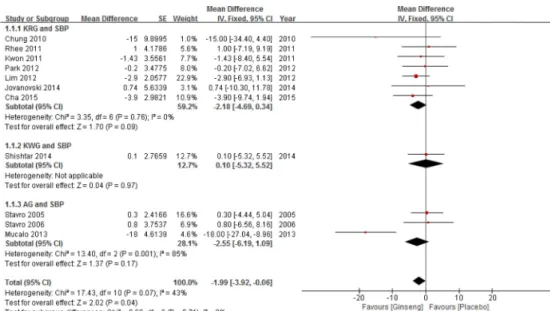
Fig. 2. Forest plot of the effect of ginseng on systolic blood pressure (SBP). Squares represent study-specific mean difference (MD);
horizontal lines represent 95% confidence intervals (CIs); diamond represents a summary MD estimate with corresponding 95% CI.
Characteristics of the selected studies
Table 1 describes the main characteristics of the included studies and changes in blood pressure in ginseng and placebo groups. All the included studies were randomized, double- blind trial to compare the effects of ginseng and placebo on blood pressure. Of the 11 studies, 7 studies investigated the effect of Korean Red Ginseng (KRG, steam-treated Panax ginseng Meyer),14,17,19-23) 3 studies examined that of American ginseng (AG),15,16,24) and 1 study evaluated the effect of Korean white ginseng (KWG, Panax ginseng Meyer).25) In 8 studies, the effect of 8-12 week intake was evaluated,14,15,19-22,23,24)
whereas 3 studies examined the acute effect.16,17,25) Almost all
subjects in the ginseng group (265/287) were treated with 2.7- 5 g/day ginseng, while 7.6% (22/287) took 18 g/day ginseng (Table 1).
The effect of ginseng on systolic blood pressure
A total of 11 studies were included in the present meta- analysis reviewing the effect of ginseng on SBP. The pooled analysis showed a significant reduction in SBP in ginseng group (MD: −1.99; 95% CI: −3.92, −0.06; p = 0.04). The hetero- geneity among the studies was not significant (I2= 43%; p = 0.07). No association was found between ginseng dose and the magnitude of SBP-lowering effect (r = 0.135, p = 0.693). How-
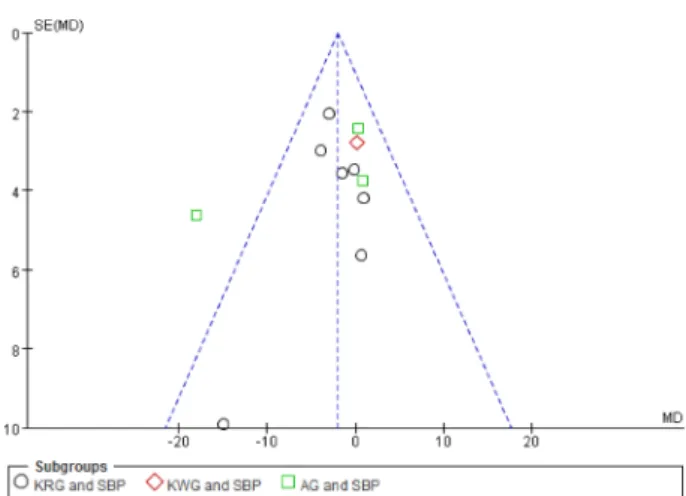
Fig. 3. Funnel plot for publication bias of the included studies in
the meta-analysis of the effect of ginseng on systolic blood pres- sure stratified (SBP) by the types of ginseng.
Fig. 4. Forest plot of the effect of ginseng on diastolic blood pressure (DBP). Squares represent study-specific mean difference (MD);
horizontal lines represent 95% confidence intervals (CIs); diamond represents a summary MD estimate with corresponding 95% CI.
Fig. 5. Funnel plot for publication bias of the included studies in
the meta-analysis of the effect of ginseng on diastolic blood
pressure stratified (DBP) by the types of ginseng.
168 / Korean J Clin Pharm, Vol. 2 6 , No. 2 , 201 6
ever, there was a positive relationship between baseline SBP level and the magnitude of SBP reduction (r = 0.848, p = 0.033). Subgroup analyses were performed according to the types of ginseng. The combined MD in KRG group was −2.18 (p = 0.09) and in AG groups was −2.55 (p = 0.09) (Fig. 2).
Visual inspection of a funnel plot suggested possible publi- cation bias (Fig. 3).
The effect of ginseng on diastolic blood pressure
Eleven studies were included in this meta-analysis of the effect of ginseng on DBP. The pooled analysis demonstratedno significant DBP-lowering effect of ginseng treatment (MD:
−1.34; 95% CI: −2.79, 0.10; p = 0.07). No heterogeneity was detected among the studies (I2= 0%; p = 0.88). Subgroup an- alyses showed no significant DBP-lowering effect in all types of ginseng (Fig. 4). Visual inspection of a funnel plot showed no clear evidence of publication bias (Fig. 5).
Comparison of the acute and long-term effect of ginseng on blood pressure
The effect of ginseng on blood pressure was evaluated by subgroup analyses according to treatment duration. In the sub-
Fig. 6. Forest plot of the acute effect of ginseng on systolic blood pressure (SBP) and diastolic blood pressure (DBP).
Fig. 7. Forest plot of the long-term effect of ginseng on systolic blood pressure (SBP) and diastolic blood pressure (DBP).
group analysis, no significant reductions in SBP and DBP were found 2.7, 3, and 4 hours after a single administration of ginseng (for SBP, MD: 0.26; 95% CI: −3.13, 3.66; p = 0.88; for
DBP, MD: −0.42; 95% CI: −2.92, 2.97; p = 0.74) (Fig. 6). On the contrary, after 8-12 weeks of treatment, KRG and AG sig- nificantly lowered both SBP and DBP (for SBP, MD: −3.14;
95% CI: −5.94, −0.35; p = 0.03; for DBP, MD: −1.96; 95%
CI: −3.73, −0.19; p = 0.03) (Fig. 7). Among the subjects who consumed ginseng for 8 to 12 weeks, 90% (200/222) took 2.7- 5 g, while the rest (10%) ingested 18 g per day. No association was found between ginseng dose and the magnitude of BP- lowering effect (r = 0.262, p = 0.532 for SBP; r =−0.108, p = 0.799 for DBP). Meanwhile, a significant positive relationship was observed between baseline SBP level and the magnitude of SBP reduction (r = 0.848, p = 0.033). Such a relationship was not seen in DBP (r =−0.406, p = 0.497).
Assessment of risk of bias
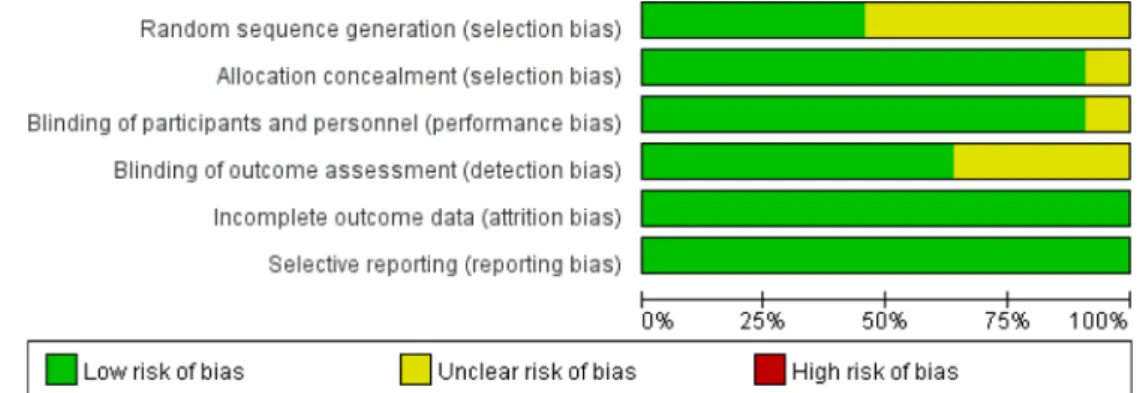
When evaluating the validity of the included studies, 4 studies were assessed as having low risk of bias in all 6 domains.19,22,24,25) No studies were rated as having risk of bias in relation to incomplete outcome data or selective reporting (Fig. 8). On the other hand, 6 studies were classified as having unclear risk of bias for random sequence generation14-17,20,21)
and 4 studies were assessed as having detection bias.14,17,21,23)
Meanwhile, 1 study14) was judged for having unclear risk of bias in relation to allocation concealment and blinding of participants and personnel(Fig. 9).
Discussion
In the present meta-analysis, ginseng treatment significantly lowered SBP, although the effect was small in magnitude.
However, no significant reduction was seen in DBP. When the effect of ginseng was evaluated according to the treatment duration, no significant reductions in SBP and DBP were found
Fig. 8. Risk of bias in included studies. Each risk of bias item was presented as percentages across all included studies.
Fig. 9. Assessment of each risk of bias for each included study.
170 / Korean J Clin Pharm, Vol. 2 6 , No. 2 , 201 6
2.7, 3, and 4 hours after a single administration of ginseng.
On the contrary, consumption of KRG or AG for 8-12 weeks achieved significant reductions in both SBP and DBP. Among the subjects who were treated either with a single dose or long term treatment of 2.7, 3, 4.5, 5, or 18 g/day ginseng, no sig- nificant relationship was found between ginseng dose and the magnitude of BP-lowering effect. Meanwhile, a significant positive relationship was observed between baseline SBP level and the magnitude of SBP reduction. Especially, the studies by Chung et al.14) and Mucalo et al.24) reported a remarkably strong relationship. But such a relationship was not seen in DBP.
Previously, Hur et al. reported no significant acute effect of ginseng on SBP and DBP in their meta-analysis.26) That result is consistent with the result from the present meta-analysis.
However, regarding long-term effects, there is a discrepancy between the result of the previous study and that of the present meta-analysis. In the previous study, no benefit was found more than 4 weeks after ginseng use in patients with hyperten- sion. But in the present meta-analysis, consumption of ginseng for 8-12 weeks achieved significant reductions in both SBP and DBP. This discrepancy may be due to the different studies which were analyzed by the previous study or the present meta- analysis. The study by Hur et al. analyzed only two studies15,27) while the present study pooled the long-term effects of 8 studies.14,15,19-24) Moreover,the study by Sung et al. was not included in the present study because it did not meet the inclusion criteria of the present meta-analysis.27)
Among the 11 studies included in this study, 5 studies examined the effect of ginseng on BP in hypertensive patients who were treated with antihypertensive medication(s): 3 studies used AG15,16,24); 2 studies used KRG.14,20) On the other hand, Lim examined the impact of KRG in patients with prehyper- tension or stage 1 hypertension,21) while Cha investigated the influence of KRG in prehypertensive patients.23) In these 2 studies, the subjects did not take antihypertensive agents throughout the study duration.21,23) Meanwhile, Park et al.
assessed the effect of KRG in subjects with metabolic syn- drome.22) The study by Shishtar et al. evaluated the effect of KWG in type 2 diabetes and the patients’ medications con- tinued unchanged.25) Although these 2 studies did not describe the subjects’ blood pressure status, the mean baseline SBP fell into prehypertension category: 134.5 mmHg for the study by Park et al.22); 133 mmHg for Shishtar et al.25) On the other hand, Kwon explored the effect of KRG in obese adult female sub- jects and the mean baseline BP of the subjects was almost
normal.19) Jovanovski et al. investigated the influence of KRG on blood pressure in individuals with normal blood pressure.17) In this meta-analysis, no relationship was found between BP- lowering effect and the patients’ baseline health status such as hypertension, prehypertension, or healthy. In patients with hypertension, extraordinary reductions in SBP and DBP were observed by Chung et al.14) and Mucalo et al.24) On the con- trary, other studies reported no reductions in hypertensive patients.15,16,20) Meanwhile, reductions in SBP and DBP were observed by Lim in patients with prehypertension or stage 1 hypertension.21) Furthermore, in prehypertensive patients, Cha observed reductions in both SBP and DBP. 23) Although it doesn’t look like that the BP-lowering effect rely entirely on the patients’ baseline health status, the remarkable SBP reductions which were noticed in the studies by Chung et al.14) and Mucalo et al.24) may be partly explained by the significant positive relationship between baseline SBP level and the magnitude of SBP reduction. The results from subgroup analyses demon- strated that no relationship between types of ginseng and BP- lowering effects.
In this meta-analysis, an analysis to compare the effect of ginseng on blood pressure according to the ethnicity was not performed because the duration of the ginseng treatment was very different among the studies: 2.7-4 hours for 3 studies conducted in Canada16,17,25); 8-12 weeks for 6 studies per- formed in Korea,14,19-23) 1 study carried out in Canada,15) and 1 study24) conducted in Croatia.
There are several limitations in this meta-analysis. In this study, the number of studies was not enough to compare the effects of different types of ginseng such as AG, KRG, and KWG. Secondly, the numbers of the subjects included in the present study were relatively small.
In spite of these limitations, this study demonstrated that 8- 12 week consumption of KRG or AG significantly lowered both SBP and DBP. Furthermore, this meta-analysis showed that patients with higher baseline SBP had a greater reduction in SBP.
Conclusion
Consumption of KRG or AG for 8-12 weeks achieved sig- nificant reductions in both SBP and DBP in a dose-independent way. There was a significant positive relationship between baseline SBP level and the magnitude of SBP reduction.
Conflicts of interest
The authors have no conflict of interest to declare.