• 검색 결과가 없습니다.

The Role of Extra-Anatomic Bypass in the Surgical Treatment of Acute Abdominal Aortic Occlusion

N/A
N/A
Protected

Academic year: 2021

Share "The Role of Extra-Anatomic Bypass in the Surgical Treatment of Acute Abdominal Aortic Occlusion"

Copied!
6
0
0

로드 중.... (전체 텍스트 보기)

전체 글

(1)

ISSN: 2233-601X (Print) ISSN: 2093-6516 (Online)

Departments of

1

Cardiovascular Surgery,

2

Anesthesia and Reanimation, and

3

Radiology, Recep Tayyip Erdogan University Faculty of Medicine Received: January 19, 2015, Revised: May 22, 2015, Accepted: May 29, 2015, Published online: June 5, 2015

Corresponding author: Şahin BOZOK, Department of Cardiovascular Surgery, Recep Tayyip Erdogan University Medical Faculty, Islampasa Mah., 53200, Rize, Turkey

(Tel) 90-5332362442 (Fax) 90-4642170364 (E-mail) [email protected]

C

The Korean Society for Thoracic and Cardiovascular Surgery. 2015. All right reserved.

CC
This is an open access article distributed under the terms of the Creative Commons Attribution Non-Commercial License (http://creative- commons.org/licenses/by-nc/4.0) which permits unrestricted non-commercial use, distribution, and reproduction in any medium, provided the original work is properly cited.

The Role of Extra-Anatomic Bypass in the Surgical Treatment of Acute Abdominal Aortic Occlusion

Gokhan Ilhan, M.D.

1

, Şahin Bozok, M.D.

1

, Şaban Ergene, M.D.

1

, Sedat Ozan Karakisi, M.D.

1

, Nebiye Tufekci, M.D.

1

, Hızır Kazdal, M.D.

2

, Sabri Ogullar, M.D.

3

, Seref Alp Kucuker, M.D.

1

Background: Aortic occlusion is rare catastophic pathology with high rates of mortality and severe morbidity. In this study, we aimed to share our experience in the management of aortic occlusion and to assess the outcomes of extra-anatomic bypass procedures. Methods: Eighteen patients who had undergone extra-anatomic bypass inter- ventions in the cardiovascular surgery department of our tertiary care center between July 2009 and May 2013 were retrospectively evaluated. All patients were preoperatively assessed with angiograms (conventional, computed tomography, or magnetic resonance angiography) and Doppler ultrasonography. Operations consisted of bilateral femoral thromboembolectomy, axillo-bifemoral extra-anatomic bypass and femoropopliteal bypass and were performed on an emergency basis. Results: In all patients during early postoperative period successful revascularization out- comes were obtained; however, one of these operated patients died on the 10th postoperative due to multiorgan failure. The patients were followed up for a mean duration of 21.2±9.4 months (range, 6 to 36 months).

Amputation was not warranted for any patient during postoperative follow-up.. Conclusion: To conclude, acute aortic occlusion is a rare but devastating event and is linked with substantial morbidity and mortality in spite of the re- cent advances in critical care and vascular surgery. Our results have shown that these hazardous outcomes may be minimized and better rates of graft patency may be achieved with extra-anatomic bypass techniques tailored ac- cording to the patient.

Key words: 1. Abdominal aorta 2. Aortic occlusion 3. Vascular surgery 4. Therapeutics

5. Extra-anatomic bypass

INTRODUCTION

Acute aortic occlusion (AAO) is a rare but catastrophic pathology that has high rates of mortality and morbidity. The causes of aortic occlusion include thrombosis and emboli ac- companied by atherosclerosis, malperfusion due to acute aort- ic dissection and embolization of intracardiac tumors [1,2].

Even though indications, techniques and results of various treatment options have been presented and discussed in the recent literature [3,4], there is no consensus on many aspects of AAO. The objective of the present study was to explore the efficacy and mid-term results of extraanatomical bypass procedures used in the treatment of total aortic occlusion.

http://dx.doi.org/10.5090/kjtcs.2015.48.3.187

(2)

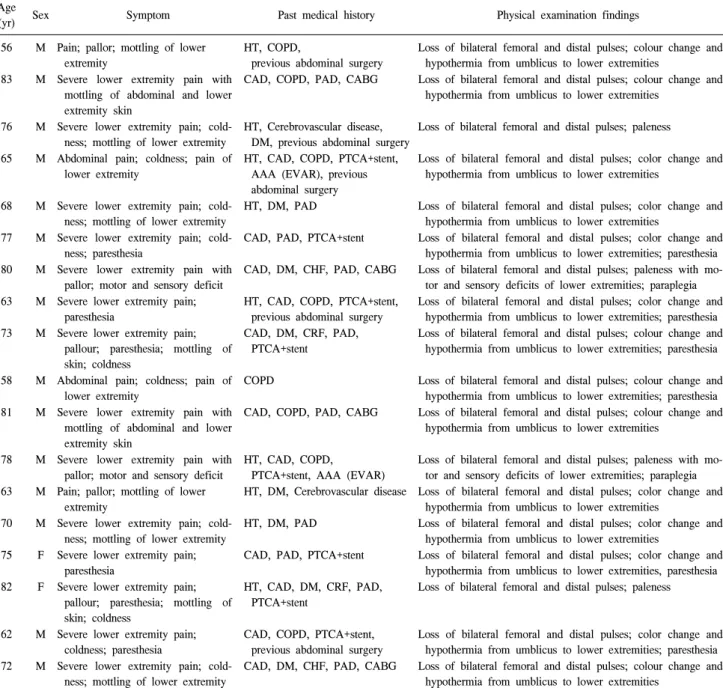
Table 1. Demographic characteristics and clinical manifestations of patients Age

(yr) Sex Symptom Past medical history Physical examination findings

56 M Pain; pallor; mottling of lower extremity

HT, COPD,

previous abdominal surgery

Loss of bilateral femoral and distal pulses; colour change and hypothermia from umblicus to lower extremities

83 M Severe lower extremity pain with mottling of abdominal and lower extremity skin

CAD, COPD, PAD, CABG Loss of bilateral femoral and distal pulses; colour change and hypothermia from umblicus to lower extremities

76 M Severe lower extremity pain; cold- ness; mottling of lower extremity

HT, Cerebrovascular disease, DM, previous abdominal surgery

Loss of bilateral femoral and distal pulses; paleness

65 M Abdominal pain; coldness; pain of lower extremity

HT, CAD, COPD, PTCA+stent, AAA (EVAR), previous abdominal surgery

Loss of bilateral femoral and distal pulses; color change and hypothermia from umblicus to lower extremities

68 M Severe lower extremity pain; cold- ness; mottling of lower extremity

HT, DM, PAD Loss of bilateral femoral and distal pulses; color change and hypothermia from umblicus to lower extremities

77 M Severe lower extremity pain; cold- ness; paresthesia

CAD, PAD, PTCA+stent Loss of bilateral femoral and distal pulses; color change and hypothermia from umblicus to lower extremities; paresthesia 80 M Severe lower extremity pain with

pallor; motor and sensory deficit

CAD, DM, CHF, PAD, CABG Loss of bilateral femoral and distal pulses; paleness with mo- tor and sensory deficits of lower extremities; paraplegia 63 M Severe lower extremity pain;

paresthesia

HT, CAD, COPD, PTCA+stent, previous abdominal surgery

Loss of bilateral femoral and distal pulses; color change and hypothermia from umblicus to lower extremities; paresthesia 73 M Severe lower extremity pain;

pallour; paresthesia; mottling of skin; coldness

CAD, DM, CRF, PAD, PTCA+stent

Loss of bilateral femoral and distal pulses; colour change and hypothermia from umblicus to lower extremities; paresthesia

58 M Abdominal pain; coldness; pain of lower extremity

COPD Loss of bilateral femoral and distal pulses; colour change and hypothermia from umblicus to lower extremities; paresthesia 81 M Severe lower extremity pain with

mottling of abdominal and lower extremity skin

CAD, COPD, PAD, CABG Loss of bilateral femoral and distal pulses; colour change and hypothermia from umblicus to lower extremities

78 M Severe lower extremity pain with pallor; motor and sensory deficit

HT, CAD, COPD, PTCA+stent, AAA (EVAR)

Loss of bilateral femoral and distal pulses; paleness with mo- tor and sensory deficits of lower extremities; paraplegia 63 M Pain; pallor; mottling of lower

extremity

HT, DM, Cerebrovascular disease Loss of bilateral femoral and distal pulses; color change and hypothermia from umblicus to lower extremities

70 M Severe lower extremity pain; cold- ness; mottling of lower extremity

HT, DM, PAD Loss of bilateral femoral and distal pulses; color change and hypothermia from umblicus to lower extremities

75 F Severe lower extremity pain;

paresthesia

CAD, PAD, PTCA+stent Loss of bilateral femoral and distal pulses; color change and hypothermia from umblicus to lower extremities, paresthesia 82 F Severe lower extremity pain;

pallour; paresthesia; mottling of skin; coldness

HT, CAD, DM, CRF, PAD, PTCA+stent

Loss of bilateral femoral and distal pulses; paleness

62 M Severe lower extremity pain;

coldness; paresthesia

CAD, COPD, PTCA+stent, previous abdominal surgery

Loss of bilateral femoral and distal pulses; color change and hypothermia from umblicus to lower extremities; paresthesia 72 M Severe lower extremity pain; cold-

ness; mottling of lower extremity

CAD, DM, CHF, PAD, CABG Loss of bilateral femoral and distal pulses; colour change and hypothermia from umblicus to lower extremities

M, male; F, female; HT, hypertension; COPD, chronic obstructive pulmonary disease; CAD, coronary artery disease; PAD, peripheral arterial disease; CABG, coronary artery bypass graft; DM, diabetes mellitus; PTCA, percutaneous transluminal coronary angioplasty;

AAA, abdominal aortic aneurysm; EVAR, endovascular aneurysm repair; CHF, congestive heart failure; CRF, chronic renal failure.

METHODS

This retrospective study was carried out using the medical records of eighteen patients with acute abdominal aortic oc- clusion treated between July 2009 and May 2013. All patients were male with an average age of 71.2±8.82 years (range, 56

to 83 years) and extranatomic bypass procedures were

performed. Hypertension (n=9), diabetes mellitus (n=8), chronic

obstructive pulmonary disease (n=8), peripheral arterial dis-

ease (n=8), congestive heart failure (n=2), cerebrovascular oc-

clusion (n=2), and chronic renal failure (n=2) were systemic

diseases detected. Twelve patients had been diagnosed for

(3)

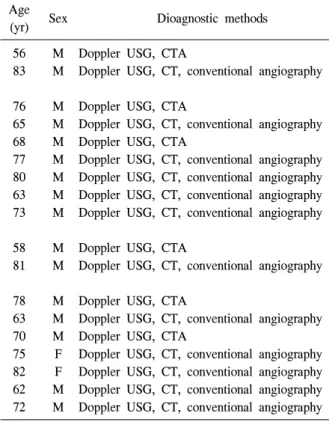
Table 2. Diagnostic and therapeutic methods applied to our patients Age

(yr) Sex Dioagnostic methods Surgical procedures

56 M Doppler USG, CTA Axillobifemoral bypass with 8 mm PTFE graft

83 M Doppler USG, CT, conventional angiography Thromboembolectomy; axillobifemoral bypass with 8 mm PTFE graft;

femoropopliteal bypass

76 M Doppler USG, CTA Axillobifemoral bypass with 8 mm PTFE graft 65 M Doppler USG, CT, conventional angiography Axillobifemoral bypass with 9 mm PTFE graft 68 M Doppler USG, CTA Axillobifemoral bypass with 8 mm PTFE graft 77 M Doppler USG, CT, conventional angiography Axillobifemoral bypass with 8 mm PTFE graft

80 M Doppler USG, CT, conventional angiography Thromboembolectomy; axillobifemoral bypass with 8 mm PTFE graft 63 M Doppler USG, CT, conventional angiography Axillobifemoral bypass with 8 mm PTFE graft

73 M Doppler USG, CT, conventional angiography Thromboembolectomy; axillobifemoral bypass with 8 mm PTFE graft;

femoropopliteal bypass

58 M Doppler USG, CTA Axillobifemoral bypass with 8 mm PTFE graft

81 M Doppler USG, CT, conventional angiography Thromboembolectomy; axillobifemoral bypass with 8 mm PTFE graft;

femoropopliteal bypass

78 M Doppler USG, CTA Axillobifemoral bypass with 8 mm PTFE graft 63 M Doppler USG, CT, conventional angiography Axillobifemoral bypass with 8 mm PTFE graft

70 M Doppler USG, CTA Thromboembolectomy; axillobifemoral bypass with 8 mm PTFE graft 75 F Doppler USG, CT, conventional angiography Axillobifemoral bypass with 9 mm PTFE graft

82 F Doppler USG, CT, conventional angiography Thromboembolectomy; axillobifemoral bypass with 8 mm PTFE graft 62 M Doppler USG, CT, conventional angiography Axillobifemoral bypass with 8 mm PTFE graft

72 M Doppler USG, CT, conventional angiography Axillobifemoral bypass with 8 mm PTFE graft

M, male; F, female; USG, ultrasonography; CTA, computed tomography angiography; PTFE, polytetrafluoroethylene; CT, computed tomography.

coronary artery disease, eight of whom had received stenting and four of them underwent coronary artery bypass grafting.

One of the two cases with a history of aortic aneurysm was endovascular aneurysm repair had been performed for the other patient with intrarenal abdominal aortic aneurysm.

Previous history of abdominal surgery had been reported in 5 patients (Table 1).

The common complaints included pain, pallour, and cya- nosis in lower extremities. In addition, eight patients suffered from intermittent claudication and paresthesia and one patient had foot drop. In one patient, diffuse abdominal pain and acute abdomen was the presenting symptom (Table 1).

Physical examination revealed pale and cold bilateral lower extremities in addition to the absence of femoral and distal pulses on bilateral lower extremities. In six patients, dis- coloration was observed starting from lower extremities ex- tending to the umbilicus. Paresthesia awas noted in four pa- tients, while paraplegia was diagnosed in one patient (Table 1). Six patients underwent urgent bilateral femoral throm-

boembolectomy subsequent to doppler ultrasonography.

Doppler ultrasonography was routinely performed to all pa- tients, while conventional and computed tomography angiog- raphy were performed in 12 and 6 patients, respectively (Table 2, Fig. 1, and Fig. 2A, B). Juxtarenal aortic occlusion with total occlusion of left renal artery was observed in two patients, while emergent surgical intervention was performed in sixteen patients with infrarenal abdominal aortic occlusion.

1) Surgical technique

All patients were operated under general anesthesia. In the

beginning, right infraclavicular incision was made. The pec-

toralis muscle was exposed and fibers were split superiorly

and inferiorly. At this point, the pectoralis minor muscle in-

sertion was divided to allow for more exposure. Right axil-

lary arteries were exposed, and proximal and distal control is

obtained. Longitudinal or oblique groin incisions were made

for exposure of femoral region. The common, superficial, and

deep (profunda) femoral arteries were dissected and controlled

(4)

Fig. 2. (A) CT angiographic image of a patient with occlusion of the in- frarenal abdominal aorta. (B) CT an- giographic image of the same patient after the operation. CT, computed tomography.

Fig. 1. Conventional angiographic image of the patients with in- frarenal abdominal aortic occlusion.

with vessel loops. Subcutaneous tunneling was performed pri- or to systemic heparinization. A graft tunneling device (e.g., Gore Tunneler) was used to create a midaxillary tunnel lateral to the nipple and above the abdominal fascia, extending from the axillary incision to the femoral incision. If required, a femoral-to-femoral tunnel was formed superior to the pubic bone for a bifemoral reconstruction. After intravenous hep- arinization (5,000 IU), a proximal axillary anastomosis and bilateral femoral distal anastomoses were made. An additional femoropopliteal bypass procedure was carried out in patients with peripheral arterial disease that underwent extraanatomic bypass. In all patients, ring polytetrafluoroethylene grafts and 5/0 polypropylene sutures were used (Table 2). Anatomical layers were closed in standard fashion subsequent to the con-

trol of bleeding.

RESULTS

Early postoperative results demonstrated that revasculariza- tion could be successfully accomplished in all patients.

However, one patient died due to multiple organ failure on 12th day postoperatively. The mean duration of stay in in- tensive care unit was 6.7±2.9 days (range, 3 to 12 days), while the duration of hospitalization was 15.1±3.9 days (range, 9 to 22 days). Re-intervention or amputation were not indicated in the early postoperative period. Graft infection was not detected in any patients, whereas thrombectomy was required in one patient to overcome graft thrombosis. The mean duration of follow-up is 21.2±9.4 months (range, 6 to 36 months) and grafts are currently patent (Fig. 2B)

DISCUSSION

In the present study, we aimed to outline the clinical pre- sentation as well as the surgical outcomes and prognosis of patients treated for AAO. Our results demonstrated that extra- anatomic bypass provides satisfactory results in selected cases.

AAO is a rare catastrophe that does not affect aorta only, but also may have rapid deleterious effects on the organs per- fused by aorta [2,3]. Therefore, increased clinical awareness on this entity is crucial for establishing the diagnosis accu- rately and planning the treatment accordingly.

Ischemic injury may exist in lower extremities, spinal cord,

kidneys, and intestines with an early mortality rate ranging

between 31% and 52% [5-8]. Basal perfusion compensated by

(5)

collateral arterial network may mask the typical ischemic clinical scene and constitute a diagnostic dilemma. Most fre- quent causes of AAO include thrombosis enhanced by athero- sclerosis and hypercoagulable state, saddle emboli, luminal enlargement due to aortic dissection and aortic trauma [1,2].

In our series, the most common cause was thrombosis due to athersoclerosis.

AAO may present in a wide spectrum of symptoms from pallour in extremities to cyanosis and compartment syndrome.

Paresthesia, loss of sensation, and motor deficits are typical findings of lower extremity. Absence of pulses is an indicator of severe ischemia which predominates the clinical picture approximately 6 hours after the onset of symptoms. Delay of the occurrence of severe ischemia symptoms may interfere with setting the correct diagnosis on time [3,4]. One of our patients presenting with paraplegia has been referred with a presumable diagnosis of spinal cord compression. Recovery of neurological symptoms after reestablishment of distal perfusion reminds that neurological deficit may be reversible in aortic occlusion. Since neurological deficits may mask the underlying vascular pathology, we suggest that major vascular occlusive disorders must be kept in mind in the differential diagnosis.

The main causes of mortality in AAO are cerebrovascular occlusion, ischemic injury to organs like heart and liver, hy- perkalemia due to renal injury, respiratory failure, and fatal arrhythmias [1,3]. Danto et al. [9] reported a mortality due to hyperkalemia after being operated for bilateral internal iliac artery occlusion. Our patient who died on 12th postoperative day had been suffering fromcongestive heart failure and chronic renal failure.

Even though typical clinical findings mostly suffice for di- agnosis, Doppler ultrasonography constitutes a practical, reli- able and non-invasive option that has 93% specificity and 90%

sensitivity [10]. In addition to routine Doppler ultrasonographic evaluation, we preferred confirmation with angiography.

Therapeutic modalities for acute bdominal aortic occlusion are embolectomy, aortobifemoral bypass, thrombolytic treat- ment, and axillo-bifemoral extraanatomic bypass procedures.

In spite of publications that advocate thrombolytic treatment [11], we think that it may be more useful for AAO develop- ing in the setting of a hypercoagulable state such as oral con- traceptive use or factor V Leiden mutation. Treatment of

AAO may vary according to the underlying etiology. If the etiology is linked with emboli, embolectomy for aorta and its distal branches may be required. We have performed embo- lectomy in three patients initially, but axillobifemoral bypass was required since blood flow could not be restored.

We made femoropopliteal bypass in addition to axillobife- moral bypass in vascular occlusion patients with athero- sclerosis. Acute thrombosis was reported to occur con- comitantly in chronic peripheral arterial disease [8,12].

The axillobifemoral bypass operation is an alternative to di- rect arterial reconstruction, such as aortobifemoral grafting.

This procedure is performed in patients with aortic graft sep- sis or a mycotic aneurysm and in patients with a totally oc- cluded abdominal aorta with a high operative risk. It is less invasive than the total reconstruction of the aorta and surgical replacement of the infected aortobifemoral graft is not neces- sary in the ‘hostile’ abdomen.

Preoperative medical measures such as heparinization, hy- dration, and optimization of cardiac functions may be em- ployed to enhance the success of surgery. Data achieved by invasive monitorization may demonstrate suboptimal left ven- tricular function and result in the modification of surgical approach. Due to the low rates of patency, we reserved axil- lobifemoral bypass for patients in poor general condition or patients with systemic comorbidities. In our series, occlusion of the graft was detected only in one patient and patency was supplied by thrombectomy.

In conclusion, AAO is a rare but devastating event and is linked with substantial morbidity and mortality in spite of the recent advances in critical care and vascular surgery. Our re- sults have shown that these hazardous outcomes may be minimized and better rates of graft patency may be achieved with extra-anatomic bypass techniques tailored according to the patient.

CONFLICT OF INTEREST

No potential conflict of interest relevant to this article was

reported.

(6)

REFERENCES

1. Dossa CD, Shepard AD, Reddy DJ, et al. Acute aortic oc- clusion: a 40-year experience. Arch Surg 1994;129:603-7.

2. Coley C, Lee KR, Steiner M, Thompson CS. Complete em- bolization of a left atrial myxoma resulting in acute lower extremity ischemia. Tex Heart Inst J 2005;32:238-40.

3. Crawford JD, Perrone KH, Wong VW, et al. A modern ser- ies of acute aortic occlusion. J Vasc Surg 2014;59:1044-50.

4. Tshomba Y, Melissano G, Apruzzi L, Baccellieri D, Negri G, Chiesa R. Open repair for aortic occlusive disease: in- dication, techniques, results, tips and tricks. J Cardiovasc Surg (Torino) 2014;55(2 Suppl 1):57-68.

5. Sen I, Stephen E, Agarwal S. Clinical profile of aortoiliac occlusive disease and outcomes of aortobifemoral bypass in India. J Vasc Surg 2013;57(2 Suppl):20S-5S.

6. Babu SC, Shah PM, Nitahara J. Acute aortic occlusion: fac-

tors that influence outcome. J Vasc Surg 1995;21:567-72.

7. Akay S, Elcin G, Erkan N. Aortic occlusion: five case reports. Turk Gogus Kalp Dama 2012;20:921-5.

8. Witz M, Lehmann J, Shnaker A, Korzets Z. Acute occlusion of the abdominal aorta associated with lower limb paralysis.

Isr Med Assoc J 2007;9:115-6.

9. Danto LA, Fry WJ, Kraft RO. Acute aortic thrombosis. Arch Surg 1972;104:569-72.

10. Langsfeld M, Nepute J, Hershey FB, et al. The use of deep duplex scanning to predict hemodynamically significant aor- toiliac stenoses. J Vasc Surg 1988;7:395-9.

11. Richardson R, Applebaum H, Touran T, et al. Effective thrombolytic therapy of aortic thrombosis in the small pre- mature infant. J Pediatr Surg 1988;23:1198-200.

12. Tetik O, Yetkin U, Yurekli I, et al. Surgical management of

chronic total occlusion of the abdominal aorta. Turk Gogus

Kalp Dama 2011;19:344-9.

수치

Table 1. Demographic characteristics and clinical manifestations of patients Age
Table 2. Diagnostic and therapeutic methods applied to our patients Age
Fig. 2. (A) CT angiographic image  of a patient with occlusion of the  in-frarenal abdominal aorta

참조

관련 문서