IMMUNE NETWORK http://www.ksimm.or.kr Volume 10 Number 6 December 2010 DOI 10.4110/in.2010.10.6.247
pISSN 1598-2629 eISSN 2092-6685 BRIEF COMMUNICATION
247 Received on November 11, 2010. Revised on November 22, 2010. Accepted on November 30, 2010.
CC This is an open access article distributed under the terms of the Creative Commons Attribution Non-Commercial License (http://creativecommons.org/licenses/by-nc/3.0) which permits unrestricted non-commercial use, distribu- tion, and reproduction in any medium, provided the original work is properly cited.
*Corresponding Author. Tel: 82-42-280-7244; Fax: 82-42-255-3158; E-mail: [email protected] Keywords: Foxp3, Regulatory B cell, Breg, CD5, CD19, CD5(+) B
Presence of Foxp3 -expressing CD19(+)CD5(+) B Cells in Human Peripheral Blood Mononuclear Cells: Human
CD19(+)CD5(+) Foxp3 (+) Regulatory B Cell (Breg)
Joonyong Noh1, Wahn Soo Choi2, Geunwoong Noh3* and Jae Ho Lee4
1Department of Animal Biotechnology, College of Animal Bioscience & Technology, Konkuk University, Seoul 143-701, 2Department of Immunology, College of Medicine, Konkuk University, Chungju 380-701, 3Division of Allergy and Clinical Immunology, Department of Paediatrics, Chungnam National University Hospital, Daejeon 301-721, 4Department of Paediatrics, Chungnam National University, Daejeon 305-764, Korea
Foxp3 is a transcript factor for regulatory T cell development.
Interestingly, Foxp3-expressing cells were identified in B cells, especially in CD19(+)CD5(+) B cells, while those were not examined in CD19(+)CD5(−) B cells. Foxp3- expressing CD5(+) B cells in this study were identified in human PBMCs and were found to consist of 8.5±3.5% of CD19(+)CD5(+) B cells. CD19(+)CD5(+)Foxp3(+) B cells showed spontaneous apoptosis. Rare CD19(+)CD5(+) Foxp3(+) regulatory B cell (Breg) population was unveiled in human peripheral blood mononuclear cells and suggested as possible regulatory B cells (Breg) as regulatory T cells (Treg). The immunologic and the clinical relevant of Breg needs to be further investigated.
[Immune Network 2010;10(6):247-249]
CD5(+) B cells constitute a subset of B cells and a sub- population of CD5(+) B cells produced IL-10 and suggested as a regulatory B cell, ‘Br1’ (1,2). The disease relationship of IL-10-producing regulatory B cells, especially in the human food allergy of atopic dermatitis, was described in a previous report of ours (3,4). Transcription factor Foxp3 is a transcript factor that controls the development of regulatory T cells and is involved in the negative regulation of immune responses (5). In this study, CD19(+)CD5(+)Foxp3(+) regulatory B cells (Breg) were demonstrated and characterized for the first
time.
Venous blood was obtained from six normal subjects (mean age=15.3±3.5 years, M:F=3:3) who visited the Department of Allergy and Clinical Immunology at the Seoul Allergy Clinic for heath examination between March and June 2010; subjects had no specific disease. Signed consent forms were obtained from either the patient or the parent. The study was approved by the Institutional Review Board of Chungnam University Hospital, Daejeon, Korea.
Peripheral blood mononuclear cells (PBMCs) were isolated from venous blood using density-gradient separation and Ficoll-Hypaque (Biomedicals, Aurora, OH, USA). PBMCs were resuspended at 1×10⁶ cells/ml in α-minimum essential medium (α-MEM; Irvine Scientific, Santa Ana, CA). CD19(+) CD5(+)Foxp3(+) regulatory B cells (Breg) were examined using fluorescence-labelled anti-CD5, anti-CD19, and an- ti-Foxp3 antibodies. Apoptotic characteristics were evaluated using fluorescence-labelled Annexin V.
The cells to be stained were prepared at a concentration of 1×10⁶ cells in 100μl of FACS staining buffer (eBioscience) in an eppendorf tube. Cells were stained with specific mono- clonal antibodies including allophycocyanin (APC)-labelled anti-CD19 (eBioscience) antibody, phycoerythrin-Cy7 (PE-Cy7)- labelled anti-CD5 antibody (eBioscience) and/or FITC-labelled Annexin V (eBioscience) for surface staining. at a concen- tration of 1μg/ml. After one hour incubation in the dark,
Human Foxp3(+) Regulatory B Cell (Breg) Joonyong Noh, et al.
248 IMMUNE NETWORK http://www.ksimm.or.kr Volume 10 Number 6 December 2010
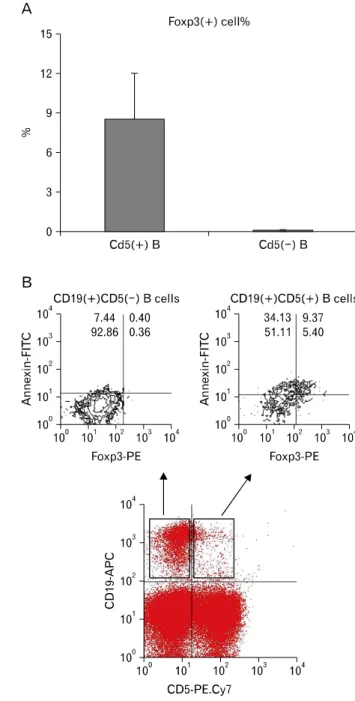
Figure 2. Characteristics of Foxp3-expressing cells in CD19(+) B cells.
(A) Foxp3(+) cell % in CD19(+)CD5(+) and CD19(+)CD5(−) B cell subpopulations. (B) Apoptotic characteristics of CD19(+)CD5(+) Foxp3(+) regulatory B cells (Breg) in a representative case. PBMCs were gated by the expression of CD19 and CD5. Each set of CD19 (+)CD5(−) B cells and CD19(+)CD5(+) B cells, CD19(−)CD5(−) cell was analyzed for Foxp3 expression and annexin V staining.
Figure 1. Foxp3 expression in only CD5(+) cells in B cells. B cells were subgated by the surface CD19 expression and analyzed by the expression of CD5 and Foxp3.
cells were washed with FACS staining buffer three times. The cells were then resuspended in 100μl of permeabilisa- tion/fixation buffer (ebioscience) just before intracellular staining. After finishing the cell surface staining and fix- ation/permeabilization, the cells were stained with a phycoer- ythrin (PE)-labelled anti-Foxp3 monoclonal antibody (eBioscience)
in a dark room for 30 minutes at 4oC. After cell surface and intracellular staining, cells were resuspended in 500 ul of FACS staining buffer. The stained cells were acquired with
Human Foxp3(+) Regulatory B Cell (Breg) Joonyong Noh, et al.
IMMUNE NETWORK http://www.ksimm.or.kr Volume 10 Number 6 December 2010 249
a FACSCaliber (BD Biosciences, Milpitas, CA, USA), and the data were analysed with CellQuest software (BD Biosciences).
CD19(+) B cells expressed the intracellular Foxp3 tran- script factor, especially only in a CD5(+) B cell sub- population in B cells (Fig. 1). Foxp3 expression was ex- clusively identified in the CD5(+) population of CD19(+) B cells and Foxp3(+) cells fraction was 8.5±3.5% in CD19 (+)CD5(+) B cells and 0.1±0.1 % in CD19(+)CD5(−) B cells (Fig. 2A). In the representative case, the apoptotic fre- quency of CD19(+)CD5(+) Foxp3(+) B cells was 63.44%
(9.37%/(9.37+5.40%)) (Fig. 2B) and CD19(+)CD5(+) B cells showed highly apoptotic characteristics using Annexin V.
Forkhead/winged-helix protein, Foxp3, is a transcription factor that controls the development of regulatory T cells (Treg) and has been reported to be expressed only in CD4 (+) T cells and not in CD19(+) B cells or in CD8(+) T cells of mice (5). These CD4(+)Foxp3(+) T cells are well known as Treg; they participate in negative immune regu- lations (5). IL-10-producing CD5(+) B cells (Br1) also pre- vented and reversed allergic airway inflammation via Foxp3 (+) T regulatory cells in a murine model (6). In this study, Foxp3-expressing CD5(+) B cells, as another subpopulation of CD5(+) B cell, were identified, in addition to IL-10-pro- ducing regulatory B cells (Br1) and TGF-β-producing regu- latory B cells (Br3) (7). Moreover, CD19(+)CD5(+)Foxp3 (+) B cells showed high spontaneous apoptotic frequency.
(Fig. 2B). In mice, 14% of B cells underwent spontaneous apoptosis (8). CD19(+)CD5 (+)Foxp3(+) B cells showed considerable spontaneous apoptosis as compared to other cell populations, especially to populations of B cells in human.
CD19(+)CD5(+)Foxp3(+) regulatory B cells (Breg) seemed to be another kind of regulatory B cells. It may be time to arrange systemically the nomenclature for regulatory B cell subsets; as IL-10-producing regulatory B cells as Br1 (4) like Tr1 of IL-10-producing T cells (5) and as TGF-β -producing regulatory B cells as Br3 (7) like Th3 of TGF-β -producing T cells (9). In addition, it has been suggested that CD19(+) CD5(+)Foxp3(+) B cells be defined as a Breg like Treg of T helper cells expressing transcript factor Foxp3. Conclusively, CD19(+)CD5(+)Foxp3(+) regulatory B cells were identified for the first time in this study. CD19(+) CD5(+)Foxp3(+)B cells were suggested as possible regu- latory B cells (Breg), a subpopulation of CD5(+) B1 cell, and were found to have highly apoptotic characteristics. The ex-
act role and immunologic significance of CD19(+)CD5(+) Foxp3(+) regulatory B cells need to be further investigated.
ACKNOWLEDGEMENTS
This work was supported by a grant from the Korean Ministry of Education, Science and Technology (The Regional Core Research Program/Chungbuk BIT Research-Oriented University Consortium).
CONFLICTS OF INTEREST
The author have no financial conflict of interest.
REFERENCES
1. Mizoguchi A, Bhan AK: A case for regulatory B cells. J Immunol 176;705-710, 2006
2. Gieni RS, Umetsu DT, DeKruyff RH: Ly1- (CD5-) B cells produce interleukin (IL)-10. Cell Immunol 175;164-170, 1997
3. Lee JH, Noh J, Noh G, Kim HS, Mun SH, Choi WS, Cho S, Lee S: Allergen-specific B cell subset responses in cow's milk allergy of late eczematous reactions in atopic derma- titis. Cell Immunol 262;44-51, 2010
4. Noh J, Lee JH, Noh G, Bang SY, Kim HS, Choi WS, Cho S, Lee SS: Characterisation of allergen-specific responses of IL-10-producing regulatory B cells (Br1) in Cow Milk Allergy.
Cell Immunol 264;143-149, 2010
5. Hori S, Nomura T, Sakaguchi S: Control of regulatory T cell development by the transcription factor Foxp3. Science 299;1057-1061, 2003
6. Amu S, Saunders SP, Kronenberg M, Mangan NE, Atzberger A, Fallon PG: Regulatory B cells prevent and reverse aller- gic airway inflammation via FoxP3-positive T regulatory cells in a murine model. J Allergy Clin Immunol 125;1114- 1124, 2010
7. Lee JH, Noh J, Noh G, Choi WS, Cho S, Lee SS. Allergen- specific TGF-β-producing CD19(+)CD5(+) Regulatory B-Cell (Br3) Responses in Human Late Eczematous Allergic Reactions to Cow’s Milk. J Interferon Cytokine Res 2011 in press
8. Douglas RS, Woo EY, Capocasale RJ, Tarshis AD, Nowell PC, Moore JS: Altered response to and production of TGF-beta by B cells from autoimmune NZB mice. Cell Immunol 179;126-137, 1997
9. Weiner HL: Oral tolerance: immune mechanisms and the generation of Th3-type TGF-beta-secreting regulatory cells.
Microbes Infect 3;947-954, 2001