REVIEW ARTICLE
염증성 장질환과 비타민 D
김기배, 김형우, 이준수, 윤순만
충북대학교 의과대학 충북대학교병원 내과
Inflammatory Bowel Disease and Vitamin D
Ki Bae Kim, Hyoung Woo Kim, Jun Su Lee and Soon Man Yoon
Department of Internal Medicine, Chungbuk National University Hospital, Chungbuk National University College of Medicine, Cheongju, Korea Vitamin D contributes to bone metabolism and acts as an immune modulator for both innate and adaptive immunity. The serum level of vitamin D has been associated with inflammatory diseases, such as inflammatory bowel disease (IBD). In epidemiologic studies, IBD patients have been shown to have low levels of vitamin D. The suboptimal circulating levels of vitamin D in IBD patients may be caused by low exposure to sunlight, dietary malabsorption, and the impaired conversion of active metabolites (1,25[OH]2D). Recent studies have demonstrated that vitamin D deficiency in IBD can increase the chance of disease recurrence, IBD-related hospital- ization or surgery, and deterioration of quality of life. Supplementation with vitamin D is therefore thought to reduce the risk of flare-ups and the improvement of the quality of life in IBD patients. This review aims to summarize the latest knowledge on the effects of vitamin D deficiency on IBD and the possible benefits of vitamin D supplementation in IBD patients. (Korean J Gastroenterol 2020;76:275-281)
Key Words: Inflammatory bowel diseases; Vitamin D; Deficiency; Supplement
Received November 22, 2020. Revised December 19, 2020. Accepted December 21, 2020.
CC This is an open access article distributed under the terms of the Creative Commons Attribution Non-Commercial License (http://creativecommons.org/licenses/
by-nc/4.0) which permits unrestricted non-commercial use, distribution, and reproduction in any medium, provided the original work is properly cited.
Copyright © 2020. Korean Society of Gastroenterology.
교신저자: 윤순만, 28644, 청주시 서원구 1순환로 776, 충북대학교병원 내과
Correspondence to: Soon Man Yoon, Department of Internal Medicine, Chungbuk National University Hospital, Chungbuk National University College of Medicine, 776 1Sunhwan-ro, Seowon-gu, Cheongju 28644, Korea. Tel: +82-43-269-7241, Fax: +82-43-269-6354, E-mail: [email protected], ORCID: https://orcid.org/
0000-0003-3885-6763
Financial support: None. Conflict of interest: None.
서 론
염증성 장질환은 만성적으로 위장관에 염증과 궤양을 유발 하는 면역 매개 질환으로, 대표적으로는 궤양성 대장염과 크 론병이 있다. 염증성 장질환은 서구와 선진국에서 높은 유병 률을 보이지만 최근 아시아를 포함한 신흥 국가에서 발병률이 빠르게 증가하고 있다.1,2 염증성 장질환의 발생 기전은 명확 하지 않지만, 발생 요인으로는 유전적 영향, 환경적 요인, 비 정상적인 면역 반응, 장내 미생물, 음식 등이 알려져 있다.3 최근 야외 활동 부족 등의 이유로 비타민 D 부족에 대한 관심이 커지고 있는데, 한 국내 문헌에 의하면 10세 이상 남성 의 47.3%, 여성의 64.5%가 비타민 D 결핍(<20 ng/mL)이 있는
것으로 조사되었다.4 한국은 비교적 북반구에 위치하며 야외 활동이 적고 야외에서 자외선 차단제를 많이 사용하기 때문에 비타민 D의 결핍에 쉽게 노출되는 것으로 추정된다. 염증성 장질환 환자들의 경우 혈중 비타민 D 수치는 일반인보다 낮게 나타나며, 질병의 활성도에 따라 수치가 달라지기도 한다.5-10 국내에서 조사된 염증성 장질환 환자의 혈중 비타민 D 평균 수치는 12.3±6.2 ng/mL로 일반인(20.0±6.7 ng/mL)에서보다 유의하게 낮게 나타났으며,11 또 다른 국내 연구에서도 93.5%
의 크론병 환자와 80%의 궤양성 대장염 환자에서 비타민 D 결핍(<20 ng/mL) 소견을 보였다.12염증성 장질환 환자들에서 비타민 D 수치가 낮게 나타나는 이유로는 일반인보다 야외 활동이 적고 식단이 제한되어 있으며 만성적인 장의 염증으로
인한 흡수 장애 때문일 것으로 추정된다. 염증성 장질환 뿐만 아니라 다른 면역 관련 질환에서도 혈청 비타민 D 수치가 낮게 보고된다. 비타민 D 결핍이 염증성 장질환을 유발하는지 또는 염증성 장질환의 결과인지 현재까지는 명확하지 않다. 본고에 서는 최근 문헌 검토를 통해 비타민 D가 염증성 장질환에 미치 는 영향을 알아보고, 비타민 D 결핍을 개선하는 방법을 살펴보 고자 한다.
본 론
1. 비타민 D의 합성과 혈중 농도
비타민 D는 식물, 효모 및 곰팡이 등에서 유래한 비타민 D2 (ergocalciferol)와 동물에서 추출한 비타민 D3 (cholecalciferol)를 포함하는 지용성 비타민이며 스테로이드 호르몬과 같은 방식으로 작용한다. 비타민 D는 일반적으로 식품 으로 공급받기에는 충분하지 않으며, 7-dehydrocholesterol의 전환을 통해 햇빛에 노출되면 사람의 피부에서 생성될 수 있다.
햇빛에 있는 자외선 B는 비타민 D의 합성에 관여하기 때문에, 자외선 노출을 피하거나 실내 창문을 통한 햇빛의 경우에는 비타민 D 생성이 원활하지 않을 수 있다.13,14자외선 B (280-320 nm)를 받으면 피부의 7-dehydrocholesterol이 비타민 D3로 합성되며, 이러한 비타민 D3는 혈액을 통해 간으로 이동하여 25-hydroxylase를 통해 25-hydroxyvitamin D (25[OH]D, 순 환 형태의 비타민 D)로 변한다. 이후 25-hydroxyvitamin D는 신장으로 가서 1,25-dihydroxyvitamin D (1,25[OH]2D, 활성 형태의 비타민 D)로 전환된다. 비타민 D 부족 현상은 이전에는 주로 야외에서 생활하였기 때문에 큰 문제가 아니었지만, 요즘 은 사람들이 대부분의 시간을 집이나 실내에서 보내기 때문에 중요한 문제가 되고 있다.
국내 연구에 의하면 성인의 경우 비타민 D의 결핍은 20대 가 가장 많았으며, 일조량이 적거나 야외 활동이 적은 봄과 겨울에 비타민 D 결핍이 심하게 나타났다.4또 다른 국내 한 연구에 의하면 각 연령에 따른 혈중 비타민 D 평균 수치는 유치원생 24.2±9.2 ng/mL, 초등학생 19.0±5.9 ng/mL, 중학 생 16.0±6.8 ng/mL, 고등학생 15.0±7.3 ng/mL로, 중고등학 생이 비타민 D 부족이 심한 것으로 나타났는데 이는 주로 교 실 등 실내에서 수업을 받는 경우가 많고, 성장에 비해 상대적 으로 비타민 D 공급이 부족한 점이 원인으로 생각된다.15
비타민 D 결핍은 혈청 25-hydroxyvitamin D를 측정하여 평가한다. 적절한 비타민 D의 수치는 문헌에 따라 다양하지 만, 30 ng/mL 이상은 정상(normal), 20-30 ng/mL는 불충분 (insufficiency), 20 ng/mL 미만은 결핍(deficiency)으로 간 주된다.16 비타민 D 결핍의 임상적인 위험 요인으로는 경구 섭취 감소, 영양 실조, 제한된 햇빛 노출, 위장 흡수 장애, 심
각한 간질환이나 간부전(25-hydroxylase 활성 감소 초래) 그 리고 신부전 등이 있다.17
2. 비타민 D의 기능
1,25-dihydroxyvitamin D는 장 흡수를 통해 칼슘 항상성 을 유지하는 데 필수적이며, 뼈 흡수를 자극하고, 신장에서 칼슘 배설을 줄여 칼슘 수치를 더욱 증가시킨다.
1,25-dihydroxyvitamin D 수치는 부갑상선 호르몬에 의해 조절되는데, 부갑상선은 부적절한 칼슘 수치를 감지하면 부 갑상선 호르몬을 분비하여 1-hydroxylase를 증가시켜 1,25-dihydroxyvitam in D 수 치 를 증 가 시 킨 다 . 1,25- dihydroxyvitamin D와 비타민 D 수용체(vitamin D receptor) 의 상호 작용은 장내 칼슘 흡수의 효능을 30-40%까지 증가시키 고, 인 흡수율을 약 80%까지 증가시킨다.18,19
1,25-dihydroxyvitamin D는 세포 분열 및 분화, 세포 사 멸, 혈관 신생을 조절하는 약 200 개 이상의 유전자에 직간접 적인 영향을 미치며 중요한 면역 조절제 역할도 한다.18,20 또 한 1,25-dihydroxyvitamin D는 염증성 장질환을 포함한 자 가 면역 질환을 억제하는 것으로 나타났다. 비타민 D는 비타 민 D 수용체를 통해 미생물에 대한 잠재적인 항염 작용을 하 며 비타민 D 또는 비타민 D 수용체가 부족하면 염증성 장질 환이 악화될 수도 있다.21,22
비타민 D는 장내 미생물 총에 유리한 영향을 주어, 면역 상호 작용을 통해 장 상피 장벽을 유지함으로써 결장을 보호 하는 역할을 한다.22-26동물 모델에서 비타민 D는 세균에 의한 염증 반응 뿐 아니라 결장 상피로의 세균 침투를 줄이는 것으 로 나타났는데, 비타민 D 수용체 유전자 결핍 마우스(vitamin D receptor knockout mouse)의 경우 야생형 마우스(wild type mouse)와 비교하여 장내 미생물 불균형(dysbiosis)이 심하게 나타났다.21,26 또한 장내 미생물 총은 비타민 D 대사 및 대장 상피에서 비타민 D 수용체의 발현에 영향을 미치는 것으로 나타났는데, 한 무작위 임상 시험에 의하면 비타민 D 보충제를 복용한 그룹에서 대조군에 비해 장내 미생물의 알파 다양성의 변화를 나타내지는 못하였지만(p>0.05), 속(genus) 의 단계에서는 비타민 D 복용 그룹에서
Lachnospira
속이 더 많았고Blautia
속은 더 적었다.27아직 이런 장내 미생물의 변화가 임상적인 효과에 어떤 영향을 미치는지는 추가적인 연 구가 필요하다.3. 염증성 장질환에서 비타민 D 결핍의 원인
기존 연구들에 의하면 염증성 장질환 환자의 약 60-70%는 혈중 비타민 D가 충분하지 않았다.19 또한 일부 코호트 연구 에 따르면 낮은 수치의 비타민 D가 염증성 장질환을 유발할 가능성이 더 높았다. 동물 모델에서도 비타민 D 결핍이 대장
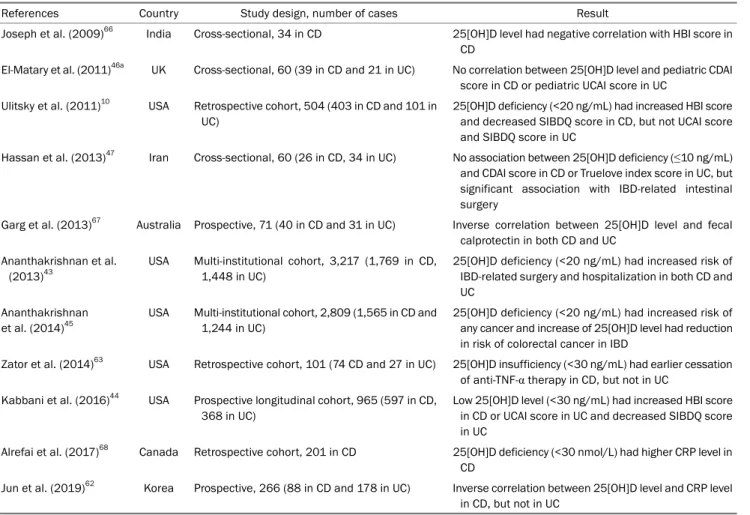
Table 1. The Studies of the Association between Vitamin D Status and Disease-related Outcomes in IBD
References Country Study design, number of cases Result
Joseph et al. (2009)66 India Cross-sectional, 34 in CD 25[OH]D level had negative correlation with HBI score in CD
El-Matary et al. (2011)46a UK Cross-sectional, 60 (39 in CD and 21 in UC) No correlation between 25[OH]D level and pediatric CDAI score in CD or pediatric UCAI score in UC
Ulitsky et al. (2011)10 USA Retrospective cohort, 504 (403 in CD and 101 in UC)
25[OH]D deficiency (<20 ng/mL) had increased HBI score and decreased SIBDQ score in CD, but not UCAI score and SIBDQ score in UC
Hassan et al. (2013)47 Iran Cross-sectional, 60 (26 in CD, 34 in UC) No association between 25[OH]D deficiency (≤10 ng/mL) and CDAI score in CD or Truelove index score in UC, but significant association with IBD-related intestinal surgery
Garg et al. (2013)67 Australia Prospective, 71 (40 in CD and 31 in UC) Inverse correlation between 25[OH]D level and fecal calprotectin in both CD and UC
Ananthakrishnan et al.
(2013)43
USA Multi-institutional cohort, 3,217 (1,769 in CD, 1,448 in UC)
25[OH]D deficiency (<20 ng/mL) had increased risk of IBD-related surgery and hospitalization in both CD and UC
Ananthakrishnan et al. (2014)45
USA Multi-institutional cohort, 2,809 (1,565 in CD and 1,244 in UC)
25[OH]D deficiency (<20 ng/mL) had increased risk of any cancer and increase of 25[OH]D level had reduction in risk of colorectal cancer in IBD
Zator et al. (2014)63 USA Retrospective cohort, 101 (74 CD and 27 in UC) 25[OH]D insufficiency (<30 ng/mL) had earlier cessation of anti-TNF-α therapy in CD, but not in UC
Kabbani et al. (2016)44 USA Prospective longitudinal cohort, 965 (597 in CD, 368 in UC)
Low 25[OH]D level (<30 ng/mL) had increased HBI score in CD or UCAI score in UC and decreased SIBDQ score in UC
Alrefai et al. (2017)68 Canada Retrospective cohort, 201 in CD 25[OH]D deficiency (<30 nmol/L) had higher CRP level in CD
Jun et al. (2019)62 Korea Prospective, 266 (88 in CD and 178 in UC) Inverse correlation between 25[OH]D level and CRP level in CD, but not in UC
CD, Crohn’s disease; UC, ulcerative colitis; IBD, inflammatory bowel disease; HBI, Harvey Bradshaw index; CDAI, Crohn’s disease activity index; UCAI, ulcerative colitis activity index; CRP, C-reactive protein; SIBDQ, short IBD questionnaire.
aPediatric study.
염에 대한 감수성을 증가시키고, 비타민 D 보충제가 치료에 도움이 될 수 있음을 보여주었다.23염증성 장질환은 질병 활 동이 높거나 기간이 길 때 비타민 D 결핍에 더 취약하였다.
많은 연구들에서 낮은 비타민 D 수치는 염증성 장질환의 질 병 활성도와 관련이 있었다.5-10 비타민 D 결핍이 염증성 장질 환을 유발하는지, 아니면 비타민 D 결핍이 염증으로 인해 발 생한 결과인지는 아직 명확히 밝혀지지 않았지만 두 가능성 모두 같이 고려되어야 한다. 또한, 비타민 D는 장내에서 항염 작용을 하므로 염증성 장질환 환자에서 정상적인 비타민 D 수치를 유지하는 것이 중요하겠다.
비타민 D 결핍이 일반인보다 염증성 장질환 환자에서 더 많은 이유로는 활동성 또는 지속적인 질환 상태에 따른 제한된 야외 활동에 의한 불충분한 햇빛 노출, 중증 질환 환자의 생활 방식의 변화, 장 증상을 유발하는 식이 변화, 흡수에 영향을 미치는 장 염증, 활성 형태(1,25-dihydroxyvitamin D)로의 전 환 장애 및 비타민 D의 배설 증가 등이 있다.9,13,14,24,28-36
염증성 장질환 환자에서 비타민 결핍의 또 다른 위험 요인으로는 여성,
임신, 염증성 장질환 관련된 수술, 높은 체질량 지수(>30 kg/m2), 노인(65세 이상) 및 백인이 아닌 인종 등이 있다.37-39 크론병에 대한 코호트 연구에 따르면 낮은 햇빛 노출, 영양 실조 및 흡연은 비타민 D 결핍의 예측인자로 조사되었고,40 염증성 장질환 환자의 유전적 변이 또한 비타민 D 수치나 활동 에 영향을 미칠 수 있다.41,42
4. 비타민 D 결핍이 염증성 장질환에 미치는 영향
비타민 D 결핍은 염증성 장질환의 질병 활성도, 질환의 재 발, 질환 관련 입원 및 수술, 환자의 삶의 질 등에 영향을 미치 는 것으로 알려져 있으며, 이와 관련된 여러 연구들이 있다 (Table 1). 크론병 환자 코호트 연구에 따르면 적정 수치의 비타민 D를 가진 환자들에 비해 비타민 D 결핍(<20 ng/mL) 이 있는 환자는 염증성 장질환 관련 수술(OR 1.76, 95% CI 1.24-2.51) 및 염증성 장질환 관련 입원이 증가하였다(OR 2.07, 95% CI 1.59-2.68).43 또한, 염증성 장질환 환자의 낮은 비타민 D 수치는 삶의 질에 영향을 미칠 수 있다.10,19,44 최근
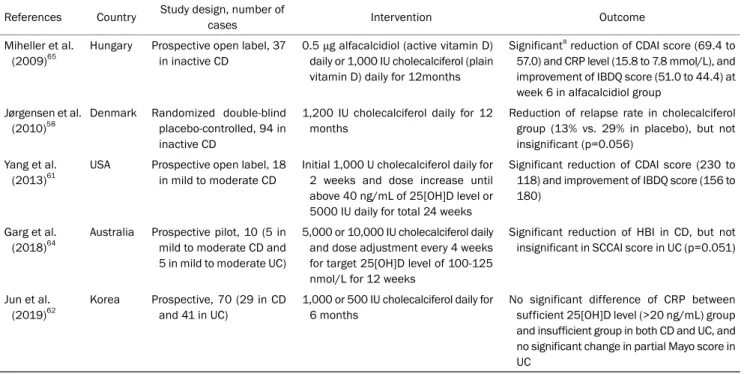
Table 2. The Studies of Relationship between Vitamin D Supplementation and Outcomes in IBD References Country Study design, number of
cases Intervention Outcome
Miheller et al.
(2009)65
Hungary Prospective open label, 37 in inactive CD
0.5 μg alfacalcidiol (active vitamin D) daily or 1,000 IU cholecalciferol (plain vitamin D) daily for 12months
Significanta reduction of CDAI score (69.4 to 57.0) and CRP level (15.8 to 7.8 mmol/L), and improvement of IBDQ score (51.0 to 44.4) at week 6 in alfacalcidiol group
Jørgensen et al.
(2010)58
Denmark Randomized double-blind placebo-controlled, 94 in inactive CD
1,200 IU cholecalciferol daily for 12 months
Reduction of relapse rate in cholecalciferol group (13% vs. 29% in placebo), but not insignificant (p=0.056)
Yang et al.
(2013)61
USA Prospective open label, 18 in mild to moderate CD
Initial 1,000 U cholecalciferol daily for 2 weeks and dose increase until above 40 ng/mL of 25[OH]D level or 5000 IU daily for total 24 weeks
Significant reduction of CDAI score (230 to 118) and improvement of IBDQ score (156 to 180)
Garg et al.
(2018)64
Australia Prospective pilot, 10 (5 in mild to moderate CD and 5 in mild to moderate UC)
5,000 or 10,000 IU cholecalciferol daily and dose adjustment every 4 weeks for target 25[OH]D level of 100-125 nmol/L for 12 weeks
Significant reduction of HBI in CD, but not insignificant in SCCAI score in UC (p=0.051)
Jun et al.
(2019)62
Korea Prospective, 70 (29 in CD and 41 in UC)
1,000 or 500 IU cholecalciferol daily for 6 months
No significant difference of CRP between sufficient 25[OH]D level (>20 ng/mL) group and insufficient group in both CD and UC, and no significant change in partial Mayo score in UC
CD, Crohn’s disease; UC, ulcerative colitis; IBD, inflammatory bowel disease; HBI, Harvey Bradshaw index; CDAI, Crohn’s disease activity index;
UCAI, ulcerative colitis activity index; CRP, C-reactive protein; IBDQ, IBD questionnaire; SCCAI, simple clinical colitis activity index.
aSignificant means less than 0.05 of p-value.
국내 연구에서도 비타민 D의 감소는 질병활성도와 연관이 있 었으며(p<0.001), 심한 비타민 D 결핍(<10 ng/mL)은 크론병 (HR 1.93, 95% CI 1.38-2.70)과 궤양성 대장염(HR 2.77, 95%
CI 1.14-6.74)에서 수술의 독립적인 위험인자로 나타났다.12 비타민 D 결핍은 염증성 장질환에서 대장암 발생의 위험이 있는 것으로 조사되었는데, 한 대규모 다기관 코호트 연구에 의하면 낮은 비타민 D 수치(<20 ng/mL)는 여러 종류의 암, 특히 대장암 증가와 관련이 있었다.45 반면, 일부 연구들에 의 하면 비타민 D 수치나 비타민 D 결핍이 질병활성도와 관련이 없었다는 결과도 있으며,46,47 크론병에서는 질병활성도 및 삶 의 질에 영향이 있었지만 궤양성 대장염에서는 관계가 없었다 는 연구 결과도 있다.10
5. 염증성 장질환과 비타민 D 보충
비타민 D 결핍은 햇빛에 대한 노출을 늘리고, 비타민 D가 포함된 음식을 섭취하고, 비타민 D 보충제의 투여를 통해 개선 될 수 있다. 햇빛의 양은 날씨, 계절 및 위도에 따라 다르기 때문에 햇빛에 대한 적절한 노출의 정도를 정하는 것은 쉽지 않다. 한 연구에 의하면 영국의 여름을 기준으로 화창한 날씨에 자외선 차단제를 바르지 않고 13분 동안 햇빛에 노출되면 비타 민 D를 생성하기에 충분한 것으로 나타났다.13영국 National Health Service (NHS)에 따르면 비타민 D에 권장되는 식품 공급원으로는 연어, 정어리, 청어, 고등어와 같은 기름진 생선,
붉은 살코기, 간, 달걀 노른자, 지방 스프레드 및 특정 시리얼과 같은 식품이 포함된다.48 Scientific Advisory Committee on Nutrition (SACN)은 4세 이상의 개인에게 공급원(식품 및 경 구 보충제)에 관계없이 매일 400 IU의 비타민 D의 섭취를 권장 한다.49그러나 염증성 장질환 환자는 음식으로 인한 장 증상으 로 인해 음식을 통해 적절한 비타민 D를 얻기가 어려울 수 있다. 따라서 경구용 비타민 D 보충제가 일반적으로 사용되며 유형에 따라 비타민 D2 또는 비타민 D3로 구분된다.
National Institute for Health and Care Excellence (NICE) 는 특정 인구 집단에서 비타민 D의 경구 보충제를 권장하고 있다. 이러한 대상으로는 4세 미만의 영유아, 임산부 또는 모유 수유중인 여성, 65세 이상인 사람, 햇빛에 노출이 적은 사람이 포함된다.50 최근 European Crohn´s and Colitis Organisation (ECCO) 가이드라인에 의하면 성인의 경우 전신 스테로이드가 투여되는 경우 예방적으로 비타민 D를 공급할 것을 제안하고
있으며,51,52 소아의 경우 스테로이드 투약과 상관없이 비타민
D 수치가 20 ng/mL 미만이면 비타민 D를 투여하라고 제시하고 있다.53 또한 European Society for Clinical Nutrition and Metabolism (ESPEN) 가이드라인에 의하면 소아나 성인 상관 없이 염증성 장질환에서 활동기이고 스테로이드 투여를 받는 경우 혈중 칼슘과 비타민 D 수치를 측정하고 부족 시 보충하라고 제시하고 있다.54경구용 비타민 D 보충제는 어린이에게 안전하 며 복용량에 관계없이 약간의 부작용만 생기는 것으로 알려져
있다.55,56성인 연구에서도 유사한 안전성을 보였는데, 한 메타분 석에 의하면 갈증, 메스꺼움, 구강 건조, 두통, 경미한 위장 장애, 졸음 및 피로 등이 일반적인 부작용으로 보고되었다.57-59 결핍을 예방하기 위해 권장되는 비타민 D 보충제의 적절한 복용량은 다양하다. NICE는 하루에 400 IU의 비타민 D를 권장 하고,50 Institute of Medicine (IOM)은 하루에 600 IU를 권장하 며,16 Endocrine Society는 하루에 1,500-2,000 IU를 권장하고 있다.59 최근 한 문헌에서는 염증성 장질환에서 하루 1,800-10,000 IU를 추천하고 있는데, 이는 만성 염증과 장내 흡수 장애를 고려한 것으로 생각된다.60 최근 ECCO와 European Society of Paediatric Gastroenterology, Hepatology and Nutrition (ESPGHAN) 공동 가이드라인에 의하면 소아 궤양성 대장염 환자에서 비타민 D 결핍 시 하루 2,000 IU 투여에 추가로 부하용량(loading dose)을 투여하는 방법을 제시하고 있는데, 2-3개월 동안 경구 비타민 D 50,000 IU를 1주일에 한 번씩 주거나 또는 1개월 동안 1주일에 세 번씩 주는 방법이다. 또 다른 방법으로 고용량(300,000-500,000 IU) 경구 비타민 D를 단 한번 투여하는 것도 효과적이고 안전한 것으로 보고되어 있다고 기술하고 있다.53
염증성 장질환에서 비타민 D 보충이 질병 활성도 및 삶의 질 등에 미치는 영향을 평가한 여러 연구들이 있다(Table 2).
한 예비 연구에 의하면 하루에 최대 5,000 IU의 비타민 D3를 24주 동안 보충하였을 때 경증 및 중등도 크론병 환자의 질병 활성도가 효과적으로 감소하였으며 환자의 삶의 질 또한 향상 되었다.61 한편, 한 무작위 이중 맹검 위약 대조 시험에서 12개 월 동안 매일 1,200 IU로 비타민 D3를 보충한 결과 크론병의 재발률이 1년에 29%에서 13%로 감소하였지만 통계적으로 유의하지는 않았다(p=0.056).58 국내의 한 전향적 연구에서도 비타민 D를 6개월간 투여 후 비타민 D 수치에 따른 CRP나 질병활성도의 변화를 비교하였을 때 유의한 차이는 없었다.62 비타민 D가 염증성 장질환에서 항-tumor necrosis factor (TNF)의 효과와도 관련이 있다는 보고도 있는데, 후향적 단일 기관 코호트 연구에 의하면 비타민 D 부족(<30 ng/mL)이 항 -TNF의 조기 중단에 영향이 있음을 보여주었다(HR 2.13, 95% CI 1.03-4.39; p=0.04).63 또한 메타분석에 따르면 비타 민 D 보충제가 염증성 장질환 환자에서 순환 비타민 D 수치 를 증가시키고 질병의 재발률을 조절하는 것으로 나타났으 며,57 한 코호트 연구에서는 비타민 D 수치의 정상화가 크론 병 관련 수술의 감소와 관련이 있다고 하였다.43 염증성 장질 환의 활성기에 12주 동안의 비타민 D 보충제를 조사한 전향 적 예비 연구에서는 비타민 D 보충제는 비타민 D의 혈중 농 도를 목표에 더 가깝게 만들었고, 증상 기반 활동 점수를 향상 시켰지만 장내 혹은 전신 염증의 객관적인 측정값을 변경하지 는 못하였다.64 또한 한 연구에 따르면 크론병 환자에서 활성
형태의 비타민 D (1,25-dihydroxyvitamin D)가 비활성 비타 민 D (25-hydroxyvitamin D)보다 뼈 대사 및 질병 활성도에 더 많은 효과를 보였다.65
결 론
염증성 장질환에서 비타민 D 부족은 비교적 흔하며 일반인 보다 더 많이 발생한다. 비타민 D는 항균 효과, 면역 반응 조 절, 장내 미생물 조절 등에 중요한 역할을 하므로 염증성 장질 환 환자에서 충분한 수치의 비타민 D는 질병 활성도를 감소 시키고 관해 상태를 유지하며, 삶의 질을 높이고 입원 및 수술 의 빈도를 줄일 수 있겠다. 비타민 D 공급을 위한 햇빛 노출을 위해 야외 활동을 권장할 수 있으나, 학업이나 업무 등 여러 이유로 인해 일정하게 야외 활동을 하기는 쉽지 않다. 또한, 음식을 통한 비타민 D 공급도 음식에 따른 장질환의 변화와 질환의 활성도에 따른 섭취 및 흡수에 변화가 있으므로 제한 점이 있다. 현재까지의 연구들에 의하면 비타민 D 보충제는 비타민 D 결핍 해결에 상당히 효과적이고 안전하며 염증성 장질환의 치료에도 도움이 된다. 하지만 기존 연구들을 보면 염증성 장질환에서 비타민 D의 보충 용량이나 투여 기간이 다양하고, 일부 일관되지 않은 결과들도 존재한다. 따라서 향 후 염증성 장질환에서 비타민 D 결핍의 영향 및 비타민 D 보충제의 효과를 평가하기 위한 잘 설계된 무작위 임상 시험 이 필요할 것으로 사료된다.
REFERENCES
1. Molodecky NA, Soon IS, Rabi DM, et al. Increasing incidence and prevalence of the inflammatory bowel diseases with time, based on systematic review. Gastroenterology 2012;142:46-54.e42;
quiz e30.
2. Ng SC, Shi HY, Hamidi N, et al. Worldwide incidence and preva- lence of inflammatory bowel disease in the 21st century: a sys- tematic review of population-based studies. Lancet 2018;390:
2769-2778.
3. de Souza HS, Fiocchi C. Immunopathogenesis of IBD: current state of the art. Nat Rev Gastroenterol Hepatol 2016;13:13-27.
4. Choi HS, Oh HJ, Choi H, et al. Vitamin D insufficiency in Korea--a greater threat to younger generation: the Korea National Health and Nutrition Examination Survey (KNHANES) 2008. J Clin Endocrinol Metab 2011;96:643-651.
5. Dolatshahi S, Pishgar E, Jamali R. Does serum 25 hydroxy vita- min D level predict disease activity in ulcerative colitis patients?.
Acta Clin Belg 2016;71:46-50.
6. Frigstad SO, Høivik M, Jahnsen J, et al. Vitamin D deficiency in in- flammatory bowel disease: prevalence and predictors in a Norwegian outpatient population. Scand J Gastroenterol 2017;
52:100-106.
7. Ko KH, Kim YS, Lee BK, et al. Vitamin D deficiency is associated
with disease activity in patients with Crohn's disease. Intest Res 2019;17:70-77.
8. Sauer CG, Loop MS, Venkateswaran S, et al. Free and bio- available 25-hydroxyvitamin D concentrations are associated with disease activity in pediatric patients with newly diagnosed treatment naïve ulcerative colitis. Inflamm Bowel Dis 2018;24:
641-650.
9. Schäffler H, Schmidt M, Huth A, Reiner J, Glass Ä, Lamprecht G.
Clinical factors are associated with vitamin D levels in IBD pa- tients: a retrospective analysis. J Dig Dis 2018;19:24-32.
10. Ulitsky A, Ananthakrishnan AN, Naik A, et al. Vitamin D deficiency in patients with inflammatory bowel disease: association with disease activity and quality of life. JPEN J Parenter Enteral Nutr 2011;35:308-316.
11. Han YM, Yoon H, Lim S, et al. Risk factors for vitamin D, zinc, and selenium deficiencies in Korean patients with inflammatory bowel disease. Gut Liver 2017;11:363-369.
12. Ham NS, Hwang SW, Oh EH, et al. Influence of severe vitamin D deficiency on the clinical course of inflammatory bowel disease.
Dig Dis Sci 2020 Mar 26. [Epub ahead of print]
13. Rhodes LE, Webb AR, Fraser HI, et al. Recommended summer sunlight exposure levels can produce sufficient (> or =20 ng ml(-1)) but not the proposed optimal (> or =32 ng ml(-1)) 25(OH)D levels at UK latitudes. J Invest Dermatol 2010;130:1411-1418.
14. Bours PH, Wielders JP, Vermeijden JR, van de Wiel A. Seasonal variation of serum 25-hydroxyvitamin D levels in adult patients with inflammatory bowel disease. Osteoporos Int 2011;22:
2857-2867.
15. Lee A, Kim SH, Nam CM, Kim YJ, Joo SH, Lee KR. Prevalence of vitamin D deficiency and insufficiency in Korean children and adolescents and associated factors. Lab Med Online 2016;
6:70-78.
16. Ross AC, Manson JE, Abrams SA, et al. The 2011 report on dietary reference intakes for calcium and vitamin D from the Institute of Medicine: what clinicians need to know. J Clin Endocrinol Metab 2011;96:53-58.
17. Raftery T, O'Sullivan M. Optimal vitamin D levels in Crohn's dis- ease: a review. Proc Nutr Soc 2015;74:56-66.
18. Reich KM, Fedorak RN, Madsen K, Kroeker KI. Vitamin D im- proves inflammatory bowel disease outcomes: basic science and clinical review. World J Gastroenterol 2014;20:4934-4947.
19. Nielsen OH, Rejnmark L, Moss AC. Role of vitamin D in the natural history of inflammatory bowel disease. J Crohns Colitis 2018;12:
742-752.
20. Adams JS, Hewison M. Unexpected actions of vitamin D: new per- spectives on the regulation of innate and adaptive immunity. Nat Clin Pract Endocrinol Metab 2008;4:80-90.
21. Froicu M, Weaver V, Wynn TA, McDowell MA, Welsh JE, Cantorna MT. A crucial role for the vitamin D receptor in ex- perimental inflammatory bowel diseases. Mol Endocrinol 2003;17:2386-2392.
22. Liu W, Chen Y, Golan MA, et al. Intestinal epithelial vitamin D re- ceptor signaling inhibits experimental colitis. J Clin Invest 2013;123:3983-3996.
23. Cantorna MT. Vitamin D, multiple sclerosis and inflammatory bowel disease. Arch Biochem Biophys 2012;523:103-106.
24. Jørgensen SP, Hvas CL, Agnholt J, Christensen LA, Heickendorff L, Dahlerup JF. Active Crohn's disease is associated with low vita- min D levels. J Crohns Colitis 2013;7:e407-e413.
25. Bacchetta J, Zaritsky JJ, Sea JL, et al. Suppression of iron-regu- latory hepcidin by vitamin D. J Am Soc Nephrol 2014;25:
564-572.
26. Zhang YG, Wu S, Lu R, et al. Tight junction CLDN2 gene is a direct target of the vitamin D receptor. Sci Rep 2015;5:10642.
27. Naderpoor N, Mousa A, Fernanda Gomez Arango L, Barrett HL, Dekker Nitert M, de Courten B. Effect of vitamin D supplementa- tion on faecal microbiota: a randomised clinical trial. Nutrients 2019;11:2888.
28. McCarthy D, Duggan P, O'Brien M, et al. Seasonality of vitamin D status and bone turnover in patients with Crohn's disease.
Aliment Pharmacol Ther 2005;21:1073-1083.
29. Gilman J, Shanahan F, Cashman KD. Determinants of vitamin D status in adult Crohn's disease patients, with particular em- phasis on supplemental vitamin D use. Eur J Clin Nutr 2006;
60:889-896.
30. Pappa HM, Gordon CM, Saslowsky TM, et al. Vitamin D status in children and young adults with inflammatory bowel disease.
Pediatrics 2006;118:1950-1961.
31. Suibhne TN, Cox G, Healy M, O'Morain C, O'Sullivan M. Vitamin D deficiency in Crohn's disease: prevalence, risk factors and sup- plement use in an outpatient setting. J Crohns Colitis 2012;6:
182-188.
32. Dumitrescu G, Mihai C, Dranga M, Prelipcean CC. Serum 25-hydroxyvitamin D concentration and inflammatory bowel dis- ease characteristics in Romania. World J Gastroenterol 2014;
20:2392-2396.
33. Govani SM, Higgins PD, Stidham RW, Montain SJ, Waljee AK.
Increased ultraviolet light exposure is associated with reduced risk of inpatient surgery among patients with Crohn's disease. J Crohns Colitis 2015;9:77-81.
34. Pallav K, Riche D, May WL, Sanchez P, Gupta NK. Predictors of vitamin D deficiency in inflammatory bowel disease and health:
a Mississippi perspective. World J Gastroenterol 2017;23:
638-645.
35. Caviezel D, Maissen S, Niess JH, Kiss C, Hruz P. High prevalence of vitamin D deficiency among patients with inflammatory bowel disease. Inflamm Intest Dis 2018;2:200-210.
36. Arihiro S, Nakashima A, Matsuoka M, et al. Randomized trial of vitamin D supplementation to prevent seasonal influenza and upper respiratory infection in patients with inflammatory bowel disease. Inflamm Bowel Dis 2019;25:1088-1095.
37. Chatu S, Chhaya V, Holmes R, et al. Factors associated with vita- min D deficiency in a multicultural inflammatory bowel disease cohort. Frontline Gastroenterol 2013;4:51-56.
38. Lee S, Metcalfe A, Raman M, et al. Pregnant women with in- flammatory bowel disease are at increased risk of vitamin D in- sufficiency: a cross-sectional study. J Crohns Colitis 2018;12:
702-709.
39. Zullow S, Jambaulikar G, Rustgi A, Quezada S, Cross RK. Risk fac- tors for vitamin D deficiency and impact of repletion in a tertiary care inflammatory bowel disease population. Dig Dis Sci 2017;62:2072-2078.
40. Siffledeen JS, Siminoski K, Steinhart H, Greenberg G, Fedorak RN. The frequency of vitamin D deficiency in adults with Crohn's disease. Can J Gastroenterol 2003;17:473-478.
41. Ananthakrishnan AN, Cagan A, Cai T, et al. Common genetic var- iants influence circulating vitamin D levels in inflammatory bowel diseases. Inflamm Bowel Dis 2015;21:2507-2514.
42. Szymczak-Tomczak A, Krela-Kaźmierczak I, Kaczmarek-Ryś M, et al. Vitamin D receptor (VDR) TaqI polymorphism, vitamin D and bone mineral density in patients with inflammatory bowel diseases. Adv Clin Exp Med 2019;28:955-960.
43. Ananthakrishnan AN, Cagan A, Gainer VS, et al. Normalization of plasma 25-hydroxy vitamin D is associated with reduced risk of surgery in Crohn's disease. Inflamm Bowel Dis 2013;
19:1921-1927.
44. Kabbani TA, Koutroubakis IE, Schoen RE, et al. Association of vi- tamin D level with clinical status in inflammatory bowel disease:
a 5-year longitudinal study. Am J Gastroenterol 2016;111:
712-719.
45. Ananthakrishnan AN, Cheng SC, Cai T, et al. Association between reduced plasma 25-hydroxy vitamin D and increased risk of can- cer in patients with inflammatory bowel diseases. Clin Gastro- enterol Hepatol 2014;12:821-827.
46. El-Matary W, Sikora S, Spady D. Bone mineral density, vitamin D, and disease activity in children newly diagnosed with in- flammatory bowel disease. Dig Dis Sci 2011;56:825-829.
47. Hassan V, Hassan S, Seyed-Javad P, et al. Association between serum 25 (OH) vitamin D concentrations and inflammatory bow- el diseases (IBDs) activity. Med J Malaysia 2013;68:34-38.
48. Vitamins and minerals: vitamin D. [Internet]. London (UK):
National Health Service; 2020 Aug 3 [cited 2020 Oct 30].
Available from: https://www.nhs.uk/conditions/vitamins-and- minerals/vitamin-d
49. SACN vitamin D and health report. [Internet]. London (UK): The Scientific Advisory Committee on Nutrition; 2016 Jul 21 [cited 2020 Dec 21]. Available from: https://www.gov.uk/government/
publications/sacn-vitamin-d-and-health-report
50. Vitamin D: supplement use in specific population groups.
[Internet]. London (UK): National Institute for Health and Care Excellence; 2014 Nov 26 [updated 2017 Aug 30; cited 2020 Dec 21]. Available from: https://www.nice.org.uk/guidance/ph56 51. Gomollón F, Dignass A, Annese V, et al. 3rd European evi-
dence-based consensus on the diagnosis and management of Crohn's disease 2016: part 1: diagnosis and medical management. J Crohns Colitis 2017;11:3-25.
52. Magro F, Gionchetti P, Eliakim R, et al. Third European evi- dence-based consensus on diagnosis and management of ul- cerative colitis. Part 1: definitions, diagnosis, extra-intestinal manifestations, pregnancy, cancer surveillance, surgery, and ileo-anal pouch disorders. J Crohns Colitis 2017;11:649-670.
53. Turner D, Ruemmele FM, Orlanski-Meyer E, et al. Management of paediatric ulcerative colitis, part 1: ambulatory care-an evi- dence-based guideline from European Crohn's and colitis organ- ization and European Society of Paediatric Gastroenterology, Hepatology and Nutrition. J Pediatr Gastroenterol Nutr 2018;67:
257-291.
54. Bischoff SC, Escher J, H?buterne X, et al. ESPEN practical guide- line: clinical nutrition in inflammatory bowel disease. Clin Nutr 2020;39:632-653.
55. Pappa HM, Mitchell PD, Jiang H, et al. Maintenance of optimal vi- tamin D status in children and adolescents with inflammatory bowel disease: a randomized clinical trial comparing two regimens. J Clin Endocrinol Metab 2014;99:3408-3417.
56. Pappa HM, Mitchell PD, Jiang H, et al. Treatment of vitamin D in- sufficiency in children and adolescents with inflammatory bowel disease: a randomized clinical trial comparing three regimens.
J Clin Endocrinol Metab 2012;97:2134-2142.
57. Li J, Chen N, Wang D, Zhang J, Gong X. Efficacy of vitamin D in treatment of inflammatory bowel disease: a meta-analysis.
Medicine (Baltimore) 2018;97:e12662.
58. Jørgensen SP, Agnholt J, Glerup H, et al. Clinical trial: vitamin D3 treatment in Crohn's disease - a randomized double-blind place- bo-controlled study. Aliment Pharmacol Ther 2010;32:377-383.
59. Holick MF, Binkley NC, Bischoff-Ferrari HA, et al. Evaluation, treatment, and prevention of vitamin D deficiency: an Endocrine Society clinical practice guideline. J Clin Endocrinol Metab 2011;96:1911-1930.
60. Hlavaty T, Krajcovicova A, Payer J. Vitamin D therapy in in- flammatory bowel diseases: who, in what form, and how much?.
J Crohns Colitis 2015;9:198-209.
61. Yang L, Weaver V, Smith JP, Bingaman S, Hartman TJ, Cantorna MT. Therapeutic effect of vitamin d supplementation in a pilot study of Crohn's patients. Clin Transl Gastroenterol 2013;4:e33.
62. Jun JC, Yoon H, Choi YJ, et al. The effect of vitamin D admin- istration on inflammatory markers in patients with inflammatory bowel disease. Intest Res 2019;17:210-217.
63. Zator ZA, Cantu SM, Konijeti GG, et al. Pretreatment 25-hydroxyvitamin D levels and durability of anti-tumor necrosis factor-α therapy in inflammatory bowel diseases. JPEN J Parenter Enteral Nutr 2014;38:385-391.
64. Garg M, Rosella O, Rosella G, Wu Y, Lubel JS, Gibson PR.
Evaluation of a 12-week targeted vitamin D supplementation regimen in patients with active inflammatory bowel disease. Clin Nutr 2018;37:1375-1382.
65. Miheller P, Muzes G, Hritz I, et al. Comparison of the effects of 1,25 dihydroxyvitamin D and 25 hydroxyvitamin D on bone path- ology and disease activity in Crohn's disease patients. Inflamm Bowel Dis 2009;15:1656-1662.
66. Joseph AJ, George B, Pulimood AB, Seshadri MS, Chacko A. 25 (OH) vitamin D level in Crohn's disease: association with sun ex- posure & disease activity. Indian J Med Res 2009;130:133-137.
67. Garg M, Rosella O, Lubel JS, Gibson PR. Association of circulating vitamin D concentrations with intestinal but not systemic in- flammation in inflammatory bowel disease. Inflamm Bowel Dis 2013;19:2634-2643.
68. Alrefai D, Jones J, El-Matary W, et al. The association of vitamin D status with disease activity in a cohort of Crohn's disease pa- tients in Canada. Nutrients 2017;9:1112.