• 검색 결과가 없습니다.

A Comparison of Oral Health Behavior and Oral Health Outcomes between Cooperative and Non-Cooperative Groups following Implementation of an Oral Health Care Program

N/A
N/A
Protected

Academic year: 2021

Share "A Comparison of Oral Health Behavior and Oral Health Outcomes between Cooperative and Non-Cooperative Groups following Implementation of an Oral Health Care Program"

Copied!
8
0
0

로드 중.... (전체 텍스트 보기)

전체 글

(1)

RESEARCH ARTICLE

Received: October 31, 2016, Revised: December 9, 2016, Accepted: December 13, 2016 ISSN 1598-4478 (Print) / ISSN 2233-7679 (Online)

Correspondence to: Yu-Rin Kim

Department of Dental Hygiene, Silla University, 140 Baegyang-daero 700beon-gil, Sasang-gu, Busan 46958, Korea Tel: +82-51-999-5707, Fax: +82-51-999-5707, E-mail: [email protected]

Copyright © 2017 by Journal of Dental Hygiene Science

치위생 과정에 근거한 구강예방프로그램 적용 후 협조군과 비협조군 간 구강건강상태 및 행동 비교

김유린

신라대학교 치위생학과

A Comparison of Oral Health Behavior and Oral Health Outcomes between Cooperative and Non-Cooperative Groups following

Implementation of an Oral Health Care Program

Yu-Rin Kim

Department of Dental Hygiene, Silla University, Busan 46958, Korea

The purpose of this study was to reveal analyze the relationship between status of participation in an oral health care program and oral health outcomes among patients in Korea, and to evaluate the results to provide evidence regarding the feasibility of widespread implementation of the program. Patients were designated as either cooperative or non-cooperative with the oral health care program and were assigned to each group accordingly. Modified dental hygiene process (M-DHP) of the oral healthcare program was modified to form the dental hygiene process. The study included 48 patients at a dental clinic in Busan, Korea. Questionnaires were used to collect information on oral health behavior (OHB), clinical examination was used to record bleeding on probing (BOP) and O’Leary index, and phase microscopy was used to identify microorganisms.

Differences between groups were evaluated using repeated measures ANOVA. Our results showed that the group cooperative with the oral health care program showed greater improvement in OHB, BOP, and O’Leary index than the non-cooperative group. Second, patient satisfaction with the M-DHP was very high, particularly for content and the friendly nature of the staff. The cooperative group showed greater improvement in oral health than the non-cooperative group for all metrics. Our results suggest that this low-coste program, if implemented, would be actively accepted and utilized in dental clinics.

Key Words: Behavior, Dental hygiene, Oral hygiene index, Periodontal index

Introduction

The insurance performance of dental disease care in South Korea increased 20.3% from 2010 to 2012, mainly because of the inclusion of gingivitis and periodontal disease, which are the most common dental diseases 1) . These diseases cause systemic health, pronunciation ability, and appearance and also lead to tooth loss, which

may affect the diet of the patient 2) . Moreover, it may also result in social isolation 3) . Oral health plays a crucial role in the quality of life 4) , and oral disease prevention is essential for good health in more than half of the middle-aged patient population 5) .

According to the United States medical panel data for

2004, about 80% of the cases are examined and pre-

vented 6) . In contrast, the corresponding value in South

(2)

Korea was 2%, highlighting the wide gap between the two countries 7) . Moreover, unlike in developed countries, oral health promotion services in the public sector of Korea often remain inactive or function inadequately, and pre- ventive oral healthcare often remains neglected because of the high cost of treatment at private medical centers 8) . Therefore, to better prevent diseases, there should be a need for development of a systematic oral healthcare prevention program that can be established in the private medical centers by experts, thereby decreasing reliance on oral health services in the public sector. Patient's personal will is important for patient's continued care. However, it is practically possible with the help of a dental profe- ssional 9) .

In other countries, according to the Dental Assistants Institution, the role of a dental hygienist includes oral healthcare and preventive measures 10) . However, in South Korea, the oral healthcare system has been extremely poor 11) , and a dental hygienist’s role is limited. Recently, efforts have been made to modify this so as to make the role more specialized and diversified, particularly in pre- ventive measures 10) . Scaling has been included in Health Insurance in Korea since July 2013, and this has resulted in private dental clinics offering different preventive care that can attract new clients wanting to undergo scaling.

In the United States, the development of a dental plaque control program in the 1960s led to a revolutionary change in the clinical activities of dental hygienists of emphasized mainly functional aspects 12) . Therefore, the intuitive focus on the current oral problem of treatment has transformed into a scientific process for comprehensive assessment that identifies potential problems 10) . The American Dental Hygienists Association defined six roles of dental hygienists in the mid-1980s. Also six categories of ‘data collection and analysis,’ ‘dental hygiene diagnosis,’ ‘the goals and priorities of the procedure,’ ‘prevention and treatment of diseases,’ ‘oral health education,’ ‘imple- mentation plan and evaluated by joint responsibility of dental hygienists and patients’ that apply to the dental hygiene work are presented in four categories of asse- ssment, planning, implementation, and evaluation 13) .

Increased interest in dental hygiene programs conducted in the United States and Canada is expected to fix the

systematic continuity management system of dental hy- giene in Korea 11) .

Recently, the dental hygiene process has been included in dental hygiene courses in South Korea, and it provides a systematic treatment plan, including assessment, diag- nosis, planning, implementation, and evaluation 11) , which can be tailored to meet the patient’s individual needs.

Moreover, implementation of this process in dental clinics is also being attempted. Therefore, independence of the dental hygienist is needed as a health prevention admi- nistrator of oral healthcare in Korea, and on the basis of the dental hygiene process, oral prevention programs should be developed. In this study, the dental hygiene process was revised to suit dental clinics in Korea, and a comprehensive oral healthcare program (modified dental hygiene process, M-DHP) has been implemented in a dental institution for 1 year. The results of this pilot study will provide evidence regarding the feasibility and widespread implementation of this program in Korea.

Materials and Methods

The study included individuals who had visited the Misoplant Dental Clinic in Busan between March 2014 and February 2015 and had been willing to take part in the M-DHP. Initially, 145 individuals were selected, of which 15 were excluded as they needed additional dental trea- tment. Finally, 48 out of 130 participants completed the entire oral health program. Questionnaires were used to record personal details, level of satisfaction, and the oral health behavior (OHB) index, in which a higher score indicated positive OHB. It is extremely difficult to implement the M-DHP in dental practice as there is high variability in patients’ oral hygiene. Therefore, a dental hygienist who is trained in the dental hygiene process plays a crucial role in motivating the patients by first making them aware of their oral health status. The participants were divided into the following two groups:

Cooperation group included individuals who had resche-

duled their appointment once or fewer times and was

self-motivated, and non-cooperation group showed indivi-

duals who had rescheduled their appointment more than

once and were not self-motivated.

(3)

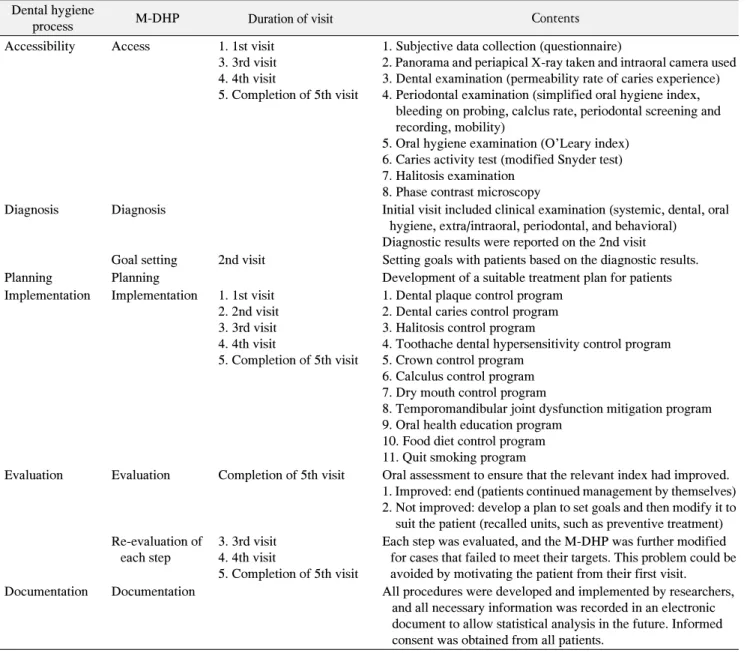
Table 1. Dental Hygiene Process Compared with the M-DHP Dental hygiene

process M-DHP Duration of visit Contents

Accessibility Access 1. 1st visit 3. 3rd visit 4. 4th visit

5. Completion of 5th visit

1. Subjective data collection (questionnaire)

2. Panorama and periapical X-ray taken and intraoral camera used 3. Dental examination (permeability rate of caries experience) 4. Periodontal examination (simplified oral hygiene index,

bleeding on probing, calclus rate, periodontal screening and recording, mobility)

5. Oral hygiene examination (O'Leary index) 6. Caries activity test (modified Snyder test) 7. Halitosis examination

8. Phase contrast microscopy

Diagnosis Diagnosis Initial visit included clinical examination (systemic, dental, oral hygiene, extra/intraoral, periodontal, and behavioral)

Diagnostic results were reported on the 2nd visit

Goal setting 2nd visit Setting goals with patients based on the diagnostic results.

Planning Planning Development of a suitable treatment plan for patients

Implementation Implementation 1. 1st visit 2. 2nd visit 3. 3rd visit 4. 4th visit

5. Completion of 5th visit

1. Dental plaque control program 2. Dental caries control program 3. Halitosis control program

4. Toothache dental hypersensitivity control program 5. Crown control program

6. Calculus control program 7. Dry mouth control program

8. Temporomandibular joint dysfunction mitigation program 9. Oral health education program

10. Food diet control program 11. Quit smoking program

Evaluation Evaluation Completion of 5th visit Oral assessment to ensure that the relevant index had improved.

1. Improved: end (patients continued management by themselves) 2. Not improved: develop a plan to set goals and then modify it to

suit the patient (recalled units, such as preventive treatment) Re-evaluation of

each step

3. 3rd visit 4. 4th visit

5. Completion of 5th visit

Each step was evaluated, and the M-DHP was further modified for cases that failed to meet their targets. This problem could be avoided by motivating the patient from their first visit.

Documentation Documentation All procedures were developed and implemented by researchers, and all necessary information was recorded in an electronic document to allow statistical analysis in the future. Informed consent was obtained from all patients.

M-DHP: modified dental hygiene process.

This study was approved by the Inje University Busan Paik Hospital (IRB no. 13-191, 2014-01-07).

1. Oral examination

The O'Leary index 14) and bleeding on probing (BOP) 15) were recorded and dental plaque samples were collected in a round junior 1 mm. The slides were observed using a phase contrast microscope (DCS6002; Doctor Prevent Co., Seoul, Korea) at a magnification of 4,300 to identify microorganisms. These microorganisms were classified as

cocci, bacilli, filamentous organisms, and spiral organisms on the basis of their shape, and the movements were clearly observed while the organisms were alive. All procedures were performed by a dental hygienist with 10 years of clinical and teaching experience and a dentist with skilled knowledge.

2. M-DHP modified to suit dental clinics in Korea

Before implementation, the participants were made

aware of the procedures and goals of the program and

(4)

Table 2. Characteristics Compared with Non-Cooperation and Cooperation (n=48)

Characteristic Non-cooperation (n=26)

Cooperation

(n=22) p-value

Gender 0.578

Male 15 (57.7) 13 (59.1)

Female 11 (42.3) 9 (40.9)

Age (y) 0.404

<30 15 (57.7) 11 (50.0)

≥30 11 (42.3) 11 (50.0)

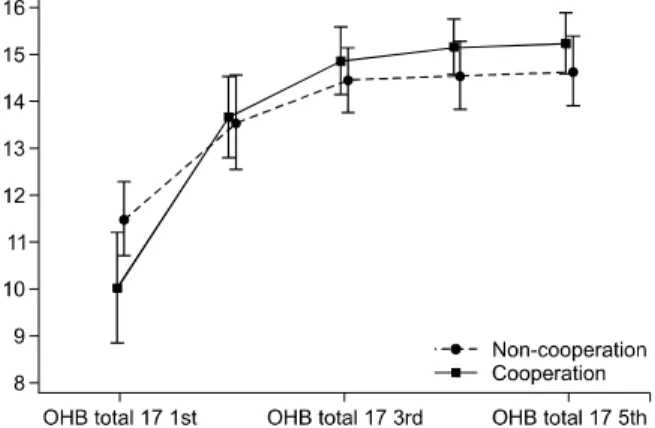
Fig. 1. Oral health behavior (OHB) index compared with non-co- operation and cooperation. Repeated measured-ANOVA by Gr- eenhouse‑Geisser: between groups, p=0.911; within the group, p<0.001; interaction, p=0.008.

informed consent was collected from them. The M-DHP was divided into eight steps. In addition, the dental hygiene process plan was subdivided, and a protocol for each preventive treatment program was prepared and performed (Table 1). The progress was based on inte- ractions with the patients (i.e., a relationship built with the patient), and the final goal was to ensure that the patient developed positive oral healthcare habits. The time requ- ired for complex calculations was decreased, and data collection was made easier through the use of computers.

This allowed the data to be easily available for statistical analysis.

3. Statistical analysis

Data was collected by the dental hygienist and analyzed by a statistician. All statistical analysis was performed using IBM SPSS Statistics ver. 21.0 (IBM Co., Armonk, NY, USA). Chi-square test was performed to test diffe- rences in the characteristics compared with the coope- ration and non-cooperation groups. Repeated measured ANOVA was performed to test differences in the oral health index and behavior improvement between the cooperation and non-cooperation groups each time.

Results

1. Comparison of characteristics between the coo- peration and non-cooperation

Of the 48 people, 26 were in the non-cooperative group and 22 in the cooperative group. The ratio of male to female was similar, the age ratio was similar, too (Table 2).

2. Comparison of the OHB index between the coo- peration and non-cooperation

There were no significant differences in the five points included in the OHB index between the groups (p=0.911).

However, OHB was observed to significantly increase with time (p<0.001), and significant differences were observed between the groups at different time points (p=0.008; Fig. 1).

3. Comparison of oral health care index between cooperation and non-cooperation groups

1) BOP

There was a significant difference in BOP between the groups at each time point (total 5 times; p=0.02). BOP also decreased significantly with time (p<0.001), but no differences were observed when groups and time points were taken into consideration (p=0.575; Fig. 2).

2) O'Leary index

A significant difference in O'Leary index was observed at each time point (5 times) between the two groups (p=0.034). A significant reduction in the O'Leary index (p<0.001) was observed with time, and the difference persisted when both groups and time points were taken into consideration (p=0.023; Fig. 3).

3) Bacterial activity

There were no significant differences in the bacterial

(5)

Fig. 3. O’Leary index compared with non-cooperation and coo- peration. Repeated measured-ANOVA by Greenhouse‑Geisser:

between group, p=0.034; within the groups, p<0.001; inter- action, p=0.023.

Table 3. Modified Dental Hygiene Process Patient Satisfaction (n=48)

Characteristic n (%)

Satisfaction with program

No -

Yes 48 (100.0)

Reason for satisfaction

Excellent facilities -

Excellent program 11 (22.9)

Less expensive 3 (6.3)

Friendly staff 34 (70.8)

Would re-participate

No -

Yes 48 (100.0)

Reason for re-participation

Excellent facilities -

Excellent program 14 (29.2)

Less expensive 4 (8.3)

Friendly staff 30 (62.5)

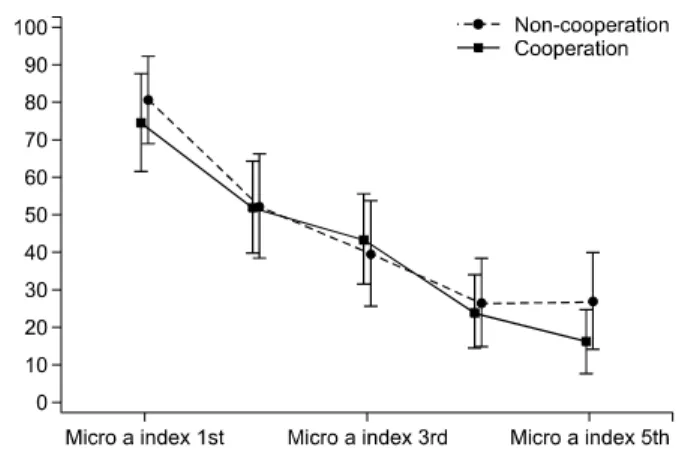
Fig. 4. Bacterial activity compared with non-cooperation and cooperation. Repeated measured-ANOVA by Greenhouse‑Geisser:

between groups, p=0.584; within the groups, p<0.001; inter- action, p=0.596. Micro a: micro active.

Fig. 2. Bleeding on probing (BOP) compared with non-coopera- tion and cooperation Repeated measured-ANOVA by Green- house‑Geisser: between groups, p=0.02; within the group, p<

0.001; interaction, p=0.575.

activity for each measurement time (total 5 times) between two groups (p=0.584). Bacterial activity significantly dec- reased with time (p<0.001), but no differences were observed when groups and time points were taken into consideration (p=0.596; Fig. 4).

4. Participant satisfaction by the M-DHP

The participants who completed the M-DHP reported 100% satisfaction at the end of 1 year (Table 3). The reasons reported included excellent program (22.9%), less expensive (6.3%), and friendly staff (70.8%). At the end of the program, all participants said they would take part in the program again, and the reasons included excellent program (29.2%), less expensive (8.3%), and friendly staff (62.5%). However, among the reasons for satisfaction and

re-participation, none of the participants opted for ex- cellent facilities.

Discussion

Biofilm control and scaling are two of the most im-

portant preventive measures in oral healthcare 16) . However,

it is nearly impossible to perform biofilm control by

oneself, and it requires expert intervention 17) . For effective

biofilm control, brushing using oral hygiene products

suitable for the patient and regular scaling is nece-

ssary 18,19) . In additional, education on self-management of

(6)

oral health must be also provided.

Oral health education at a group level has been found to be more effective than that at an individual level 20) . Moreover, education provided by the dental hygienist usually receives a more cooperative response than that provided by a dentist 21) . Therefore, the role of a dental hygienist in oral healthcare is important, and preventive measures should be a part of the hygienist’s job.

Previous studies reported that 82.7% (24 out of 29 people) cooperated when the dental hygiene process was applied in dental clinics for 5 months 22) and 28% (116 out of 414 people) 23) cooperated when the dental hygiene process periodontal control was applied in dental clinics for five years. In the current study, 48 of 130 participants completed the program (36.9% cooperation). Taking into account the fact that this result was in compliance with oral healthcare and not treatment, this number indicates a relatively high degree of cooperation.

Evaluation at each step of the M-DHP helped develop a relationship between the hygienist and patient. Coo- peration may have also increased because the patient is actively trying to make it to the goal. Won et al. 24) reported that preventive oral healthcare services are very important, and continuous oral health education is necessary for controlling risk factors of oral diseases.

The most crucial feature of the preventive treatment included in the M-DHP is patient motivation. The im- provement observed in the cooperation group in this study suggests that the program was effective. However, there is insufficient information regarding the dental hygiene process for patient motivation. Moreover, it is extremely difficult to quantify, making comparisons impossible.

Therefore, future studies should focus on patient moti- vation. The M-DHP helped change the OHB of the study participants and also improved their oral healthcare index.

BOP is one way of measuring the activity of the periodontal disease and the easiest and quickest way 23) . Gingival bleeding destroys the epithelium of the perio- dontal and connective tissue. Therefore, diagnosis of periodontal disease is important for its treatment 24) . BOP was decreased equally in the study by Oh 25) . O'Leary index was also decreased in studies conducted by Park 26) . Oh 25) reported that continuous oral care is needed because

periodontal depth increases according to time (1st visit:

within 7 mm; 2nd and 3rd visit: within 3 mm; and 4th visit: within 6 mm).

A patient’s oral condition may be worsened if the recall interval of the M-DHP is too long. Therefore, constant motivation is extremely important. Although the oral hygiene process is widely studied, its application in dental clinics is very limited 26-30) . The results of this study sho- wed that participants who completed the program showed long-term improvement in oral health. In addition, satisfaction with the M-DHP was 100% and all par- ticipants were willing to repeat the process. They were particularly satisfied with the contents of the program and friendly nature of the staff. The study conducted by Oh et al. 22) showed that the patient's condition is considered systematic and efficient interaction was more important than the unconditional kindness. This study also demon- strated that expression of sympathy to patients by professional experts resulted in better patient satisfaction and behavior changes than did good facilities and equipment alone. Although Korea has recently turned to prevention in various fields, preventive programs still remain insufficient. Therefore, we strongly recommend introduction and utilization of the M-DHP controlled by the dental hygienist at a low cost along with detailed follow up.

Summary

This study had the following limitations that this study included several dental clinics only in Korea, thus limiting the generalizability of the results. The second limitation is that the cross-sectional design of the study made it difficult to establish causality. I think that the dental hygiene process have not been yet applied to many dental clinics. Nevertheless, this study is meaningful because M-DHP was applied to the dental clinic. Focus on disease prevention measures and recognition of dental hygienists’

work autonomy will help improve patient oral health to a

great extent. Clinical application of the M-DHP based on

the dental hygiene process, will help achieve this.

(7)

References

1. Health Insurance Review and Assessment Service: Q3 2016 medical statistics index. Health Insurance Review and Assessment Service, Wonju, 2016.

2. Lee BG, Lee JH: Awareness and satisfaction survey regarding national health insurance dental scaling. J Korean Acad Oral Health 40:17-23, 2016.

3. Boretti G, Bickel M, Geering AH: A review of masticatory ability and efficiency. J Prosthet Dent 74: 400-403, 1995.

4. World Health Organization: Global strategy on human resources for health: Workforce 2030. World Health Organization, 2016.

5. Choi JS, Jeong SH: Development of strategies for promoting oral health. Korea Institute for Health and Social Affairs, Sejong, 2000.

6. Manski RJ, Macek MD, Brown E, Carper KV, Cohen LA, Vargas C: Dental service mix among working-age adults in the United States, 1999 and 2009. J Public Health Dent 74:

102-109, 2014.

7. Kim HS, Kim MK, Shin HS: Expenditure in ambulatory dental care and factors related to its spending. Korean J Health Policy Adm 22: 207-224, 2012.

8. Jeong SH: Dental utilization and expenditures in Korea health panel survey, 2008-2011. J Korean Dent Assoc 52: 291-301, 2014.

9. Matuliene G, Studer R, Lang NP, et al.: Significance of periodontal risk assessment in the recurrence of periodontitis and tooth loss. J Clin Periodontol 37: 191-199, 2010.

10. Jang HS, Ministry of Health and Welfare, Korea Health Industry Development Institute: Demand and supply planning for the dental professions. Korea Health Industry Development Institute, Seoul, p.145, 2003.

11. Lee SY, Cho YS: Review on theoretical background and components of dental hygiene process. J Dent Hyg Sci 5:

25-32, 2005.

12. Fitch P: Cultural competence and dental hygiene care deli- very: integrating cultural care into the dental hygiene process of care. J Dent Hyg 78: 11-21, 2004.

13. American Dental Hygienists Association: Standards for clinical dental hygiene practice. American Dental Hygienists Association, Chicago, 1985.

14. Lang NP, Tonetti MS: Periodontal risk assessment (PRA) for

patients in supportive periodontal therapy (SPT). Oral Health Prev Dent 1: 7-16, 2003.

15. Lang NP, Joss A, Orsanic T, Gusberti FA, Siegrist BE:

Bleeding on probing. A predictor for the progression of periodontal disease? J Clin Periodontol 13: 590-596, 1986.

16. Choi MS: Review on literature of dental plaque control-fo- cused on the literature relating to oral hygiene instruction.

Unpublished doctoral dissertation, Chosun University, Gw- angju, 2013.

17. Jo MJ: Control effect of oral health following individualized repeated instruction. J Dental Hyg Sci 8: 361-365, 2008.

18. Eom MR, Jeong DB, Park DY: Enhancement of plaque control score following individualized repeated instruction. J Korean Acad Oral Health 33: 10-18, 2009.

19. Axelsson P, Nyström B, Lindhe J: The long-term effect of a plaque control program on tooth mortality, caries and peri- odontal disease in adults. Results after 30 years of main- tenance. J Clin Periodontol 31: 749-757, 2004.

20. Sheiham A, Netuveli GS: Periodontal diseases in Europe.

Periodontol 2000 29: 104-121, 2002.

21. Song KB, Na CH, Kim US, Jeong SH: The relationships between periodontal indices and oral hygiene behaviour and knowledge about periodontal disease after periodontal treat- ment. J Korean Acad Oral Health 26: 101-115, 2002.

22. Oh HY, Kim CH, Park YH, Lim SH, Kim J: The comparison on periodontal attitude and oral health promotion behavior by dental hygiene process applies. J Korean Soc Dent Hyg 12:

861-870, 2012.

23. Lee HW, Park JW, Suh JY, Lee JM: Patient compliance with supportive periodontal therapy. J Korean Acad Periodontal 39: 193-198, 2009.

24. Won JY, Sin SC, Seo HS, Lyu H: A study on the incremental dental cares of giving the first consideration to prevention in dental clinic. J Korean Acad Oral Health 27: 329-346, 2003.

25. Oh HY: Case of the application of dental plaque control program in dental clinic. Korean Acad Dent Hyg 11: 59-68, 2009.

26. Park DY: Dental plaque control and basic self-oral health care in dental clinic. J Korean Dent Assoc 45: 12-20, 2007.

27. Han SY, Kim NH, Yoo JH, Kim CS, Chung WG: Current status of clinical dental hygiene education based on dental hygiene process of care. J Dent Hyg Sci 9: 271-278, 2009.

28. An SH, Lee CH: A study on the current state of oral health in

(8)

some community residents through comprehensive dental hygiene care. Korean Acad Dent Hyg 11: 45-58, 2009.

29. Lee SY, Choi HN: Analysis of case reports based on dental hygiene process. J Korean Soc Dent Hyg 11: 749-758, 2011.

30. Lee JY, Han GS: A study on clinical feasibility and practical

strategies for dental hygiene process (ADPIE). J Dent Hyg

Sci 14: 433-441, 2014.

수치

Table  1.  Dental  Hygiene  Process  Compared  with  the  M-DHP Dental hygiene
Table 2. Characteristics Compared with Non-Cooperation and  Cooperation  (n=48) Characteristic Non-cooperation  (n=26) Cooperation (n=22) p-value Gender 0.578     Male 15 (57.7) 13 (59.1)     Female 11 (42.3) 9 (40.9) Age (y) 0.404     <30 15 (57.7) 11 (50
Fig. 3. O’Leary index compared with non-cooperation and coo- coo-peration.  Repeated  measured-ANOVA  by  Greenhouse‑Geisser:

참조

관련 문서