Korean J Androl. Vol. 29, No. 3, December 2011 h t t p : / / d x . d o i . o r g / 1 0 . 5 5 3 4 / k j a . 2 0 1 1 . 2 9 . 3 . 2 4 2
242
접수일자: 2011년 12월 8일, 수정일자: 2011년 12월 14일, 게재일자: 2011년 12월 14일
Correspondence to: In Rae Cho
Department of Urology, Inje University Ilsanpaik Hospital, 2240, Daehwa-dong, Ilsanseo-gu, Goyang 411-706, Korea
Tel: 031-910-7230, Fax: 031-910-7239 E-mail: [email protected]
Comparison of Different Alpha-blocker Combinations in Male Hypertensives with Refractory Lower Urinary Tract Symptoms
Keon Cheol Lee1, Jong Gu Kim2, Sung Yong Cho1, Joon Sung Jeon1, In Rae Cho1 Department of Urology, 1Inje University Ilsanpaik Hospital, Goyang,
2Happy Urology Clinic, Ansan, Korea
= Abstract =
Purpose: We compared the efficacy and safety profiles of dose increase, traditional combination methods, and combining different alpha blockers in hypertensive males with lower urinary tract symptom (LUTS) refractory to an initial dose of 4 mg doxazosin.
Materials and Methods: Between 2000 and 2005, 374 male patients with LUTS and hypertension unresponsive to 4 weeks of 4 mg doxazosin were enrolled. The subjects were randomly classified into 3 groups, 8 mg/day of doxazosin (D group), 4 mg of doxazosin plus 0.2 mg/day of tamsulosin (DT group), and 4 mg doxazosin plus 5 mg/day finasteride (DF group). Patients were evaluated based on their International Prostate Symptom Score (IPSS), quality of life (QOL), uroflowmetry and blood pressure (BP) and adverse events (AEs) at the baseline and 3 and 12 months after treatment.
Results: The 269 patients (71.9%) were followed for at least 1 year (D group n=84, DT group n=115, and DF group n=70). The clinical parameters before and after initial 4 mg/day doxazosin were not different among the 3 groups. IPSS improvement after 3 months and maximal flow rate (Qmax) improvement after 3 and 12 months were significantly higher in the D and DT groups than the DF group (p<0.05). Sitting systolic and diastolic BP of the D group decreased larger than those of the other 2 groups (p<0.05). At least one of the AEs was reported by 29.0%, 19.3%, and 17.3% of patients in the D, DT, and DF groups, respectively. In particular, vasodilatory AEs of the D group (28.2%) were higher than those of other groups (p<0.05), and sexual function AEs of the DF group (10.9%) were higher than those of other groups (p<0.05).
Conclusions: Doxazosin 4 mg plus tamsulosin 0.2 mg has comparable efficacy but less vasodilatory AEs than doxazosin 8 mg, and has superior efficacy to but comparable vasodilatory AEs to 4 mg doxazosin plus 5 mg finasteride in hypertensive male LUTS patients.
Key Words: Urinary tract, Symptoms, Doxazosin, Tamsulosin, Finasteride
Introduction
In benign prostatic hyperplasia (BPH) patients whose lower urinary tract symptoms (LUTS) are refractory to an initial alpha-blocker, there are several options, in- cluding recommending surgery, changing to other al- pha-blockers or dose escalation, and adding 5-alpha re- ductase inhibitors. However, many patients are re-
luctant to undergo surgery and the risk of morbidity or side effects of surgery is not so minimal as to ignore.
With the new development as well as refinement of many alpha-blockers, the percentage of those electing surgery as a BPH treatment is decreasing.1,2 In BPH medication, combination therapy usually means using an alpha-blocker with 5-alpha reductase inhibitor. In a medical therapy of prostatic symptoms (MTOPS) study, the long-term results supported combination therapy as more effective than alpha-blocker only treatment in terms of symptom improvement as well as uroflow.
Nevertheless, a 5-alpha reductase inhibitor was not helpful compared with a placebo in the short-term;
long-term treatment is required for it to be effective.3 It is generally accepted that the various alpha-block- ers used clinically do not differ in efficacy, but only in their side effects or tolerability profile,4 so patients unresponsive to an initial alpha-blocker should be treated with dose escalation. Nonetheless, dose escala- tion inevitably increases the rate of side effects. In par- ticular, in patients with concomitant BPH and hyper- tension, dose escalation of blood pressure (BP)-lowering alpha-blockers could cause more cardiovascular side effects. Many alpha-blockers differ in the intensity of side effects; that is, doxazosin can lower BP signi- ficantly in poorly-controlled hypertensive patients with BPH5 but tamsulosin has a lesser effect on BP regard- less of hypertension.6,7
Many patients have both hypertension and BPH.
Among those aged over 65, the prevalence of hyper- tension is about 50%, and this is similar to the preva- lence of BPH-induced LUTS. About 30% of BPH pa- tients are already taking anti-hypertensives and the ad- ministration of alpha-blockers in these patients in- creases BP-related side effects.8-10 BP-related side ef- fects of alpha-blockers in hypertensive patients are managed by a decrease in anti-hypertensives by a car- diologist or changing BPH treatment methods. However, in cases of needing a dose increase of alpha-blockers, many urologists feel burdened about the decision for fear of side effects.
Alpha-blockers used in treating BPH can be classi- fied into one of several categories according to their
molecular structure. Non-selective alpha-blockers such as doxazosin, terazosin, and alfuzosin are quinazoline derivatives and tamsulosin is a sulfonamide derivative.
With the recent recruitment of alpha 1-D selective naf- topidil11 and 1-A superselective silodosin,12 the spec- trum became wider, but the possibility of synergy be- tween different classes of alpha-blockers has not yet been explored. We empirically observed LUTS im- provement by adding other kinds of alpha-blockers in surgery-reluctant BPH patients unresponsive to an ini- tial alpha-blocker. As far as we know, up to the pres- ent, no study has dealt with the efficacy of a combina- tion of different kinds of alpha-blockers in BPH. In this study, we compared methods of combining differ- ent alpha-blockers with simple summation of an al- pha-blocker alone or a conventional combination of al- pha-blocker plus 5-alpha reductase inhibitor in hyper- tensive BPH patients whose LUTS was refractory to the initial alpha-blocker.
Materials and Methods
Between January 2000 and December 2005, 374 male LUTS patients taking anti-hypertensives who showed an unsatisfactory response to 4 weeks of 4 mg/day of doxazosin (cardura XLⓇ) for the treatment of LUTS were enrolled in this study. After 4 mg/day of dox- azosin for 4 weeks, all of the enrolled patients showed a Qmax increase of less than 3 ml/s and less than 20%
improvement in their International Prostate Symptom Score (IPSS) unlike typical responsive patients.
After enrollment, the 374 subjects were divided into 3 groups. In the first group, the dose of doxazosin was escalated to 8 mg (D group, n=124), in the second group, 0.2 mg tamsulosin (HarnalⓇ) was added to the initial 4 mg doxazosin (DT group, n=140), and in the last group, 5 mg finasteride (ProscarⓇ) was added to the initial 4 mg doxazosin (DF group, n=110).
All of the subjects were taking more than one of the anti-hypertensives, among them calcium channel blockers, angiotensin II receptor blockers, angiotensin converting enzyme inhibitors, beta-blockers, and diuretics. Additionally, those patients with neurogenic bladder, prostate or bladder cancer, urethral stricture,
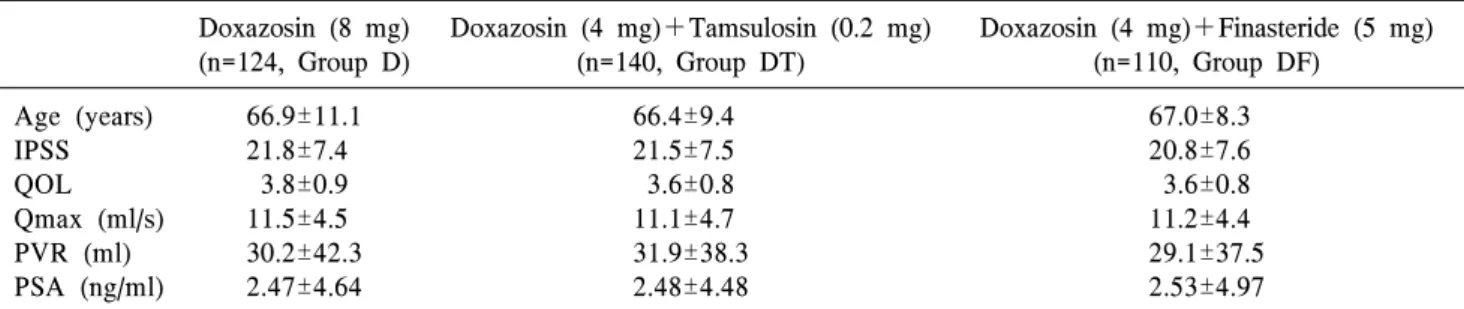
Table 1. Baseline demographics and characteristics show no difference among groups (mean±SD) Doxazosin (8 mg)
(n=124, Group D)
Doxazosin (4 mg)+Tamsulosin (0.2 mg) (n=140, Group DT)
Doxazosin (4 mg)+Finasteride (5 mg) (n=110, Group DF)
Age (years) IPSS QOL Qmax (ml/s) PVR (ml) PSA (ng/ml)
66.9±11.1 21.8±7.4
3.8±0.9 11.5±4.5 30.2±42.3 2.47±4.64
66.4±9.4 21.5±7.5 3.6±0.8 11.1±4.7 31.9±38.3 2.48±4.48
67.0±8.3 20.8±7.6 3.6±0.8 11.2±4.4 29.1±37.5 2.53±4.97 One-way ANOVA.
IPSS: international prostate symptom score, QOL: quality of life, Qmax: maximal flow rate, PVR: post-void residual urine, PSA: prostate-specific antigen.
p>0.05 for all parameters.
and history of prostatectomy were excluded.
All the patients were assessed before treatment about disease history, IPSS, quality of life (QOL), duration of hypertension, classes of anti-hypertensives, BP, digital rectal examination, urinalysis, serum bio- chemical assay, prostate-specific antigen (PSA), max- imal flow rate (Qmax), and residual urine.
Efficacy was assessed two times after 3 and 12 months of dose escalation or combination therapy us- ing changes in IPSS, QOL, and Qmax. Safety was as- sessed at the same visit using systolic and diastolic BP and adverse events (AES) were evaluated at every visit.
Statistical analysis methods were ANOVA for the comparisons among the groups, paired t-test for the comparison of pre- and post-treatment and chi-squared and Fisher’s exact test for the differences of incidence of AES among the groups. A p-value less than 0.05 was regarded as significant.
Results
Of the 374 enrolled subjects, 269 patients received follow-up care for 1 year or longer. The other 105 pa- tients (28.1%) dropped out, and the causes of drop-out were follow-up loss in 91 patients and side effects in 14 patients. The drop-out rate of each group was 40/124 (32.2%), 25/140 (17.9%), and 40/110 (36.4%) for the D, DT, and DF groups, respectively. The DT group had lower drop-out rate than the other groups (p<0.05). Among the 269 patients analyzed, the D group contained 84 patients, the DT group contained
115 patients, and the DF group contained 70 patients.
The duration of taking anti-hypertensives before the study was 5.4±5.2 (1 month∼14 years) years. Before the administration of initial 4 mg doxazosin, the three groups were similar in all parameters (Table 1).
During a follow-up of 12 months, before a dose in- crease or combination (after 4 mg/day of doxazosin for 4 weeks from the baseline), the three groups did not differ in terms of IPSS, QOL, or Qmax. After 3 and 12 months of treatment, all three groups showed sig- nificant symptom improvement compared with the baseline (p<0.05, Table 2). In the comparison among the groups, after 3 months of treatment, IPSS improve- ment of the D and DT groups (−7.0±6.0, −7.1±5.9) was higher than that of the DF group (−4.3±7.0) (p<
0.05). However, after 12 months of treatment, the changes in the IPSS did not differ among the 3 groups (−6.8±6.2, −7.0±6.1 and −5.9±7.7). The changes in the QOL score did not differ among the 3 groups after 3 and 12 months.
Increases in Qmax after 3 months increased 4.3±4.0, 5.2±3.4, and 1.7±4.2 ml/s in the D, DT, and DF groups, respectively, and after 12 months, they were 4.4±5.4, 4.9±3.5, and 2.1±4.4 ml/s, respectively. The increase in the Qmax in the DF group was less than in the other 2 groups after both 3 and 12 months (p<
0.05, Table 3).
Before and after the initial 4 weeks of 4 mg dox- azosin, the systolic/diastolic BP levels among the 3 groups were not different. However, after 3 and 12 months of a dose increase or combination treatment,
Table 3. Compared among groups, the DF group shows less improvement in 3-month IPSS and Qmax and 12-month Qmax parameters (mean±SD)
Doxazosin (8 mg) (n=84, Group D)
Doxazosin (4 mg)+Tamsulosin (0.2 mg) (n=115, Group DT)
Doxazosin (4 mg)+Finasteride (5 mg) (n=70, Group DF)
Δ IPSS 3 Mo 12 Mo Δ QOL 3 Mo 12 Mo Δ Qmax (ml/s) 3 Mo 12 Mo
−7.0±6.0a
−6.8±6.2
−0.8±1.0
−0.6±1.0 4.3±4.0d 4.4±5.4g
−7.1±5.9b −7.0±6.1 −0.8±0.9 −0.8±0.9 5.2±3.4e 4.9±3.5h
−4.3±7.0c −5.9±7.7 −0.6±0.9 −0.7±0.9 1.7±4.2f 2.1±4.4i Independent T-test.
Δ: change, DF: doxazosin (4 mg) plus finasteride (5 mg), IPSS: International Prostate Symptom Score, Mo: month, QOL:
quality of life, Qmax: maximal flow rate.
a vs c: p=0.032, b vs c: p=0.002. d vs f: p=0.000, e vs f: p=0.000, g vs i: p=0.026, h vs i: p=0.001.
Table 2. Compared with before-treatment, each group showed improvement of all parameters at 3 and 12 months after the dose increase or beginning of combination therapy (mean±SD)
Doxazosin (8 mg) (n=84, Group D)
Doxazosin (4 mg)+Tamsulosin (0.2 mg) (n=115, Group DT)
Doxazosin (4 mg)+Finasteride (5 mg) (n=70, Group DF)
IPSS Before 3 Mo 12 Mo QOL Before 3 Mo 12 Mo Qmax (ml/s) Before 3 Mo 12 Mo
20.9±7.5 13.9±7.9*
14.1±8.4*
3.6±0.9 2.8±0.9*
2.9±1.0*
12.2±4.9 16.5±5.6*
16.7±7.1*
20.6±7.2 13.5±6.1*
13.5±6.2*
3.5±0.8 2.7±0.7*
2.7±0.7*
11.4±4.6 16.7±5.2*
16.3±5.3*
19.8±7.8 15.5±7.3*
13.8±7.4*
3.4±0.8 2.8±0.9*
2.7±0.9*
11.8±4.5 13.5±5.8*
13.9±4.8*
Paired T-test.
IPSS: International Prostate Symptom Score, Mo: month, QOL: quality of life, Qmax: maximal flow rate.
*p<0.05 compared with before-treatment.
the change in the systolic/diastolic BP in the D group was significantly larger than in the other 2 groups (p<
0.05, Fig. 1).
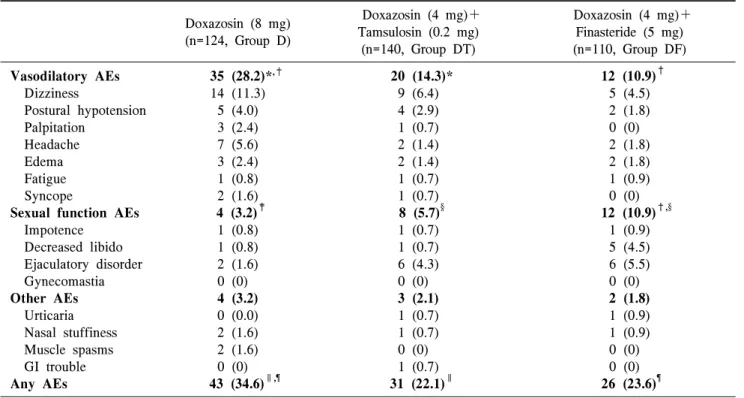
AEs were evaluated in all 374 subjects and were classified as vasodilatory AEs, sexual function AEs, and other AEs. In the 124 D group patients, 43 AEs (34.7%) occurred in 36 patients (29.0%). In the 140 DT group patients, 31 AEs (22.1%) occurred in 27 pa- tients (19.3%). In the 110 DF group patients, 26 AEs (23.6%) occurred in 19 patients (17.3%). The D group
had more AEs than the other groups (p<0.05).
Withdrawal due AEs in the D group occurred in 7 pa- tients (5.6%), and the causes were severe dizziness (2 patients), hypotension (2 patients), palpitation (1 pa- tient), and syncope (2 patients). In the DT group, 4 patients (2.9%) withdrew from treatment and the caus- es were severe dizziness (2 patients), urticaria (1 pa- tient), and ejaculatory disorder (1 patient). In the DF group, 3 patients (2.7%) withdrew from treatment, and the causes were severe dizziness (1 patient), urticaria
Table 4. The incidence of adverse events in all 374 patients enrolled, expressed as number (percentage) Doxazosin (8 mg)
(n=124, Group D)
Doxazosin (4 mg)+
Tamsulosin (0.2 mg) (n=140, Group DT)
Doxazosin (4 mg)+
Finasteride (5 mg) (n=110, Group DF) Vasodilatory AEs
Dizziness
Postural hypotension Palpitation
Headache Edema Fatigue Syncope
Sexual function AEs Impotence
Decreased libido Ejaculatory disorder Gynecomastia Other AEs Urticaria Nasal stuffiness Muscle spasms GI trouble Any AEs
35 (28.2)*,†
14 (11.3) 5 (4.0) 3 (2.4) 7 (5.6) 3 (2.4) 1 (0.8) 2 (1.6) 4 (3.2)‡
1 (0.8) 1 (0.8) 2 (1.6) 0 (0) 4 (3.2) 0 (0.0) 2 (1.6) 2 (1.6) 0 (0) 43 (34.6)∥,¶
20 (14.3)*
9 (6.4) 4 (2.9) 1 (0.7) 2 (1.4) 2 (1.4) 1 (0.7) 1 (0.7) 8 (5.7)§
1 (0.7) 1 (0.7) 6 (4.3) 0 (0) 3 (2.1) 1 (0.7) 1 (0.7) 0 (0) 1 (0.7) 31 (22.1)∥
12 (10.9)† 5 (4.5) 2 (1.8) 0 (0) 2 (1.8) 2 (1.8) 1 (0.9) 0 (0) 12 (10.9)†,§
1 (0.9) 5 (4.5) 6 (5.5) 0 (0) 2 (1.8) 1 (0.9) 1 (0.9) 0 (0) 0 (0) 26 (23.6)¶ Independent T-test.
AEs: adverse events, Some patients can have more than one AE.
*,†,‡,§,∥,¶p<0.05 compared with other groups.
Fig. 1. Changes in systolic and diastolic blood pressure after 3 and 12 months of dose increase or combination therapy in the 3 groups. The 8 mg doxazosin group after 3 and 12 months of treatment shows a significantly larger BP change than the other groups. SBP: systolic blood pressure, DBP: diastolic blood pressure. *Means p<0.05 compared with the other groups. Independent T-test.
(1 patient), and decreased libido (1 patient). The drug-withdrawal rate did not differ among the 3 groups (p>0.05). Vasodilatory AEs were more common in
the D group and sexual function AEs were more com- mon in the DF group (p<0.05). The incidence of oth- er AEs were not different among the groups (Table 4).
Discussion
Benign prostatic hyperplasia (BPH) is a common urologic disease in old age. The incidence is 50% in the fifties and 90% in those over 80 years old.13 Medical treatment for BPH has less side effects than surgery and can effectively improve LUTS. Selective alpha-1 blockers block alpha-1 receptors in the pros- tate and bladder neck and by blocking sympathetic in- nervation of the prostatic smooth muscle, relieve uri- nary obstruction due to BPH. These drugs usually re- lieve obstructive and irritative symptoms within 1 or 2 weeks and increase urinary flow. The total symptom score is improved 30∼40% and maximal urinary flow rate 15∼30% compared with the baseline after alpha-1 blockers for BPH.14,15
There are few comparative studies about the effi-
cacy of each of the alpha blockers. In one comparative study pf doxazosin and tamsulosin, although both of the drugs showed prominent improvement in LUTS and the urinary flow rate, doxazosin was more effec- tive in terms of LUTS improvement.16 Alpha-1 re- ceptors in the spinal cord are involved at least partially in voiding dysfunction, mainly in the storage function.
Blockage of alpha-1 D receptors of the spinal cord in- hibited bladder contraction but inhibition by alpha-1 A blockage of the spinal cord was much weaker.17 Although the mechanisms of the storage function im- provement with alpha-blocker have not been eluci- dated, the efficacy of alpha-blockers assessed by IPSS reflects storage function improvement as well as that of the emptying function. Therefore, the influence on these receptors by non-selective doxazosin can explain the more effective management of total voiding prob- lems regardless of side effects.18
On the other hand, tamsulosin selectively binds to alpha-1 A receptors abundant in prostate, and the high affinity to selective protein causes the drug to concen- trate in the lower urinary tract rather than the central nervous system, comparing with doxazosin. This sug- gests that the two drugs are somewhat different in their action mechanisms due to different chemical structure categories.18-20 However, it is generally ac- cepted that many alpha-blockers have the same effi- cacy but only differ in terms of side effects.4 Quinazoline family alpha-blockers such as terazosin, doxazosin, and alfuzosin were originally developed as anti-hypertensives. Although it has minimal effects on stable BP, physiologic BP control can be influenced by its effect on the cardiovascular system.21 Kirby5 reported that doxazosin can cause much more BP change in hypertensive patients but only minimal ef- fects in normotensive patients, and their side effects are mild or moderate, so doxazosin can treat hyper- tension and BPH at the same time. Many older men have both hypertension and LUTS due to BPH.
Theoretically, alpha-1 blockers seem attractive to treat both of these diseases, but in the LUTS patients who visit urologic departments, about 30% are already tak- ing anti-hypertensives.8,9 In these patients, BP-lowering alpha-1 blockers may disturb BP control and require
re-adjusting the anti-hypertensives; AEs can also be- come more prominent. In most hypertensive patients with a heart problem, alpha-1 blockers are not the first choice; rather, primarily beta-blockers, calcium chan- nel blockers, and ACE inhibitors are used for BP con- trol, and in these patients, for the treatment of BPH, those alpha-1 blockers with minimal effects on BP are more desirable.22
Tamsulosin is a sulphonamide derivative and 12 times more selective to prostatic tissue than aorta.23 Tamsulosin was not not developed as an anti-hyper- tensive, so it is not effective in BP control. Tamsulosin has only a minimal effect on BP in anti-hyper- tensive-taking patients as well as on that in non- hypertensives.6,7 When co-administered with nifedi- pine, enalapril, and atenolol, tamsulosin did not affect the pharmaco-dynamic actions of anti-hypertensives and the tolerability or symptomatic events were not affected.
Although the AEs of tamsulosin in the cardiova- scular system are less common than those of other al- pha blockers, the retrograde ejaculation rate with 0.4 mg tamsulosin is as high as 4.5∼10%.7,14,24 In the cas- es of an unsatisfactory response to alpha-blockers, af- ter ruling out other causes mimicking BOO, a dose in- crease can be attempted. Although 4 mg doxazosin is the initial dose in BPH patients, it can be escalated up to 8 mg.10,17,25 MacDiarmid et al.25 compared the 4 mg dose of doxazosin directly with the 8 mg one.
They reported that because 8 mg was more effective in symptom relief but AEs were similar, dose escala- tion to 8 mg should be considered if results are unsat- isfactory at 4 mg. However, dose escalation of al- pha-blockers affecting the cardiovascular system might induce side effects as well as LUTS improvement. In particular, in BPH patients already taking anti-hyper- tensives, the incidence of BP-related side effects would be much higher. In their study, prescription pat- terns of 90 doctors were also analyzed. In that analy- sis, 88 thought the optimal dose of doxazosin was 4 mg and only 2 doctors thought it was 8 mg. Those results showed that most of the prescribers are re- luctant to escalate the dose.
In Asia, the appropriate dose of tamsulosin has been
regarded as 0.2 mg, and this dose is used in the Republic of Korea and Japan, but in the United States and Europe, 0.4 mg is used for efficacy and safety.7,26,27 With the approval by medical insurance, dose escalation of tamsulosin up to 0.4 mg is becom- ing popular in selected patients in Korea as well.
Up to the present, combination therapy for BPH has been limited to alpha-blockers and 5 α-reductase in- hibitors and the advantages of that combination were proven by a MTOPS study. McConnell et al.3 reported in a MTOPS study that a combination of doxazosin and finasteride was more effective than doxazosin or finasteride alone in terms of uroflow or IPSS improve- ment and decreased the progression of BPH and the incidence of acute urinary retention. They reported that combination therapy decreased the BPH-related sur- geries or acute urinary retention in the long-term.
However, in the short-term follow-up, the symptom improvement with combination therapy did not differ from therapy with doxazosin alone, and finasteride alone did not differ from a placebo.
In our study as well, the doxazosin-finasteride group showed later onset of symptom improvement than the other groups.
When assessing the efficacy of alpha-blockers, more than 20∼30% improvement of symptom scores or more than a 3 ml/s increase in the maximal uroflow rate is regarded as successful treatment.16,28 In this study, we defined an unsatisfactory response to an initial does of 4 mg of doxazosin as less than 20% improvement of symptom scores or less than a 3 ml/s increase in the maximal uroflow rate. Patients with such an unsat- isfactory response received dose escalation to 8 mg of doxazosin or adding 0.2 mg tamsulosin or 5 mg finas- teride.
This study has one important limitation. Despite us- ing finasteride in some patients, the effect of prostate size on treatment efficacy was not evaluated. All of the patients were randomly allotted to each group, but a possible bias caused by prostate size cannot be ruled out.
The objective of BPH treatment is relieving LUTS with minimal side effects. In general, the objective of combination therapy is maximizing efficacy while
minimizing side effects. In cases needing a dose in- crease, the use of single agent with a maximal dose can increase efficacy but has side effects as well.
Therefore, a combination of different kinds of drugs can be tried. However, there are no studies about the combination of different classes of alpha-blockers, which have somewhat different sites of action and dif- ferent side effect profiles, and to our knowledge, our study is the first trial addressing this issue. In this study, both the 8 mg doxazosin group and the combi- nation group of 4 mg doxazosin and 0.2 mg tamsulosin experienced significant symptom improvement and an increase in the Qmax. Between the groups, the combi- nation group of 4 mg doxazosin and 0.2 mg tamsulosin showed a smaller change in BP and less cardiovascular side effects with comparable symptom improvement.
The subjects of this study were limited to hypertensive BPH patients unresponsive to an initial 4 mg dosage of doxazosin, and it would be interesting to compare a combination of different alpha-blockers with dose es- calation of tamsulosin or other classes of new alpha- blockers.
Our results suggest the possibility of a combination of different alpha-blockers as a method of efficacy po- tentiation with acceptable side effects. This will re- quire additional studies about whether it is a simple summation effect or whether any synergy exists.
Conclusions
In patients with concomitant BPH and hypertension whose LUTS is unresponsive to an initial 4 mg dose of doxazosin, combination therapy with 0.2 mg tamsu- losin has efficacy comparable to 8 mg doxazosin but much less incidence of BP lowering or vasodilatory side effects. When compared with a conventional fi- nasteride combination, the 0.2 mg tamsulosin combi- nation improved clinical symptoms more prominently from the early period and improved uroflow persisted until the end of the study with a lower incidence of sexual dysfunction.
In the patients unresponsive to the initial 4 mg of doxazosin, adding 0.2 mg of tamsulosin seems to be both a more effective and a safer method than 8 mg
doxazosin or adding finasteride. This could be ex- trapolated to other alpha-blocker combinations for re- fractory BPH patients reluctant to undergo surgery.
REFERENCES
1) Holtgrewe HL, Mebust WK, Dowd JB, Cockett AT, Peters PC, Proctor C. Transurethral prostatectomy:
practice aspects of the dominant operation in American urology. J Urol 1989;141:248-53
2) Souverein PC, Erkens JA, de la Rosette JJ, Leufkens HG, Herings RM. Drug treatment of benign prostatic hyperplasia and hospital admission for BPH-related surgery. Eur Urol 2003;43:528-34
3) McConnell JD, Roehrborn CG, Bautista OM, Andriole GL Jr, Dixon CM, Kusek JW, et al; Medical Therapy of Prostatic Symptoms (MTOPS) Research Group.
The long-term effect of doxazosin, finasteride, and combination therapy on the clinical progression of benign prostatic hyperplasia. N Engl J Med 2003;
349:2387-98
4) AUA Practice Guidelines Committee. AUA guide- line on management of benign prostatic hyperplasia (2003). Chapter 1: Diagnosis and treatment recom- mendations. J Urol 2003;170:530-47
5) Kirby RS. Doxazosin in benign prostatic hyperplasia:
effects on blood pressure and urinary flow in normo- tensive and hypertensive men. Urology 1995;46:182-6 6) Chapple CR, Wyndaele JJ, Nordling J, Boeminghaus
F, Ypma AF, Abrams P. Tamsulosin, the first pros- tate-selective alpha 1A-adrenoceptor antagonist. A meta-analysis of two randomized, placebo-controlled, multicentre studies in patients with benign prostatic obstruction (symptomatic BPH). European Tamsulosin Study Group. Eur Urol 1996;29:155-67
7) Lepor H. Phase III multicenter placebo-controlled study of tamsulosin in benign prostatic hyperplasia.
Tamsulosin Investigator Group. Urology 1998;51:
892-900
8) Boyle P, Napalkov P. The epidemiology of benign prostatic hyperplasia and observations on con- comitant hypertension. Scand J Urol Nephrol Suppl 1995;168:7-12
9) Lukacs B, Blondin P, MacCarthy C, Du Boys B, Grippon P, Lassale C. Safety profile of 3 months' therapy with alfuzosin in 13,389 patients suffering from benign prostatic hypertrophy. Eur Urol
1996;29:29-35
10) Milani S, Djavan B. Lower urinary tract symptoms suggestive of benign prostatic hyperplasia: latest up- date on alpha-adrenoceptor antagonists. BJU Int 2005;95 Suppl 4:29-36
11) Masumori N. Naftopidil for the treatment of urinary symptoms in patients with benign prostatic hyper- plasia. Ther Clin Risk Manag 2011;7:227-38 12) Schilit S, Benzeroual KE. Silodosin: a selective al-
pha1A-adrenergic receptor antagonist for the treat- ment of benign prostatic hyperplasia. Clin Ther 2009;
31:2489-502
13) Berry SJ, Coffey DS, Walsh PC, Ewing LL. The de- velopment of human benign prostatic hyperplasia with age. J Urol 1984;132:474-9
14) Djavan B, Chapple C, Milani S, Marberger M. State of the art on the efficacy and tolerability of alpha1-a- drenoceptor antagonists in patients with lower uri- nary tract symptoms suggestive of benign prostatic hyperplasia. Urology 2004;64:1081-8
15) Roehrborn CG, Prajsner A, Kirby R, Andersen M, Quinn S, Mallen S. A double-blind placebo-con- trolled study evaluating the onset of action of dox- azosin gastrointestinal therapeutic system in the treatment of benign prostatic hyperplasia. Eur Urol 2005;48:445-52
16) Kirby RS. A randomized, double-blind crossover study of tamsulosin and controlled-release doxazosin in patients with benign prostatic hyperplasia. BJU Int 2003;91:41-4
17) Sugaya K, Nishijima S, Miyazato M, Ashitomi K, Hatano T, Ogawa Y. Effects of intrathecal injection of tamsulosin and naftopidil, alpha-1A and -1D adre- nergic receptor antagonists, on bladder activity in rats. Neurosci Lett 2002;328:74-6
18) Kirby R, Andersson KE, Lepor H, Steers WD. al- pha(1)-Adrenoceptor selectivity and the treatment of benign prostatic hyperplasia and lower urinary tract symptoms. Prostate Cancer Prostatic Dis 2000;3:
76-83
19) Tammela T. Benign prostatic hyperplasia. Practical treatment guidelines. Drugs Aging 1997;10:349-66 20) Matsushima H, Kamimura H, Soeishi Y, Watanabe
T, Higuchi S, Tsunoo M. Pharmacokinetics and plas- ma protein binding of tamsulosin hydrochloride in rats, dogs, and humans. Drug Metab Dispos 1998;26:
240-5
21) de Mey C. Cardiovascular effects of alpha-blockers used for the treatment of symptomatic BPH: impact on safety and well-being. Eur Urol 1998;34 Suppl 2:18-28
22) Buzelin JM, Fonteyne E, Kontturi M, Witjes WP, Khan A. Comparison of tamsulosin with alfuzosin in the treatment of patients with lower urinary tract symptoms suggestive of bladder outlet obstruction (symptomatic benign prostatic hyperplasia). The European Tamsulosin Study Group. Br J Urol 1997;
80:597-605
23) Yamada S, Suzuki M, Tanaka C, Mori R, Kimura R, Inagaki O, et al. Comparative study on alpha 1-adrenoceptor antagonist binding in human prostate and aorta. Clin Exp Pharmacol Physiol 1994;21:
405-11.
24) De Mey C. Alpha1-blocker therapy for lower urinary tract symptoms suggestive of benign prostatic ob- struction: what are the relevant differences in rando- mised controlled trials? Eur Urol 2000;38 Suppl 1:25-39
25) MacDiarmid SA, Emery RT, Ferguson SF, McGuirt- Franklin R, McIntyre WJ, Johnson DE. A random- ized double-blind study assessing 4 versus 8 mg.
doxazosin for benign prostatic hyperplasia. J Urol 1999;162:1629-32
26) Abrams P, Speakman M, Stott M, Arkell D, Pocock R. A dose-ranging study of the efficacy and safety of tamsulosin, the first prostate-selective alpha 1A- adrenoceptor antagonist, in patients with benign pro- static obstruction (symptomatic benign prostatic hy- perplasia). Br J Urol 1997;80:587-96
27) Okada H, Kamidono S, Yoshioka T, Okuyama A, Ozono S, Hirao Y, et al. A comparative study of ter- azosin and tamsulosin for symptomatic benign pro- static hyperplasia in Japanese patients. BJU Int 2000;
85:676-81
28) Lee E, Lee C. Clinical comparison of selective and non-selective alpha 1A-adrenoreceptor antagonists in benign prostatic hyperplasia: studies on tamsulosin in a fixed dose and terazosin in increasing doses. Br J Urol 1997;80:606-11